Tag: MIB

  • TRAI clears platform services offered by local cable ops, subject to conditions and payments

    TRAI clears platform services offered by local cable ops, subject to conditions and payments

    NEW DELHI: The Telecom Regulatory Authority of India (TRAI) has recommended the establishment of an online system by the Information and Broadcasting Ministry to register all the platform services being offered and the registration is on the basis of a simple set of information and at a nominal registration fee of Rs 1000 per channel.

     
    According to the recommendations on the ‘Regulatory Framework for Platform Services’ issued by it, TRAI said distribution platform operators (DPOs) desirous of providing platform services must be incorporated as a company under the Indian Companies Act 2013.

     
    TRAI had issued a consultation paper on ‘Regulatory framework for Platform Services’ on 23 June and the recommendations are based on the responses received from stakeholders. TRAI said there is an urgent need to ensure that these programming services are brought within the four corners of a robust and fair regulatory system that addresses all concerns adequately.


    The Ministry in a letter to TRAI on 17 January 2013 sought recommendations of TRAI under section 11 (1) (a) (ii), (iii) and (iv) of TRAI Act, 1997 on the issues related to local ground-based channels of cable TV operators. In addition, through an earlier letter of 2 February 2009, the Ministry had also sought TRAI’s recommendations about such kind of programming services being offered by DTH service providers to their subscribers as well as on the issue of carriage of FM radio channels on the DTH platform.

     
    The Regulator also issued a letter in this connection to the secretary in the Ministry, Bimal Julka.

     
    TRAI has also said a time of 12 months should be given to the DPOs to comply with the guidelines to be issued by the Ministry in this regard.

     
    Prior clearance is required from the district authorities of any local information and local affairs bulletins that may be transmitted.

     
    Platform Services (PS) are programming services/ channels that are owned by the DPO; available only to the subscribers of the DPO’s network; advertisements, if any, on these channels is inserted by the DPO and ad-revenues, therefore, accrue to it. Regular TV channels, howsoever transmitted, and Doordarshan channels which appear on the TV networks, cannot be included in PS. Further, foreign TV channels not registered in India cannot be included in PS.

     
    A maximum number of five PS channels may be offered by the cable operators in non-DAS areas. In DAS areas and for all other platforms, a maximum of 15 PS channels may be offered by the DPOs. These numbers are the number of PS channels to be made available at the subscribers’ end.

     
    In addition to the recommendations on Platform services, the Authority has suo motu made recommendations for a regulatory framework for ground based broadcasters as well. This has been done to ensure that any TV channel that is distributed on any TV network in India is covered by a regulatory framework, whether it is obtained from a satellite-based broadcaster; produced by the network operator or sourced from a terrestrial broadcaster.

     
    The recommendations for the ground-based broadcasters are largely the same as that for the satellite broadcasters, barring the requirements of seeking spectrum and approvals in that regard from Department of Telecom and the Department of Space.

     
    Retransmission of FM radio channels on TV channel distribution networks has been recommended provided that all the legal rights to do so are obtained. However, the Authority has said that this matter will be revisited at a later point in time, once the FM radio industry fully develops in India.

     
    These recommendations have been issued in view of ground based channels being operated at the level of cable TV operators and regarding the kind of programming services being offered by the DTH service providers to their subscribers.

     
    The Authority recommends that no change in the existing FDI limits and Net-worth requirements be made for DPOs offering PS.

     
    In so far as carrying local news and current affairs bulletins on PS is concerned, the following categories will be treated as non-news and current affairs broadcast and will, therefore, be permissible:

     
    (i) Information about local events and other local affairs, sourced locally and not obtained from news agencies or from broadcast news channels/ sources;

    (ii) Information pertaining to sporting events, excluding live coverage. However live commentaries of sporting events of local nature may be permissible, if broadcasting rights for the same are not held by anyone else;

    (iii) Information pertaining to Traffic and Weather;

    (iv) Information pertaining to and coverage of cultural events, festivals;

    (v) Coverage of topics pertaining to examinations, results, admissions, career counseling;

    (vi) Availability of employment opportunities; and

    (vii) Public announcements pertaining to civic amenities like electricity, water supply, natural calamities, health alerts etc. as provided by the local administration.

     
    There are four distinct kinds of channels, though variously described, and with a variety of content, that are being carried on DPO networks. For analytical ease and simplicity these are classified in terms of the source of the channel:  

     
    (a) Private Satellite Channels: These are the traditional satellite broadcast channels, governed by the Uplinking/ Downlinking Guidelines of the Ministry. They carry all genres of programme content.

    (b) Doordarshan Channels: These are the Public Broadcaster’s channels, some of which the TV networks are mandated to carry under the Cable Television Networks (Regulation) Act 1995.

    (c) Platform Services (PS) Channels: These are channels owned and operated by the DPOs and distributed to their own subscribers. They are of several kinds and, depending on the design of the network, may or may not be interactive. They offer a fairly wide variety of content to their subscribers. Content generally offered includes local affairs information/news; movies; general entertainment; music; education and religion. The DTH networks offer on-demand services for which the subscriber has to pay extra. These channels include movies/ video on demand, educational channels, interactive channels, etc. While such on-demand channels are at present distributed only by the DTH operators, in the DAS environment MSOs too can provide them.

     
    (d) Ground-based Channels: These channels are akin to the traditional broadcast channels, but with a strong local focus. In the comments received they have generally been referred to as ‘local-channels’ and the producers of such channels have been described as ‘local-channel operators’. In reality they are ground-based broadcasters. These channels offer a variety of content such as local news and information; regional movies and music; religious content, etc. The ground-based broadcaster channels are an integral part of most cable TV networks. Like traditional TV channels, these channels may also be carried on more than one DPO network simultaneously. The owners of these channels transmit the content terrestrially to the headend of the cable TV network, i.e., there is no uplinking or downlinking of the channel and the DPOs retransmit them on commercial terms to the subscribers. Like traditional TV channels, these local-channels also carry advertisements and the ad-revenue obtained usually accrues to the ground-based broadcaster. Consequently, they own the rights for the content carried and are responsible for the same. At present, such channels are not specifically covered under any regulatory framework and the ground-based broadcasters are not formally recognised as a ‘broadcaster’.

     
    The Authority recommended that any DPO offering PS retain, with itself, a recording of all PS channel programmes for a period of 90 days; a written log/register should also be maintained about such programme for a period of one year from the date of broadcast. The recording and the register can be examined by the Authorised Officer and the State/District Monitoring Committee appointed by the MIB as, when and if required. For PS distributed on a pan-India basis MIB should be the monitoring agency.

     
    The Authority recommends that the first violation of the PS Guidelines should lead to prohibition on transmission of the PS channel for a period of up to 30 days; for the second violation, the prohibition on transmission of the PS channel should be for a period of up to 90 days; for the third violation the registration of the PS should be revoked and the PS channel concerned should not be allowed to be transmitted. Consequently, the number of PS channels that the DPO can transmit thereafter will be appropriately reduced.

     
    Considering the smaller reach of some of the ground-based broadcasters, the Authority recommends that a State should be taken as a unit and a reach in 15 or more States should be taken as a pan-India presence. The States that are members of the North Eastern Council (NEC) could be considered to be equivalent to one State, for this purpose.

     

  • I&B sets deadline for MSOs interested in DAS phase III

    I&B sets deadline for MSOs interested in DAS phase III

    NEW DELHI: All multi-system operators interested in distributing digital cable television services through the local cable operators in areas covered under phase III have been asked to apply by 21 December, this year.


    Phase III Digital Addressable System comes into effect from 31 December 2015, according to the revised deadlines.


     This phase will cover all remaining Municipal Corporations and Municipalities.


     The application in Form 6 (in triplicate) duly filled in and complete in all respects along with enclosures/documents and processing fee etc., has to be submitted to the Information and Broadcasting Ministry.


     It must contain details of the company/firm, directors/key executives and shareholding pattern etc in the prescribed Proforma.


     Application can also be submitted in person during Open House Meeting held on every Tuesday between 11 AM to 12 noon after sending request by email at das.mib@qmail.com or sobpandl@omail.com .


     The application form (Form 6) and Proforma for details of company etc can be downloaded from Ministry’s official websites: www.mib.nic.in or www. digitalindiamib.com.


     Applications received after 31 December 2014 will not be accepted/entertained for phase lll areas till cutoff date of phase lll is over. Incomplete applications will not be accepted.


     Queries in this regard can be addressed to das.mib@omail.com or contact Section Officer (DAS) on telephone no. 011-23381478.

  • New central service officers need to be tech-savvy: Bimal Julka

    New central service officers need to be tech-savvy: Bimal Julka

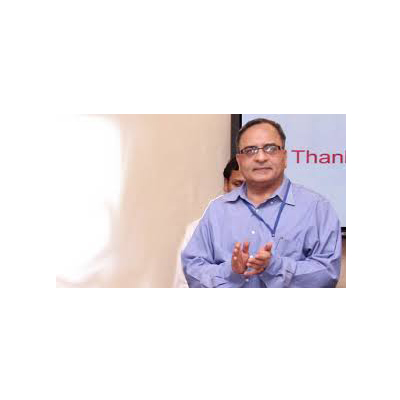
    NEW DELHI: Information and Broadcasting secretary Bimal Julka has said that young officers training in central services need to be tech-savvy and to keep pace with the rapidly changing information and communication scenario.

    The challenge is to respond swiftly and firmly in real-time basis, he added, noting that the electronic media was developing at a very fast pace.

    “Reaching out to the masses at the grass-root and involving them in the development process is one of the biggest challenges before the Government”, he said while delivering his address at the valedictory function of induction training for the officer trainees of Indian Information Service (IIS) – 2013 and 2014 batch – at Indian Institute of Mass Communication.

    Julka said that the role of information service officers was critical in meeting this challenge as it enabled the bridging of the gap between people and the government. He exhorted the officer trainees to develop specialised communication strategies and tools for the successful implementation of various flagship programmes of the government such as Prime Minister’s Jan-dhanYojana, Swachh Bharat Mission, Beti Bachao, and Shramev Jayate Karyakram.

    Julka said his Ministry acts as a facilitator and enabler of government communication


  • Citizens’ Charter of MIB makes commitments for ensuring certain services

    Citizens’ Charter of MIB makes commitments for ensuring certain services

    NEW DELHI: The Information and Broadcasting Ministry today undertook to facilitate sustained annual growth rate of 13 percent for the media and entertainment sector and ensure free flow of information to the public and safeguard freedom of press and media.


    In a Citizen’s Charter released by it, the Ministry also said the aim was to effectively disseminate information on the policies, programmes and achievements of government using emerging technologies, promote development of broadcasting industry in India; strengthen the public service broadcaster and work towards universal digitisation of broadcasting by 2017.


    The aim was also to expand FM radio network to all cities of 100,000 and above by 2014-15 and community radio service for empowering local communities.


    The Ministry undertook to create a policy framework for the development of value based content for healthy entertainment of people of all ages; and restore, digitalise, preserve and enhance public access to the archival wealth of films, video and audio resources.


    It would support digital conversion of Indian films by 2016-17 and upscale human resources development and set up centers of excellence for the media and entertainment sector.


    The Charter not only contains the names and contact details of officers concerned but also the maximum time limit for various activities being handled by it, documents required and the entry fee. It also includes details of service standards, number of months to be taken for various activities, and the addresses of media units.  


    The Ministry said the aim was to create an enabling environment for sustained growth of media and entertainment sector, facilitate value based wholesome entertainment and effectively disseminate information on government policies, programmes and achievements.


    The services mentioned in it include issue of Issue of license for providing DTH services to prospective licensee, Issue of License to Multi System Operators, Issue of license for providing HITS services to prospective licensee, Registration of Television Rating Points (TRP) Agencies to operate in India, Setting up teleports by TV Channels for up linking/ down linking, Issue of permission for Up linking/ Down linking of TV Channels uplinked from India, Issue of Permission for Down linking of TV Channels uplinked from Abroad.


    The details have been placed on the website of the Ministry mib.nic.in.


  • Julka asks M&E Industry to contribute to ‘Swacch Bharat Mission’

    Julka asks M&E Industry to contribute to ‘Swacch Bharat Mission’

    NEW DELHI: The Government has asked the media and entertainment industry to contribute towards creating awareness and showing effective action in the ‘Swacch Bharat Mission’.


    Information and Broadcasting Ministry Secretary Bimal Julka said that the Media and Entertainment industry could help in reaching out to people with the right content and effective messaging which would ensure community participation in the ‘Swacch Bharat Mission’.


    He added “the M&E Industry has an important role to play in order to make Swacch Bharat a mass movement.  It is essential for all stakeholders to be partners in the drive towards this initiative.”


    Julka held a meeting with the stakeholders of the M&E Industry on the Mission here. The stakeholders of the Industry included representatives of News Broadcasters Association (NBA), Indian Broadcasting Foundation (IBF), representatives of FM radio, community radio, Digital Media, Entertainment channels and National Broadcasters including the Public Broadcaster Prasar Bharati.


    Quoting the example of Digitisation of Cable TV, where all stakeholders have themselves taken initiatives towards creating awareness, Julka suggested that the Entertainment Industry should bring leading stars together to communicate messages through TV on Swacch Bharat to households.


    For the FM radio industry and community radio stations, Julka appealed to create region specific and event specific programmes on the Swacch Bharat Mission.


    He has also appealed to the Digital Media Industry to play Swacch Bharat messages across various theatre screens in the country, to make people aware about the initiative.


    Representatives of the industry extended their support to carry forward the initiative and shared their views and suggestions in order to create an effective multi-media campaign which would translate ‘information into action’ towards fulfilling the Prime Minister’s vision on “Swacchchhata”.

  • Total number of TV channel goes up to 813

    Total number of TV channel goes up to 813

    MUMBAI: Within a fortnight, three more channels have been added to the entire list of channels that can be viewed in India. This includes 400 news and current affairs channels and 413 non-news and current affairs channels, as on 15 September 2014.


    The number of TV channels that can uplink from and downlink to India is 685 (earlier 682).This includes 378 news (earlier 376) and 307 (earlier 306) non-news channels.


    As for the channel that can only uplink and only downlink, the number remained constant at 35 and 93, respectively. The new channels include Kalinga TV, Epic TV. The latter, started by former Disney MD Mahesh Samat, has been waiting for more than a year to get a licence approval from MIB.


    At a recent function, Information and Broadcasting Minister Prakash Javadekar had said that the ministry is working towards clearing licences of all the pending channels that had been deliberately kept pending by the earlier government. Near about 14 channels were to be listed.


    The ministry has also simplified the process of security clearance for broadcasters.

  • Government notifies new dates of phase III and phase IV of DAS

    Government notifies new dates of phase III and phase IV of DAS

    NEW DELHI: The Government has finally issued the notification postponing the dates of phase III and phase IV of implementation of digital addressable system (DAS) to December 2015 and December 2016 respectively.


    Indiantelevision.com was the first to break the news about the postponement of the dates for DAS phase III and IV. Speaking to indiantelevision.com I&B secretary Bimal Julka had confirmed that ‘the government had decided to delay the digitisation deadline by a full year in order to give all those involved enough opportunity to overcome all the unseen hurdles that had come up after the UPA government mandated  DAS and the various analogue sunset dates.’


    The notification says that the change has been done ‘on being satisfied to do so in public interest’.


    The DAS notification has been issued by way of amendment to the notification issued on 11 November 2011 which had made it “obligatory for every cable operator to transmit or re-transmit programmes of any channel in encrypted form through digital addressable system.”


    Although the Government had announced its decision to postpone DAS in phase III and phase IV to encourage greater indigenisation of set top boxes, no action could be taken until issuance of the notification.


    Until now, the deadline for phase III was September 2014 and for phase IV December 2014.


    In the first two phases of digitisation, which included cable TV households in the four metros and other major cities, most of the STBs that were installed had been imported from other countries.


    After he took over as Information and Broadcasting Minister, one of the major areas of focus of Prakash Javadekar has been indigenisation of STBs and Ministry sources said the new dates are in keeping with inputs supplied to the Minister in this connection.


    The ministry has made efforts to get STBs declared as Telecommunication Network Equipment which will enable domestic manufacturers to get exempted from certain taxes, an official said.


    Nearly 110 million STBs are required to be installed in cable TV households in the remaining two phases of digitisation and the extended deadline will ensure that the domestic manufacturers prepare themselves and meet this demand, officials said.

  • MIB gives licence to 12 new channels

    MIB gives licence to 12 new channels

    MUMBAI: 12 new channels have been added to the list of permitted private satellite TV channels in India after they received licence clearances from the Ministry of Information and Broadcasting (MIB). As of 31 August 2014, there are 810 channels in all as compared to 798 till 28 August 2014.


    Of the 12 additions, one is a news channel and the rest are non-news. The total news and current affairs channels in the country are now 398 and non-news and current affairs are 412.


    The new channels that have received clearances include Blue, ESPN, ESPN HD, Star Sports Highlights, Star Cricket Asia, Janam and Green TV.


    Meanwhile, existing channels Star Sports 1, Star Sports 2, Star Sports 3 and Star Sports 4 have got permission for languages English, Hindi, Assamese, Bengali, Bodo, Dogri, Gujarati, Kannada, Kashmiri, Konkani, Maithili, Malayalam, Manipuri, Marathi, Nepali, Sanskrit, Santhali, Sindhi, Tamil, Telugu, Urdu and any other language as permitted under the Constitution of India.


    Star Sports HD1 and Star Sports HD2 have got permission for languages English, Hindi, Assamese, Bengali, Bodo and Dogri. New channels under Star India that got permission- ESPN, ESPN HD, Star Sports Highlights and Star Cricket Asia also have permission for all the above languages.


    The number of TV channels permitted for uplink from and downlink to India has increased from 671 to 682 with 376 (earlier 375) news and 306 (earlier 296) non-news channels. The number of channels permitted for uplink from India has increased from 34 to 35 with six news and 29 (earlier 28) non-news channels.


    TV channels that can only downlink in India stayed constant at 93 with 16 news and 77 non-news channels.

  • MIB warns MSOs against disconnection signals to LCOs

    MIB warns MSOs against disconnection signals to LCOs

    MUMBAI: The Government today warned multi-system operators against disconnecting signals of local cable operators without due notice specifying reasons and said any violation of this would viewed seriously and action against erring MSOs.


    The directive comes even as more than twenty cases are pending before the Telecom Disputes Settlement and Appellate Tribunal (TDSAT) relating to disconnection of signals by distributors to MSOs or MSOs to LCOs.


    The Information and Broadcasting Ministry said Chapter V of Standards of Quality of Service (Digital Addressable Cable Systems) Regulations 2012 issued by Telecom Regulatory Authority of India (TRAI) is clear that ‘no multi system operator (MSO) shall disconnect the signals of a TV channel of a linked local cable operator, without giving three weeks’ notice to such local cable operator, clearly specifying the reasons for the proposed disconnection.’


    The Regulation further says notice of disconnection of signals of TV channels is also required to be published in two leading local newspapers of the State in which the service provider is providing the services, out of which one notice shall be published in the newspaper in the local language of the area.


    The Ministry said it had been brought to its notice that some MSOs are disconnecting signals to cable subscribers without giving any notice in violation of the Regulation.


    The Ministry said this is also in violation of the undertaking given by MSOs in form 2 of their application which states: ‘We shall ensure that my/our cable television network shall be run in accordance with the provisions of the Cable Television Network (Regulations) Act 1995 and the rules made thereunder, regulations, orders, guidelines or the directions issued by the Central Government or the Authority from time to time.’

  • Madras HC denies stay on Kal Cables’ licence cancellation by MIB

    Madras HC denies stay on Kal Cables’ licence cancellation by MIB

    MUMBAI: As soon as the Ministry of Information and Broadcasting (MIB) came out with an order cancelling the registration of Kal Cables, the company run by the Maran group moved the Madras High Court challenging the order.


    The petition contends that there was no notice issued to it before cancellation. While the petitioner was seeking to squash the order, the interim prayer was to provide a stay on it. The court denied the stay and said that the 15 day deadline for winding up operations will continue. However it has stayed the MIB’s directive to put a scroll on its network informing them that the service will be cut and asking them to move to other MSOs.  


    The petition from Kal Cables managing director Vittal Sampathkumaran states that following the insertion of Rules 11A to 11F in the Cable Television Network Rules 1995, it had applied for grant of registration to operate as MSO in digital addressable system (DAS) areas in November 2012.


    In March 2013 the MIB granted provisional registration to Kal Cables which has now been revoked and has asked the MSO to wind up operations within 15 days. The registration was denied on the grounds of denial of security clearance. However, Kal says that there has been no change in its business operations, and hence this is no cause for denial of licence.


    The court has asked the Ministry of Home Affairs (MHA) to submit its report on why the clearance was denied. Counsel for MHA said that the document was confidential and could be provided only by Tuesday, 2 September.


    Kal Cables runs Sumangli Cable Vision that has operations mainly in Chennai.