Tag: MIB

  • NBF questions Barc’s opt-out methodology; demands release of recent historical data

    NBF questions Barc’s opt-out methodology; demands release of recent historical data

    Mumbai: The News Broadcasters Federation (NBF) has written to Broadcast Audience Research Council (Barc) expressing its apprehensions around the manner in which the agency is to resume ratings on 17 March. In a letter dated 9 February, NBF has alleged that the move indicates “continued favouritism to select few channels that would reflect in skewed audience measurement numbers and fabricated industry representation when the data is planned to be released on March 17, 2022.”

    Barc’s communication to its subscribers on 7 February comes barely a week after detailed discussion with channels of NBDA, which the NBF claimed “are of conflict of interest on this issue. NBF, as the largest new broadcasters’ industry association protecting the business interest of news channels, has not been consulted despite several requests on the same.”

    The association has also expressed doubt regarding the opt-out methodology being used by Barc having an official seal of approval from the MIB.

    “The MIB had directed Barc to release the data with ‘immediate effect’ on a four week rolling over basis including the data for the preceding three months ‘for fair and equitable representation of true trends’. Barc, however, has chosen to completely undermine the government’s order, and in violation, is now proceeding with an opt-out option. Ratings are relative within a genre. The opt-out option is a direct contravention and renders completely redundant the MIB direction of three-month ratings. It is a way to conceal even recent historical data,” NBF said.

    The association argued that the decision to withhold data will deprive advertisers of complete clarity on how news viewership had been during the dark period and will hinder the post-evaluation of their campaigns. “News channel viewership is measured in market share terms. Any channel opting out disrupts the true representation of the market share. Barc by providing an opt-out option is doing an extreme disservice to the entire industry including advertisers and advertising agencies as well.”

    Voicing concern regarding the date of ratings release, NBF noted that the MIB order directing the ‘immediate’ release of ratings came on 12 January. Releasing the data on 17 March will not give a ‘fair and transparent picture of the actual viewership.’

    “Even if the audience data is released on a four-week rolling average basis on 17 March, final TRPs will skew the average since it would only reflect a one-off major event of the assembly elections and the ensuing counting day to five states, including Uttar Pradesh. The day chosen for the resumption of ratings will not give a fair and transparent picture of the actual viewership across the stakeholders – trusted viewers, advertisers and advertising agencies.”

    In an earlier letter dated 28 January, NBF had urged Barc to resume TV ratings for willing news channels, starting 3 February. Its member news channels had, in fact, demanded the release of ratings for the entire blackout period of 16 months.

    “Even during the dark period – October 15 2020 until date – audience data is being collected and tabulated for all genres including those with a lesser sample size than news channels. So, in all fairness, it should be released as they are, with immediate effect and as directed by the MIB,” stated the letter dated 9 February.

    The NBF has also questioned Barc’s silence on the systems that have to be put in place to correct the impact of landing pages, which is a major concern for the industry. “Barc needs to openly declare the outliers and the measures that are being taken to prevent the spike in ratings due to landing pages,” it observed.

  • Budget 2022: I&B ministry allocation slashed to Rs 3980.77 crore in FY23

    Budget 2022: I&B ministry allocation slashed to Rs 3980.77 crore in FY23

    Mumbai: The Union Budget 2022 has earmarked a total sum of Rs 3980.77 crore for the ministry of information and broadcasting in the fiscal year 2022-23. This amounts to a decrease of Rs 90 crore from last year.

    With the exception of the Press Council of India that saw an increase of Rs 7 crore, up from Rs 20 crore in FY22 to Rs 27 crore for FY 23, the budgets for all other autonomous bodies under the MIB were slashed.

    Allocation for Prasar Bharati’s declined to Rs 2,555.29 crore from Rs 2,640.11 crore in the last financial year. The same was the case with The Films and Television Institute of India (from Rs 58.48 crore last year to Rs 55.39 crore this year), the Indian Institute of Mass Communication (from Rs 65 crore to Rs 52 crore), Children’s Film Society of India and the Satyajit Ray Film and Television Institute.

    Allocation for broadcasting under the social services head has also gone down from Rs 2,921.11 crore to Rs 2,839.29 crore. There was also a reduction in the budget for ‘information and publicity’ from Rs 971.26 crore to Rs 942.04 crore.

    ‘Information and publicity’ covers establishment expenditure of media units in the country such as the Bureau of Outreach and Communication, Press Information Bureau, Publications Division, New Media Wing, Registrar of Newspapers for India (RNI), Films Division, National Film Archive of India, Electronic Media Monitoring Centre and others.

    Hailing the budget as “beneficial”, information and broadcasting minister Anurag Thakur said that it is a blueprint to fulfil the hopes and aspirations of a new India in the 100th year of its independence.

    The annual budget for 2022-23 was presented by finance minister Nirmala Sitharaman in Parliament on Tuesday.

  • Broadcasters huddle up, as 5G roll-out plan gathers pace

    Broadcasters huddle up, as 5G roll-out plan gathers pace

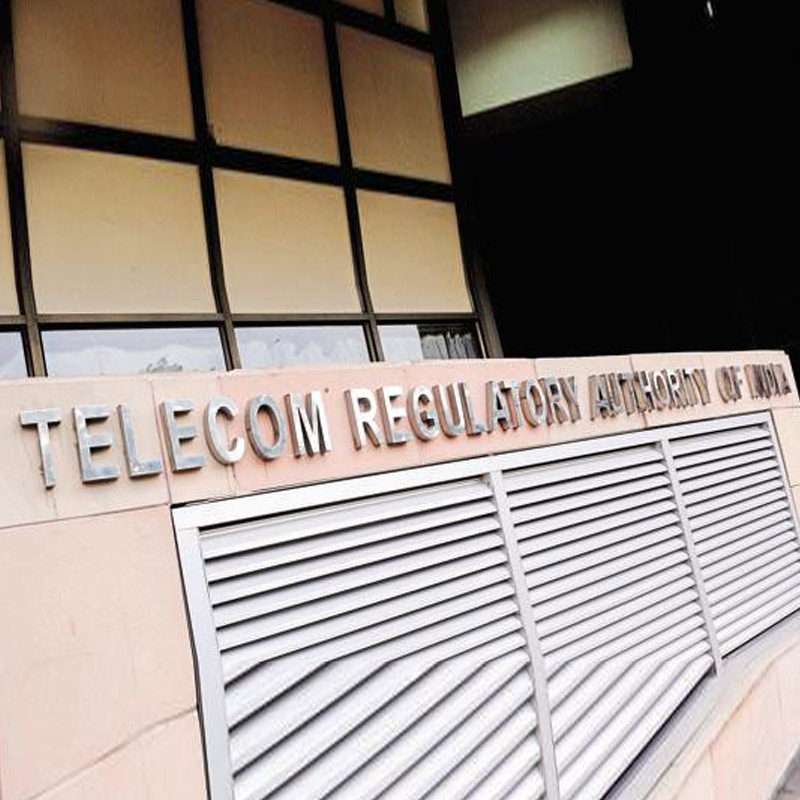
    Mumbai: Just as the industry was gearing up to welcome 2022, the Telecom Regulatory Authority of India (Trai) set the ball rolling on the 5G roll-out in India. The next wave of disruption in the telecom sector is set to hit 13 cities in the first phase: Gurugram, Bengaluru, Kolkata, Mumbai, Chandigarh, Delhi, Jamnagar, Ahmedabad, Chennai, Hyderabad, Lucknow, Pune, and Gandhi Nagar.

    The auctions are likely to be held in mid-2022 following the Telcom department’s request for a recommendation on modalities such as reserve price, band plan, block size, and the quantum of spectrum. But amid all this, the broadcasters’ concerns continue to escalate, with apprehensions regarding a potential spectrum clash with 5G.

    5G Vs Broadcasters

    Airwaves in several bands including 526-698 MHz, 700 MHz, 800MHz, 900 MHz, 1800 MHz, 2100 MHz, 2300 MHz, 2500 MHz, 3300-3670 MHz, and 24.25-28.5 GHz have been identified for 5G auctions in India, whereas downlinks by all broadcasters intended for reception by MSOs are in the band of 3700-4200 MHz as prescribed by the International Telecommunication Union (ITU), and are also governed by the downlink policy by the government. Over 600 licensed satellite channels in India operate in this band.

    Ever since the 5G trials started in India in June 2021, broadcasters who claim to have faced interference on downlink frequencies during that period have been raising the issue with the MIB, DoT, and WPC (Wireless Planning and Coordination Wing of DoT), and the Trai. There are concerns regarding potential interference due to the larger C band allocation to 5G and the limited guard band of 30 MHz between the two services.

    The current upper limit of the National Frequency Allocation Plan 2018 is 3600 MHz. “A guard band of 100 MHz is ideal,” broadcasters say. They further contend that the proposed revision of NFAP-18 to include new bands for 5G use by DOT’s arm WPC may even stretch beyond 3670 MHz to 3800 MHz. This could lead to serious disruption of satellite services for media and broadcast in the 3700-4000 MHz band.

    Prasar Bharati joins the chorus against 5G

    Joining the chorus, Prasar Bharati recently raised objections to the auctioning of the 526-582 MHz frequency band that is being used by Doordarshan for providing terrestrial TV broadcasting. According to media reports, the public broadcaster argued that airwaves in this frequency range are required for expansion and modernisation of its services. Prasar Bharati has told Trai that “availability of spectrum is very crucial for planning DD TV Transmitters. Thus, the decision to use frequency band 470-698 for IMT purpose can be taken only after finalisation of terrestrial TV services by Doordarshan or other private broadcasters.”

    “Many analogue, digital-ready and digital terrestrial TV transmitters are operating in the band. Also, digital-ready transmitters are under installation in the Union Territory of Jammu & Kashmir for which the wireless planning & coordination wing (WPC) has provided for in this band only,” it added.

    Another hurdle on the way: Field trials

    Private broadcasters have also expressed displeasure about field trials of 5G services without notifying the framework – specifically the study of emission and interference on already existing C Band satellite service, non-involvement of incumbent users of the C-band who have been using the satellites for over 30 years in the trials, lack of study on the use of band pass filters at cable headends as well as no consideration of their funding, non-determination of emission safeguards and monitoring architecture for 5G emitting towers, and absence of potential options which can be implemented immediately.  

    As a solution, they have suggested the use of alternative bands for 5G – an option unavailable for C&S services. Based on trial information available with the regulator and DoT, they have further urged the authorised bodies to recommend and publish the specifications for appropriate Band Pass Filters to be used by MSOs, IPTV, and HITs operators per downlink chain for receiving satellite TV signals.

    In order to compensate for the lower availability of C-band transponder capacity, the regulators have been requested to allow broadcasters to use foreign satellites without seeking any clarification from them. Fast track approval for newer compression technologies such as HEVC or H.265 that use lower transponder capacity in comparison to present MPEG4 bandwidth recommendation without any reduction in the quality of the television channels has also been sought. The minimum bandwidth recommended for approval by all regulatory bodies for HEVC is 4Mbps per HD channel and 1.5Mbps per SD channel.

    The television broadcasting and distribution industries in India are facing major disruption under the new tariff regime. Even though they welcome the launch of 5G, which holds great opportunity for the M&E sector in the era of convergence, the smaller players have argued for government intervention in the form of subsidies if they have to move to a higher or alternative frequency.

  • Broadcasters cheer, as TRPs for news channels to resume after regulatory reboot

    Broadcasters cheer, as TRPs for news channels to resume after regulatory reboot

    Mumbai: After a year-long wait, the ministry of information and broadcasting (I&B) on Wednesday finally gave its go-ahead to Broadcast Audience Research Council (Barc) India to immediately resume ratings for TV news channels, giving broadcasters a reason to cheer in the new year.

    As per the order, Barc India will have to release ratings for news and niche genres on a ‘four-week rolling average concept’ with immediate effect. But first, it will be required to share the last three months’ data which is expected to give some direction to news channels, and advertisers who had been taking a shot in the dark.

    “I welcome the government’s decision to finally resume ratings for the news genre,” said TV9 Network CEO Barun Das, terming the monthly ratings as the need of the hour. “I have for long been advocating the need to restore ratings while questioning the suspension decision in the first place. News Broadcasters Federation’s (NBF’s) efforts in this direction have been exemplary.”

    In February 2021, over 50 TV news channels had written to the then I&B minister Prakash Javadekar questioning the decision to single out the news genre for suspension.  “News genre commands 12 per cent of the total viewership and 18 per cent revenue of the industry. So, why is that the rating system which is bad for roughly 12 per cent of the TV industry, good for the rest 88 per cent?” Das had written in a separate letter.

    Also read: “Lakhs of livelihood at stake,” TV9 urges MIB to resume TRPs

    Also read : Over 50 TV news channels write to MIB over suspension of TRPs

    In a bid to restore confidence in Barc ratings, the I&B ministry also assured channels that the TV measurement body has undertaken revision in its processes, protocols, oversight mechanism and initiated changes in the governance structure. “The reconstitution of the Board and the Technical Committee to allow for the induction of Independent Members have also been initiated by Barc.  A permanent Oversight Committee has also been formed. The access protocols for data have been revamped and tightened,” the ministry stated.

    Taking a step further, MIB has also set up a ‘Working Group’ under the chairmanship of the Prasar Bharti CEO Shashi Shekhar Vempati for the consideration of leveraging the Return Path Data (RPD) capabilities for the use of TRP services, as recommended by Telecom Regulatory Authority of India (Trai) and the TRP Committee Report. The group will submit its report in four months’ time.

    “Happy that exactly a year later, the recommendations of the TRP committee report have been accepted by MIB India. Thankful to fellow members of the committee for the hard work put in. Looking forward to achieving cross-industry consensus on the use of Return Path Data (RPD) for TRPs,” tweeted Prasar Bharati CEO.

    Also read: I&B ministry forms Joint Working Group for audience measurement sampling

    The announcement was also welcomed by the News Broadcasters Association (NBA). In a statement, one of the members of the association, who is CEO of a news channel said, “NBA’s stand is vindicated as ministry stamps the room for improvement, acknowledges the deficiencies, and puts a timeline to ratings’ release and systematic corrections.”

    The news broadcasters also gave a thumbs up to the transition from weekly to monthly ratings. “I’m very much in favour of monthly ratings. I think news channels’ content cannot be moulded on the basis of ratings, like the way GECs content can be moulded,” said a senior representative from a national news channel. “The sole purpose of ratings is to give a measuring base to advertisers, and they take a minimum of two to three months to establish a fair and equitable representation of true trends. So, we don’t need ratings on a weekly basis.”

    According to industry representatives, the new ‘four-week rolling average concept’ will also be better equipped to deal with inconsistencies related to inadequate sample size.

    While the decision to scrap out weekly ratings got a positive response, some industry veterans also suggested that releasing news ratings quarterly or twice in a year would be a better proposition. “The global news industry is transforming itself into a “news product” that people can pay for. Ideally, the news genre should be subscription-oriented, as most newspapers are now these days. Globally too, that’s the trend – shifting to an advertising-driven, pay-TV model,” he said.

    The ministry’s go-ahead comes just weeks ahead of an intense election season in five states, including an electoral battle for India’s most populous state. With news channels, all geared up to grab maximum eyeballs, it will be interesting to see how the latest system of news ratings will change the game, especially with several new channels entering the race. “We will have to see whether the scenario has actually changed over the last year or not. But, hopefully, it will only get better from here,” said a senior representative from a news channel.

    The overhaul in the television rating system in India kickstarted in October 2020 when Mumbai Police claimed in a press briefing that they probed a case of manipulation of TRPs and found some incriminating evidence. The police said the accused were allegedly bribing the households to keep a particular channel running, leading to several arrests, and FIRs against three news channels.

    The controversy had forced Barc India to temporarily suspend the publishing of weekly data for news channels, which remained in limbo for over 1.3 years. “A pause was necessitated to enable the industry and Barc India to work closely to review its already stringent protocols and further augment them,” the then Barc India chairman Punit Goenka had said.

  • I&B ministry forms Joint Working Group for audience measurement sampling

    I&B ministry forms Joint Working Group for audience measurement sampling

    Mumbai: The ministry of information and broadcasting (MIB) has formed a Joint Working Group to formulate a mandate for exploring data capturing capabilities in Set Top Boxes (STBs) for audience measurement sampling.

    With Prasar Bharti CEO Shashi Shekhar Vempati as the chairman and DTH association president Harit Nagpal as a member, the joint working group will have one representative each from MeitY, BIS, Barc India, and AIDCF. It will submit its report to the I&B ministry within the next four months.

    The current guidelines for the TV Rating Agencies prescribe the use of panel homes, drawn by establishment survey and representative of the TV viewing population, for carrying out the Audience measurement. However, the latest recommendations from the Telecom Regulatory Authority of India (Trai) and TRP committee headed by Prasar Bharati CEO suggested combining traditional sample-based statistical approaches with big data approaches like Return Path Data in STBS.

    The new working group has been entrusted to study different aspects of the data capturing including Return Path Data (RPD) in the context of the audience measurement, international practices, and security of the viewership data. “It will also study successful global best practices in RPD, like that of Canada, the models undertaken by Barc India and other independent experiments by DTH operators and other relevant stakeholders,” said the ministry on Wednesday.

    The Group will specify minimum standards for RPD capable STBS, SOPs for certification and audit of the same, and specify common protocols, data standards, and modifications to current rating methodology so that data from RpD capable STBS could be integrated into the current TV ratings system.

    Additionally, it will specify minimum standards for any smartphone-based Apps to augment the above proposed RPD system for integration into the current TV ratings.

    -Specify SOPs for certification and audit of the same.

    -Evolve a consensus for how such different data sets including RpD/ smartphone-based data collection will be priced/ costs shared within the framework of the TV ratings system.

    -Specify consent-based privacy framework to govern all such data collection and use within TV ratings.

    -Establish timelines for rollout of above with a clear roadmap to guide all stakeholders while laying out points of responsibility for the same. 

  • Prasar Bharati not closing any Akashvani radio station in India: Anurag Thakur

    Prasar Bharati not closing any Akashvani radio station in India: Anurag Thakur

    Mumbai: Prasar Bharati is not closing any Akashvani radio station in India, the minister of information and broadcasting Anurag Thakur told the Parliament on Tuesday. Thakur was responding to concerns regarding the closure of radio stations across different parts of the country that have been in the news for the last couple of years.

    Prasar Bharati has issued a clarification on false reporting and fake news claiming closure of AIR stations on several occasions earlier. Speaking in the Parliament, Thakur once again elaborated that “obsolete analog transmitters are phased out from time to time with the availability of alternate transmission technologies such as FM, satellite radio through DTH and internet streaming.”

    “Further, content reforms are undertaken from time to time to ensure that the national, regional and local services of Akashvani serve diversity of content, while optimally leveraging the scarce resources, giving opportunity to local talent and improving quality without duplication of content. The operational expenditure of these services is being met through the Internal and Extra Budgetary Resources (IEBR) of Prasar Bharati,” he stated.

    Thakur also told the Parliament that the government has approved schemes for setting up of Frequency Modulation (FM) transmitters in Sashastra Seema Bal (SSB) premises at seven locations along the Indo-Nepal Border including SSB premises at Narkatiaganj in West Champaran District in the State of Bihar.

    On FM stations and community radio stations, Thakur further said that Prasar Bharati has 523 FM transmitters located at 483 All India Radio (AIR) stations across the country. Under the policy guidelines on the expansion of FM radio broadcasting service through private agencies (phase-III), MIB grants FM radio license to private companies registered in India under the Companies Act, 2013.

    The private FM radio phase-III policy being city-centric provides for setting up of FM radio stations in all cities having a population above one lakh unless it is getting covered from an adjacent city. Further 11 cities in border areas of UT of Jammu & Kashmir, UT of Ladakh and the North East states having a population less than one lakh have also been approved for setting up FM radio stations.

    Under FM phase-III, the government has approved to the auction of 683 channels in 236 cities.

  • IT panel recommends MIB to restructure PCI to cover all types of media

    IT panel recommends MIB to restructure PCI to cover all types of media

    Mumbai: Parliament’s standing committee on communications and information technology, headed by Congress leader Shashi Tharoor has recommended the ministry of information and broadcasting (MIB) to set up a media council on the lines of the Press Council of India (PCI), with statutory powers over print, television and digital media platforms.

    The recommendation was part of the ‘Ethical Standards in Media Coverage’ report which expresses concerns regarding the limited efficacy of existing regulatory bodies like the PCI and the News Broadcasting and Digital Standards Authority (NBDSA) in enforcing their decisions. This has led to the fourth estate “gradually losing its credibility and integrity.”

    The report noted that while the PCI – a statutory body governing the print media – may entertain complaints and is empowered to warn, admonish or censure newspapers, news agencies, the editor or the journalist concerned, it does not have the power to enforce compliance. Its advisories are not enforceable in a court of law.

    Similarly, while the NBDSA (a self-regulatory body for news broadcasting), has the power to fine, its jurisdiction extends to only those organisations that choose to be members of the News Broadcasters and Digital Association. Compliance with its orders is also voluntary.

    Suggesting restructuring the PCI to cover all types of media, the panel said, “In view of the above, the Committee has opined that the MIB should explore the possibility of establishing a wider Media Council encompassing not just the print media but the electronic and digital media as well, and equip it with statutory powers to enforce its orders where required.”

    The committee also recommended that pending a decision on the council, the ministry should look into the possibility of expanding the regulatory framework to monitor e-newspapers.

  • Prasar Bharati developing next generation broadcast solution

    Prasar Bharati developing next generation broadcast solution

    Mumbai: Prasar Bharati has entered into an MoU with IIT Kanpur to develop next generation broadcast solution/roadmap for digital terrestrial broadcasting consistent with emerging standards such as 5G broadcast.

    “The sanction for the Proof of Concept (PoC) of next generation broadcasting has also been conveyed to IIT Kanpur,” the minister of information and broadcasting Anurag Thakur told the Lok Sabha on Tuesday. “The selection of an appropriate next generation broadcast technology and Digital Terrestrial Transmission (DTT) roadmap of Doordarshan depends upon evaluation of this PoC.”

    Speaking at the CII Big Summit last month Prasar Bharti CEO Shashi Shekhar Vempati had also stressed upon the need for convergence across infrastructure and content creation.

    He said that if the collaboration with IIT Kanpur is successful it will be possible to directly receive broadcast signals on smartphones in future. “In the event of a high-viewership event like the Indian Premier League (IPL), there is no reason why millions of users need to receive that content on a unicast mode through the internet. If this works, all of the content can be delivered directly on broadcast frequencies to people on their smartphones or smart TVs,” he said.

    The public broadcaster is already working on bringing convergence across TV and radio so that a lot of exclusive radio content can be made visually rich and available for TV audiences. PM’s ‘Mann Ki Baat’ was the first such example. Prasar Bharati is following the same format where a camera is put up in the studio all-day long for another show ‘Rangoli’.

  • Trai issues new consultation paper to regulate monopoly in Cable TV services

    Trai issues new consultation paper to regulate monopoly in Cable TV services

    New Delhi: The Telecom Regulatory Authority of India (Trai) has released a new consultation paper to regulate the market structure/ competition in Cable TV services across the country.

    The issue was initially raised by the ministry of information and broadcasting (MIB) in December 2012, when it sought the recommendation of the regulatory body. In its letter to Trai, the ministry highlighted how Cable TV distribution is virtually monopolised by a single entity in some states like Tamil Nadu, Punjab, Orissa, Kerala, Uttar Pradesh, and Andhra Pradesh.

    According to MIB, it has become necessary to examine whether there is a need to bring in certain reasonable restrictions on Multi-System Operators (MSOs) and Local Cable operators (LCOs), including restricting their area of operation or restricting the subscriber base to prevent monopoly. The Cable TV Act and the Cable TV Rules also do not restrict the number of MSOs/LCOs operating in any specific area.  

    After following a due consultation process, Trai issued its recommendations on 26 November 2013. However, Trai has now received a backreference from MIB mentioning therein that a considerable time has passed since the recommendations were made and that the media and entertainment (M&E) landscape has changed drastically, particularly with the advent of new digital technologies in this sector. Technological developments especially IP technology and the increasing use of packet-switched digital communications have made converged services possible.

    Therefore, some of the issues need further consideration by the authority and it may provide a fresh set of recommendations in the matter looking at the subsequent developments/expansion in the M&E sector, stated MIB.

    The regulatory body has now invited comments from the stakeholders by 22 November. Counter comments, if any, may be submitted by 6 December.

    As of September 2021, there are 1733 registered MSOs in the country and approximately 1. 55 lakh cable operators as of March 2021.

  • MIB to relook Journalists Welfare Scheme

    MIB to relook Journalists Welfare Scheme

    Mumbai: The ministry of information and broadcasting (MIB) has constituted a ten-member committee headed by renowned journalist and member of Prasar Bharati Ashok Kumar Tandon to take a look at the existing guidelines of the Journalists Welfare Scheme (JWS) and make appropriate recommendations for changes therein. 

    This decision is considered significant in the light of the many changes that have taken place in the media eco-space including the loss of a large number of journalists due to COVID-19 and the broad basing of the definition of the “working journalists”.

    The JWS which has been in existence for many years needs a relook from a futuristic perspective and broad basing the coverage for the benefit of the journalists of this country. With the enactment of the Occupational, Safety, Health and Working Condition Code 2020, the definition of the working journalists has been broadened to include within its fold those working in both traditional and digital media. Further, it was also considered necessary to look at the possible parity between accredited and non-accredited journalists from the perspective of welfare and availing of benefits under the scheme.

    The MIB has in recent times taken proactive steps for grant of ex-gratia payment to the families of journalists who unfortunately died due to COVID-19 and such assistance has been given in over 100 cases at Rs five lakh each. 

    The committee is expected to give its report in a time-bound manner within two months. Its recommendations would enable the government to frame guidelines afresh for the benefit of the journalists. The committee headed by Ashok Kumar Tandon includes Sachidanand Murthy (resident editor – The Week), Shekhar Aiyar (freelance journalist), Amitabh Sinha (News 18), Sishir Kumar Sinha (Business Line), Ravinder Kumar (special correspondent – Zee News), Hitesh Shankar (editor – Panchjanya), Smriti Kak Ramachandran (Hindustan Times), Amit Kumar (Times Now), Vasudha Venugopal (Economic Times) and Kanchan Prasad (Addl DG, Press Information Bureau).