Tag: MIB

  • “Reaching out to the mass is our biggest challenge”: ASCI’s Benoy Roychowdhury

    “Reaching out to the mass is our biggest challenge”: ASCI’s Benoy Roychowdhury

    MUMBAI:  Step outside your home and there is hardly a place where you can’t spot an advertisement — bus stops, public transports, and of course, the hoardings.  At home it reaches us through the glaring television screen or through melodious jingles via radio waves, in the newspapers and newspaper inserts, in magazines and leaflets. Many advertisers know us on a first name basis and communicate with us through SMS and WhatsApp forwards. Given their all-encompassing nature, there is no shortage of ads that claim everything and anything under the sun and  prey on gullible consumers.


    In spite of disagreements and disapprovals on certain advertisements, people hardly raise their voice against such ads assuming it is beyond their power – a fact that poses a challenge to the Advertising Standards Council of India (ASCI)


    Need to be better known:


    While ASCI commands considerable credibility amongst the industry operators, there is a growing need for it to be better known as an organisation. “Today pretty much all of the industry knows us. The large advertisers, the big companies who deal with us know how we function. The issue lies with the lay consumers who are directly affected by rogue and misleading advertisements,”says  HT Media executive director and recently appointed ASCI chairman Benoy Roychowdhury.


    “Often people come across something offensive or false, but aren’t informed enough to take action against it. When they see something offensive, they question themselves ‘what to do about it? Most of them are unaware of a body that protects their interests against advertisers, without drawing them into court litigations, etc.  I think informing them about ASCI and encouraging them to actively use our help to address misleading advertisements is our biggest challenge at hand,” Roychowdhury admits.


    ASCI is already taking action to redress the situation by reaching out to the consumer digitally.


    Roadmap for maximum reach:


    Considering the fact that gaining popularity is ASCI’s biggest challenge, Roychowdhury shares the regulatory body’s plans to launch a campaign to spread awareness of ASCI and its functions. “We are working on an advertising campaign, which we plan to put in place in the next few months. The purpose is to reach out to consumers and tell them what to do when they see some offensive advertising and familiarising them with how ASCI functions,” shares Roychowdhury.


    He also adds that the agencies on board with ASCI will contribute to the concept and execution of the ad campaign ASCI is about to launch.  With 2015 being the thirtieth year of ASCI’s operation, the organisation wants to send out a message through the campaign about how it has been working to protect consumers and what it has to offer.  “In fact, five or six years ago, we did a similar campaign with a popular television actress with the tagline, ‘Jhoot bole kauwa kaate’”, Roychowdhury recollects.


    “The second step in ASCI’s roadmap is to make it easier for consumers to reach out to ASCI and lodge their complaints. A vital step in this process was to put out an ASCI app that enables consumers to immediately share their grievances with us. Today, we have also started receiving a bulk of our complaints through emails as well, and we are also looking at other modes of communication with consumers like Whatsapp etc.,” shares Roychowdhury. His contention is that if the process to lodge a complaint becomes complicated, consumers are likely not to reach out to ASCI.


    While conventional media like print and broadcast are going steadily, it is the digital media that is growing rapidly. “Hence we need to focus on ad campaigns on the digital platform as well,” he asserts. Following this directive, the organisation has upped its ante in the social media sphere in the last one and half years. “We are taking part in more online discussions and expanding our engagement with people through various social networking sites like Facebook, Twitter, LinkedIn etc. as well,” he adds.


    Digital India- an edged sword: Native advertising


    While technology and digitisation has brought ASCI closer to the consumer, it has also the paved way for new marketing initiatives by advertisers using different mediums and tools that makes it harder for the self-regulatory body to implement its guidelines.


    “Digital is great for ASCI as 15 percent of our complaints are digitally sent to us now. Our app allows you to take a photograph of the advertisement you want to complain about and send us through the app.  10 percent of our digital presence is through this app. To that extent digital is something great,” Roychowdhury reveals.


    ASCI does not find any major problem in dealing with digital advertisers since the body believes in accepting and evolving with the society. “The real issue is that digital advertising is giving way to these so called native advertising, most of which is content driven. They fall into this grey area between content and advertising. We need to develop norms for them as we as a body do not pass any comment on content, unless it is offensive and obscene to the public,” he says.


    While consumers have predominantly complained about TV Commercials, ASCI has also seen an increase in the complaints against digital advertisements rising from 5 percent  in 2013-14 to 11 percent in 2014-15. The challenge is also to identify an advertisement from user uploaded content, and differentiate between advertorial and editorial.


    Reassuring consumers, Roychowdhury further adds, “Thankfully there are people ahead of us in the curve in other countries like Advertising Standards Authority (ASA) in UK. We are examining their rules and bylaws to figure how to incorporate them in India. Also the sheer size of the digital space is so vast that it becomes difficult to monitor each sphere of it.”


    Censorship of advertisement:


    Apart from mitigating issues about misleading advertisements, ASCI also has the additional responsibility to look out for advertisements that hurts people’s sentiments. Several consumers complain about vulgar and obscene advertisement to ASCI. But unlike film and television content, advertisements don’t go through a censorship screening.


    Explaining the knowhow behind the process, Roychowdhury says, “We don’t pre-screen advertisement in India. Every channel has its own set of rules and regulations that the advertiser has to adhere to. Moreover, ASCI being a self-regulatory body can only provide an advertising advice when a certain advertiser approaches them with questionable content, which is not binding on them. Having said that, most of the suggestions given by us have been upheld by advertisers and have worked to their advantage.”


    The parameters of judging whether an ad is offensive and vulgar are changing with times as society moves ahead and becomes more progressive. “There was a time when airing lingerie ads was unthinkable and now we don’t even flinch at them,” Roychowdhury compares. “Therefore the question of offensive content is a subjective matter and the norms keep evolving.”


    “When a council member looks into such ads they take into consideration if it can cause grave or widespread offence. An ad can cause grave offense to an individual, while others will be fine with it. Secondly, we judge an advertisement based on the product it is selling. If it is for lingerie or a condom, then the advertisement’s content needs to be taken in that light. On the other hand, we will raise an eyebrow to a car advertisement having unnecessary skin show,” he explains.


    Industry support:


    Being a self-regulatory body comprising of all four sectors connected with Advertising — advertisers, agencies, media including broadcasters and the press and others like PR agencies, market research companies, the organisation enjoys support and reverence from its stakeholders.


    “The specific reason behind why you have a self-regulatory body is because before moving the court, here is an option to settle the issues as per industry guidelines. It is challenging at times to keep our stakeholders on the same page, but if they are reminded of the option they have apart from ASCI – moving the court or going to the government, they clearly prefer us. Going to the government is a terrible option as it takes time due to bureaucratic involvement and secondly it comes at a hefty price. Whereas, ASCI addresses the issues without having to employ fancy lawyers or going through a tedious process,” explains Roychowdhury.


    While Chowdhury doesn’t cringe at the idea of going to the court if any party has been given a court notice, as ASCI isn’t above the court, going by industry behaviour, advertisers tend to settle intra-industry disputes through ASCI.


    “Most advertisers see us a far better option than going for either litigation or moving any other government body.” But the picture is completely different when it comes to the masses, the consumers who are directly affected by misleading advertisements.


    Industry dispute:


    “Lately we have observed a number of broadcasters using ASCI mails to settle their own personal score with rivals”. Roychowdhury makes it very clear that ASCI is strongly against such usage of their notices and mailers that are not included in their press releases meant for the public.


    “It’s not like we are carrying out any business behind closed doors. All the decisions we make are available through our press releases on our website and people are free to go over it. But picking specific details to carry out their rivalry is uncalled for,” he says.


    Out of the 1877 advertisements complained against during the year, 71 were received from industry regarding misleading advertising or unfair competitive advertising. Of these, 58 were upheld, as per ASCI’s CCC analysis report.


    “We are here to promote self-regulation among advertisers, so intra-industry disputes are more than welcome at ASCI. Because the resolution takes less time thanks to our fast track mechanism for intra member complaints, we are a more preferred mode to address their grievances. What we do discourage is going to the media with individual decisions to settle personal or industry rivalry. In the long run it doesn’t benefit the industry. In fact we don’t entertain queries on such issues,” he shares.


    While health and teleshopping remain an issue for ASCI to tackle, Roychowdhury informs that education has emerged as a sector that gives way to rogue advertisement.


    Biggest offenders:


    A majority of the advertisements against which complaints were upheld fall under the educational sector (439), followed by the healthcare sector (297) and medical services clinics (271).


    “This year we also see emergence of complaints against advertisements in the automotive (69) as well as the telecom sector (58). There have been other complaints against leadership claims of media (Channels/Publications), teleshopping advertisements promising magical results and real estate advertisements as well,” Roychowdhury informs.


    Surprisingly, he doesn’t find any issues with Ayurvedic and herbal product advertisers. “Ayurvedic remedies form a very respectable section of Indian traditions. ASCI doesn’t discourage advertisement of such products, as long as they don’t make unnatural claims like pills that reduce weight in a  jiffy and Ayurvedic products that cure cancer, AIDS  etc,” he says.


    Overall, ASCI has been able to achieve close to 90 per cent compliance, which is a good figure considering ASCI is a self-regulatory body. With the backing of regulatory agencies such as the MIB as well as the DCA, Roychowdhury hopes that this number will go up in the coming year.
  • MIB yet to clear 260 applications for new satellite TV channels

    MIB yet to clear 260 applications for new satellite TV channels

    NEW DELHI: Even as India has a total of 830 private satellite television channels, as many as 260 applications are pending with the Ministry of Information and Broadcasting (MIB) for grant of permission to operate TV channels.


    As grant of permission is a continuous process, only cumulative data is maintained, Minister of State for Information and Broadcasting Col Rajyavardan Singh Rathore told the Parliament today.


    While 37 channels including 11 news channels were permitted in 2012, the number of clearances came down to only seven in 2013 including four news channels. In 2014, a total of 45 channels were cleared including 14 news channels, while 42 channels were cleared until November-end this year, which included only three news channels.


    Of the 830 channels, 398 channels are news and current affairs channels, the Minister said, adding that religious and sports channels are included in the non-news and current affairs category.


    The Minister said that the MIB ensures regular monitoring of all the applications, regular follow up with concerned Ministries and Departments for obtaining clearances, and processing of applications according to the Citizens’ Charter. 

  • India boasts of 830 TV channels even as MIB cancels permission of 125

    India boasts of 830 TV channels even as MIB cancels permission of 125

    NEW DELHI: The total number of television channels uplinking from or downlinking into India has risen to 830, with the permission of as many as 125 channels cancelled by the Ministry of Information and Broadcasting (MIB).


    Thus, the government had given permission to a total of 955 channels, which included those who have been later denied permission.


    Of the permitted channels, 398 are news and current affairs channels while 432 are general entertainment channels (GECs).


    Twenty channels including seven news channels have been permitted to uplink from India but not downlink within the country, as of 30 November, 2015. 


    A total of 725 channels including 349 GECs are allowed to uplink and downlink in the country while 85 including 70 GECs are uplinked from overseas but allowed to downlink into TV homes in the country.


    Star India brought into its fold the Maa cluster of channels including Maa TV, Maa Movies, Maa Music, and Maa Gold. NGC Network India launched National Geographic, Nat Geo Wild, Nat Geo Wild HD, Nat Geo People HD, Nat Geo Music HD, National Geographic HD, Fox Life and Fox Life HD in other Indian languages. Eenadu TV launched ETV Life, ETV Plus and ETV Abhiruchi that are Telugu channels permitted for uplinking. Additionally, Colors TV launched Colors Infinity and Colors Infinity HD.


    Other channels that received permission this year include 9X Bajao (earlier 9X Bajaao and 9X Bangla), Rengoni, Asianet HD, Australia Network, Da Vinci Learning (non-news channel), Sharnam, Tulsi TV (earlier Vedas Om TV); the multi-lingual Sree TV, Naaptol HD (earlier All Time), Media One Life in Malayalam and English; Sangeet Marathi; MNGK Star in English and Indian languages; Ishwar in English and Indian languages; Baby TV HD; Seven Sisters Rainbow; Positive Health; Shubh TV; Swadesh News; Cartoon TV (earlier Maha Mazza); Teleshop; Home Shop 18 Tamil; V S Entertainment; Nick HD+ (earlier Bandhan); Veria Living and Zee Café HD (for downlinking).

  • Adcap case to be heard on 11 February, MIB informs Court matter under discussion with broadcasters

    Adcap case to be heard on 11 February, MIB informs Court matter under discussion with broadcasters

    NEW DELHI, 27 November: The Information and Broadcasting Ministry today informed the Delhi High Court that it was in talks with the News Broadcasters Association and other stakeholders on the issue of the advertising cap of 12 minutes per hour.


    Consequently, the Court put off hearing of the matter to 11 February. This is the first time that the Ministry has put in an appearance in the petition filed by the News Broadcasters and others against the Telecom Regulatory Authority of India and others.


    The Bench observed that the matter had been pending for some time and therefore it will hear and conclude the case in the next hearing.


    Counsel for NBA Nisha Bhambhani also said that talks were on with the Ministry in this regard.


    Meanwhile in an intervention MSO Home Cable Network (P) Ltd said it wanted to intervene as it was directly affected by the outcome of the present petition. Lawyer Vivek Sarin appearing for Home Cable said in the intervention application that “the ordinary subscribers are unduly burdened with unjustified charges when the cost of operating the channels can be recovered from the advertisement revenue. The said cost includes notional profits also.”


    The application wanted the NBA petition to be dismissed and added: “The Pay channel broadcasters are profiteering at the expense of subscribers and the DPO’s. There is no justification for changing monthly subscription when commercial advertisements are inserted. The Standards of Quality of Service (Digital Addressable Cable TV Systems) Regulations 2012 (with Amendments thereafter) is justified to the extent they are applicable to Pay Channels. The pay channel broadcasters cannot charge the subscription fee while inserting commercials into the content or in the alternative, the subscribers have to be compensated for the revenue earned on the basis of their being subscribers of the channels.”


    In the last two hearings on 8 and 23 September, the NBA had sought the adjournment on the ground that the matter was under discussion with the Ministry to seek certain clarifications.


    (It is learnt by indiantelevision.com that this comes in the wake of a statement made by Minister Arun Jaitley in January this year that there should be no ad cap in the print or electronic media, However, no instructions have been issued in this regard by the Minister so far,).

    The order that TRAI will not take any action against any channel pending the petition will continue. In an earlier hearing, the Court had, at the regulator’s instance, directed that all channels keep a record of the advertisements run by them.
      
    The NBA had challenged the ad cap rule, contending that TRAI does not have jurisdiction to regulate commercial airtime on television channels.
     
    Apart from the NBA, the petitions have been filed by Sarthak Entertainment, Pioneer Channel Factory, E24 Glamoru, Sun TV Network, TV Vision, B4U Broadband, 9X Media, Kalaignar, Celebrities Management, Eanadu Television and Raj Television.
     

    The news and regional broadcasters fear that the capping of commercial airtime will curtail their ad revenues. They also argue that the ad cap must be brought only after the benefits of cable TV digitisation start showing. 


     Meanwhile, TRAI had three months earlier released results of their records which show that around 36 news channels apart from 105 General Entertainment Channels are violating the ad cap by telecast ads of more than 12 minutes an hour.

  • Only 188 community radio stations operational even after a decade of this sector

    Only 188 community radio stations operational even after a decade of this sector

    New Delhi, 25 November: Even as 235 entities have signed the grant of permission agreement (GOPA) for setting up community radio stations in the country, the actual number of operational CRS is only 188 after more than a decade of launch of this sector.


    This shows an increase of only eight community radio stations since the last list issued in May this year.


    A total of 960 applications for CRS had been either rejected or withdrawn as on 15 November.


    However, another 323 applications are still under the consideration of the government from educational institutions, non-governmental organizations, Krishi Viguan Kendras and State Agriclture Universities. Some of these date back to 2011.


    The operational stations include 105 by universities and private and government educational institutions, seven by NGOs, seven by Krishi Vigyan Kendras, and five by State Agricultural Universities.


    State-wise, Tamil Nadu has the hghest number of CRS with 27, followed by Uttar Pradesh with 23. Maharashtra has 17, Madhya Pradesh has 15, and Karnataka has 14 stations. Uttarakhand, Haryana and Odisha have nine each; Kerala and Rajasthan have eight each; Delhi and Gujarat have six each; Andhra Pradesh, Bihar, and Telangana have five each; Assam, Chandigarh, Chattisgarh, Puducherry, Punjab, and West Bengal have three each; Himachal Pradesh has two and Jammu and Kashmir and Jharkhand have one each.


    Thus, there are only three CRS in the northeast, and only one in J and K.    


    Though the scheme was launched around a decade earlier, the outreach of the Community Radio Stations was enhanced in 2006 to include non Governmental and Community based organizations with at least three years of legal existence.

  • MIB sets up toll free call centre for seamless transition of DAS

    MIB sets up toll free call centre for seamless transition of DAS

    MUMBAI: The Ministry of Information and Broadcasting (MIB) has set up a Toll Free Telephone Number 1-800-180-4343 to answer queries of stakeholders, including consumers, for seamless transition to digitisation. To begin with the queries can be answered in 8 Indian languages – Hindi, English, Bangla, Gujarati, Marathi, Telugu,Tamil & Kannada. 
     

    After the completion of first two phases of cable TV digitisation, which covered 4 metros (Delhi, Mumbai, Kolkata and Chennai) and 38 cities having populations of more than 10 lakh each, Phase III of digitisation is underway. It would cover all the remaining urban areas in the country and is to be completed by 31 Dec 2015. 

    The MIB has been facilitating the smooth switchover to digitisation. In this connection a list of urban areas to be covered in Phase III has been finalised in consultation with the state/Union Territory Governments. A Task Force has been constituted which is meeting every month to take stock of the progress. State and Union Territory Governments have nominated state level and district level nodal officers for coordination work. 10 workshops have been conducted by the Ministry of I&B at regional level to sensitise the nominated nodal officers about their role in the digitisation process.


    Twelve regional units have also been set up by the MIB for effective coordination. Secretary (I&B) has requested all the Chief Secretaries to set up monitoring committees to review preparedness for digitisation. Broadcasters as well as Multi System Operators (MSOs) have launched public awareness campaign. MIS software has been made operational for collection of seeding status of Set Top Boxes (STBs) online from registered MSOs, Direct To Home (DTH) and Headend In the Sky (HITS) operators. 

  • Impact of DAS on Sports Ecosystem: Rajesh Sethi

    Impact of DAS on Sports Ecosystem: Rajesh Sethi

    DAS  (digital addressable system) is here to stay. Despite the shortcomings, the hiccups in the implementation of the first two phases, the government has announced that it will not extend the deadlines of December 31, 2015 for phase III areas and December 31, 2016 for phase IV, when the entire country is expected to be digitised. After complete switchover, cable TV services will be available only through set top boxes in India.
     
    We, at the Indiantelevision.com are starting a new section – ‘The Impact of DAS’ through which thought leaders, experts from the television ecosystem will share their thoughts, ideas, and say their piece on the subject. We are beginning with the impact of DAS on the sports broadcasting ecosystem. 
     
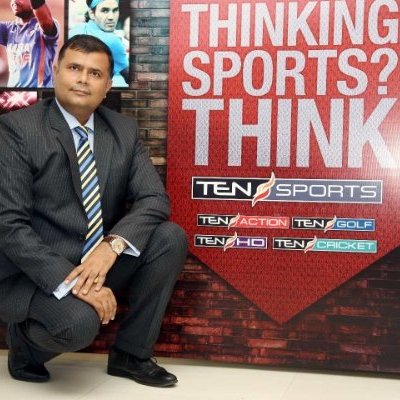
    Our expert for the section is Ten Sports Network CEO Rajesh Sethi.


    Excerpts: 


    How big an impact has phase I and II digitization made when it comes to subscription revenue?


    Phase I and phase II digitization has made a positive impact as far as the subscription revenue is concerned for the industry and given the trend we expect increase in the revenue once phase III and IV is completed. Ten Sports has also experienced the upside of subscription revenue which can be seen from our increased ARPU.  The addressability has improved but a lot still needs to be done. We believe that as the digitalization matures & packaging is implemented on ground by the operators, we will be able to achieve complete benefits of digitalization.
     

    From sports broadcaster’s point of view are you happy with the two phases of digitization?
     
    Although the implementation of two phases of digitization had been slow as compared to expectations, the completion of the two phases has facilitated increased subscription revenues and more accountability in the industry. From a sports broadcaster’s perspective, it will provide Ten Sports an opportunity to introduce new products based on the type and preference of consumers and provide enhancements like multi camera action, on demand services etc. We as asports broadcaster are keen to enhance the consumer experience and are interested in working with operators to fully reap the benefits of digitalization.


    Is the sports broadcasting industry in a subscription positive scenario? Or we are still ad dependent?


    The sports broadcasting industry in India is still evolving and ad revenue contributes significant part of revenues and will continue to remain the same in foreseeable future for main streamsports content. However, as digitization is still not complete, there is a high potential of increased subscription revenue and lesser dependency on ad revenues. We expect the niche sports offering to move towards subscription driven revenue model. As a sports broadcaster, we believe that the industry is moving in the right direction and once phase III and IV is complete there will be a possibility for this industry to be in a subscription positive scenario.


    Are sports like Football, Badminton which are hugely popular but has very little room for advertisement profitable assets for broadcaster?


    There has been increased interest from consumers for non-cricket sports in India in the last few years. Football and Badminton have gained traction in an industry which is preliminary dominated by cricket. It’s a step forward in right direction and we have seen advertisement revenue picking up for non-cricket content, the most recent example being Kabaddi. With regards to football and badminton being a profitable asset for a broadcaster, profitability is a function of revenue potential and content cost. Though the revenue potential and content cost presently is limited, it is expected to rapidly grow for these products. This makes it a good opportunity for a broadcaster to obtain future profitability on these content.
     
    With phase III and IV scheduled do you see a substantial inclination in subscription revenue?


    Phase III and IV is all about getting to remote areas of India. It provides an opportunity for thesports broadcasters to bring local content which connects & relates to the audiences residing in these towns. We see positive growth in subscription revenue as the number of HH’s in these towns provide a growth opportunity from the existing very low ARPU levels.


    How can a non cricket sport or a sport with least ad room turn profitable for broadcasters?


    The subscription revenue and ad revenue are the two key revenue source for a sports broadcaster. However, profitability for a content not only depends on revenue but also on the cost. The sportswhich has least room for ad revenues would depend on increased subscription revenue which we expect to increase once phase III and IV digitization is completed. At Ten Sports, as part of innovation drive, our team analyzes the potential of content across various genres which might not be currently popular in India and then builds it up for the consumers. We see increased traction for non-cricket content in recent years which translates into higher revenue potential and eventually a profitable content.


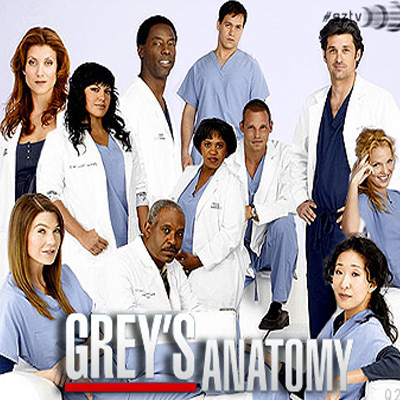
  • BCCC raps Star World for homosexual content in ‘Grey’s Anatomy’

    BCCC raps Star World for homosexual content in ‘Grey’s Anatomy’

    MUMBAI: The self-regulatory body for non-news entertainment channels, Broadcasting Content Complaints Council (BCCC), has pulled up Star India’s English entertainment channel Star World for airing, what it calls “objectionable” content, in its popular medical drama Grey’s Anatomy.

    The scene exhibits homosexual encounter in the broadcast, which was reported objectionable by the regulatory body in the month of June.

    The notice followed complaints from the Ministry of Information and Broadcasting (MIB).

    The BCCC has filled a report over a scene in which one of the characters in the series asks her male colleague to teach her how to satisfy her partner sexually by demonstrating it. 

    Grey’s Anatomy follows the lives of surgeons in a fictional setup and has been on air for over a decade.

  • FM Phase III: MIB outs agreement formats to be signed with Prasar Bharati

    FM Phase III: MIB outs agreement formats to be signed with Prasar Bharati

    NEW DELHI: The Information and Broadcasting Ministry has made available the formats of the agreements to be signed with Prasar Bharati by fresh Letters of Intent (LOI) holders in FM Phase III and those who had sought migration from Phase II.


    The agreements also contain a list of obligations of the licensor and the licensee of FM Radio Phase III.


    There are clear provisions for arbitration, jurisdiction etc. The arbitrator will be nominated by Prasar Bharati CEO.


    Fresh applicants have licences for 15 years. Under the agreement, they will be at liberty to ask Prasar Bharati to use its tower and other infrastructure facilities under mutually agreed terms and conditions.


    The tower aperture fee will be increased by five per cent of the last licence fee paid. 

  • MIB updates areas in 7 states & 1 UT to be covered in DAS Phase III

    MIB updates areas in 7 states & 1 UT to be covered in DAS Phase III

    NEW DELHI: The Ministry of Information and Broadcasting (MIB) today further updated the urban areas to be covered in seven states and one union territory during Phase III of the Digital Addressable System (DAS) to be completed by the end of this year.


    This is in addition to the 16 states for which upgradation was announced on 16 October.


    The seven states are: Andhra Pradesh; Chhattisgarh; Jammu & Kashmir; Kerala; Madhya Pradesh; Manipur and Telengana, and the Union Territory of Daman & Diu.


    Earlier last month, the states and union territories where changes were made were: Arunachal Pradesh, Assam, Gujarat, Haryana, Himachal Pradesh, Jharkhand, Mizoram, Nagaland, Odisha, Rajasthan, Punjab, Tripura, Uttarakahd, Uttar Pradesh, Andaman and Nicobar, and Puducherry.


    MIB’s updated list with regard to these states and UTs also indicates areas that have been deleted and those which have been added, apart from the number of television households to be covered in each case.


    The changes have been made on the basis of reports of empowered officers in each state.


    The list does not contain areas covered in the first two phases.


    The list of areas to be covered in Phase III had been issued on 30 April this year.