Tag: MIB

  • I&B Minister Anurag Thakur expects Indian M&E sector to double by 2030

    I&B Minister Anurag Thakur expects Indian M&E sector to double by 2030

    MUMBAI: Indian media and entertainment sector, which is currently valued at $24 billion is expected to grow to $30 billion by 2024.

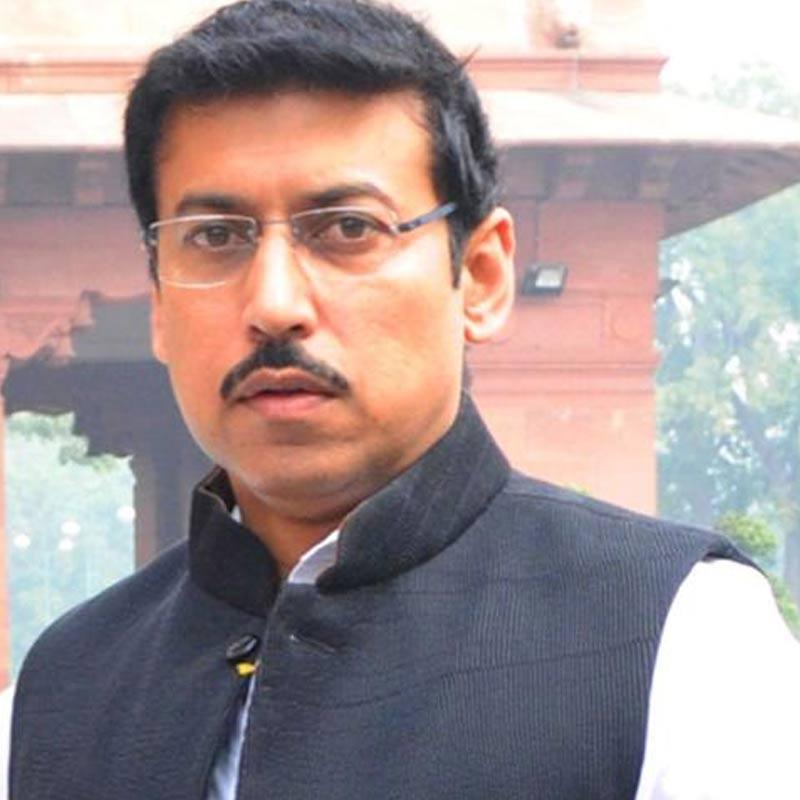
    “I feel with the growth rate we have and I’m sure it’s going to grow more than that. By 2030 we expect it to double and even more,” Information and Broadcasting Minister Anurag Thakur told an international media publication at the ongoing Cannes Film Festival recently.

    “I think it’s quite lucrative and I expect a lot of people to come and shoot in India because our major focus is to make India the content hub of the world. India has a lot to offer, we still need to grow and go ahead from here. And I expect these incentives may help in the future to attract a lot of business” said Thakur.

    In the interaction, he also spoke about the importance of being competitive. “By the end of the Cannes Film Festival you will see the word has spread that India has announced this much – others may come with better packages and all that,” added Thakur. “In a competitive world, you can’t stop here, you have to keep moving. It has to be on a real-time basis, you have to compete with the world. It is not only the incentive — yes it is going to impact — it is also the locations, skilled and less expensive manpower and a huge domestic [India] market available for them as well.”

    He also spoke about the importance of the country creating content that can travel globally. “We have to create content for the world, not only for the domestic [India] market. Keeping that in mind, I’m sure if they [the West] could have Marvel’s superheroes, why can’t India?”. “We have a 6,000-year-old rich cultural heritage, we can showcase it to the world in a beautiful manner,” Thakur added.

  • MIB broadens the list of sports events of national importance

    MIB broadens the list of sports events of national importance

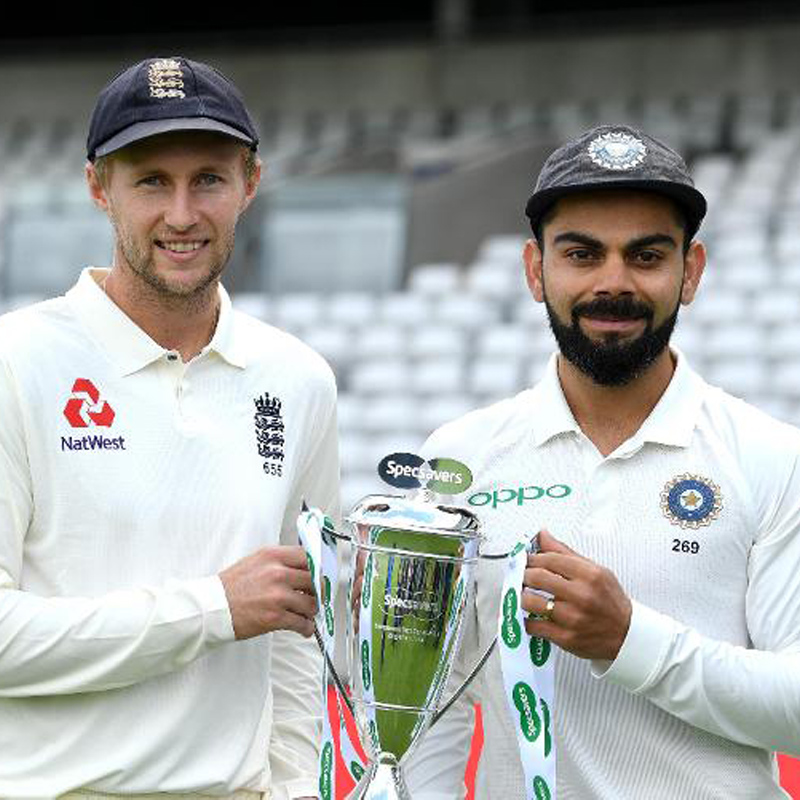
    Mumbai: The Ministry of Information And Broadcasting (MIB) has under the Sports Broadcasting Signals (Mandatory Sharing with Prasar Bharati) Act, 2007, broadened the list of sports events of national importance, according to a recent notification. These events will now be shared with Prasar Bharati as the broadcast rights holder.

    In terms of cricket, the good news for the Board Of Control For Cricket in India (BCCI) is that there is no mention of the Indian Premier League (IPL) whose media rights will be decided in an e-auction next month. All sports leagues have been kept out of the list. Under the sports act, all test matches played by India are covered. Earlier, only test matches deemed of high interest were covered.

    ODIs and Twenty20 matches played by India were already covered. Also, among other new things that have now come under the Act the semi-finals and finals of the International Cricket Council (ICC) World Test Championship will have to be shared. India playing matches, Semi-finals and finals of the Under-19 World Cup will now have to be shared. All Olympic Games including the Winter Olympics are now covered under the Act. The Commonwealth Games and Asian Games continue to be covered under the Act.

    These are all the events that will have to be shared with Prasar Bharati. Some were already covered under previous notifications. Some events in football, shooting and archery are deemed of national importance only if India is hosting those events. Following are the lists:

    Cricket

    (a) All official One-Day, Twenty-20 and Test matches played by the Indian Men’s and Women’s Cricket Team and all ICC Test matches featuring India

    (b) Semi-finals and finals of ICC Men’s and Women’s One-Day International World Cup

    (c) Semi-finals and finals of ICC Men’s and Women’s Twenty-20 World Cup

    (d) All Semi-finals and finals of ICC Champions Trophy (One Day)

    (e) All Semi-finals and finals of ICC World Test Championship

    (f) Semi-finals and finals of ICC Men’s and Women’s Asia Cup (Twenty -20 and One-Day International)

    (g) India playing matches, Semi-finals and finals of Under-19 World Cup.

    Tennis

    (a) Davis Cup-All matches featuring India

    (b) Grand Slam Tournaments – Finals of Men’s Singles, Women’s Singles and all matches featuring Indian players from quarter-finals onwards

    (c) Grand Slam Tournaments – All such matches featuring Indian players in men’s doubles, Women’s doubles or Mixed doubles from quarter-finals onwards.

    Hockey

    (a) World Cup – All matches featuring India and semi-finals and finals

    (b) Champions Trophy – All matches featuring India and finals

    (c) Indira Gandhi Gold Cup for Women-Semi-finals and finals

    (d) Hockey India Sub-Junior National Championship and Hockey India Academy National Championship

    (e) Hockey Men’s Junior Men World Cup*

    (f) Sultan Azlan Shah Cup- All matches featuring India, Semi-finals and finals;

    (g) International Hockey Federation (FIH) – Hockey Pro League matches.

    Football

    (a) World Cup – Opening match, quarterfinals, semi-finals and finals

    (b) Asia Cup – All matches featuring India and semi-finals and finals

    (c) Santosh Trophy – Semi-finals and finals

    (d) Asian Women’s Football Cup*

    (e) Under-17 Federation Internationale de Football Association Women’s World Cup*

    (f) World Cup (Under – 17) – Opening match, quarterfinals, semi-finals and finals.

    Badminton

    (a) All England Open Badminton Championship – All matches featuring Indian players, semifinals and finals

    (b) Badminton World Federation World Cup Championship – All matches featuring Indian players, semi-finals and finals.

    Kabaddi

    World Cup – All matches featuring India, semi-finals and finals.

    Khelo India Games

    (a) Khelo India Games

    (b) Khelo India School Games

    (c) Khelo India Youth Games

    (d) Khelo India University Games

    (e) Khelo India Games for differently abled persons

    (f) Khelo India Games for Indigenous Sports

    (g) Khelo India Winter Games.

    Other Events

    (a) International Shooting Sport Federation World Cup Event*

    (b) Commonwealth Shooting Championship*;

    (c) Commonwealth Archery Championship*

    (d) International events organised by National Sports Federations recognized by the Government of India.

  • Trai accommodates Prasar Bharati’s concerns on 5G auctions; overlooks private broadcasters

    Trai accommodates Prasar Bharati’s concerns on 5G auctions; overlooks private broadcasters

    Mumbai: Despite several requests from private broadcasters, the Telecom Regulatory Authority of India (Trai) seems to have overlooked their request in the much-awaited recommendation on the 5G spectrum auction released on Monday. The telecom regulator, however, has accommodated Prasar Bharati’s concerns regarding the auctioning of the 526-582 MHz frequency band being used by Doordarshan for providing terrestrial TV broadcasting.

    The private players had requested for an adequate guard band of 100MHz between the 3300-3670 MHz allocated to 5G and 3700-4200 MHz being used by them in accordance with the international telecommunication union (ITU) norms. 

    Trai has instead recommended the department of telecommunication (DoT) to ask the ministry of information and broadcasting (MIB) to take appropriate action and sensitise the MSOs, DTH operators, and other users to ensure the use of high-quality bandpass filters operating in 3700-4200 MHz range to avoid interference from IMT stations.

    “As the IMT emissions in the 3300-3670 MHz may saturate the low noise block (LNB) of the fixed-satellite service (FSS) earth station which traditionally operates in the 3400-4200 MHz, there is a need to make use of high-quality bandpass filters operating in 3700-4200 MHz range,” a statement issued by Trai said. 

    ALSO READ | Broadcasters huddle up as 5G roll-out plan gathers pace

    Broadcasters claimed to have faced interference on downlink frequencies during the initial 5G trials, following which they raised the issue with the MIB, DoT, and WPC (Wireless Planning and Coordination Wing of DoT), and the Trai. There were apprehensions around potential interference due to the larger C band allocation to 5G and the limited guard band of 30 MHz between the two services.

    “The 526-612 MHz frequency range should not be put in the forthcoming auction,” Trai recommended while stating the following reasons:

    (i)  Band plan(s) for the frequency range 526-612 MHz is yet to be defined by 3GPP/ITU.

    (ii)  Development of ecosystem for IMT in the 526-612 MHz frequency range will take some time.

    (iii)  MIB is using the 526-582 MHz band extensively across the country for TV transmitters.

    The telecom regulator has urged the DoT to come out with a plan for reframing the 526-582 MHz band to be utilised for IMT deployments. “To make 526-582 MHz band available for IMT, DoT should work with MIB to prepare a plan for an early migration from analogue to digital transmission, so that the frequency band from 526-582 MHz can be vacated for IMT services,” it said.

    Prasar Bharati had earlier argued that airwaves in the 526-582 MHz frequency band are required for the expansion and modernisation of its services. The public broadcaster had told Trai that “availability of spectrum is very crucial for planning DD TV Transmitters. Thus, the decision to use frequency band 470-698 for IMT purpose can be taken only after finalisation of terrestrial TV services by Doordarshan or other private broadcasters.”

    “Many analogue, digital-ready and digital terrestrial TV transmitters are operating in the band. Also, digital-ready transmitters are under installation in the union territory of Jammu & Kashmir for which the wireless planning & coordination wing (WPC) has provided for in this band only,” it added.

    The DoT, through its letter dated 13 September 2021, requested Trai to furnish its recommendations on the auction of spectrum in the frequencies identified for international mobile telecommunications (IMT)/5G. The recommendations were sought on the applicable reserve price, band plan, block size, the quantum of spectrum to be auctioned and associated conditions for auction of spectrum in 526-698 MHz, 700 MHz, 800 MHz, 900 MHz, 1800 MHz, 2100 MHz, 2300 MHz, 2500 MHz, 3300-3670 MHz, and 24.25 – 28.5 GHz bands identified for IMT/5G in India.

    Except for 526-698 MHz, Trai has recommended that all available spectrum in the abovementioned bands be put to auction for 5G services.

  • Trai institutes mechanism for speedy implementation of its recommendations by DoT, MIB

    Trai institutes mechanism for speedy implementation of its recommendations by DoT, MIB

    Mumbai: The Telecom Regulatory Authority of India (Trai) has released its annual report for the year 2020-21. The report contains an overview of the broadcasting sector and a summary of the key initiatives of Trai on regulatory matters with specific reference to the functions mandated to it under the Act.

    Over the last few years, Trai has sent a number of recommendations to the department of telecommunications (DoT) and the ministry of information and broadcasting (MIB) on important issues concerning the growth of broadcasting and cable services in the country. A number of these recommendations have been accepted during the period. “However, many of the important recommendations are still pending for decision/implementation by DoT and MIB which if implemented would have a significant positive impact on the sector,” the telecom regulator said.

    Important recommendations that have been accepted by MIB during the year 2020-21 and their likely impact on the sector are detailed below:

    (i) Recommendations on “Issues related to New DTH Licenses” were forwarded to the government on 23 July 2014. The implementation of these recommendations will ensure certainty and continuity of business and orderly growth of the DTH sector and will promote a level playing field. After acceptance of these recommendations by MIB, the amendments to DTH License guidelines were issued on 30 December 2020.

    (ii) Recommendations on “KYC of DTH Set Top Boxes” forwarded to the government on 24 October 2019 addressed the security concerns for use of DTH boxes outside the country as satellites have footprints beyond geographical boundaries. The acceptance and implementation of these Recommendations will result in standardisation of the verification process and will ensure installation of DTH connection at the address mentioned in CAF and will not load the industry/customer with unnecessary additional requirements and costs.

    (iii) Recommendations on “Platform Services offered by DTH Operators” forwarded to the government on 13 November 2019 addressed the issues of bringing platform services under a regulatory framework and providing transparent information to consumers about platform services. Amendments to DTH License guidelines have been issued by MIB on 30 December 2020 whereby DTH operators are permitted to operate platform services channels to a maximum of five per cent of their total channel carrying capacity.

    Recommendations forwarded to MIB that are still pending with the government as of 31 March 2021 are as follows:

    1.      Recommendations on restrictions on certain entities from entering the business of broadcasting and distribution of TV channels.

    2.      Recommendations on Issues related to radio audience measurement and ratings in India.

    3.      Recommendations on issues related to digital terrestrial broadcasting (DTT) in India.

    4.      Recommendations on sharing infrastructure in the TV broadcasting distribution sector.

    5.      Recommendations on issues related to digital radio broadcasting in India.

    6.      Recommendations on issues relating to uplinking and downlinking of television channels in India.

    7.      Recommendations on reserve price for auction of FM radio channels in new cities.

    8.      Recommendations on interoperability of set-top box.

    9.      Recommendations on review of television audience measurement and rating system in India.

    10.    Recommendations on a regulatory framework for platform services (PS) for MSO.

    The Trai felt that a periodic review of the implementation status of all recommendations of the authority should be done at the highest level. With an objective to put in place a mechanism whereby there is a periodic review of the implementation of pending recommendations of Trai in DoT/MIB and to create a central repository for real-time tracking of the status of all recommendations, the regulator has developed a recommendation status portal which can be accessed jointly by Trai, DoT, and MIB.

  • I&B minister Anurag Thakur launches Broadcast Seva Portal

    I&B minister Anurag Thakur launches Broadcast Seva Portal

    Mumbai: Union minister of information and broadcasting Anurag Singh Thakur on Monday launched the Broadcast Seva Portal in New Delhi to facilitate ease of doing business in the broadcasting sector. Broadcast Seva Portal is an online portal solution for speedy filing and processing of applications of broadcasters for various kinds of licenses, permissions, and registrations.

    The 360-degree digital solution will facilitate the stakeholders in seeking permissions, applying for registration, tracking applications, calculating fees and executing payments. The services will be provided under the wider umbrella efforts of Digital India to all stakeholders including private satellite TV channels, teleport operators, MSOs, community and private radio channels.

    The Broadcast Seva Portal aims to bring transparency, accountability, and responsiveness to the ecosystem, with all information being made available on a single dashboard.

    Various services and features of the portal include end-to-end processing, integration with payment system (Bharat Kosh), integration with e-office and stakeholder ministries, analytics, reporting and Management Information System (MIS), integrated helpdesk, application forms and status tracking, downloading letters/orders from the portal itself, and alerts to stakeholders (SMS/e-mails).

    Speaking on the occasion, Thakur said the government has harnessed technology to bring transparency to the system and make it more accountable. “The Broadcast Seva Portal will reduce the turnaround time of applications and at the same time will help applicants track their progress. It will reduce the human interface that was required earlier and thus add to capacity building of the ministry and will be a major step towards ease of doing business,” he said.

    The minister informed the audience that the test run of the portal has received positive feedback from end-users. Soon it will be coupled with the National Single Window System. The ministry is open to further improvements that the industry may feel are required.

    MIB secretary Apurva Chandra shared that the new portal has several improvements over the previous version, having incorporated suggestions from stakeholders over a trial period of one month.

    The broadcasters present at the event welcomed the launch of the portal and said that it will greatly reduce the distance an application has to travel and the effort required in the application process.

    Improving India’s business climate is one of the key focus areas of the Government of India and the Broadcast Seva Portal exemplifies the Government’s commitment to ease of doing business and empowering the broadcasting sector.

    “The portal is a giant leap forward in realising prime minister Narendra Modi’s mantra of ‘Minimum Government, Maximum Governance’ as this simple and user-friendly web portal provides a broadcaster with an end-to-end solution with just a click of a mouse. It will boost the business environment and empower the entire broadcast sector by directly benefiting more than 900 Satellite TV Channels, 70 Teleport operators, 1700 Multi-service operators, 350 Community Radio Stations (CRS), and 380 Private FM Channels and others,” Thakur added.

  • MIB merges film media units with NFDC

    MIB merges film media units with NFDC

    Mumbai: The ministry of information and broadcasting (MIB), through three different orders, transferred the mandate of the production of documentaries and short films, organisation of film festivals and the preservation of films to the National Film Development Corp (NFDC), a PSU working under the ministry.

    The government of India has made a budgetary allocation of Rs 1304.52 crore up to 2026 for all these activities, which will be implemented through NFDC. 

    In order to further strengthen the NFDC, it has been decided that the revenues generated by these activities will also accrue to NFDC. The merger of Film Media Units under the Corporation will ensure a balanced and synergised development of the Indian cinema in all its genres- feature films, documentaries, children’s content, animation and short films and will lead to better and efficient utilisation of existing infrastructure and manpower.

    The production of documentaries was earlier done by Films Division. The legacy and brand name of Films Division will be taken further and the production vertical for production of documentaries in the NFDC will be named as ‘Films Division.’

    Similarly, the organisation of film festivals that was the mandate of the Directorate of Films Festivals has been transferred to NFDC. This will bring the organisation of different national and international film festivals under one roof, thereby bringing in more synergy and a focused international outreach. Some of the major upcoming Film Festivals to be organised by NFDC are the Mumbai International Film Festival, International Film Festival of India at Goa, and Children’s Film Festival.

    The Preservation related activities that are carried out by National Film Archives of India have also been transferred to NFDC. The National Film Heritage Mission aiming at digitisation and restoration of films and documentaries will now be implemented by NFDC.

    Bringing all these activities under a single management will reduce the overlap of various activities and ensure better utilisation of public resources. The mandate of production of feature films is already being carried out by NFDC. It will give a strong impetus to the production of films of all genres including feature films, documentaries, children films and animation films; promotion of films through participation in different international festivals and organising various domestic festivals; preservation of filmic content, digitisation and restoration of films; and distribution and outreach activities. The ownership of the assets available with these units will, however, remain with the Government of India.

    Audio Visual Service is one of the 12 Champion Service sectors identified by Dept of Commerce, and the MIB is the nodal Ministry for this sector. Financial incentives for audio-visual co-productions with foreign countries and for promotion of shooting of foreign films in India have also been approved by the Government to further stimulate the Audio-Visual service sector of the economy and promote creative and technical services. This will also be spearheaded by the NFDC through its Film Facilitation Office.

    In December 2020, the union cabinet had decided to merge four of its film media units, namely Films Division, Directorate of Film Festivals, Directorate of Film Festivals, and Children’s Film Society, India with the National Film Development Corporation Ltd. by expanding the Memorandum of Articles of Association of NFDC, which will then carry out all the activities hitherto performed by them with the objective of ensuring synergy, convergence of activities & better utilisation of resources. The ministry had shared these major policy decisions in its interaction with the film industry held in Chennai and Mumbai earlier this month.

  • MIB orders blocking of Punjab Politics TV’s digital media resources

    MIB orders blocking of Punjab Politics TV’s digital media resources

    Mumbai: The ministry of information & broadcasting (MIB) has ordered blocking of apps, website, and social media accounts of foreign-based Punjab Politics TV, having close links with Sikhs For Justice (SFJ), an organisation that has been declared unlawful under the Unlawful Activities (Prevention) Act, 1967.

    Relying on intelligence inputs that the channel was attempting to use online media to disturb public order during the ongoing state assembly elections, the ministry used emergency powers under the IT Rules on 18 February to block the digital media resources of Punjab Politics TV.

    “The contents of the blocked apps, website, and social media accounts had the potential to incite communal disharmony and separatism; and were found to be detrimental to the sovereignty and integrity of India, security of the state, and public order. It was also observed that the launch of new apps and social media accounts was timed to gain traction during the ongoing elections,” the ministry said in a statement on Tuesday.

    The government of India took the decision in the interest of securing the overall information environment in India and thwarting any actions having the potential to undermine the country’s sovereignty and integrity, it added.

  • MIB directs erring MSOs to immediately furnish seeding data

    MIB directs erring MSOs to immediately furnish seeding data

    Mumbai: The ministry of information and broadcasting (MIB) has directed erring Multi System Operators (MSOs) to immediately enter/update their seeding data on the ministry’s MIS (Management Information System).

    As per the official advisory dated 21 February, despite repeated reminders, many MSOs are not entering/updating their seeding data, i.e the number of active set-top boxes on their network, on the ministry’s MIS. The information regarding the number of cable TV subscribers is considered essential for policy decisions/regulatory issues etc, it said.

    It was further stated that failure to submit/update seeding data on MIS will be considered a violation of Rule 10A of the Cable Television Networks Rules 1994 and may result in cancellation/suspension of MSO registration granted

    Rule 10A of the Cable Television Networks Rules 1994, binds, inter-alia, every MSO to give such information as may be sought for by, inter-alia, the central government within such period and such form as may be specified.

  • Prasar Bharati invites applications for vacant MPEG-2 DD Free Dish slots

    Prasar Bharati invites applications for vacant MPEG-2 DD Free Dish slots

    Mumbai: Prasar Bharati has invited applications for vacant MPEG-2 slots on free DTH platform DD Free Dish in the 58th e-auction process. The slots will be allowed for the period between 1 April and 31 March 2023, and the e-auction will be tentatively held from 7 March. 

    The public broadcaster has categorised different language/genre channels into six buckets and published their starting reserve price for the bidding process.

    Starting reserve price/annum for Hindi GECs (bucket A+) is Rs 15 crore, while Hindi movie channels (bucket A) will have to start the bid at Rs 12 crore. Hindi, English, and Punjabi news and current affairs channels (bucket C) will have to bid starting at Rs seven crore.

    For bucket B comprising all Hindi music and sports channels, Bhojpuri GECs and movies and Hindi teleshopping channels, the starting reserve price is Rs 10 crore. For all other remaining genre (language) channels in bucket D and devotional (spiritual/AAYUSH channels) in bucket R1 the starting reserve price is Rs six crore and three crore, respectively.

    Only satellite channels licensed by the MIB can take part in the e-auction. Only companies holding valid permission from the ministry or their authorised distributor partners can apply for participation.

    In case the applicant company is other than the licensee, the document/agreement signed between the license-holder company and the applicant company authorising the applicant/bidder for distribution of the channel and bidding on behalf of the licensee must be submitted.

    International public broadcasters licensed by the MIB can also participate in the e-auction.

  • 6154 complaints against misleading ads in last three years: Anurag Thakur

    6154 complaints against misleading ads in last three years: Anurag Thakur

    Mumbai: Over 6,000 complaints related to misleading advertisements were registered online by consumers on the government portal GAMA (Grievance Against Misleading Advertisements) in the past three years, said the union minister of I&B Anurag Thakur, responding to a question in the Lok Sabha on Tuesday.

    The portal launched by the Department of Consumer Affairs accepted 6,154 complaints between 2019 and 2021, said Thakur. Last year saw 948 grievances being registered, while in 2020 there were 1,790 grievances and 3,416 in 2019.

    All advertisements telecast on private satellite TV channels are regulated in accordance with the Advertising Code prescribed under the Cable Television Networks Rules, 1994. The ministry of information and broadcasting issues advisories from time to time to broadcasters for ensuring compliance to the Advertising Code, Thakur said in a written response.

    The Department of Consumer Affairs had launched the GAMA portal in 2015 where consumers can lodge complaints relating to misleading advertisements. A Central Consumer Protection Authority (CCPA) was established under Consumer Protection Act, 2019, on 24 July 2020, which inter-alia looks into misleading advertisements either suo-motu or on complaints from the central government, according to the I&B minister.