Tag: MIB

  • Peace TV Saga: 24 TV channels identified unfit for telecast in 2015 by India

    Peace TV Saga: 24 TV channels identified unfit for telecast in 2015 by India

    NEW DELHI: As some South Asian countries scramble to plug loopholes to stop re-transmission of unlicensed TV channels in the aftermath of Dhaka massacre perpetrators being allegedly influenced by Peace TV sermons, India identified 24 channels as not fit for telecast in 2015.

    Peace TV from Dubai and as many as 14 television channels from Pakistan figured in a list of 24 channels that India’s Ministry of Home Affairs (MHA) identified as ‘not conducive to the security environment in the country’ in 2012.

    The list included Pakistani channels like PTV, PTV Home, PTV World, Geo TV, Dawn, Express, Waqat, Q TV, Madni TV, Noor TV, Hadi TV, Aaj, Filmax and STV.

    Out of the other ten, there were two from Nepal (one identified as Nepal, and the other as Kantipur), one channel each from Bangladesh (NTV Bangladesh), Maldives (TV Maldives) and Bhutan (Bhutan Broadcasting Service), and the United Kingdom-based Ahmedia Channel.

    The other channels were from Arab countries like Saudi TV, while the Indian security agencies had not disclosed identities of two channels, ARY TV and XYZ TV.   

    These TV channels were denied downlinking licences by the Indian government. However, industry observers maintain some of the aforementioned channels continued to be available illegally on some networks in some parts of the country owing to “pressure from local cable TV subscribers and lax or indulgent policing.”   

    Last week, Ministry of Information and Broadcasting (MIB) warned distribution platforms against re-transmitting unlicensed TV channels, including Peace TV,  in India and said action under law will be taken against defaulters.

    Interestingly, junior minister at MIB Rajyavardhan Rathore informed  Parliament  in  December 2015 that the ministry had formulated a detailed guideline for setting up of state and district level monitoring committees to oversee content transmitted by India’s 60,000-odd cable operators with a view to curb illegal channels.

    These committees, comprising various cross sections of the society, were intended to aid and advise authorized government officials in ensuring compliance of the provisions of the Cable TV networks Regulation Act, Rathore had said in Parliament.

    This Ministry had proposed certain amendments in the Cable Television Networks (Regulation) Act 1995 too to address the problem of illegal telecast of foreign channels.

    The Cable Television Networks (Regulation) Second Amendment Bill 2011 containing these amendments was introduced in the Lok Sabha on December 15,  2011 and was referred to the Parliamentary Standing Committee concerned for examination. The Committee opined that the proposed amendment to the Act would be redundant in view of the proposed complete digitalization of  cable networks. The Bill was introduced in the 15th Lok Sabha but lapsed following the dissolution of the House.

    Cable Organisations Support Govt Action

    Meanwhile, reacting to the warning issued by MIB against distribution of unlicensed channels like Peace TV, National Cable and Telecommunication Association (NCTA) President Vikki Choudhri said he had flagged this issue with the government several times in the past.

    A letter from NCTA to the government in January 2008 had highlighted some distribution platforms carried on their networks unlicensed foreign-based TV channels in India.

    Choudhri was of the opinion that “strict action’ was the only way to stop such irregularities and added in August 2010 had also advised the police on seven local operators who were telecasting such unlicensed channels.

    Cable Operators Federation of India (COFI) President Roop Sharma said she had been, from time to time, sending out advisories to Federation’s LCO members to guard against re-transmitting TV channels that were not permitted by the government and did not have proper landing rights in India.

    “All you need to do is pick up the phone and expose offenders. We do not encourage airing channels that might lead to communal tensions,” Sharma added, urging viewers too to come out and complain against such illegal TV channels.

    All India Aavishkaar Dish Antenna Sangh President A K Rastogi reiterated his industry colleagues’ stand saying MIB had laid down strict guidelines in this regard and any violator should be “punished” without any discrimination.

    Maharashtra Cable Operators Foundation (MCOF) president Arvind Prabhu said that the foundation had asked all member MSOs at various times to ensure such illegal channels were not re-transmitted.

    Pointing out that  “any MSO or LCO who is a real Indian at heart will immediately switch off these channels if they are being shown”, Prabhu told

    indiantelevision.com  that the number of MSOs who might be showing such channels was “miniscule”.

    Bangladesh Bans Peace TV

    Reliance Industries Ltd-owned English news channel CNN-News18, meanwhile, reported that Islamic preacher Zakir Naik collected large amounts of money in the name of his UK-based charity Islamic Research Foundation International and later diverted it to Peace TV.

    The CNN-News18 investigation has also revealed that Mumbai-based Harmony Media prepares production content for Peace TV and that the offices of the production house and Naik’s Mumbai NGO were located in the same building in Mumbai.

    In a related development, PTI reported from Dhaka that Bangladesh government on Sunday banned the broadcasting of India-based controversial preacher Zakir Naik’s Peace TV.

    The decision to ban Peace TV Bangla was taken during a special meeting of Cabinet Committee on Law and Order, PTI reported, quoting Bangla Industry Minister Aamir Hossain Amu who chaired the meeting.

    ALSO READ

    Indian govt warns against re-transmission of Peace TV illegally
  • Indian govt warns against re-transmission of Peace TV illegally
    Indian govt warns against re-transmission of Peace TV illegally
    NEW DELHI/MUMBAI: Even as reports came that the Government is initiating a probe into how Peace TV is being beamed into the country, the Ministry of Information and Broadcasting (MIB) issued an advisory today asking all MSOs, cable operators  and DTH platforms against transmitting any un-authorized TV channels on their networks.

    Drawing attention to reports of “security threats due to TV content aimed at inciting communal and terrorist violence”, the government advisory said, “Reports are being received of such content being broadcast through private satellite TV channels, such as Peace TV channel, which are not permitted by this Ministry for downlinking into the country. It is, therefore, essential that broadcast or transmission of such non-permitted channels is stopped immediately by the cable operators and DTH operators.”

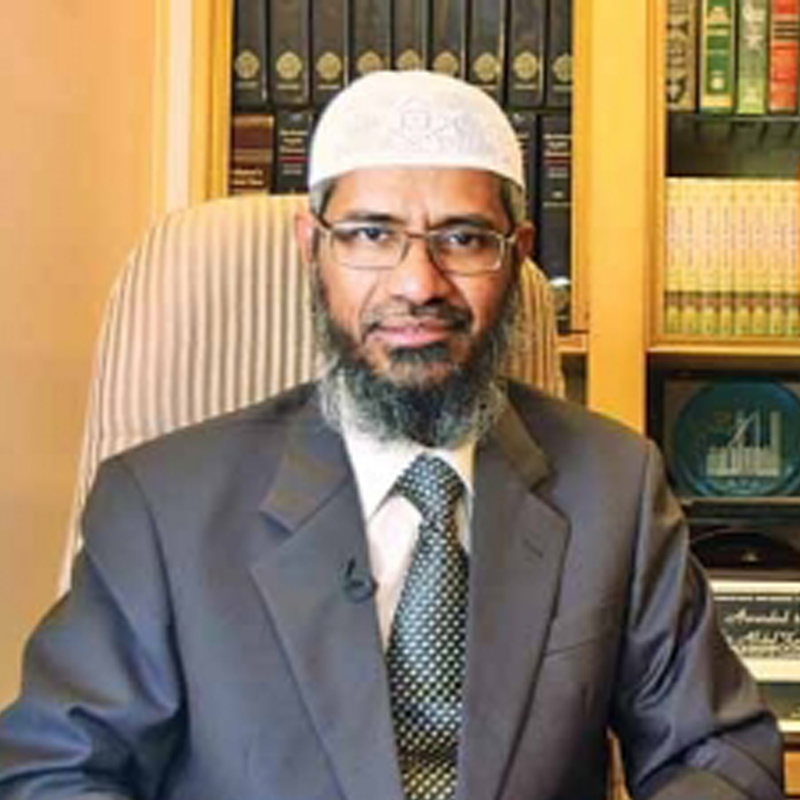
    Peace TV, twice denied landing rights in India earlier, airs sermons of Mumbai-based tele-evangelist Dr. Zakir Naik.

    The government warned that necessary action would be taken for any violations against defaulters.

    A Press Trust of India (PTI) report, separately, quoted home minister Rajnath Singh as saying that reports regarding Mumbai-based Zakir Naik, his sermons on Peace TV and the Islamic institution run by him have been taken note of and action will be taken as per law.

    Meanwhile, MIB sources said that the National Intelligence Agency (NIA) and Intelligence Bureau would be asked to probe how the channel is beaming into the country.

    The sources, who said that the channel had been denied permission twice to beam into India, added that the MIB would take the help of the External Affairs Ministry to approach the countries in west Asia from where the channel was being beamed.

    The government advisory to Indian media pointed out that non-permitted TV channels are in violation of the sub-rule 6(6) of the Cable TV Rules under programme code and “need to acted upon immediately”.

    Section 5 of the Cable Television Networks (Regulation) Act 1995, amended in 1997,  states no person shall transmit or re-transmit through a cable service any programme unless such programme is in conformity with the programme code. In the Cable Television Network (CTN) Rules 1994, framed under the Cable TV Act, the nature of the contents prohibited to be transmitted or re-transmitted are given in the in the programme code under Rule 6 of these Rules.

    Sub Rule 6(6) of the Cable TV Rules specifies that no cable operator shall carry or include in his cable service any television broadcast or channel, which has not been registered by the Central Government for being viewed within the territory of India.

    The advisory said that a list of the private satellite TV channels permitted by the government was available on the website of MIB at www.mib.nic.in.

    Transmission or re-transmission of any TV channel in violation of the Section 5 of the Cable TV Act, read with Rule 6(6), by any cable operator is an offence which attracts action against the operators by authorized officers.

    The Central government advisory has been sent to various State governments too.

    Naik and his Mumbai-based Islamic Research Foundation (IRF) came into limelight after a Bangladeshi newspaper, quoting local government officials, alleged that his sermons influenced the people who killed 20 people, comprising mostly foreigners, in Dhaka few days before Eid.

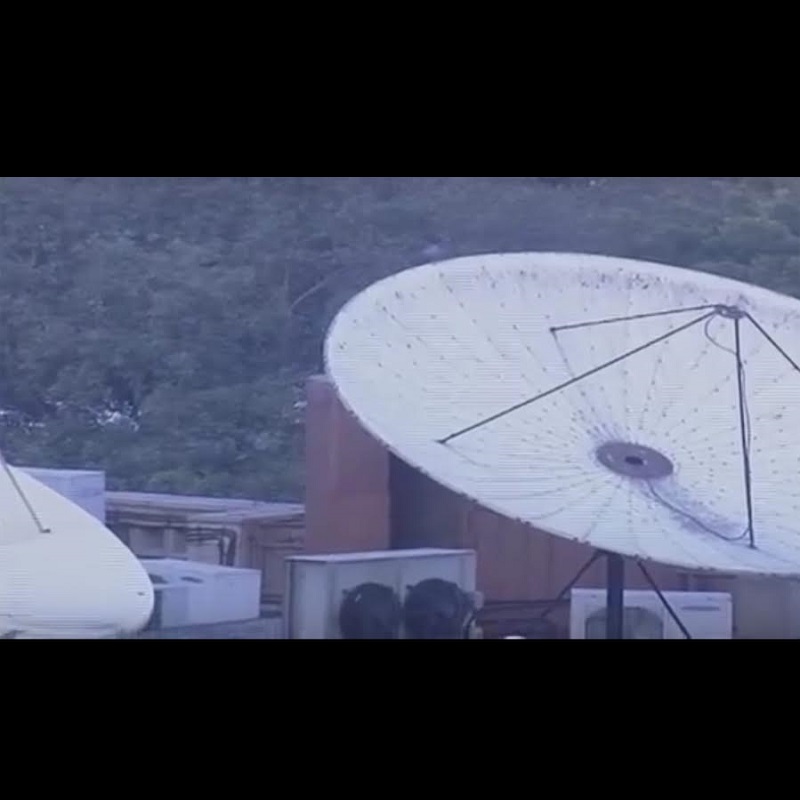
    According to Peace TV’s website, peacetv.in, on which its schedule is available, the channel is beamed off at least a dozen satellite transponders to reach viewers  in more than 200 countries.

    Its English HD feed is available off AsiaSat7 at 105.5 degrees East and off Arabsat BADR 4 at 26.0 degrees East. AsiaSat 7’s C-band transponders have coverage over South East Asia, West Asia, Asia and Australasia, while Arabsat BADR 4 allows it to reach out in Africa, West Asia, Pakistan, Afghanistan and parts of Europe.

    The channel also has an India region targeted specific transponder on Intelsat12 at 45 degrees east. Indian government officials think that some cable operators and MSOs, probably, are latching on to this beam and (illegally) retransmitting Peace TV following requests from subscribers.

  • Indian govt warns against re-transmission of Peace TV illegally
    Indian govt warns against re-transmission of Peace TV illegally
    NEW DELHI/MUMBAI: Even as reports came that the Government is initiating a probe into how Peace TV is being beamed into the country, the Ministry of Information and Broadcasting (MIB) issued an advisory today asking all MSOs, cable operators  and DTH platforms against transmitting any un-authorized TV channels on their networks.

    Drawing attention to reports of “security threats due to TV content aimed at inciting communal and terrorist violence”, the government advisory said, “Reports are being received of such content being broadcast through private satellite TV channels, such as Peace TV channel, which are not permitted by this Ministry for downlinking into the country. It is, therefore, essential that broadcast or transmission of such non-permitted channels is stopped immediately by the cable operators and DTH operators.”

    Peace TV, twice denied landing rights in India earlier, airs sermons of Mumbai-based tele-evangelist Dr. Zakir Naik.

    The government warned that necessary action would be taken for any violations against defaulters.

    A Press Trust of India (PTI) report, separately, quoted home minister Rajnath Singh as saying that reports regarding Mumbai-based Zakir Naik, his sermons on Peace TV and the Islamic institution run by him have been taken note of and action will be taken as per law.

    Meanwhile, MIB sources said that the National Intelligence Agency (NIA) and Intelligence Bureau would be asked to probe how the channel is beaming into the country.

    The sources, who said that the channel had been denied permission twice to beam into India, added that the MIB would take the help of the External Affairs Ministry to approach the countries in west Asia from where the channel was being beamed.

    The government advisory to Indian media pointed out that non-permitted TV channels are in violation of the sub-rule 6(6) of the Cable TV Rules under programme code and “need to acted upon immediately”.

    Section 5 of the Cable Television Networks (Regulation) Act 1995, amended in 1997,  states no person shall transmit or re-transmit through a cable service any programme unless such programme is in conformity with the programme code. In the Cable Television Network (CTN) Rules 1994, framed under the Cable TV Act, the nature of the contents prohibited to be transmitted or re-transmitted are given in the in the programme code under Rule 6 of these Rules.

    Sub Rule 6(6) of the Cable TV Rules specifies that no cable operator shall carry or include in his cable service any television broadcast or channel, which has not been registered by the Central Government for being viewed within the territory of India.

    The advisory said that a list of the private satellite TV channels permitted by the government was available on the website of MIB at www.mib.nic.in.

    Transmission or re-transmission of any TV channel in violation of the Section 5 of the Cable TV Act, read with Rule 6(6), by any cable operator is an offence which attracts action against the operators by authorized officers.

    The Central government advisory has been sent to various State governments too.

    Naik and his Mumbai-based Islamic Research Foundation (IRF) came into limelight after a Bangladeshi newspaper, quoting local government officials, alleged that his sermons influenced the people who killed 20 people, comprising mostly foreigners, in Dhaka few days before Eid.

    According to Peace TV’s website, peacetv.in, on which its schedule is available, the channel is beamed off at least a dozen satellite transponders to reach viewers  in more than 200 countries.

    Its English HD feed is available off AsiaSat7 at 105.5 degrees East and off Arabsat BADR 4 at 26.0 degrees East. AsiaSat 7’s C-band transponders have coverage over South East Asia, West Asia, Asia and Australasia, while Arabsat BADR 4 allows it to reach out in Africa, West Asia, Pakistan, Afghanistan and parts of Europe.

    The channel also has an India region targeted specific transponder on Intelsat12 at 45 degrees east. Indian government officials think that some cable operators and MSOs, probably, are latching on to this beam and (illegally) retransmitting Peace TV following requests from subscribers.

  • Venkaiah Naidu gets additional charge of MIB; Manoj Sinha bags Communications portfolio

    Venkaiah Naidu gets additional charge of MIB; Manoj Sinha bags Communications portfolio

    NEW DELHI: M. Venkaiah Naidu is the new boss for India’s media and entertainment sector at Ministry of Information & Broadcasting (MIB) as the senior minister replacing Arun Jaitley who continues to be country’s finance minister.

    Similarly, there’s a new Communications boss at the Capital’s Sanchar Bhawan that houses one part of the Ministry of Communications & Information Technology (MoCIT). Manoj Sinha will hold independent charge of Communications portfolio in the bifurcated MoCIT.

    Earlier MoCIT minister Ravi Shankar Prasad retains control over IT & Electronics departments in MoCIT, while being given additional charge of Ministry of Law.

    Prime Minister Narendra Modi affected a reshuffle of his Cabinet on July 5, 2016, bringing in new people as senior and junior ministers and re-jigging portfolios of some existing ministers. With the induction of the newcomers, the council of ministers has been expanded to 78 members.

    Both Naidu and Sharma, at the helm of crucial ministries, have additional responsibilities too.

    While Naidu also holds charge at Ministry of Urban Development Housing and Urban Poverty Alleviation, Sharma too is a junior minister at Ministry of Railways.

    Naidu will be accompanied at MIB by Olympics medallist-turned-politician Rajyavardhan Singh RathoreRajyavardhan Singh Rathore, who continues as the junior minister.

    It remains to be seen how quickly the new ministers grasp complex issues such as digitisation, broadcast licences, content regulations, Net Neutrality, spectrum auctioning, while keeping pace with newer technologies being embraced by India’s media & entertainment and communications sectors.

    Political observers of India’s complicated polity were divided in their opinion on whether the Cabinet reshuffle reflected talents been rewarded or people given ministerial berths with an eye on some up and coming State-level elections that are crucial for the nationalist BJP, which leads the government in New Delhi.

  • Venkaiah Naidu gets additional charge of MIB; Manoj Sinha bags Communications portfolio

    Venkaiah Naidu gets additional charge of MIB; Manoj Sinha bags Communications portfolio

    NEW DELHI: M. Venkaiah Naidu is the new boss for India’s media and entertainment sector at Ministry of Information & Broadcasting (MIB) as the senior minister replacing Arun Jaitley who continues to be country’s finance minister.

    Similarly, there’s a new Communications boss at the Capital’s Sanchar Bhawan that houses one part of the Ministry of Communications & Information Technology (MoCIT). Manoj Sinha will hold independent charge of Communications portfolio in the bifurcated MoCIT.

    Earlier MoCIT minister Ravi Shankar Prasad retains control over IT & Electronics departments in MoCIT, while being given additional charge of Ministry of Law.

    Prime Minister Narendra Modi affected a reshuffle of his Cabinet on July 5, 2016, bringing in new people as senior and junior ministers and re-jigging portfolios of some existing ministers. With the induction of the newcomers, the council of ministers has been expanded to 78 members.

    Both Naidu and Sharma, at the helm of crucial ministries, have additional responsibilities too.

    While Naidu also holds charge at Ministry of Urban Development Housing and Urban Poverty Alleviation, Sharma too is a junior minister at Ministry of Railways.

    Naidu will be accompanied at MIB by Olympics medallist-turned-politician Rajyavardhan Singh RathoreRajyavardhan Singh Rathore, who continues as the junior minister.

    It remains to be seen how quickly the new ministers grasp complex issues such as digitisation, broadcast licences, content regulations, Net Neutrality, spectrum auctioning, while keeping pace with newer technologies being embraced by India’s media & entertainment and communications sectors.

    Political observers of India’s complicated polity were divided in their opinion on whether the Cabinet reshuffle reflected talents been rewarded or people given ministerial berths with an eye on some up and coming State-level elections that are crucial for the nationalist BJP, which leads the government in New Delhi.

  • Chrome at variance with MIB on DAS Phase III, claims 78.6 per cent completed

    Chrome at variance with MIB on DAS Phase III, claims 78.6 per cent completed

    MUMBAI: Even as the Information & Broadcasting Ministry has claimed almost 100 per cent digitization in the ongoing Phase III of digital addressable systems, Chrome Data Analytics & Media says its studies show the figure is much lower at 78.6 per cent.

    The Task Force for the final two phases set up by the Ministry was informed in its 15th meeting on 30 May 2016 that about 41 million set top boxes had been seeded in Phase III despite the pending cases in many high courts.

    As reported by indiantelevision.com, the claim was made by Information and Broadcasting joint secretary R Jaya who had earlier told the 14th meeting on 16 February 2016 that around 90.44 percent success had been achieved in DAS phase III. During the meeting it was informed that the seeding of STBs by MSOs increased from 6.91 million to 12.43 million between 31 December 2015 and 15 February 2016.

    However, Chrome says its calculation of 78.6 per cent is primarily based on the 31.83 million C&S population that was digitized out of a total of 40.50 million C&S population in DAS III areas.

    This number was based on primary research that supports the company’s proprietary tools like the Chrome subscriber establishment survey, widely used by the broadcasting industry, taking into account the Census 2011 numbers.

    Chrome Data Analytics & Media CEO Pankaj Krishna told indiantelevision.com that “what we have seen in the current DAS phase is significant gains for DTH players, with their considerable infrastructure contributing towards these gains.”

    Phase IV of DAS, the last phase of digitization that aims at covering all the remaining urban and rural areas in the country is set to be completed by 31 December 2016.

  • Chrome at variance with MIB on DAS Phase III, claims 78.6 per cent completed

    Chrome at variance with MIB on DAS Phase III, claims 78.6 per cent completed

    MUMBAI: Even as the Information & Broadcasting Ministry has claimed almost 100 per cent digitization in the ongoing Phase III of digital addressable systems, Chrome Data Analytics & Media says its studies show the figure is much lower at 78.6 per cent.

    The Task Force for the final two phases set up by the Ministry was informed in its 15th meeting on 30 May 2016 that about 41 million set top boxes had been seeded in Phase III despite the pending cases in many high courts.

    As reported by indiantelevision.com, the claim was made by Information and Broadcasting joint secretary R Jaya who had earlier told the 14th meeting on 16 February 2016 that around 90.44 percent success had been achieved in DAS phase III. During the meeting it was informed that the seeding of STBs by MSOs increased from 6.91 million to 12.43 million between 31 December 2015 and 15 February 2016.

    However, Chrome says its calculation of 78.6 per cent is primarily based on the 31.83 million C&S population that was digitized out of a total of 40.50 million C&S population in DAS III areas.

    This number was based on primary research that supports the company’s proprietary tools like the Chrome subscriber establishment survey, widely used by the broadcasting industry, taking into account the Census 2011 numbers.

    Chrome Data Analytics & Media CEO Pankaj Krishna told indiantelevision.com that “what we have seen in the current DAS phase is significant gains for DTH players, with their considerable infrastructure contributing towards these gains.”

    Phase IV of DAS, the last phase of digitization that aims at covering all the remaining urban and rural areas in the country is set to be completed by 31 December 2016.

  • DTT could be thrown open for pvt sector companies

    DTT could be thrown open for pvt sector companies

    NEW DELHI: The Indian government is exploring possibilities of throwing open the digital terrestrial transmission or DTT services for private sector participation.

    Broadcast carriage and telecoms regulator TRAI is poised to start a public consultation in this regard soon.

    Presently, terrestrial transmission, analogue or digital, is a monopoly game with India’s pubcaster Doordarshan being the only player.

    A senior level source in Ministry of Information & Broadcasting (MIB) admitted that in near future DTT could see involvement of private sector companies as seen in the area of cable and satellite broadcasting.

    The MIB source also pointed out that in this connection TRAI has already been consulted and the regulator is in the process of fine-tuning a background paper on DTT that will form part of the consultation with industry stakeholders.

    Some of the issues that could be put up for discussion include whether it’s correct in this age of fast-evolving technology to keep DTT a playing arena for only DD; whether DTT services with private sector involvement would be in an encrypted or unencrypted form and technologies to be used.

    Quite a few Asian countries like Hong Kong, Thailand and Singapore — considered more sophisticated media markets in terms of ARPUs in comparison to India — have private sector companies providing DTT services.

    According to ViaSat magazine, telco PCCW, for example, in Hong Kong recently announced launch of a new set-top box (STB) that will be an all-in-one, 4K-ready device providing IPTV, DTT and over-the-top (OTT) services to subscribers.

    However, it must be remembered that even if TRAI comes out with a consultation paper on DTT and finally recommends that private sector companies be allowed to provide DTT services, along with DD, the final say on the matter would be with MIB.

    In an earlier story Indiantelevision.com had reported that DD, one of the largest broadcasting organisations in the world in terms of the studios and transmitters, has commenced DTT services in 16 cities.

    DD move to also replace its analogue transmitters with digital transmitters will allow up to 8 channels to be carried from a single transmitter.

    Interestingly, while listing the many advantages of DTT services, Doordarshan on its website points out that “DTT secures greater plurality in Platform ownership, ensuring that no single platform owner is so powerful that they can exert undue influence on public opinion or political agendas.”

    ALSO READ:

    Doordarshan launches Mobile TV in India, needs no internet

    http://www.indiantelevision.com/television/tv-channels/terrestrial/doordarshan-launches-mobile-tv-in-india-needs-no-internet-160404

    DD moving to digitisation through Freedish and DTT: Rathore

    http://www.indiantelevision.com/regulators/i-and-b-ministry/dd-moving-to-digitisation-through-freedish-and-dtt-rathore-141202


  • DTT could be thrown open for pvt sector companies

    DTT could be thrown open for pvt sector companies

    NEW DELHI: The Indian government is exploring possibilities of throwing open the digital terrestrial transmission or DTT services for private sector participation.

    Broadcast carriage and telecoms regulator TRAI is poised to start a public consultation in this regard soon.

    Presently, terrestrial transmission, analogue or digital, is a monopoly game with India’s pubcaster Doordarshan being the only player.

    A senior level source in Ministry of Information & Broadcasting (MIB) admitted that in near future DTT could see involvement of private sector companies as seen in the area of cable and satellite broadcasting.

    The MIB source also pointed out that in this connection TRAI has already been consulted and the regulator is in the process of fine-tuning a background paper on DTT that will form part of the consultation with industry stakeholders.

    Some of the issues that could be put up for discussion include whether it’s correct in this age of fast-evolving technology to keep DTT a playing arena for only DD; whether DTT services with private sector involvement would be in an encrypted or unencrypted form and technologies to be used.

    Quite a few Asian countries like Hong Kong, Thailand and Singapore — considered more sophisticated media markets in terms of ARPUs in comparison to India — have private sector companies providing DTT services.

    According to ViaSat magazine, telco PCCW, for example, in Hong Kong recently announced launch of a new set-top box (STB) that will be an all-in-one, 4K-ready device providing IPTV, DTT and over-the-top (OTT) services to subscribers.

    However, it must be remembered that even if TRAI comes out with a consultation paper on DTT and finally recommends that private sector companies be allowed to provide DTT services, along with DD, the final say on the matter would be with MIB.

    In an earlier story Indiantelevision.com had reported that DD, one of the largest broadcasting organisations in the world in terms of the studios and transmitters, has commenced DTT services in 16 cities.

    DD move to also replace its analogue transmitters with digital transmitters will allow up to 8 channels to be carried from a single transmitter.

    Interestingly, while listing the many advantages of DTT services, Doordarshan on its website points out that “DTT secures greater plurality in Platform ownership, ensuring that no single platform owner is so powerful that they can exert undue influence on public opinion or political agendas.”

    ALSO READ:

    Doordarshan launches Mobile TV in India, needs no internet

    http://www.indiantelevision.com/television/tv-channels/terrestrial/doordarshan-launches-mobile-tv-in-india-needs-no-internet-160404

    DD moving to digitisation through Freedish and DTT: Rathore

    http://www.indiantelevision.com/regulators/i-and-b-ministry/dd-moving-to-digitisation-through-freedish-and-dtt-rathore-141202


  • Over 180 TV channels asked to provide information to EMMC

    Over 180 TV channels asked to provide information to EMMC

    NEW DELHI: A total of 182 television channels have been asked by the Information and Broadcasting Ministry to provide by 8 June certain details required for monitoring purposes by the Electronic Media Monitoring Centre (EMMC).

    The pay channels have to provide one set of Professionat TRO for each TV channel permitted to them which can give SD-SDI output (in case of HD channels, HD-SDI output) alongwith one spare IRD per bouquet to EMMC.

    Alternately, the pay TV broadcaster/ service irovider should provide Viewing Card (VC) with matching CAlvl module for interfacing with demodulators to decrypt and demodulate the channels over IP. TV Channels are also required to provide the technical details as frequency, satellite, location of teleport, etc.

    The Free-to-Air (FTA) TV channels whose signals are not encrypted need not provide such equipment. However, they may immediately inform of the frequency being used

    The Information and Broadcasting Ministry said that under Clause 5.14 of Downlinking Guidelines, ‘the applicant company shall provide the necessary monitoring facility at its own cost for monitoring of programmes or content by the representative of the Ministry of Information and Broadcasting or any other Government agency as and when required’.

    A list attached along with the notice published on the site of the Ministry mib.nic.in also gives a list of the 182 channels as well as the officers to whom the information has to be sent.

    The list contains all genres of channels – news, general entertainment, business news, and music.