Tag: MIB

  • Prasar Bharati CEO Jawhar Sircar officially seeks early retirement

    Prasar Bharati CEO Jawhar Sircar officially seeks early retirement

    MUMBAI: Prasar Bharati CEO Jawhar Sircar has been known to not pull any punches. Last month, he had expressed his desire to resign from his post to the media as he was not getting anywhere with the organisaton and neither was Prasar Bharati. Now, he has written to the ministry of information & broadcasting secretary (MIB) Ajay Mittal stating that he would like to resign prematurely from 4 November, says a PTI report.

    He has also written to I&B minister Venkaiah Naidu, expressing his desire to resign from his position post-Diwali – that is after 30 October. The report goes on to state that he would like to relocate to Kolkata.

    Sircar was yanked out of his position as secretary, culture, and installed as the Prasar Bharati CEO by an eminent panel led by the then Indian vice-president and a Supreme Court judge during the UPA government’s tenure in 2012. He serves as the vice-president of the Asia Pacific Broadcasting Union, which is a club of broadcasters from 67 countries. He has also had two short stints MIB secretary during his career.

  • IDOS 2016: TRAI tariff framework coming next fortnight

    IDOS 2016: TRAI tariff framework coming next fortnight

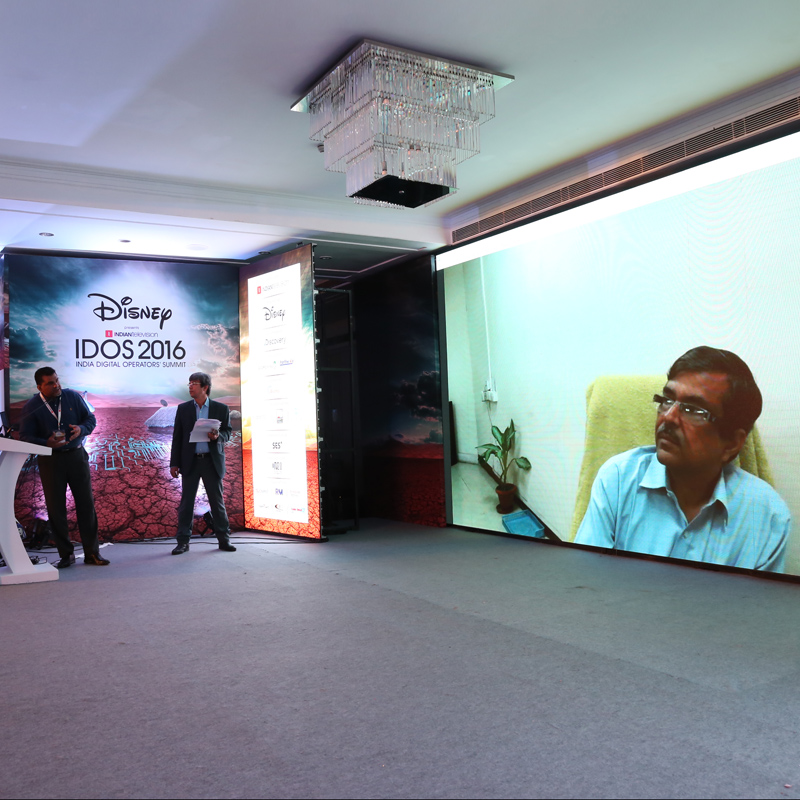
    GOA: The draft tariff framework of the Telecom Regulatory Authority of India (TRAI) is set to be released in a fortnight. This was declared by TRAI principal advisor (telecom services) Sunil Kumar Gupta in a Skype video conference with indiantelevision.com’s founder, CEO and editor-in-chief Anil Wanvari at IDOS 2016 here on Friday evening.

    “We have taken the views of all the stakeholders while drawing up the framework. It is based on the following four major planks — non-discriminatory pricing, transparency, consumer protection and overall growth of the industry,” he said.

    Gupta was clear that the sunset date for Phase IV was unshiftable. “Both MIB and we are very committed to this,” he said. “31 December 2016 is the sunset date for DAS Phase IV.”

    He cautioned that no one should take shelter around the fear that someone may try and scuttle phase IV by approaching the court. “There are enough set top boxes in the country today,” he said. “There is no shortage. Hence there can be no delay.”

    He reiterated that progress on digitisation and DAS has been good. “Revenues from the ground are going up in phase I and phase II,” he said. “According to MIB, 93 per cent of phase III has been digitised and in phase IV, there has been some good seeding too.”

    Gupta also warned that unless interconnection agreements are signed between MSOs and LCOs, the parties would not get any recourse from TDSAT as that is the direction that has been given. “It is important that the agreements are signed,” he said. “We have gone around the country and spoken to LCOs around the country. Often times they have been apprehensive about some of the agreements. But when we have explained to them, many of them have not read them properly, and hence the apprehension. When they have been explained and read it, they have gone ahead and done the shining.”

    He also expected a decisive verdict from the Delhi High Court in the first week of October around the Phase III litigation. Gupta urged the cable community to focus and keep the consumer aware of what was happening through their own networks and encourage him/her about DAS. “It is in the industry’s own interest,” he stated.

    On being asked whether TRAI would intervene and hasten the process on the infrastructure consultation paper, Gupta said there are some people who want to share infrastructure and some who don’t. On being prodded if the regulator would intervene if those who don’t want it to go through outweigh the ones who want it to, Gupta said, the consultation process would follow its due course. “Infrastructure sharing is between two private players, they can go ahead and do it. I don’t see why we need to intervene and mandate infrastructure sharing.”

    He also insisted that the entire industry – including the cable operators – need to tweak business models and the cable ops need to look at broadband seriously. “There is a lot of upside to broadband,” he said. “ARPUs are good over there, they can offer value to the consumer. Change is upon the industry and it needs to embrace this change and drive themselves forward. No telco can offer the kind of services, cable TV can offer, say 40 GB at a price of Rs 700-800 a month. The entire cable TV sector holds a lot of potential. Now the industry needs to realise it.”

  • IDOS 2016: TRAI tariff framework coming next fortnight

    IDOS 2016: TRAI tariff framework coming next fortnight

    GOA: The draft tariff framework of the Telecom Regulatory Authority of India (TRAI) is set to be released in a fortnight. This was declared by TRAI principal advisor (telecom services) Sunil Kumar Gupta in a Skype video conference with indiantelevision.com’s founder, CEO and editor-in-chief Anil Wanvari at IDOS 2016 here on Friday evening.

    “We have taken the views of all the stakeholders while drawing up the framework. It is based on the following four major planks — non-discriminatory pricing, transparency, consumer protection and overall growth of the industry,” he said.

    Gupta was clear that the sunset date for Phase IV was unshiftable. “Both MIB and we are very committed to this,” he said. “31 December 2016 is the sunset date for DAS Phase IV.”

    He cautioned that no one should take shelter around the fear that someone may try and scuttle phase IV by approaching the court. “There are enough set top boxes in the country today,” he said. “There is no shortage. Hence there can be no delay.”

    He reiterated that progress on digitisation and DAS has been good. “Revenues from the ground are going up in phase I and phase II,” he said. “According to MIB, 93 per cent of phase III has been digitised and in phase IV, there has been some good seeding too.”

    Gupta also warned that unless interconnection agreements are signed between MSOs and LCOs, the parties would not get any recourse from TDSAT as that is the direction that has been given. “It is important that the agreements are signed,” he said. “We have gone around the country and spoken to LCOs around the country. Often times they have been apprehensive about some of the agreements. But when we have explained to them, many of them have not read them properly, and hence the apprehension. When they have been explained and read it, they have gone ahead and done the shining.”

    He also expected a decisive verdict from the Delhi High Court in the first week of October around the Phase III litigation. Gupta urged the cable community to focus and keep the consumer aware of what was happening through their own networks and encourage him/her about DAS. “It is in the industry’s own interest,” he stated.

    On being asked whether TRAI would intervene and hasten the process on the infrastructure consultation paper, Gupta said there are some people who want to share infrastructure and some who don’t. On being prodded if the regulator would intervene if those who don’t want it to go through outweigh the ones who want it to, Gupta said, the consultation process would follow its due course. “Infrastructure sharing is between two private players, they can go ahead and do it. I don’t see why we need to intervene and mandate infrastructure sharing.”

    He also insisted that the entire industry – including the cable operators – need to tweak business models and the cable ops need to look at broadband seriously. “There is a lot of upside to broadband,” he said. “ARPUs are good over there, they can offer value to the consumer. Change is upon the industry and it needs to embrace this change and drive themselves forward. No telco can offer the kind of services, cable TV can offer, say 40 GB at a price of Rs 700-800 a month. The entire cable TV sector holds a lot of potential. Now the industry needs to realise it.”

  • MIB, TRAI to examine DAS Phase III interconnect issues

    MIB, TRAI to examine DAS Phase III interconnect issues

    NEW DELHI: Multi-system operators and local cable operators were yesterday assured by senior officials of the Ministry of Information and Broadcasting (MIB) and the Telecom Regulatory Authority of India  (TRAI) that contentious issues relating to interconnect agreements of Phase III of digitisation would be resolved.

    In a meeting held under the chairmanship of MIB additional secretary Jayashree Mukherjee, the MSOs and LCOs presented problems being faced by them.

    Primarily, the issues arise in the areas switching from analogue to digital addressable system and where the MSOs and LCOs have to sign fresh interconnect agreements with broadcasters.

    In the last meeting of the DAS Task Force on 31 August 2016, it was stated that the broadcasters should request the MSOs with whom they have interconnect agreements but who have not applied for MSO registration whether they were interested to work as an MSO in DAS-notified area failing which they would not be able to act as an MSO after the cut-off date.

    MIB was told that there are around 6,000 MSOs operating in the country, but only about 1,300 had applied for the MSO registration.

    The Indian Broadcasting Foundation (IBF) representative was requested to ensure that similar action is taken by all members of the organisation and also that a list of member-boradcasters with their e-mail addresses is sent so that MIB  could also write to them.

    ALSO READ:

    What really happened at the 16th DAS Task Force meeting

    TRAI may moot MRP for bouquet TV channels; no price cap on unbundled premium products

  • MIB, TRAI to examine DAS Phase III interconnect issues

    MIB, TRAI to examine DAS Phase III interconnect issues

    NEW DELHI: Multi-system operators and local cable operators were yesterday assured by senior officials of the Ministry of Information and Broadcasting (MIB) and the Telecom Regulatory Authority of India  (TRAI) that contentious issues relating to interconnect agreements of Phase III of digitisation would be resolved.

    In a meeting held under the chairmanship of MIB additional secretary Jayashree Mukherjee, the MSOs and LCOs presented problems being faced by them.

    Primarily, the issues arise in the areas switching from analogue to digital addressable system and where the MSOs and LCOs have to sign fresh interconnect agreements with broadcasters.

    In the last meeting of the DAS Task Force on 31 August 2016, it was stated that the broadcasters should request the MSOs with whom they have interconnect agreements but who have not applied for MSO registration whether they were interested to work as an MSO in DAS-notified area failing which they would not be able to act as an MSO after the cut-off date.

    MIB was told that there are around 6,000 MSOs operating in the country, but only about 1,300 had applied for the MSO registration.

    The Indian Broadcasting Foundation (IBF) representative was requested to ensure that similar action is taken by all members of the organisation and also that a list of member-boradcasters with their e-mail addresses is sent so that MIB  could also write to them.

    ALSO READ:

    What really happened at the 16th DAS Task Force meeting

    TRAI may moot MRP for bouquet TV channels; no price cap on unbundled premium products

  • TRAI may moot MRP for bouquet TV channels; no price cap on unbundled premium products

    TRAI may moot MRP for bouquet TV channels; no price cap on unbundled premium products

    MUMBAI: Broadcast carriage regulator Telecom Regulatory Authority of India (TRAI) has lined up a slew of draft guidelines relating to tariff, quality of service and interconnections, including proposing maximum retail price (MRP) for channels being bundled in genre-wise bouquets, freeing unbundled premium channels of  price caps and reining in the last mile cable operator (LCO) from breaching revenue-gravy trail.

    The draft recommendations, outcome of several consultation papers issued by TRAI over the last 12 months, could be discussed in a meeting that the regulator likely to have on Wednesday with stakeholders. Representatives of organisations like All-India Digital Cable Federation (AIDCF), Indian Broadcasting Foundation (IBF) and Ministry of Information and Broadcasting (MIB) are likely to be part of the meeting.

    Other topics for discussion at this meeting may revolve aroundanalogue tariffs to be levied in phase III and phase IV areas until sunset dates.

    Sources in TRAI indicated the regulator is in favour of introducing MRP for TV channels that broadcasters offer in a bouquet to MSOs so the prices could be conveyed to a consumer in a transparent manner for him to make an empowered choice.

    Though broadcasting companies do submit annually a-la-carte rates of their respective channels to TRAI, the regulator is of the opinion that a consumer doesn’t ultimately get to choose the channel of his choice transparently.

    How will the MRP be fixed? TRAI feels that the broadcasters should convey the price themselves as they were the best judge of their products and the same would be conveyed to the consumer. Or, the regulator could moot a formula for fixing the MRP.

    Fully aware that such measures could be termed restrictive and intrusive by industry players, TRAI is likely to dangle sops and suggest that broadcasters were free to price a premium channel at any level, but such channels cannot be part of any bouquet or bundling.

    The draft proposals, being fine-tuned by TRAI officials, are likely to be put out in public domain over the next 7-10 days. As these guidelines pertain to carriage services, the regulator can notify them itself. The likely date from which they would come into effect is April 2017. Unless, of course, somebody moves the court challenging the guidelines.

    Apart from these, TRAI is also toying with the idea of introducing an app with the help of which a consumer can get a TV channel from his distribution platform operator (DPO) after furnishing details like area of residence and area service provider’s name. The details will be get forwarded to the DPO concerned for further action.

    TRAI feels that with over 90 per cent of the areas in Phase 1, II and III already receiving digitised TV services, there would be no dearth of opportunities even if the sunset date of December 2016 for Phase IV or complete digitisation gets pushed by few months into 2017.

    In its consultation paper, issued in January 2016, TRAI had stated broadcast industry in India had been driven largely by satellite TV distribution business and unorganized growth of cable TV. During the early days, broadcasters were directly dealing with the cable operators who aggregated and carried broadcast TV services to end users. The distribution model was, according to the regulator, heavily skewed towards advertisement-driven revenues due to difficulties in maintaining transparency in the flow of subscription revenues across the analog value chain, which have become more transparent with the rollout of digital services or digitisation pushed by MIB andTRAI.

    Though TRAI had mandated a-la-carte availability of broadcast TV channels across the value chain, including subscribers, the a-la-carte tariff is presently structured in such a manner that makes it devoid of value proposition vis-à-vis bundled offerings,TRAI highlighted in its January paper (available at http://www.trai.gov.in/WriteReadData/ConsultationPaper/Document/CP_Tariff_issues_29_Jan_2016_final.pdf ), adding consumer was the “ultimate sufferer” ending up receiving hundreds of TV channels many of which remain confined to his STB and never viewed.

    ALSO READ: TRAI releases consultation paper on tariff issues for TV services

    ALSO READ: TRAI allows more time for reactions on QoS methodology under DAS

  • TRAI may moot MRP for bouquet TV channels; no price cap on unbundled premium products

    TRAI may moot MRP for bouquet TV channels; no price cap on unbundled premium products

    MUMBAI: Broadcast carriage regulator Telecom Regulatory Authority of India (TRAI) has lined up a slew of draft guidelines relating to tariff, quality of service and interconnections, including proposing maximum retail price (MRP) for channels being bundled in genre-wise bouquets, freeing unbundled premium channels of  price caps and reining in the last mile cable operator (LCO) from breaching revenue-gravy trail.

    The draft recommendations, outcome of several consultation papers issued by TRAI over the last 12 months, could be discussed in a meeting that the regulator likely to have on Wednesday with stakeholders. Representatives of organisations like All-India Digital Cable Federation (AIDCF), Indian Broadcasting Foundation (IBF) and Ministry of Information and Broadcasting (MIB) are likely to be part of the meeting.

    Other topics for discussion at this meeting may revolve aroundanalogue tariffs to be levied in phase III and phase IV areas until sunset dates.

    Sources in TRAI indicated the regulator is in favour of introducing MRP for TV channels that broadcasters offer in a bouquet to MSOs so the prices could be conveyed to a consumer in a transparent manner for him to make an empowered choice.

    Though broadcasting companies do submit annually a-la-carte rates of their respective channels to TRAI, the regulator is of the opinion that a consumer doesn’t ultimately get to choose the channel of his choice transparently.

    How will the MRP be fixed? TRAI feels that the broadcasters should convey the price themselves as they were the best judge of their products and the same would be conveyed to the consumer. Or, the regulator could moot a formula for fixing the MRP.

    Fully aware that such measures could be termed restrictive and intrusive by industry players, TRAI is likely to dangle sops and suggest that broadcasters were free to price a premium channel at any level, but such channels cannot be part of any bouquet or bundling.

    The draft proposals, being fine-tuned by TRAI officials, are likely to be put out in public domain over the next 7-10 days. As these guidelines pertain to carriage services, the regulator can notify them itself. The likely date from which they would come into effect is April 2017. Unless, of course, somebody moves the court challenging the guidelines.

    Apart from these, TRAI is also toying with the idea of introducing an app with the help of which a consumer can get a TV channel from his distribution platform operator (DPO) after furnishing details like area of residence and area service provider’s name. The details will be get forwarded to the DPO concerned for further action.

    TRAI feels that with over 90 per cent of the areas in Phase 1, II and III already receiving digitised TV services, there would be no dearth of opportunities even if the sunset date of December 2016 for Phase IV or complete digitisation gets pushed by few months into 2017.

    In its consultation paper, issued in January 2016, TRAI had stated broadcast industry in India had been driven largely by satellite TV distribution business and unorganized growth of cable TV. During the early days, broadcasters were directly dealing with the cable operators who aggregated and carried broadcast TV services to end users. The distribution model was, according to the regulator, heavily skewed towards advertisement-driven revenues due to difficulties in maintaining transparency in the flow of subscription revenues across the analog value chain, which have become more transparent with the rollout of digital services or digitisation pushed by MIB andTRAI.

    Though TRAI had mandated a-la-carte availability of broadcast TV channels across the value chain, including subscribers, the a-la-carte tariff is presently structured in such a manner that makes it devoid of value proposition vis-à-vis bundled offerings,TRAI highlighted in its January paper (available at http://www.trai.gov.in/WriteReadData/ConsultationPaper/Document/CP_Tariff_issues_29_Jan_2016_final.pdf ), adding consumer was the “ultimate sufferer” ending up receiving hundreds of TV channels many of which remain confined to his STB and never viewed.

    ALSO READ: TRAI releases consultation paper on tariff issues for TV services

    ALSO READ: TRAI allows more time for reactions on QoS methodology under DAS
  • Prasar Bharati looks at digitizing archives; to seek Rs 250 crore from govt

    Prasar Bharati looks at digitizing archives; to seek Rs 250 crore from govt

    MUMBAI: Pubcaster Prasar Bharati is taking another stab at digitizing and monetising the huge archival content catalogue that is lying in the shelves of All India Radio and Doordarshan. And it is all set to make a formal request to the ministry of broadcasting and broadcasting (MIB) for nearly Rs 250 crore to help it achieve what it intends to do. It says included in this archive are prominent speeches of national leaders, popular programmes and music.

    Prasar Bharati officials recently made a presentation to the MIB enumerating why it needs to do this. Sources say both Doordarshan and All India Radio have millions of hours of both audio and video content. In fact, All India Radio had digitized some of its content around a decade ago and even monetized some of it by selling CDs. The UK pubcaster BBC is amongst the world’s largest exporters of TV content with worldwide sales of around 400 million Euros. If Prasar Bharati manages even 10 per cent of that, it will more than recover its digitization costs.

    The problem, however, is that its archive has not been maintained in the best manner and is on beta and VHS tapes, many of which could be damaged or unrecoverable. And some of it could be have been stolen or lost.

    It is also looking at drafting a syndication policy to sell its content worldwide to other media outlets or online directly to consumers.

    Says a media observer: “Hopefully, it takes up the task seriously this time and the MIB helps it see it through to conclusion. DD is in danger of becoming a dinosaur; digitisation will allow it to bring new legs to old content which a generation has not seen. It could be put out online or on mobile for consumption apart from finding customers for its clips worldwide.”

  • Prasar Bharati looks at digitizing archives; to seek Rs 250 crore from govt

    Prasar Bharati looks at digitizing archives; to seek Rs 250 crore from govt

    MUMBAI: Pubcaster Prasar Bharati is taking another stab at digitizing and monetising the huge archival content catalogue that is lying in the shelves of All India Radio and Doordarshan. And it is all set to make a formal request to the ministry of broadcasting and broadcasting (MIB) for nearly Rs 250 crore to help it achieve what it intends to do. It says included in this archive are prominent speeches of national leaders, popular programmes and music.

    Prasar Bharati officials recently made a presentation to the MIB enumerating why it needs to do this. Sources say both Doordarshan and All India Radio have millions of hours of both audio and video content. In fact, All India Radio had digitized some of its content around a decade ago and even monetized some of it by selling CDs. The UK pubcaster BBC is amongst the world’s largest exporters of TV content with worldwide sales of around 400 million Euros. If Prasar Bharati manages even 10 per cent of that, it will more than recover its digitization costs.

    The problem, however, is that its archive has not been maintained in the best manner and is on beta and VHS tapes, many of which could be damaged or unrecoverable. And some of it could be have been stolen or lost.

    It is also looking at drafting a syndication policy to sell its content worldwide to other media outlets or online directly to consumers.

    Says a media observer: “Hopefully, it takes up the task seriously this time and the MIB helps it see it through to conclusion. DD is in danger of becoming a dinosaur; digitisation will allow it to bring new legs to old content which a generation has not seen. It could be put out online or on mobile for consumption apart from finding customers for its clips worldwide.”

  • Shareholders to meet on 15 Oct for Hathway demerger approval

    Shareholders to meet on 15 Oct for Hathway demerger approval

    MUMBAI: The court has convened meeting of Hathway Cable and Datacom Ltd equity shareholders and Hathway Broadband Private Limited and their respective shareholders and creditors on 15 October, 2016, in Mumbai.

    The meeting is for the purpose of considering and, if thought fit, approving with or without modification(s), the demerger of the broadband business of Hathway Cable and its transfer to Hathway Broadband, Ajay Singh, head, legal, company secretary and chief compliance officer, at Hathway Cable, stated in a communiqué to the BSE and the NSE.

    The court appointed Jagdiskumar G. Pillai, Hathway Cable managing director and CEO, to be the chairman of the said meeting. The voting period begins on 11 0ctober, 2016 , at 10.00 am and ends on Friday, 14 0ctober, 2016, at 5.00 pm. Himanshu S. Kamdar, practicing company secretary, has been appointed as the scrutinizer. The results shall be declared on 17 0ctober, 2016.

    The proposed demerger of the ISP Business (defined below) from Hathway Cable to Hathway Broadband may happen upon payment of Rs. 98.05 crore by the latter to the former. The plan is to demerge the ISP Business from Hathway Cable and transfer it to vest in Hathway Broadband.

    Hathway Cable is a multi-system operator (MSO) engaged in the business of distribution of television channels. Hathway Broadband is a private limited company incorporated under the Companies Act, and a wholly owned subsidiary of Hathway Cable.