Tag: MIB

  • States may decide Pak artistes films fate

    States may decide Pak artistes films fate

    NEW DELHI: The Central Government will not intervene in cases involving protests about Pakistani actors working in Indian films if the film had been certified by the Central Board of Film Certification.

    Even as the controversy over Shah Rukh Khan having met a local part chief in connection with his upcoming film ‘Raees’ starring Pakistani actress Mahira Khan rages, the information and broadcasting ministry (MIB) sources told indiantelevision.com that this was more of a law and order problem which fell into the realm of the state governments.

    In October this year, the Film & Television Producers Guild of India Ltd had expressed “genuine concern for all those film producers who invested heavily in films featuring artistes from across the border.”

    Even as it expressed unflinching support to the Central Government and its solidarity with the Indian armed forces on their supreme sacrifice at Uri (Jammu and Kashmir) and courage and valor displayed during the recent counter-terrorism operations, it noted there had been some discourse in the media recently with regard to certain threats to disrupt the release of these movies.

    The Guild, which represents most of the active Hindi film producers, there are many film producers who had either already shot their films or were in the process of completing their unfinished films prior to the escalation of hostilities with Pakistan. These included Karan Johar (‘Ae Dil Hai Mushkil’ with Fawad Khan and ‘Dear Zindagi’ with Ali Zafar) which had also been certified by the CBFC and released.

    Pakistani actor Fawad Khan was also seen in ‘Kapoor and Sons’, and earlier in ‘Khoobsoorat’ opposite Sonam Kapoor.

    Meanwhile, the sources said no permission had been granted to any Pakistani TV or radio channel to broadcast in India.

    Also read

    Bollywood supports Govt’s Pak policy; pleads for ongoing projects

    Film Industry supports Govt on Pak but says do not stop ongoing projects


  • 53 TV channels, six teleports’ licences up for renewal in ’17

    53 TV channels, six teleports’ licences up for renewal in ’17

    NEW DELHI: Ministry of Information and Broadcasting (MIB) has conveyed to all TV channels and teleports that licenses for uplink and/or downlink expiring in 2017 should be renewed six months prior to the expiry date.

    The MIB communication to TV channel and teleports, dated December 16, 2016 and posted on the ministry website on December 20, 2016 stated, “Permission-holding companies, whose initial period of permission for uplinking and/or downlinking of TV channels and setting up of teleports is going to expire during 2017 and which are willing to get the permission renewed beyond its initial period are required to apply for the same six months prior to the date of expiry of the permission period.”

    The government also clarified that TV channels who have not applied six months prior to the date of expiry of the permission period, the December MIB note may be “treated as 21 days notice” and the government would take it that the permission-holder was not interested in further extension after which the government was free to take “further necessary action”.

    MIB has put out a list of 53 TV channels and six teleports whose licenses expire at various times during 2017.

    The companies are required to apply for renewal of license along with relevant documents, including details of the company, shareholding patterns and foreign investments, for various government organizations like MIB and Ministry of Home Affairs to scrutinize the documents for renewal of licenses. Renewal will also depend on companies concerned agreeing to and updated guidelines relating to uplink and downlink.

  • 53 TV channels, six teleports’ licences up for renewal in ’17

    53 TV channels, six teleports’ licences up for renewal in ’17

    NEW DELHI: Ministry of Information and Broadcasting (MIB) has conveyed to all TV channels and teleports that licenses for uplink and/or downlink expiring in 2017 should be renewed six months prior to the expiry date.

    The MIB communication to TV channel and teleports, dated December 16, 2016 and posted on the ministry website on December 20, 2016 stated, “Permission-holding companies, whose initial period of permission for uplinking and/or downlinking of TV channels and setting up of teleports is going to expire during 2017 and which are willing to get the permission renewed beyond its initial period are required to apply for the same six months prior to the date of expiry of the permission period.”

    The government also clarified that TV channels who have not applied six months prior to the date of expiry of the permission period, the December MIB note may be “treated as 21 days notice” and the government would take it that the permission-holder was not interested in further extension after which the government was free to take “further necessary action”.

    MIB has put out a list of 53 TV channels and six teleports whose licenses expire at various times during 2017.

    The companies are required to apply for renewal of license along with relevant documents, including details of the company, shareholding patterns and foreign investments, for various government organizations like MIB and Ministry of Home Affairs to scrutinize the documents for renewal of licenses. Renewal will also depend on companies concerned agreeing to and updated guidelines relating to uplink and downlink.

  • TV Today not selling 3 FM stations to ENIL; seeks MIB nod for migration

    TV Today not selling 3 FM stations to ENIL; seeks MIB nod for migration

    MUMBAI: TV Today Network shall not undertake the agreement, entered into with Entertainment Network (India) Limited, to sell three Metro FM Radio stations, as was earlier approved by the board in its meeting held on 13 November 2015, according to a BSE filing.

    TV Today had inked a deal to sell seven Oye FM radio stations to ENIL which operates Radio Mirchi. However, MIB did not approve sale of three stations and the matter went before the Delhi High Court.

    Such sale agreement was subject to the approval of the MIB or an order from the Delhi High Court allowing the sale of Metro Radio stations whichever is earlier.

    TV Today said it would now reorganise the radio business. The company would approach the Ministry of Information and Broadcasting to seek permission to migrate its radio business from phase II to phase III.

    “The committee of senior officials in their meeting held on 19 December, 2016 has approved the initiation of procedural modalities w.r.t proposal of migrating its radio business from phase II to the FM radio phase III, that would enable the company from reorganisation of its radio business,” TV Today said in a BSE filing.

    “The migration fee will involve a total net capital expenditure of Rs 71.36 crore excluding other charges/interest and will be completed within three months,” it added.

  • TV Today not selling 3 FM stations to ENIL; seeks MIB nod for migration

    TV Today not selling 3 FM stations to ENIL; seeks MIB nod for migration

    MUMBAI: TV Today Network shall not undertake the agreement, entered into with Entertainment Network (India) Limited, to sell three Metro FM Radio stations, as was earlier approved by the board in its meeting held on 13 November 2015, according to a BSE filing.

    TV Today had inked a deal to sell seven Oye FM radio stations to ENIL which operates Radio Mirchi. However, MIB did not approve sale of three stations and the matter went before the Delhi High Court.

    Such sale agreement was subject to the approval of the MIB or an order from the Delhi High Court allowing the sale of Metro Radio stations whichever is earlier.

    TV Today said it would now reorganise the radio business. The company would approach the Ministry of Information and Broadcasting to seek permission to migrate its radio business from phase II to phase III.

    “The committee of senior officials in their meeting held on 19 December, 2016 has approved the initiation of procedural modalities w.r.t proposal of migrating its radio business from phase II to the FM radio phase III, that would enable the company from reorganisation of its radio business,” TV Today said in a BSE filing.

    “The migration fee will involve a total net capital expenditure of Rs 71.36 crore excluding other charges/interest and will be completed within three months,” it added.

  • Govt warning to TV channels on b’cast norms breach

    Govt warning to TV channels on b’cast norms breach

    NEW DELHI: Ministry of Information and Broadcasting (MIB) has issued warning to three different television channels over content that an inter-ministerial committee, appointed by it, felt was not as per broadcasting norms and a breach of content code, a PTI report stated.

    In the first case, a television channel was issued a warning in an order dated 29 November, after it showed disturbing visuals of incidents of suicide in Kerala without adequately morphing them, as recorded in the ministry order.

    In another instance, a warning was issued in an order dated 29 November to another channel which too allegedly did not adequately blur the visuals of a murder victim lying in a pool of blood.

    Another channel was also issued a warning by the ministry over revealing the identity of a victim of sexual abuse and other content which did not confirm to the norms.

    A couple of months back, as reported by Indiantelevision.com, MIB had issued a notice to NDTV channel suspending its telecast over alleged breach of content code relating to national security issues. The order was subsequently suspended owing to public and media pressure and criticism that the government was resorting to censorship of news in the garb of broadcasting norms breaches.

  • Govt warning to TV channels on b’cast norms breach

    Govt warning to TV channels on b’cast norms breach

    NEW DELHI: Ministry of Information and Broadcasting (MIB) has issued warning to three different television channels over content that an inter-ministerial committee, appointed by it, felt was not as per broadcasting norms and a breach of content code, a PTI report stated.

    In the first case, a television channel was issued a warning in an order dated 29 November, after it showed disturbing visuals of incidents of suicide in Kerala without adequately morphing them, as recorded in the ministry order.

    In another instance, a warning was issued in an order dated 29 November to another channel which too allegedly did not adequately blur the visuals of a murder victim lying in a pool of blood.

    Another channel was also issued a warning by the ministry over revealing the identity of a victim of sexual abuse and other content which did not confirm to the norms.

    A couple of months back, as reported by Indiantelevision.com, MIB had issued a notice to NDTV channel suspending its telecast over alleged breach of content code relating to national security issues. The order was subsequently suspended owing to public and media pressure and criticism that the government was resorting to censorship of news in the garb of broadcasting norms breaches.

  • TRAI chief: Pending DAS tariff, interconnect, QoS norms by year-end

    TRAI chief: Pending DAS tariff, interconnect, QoS norms by year-end

    NEW DELHI: India’s telecoms and broadcast carriage regulator Telecom Regulatory Authority of India (TRAI) has said it would issue final guidelines relating to broadcast tariff, interconnect and quality of service issues by this month-end and reiterated its overall aim is to “harmonise” norms so as to facilitate growth of the industry in an ambiguity-free regulatory environment.

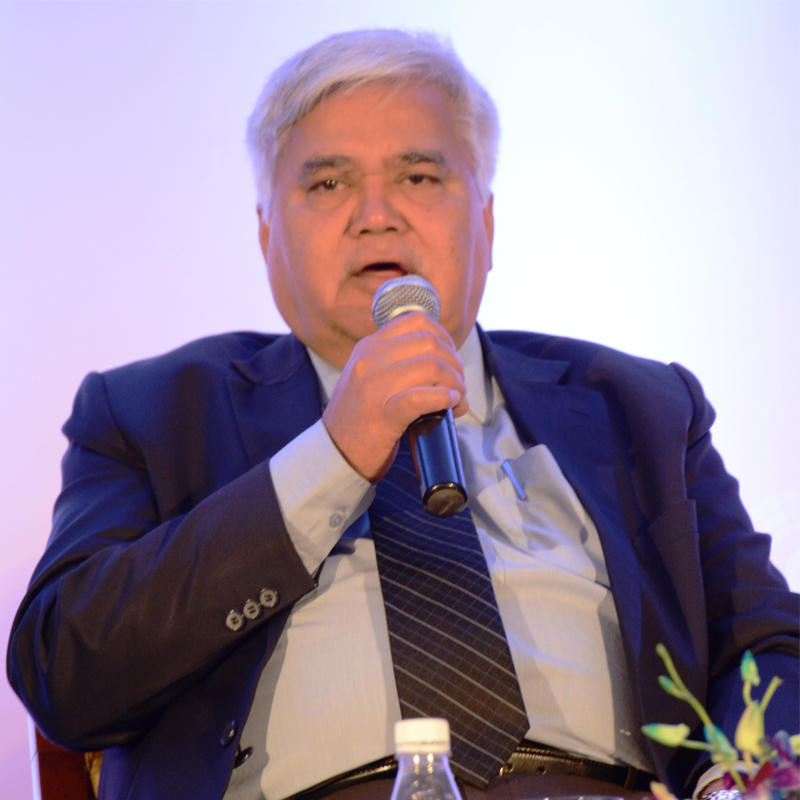
    “We are bringing out a comprehensive and common framework for all platforms relating to quality of service (QoS), tariff and interconnect. We have been working on it for many months now,” TRAI chairman RS Sharma told indiantelevision.com in an exclusive interview, adding that criticism of draft guidelines were part of a democratic consultation process.

    According to Sharma, the final recommendations of the regulator, which are being framed after a lengthy process of consultation with all stakeholders spread over several months, will be “issued by the end of this month (2016 end).”

    Sharma, who spoke on a whole range of issues on telecoms and broadcast sectors that it oversees, said the overall effort of TRAI was to create a framework for industry players that will boost digitization making the dream of Digital India come true. “We are working towards an environment that will reduce ambiguity in regulations and help all stakeholders, including the consumer,” he added.  

    Last week, the Delhi High Court removed almost all legal hurdles to complete digital rollout of TV services in the country by vacating all interim court orders that had been passed by other courts in the country extending the deadline for implementation of Phase III of digital addressable system (DAS).

    Though Sharma pointed out that the legal cases (taken care by Delhi HC on direction from Supreme Court) had no direct bearing on TRAI’s efforts to bring about a comprehensive regulatory framework for digital TV services in India, Sharma said, “It is the Ministry of Information and Broadcasting (MIB) that will have to enforce the (digitization) schedule, but we are ready to provide any assistance to MIB if needed.”

    On the entry of new technologies in India, which give window to innovations, the TRAI chief opined new technologies should be actively promoted without an attempt to throttle them through regulations.

    “We should not try to throttle them (new technologies) just because there are legacy business models. Business models must adapt to technology rather that technology being stifled in order to protect business models,” Sharma said.

    Quizzed, on the issue of Net Neutrality and new techs like OTT, Sharma explained, “We have already dealt with the issue of Net Neutrality from the tariff perspective (TRAI banned zero-tariff plans by telcos earlier this year). But as the government has asked us to provide it with comprehensive recommendations on the issue, we are in the final stages… (but) it may take a couple of months more.”

    While agreeing with the broad idea that time has arrived for India to have a comprehensive convergence law and regulator, Sharma made it clear that TRAI was not a competent authority to take a call on such policy matters and it was the government’s prerogative. “What should be the methods of regulatory structure (for a convergence law)? How will it be governed? Who will do it? I am not the competent person (on such issues) as it’s for the government to decide. But I certainly agree that because of technological developments, lot of convergence is happening in various sectors.”

    Asked to comment on a common criticism that India is an over-regulated market, Sharma disagreed and said, “We don’t believe in unnecessary regulations. However, at the same time, some regulation is necessary for an orderly growth of the industry; especially so consumers don’t suffer because of ambiguities in rules.”   

    Keep tuned in to read the full interview of TRAI chief, which is coming soon.

    ALSO READ:

    Delhi HC removes legal hurdles to implement DAS IV by 1 Jan 2017

     

  • TRAI chief: Pending DAS tariff, interconnect, QoS norms by year-end

    TRAI chief: Pending DAS tariff, interconnect, QoS norms by year-end

    NEW DELHI: India’s telecoms and broadcast carriage regulator Telecom Regulatory Authority of India (TRAI) has said it would issue final guidelines relating to broadcast tariff, interconnect and quality of service issues by this month-end and reiterated its overall aim is to “harmonise” norms so as to facilitate growth of the industry in an ambiguity-free regulatory environment.

    “We are bringing out a comprehensive and common framework for all platforms relating to quality of service (QoS), tariff and interconnect. We have been working on it for many months now,” TRAI chairman RS Sharma told indiantelevision.com in an exclusive interview, adding that criticism of draft guidelines were part of a democratic consultation process.

    According to Sharma, the final recommendations of the regulator, which are being framed after a lengthy process of consultation with all stakeholders spread over several months, will be “issued by the end of this month (2016 end).”

    Sharma, who spoke on a whole range of issues on telecoms and broadcast sectors that it oversees, said the overall effort of TRAI was to create a framework for industry players that will boost digitization making the dream of Digital India come true. “We are working towards an environment that will reduce ambiguity in regulations and help all stakeholders, including the consumer,” he added.  

    Last week, the Delhi High Court removed almost all legal hurdles to complete digital rollout of TV services in the country by vacating all interim court orders that had been passed by other courts in the country extending the deadline for implementation of Phase III of digital addressable system (DAS).

    Though Sharma pointed out that the legal cases (taken care by Delhi HC on direction from Supreme Court) had no direct bearing on TRAI’s efforts to bring about a comprehensive regulatory framework for digital TV services in India, Sharma said, “It is the Ministry of Information and Broadcasting (MIB) that will have to enforce the (digitization) schedule, but we are ready to provide any assistance to MIB if needed.”

    On the entry of new technologies in India, which give window to innovations, the TRAI chief opined new technologies should be actively promoted without an attempt to throttle them through regulations.

    “We should not try to throttle them (new technologies) just because there are legacy business models. Business models must adapt to technology rather that technology being stifled in order to protect business models,” Sharma said.

    Quizzed, on the issue of Net Neutrality and new techs like OTT, Sharma explained, “We have already dealt with the issue of Net Neutrality from the tariff perspective (TRAI banned zero-tariff plans by telcos earlier this year). But as the government has asked us to provide it with comprehensive recommendations on the issue, we are in the final stages… (but) it may take a couple of months more.”

    While agreeing with the broad idea that time has arrived for India to have a comprehensive convergence law and regulator, Sharma made it clear that TRAI was not a competent authority to take a call on such policy matters and it was the government’s prerogative. “What should be the methods of regulatory structure (for a convergence law)? How will it be governed? Who will do it? I am not the competent person (on such issues) as it’s for the government to decide. But I certainly agree that because of technological developments, lot of convergence is happening in various sectors.”

    Asked to comment on a common criticism that India is an over-regulated market, Sharma disagreed and said, “We don’t believe in unnecessary regulations. However, at the same time, some regulation is necessary for an orderly growth of the industry; especially so consumers don’t suffer because of ambiguities in rules.”   

    Keep tuned in to read the full interview of TRAI chief, which is coming soon.

    ALSO READ:

    Delhi HC removes legal hurdles to implement DAS IV by 1 Jan 2017

     

  • MSO’s net worth should be positive for registration: Govt.

    MSO’s net worth should be positive for registration: Govt.

    NEW DELHI: An inter-ministerial committee (IMC) of the government, grappling with the issue of differentiating between serious and non-serious players, has recommended that net worth of an MSO must be positive for grant of registration, but shied away from stipulating a minimum monetary ceiling.

    The IMC, which met earlier this month, came to the conclusion after feedback from various other ministries, including finance, information and broadcasting and commerce, that in case an existing registered MSO applied for registration for additional areas, the net worth of the company must be positive for those areas too for a green signal from the government.

    For an expenditure of about 25 lakh (Rs. 25,00,000) by a company to establish an MSO business, a loan can be availed of by a new applicant through banks, the IMC said.

    Justifying its stand on the MSO company’s net worth being positive, IMC said it should be so as the government was providing loans without collaterals to small entrepreneurs for starting a business. “Hence the net worth of the entity applying for MSO registration has to be positive,” the government panel observed.

    For the purposes of net worth evaluation, IMC reiterated that immovable/movable assets, generally included in the net worth certificates submitted by the applicants, could continue to be taken into account as per previous practice.

    The panel took into consideration, among other issues, whether for registration purpose an entry level threshold net worth be specified and whether an MSO, already registered for certain areas, may be considered as eligible for registration in extended areas if its net worth was presently negative.