Tag: MIB

  • Regulations 2016: Of DeMon challenges, changing goalposts & rampant litigation

    Regulations 2016: Of DeMon challenges, changing goalposts & rampant litigation

    The regulatory regime in 2016 not only continued to struggle keeping pace with fast-marching technology (4G is passé, 5G is being talked in some countries), but lack of consensus amongst stakeholders on major issues meant that litigation was rampant, thus leading to changing milestones. It was also about the government trying to enforce censorship via the backdoor and, hence, despite the best of intentions, only average dividends accrued to the media and entertainment sector in India, which is still described as a market with huge potential, but also a challenging place to do business.

    The biggest policy (that ultimately turned into a regulatory challenge) initiative of 2016 — some would say the biggest hiccup — was PM Modi’s demonetisation bomb aimed at unleashing a surgical strike on black money and parallel economy in the country that, according to an earlier government narrative, made the poor poorer and gave a fillip to corruption. Debatable long term gains of such a move, notwithstanding, the media industry immediately felt the heat of cash crunch.

    As collections from the ground dropped for LCOs, it affected the MSOs too, though many big MSOs insisted that making high-value currency notes illegal from November 9, 2016 could act as a catalyst for LCOs to make their business more transparent.

    From an earlier estimate of Rs. 600 crore or Rs. 6 billion loss to the media and advertising segments owing to demonetisation, loss estimates ballooned to almost Rs 300 billion towards the end of the year when most corporate adspends were slashed owing to low on-ground collections. FMCG companies led this trend and are likely to do so the in the last quarter of the 2016-17 financial year too. The cascading effects on all segments made them yelp with pain.

    Demonetisation also made the telecoms and broadcast carriage regulator the Telecom Regulatory Authority of India (TRAI) scurry to issue guidelines to facilitate the government push towards a cashless economy. For example, reduction of the ceiling tariff for the use of unstructured supplementary service data (USSD)-based mobile banking services from Rs 1.50 to Rs.0.50 and amendment to the mobile banking (quality of service) regulations to increase the number of stages from 5 to 8 per USSD session.

    Though the government’s reluctance to interact with the media directly continued throughout the year as government representatives, led by PM Modi, relied more on social media to communicate with the country at large, like many regimes in the past this government too attempted to curb media freedom. The Ministry of Information and Broadcasting (MIB) directive to NDTV India, on suggestions from an inter-ministerial committee, to shutter for a day as a penalty for breaching content code on issues related to national security was one such example.

    The government initially tried to justify the move saying national security was compromised by NDTV India, a Hindi news channel, but ultimately MIB buckled under pressure from a large section of the media frat and populace in general to go in for a face saver and the directive was kept in abeyance. However, the message couldn’t have been louder and clearer to not only the media, but also the critics: don’t underestimate the government’s resolve to crack the whip even though the Constitution grants Indians certain freedom of expression and free media be damned.

    However, it would be unfair to criticise the government for doing nothing except increasingly crack the whip. As part of overall reforms, the government did liberalise FDI norms for several sectors, including the media, in June. Foreign direct investment limits in broadcast carriage services like DTH, cable distribution, teleports, HITS, mobile TV, etc were allowed up till 100 per cent with certain caveats. Norms for FM radio broadcasts too were liberalised.

    Still, foreign or global media players didn’t start pouring money immediately in ops in India. Government data on FDI till September 2016 makes it clear that the media and entertainment sector was not amongst the top 10 sectors where foreign investment flowed in and its share was comparatively small despite liberalised norms and New Delhi’s attempts to further work on ease of doing business in India.

    The MIB did manage to shave off to an extent the time period taken to obtain a licence for uplink or downlink for TV channels and teleports, but failed on many counts to be proactive on developing issues (like controversial appointments in several MIB-controlled media institutions and attempted content regulation by non-authorised organisations), for example. Its reactionary approach complicated matters further.

    Widely criticised for over regulating the telecoms and broadcast & cable sectors, the TRAI stuck to its avowed and stated aim of attempting to create a regulatory regime that would reduce ambiguities and create a level playing field for all stakeholders.

    From trying to deal with issues in a piecemeal fashion (Net Neutrality being one) to smoothening the road ahead for the players via various guidelines and recommendations, TRAI, under chairman RS Sharma, has not shied away from confronting any bull (like Facebook) — some players, however, say it acted like a bull in a China shop.

    Whether it was the issue of Net Neutrality or zero tariffs offered by telcos for certain services or tariffs, interconnect and quality of services in the broadcast carriage sector or pushing MSOs on digital rollout or suggesting free limited data to rural India to give a fillip to the digital economy or cracking the whip on mobile phone call drops, or interoperable boxes for DTH and cable TV services, the TRAI has been trying to walk the tight rope between regulations and industry and political lobbying.

    But it must be agreed that TRAI has done less of flip-flops compared to organisations like the MIB or ministry of telecommunications and stuck on its stated route to regulation. It also has been talking straight. For example, TRAI could not have been more apt when Chairman RS Sharma told indiantelevision.com in a year-end interview that the regulator has to step in only when industry stakeholders fail to resolve issues amongst themselves. Because the industry has consitently been disastrous on managing this and thrives on ambiguities and rampant litigations, the regulator has had to time and again had to step in to remove doubts, even if that means minimalistic regulations, Sharma opined.

    On cue, it seems, towards the fag end of the 2016, Star TV and Vijay TV moved the courts against draft TRAI regulations on tariff, interconnect and quality of services, pleading the regulator could not hold sway in areas where already established domestic and international laws are there. Till further hearing later this month, the Madras High Court directed TRAI to maintain the status quo.

    With the digitisation goalpost shifted to March 2017 it is to be seen whether MIB can push through some ongoing reforms and withstand pressures arising out of demonetisation and from political allies.

  • Poll schedule on social media shows unprecedented reach

    Poll schedule on social media shows unprecedented reach

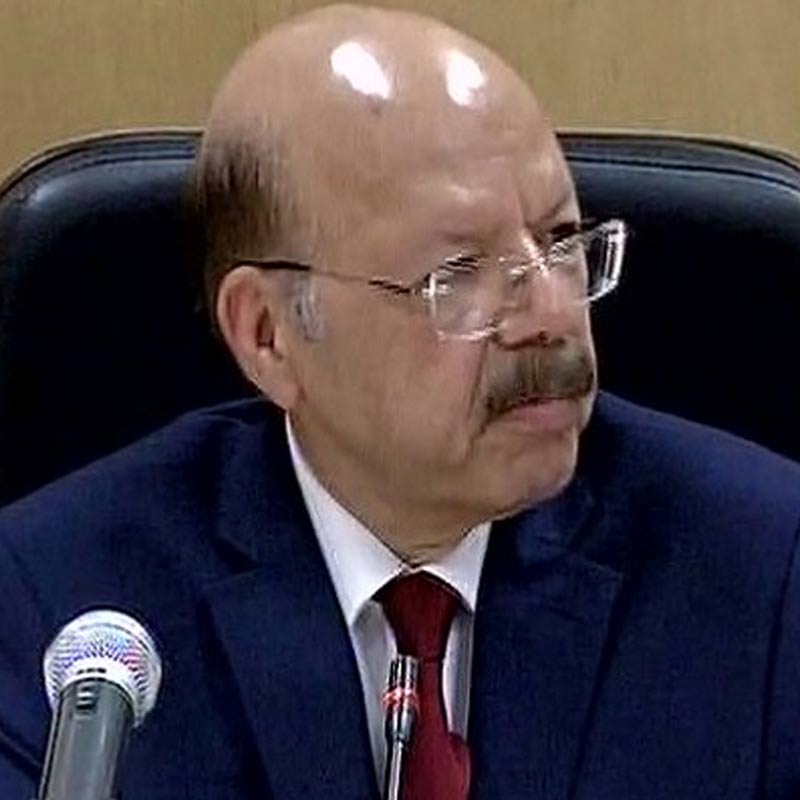
    NEW DELHI: The impact of the social media and mobile apps became evident when the live-streaming of the Election Commission of India’s press meet on 4 January 2017 to announce the dates of elections in five states reached unprecedented figures.

    The press conference by the ECI was live-streamed on the Information and Broadcasting’s YouTube channel and on the Facebook Pages of Press Information Bureau, the Ministry, and Facebook India. Important highlights of the announcement were also tweeted live by PIB and MIB, and shared on their Facebook Pages as well.

    The actual figures of the reach of the relevant information on the ECI Press Conference the among the Citizens are as follows:

    (Figures as on 7:00 PM, 4 January, 2017)

    Among MIB’s social media accounts, a total of 22 tweets, 5 Facebook and 1 YouTube posts were made on Assembly Election Schedule.

    On Facebook, the 5 posts achieved a Total Reach of over 5,24,000 people, 1,219 Likes and 140 Shares.

    The ECI press conference was also Live-streamed on Ministry’s Facebook page, which received 12,000 views and reached over 4,95,000 people.
    A total of 55,127 Impressions were achieved for the 22 tweets made from MIB handle. These were re-tweeted 1,448 times and 550 favourites were achieved.

    The Live Stream of the ECI Press Conference on YouTube achieved 1,700 views.

    Among PIB’s social media accounts, a total of 68 tweets and 10 Facebook posts were made on Assembly Election Schedule. The Facebook posts achieved a total reach of more than 29,700 people, 167 Likes and 46 Shares, while PIB’s tweets resulted in 650,000 impressions (views), 4,140 re-tweets and 951 favourites, as of now.

    The live-streaming of the event on PIB’s Facebook page has reached 3,04,000 people and fetched more than 800 views.

    In addition to the above platforms, the ECI press conference was live streamed for the first time on two Facebook pages, Facebook India and Government, Politics and Non Profits, which collectively received a massive response with more than 100,000 video views and reached over 1.3 million people on Facebook. The Facebook Live Stream received 6,400 likes and 624 shares. (Figures as on 7:00 PM, 4th January, 2017)

    On Twitter, Top Trending Hashtags throughout the day were #ElectionCommission, #AssemblyElection, Manipur & Goa, 5 States, Phase2, Uttarakhand and Model Code of Conduct.

    The maximum potential reach was achieved on the hashtags #ElectionCommission and #AssemblyElection of about 2.12 million and 2.01 million respectively.

  • Poll schedule on social media shows unprecedented reach

    Poll schedule on social media shows unprecedented reach

    NEW DELHI: The impact of the social media and mobile apps became evident when the live-streaming of the Election Commission of India’s press meet on 4 January 2017 to announce the dates of elections in five states reached unprecedented figures.

    The press conference by the ECI was live-streamed on the Information and Broadcasting’s YouTube channel and on the Facebook Pages of Press Information Bureau, the Ministry, and Facebook India. Important highlights of the announcement were also tweeted live by PIB and MIB, and shared on their Facebook Pages as well.

    The actual figures of the reach of the relevant information on the ECI Press Conference the among the Citizens are as follows:

    (Figures as on 7:00 PM, 4 January, 2017)

    Among MIB’s social media accounts, a total of 22 tweets, 5 Facebook and 1 YouTube posts were made on Assembly Election Schedule.

    On Facebook, the 5 posts achieved a Total Reach of over 5,24,000 people, 1,219 Likes and 140 Shares.

    The ECI press conference was also Live-streamed on Ministry’s Facebook page, which received 12,000 views and reached over 4,95,000 people.
    A total of 55,127 Impressions were achieved for the 22 tweets made from MIB handle. These were re-tweeted 1,448 times and 550 favourites were achieved.

    The Live Stream of the ECI Press Conference on YouTube achieved 1,700 views.

    Among PIB’s social media accounts, a total of 68 tweets and 10 Facebook posts were made on Assembly Election Schedule. The Facebook posts achieved a total reach of more than 29,700 people, 167 Likes and 46 Shares, while PIB’s tweets resulted in 650,000 impressions (views), 4,140 re-tweets and 951 favourites, as of now.

    The live-streaming of the event on PIB’s Facebook page has reached 3,04,000 people and fetched more than 800 views.

    In addition to the above platforms, the ECI press conference was live streamed for the first time on two Facebook pages, Facebook India and Government, Politics and Non Profits, which collectively received a massive response with more than 100,000 video views and reached over 1.3 million people on Facebook. The Facebook Live Stream received 6,400 likes and 624 shares. (Figures as on 7:00 PM, 4th January, 2017)

    On Twitter, Top Trending Hashtags throughout the day were #ElectionCommission, #AssemblyElection, Manipur & Goa, 5 States, Phase2, Uttarakhand and Model Code of Conduct.

    The maximum potential reach was achieved on the hashtags #ElectionCommission and #AssemblyElection of about 2.12 million and 2.01 million respectively.

  • Highlight women’s rights, broadcasters told

    Highlight women’s rights, broadcasters told

    NEW DELHI: In the wake of rampant cases of molestations of women, even in public places like in Bengaluru recently on New Year’s Eve, the government has issued a directive to TV broadcasters and FM radio stations to highlight the importance of treating women with respect and equality.

    The Ministry of Information and Broadcasting (MIB) on Wednesday sent out an advisory to FM radio and television broadcasters, which have signed the licence conditions and other government regulations, to air programmes on TV and radio to convey the message that women need to be “treated with respect and equality”.

    Both TV and radio broadcasters, the MIB said as per stipulations, need to broadcast public interest announcements for maximum of one hour per day suitable/proportional time slots interspersed during that day to highlight the women’s issue.

    For FM radio broadcasters, MIB advised two jingles of 60 seconds and 57 seconds duration should be aired. The private FM Radio stations were advised to broadcast the jingles at least twice a day during peak hours.

  • Highlight women’s rights, broadcasters told

    Highlight women’s rights, broadcasters told

    NEW DELHI: In the wake of rampant cases of molestations of women, even in public places like in Bengaluru recently on New Year’s Eve, the government has issued a directive to TV broadcasters and FM radio stations to highlight the importance of treating women with respect and equality.

    The Ministry of Information and Broadcasting (MIB) on Wednesday sent out an advisory to FM radio and television broadcasters, which have signed the licence conditions and other government regulations, to air programmes on TV and radio to convey the message that women need to be “treated with respect and equality”.

    Both TV and radio broadcasters, the MIB said as per stipulations, need to broadcast public interest announcements for maximum of one hour per day suitable/proportional time slots interspersed during that day to highlight the women’s issue.

    For FM radio broadcasters, MIB advised two jingles of 60 seconds and 57 seconds duration should be aired. The private FM Radio stations were advised to broadcast the jingles at least twice a day during peak hours.

  • TV industry gives mixed reaction to MIB’s DAS III & IV extension

    TV industry gives mixed reaction to MIB’s DAS III & IV extension

    MUMBAI: Even as recently as a month ago, India’s ministry of information and broadcasting (MIB) and the industry regulator the Telecom Regulatory Authority of India announced that the DAS IV deadline of 31 December 2016 was sacrosanct and that the cable TV industry would have to bite the bullet. So, when the MIB announced on 22 December that it was pushing forward the Phase IV date to 31 March 2017 and the Phase III date to 31 January 2017, eyebrows were raised once again globally.

    Can the MIB ever stand firm on deadlines or can it set realistic ones, asked potential international investors who have been waiting to hear some positive developments about India’s digitizing-in-stops-and-starts cable TV sector?

    But, the response on the ground amongst India’s TV broadcasters and cable TV operators was mixed. Some have welcomed the decision; others have been harshly critical of the MIB’s postponement rationale.

    The MIB said the extension was being done “in lieu of uncertainty in the market due to pending court cases and unsatisfactory progress of installation of set-top boxes (STBs) in Phase IV areas.”

    Speaking to Indiantelevision.com, Viacom 18 group CEO Sudhanshu Vats said, “Owing to lack of preparedness of the industry toward digitisation, it is a good move provided there are no more extensions at all.”

    Questions an investment banker unwilling to be identified: “The cable TV trade has been given four to five years to digitize. And, they have not managed to do the job well over this period. What miracle will they perform in one month and three months? What’s to guarantee that the court cases will be settled and that government will not once again become weak-kneed and go in for a further postponement when these fresh deadlines come up? Investors want certainty, not this joke that the government has made of DAS.”

    Hathway Cable & Datacom’s Delhi distributor Vinod Chauhan said, although the order does not directly impact his operation since he was in the area covered under DAS I, it was a good move, but he questioned the logic behind it. Hathway Cable has been expanding into Phase III markets and had hopes that broadband and this expansion would help it increase its ARPUs.

    Siti Networks Ltd COO strategy & compliances Anil Malhotra said that the MSO’s planning for switching over to digital coincided with the government’s deadline of 31 December 2016. He said that there was pickup in demand for digital STBs of late. “We are not worried at all since we have a huge inventory of imported STBs,” Malhotra said.

    As the brief talk veered toward the effect of demonetisation, he said that entertainment was one of the primary essentials in the hectic lives of people today. “Everyone is ready and prepared to shell out Rs 1000-1100 for good quality STBs,” Malhotra added.

    Star India legal and regulatory affairs president and general counsel Deepak Jacob expresed his disappointment about the government’s decision. “When the DAS IV deadline was finally set for 31 December 2016 as per a government notification approved by Parliament, the ministry ideally cannot and should not extend the deadline at all,” he said emphatically. “Now, the government should stick to its new deadline and not allow any posptonment.”

    Smaller cable TV operators are however pleased about the lifeline they have got. Said Maharashtra Cable Operators Foundation (MCOF) president Arvind Prabhoo: “I think the MIB realised that covering diverse areas in a vast country like India was a challenge. Also, taking into consideration the pending court cases against digitisation, the ministry has rightly extended the deadline. It is a good, welcome move.”

    MSO Den Network CEO S N Sharma pointed out that the decision was not going to play a spoiler. He said, “It is not a six month or a year’s extension. It is just three months. The decision looks fine to me. I think this will give everyone sufficient time to do the seeding.”

    Most small cable networks in DAS IV service very few consumers. They are well below the size to viably provide digital cable TV. Most of these have resigned to the fate of losing their business and only livelihood, opined Hyderabad based Sky Vision MD R.S. Raju . “The currency demonetisation put a further damper. Consumers completely stopped spending on non-essential purchases, and STB deployment has been badly hit in rural areas, where plastic money is not prevalent, and new currency notes are in short-supply,” he said.

    He revealed that the MIB had some none to encouraging facts to reveal at the 18 th task force meeting.

    “The I&B ministry has declared certain (un-encouraging) data on STB deployments, up to 25 October 2016. Between 31 August & 25 October 2016, 1.97 million STBs were seeded in DAS IV areas. In Phase III, 0.876 million STBs were seeded in the same period. Combined, 2.84 million STBs were deployed in these two months. To date, pan-India, 92.4 million STBs have been deployed till 25 October 2016, according to MIB data,” Raju said.

    “As per earlier MIB data till 26 July 2016, 17.8 million STBs were seeded in DAS IV areas. Combined with the new data, this indicates that 19.77 million STBs have been seeded in DAS IV areas. DAS IV covers 61.08 million rural TV households spanning 28 states & 6 union territories (2011 Census),” Raju added.

    Raju further informed, “With very low ARPUs and the high cost of laying long length fibre networks to small pockets of Phase IV areas, most MSOs have only ‘cherry picked’ a few DAS IV areas to expand their operations. Few new headends have been set up or are planned in DAS IV areas. Generally, DAS IV areas are serviced from existing headends in neighbouring DAS III areas.”

    He revealed that a representative of the Consumer Electronics and Appliances Manufacturers Association (CEAMA) mentioned that no major purchase orders were received recently by the indigenous STB manufacturers (from MSOs) at the same task force meeting.

    A representative of the Indian Broadcasting Foundation (IBF) mentioned that very few requests had so far been received by its broadcaster members from MSOs for interconnect agreements for Phase IV areas.

    It would be logical to conclude that rural TV viewers will either shift to Doordarshan’s FreeDish or one of the six private, pay DTH platforms, stated Raju.

    At the same meeting, MIB joint secretary (P&A) Mihir Kumar Singh asked the members to suggest measures to implement Phase IV by the notified cut-off date, added Raju.

    And since none of them could offer logical feasible solutions, the MIB has had to take the stance it has. Additionally, the letter from the Andhra Pradesh chief minister N. Chandrababu Naidu to MIB minister M Venkaiah seeking postponement Naidu could have also forced the government to take the decision.

  • TV industry gives mixed reaction to MIB’s DAS III & IV extension

    TV industry gives mixed reaction to MIB’s DAS III & IV extension

    MUMBAI: Even as recently as a month ago, India’s ministry of information and broadcasting (MIB) and the industry regulator the Telecom Regulatory Authority of India announced that the DAS IV deadline of 31 December 2016 was sacrosanct and that the cable TV industry would have to bite the bullet. So, when the MIB announced on 22 December that it was pushing forward the Phase IV date to 31 March 2017 and the Phase III date to 31 January 2017, eyebrows were raised once again globally.

    Can the MIB ever stand firm on deadlines or can it set realistic ones, asked potential international investors who have been waiting to hear some positive developments about India’s digitizing-in-stops-and-starts cable TV sector?

    But, the response on the ground amongst India’s TV broadcasters and cable TV operators was mixed. Some have welcomed the decision; others have been harshly critical of the MIB’s postponement rationale.

    The MIB said the extension was being done “in lieu of uncertainty in the market due to pending court cases and unsatisfactory progress of installation of set-top boxes (STBs) in Phase IV areas.”

    Speaking to Indiantelevision.com, Viacom 18 group CEO Sudhanshu Vats said, “Owing to lack of preparedness of the industry toward digitisation, it is a good move provided there are no more extensions at all.”

    Questions an investment banker unwilling to be identified: “The cable TV trade has been given four to five years to digitize. And, they have not managed to do the job well over this period. What miracle will they perform in one month and three months? What’s to guarantee that the court cases will be settled and that government will not once again become weak-kneed and go in for a further postponement when these fresh deadlines come up? Investors want certainty, not this joke that the government has made of DAS.”

    Hathway Cable & Datacom’s Delhi distributor Vinod Chauhan said, although the order does not directly impact his operation since he was in the area covered under DAS I, it was a good move, but he questioned the logic behind it. Hathway Cable has been expanding into Phase III markets and had hopes that broadband and this expansion would help it increase its ARPUs.

    Siti Networks Ltd COO strategy & compliances Anil Malhotra said that the MSO’s planning for switching over to digital coincided with the government’s deadline of 31 December 2016. He said that there was pickup in demand for digital STBs of late. “We are not worried at all since we have a huge inventory of imported STBs,” Malhotra said.

    As the brief talk veered toward the effect of demonetisation, he said that entertainment was one of the primary essentials in the hectic lives of people today. “Everyone is ready and prepared to shell out Rs 1000-1100 for good quality STBs,” Malhotra added.

    Star India legal and regulatory affairs president and general counsel Deepak Jacob expresed his disappointment about the government’s decision. “When the DAS IV deadline was finally set for 31 December 2016 as per a government notification approved by Parliament, the ministry ideally cannot and should not extend the deadline at all,” he said emphatically. “Now, the government should stick to its new deadline and not allow any posptonment.”

    Smaller cable TV operators are however pleased about the lifeline they have got. Said Maharashtra Cable Operators Foundation (MCOF) president Arvind Prabhoo: “I think the MIB realised that covering diverse areas in a vast country like India was a challenge. Also, taking into consideration the pending court cases against digitisation, the ministry has rightly extended the deadline. It is a good, welcome move.”

    MSO Den Network CEO S N Sharma pointed out that the decision was not going to play a spoiler. He said, “It is not a six month or a year’s extension. It is just three months. The decision looks fine to me. I think this will give everyone sufficient time to do the seeding.”

    Most small cable networks in DAS IV service very few consumers. They are well below the size to viably provide digital cable TV. Most of these have resigned to the fate of losing their business and only livelihood, opined Hyderabad based Sky Vision MD R.S. Raju . “The currency demonetisation put a further damper. Consumers completely stopped spending on non-essential purchases, and STB deployment has been badly hit in rural areas, where plastic money is not prevalent, and new currency notes are in short-supply,” he said.

    He revealed that the MIB had some none to encouraging facts to reveal at the 18 th task force meeting.

    “The I&B ministry has declared certain (un-encouraging) data on STB deployments, up to 25 October 2016. Between 31 August & 25 October 2016, 1.97 million STBs were seeded in DAS IV areas. In Phase III, 0.876 million STBs were seeded in the same period. Combined, 2.84 million STBs were deployed in these two months. To date, pan-India, 92.4 million STBs have been deployed till 25 October 2016, according to MIB data,” Raju said.

    “As per earlier MIB data till 26 July 2016, 17.8 million STBs were seeded in DAS IV areas. Combined with the new data, this indicates that 19.77 million STBs have been seeded in DAS IV areas. DAS IV covers 61.08 million rural TV households spanning 28 states & 6 union territories (2011 Census),” Raju added.

    Raju further informed, “With very low ARPUs and the high cost of laying long length fibre networks to small pockets of Phase IV areas, most MSOs have only ‘cherry picked’ a few DAS IV areas to expand their operations. Few new headends have been set up or are planned in DAS IV areas. Generally, DAS IV areas are serviced from existing headends in neighbouring DAS III areas.”

    He revealed that a representative of the Consumer Electronics and Appliances Manufacturers Association (CEAMA) mentioned that no major purchase orders were received recently by the indigenous STB manufacturers (from MSOs) at the same task force meeting.

    A representative of the Indian Broadcasting Foundation (IBF) mentioned that very few requests had so far been received by its broadcaster members from MSOs for interconnect agreements for Phase IV areas.

    It would be logical to conclude that rural TV viewers will either shift to Doordarshan’s FreeDish or one of the six private, pay DTH platforms, stated Raju.

    At the same meeting, MIB joint secretary (P&A) Mihir Kumar Singh asked the members to suggest measures to implement Phase IV by the notified cut-off date, added Raju.

    And since none of them could offer logical feasible solutions, the MIB has had to take the stance it has. Additionally, the letter from the Andhra Pradesh chief minister N. Chandrababu Naidu to MIB minister M Venkaiah seeking postponement Naidu could have also forced the government to take the decision.

  • MIB stresses on digital, connectivity revolution; Google Play govt schemes

    MIB stresses on digital, connectivity revolution; Google Play govt schemes

    NEW DELHI: Information and Broadcasting Minister M Venkaiah Naidu has said the endeavour of the Government is to improve delivery systems, need to promote digital transformation and take forward the connectivity revolution in all sectors.

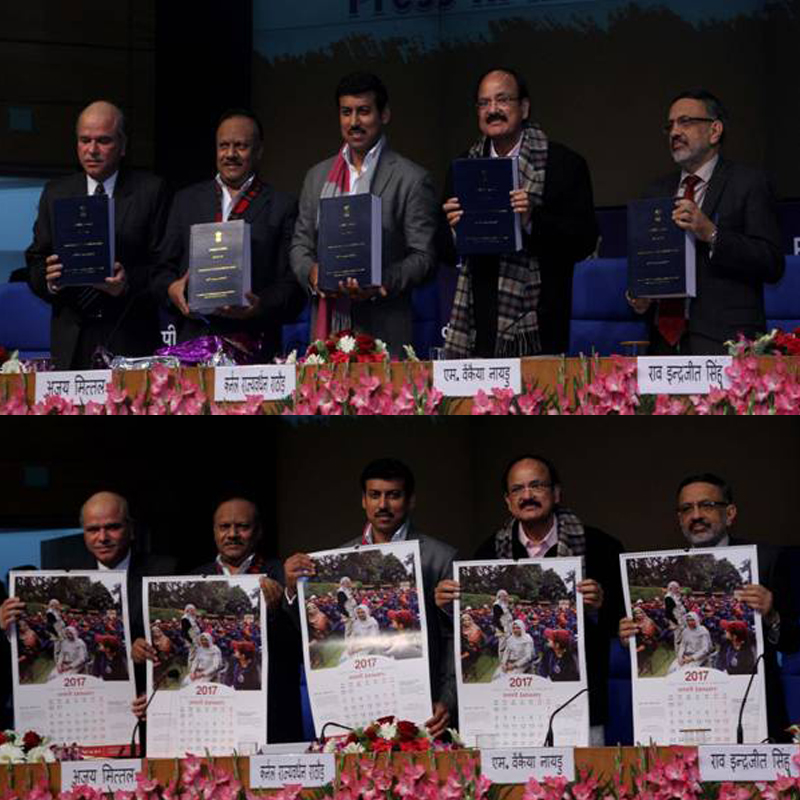
    Speaking after the release of the Government of India Calendar 2017, he lauded the growth of the Indian print media and said it continued its growth story at a steady rate of 5.13% over the previous year. Earlier, Naidu launched the Government of India Digital Calendar 2017 App. He added that the calendar App could be downloaded from Google Play store free of cost.

    A total of 5,423 new publications had been registered during the year 2015-16 with the total number of Registered Publications as on 31 March 2016 standing at 1, 10,851.

    Giving the Circulation-wise details, Naidu said that Hindi publications continued to lead with 31,44,55,106 copies per publishing day followed by English with 6,54,13,443 copies and Urdu with 5,17,75,006 copies per publishing day.

    He said the phenomenal growth of the print media sector had mandated changes in the print media policy/guidelines in the past years. The need to update policies keeping in mind the changing dynamics in the print media sector, has resulted in evolving a robust mechanism for RNI to maintain an updated list of Publications in the Country. This mechanism also facilitated weeding out illegal publications that may prove to be an irritant to law-enforcement agencies.

    Referring to the New Print Advertisement Policy framework, the Minister said that it provided for circulation verification Procedure for empanelment of Newspapers and Journals with DAVP. The procedure involved certification by RNI if circulation exceeds 45,000 copies per publishing day.

    He said the vision of the Government was to position the nation on a sustainable growth trajectory. The Government is committed to bring about transformational changes in the country with the mantra of ‘Reform, Perform & Transform’.

    The vision has been depicted in the Government of India Calendar 2017 with the theme “Mera Desh Badal Raha Hai, Aage Badh Raha Hai”.

    He also released the Press in India Report 2015-16 prepared by the Registrar of Newspapers of India. Minister of state for information & broadcasting Rajyavardhan Rathore was also present on the occasion.

    Naidu announced that the Government would be launching a 100 days campaign across the country on the theme of Good Governance from 25 December which marks the birthday of the former prime minister A B Vajpayee and is celebrated as Good Governance Day. Ministers, Members of the Parliament would be travelling across the country to highlight key initiatives of the Government that has been taken in the last two and a half years.

    The Government Calendar meanwhile showcases various flagship schemes and initiatives of the Government identifying a different theme every month:

    ·        Jan:     Skilling India for Youth Led Development

    ·        Feb:    Empowering the Poor

    ·        Mar:   Sashakt Nari, Sashakt Bharat

    ·        April: Futuristic India through Infrastructure Building

    ·        May:  MSME: India’s Economic Backbone

    ·        June: Farmers: Bread Winners of our Nation

    ·        July:   Rural Electrification: Lightning Every Home     

    ·        Aug:    Armed Forces: Pride of the Nation

    ·        Sept:   Cashless Transactions

    ·        Oct:     Swachh Bharat: New Vigour to Sanitation

    ·        Nov:   Corruption Free Governance

    ·        Dec:    Sugamya Bharat: Accessible India


    The highlights of the Press in India Report is given below:

    1

    The Total Number of Registered Publications

    i)       Newspaper category (Daily, Tri/Bi-weekly periodicities)

    ii)    Periodicals category (other periodicities)

    1,10,851

    16,136

    94,715

    2

    The number of new publicationsregistered during 2015-16

    5,423

    3

    Number of publications ceased during2015-16

                15

    4

    Number of publications  deregisteredduring 2015-16

                22

    5

    Percentage of growth of total registered publications over the previous year

    5.13 %

    6

    The largest number of publications registered in any Indian language (Hindi)

    44,557

    7

    The second largest number of publications registered in any languageother than Hindi (English)

    14,083

    8

    The State with the largest number ofregistered publications (Uttar Pradesh)

    16,984

    9

    The State with the second largest number of registered publications(Maharashtra)

    15,260

    10

    The number of  publications that submitted Annual Statements

    (This figure includes 1,341 Misc. publications)

    27,445

    11

    The total claimed circulation of publications during 2015-16

    i)       Hindi Publications

    ii)    English Publications

    iii)  Urdu Publications

    iv)  Marathi

    v)     Gujarati

    vi)  Telugu

    vii)  Odiya

    viii) Malayalam

    ix)  Tamil

    x)     Kannada

    xi)  Punjabi

    xii)                        Assamese

    xiii)                     Kashmiri

    61,02,38,581

    31,44,55,106

    6,54,13,443

    5,17,75,006

    3,67,88,737

    2,88,28,334

    2,76,45,134

    2,03,12,592

    1,55,57,673

    93,39,722

    64,85,082

    59,31,641

    13,90,759

    1,37,450

    12

    The largest number of publications that submitted Annual Statements in any Indian language (Hindi).

    14,316

    13

    The second largest number of publications that submitted Annual Statements in any language (English).

    2,174

    14

    The largest circulated Daily: “Ananda Bazar Patrika”, Bengali, Kolkata.

    11,50,038

    15

    The Second largest circulated Daily:“Hindustan Times” English, Delhi.

    9,92,239

    16

    The largest circulated Hindi Daily:“Punjab Kesari”, Jalandhar

    7,36,399

    17

    The largest circulated Multi-edition Daily: “Dainik Bhaskar”, Hindi. (45 editions)

    46,14,939

    18

    The second largest circulated Multi-edition Daily: “The Times of India”, English. (33 editions)

    44,21,374

    19

    The largest circulated Periodical: “The Sunday Times of India”, English/Weekly edition, Delhi.

    8,02,466

    20

    The largest circulated Periodical inMalayalam“Vanitha”,Malayalam/Fortnightly edition, Kottayam.

    6,94,291

    21

    Total Title Applications Received

    Titles Approved

    20,999

    12,817

    22

    Titles Deblocked during 2015-16

    (As they did not apply for registration within 2 years)

    7,754


  • MIB stresses on digital, connectivity revolution; Google Play govt schemes

    MIB stresses on digital, connectivity revolution; Google Play govt schemes

    NEW DELHI: Information and Broadcasting Minister M Venkaiah Naidu has said the endeavour of the Government is to improve delivery systems, need to promote digital transformation and take forward the connectivity revolution in all sectors.

    Speaking after the release of the Government of India Calendar 2017, he lauded the growth of the Indian print media and said it continued its growth story at a steady rate of 5.13% over the previous year. Earlier, Naidu launched the Government of India Digital Calendar 2017 App. He added that the calendar App could be downloaded from Google Play store free of cost.

    A total of 5,423 new publications had been registered during the year 2015-16 with the total number of Registered Publications as on 31 March 2016 standing at 1, 10,851.

    Giving the Circulation-wise details, Naidu said that Hindi publications continued to lead with 31,44,55,106 copies per publishing day followed by English with 6,54,13,443 copies and Urdu with 5,17,75,006 copies per publishing day.

    He said the phenomenal growth of the print media sector had mandated changes in the print media policy/guidelines in the past years. The need to update policies keeping in mind the changing dynamics in the print media sector, has resulted in evolving a robust mechanism for RNI to maintain an updated list of Publications in the Country. This mechanism also facilitated weeding out illegal publications that may prove to be an irritant to law-enforcement agencies.

    Referring to the New Print Advertisement Policy framework, the Minister said that it provided for circulation verification Procedure for empanelment of Newspapers and Journals with DAVP. The procedure involved certification by RNI if circulation exceeds 45,000 copies per publishing day.

    He said the vision of the Government was to position the nation on a sustainable growth trajectory. The Government is committed to bring about transformational changes in the country with the mantra of ‘Reform, Perform & Transform’.

    The vision has been depicted in the Government of India Calendar 2017 with the theme “Mera Desh Badal Raha Hai, Aage Badh Raha Hai”.

    He also released the Press in India Report 2015-16 prepared by the Registrar of Newspapers of India. Minister of state for information & broadcasting Rajyavardhan Rathore was also present on the occasion.

    Naidu announced that the Government would be launching a 100 days campaign across the country on the theme of Good Governance from 25 December which marks the birthday of the former prime minister A B Vajpayee and is celebrated as Good Governance Day. Ministers, Members of the Parliament would be travelling across the country to highlight key initiatives of the Government that has been taken in the last two and a half years.

    The Government Calendar meanwhile showcases various flagship schemes and initiatives of the Government identifying a different theme every month:

    ·        Jan:     Skilling India for Youth Led Development

    ·        Feb:    Empowering the Poor

    ·        Mar:   Sashakt Nari, Sashakt Bharat

    ·        April: Futuristic India through Infrastructure Building

    ·        May:  MSME: India’s Economic Backbone

    ·        June: Farmers: Bread Winners of our Nation

    ·        July:   Rural Electrification: Lightning Every Home     

    ·        Aug:    Armed Forces: Pride of the Nation

    ·        Sept:   Cashless Transactions

    ·        Oct:     Swachh Bharat: New Vigour to Sanitation

    ·        Nov:   Corruption Free Governance

    ·        Dec:    Sugamya Bharat: Accessible India


    The highlights of the Press in India Report is given below:

    1

    The Total Number of Registered Publications

    i)       Newspaper category (Daily, Tri/Bi-weekly periodicities)

    ii)    Periodicals category (other periodicities)

    1,10,851

    16,136

    94,715

    2

    The number of new publicationsregistered during 2015-16

    5,423

    3

    Number of publications ceased during2015-16

                15

    4

    Number of publications  deregisteredduring 2015-16

                22

    5

    Percentage of growth of total registered publications over the previous year

    5.13 %

    6

    The largest number of publications registered in any Indian language (Hindi)

    44,557

    7

    The second largest number of publications registered in any languageother than Hindi (English)

    14,083

    8

    The State with the largest number ofregistered publications (Uttar Pradesh)

    16,984

    9

    The State with the second largest number of registered publications(Maharashtra)

    15,260

    10

    The number of  publications that submitted Annual Statements

    (This figure includes 1,341 Misc. publications)

    27,445

    11

    The total claimed circulation of publications during 2015-16

    i)       Hindi Publications

    ii)    English Publications

    iii)  Urdu Publications

    iv)  Marathi

    v)     Gujarati

    vi)  Telugu

    vii)  Odiya

    viii) Malayalam

    ix)  Tamil

    x)     Kannada

    xi)  Punjabi

    xii)                        Assamese

    xiii)                     Kashmiri

    61,02,38,581

    31,44,55,106

    6,54,13,443

    5,17,75,006

    3,67,88,737

    2,88,28,334

    2,76,45,134

    2,03,12,592

    1,55,57,673

    93,39,722

    64,85,082

    59,31,641

    13,90,759

    1,37,450

    12

    The largest number of publications that submitted Annual Statements in any Indian language (Hindi).

    14,316

    13

    The second largest number of publications that submitted Annual Statements in any language (English).

    2,174

    14

    The largest circulated Daily: “Ananda Bazar Patrika”, Bengali, Kolkata.

    11,50,038

    15

    The Second largest circulated Daily:“Hindustan Times” English, Delhi.

    9,92,239

    16

    The largest circulated Hindi Daily:“Punjab Kesari”, Jalandhar

    7,36,399

    17

    The largest circulated Multi-edition Daily: “Dainik Bhaskar”, Hindi. (45 editions)

    46,14,939

    18

    The second largest circulated Multi-edition Daily: “The Times of India”, English. (33 editions)

    44,21,374

    19

    The largest circulated Periodical: “The Sunday Times of India”, English/Weekly edition, Delhi.

    8,02,466

    20

    The largest circulated Periodical inMalayalam“Vanitha”,Malayalam/Fortnightly edition, Kottayam.

    6,94,291

    21

    Total Title Applications Received

    Titles Approved

    20,999

    12,817

    22

    Titles Deblocked during 2015-16

    (As they did not apply for registration within 2 years)

    7,754


  • States may decide Pak artistes films fate

    States may decide Pak artistes films fate

    NEW DELHI: The Central Government will not intervene in cases involving protests about Pakistani actors working in Indian films if the film had been certified by the Central Board of Film Certification.

    Even as the controversy over Shah Rukh Khan having met a local part chief in connection with his upcoming film ‘Raees’ starring Pakistani actress Mahira Khan rages, the information and broadcasting ministry (MIB) sources told indiantelevision.com that this was more of a law and order problem which fell into the realm of the state governments.

    In October this year, the Film & Television Producers Guild of India Ltd had expressed “genuine concern for all those film producers who invested heavily in films featuring artistes from across the border.”

    Even as it expressed unflinching support to the Central Government and its solidarity with the Indian armed forces on their supreme sacrifice at Uri (Jammu and Kashmir) and courage and valor displayed during the recent counter-terrorism operations, it noted there had been some discourse in the media recently with regard to certain threats to disrupt the release of these movies.

    The Guild, which represents most of the active Hindi film producers, there are many film producers who had either already shot their films or were in the process of completing their unfinished films prior to the escalation of hostilities with Pakistan. These included Karan Johar (‘Ae Dil Hai Mushkil’ with Fawad Khan and ‘Dear Zindagi’ with Ali Zafar) which had also been certified by the CBFC and released.

    Pakistani actor Fawad Khan was also seen in ‘Kapoor and Sons’, and earlier in ‘Khoobsoorat’ opposite Sonam Kapoor.

    Meanwhile, the sources said no permission had been granted to any Pakistani TV or radio channel to broadcast in India.

    Also read

    Bollywood supports Govt’s Pak policy; pleads for ongoing projects

    Film Industry supports Govt on Pak but says do not stop ongoing projects