Tag: MIB

  • MSO renewals and cancellations list released

    MUMBAI: The MIB has granted registration to 230 multi-system operators (MSOs) for ten years as on 13 February, 2017, to operate digital addressable system (DAS). As per MIB order no. 2/108/2015-DAS dated 27 January, 2017, all these registered MSOs can operate anywhere in India. 

    The MIB has also released a list of 45 multi-system operators (MSO) the registration of which to operate DAS has been cancelled (as on 13 February, 2017) or their pending cases have been closed. 

    Of the MSOs listed on the MIB site, permission to one MSO has been restored, and the order for closure of two has been withdrawn. 

    For Kal Cables Pvt Ltd (Chennai),  the MIB order of cancellation of MSO registration has been withdrawn and provisional registration granted on 13 January 2017. For S.S.R. Cable Network (Adilabad, Telangana), the order for closure of application has been withdrawn and provisional registration was issued on 19 January 2017.

    For Nakerkal Communications, the MIB order for closure of application has also been withdrawn and the provisional registration was issued on 10 January 2017.

    On 9 January, www.indiantelevision.com had reported that the registration of MSOs remained slow with 71 provisional clearances in December 2016 and up to 4 January 2017 taking the total to 1130 despite the fact that less than a month is left for Phase III analogue switch-off and two months before the final phase of digital addressable system DAS deadline gets over.

    The number of permanent MSOs (with 10-year licences) remained static at 229, while the number of cancellations remained at 44 as intimated on 30 November 2016. Of the 71 entrants, 21 were registered in the first four days of January 2017.

    With the home ministry directive about doing away with security clearances for MSOs not communicated in writing to the MIB, confusion prevailed over slowing down of the registration processes of MSOs for delivering services in DAS areas. The Government already deferred to 31 January 2017 the sunset date for Phase III (from 31 December 2015) and 31 March 2917 for Phase IV (from 31 December 2016).

    The Ministry on 8 July 2016 issued an advisory to the Chief Secretaries of all States/UTs Governments, the District Collectors and the Multi System Operators (MSOs)/ Local Cable Operators (LCOs) to ensure that no unpermitted TV channel, are transmitted/ re-transmitted in the Cable Networks and to take action against the defaulter under the provisions of the Cable Television Networks Act 1995 to stop transmission of these channels.

    Click here for list of 230 MSOs

    Click here for list of MSOs registration of which has been cancelled (or cases closed)

    Also Read:

    MSO registrations remain slow even as DAS deadlines approach
    Report illegal TV channels, Govt alerted

  • MIB petitioned on pre-censorship of period cinematic content

    NEW DELHI: If a fringe group from Rajasthan has its way, then period cinematic dramas may face pre-censorship, which sooner or later could also lead to government interventions for TV content that still doesn’t face much content regulations and pre-screening vetting.

    Rajasthan’s Karni Sena wants pre- censorship of period films and plans to approach the Ministry of Information and Broadcasting (MIB) in this regard. It had recently protested against Sanjay Leela Bhansali’s period film `Padmavati’ accusing him of presenting “distorted facts”, according to a PTI report.

    “We are asking the I&B ministry about the pre-censorship of historic films. We are also hoping for some support from producer and director associations and in fact they are ready to give their support,” the PTI report quoted Karni Sena chief Lokendra Singh Kalvi as stating.

    Karni Sena had stalled the shooting of the Ranveer Singh-Deepika Padukone starrer by vandalising the set at the Jaigarh Fort in Jaipur in the northern state of Rajasthan and also assaulted director Bhansali. The acts weren’t strongly condemned by either the State or the Central governments and MIB minister M. Venkaiah Naidu had made some vague statements about freedom of expression in seemingly limp support of the film industry.

    “Our demands have been fulfilled by them (the film-makers of `Padmavati’). They have promised that they won’t show any kind of personal rapport between the actors in the movie (Rajput queen Padmavati and the then Muslim ruler in Delhi Allauddin Khilji),” Kalvi told PTI.

    According to the report, Kalvi said his group will also try to hold discussion over pre-screening of all historic films to journalists and historians so there was “no distortion of history.”

    TV and film industry observers opined that if the government capitulated to such pre-censorship of demands regarding films, it would be just a matter of time when similar demands would be made of historical and period serials aired on TV channels, the number of which are increasing on GECs.

    Incidentally, the film `Padmavati’ is based on `Padmavat’, a celebrated fictional ballad written in the Awadhi dialect of Hindi by 16th-century Indian Sufi poet Malik Muhammad Jayasi. The plot revolved around the beautiful queen Padmavati, originally hailing from Sri Lanka, who married a Rajput prince and came to the then India that was made up of a plethora of independent and princely states and had to commit suicide by jumping into a pyre to save her honour from the Muslim ruler of Delhi Khilji who got besotted by her reported beauty and annihilated her husband’s kingdom.

    As some critics have said, fiction is being turned into history in the 21st century India and artistic creativity was being stifled.

  • Media Communication Policy being drafted to ensure access to information

    Media Communication Policy being drafted to ensure access to information

    NEW DELHI: A Media Communication Policy is under formulation in the Information and Broadcasting Ministry to address communication needs and enhance access to information.

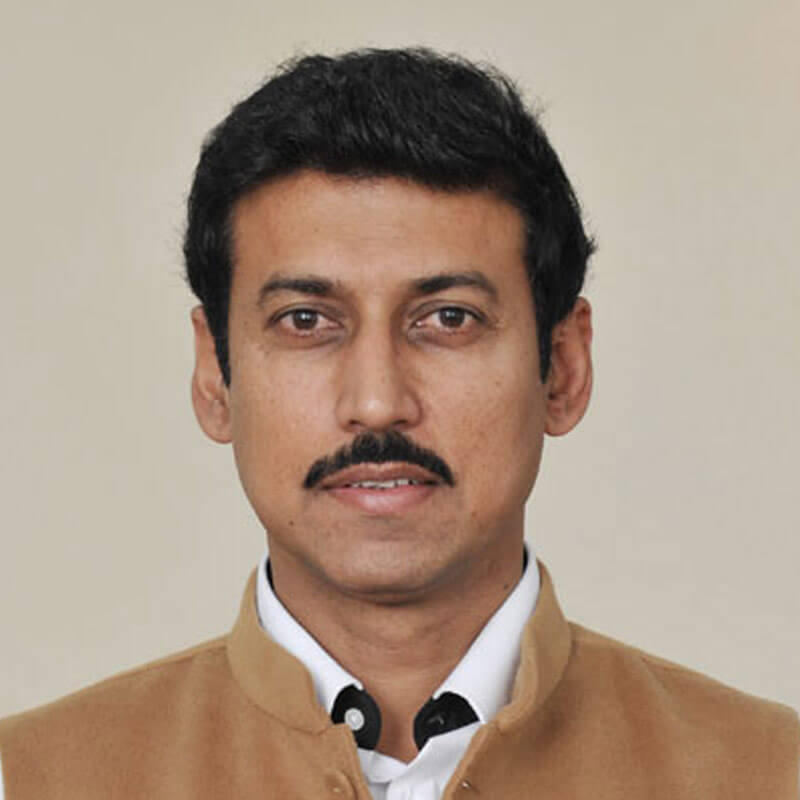
    Stating this, Minister of State for I and B Rajyavardhan Rathore told Parliament today that the aim would also be to promote national dialogue on development issues by all citizens; and ensure timely, orderly and effective growth and dissemination of Government information.

    This was decided in the State Information Ministers’ Conference (SIMCON) held on 9 and 10 December 2016.

    Various issues concerning State and Central Governments on integrated and effective dissemination of information were discussed.

    It was decided that the policy will be finalized in consultation with States.

    Integrating Government communication with development and enabling participation from citizens to improve decision making and implementation of Government programmes will be the aims of the policy, the Minister said.

    He said facilitating systematic use of communication and information strategies contributes in large measure to more effective use of Government resources and better implementation of Government programmes and policies thereby contributing to improved quality of life of citizens. 

    Also Read:

    Mass Comm courses in regional languages significant: Naidu

  • No going back on DAS despite difficulties in P-IV: MIB

    No going back on DAS despite difficulties in P-IV: MIB

    NEW DELHI: Even as he admitted the fourth phase of digital addressable system for cable television was the most difficult, advisor (DAS) in the information and broadcasting ministry Yogendra Pal has said there is “no going back on the deadline of 31 March 2017.”

    Pal said that there were difficulties because several MSOs were reluctant to set up headends in far out rural areas, as the fourth and final phase only covers rural areas. He said the 60-plus cases pending in Delhi High Court relating to Phase III had been disposed of with the exception of three which challenged section 4A of the Cable Television Networks (Regulation) Act 1995, and all stay orders had been vacated.

    However, Pal admitted that a new case had been filed in Telengana to the effect that while there was clear reference to switching to DAS in Section 4A, there was no reference to switching off analogue signals. He said this case had been filed by a party not involved with the cable TV business.

    However, cable TV veteran Lt. Colonel V C Khare (retired) who chaired the session on ‘DAS implementation – miles to go before we sleep?” claimed that just around 22 per cent seeding of set-top boxes had been achieved in the third phase as against government claims of almost total seeding.

    Siticable Networks CEO V D Wadhwa also agreed that there were ‘gaps’ in Phase III, and Siticable had yet to seed another 2,50,000 STBs. But, he welcomed DAS, though he felt monetisation was still a challenge.

    Wadhwa said that while the objective of the consumer getting channels of his choice had been achieved, the industry was cable of overcoming soon the problems about SMS or receipts not being issued which had been raised by Khare in a presentation earlier in the day when he showed various loopholes in the DAS legislation.

    Khare had also pointed out that DAS in effect was aimed at involving only the broadcaster and the multisystem operator, conveniently keeping out the LCO who had built the industry.

    Other speakers in the session were unanimous that the cable TV industry had achieved in four years something that the direct to home industry had not been able to do in twelve years.

    In a session on “Business Model and Regulations”, there was general unanimity that the industry needed regulation but it did not have to come from a government regulator. The speakers favoured industry-led regulation.

    Eminent lawyer Kaushik Moitra of TMT Practice who moderated the session said that the Telecom Regulatory Authority of India (TRAI) had been given the additional burden of broadcasting only till a Broadcasting Regulatory Authority of India is set up but this had not happened. He said there was a certain need to move towards self-regulation. He also raised the question of whether TRAI was working to unite the LCOs.

    However, he applauded the growth of the industry with the last five years showing the growth of the highest number of television channels.

    Indiacast EVP Amit Arora said regulation was welcome, but it should not mean “jumping in at all times – this kills enterprise”. Even as no other country had achieved the kind of growth that local cable operators had shown in India, the regulator had to show greater responsibility towards the last mile operator. He also wondered why the MSOs and LCOs could not handle broadband while dealing with cable TV.

    Prag News CMD Sanjive Narain said that the regulator was only mean t to “ease movement” and not strictly regulate. It should solve problems before waiting for them to arise. He said that though TRAI consulted stakeholders, everything was often’pre-decided’.

    He said the primary problem before the industry was one of revenue sharing. Once that was out of the way, things would move smoothly.

    VuClip consultant Sisir Pillai said a regulator is needed, particularly in view of newer technologies like OTT. Referring to the growth of OTT, he said that the aim was to deliver content in whatever manner the subscriber wanted and find revenue for this.

    Answering a question later, he said that wired delivery was still the best medium even if video had to be sent to mobiles or other platforms.

    InDigital senior VP – operations and head of regulatory Subhashish Mazumdar said there was no regulator when the LCO began with VCRs and built the industry. This meant that the last mile operator and multi-system should be capable of solving their own problems. The industry was now geared up for this, he said.

    Agreeing that the primary problem was one of revenue sharing, Mazumdar said that the issue of unity among stakeholders to solve such problems had to come from the top.

    Earlier, Dr A K Rastogi of Aavishkaar which was among the organizers said that the primary problem was one of unity among stakeholders and a step had been taken in this direction with the formation of the Media Club of India.

    A session later on “Significance of wireline operation in Digital India” moderated by Castle Media ED Vinsley Fernandes was unanimous that there was no better technology than wireline.

    The session was addressed by Cisco CTO Gulshan Khurana, Siti Networks COO Anil Malhotra, Ortel Communications President and CEO Bibhu Rath, Suresh Sethiya of ICNCL of Kolkata, and StoreSay founder and CEO Raman Kalra.

  • TRAI gets support from Subhash Chandra on inter-connect  guidelines

    TRAI gets support from Subhash Chandra on inter-connect guidelines

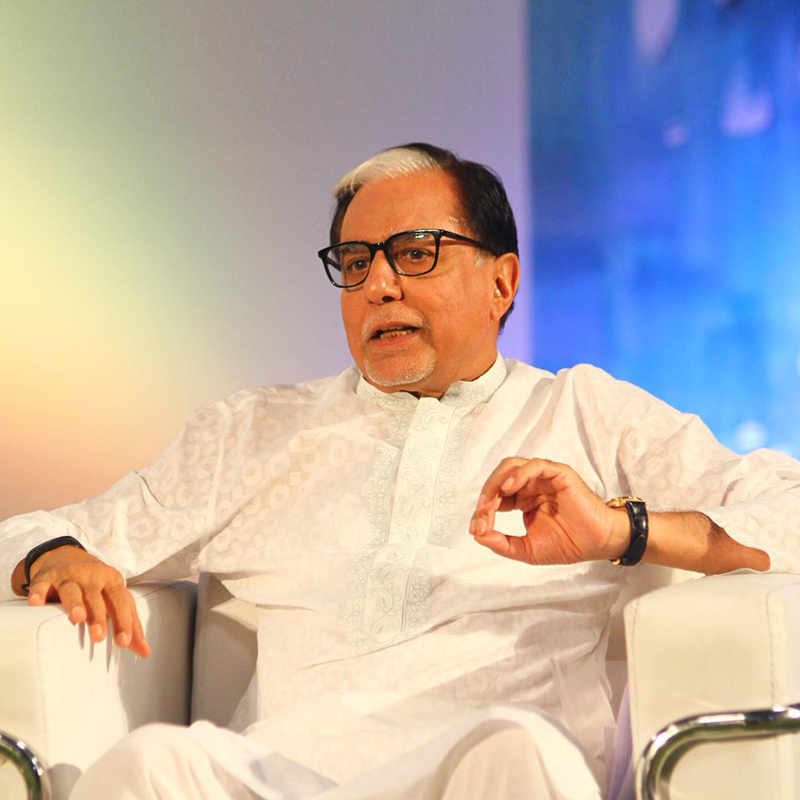
    NEW DELHI: Urging all the stakeholders of the Indian broadcast and cable segments to sink their differences and “come together” for the overall benefit  of the industry, Zee group chairman Subhash Chandra supported regulator TRAI’s draft inter-connect guidelines that, amongst other such broadcast regulations, have been put on hold owing to them legally challenged in courts.  

    “I am a strong supporter of (TRAI’s draft) inter-connect regulations,” Chandra, a Rajya Sabha Member of Parliament from Haryana state, said, adding that in order to reduce litigations amongst stakeholders in the industry it was paramount to “support” such regulations.

    However, Chandra made it clear that though broadcast and cable industry should back TRAI draft guidelines at present — “at least temporarily” — such guidelines should be relaxed over a period of time and jocularly added that rampant litigations financially enriched lawyers only. He was responding to a question from the audience on growing division between broadcasters and distribution platforms, especially the MSOs and LCOs.

    Earlier, delivering the keynote address at the SATCAB meet organized by the All-India Dish Antennae Aavishkaar Sangh, the Zee/Essel Group founder said that there was no reason why the estimated 230,000 (his estimates) local cable operators in the country should not shed allegiance to multiple industry bodies and “unite under one umbrella” to become a force to reckon with so that their voice could be heard more forcefully in the corridors of power.

    Pointing out that not only the MSOs and LCOs should unite, but “all stakeholders” like broadcasters too, Chandra sounded a word of caution, “As an industry we need to be alert to technological evolution.” He added that unless that happens, others, like telcos, “will take a lead over consumer experience”, which will be “our weakness.”

    Chandra said the cable industry had to prepare itself “to catch up with the future” as at present the industry was at “ground level with basic set top boxes”, for example, when technology (like 3D printing) could soon make it possible for viewers to get a different experience in, say, a TV cookery show.

    Referring to various concerns of the LCOs, he said he had ensured that the issue of entertainment tax got subsumed in the Goods and Services Tax (GST), but for him to take up issues relating to the sector stakeholders needed to unite.

    Going back in time to 1992, he dwelt on how the idea of Zee had been drawn up and how when he had given this information to a senior official in the Ministry of Information and Broadcasting (MIB), he had been strongly criticized for the whole idea and was told it would never succeed. “But in just three months of launch”, he said, “Zee had 300,000 television homes subscribing to it.”  

    ALSO READ:

    Top M&E industry honchos see no major benefit from Budget ’17

    MSOs join issues with TRAI tariff plea at Madras HC

    Tariff order: Don’t notify without SC nod, TRAI told; Madras HC case to continue


  • OTT poses regulatory challenges but govt committed to digitisation

    OTT poses regulatory challenges but govt committed to digitisation

    NEW DELHI: Minister of State for Information and Broadcasting (MIB) Rajyavardhan Rathore has said that digital technology platform acted as an equalizer ensuring level playing field and providing equal opportunities for all irrespective of age, region and economic background, but cautioned that techs like OTT posed regulatory challenges too.

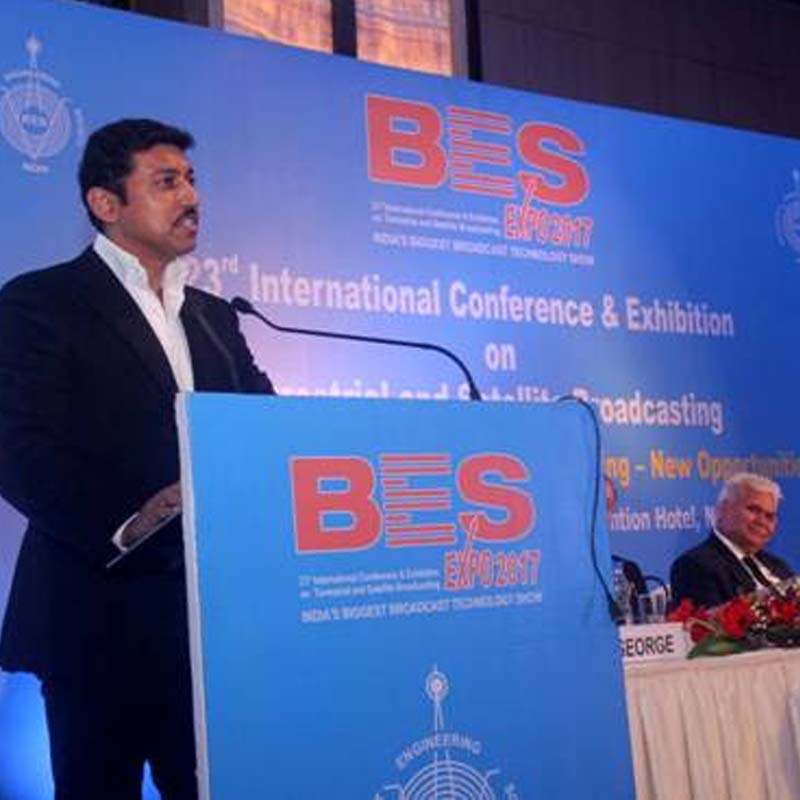
    Digital technology apart from providing better services, also ensured transparency that enabled plugging leakages at every levels so that the intended benefits trickle down to every citizen, the Minister said here yesterday at the inaugural ceremony of the 23rd International Conference & Exhibition on Terrestrial and Satellite Broadcasting, organised by the Broadcasting Engineering Society (BES) that also is holding the BES Expo 2017.

    Also present on the occasion were TRAI chairman RS Sharma and Member of Parliament and Zee chairman Subash Chandra. The theme of the event is `Hybrid Technologies in Broadcasting’.

    Rathore said that while digital technology offered immense opportunities to reach out to people, it also posed many challenges with regards to content regulation, illegal broadcasts that demanded innovative solutions to address the concerns. The Over the Top (OTT) applications have democratized the reach of content providing a wide range of services especially to young people with smart gadgets.

    However, the OTT applications were a concern for regulatory authority as they were not governed by any law, Rathore said, adding that the government was committed to digitization and the latest Union Budget 2017 had included digital economy as one of the key themes that had allotted Rs 10,000 crore (Rs. 100,000 million) for the Digital India program launched by PM Narendra Modi.

    The Minister, along with Chandra and Sharma, also felicitated the winners of the awards constituted by Broadcast Engineering Society in various categories such as broadcasting, engineering, training and innovation. The life time achievement award was conferred to BB Srivastava for his outstanding contributions to the radio FM industry.

  • OTT poses regulatory challenges but govt committed to digitisation

    OTT poses regulatory challenges but govt committed to digitisation

    NEW DELHI: Minister of State for Information and Broadcasting (MIB) Rajyavardhan Rathore has said that digital technology platform acted as an equalizer ensuring level playing field and providing equal opportunities for all irrespective of age, region and economic background, but cautioned that techs like OTT posed regulatory challenges too.

    Digital technology apart from providing better services, also ensured transparency that enabled plugging leakages at every levels so that the intended benefits trickle down to every citizen, the Minister said here yesterday at the inaugural ceremony of the 23rd International Conference & Exhibition on Terrestrial and Satellite Broadcasting, organised by the Broadcasting Engineering Society (BES) that also is holding the BES Expo 2017.

    Also present on the occasion were TRAI chairman RS Sharma and Member of Parliament and Zee chairman Subash Chandra. The theme of the event is `Hybrid Technologies in Broadcasting’.

    Rathore said that while digital technology offered immense opportunities to reach out to people, it also posed many challenges with regards to content regulation, illegal broadcasts that demanded innovative solutions to address the concerns. The Over the Top (OTT) applications have democratized the reach of content providing a wide range of services especially to young people with smart gadgets.

    However, the OTT applications were a concern for regulatory authority as they were not governed by any law, Rathore said, adding that the government was committed to digitization and the latest Union Budget 2017 had included digital economy as one of the key themes that had allotted Rs 10,000 crore (Rs. 100,000 million) for the Digital India program launched by PM Narendra Modi.

    The Minister, along with Chandra and Sharma, also felicitated the winners of the awards constituted by Broadcast Engineering Society in various categories such as broadcasting, engineering, training and innovation. The life time achievement award was conferred to BB Srivastava for his outstanding contributions to the radio FM industry.

  • Hinduja Group media head Mansukhani spells out priorities

    Hinduja Group media head Mansukhani spells out priorities

    NEW DELHI: The new CEO  & MD of Hinduja Media Group Ashok Mansukhani, a veteran of Indian media industry, has already got his priorities etched out and expressed willingness to work along with all stakeholders of the sector for the overall growth and mutual benefits.

    Speaking to Indiantelevision.com, the bureaucrat-turned-corporate-executive Mansukhani said priorities included getting digital rollout of Indian TV services “back on track”, push for promotion of digitisation and increased education of consumers, explore how some of his cable segment colleagues could benefit from digitisation and last, but not the least, to work towards bringing other segments of the media and entertainment sector, including regulators and policy-makers, together so a conducive environment for a mature dialogue could be created.

    Indirectly admitting that digitisation had hit roadblocks in the last 12-18 months owing to several reasons, Mansukhani said while the third phase of digitisation is coming to an end, edges in the fourth and last phase need to be ironed out. “At the end of the day, it’s a matter of 73 million homes in small towns and hamlets in the last phase of digitisation and we cannot take the task lightly,” he explained.

    Mansukhani, a former Indian Revenue Service government official, has seen the Indian media industry (specifically the electronic medium) grow from staid Doordarshan days to the present vibrant — and possibly a bit chaotic — stage of evolution when the country has over 800 private sector licensed TV channels, several distribution platforms and approximately 50,000 cable operators. His stints at the pubcaster’s headquarters in New Delhi’s Mandi House area, Ministry of Information and Broadcasting (MIB) and later in the private sector with the Hinduja Group, puts him in a unique position.

    According to Mansukhani, who now will be heading the media assets of the multi-billion dollar Hinduja Group, including MSO company IndusInd Media and Communications Ltd (IMCL) and the HITS venture, the Indian media and TV industry is at a critical stage of development and hinted increased litigation and face-off with the regulator and policy-makers could be detrimental  for the industry, which needs to come together to voice the genuine and common concerns of the industry.

    “I would also like to see and explore how we can help cable operator colleagues and others benefit from digitisation,” Mansukhani said, adding that a more concerted effort needs to be put in by stakeholders, including broadcasters, distribution platforms and the regulator, to educate consumers, especially those in small towns, about the long term benefit of digitisation despite the monthly outflow in subscription fee increasing a bit.

    “Consumer education is very important in general and especially for the fourth phase (of digitisation) homes. All of us need to support this education process as it would be beneficial for all stakeholders,” he said.

    Mansukhani comes in place of Tony D’Silva, who joined the Hinduja Group on 1 August 2012 as the president of Hinduja Ventures Limited and strategised the group’s media businesses. D’Silva had expressed a desire to demit office after completion of his contract on 31 January 2017 to pursue “other interests and spend more time with his family,” according to an official statement from the Hinduja Group.

    However, it needs to be seen how Mansukhani grows the comparatively new HITS business carried out under a separate group company, apart from tackling the challenges of IMCL, an MSO.

    ALSO READ:

    Ashok Mansukhani takes over as IMCL CEO & MD

    Distribution vet Tony D’silva departs from IMCL

  • Hinduja Group media head Mansukhani spells out priorities

    Hinduja Group media head Mansukhani spells out priorities

    NEW DELHI: The new CEO  & MD of Hinduja Media Group Ashok Mansukhani, a veteran of Indian media industry, has already got his priorities etched out and expressed willingness to work along with all stakeholders of the sector for the overall growth and mutual benefits.

    Speaking to Indiantelevision.com, the bureaucrat-turned-corporate-executive Mansukhani said priorities included getting digital rollout of Indian TV services “back on track”, push for promotion of digitisation and increased education of consumers, explore how some of his cable segment colleagues could benefit from digitisation and last, but not the least, to work towards bringing other segments of the media and entertainment sector, including regulators and policy-makers, together so a conducive environment for a mature dialogue could be created.

    Indirectly admitting that digitisation had hit roadblocks in the last 12-18 months owing to several reasons, Mansukhani said while the third phase of digitisation is coming to an end, edges in the fourth and last phase need to be ironed out. “At the end of the day, it’s a matter of 73 million homes in small towns and hamlets in the last phase of digitisation and we cannot take the task lightly,” he explained.

    Mansukhani, a former Indian Revenue Service government official, has seen the Indian media industry (specifically the electronic medium) grow from staid Doordarshan days to the present vibrant — and possibly a bit chaotic — stage of evolution when the country has over 800 private sector licensed TV channels, several distribution platforms and approximately 50,000 cable operators. His stints at the pubcaster’s headquarters in New Delhi’s Mandi House area, Ministry of Information and Broadcasting (MIB) and later in the private sector with the Hinduja Group, puts him in a unique position.

    According to Mansukhani, who now will be heading the media assets of the multi-billion dollar Hinduja Group, including MSO company IndusInd Media and Communications Ltd (IMCL) and the HITS venture, the Indian media and TV industry is at a critical stage of development and hinted increased litigation and face-off with the regulator and policy-makers could be detrimental  for the industry, which needs to come together to voice the genuine and common concerns of the industry.

    “I would also like to see and explore how we can help cable operator colleagues and others benefit from digitisation,” Mansukhani said, adding that a more concerted effort needs to be put in by stakeholders, including broadcasters, distribution platforms and the regulator, to educate consumers, especially those in small towns, about the long term benefit of digitisation despite the monthly outflow in subscription fee increasing a bit.

    “Consumer education is very important in general and especially for the fourth phase (of digitisation) homes. All of us need to support this education process as it would be beneficial for all stakeholders,” he said.

    Mansukhani comes in place of Tony D’Silva, who joined the Hinduja Group on 1 August 2012 as the president of Hinduja Ventures Limited and strategised the group’s media businesses. D’Silva had expressed a desire to demit office after completion of his contract on 31 January 2017 to pursue “other interests and spend more time with his family,” according to an official statement from the Hinduja Group.

    However, it needs to be seen how Mansukhani grows the comparatively new HITS business carried out under a separate group company, apart from tackling the challenges of IMCL, an MSO.

    ALSO READ:

    Ashok Mansukhani takes over as IMCL CEO & MD

    Distribution vet Tony D’silva departs from IMCL

  • Arnab blinks; switches to ‘Republic TV’

    Arnab blinks; switches to ‘Republic TV’

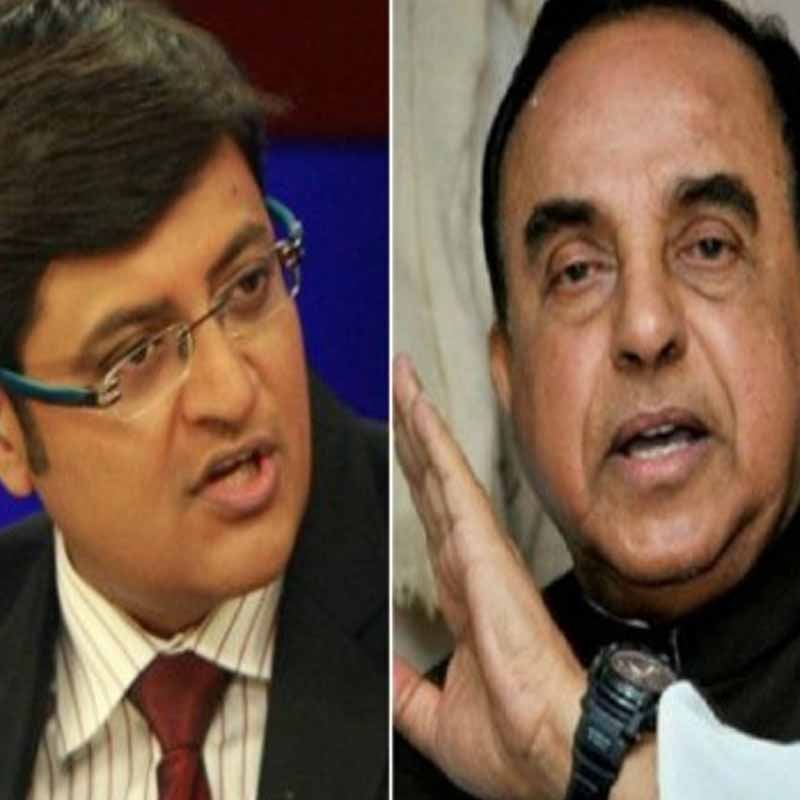
    MUMBAI: Dramatics personified well-known news anchor Arnab Goswami has declared the new name of his news channel to be ‘Republic TV’, switching from the original ‘Republic’.

    BJP Member of Parliament Subramaniam Swamy had questioned the use of the world ‘republic’ for commercial use, citing Indian law.

    In a letter dated 13 January 2017, Swamy wrote to the secretary, ministry of information and broadcasting (MIB) : “It has come to my notice that a new TV channel under the name of “Republic” is in the process of being launched… It may be noticed that certain names and emblems are prohibited from being used under the Emblems and Names (Prevention of Improper Use) Act, 1950 for professional and commercial purposes. As per the schedule accompanying the statute, under Item 6, there is an express prohibition from using the phrase, “Republic”. ”

    Now, in a letter dated 28 January to the under-secretary to the government of India (MIB), Republic TV’s MD and editor-in-chief, on behalf of ARG Outlier Media, Goswami stated that the documents needed were being submitted to facilitate the name change.

    Goswami may have eventually chosen to start the real news battle later, when he is fully prepared, rather than the ‘namesake’ fight.

    ALSO READ:

    BJP MP Swamy finds holes in Arnab Goswami’s ‘Republic’

    RBNL ex-CBO Khanchandani joins Arnab’s Republic

    Arnab’s Republic widens footprint on Facebook, Twitter