Tag: MIB

  • No new channels added in December 2017

    No new channels added in December 2017

    BENGALURU: Since 31 October 2017, the number of licences issued by the Ministry of Information and Broadcasting (MIB) has remained the same. According to an MIB status report, permitted private satellite TV channels having valid permission in India stood at 877 as on 31 December 2017. No new licences were issued in November and December 2017.

    The government had issued licences to 45 channels in 2017 as compared to 75 in the previous calendar year. In all, permission has been granted to 1,099 channels. Permission was cancelled for 222 channels, with 66 in 2017 alone. 44.4 percent or 389 of the permitted channels were news and current affairs channels; 488 channels were non-news and current affairs channels.

    Of the 877 channels, 778 channels were permitted to both uplink from and downlink into India. Of these, 369 or 47.4 percent were news channels and 409 were non-news channels. Sixteen channels, of which 5 (31.25 percent) were news channels and 11 were non-news that have been permitted for uplink from, but not downlink into, India. Sixty-eight channels have been permitted only to downlink into India and not to uplink from the country. Of these 68 channels, 15 (22.1 percent) were news channels.

    Nine new channels (one news channel and 8 non-news channels) were allowed between 1 August and 31 August 2017. In September 2017, two licences and just one licence in October 2017 were granted.

  • Dish TV re-evaluating Videocon d2h merger

    Dish TV re-evaluating Videocon d2h merger

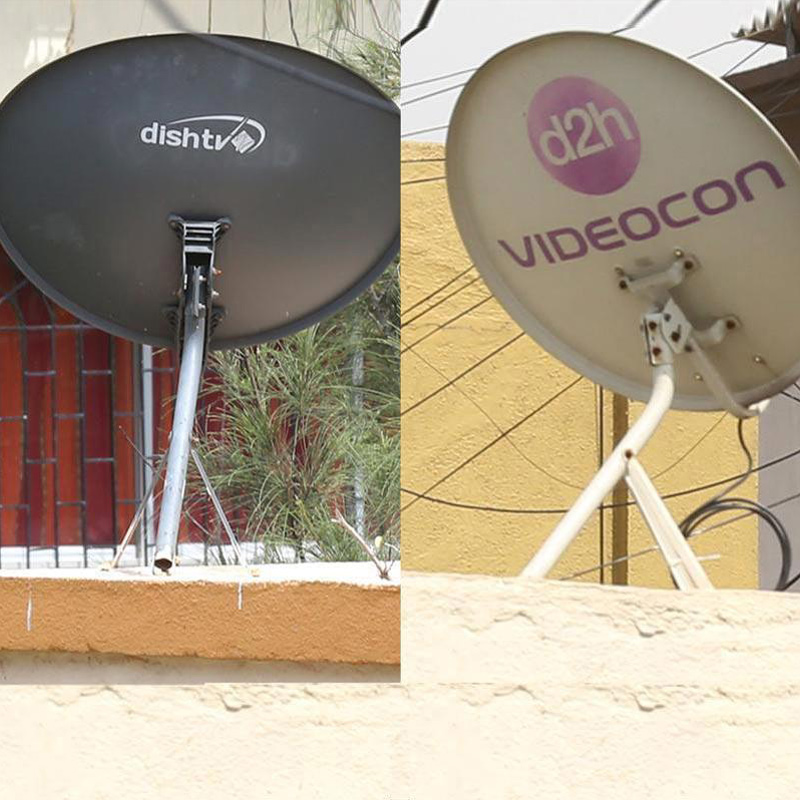
    MUMBAI: The Dish TV-Videocon d2h merger had reached the final stage with the Ministry of Information and Broadcasting (MIB) giving it the green signal. Then, suddenly on 22 December, Dish TV announced that the union would be delayed beyond 27 December 2017 citing technical reasons. Now those reasons–it basically is revaluating the deal–are likely to hold up the fusing of the two DTH operators even further.

    Dish TV yesterday informed the BSE that it had told its advisors–which include financial advisor Morgan Stanley, E&Y, SR Batliboi & Co and Luthra & Luthra Law Offices-to re-examine the deal terms within 60 days.

    It said that it was taking this step as “it has come to our knowledge that certain entities belonging to the Videocon group, including the promoters of Videocon D2h Ltd, have become subject to insolvency and/or enforcement proceedings by lenders. The company is evaluating as to whether there is any impact of the same on its rights and obligations under the definitive agreements, and consequential effects on the transactions contemplated.”

    The companies had announced a merger in November 2016 tom-tomming the benefits that would accrue to the two if they went ahead. And both companies went about the process getting the various regulatory approvals required. In early March 2017, the merger got the NOC from the BSE and the NSE, Competition Commission of India clearance on 4 May 2017, shareholder approval through a meeting convened by the National Company Law Tribunal (NCLT) on 12 May 2017, and the NCLT green flag on 27 July 2017, and the MIB go ahead on 15 December 2017.

    As per the terms of the merger Dish TV Videocon d2h was to issue 857.79 million fresh shares. Shareholders of Videocon d2h were to get 2.02 shares of Dish TV Videocon for every share of Videocon d2h. D Dish TV shareholders would own 55.4 per cent shares of the merged entity while Videocon d2h would own the remaining 44.6 per cent.

    Dish TV is pressing the pause and review button at a time when at least two transactions in the direct-to-home segment have been completed.  Late last year, private equity firm Warburg Pincus picked up a 20 per cent piece of Airtel DTH for a handsome price of $350 million valuing the entire operation at $1.7 billion. Then Delhi-based Pantel Technologies and Veecon Media bought out all the losses, debt, and liabilities of Reliance Big DTH from the Anil Ambani group, bringing to a close a long struggle by the latter to exit the DTH business.

    Also Read :

    Dish TV-Videocon d2h merger date postponed

    DTH’s year of consolidation

    DTH subscriber growth down in second quarter


  • Cross-media holding: Indian policymakers push for regulations

    Cross-media holding: Indian policymakers push for regulations

    NEW DELHI: A section of policymakers in India is not in favour of market forces taking care of monopolistic trends in the increasingly converging print and electronic media. It has recommended government intervention—a thought-process that can have wide-ranging implications on activities of broadcasting companies, MSOs and even LCOs if put into action.

    Stating that it cannot “ignore the concerns expressed by the industry,” parliament’s Standing Committee on Information Technology in its 44th report last week observed that issues related to vertical monopolies and cross-media holdings have “serious implications for the print and electronic media in India and cannot be simply left to the market forces…  (and) need suitable intervention of government from time to time.”

    In its submission before the committee, comprising members of parliament (MPs) from the upper and lower houses, TRAI made it clear that it had twice in the last six years submitted wide-ranging suggestions on media holdings and vertical monopoly that were not yet accepted by the Ministry of Information and Broadcasting (MIB) though it would be “desirable” to implement the recommendations on a “priority basis”.

    MIB, however, told the parliamentary panel that it was not in favour of “too much control to restrict” the areas of operation of media entities and regulations should aim at preventing exploitation by any particular entity while leaving the remaining dynamics to the market forces.

    Among the many suggestions made by the TRAI to calculate market dominance via a complex formula, the regulator had strongly advocated barring federal and state governments and organisations controlled by it from entering into the business of broadcasting and distribution of TV services while suggesting exit options for such organisations. Political parties, too, were isolated by the regulator from entering directly into the broadcasting and distribution business.

    In India, quite a few broadcasting and distribution platforms, especially MSOs and LCOs, are directly or indirectly owned and controlled by political parties/politicians/MPs/state government(s). Tamil Nadu government-owned MSO Arasu—also discussed by the committee in its report—is one such example.

    The committee directed the government to update it on the action taken on recommendations made by TRAI on issues of vertical monopolies and cross-media holdings.

    Interestingly, the News Broadcasters Association or the NBA had strongly pleaded before the committee that vertical monopoly or integration of distribution platforms and broadcasting companies was “not healthy” for either the cable or the broadcasting sectors. Reason: such integration and interplay made room for “bias” and, more importantly, removed the concept of a level playing field. The NBA had also clarified its apprehensions saying vertical integration would affect consumer choice too.

    “NBA has submitted that cross media ownership is not a healthy trend in media industry and has the potential of creating serious conflict of interest situation, which can stifle both the content side and business side of media companies,” the parliamentary panel in its report said.

    ALSO READ:

    DTH licensing recommendations: TRAI restricts vertically integrated broadcasters from owning more than one DPO

    TRAI managed to give broadcasting as much importance as telecom in 2014

    Parliamentary panel pushes for TRAI’s empowerment

    Parliamentary panel raps MIB on knuckles for DAS implementation

    Column-Policy Cross-Connections

  • Parliamentary panel raps MIB on knuckles for DAS implementation

    Parliamentary panel raps MIB on knuckles for DAS implementation

    MUMBAI: The Parliament’s Standing Committee on Information Technology and Communications (SCIT) has sent out a stern message to the stakeholders of India’s broadcast and cable industry, including the Ministry of Information and Broadcasting (MIB): get your acts together.

    BJP MP Anurag Thakur-chaired all-party parliamentary panel has been especially critical of MIB’s handling of country’s digitisation of TV services or digital addressable system (DAS). It pointed out that MIB could not “absolve” itself of “responsibility” of DAS implementation as it was the administrative ministry for media matters.

    It has exhorted the ministry to put in place a monitoring mechanism at the federal level at the earliest to coordinate with the authorised officers for tracking violations by operators and to also hold periodic meetings with the stakeholders concerned to ensure that the mandated cable TV digitisation process is enforced.

    Putting the onus on the ministry to persuade MSOs to complete seeding of consumer data in the cable TV operators’ management information systems at the earliest, the parliamentary panel has directed the government to ensure proper agreements are signed between stakeholders (broadcasters, MSOs and LCOs). MIB has also been directed to update the panel on the progress made by MIB and to take extreme step of even cancellation of MSO licence in case of non-compliance.

     Interestingly, the committee told the nodal ministry to take a final decision within a definite time period in the case of Tamil Nadu government-controlled MSO Arasu Cable in keeping with TRAI norms for MSOs seeking to provide digital service.

     Arasu has been seeking temporary extension of its licence saying it has been unable to fully seed its subscribers with STBs that were taking long to import. In separate recommendations made earlier — not yet accepted by the government — TRAI had suggested barring federal or state governments or its organisations from segments of broadcast and TV services’ distribution.

     The committee said that it expects MIB to address effectively issues raised in the complaints filed by some MSOs and LCOs in Tamil Nadu (mostly against Arasu) and that the ministry should revert within three months reporting the progress made.

    The committee, while suggesting infrastructure sharing for distribution platforms, urged the government to provide necessary resources or financial incentives to distribution platforms like MSOs who were aiming to provide services in rural areas. Its rationale: developing infrastructure individually may be a costly proposition for cable TV operators.

     Alive to number of litigations in the broadcast and cable sectors, the committee exhorted MIB and the government to explore having a dialogue with courts on the need to close early cases relating to TRAI’s new guidelines on tariff, QoS and inter-connect, which were issued in 2016 but challenged in Chennai and Delhi high courts by Star TV-Vijay TV combine and Tata Sky and Airtel Digital. Both the cases are still pending final verdicts from the courts.

    The committee has recommended that an option of pay-per-use, as made available by DTH operators to subscribers, be explored for cable TV too as it could give the consumer more flexible options.

    Finally, the committee has directed the MIB to do a formal cable TV digitisation impact assessment study including all its aspects to get a clear picture on how far DAS has actually been able to achieve its intended objectives.

    Also read:

    Arasu can’t operate outside Tamil Nadu despite DAS compliance

    MIB report: 50% digital STBs seeded during DAS’ first three phases

    Arasu digital STB costs Rs 200, govt alerts subs


  • BARC ratings: DD Sports in top 5 after 37 weeks

    BARC ratings: DD Sports in top 5 after 37 weeks

    MUMBAI: Pubcaster DD Sports surprisingly garnered third position in broadcast audience research council’s (BARC) all India ratings for week 50 in the sports genre. The live feed of India versus Sri Lanka’s second ODI match helped the channel to climb up.

    Star Sports 1 Hindi leads the chart with 20855 impressions (000s) sum followed by Star Sports 1 with 110690 impressions (000s) sum. DD Sports made an entry after 37 weeks in BARC all India ratings with 81011 impressions (000s) sum. Sony Ten 1 is in fourth position with 80695 impressions (000s) sum. We have second FTA channel in the list, Star Sports First with 57528 impressions (000s) sum.

    DD Sports’ last appearance was in week 12 at the time of India versus Australia live test series. At that time DD Sports was at fifth slot with 26973 impressions (000s) sum. Private broadcasters are up in arms against sharing their live feed with the public broadcaster.

    The Supreme Court on 22 August 2017 said that shared feed of sporting events can only be carried on the terrestrial network of Doordarshan or DD FreeDish and cannot be retransmitted to private cable and DTH operators. After this, in the month of September Prasar Bharti CEO Shashi Shekhar Vempati through a tweet directed all the private DTH and cable operators not to telecast the sporting events’ live feed from Doordarshan that have originally been shared by the rights-holding private broadcasters.

    In December some reports surfaced in the media that Star India would have to share the IPL telecasts with the pubcaster DD that will air the cricket matches on its terrestrial network and FTA DTH platform. This would be made possible as and when the government formally issues a directive as both the law and information & broadcasting ministries were being consulted under a regulation called the Sports Broadcasting Signals (Mandatory Sharing with Prasar Bharati) Act, 2007.

    If the IPL is being shared between the private broadcaster and the pubcaster, we’ll have to see which one bowls us over with higher viewership.

    Star India wins: SC disallows Prasar from retransmitting shared sports feed live

    Prasar CEO reiterates implementation of SC verdict on DD’s shared sports feed retransmission

    Comment: Does Star stand to gain or lose by sharing IPL with DD?

  • MIB recants, says only explicit condom ads banned during the day

    MIB recants, says only explicit condom ads banned during the day

    MUMBAI: After stirring the hornet’s nest on the contentious issue of restricting condom ads to only water-shedding hours, the Ministry of Information and Broadcasting (MIB) has clarified that such ads can be aired on TV during daytime. 

    In an advisory earlier this month, the MIB had asked all TV channels to air condom advertisements only between 10pm to 6am to avoid exposure of such material to children.

    But in a clarification dated 21 December 2017, the ministry said the ban on condom advertisements during daytime applies only to commercials that have sexually explicit content.

    In a release, the ministry quoted that “advertisements that do not sexually objectify women and are aimed at informing citizens regarding devices/products/medical interventions to ensure safe sex are not covered under the said advisory.”

    The ministry had earlier stated that it had taken note of objections regarding condom ads that are “targeted at a particular age group” being aired on some channels that are considered as ‘indecent especially for children.’ It used Rule 7 (7) and Rule 7 (8) of the Cable TV Networks Rules, 1994 to tell broadcasters to refrain from telecasting ads of condoms that could be considered inappropriate/indecent for viewing by children. 

    The relaxation on the issue came after the Rajasthan high court issued a notice to the Centre challenging an advisory of the MIB barring TV channels from showing condom ads during prime time.

    The petition underlined the fact that condom ads don’t violate Rule 7 of the Cable Television Network Rules, 1994 which apply to anything which endangers the safety of children or create in them any interest in unhealthy practices or shows them begging or in an undignified or indecent manner. 

    The Advertising Standards Council of India (ASCI) had approached the ministry earlier this month for guidance after several people complained regarding the inappropriate nature of the condom ads being telecast during primetime viewing on most channels. 

    Also Read:

    I&B tightens up on condom ads on TV

    ‘Sanskari’ India wants condom ads off primetime

    MIB categorises all non-Hindi and non-Eng TV channels as regional

  • MIB categorises all non-Hindi and non-Eng TV channels as regional

    MIB categorises all non-Hindi and non-Eng TV channels as regional

    MUMBAI: In its latest order, the Ministry of Information and Broadcasting (MIB) has sought to clear some of the confusion around its recent order on processing fees that broadcasters will have to bear in the event of a change in satellite or channel name, among other things.

    In an order released today, the ministry has sought to define what a regional channel is. According to it, any channel which is not in Hindi or English will be considered as being regional in nature. Moreover, spiritual and yoga channels will fall under the purview of this definition when it comes to calculating fees that they have to pay the MIB.

    On 13th December, the MIB had issued an order that sharply increased the processing fee for TV channels in supersession of an order dated 1 January 2009. Under the revision, national channels will now have to cough up Rs 100,000 while regional ones will shell out Rs 50,000 as processing fee for any change, including change of satellite, channel name/logo, language of channel, category of channel, mode of transmission, teleport, teleport location, and category of channel from general entertainment channel to news channel for temporary uplinking of a live event.

    The order had introduced two new categories for channels—regional and national—which had caused confusion in broadcasters’ minds. According to the television uplinking and downlinking guidelines, there are only two categories of channels—news and current affairs and non-news and current affairs channels.

    While the order has clarified what a regional channel is, the definition of a national channel remains to be seen. Until today, there was no clarification on which channels will be treated as regional.

    Also Read: Trai paper seeks to streamline uplinking, downlinking norms

    MIB bumps up TV channel processing fee

  • Trai paper seeks to streamline uplinking, downlinking norms

    Trai paper seeks to streamline uplinking, downlinking norms

    MUMBAI: Following a prod from the ministry of information and broadcasting (MIB) additional secretary Jayashree Mukherjee, the Telecom Regulatory Authority of India (TRAI) on 19 December issued an industry consultation paper which seeks to update guidelines related to uplinking, downlinking, of TV channels and the setting up of teleports.

    Mukherjee had sought the TRAI’s recommendations on these issues keeping in mind changes in technology, market scenarios and lessons learnt over the past six years since the guidelines were passed.  

    In its paper, Trai has asked stakeholders, such as broadcasters, if there was any need to redefine news and current affairs TV channels and non-news and current affairs TV channels more specifically.

    Pointing at a possible hike in the net-worth requirement of Rs 5 crore for obtaining a licence for uplinking or downlinking of TV channels, and an increase in process fees for applicants, the paper states that non-serious players were able to obtain licenses, which were either traded or leased to a different entity.

    “To  ensure  that  only  serious  players,  who  are  interested  in  the business of satellite TV channels, apply for obtaining license for  uplinking  or downlinking of TV channels, one way could be to increase the entry barriers. The other way could be to eliminate the incentives, which encourage trading and/or sub-leasing of licenses. Further, sub-leasing or trading of channels can also be controlled by putting in place certain checks, which discourage such practices,” the release stated.

    The paper argues that an increase in entry barriers for uplinking of TV channels from India may encourage diversion of such business opportunities to outside India. Moreover, Trai has raised the question of auctioning satellite TV channels as a complete package similar to FM radio channels. Or if industry thinks that it is possible to auction individual legs of satellite TV broadcasting – uplinking space spectrum, transponder capacity?

    And it has opened up an issue which has been a sore point for the industry: if it is advisable to restrict the use of foreign satellites for satellite TV broadcasting or uplinking of satellite TV channels to be downlinked in India from foreign soil? And also whether it is possible to auction channels without restricting the use of foreign satellites and uplinking of signals of TV channels from foreign soils. The paper appeals to stakeholders if there could be a better way to grant a licence for a TV satellite channel then what is presently followed in order to simply the procedure.

    Other issues the TRAI is seeking industry’s input on is whether encryption of all satellite TV signals – whether free to air or pay TV and what timeline should be given to licensed broadcasters to launch their channels from the date of issue of a licence and the penalties that should be levied on them in case they fail to restore their disrupted channels within a specified period. The consultation paper also approaches sensitive issues such as terms of  the tradeability of licences by a licencee.  

    On the teleport side, the TRAI is seeking to get industry’s understanding of what a teleport should be defined as in a new digital era, the licensing norms, fee structures for processing a licence, if there is a need to restrict the number of teleports in India, and their location like say in a park.

    The industry watchdog has requested that industry sends in its inputs by 18 January 2018.

    Also Read: TRAI sees merit in using satcom for broadband delivery

    TRAI’s Consultation Paper on VoIP can affect mobile TV, IPTV

    MSOs move Madras HC seeking relief on inter-connect pacts


  • Government to once again make MHA clearance compulsory for MSOs?

    Government to once again make MHA clearance compulsory for MSOs?

    MUMBAI: Are there more regulatory controls coming on the cable TV industry? If reports emerging in the media (The Asian Age) are to be believed, then they probably are. According to the newspaper, every multisystem operator (MSO) which is licensed with the ministry of information & broadcasting (MIB), will now have to also seek the ministry of home affairs’ security (MHA’s) clearance. A notification to this effect is being planned and passed by the Narendra Modi government.

     Hitherto, broadcasters and satellite service providers had to go through this procedure. MSOs could just get a licence from the post office to operate in the country, following which they had to get a digital licence from the MIB. The security clearance from the MHA requirement was discontinued a couple of years ago to speed up the  pace of cable TV digitalisation.

     The newspaper says the government was forced to take such a step for MSOs as well because the MIB had received complaints that several cable TV operators are continuing to retransmit channels which showed content that was potentially harmful to the nation’s security and was deemed as objectionable.

     The government is seeking to make it compulsory for MSOs to get annually vetted by the central intelligence and government security agencies to prevent this from occurring.

     No confirmation, from the MIB or government sources, was available at the time of writing this report.