Tag: MIB

  • No specific instance of paid news on private TV channels yet: MIB

    No specific instance of paid news on private TV channels yet: MIB

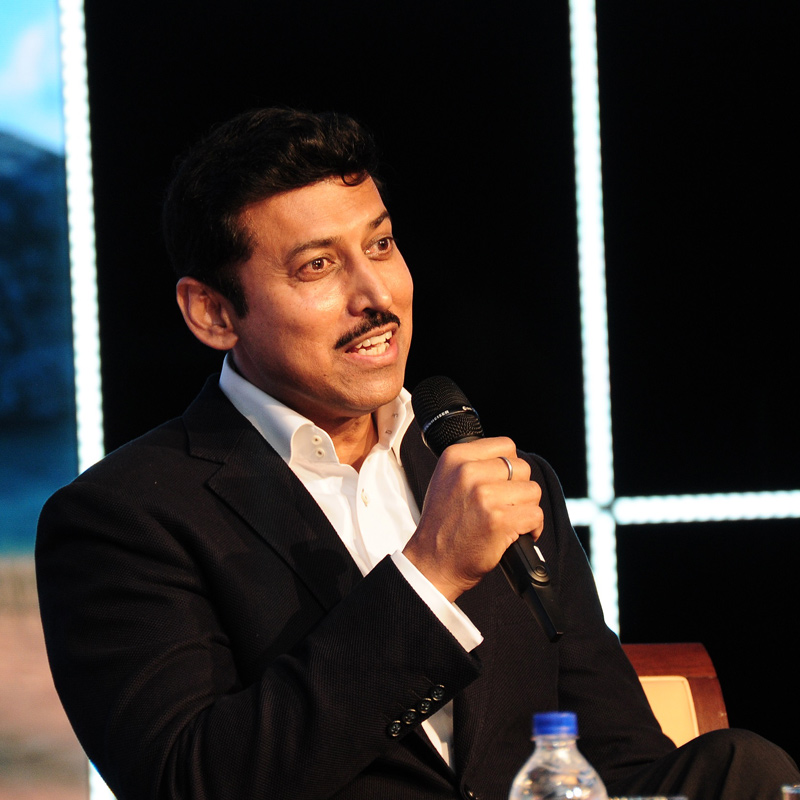
    MUMBAI: The Ministry of Information and Broadcasting (MIB) has not yet had to face the menace of paid news on news channels. In a reply to the Lok Sabha or Lower House of Parliament, junior minister of MIB Rajyavardhan Singh Rathore informed that no specific instance of paid news in electronic media (private satellite TV channels) has been brought to the notice of the ministry.

    He further added that instances of paid news during election time were directly dealt by the Election Commission of India under the Representation of the People Act, 1951. The existing provisions contained in the Programme and Advertising Codes (PAC) and the existing mechanism are considered adequate to regulate content on TV channels.

    The minister was speaking in response to questions raised regarding paid news on 24X7 news channels and the ministry’s action on the same. Rathore also stated that the existing rules under the Cable TV Network Rules of 1994 were good enough to ensure channels didn’t cross their lines and the act does not allow for pre-censorship, only penalty after telecast. “Action is taken against TV channels whenever violation of the PAC is established,” he said.

    The PAC contains a wide range of parameters to regulate programmes and advertisements on such TV channels including the content likely to pose menace of news sensationalism and breaking news culture. Rathore named a few rules:

    Rule 6(c) provides that no programme should be carried in the cable service which contains attack on religions or communities or visuals or words contemptuous of religious groups or which promote communal attitudes;

    Rule 6(d) provides that no programme should be carried in the cable service which contains anything obscene, defamatory, deliberate, false and suggestive innuendos and half-truths;

    Rule 6(e) provides that no programme should be carried in the cable service which is likely to encourage or incite violence or contains anything against maintenance of law and order or which promote anti-national attitudes;

    Also Read :

    MIB says fewer TV channels violating ad, prog norms

    Govt warned 55 violators of programme & ad codes in 3 yrs, says Rathore

    Prog & Advt Code violation: 30 channels faced action in 2015 & 2016

  • MIB says ISRO upping capacity to facilitate migration from foreign satellites

    MIB says ISRO upping capacity to facilitate migration from foreign satellites

    NEW DELHI: The Indian government has admitted that inadequate capacity on Indian satellites has compelled domestic direct to home (DTH) operators to use a large number of transponders on foreign satellites and that India’s space agency Indian Space Research Organisation (ISRO) is gearing up to meet growing demands owing to proliferation of HD TV channels.

    “Presently DTH services are being supported by 42 transponders on indigenous satellites (INSAT/GSAT) and about 69 transponders on foreign satellites. There is a registered demand of additional about 64 transponders for immediate future,” junior minister at Ministry of Information and Broadcasting (MIB) Rajyavardhan Rathore informed fellow parliamentarians in Lok Sabha or the Lower House of Parliament recently.

    Without stating it in so many words though, Rathore said that as ISRO increases its satellite capacity to be able to meet the demands of Indian DTH operators, a migration from foreign satellites would become a reality — a move that MIB and Department of Space are slowly implementing to nudge users of satellite services, especially TV channels, to move away from non-Indian birds.

    “It is expected that over a period of next three years adequate capacity would be added through Indian satellites to facilitate migration of foreign capacity to Indian [satellite] capacity,” the minister said, adding, according to Telecom Regulatory Authority of India (TRAI) data, there has been a significant growth in the number of high definition (HD) satellite TV channels. The number has grown from three in 2010 to 83 in 2017.

    Dwelling on TRAI’s recommendations on sharing of infrastructure on a voluntary basis, Rathore clarified that till date MIB has not received any proposal from DTH operators for sharing of satellite transponders and earth station facilities with another such player or distribution platforms. “Enabling sharing of infrastructure may address the issue of demand-supply mismatch and reduce capital and operating expenditure of the service provider to an appreciable extent,” he added.

    Meanwhile, addressing another set of queries raised by parliamentarians relating to DTH, the minister said a total number of 1922 complaints/grievances against private DTH service providers were received through monitoring systems of the government and TRAI over the last three years on various issues ranging from technical/financial/policy matters to delay or improper installation, malfunctioning of STBs, issues of interoperability, disruption of signals during bad weather, improper billing, channel packaging, FTA channels, etc. As many as 1811 complaints were addressed by MIB till date.

    As soon as complaints are received, they are brought to the attention of the DTH operator concerned and later a follow-up action too is undertaken to evaluate compliance and whether the problems were resolved or not, the minister explained.

    According to the minister, sector regulator TRAI had issued last year a set of tariff guidelines to boost healthy competition among DTH service providers and bring down the subscription prices for consumers. The guidelines were legally contested by some stakeholders and are awaiting judicial advice, he added.

    ALSO READ:

    MIB admits no DTH infra sharing permission sought

    MIB, DoS nudge TV channel to use Indian satellites

    MIB to collect data on satellite capacity needs, digital chatter

    MIB, TRAI allay industry fears on sat capacity leasing & content regulations


  • MIB forms committee to draft online media norms

    MIB forms committee to draft online media norms

    MUMBAI: After retracting the order which called for guidelines to punish journalists for fake news, the government has upped the ante to regulate online media. Smriti Irani-led Ministry of Information and Broadcasting (MIB) has constituted a committee of 10 members to discuss and recommend a regulatory framework for online media.

    The order which was released on 4 April named the secretaries of the ministries of Home, Electronics and Information Technology, and the departments of Legal Affairs, and Industrial Policy and Promotion as part of the committee. Along with that, it will have representatives from the Press Council of India, News Broadcasters Association and the Indian Broadcasters Federation.

    It has been reported earlier also that government was in talks to come up with regulations  for online media. Speaking at an event, Irani said that the ministry was planning to bring about regulations, especially for online news, opinion and entertainment content.

    In the terms of references, three reasons have been cited. The first one is to “delineate the sphere of online information dissemination which needs to be brought under regulation, on the lines applicable for print and electronic media”.

    The second reason is to “recommend appropriate policy formulation for online media/news portal and online content platforms, including digital broadcasting which encompasses entertainment/infotainment and news/media aggregators, keeping in mind the extant FDI norms, programme and advertising code for TV channels, norms circulated by PCI, code of ethics framed by NBA and norms prescribed by IBF”.

    Finally the order said that the committee would analyse the international scenario on such existing regulatory mechanism to incorporate the best practices.

    Commenting on the update, news broadcaster NDTV said, “The youngest and most democratic of all media – online media – must be allowed self-regulation: the chance to develop and implement its own guidelines for responsible and fair journalism. The IT Act already applies to online content. The government move that seeks to decide new rules for online media excludes any representatives from online news publishers and reads as exclusionary and coercive. Online publishers are perfectly capable of forming a credible organization, pairing their own leaders with eminent and independent voices, similar to those that represent broadcasters and print media. Allow a real discussion, a genuine debate. That is the fundamental operating principle of the internet.”

    When a newspaper or a television channel runs news, it has to adhere to the law. There are self-regulatory bodies to set guidelines for traditional media. In the online ecosystem, however, the legislation in terms of news or video content is not very clear.

    Since a while, governments all over the globe have been attempting to prevent “fake news”. In India, the move has been criticised by many media professionals and organisations as a step to curb the freedom of media. The authority is looking to restrict news content spread via YouTube, Facebook and WhatsApp as the order refers to “digital broadcasting” too.

    Also Read :

    Smriti Irani says govt mulling legislation for online content

    Comment: MIB’s botched whip on fake news akin to testing waters

  • MIB directs BARC to stop landing page impressions for measurements

    MIB directs BARC to stop landing page impressions for measurements

    MUMBAI: Clamping down on the practice of running a channel on multiple logical channel numbers (LCNs) allegedly for influencing television ratings, the Ministry of Information and Broadcasting (MIB) has advised the Broadcast Audience Research Council (BARC) to discontinue the adoption of landing channels for the purposes of television audience measurement with immediate effect. Moreover, the ministry has asked BARC to send a compliance report on the same.

    According to government sources, non­compliance on the landing page advisory “shall be violation of the Policy Guidelines for Television Rating Agencies in India.”

    The development comes close on the heels of the Telecom Regulatory   Authority   of  India’s (TRAI) statement on the issue on Tuesday. The telecom regulator issued a consultation paper to discuss the issue of the landing page (the page that appears when one switches on the STB and the TV set) and its many uses and misuses with the industry stakeholders.

    Pointing out that the practice of running a channel on multiple logical channel numbers (LCNs) allegedly for influencing television rating was brought to the notice of the regulator, the TRAI statement said. Some TV channels allegedly, in collusion, with the distributors, placed some television channels on multiple LCNs (meaning at several places in different programming genres in the EPG), it added.

    Also Read:

    TRAI initiates consultation on landing page issue

    TDSAT ‘reserves’ order on landing-page case

    TRAI tightens landing-page norms

  • PMO directs MIB to withdraw guidelines on fake news

    PMO directs MIB to withdraw guidelines on fake news

    MUMBAI: The Prime Minister’s Office (PMO) has ordered the withdrawal of guidelines to crack down on journalists responsible for distributing fake news, a senior government official said today.

    “The prime minister has directed that the press statement regarding fake news be withdrawn and the matter be addressed in the Press Council of India,” a senior official in Modi’s office told news agency Reuters. No reason was given.

    On Monday, the Ministry of Information and Broadcasting (MIB) had issued a statement stating that noticing increasing instances of fake news in various mediums, including print and electronic, the guidelines for accreditation of journalists have been amended with penalties and punishment factored in.

    “On receiving any complaints of instances of fake news, the same would get referred to the Press Council of India (PCI) if it pertains to print media and to News Broadcasters Association (NBA) of India if it relates to electronic media for determination of the news item being fake or not,” the MIB statement had said, adding that the process would be completed within 15 days.

    Even as the government announced amendments in the guidelines for accreditation of print and electronic or TV journalists outlining punishments for breaches on account of fake news, the intention was termed by stakeholders as debatably honourable but an indirect way to muzzle media freedom.

    Welcoming the decision, News Broadcasters Association has issued a statement. The move has been lauded for letting industry bodies such as NBA and Press Council of India(PCI) to decide all Fake News related issues as it was proposed by Smriti Irani earlier.

    Also Read: MIB issues stringent norms on fake news in TV & print media

  • DD Free Dish looks at  advertising for monetisation

    DD Free Dish looks at advertising for monetisation

    MUMBAI: The government’s own direct-to-home (DTH) platform DD Free Dish has had a good run since launch because of its wide acceptance, especially in the rural areas where the reach of cable is limited and pay TV is expensive. Now, the government is drawing up plans to make money from the platform.

    Last year, the government sanctioned a scheme to extend the number of channels to up to 250. In a reply in the Lok Sabha recently, Minister of State in the Ministry of Information and Broadcasting (MIB) Rajyavardhan Rathore said that this would enable Free Dish to generate revenue via advertisements. Quoting a private newspaper, the response mentions that private channels easily garner Rs 500-700 crore as revenue a year while a channel slot on Free Dish is as low as Rs 6-8 crore. He admitted that there were limitations to the revenue models that could be adapted into the free service if it wanted to ensure quality and reach.

    Another means of making money is via auction of channel slots on the DTH platform, which turned into a legal case when the auctions were arbitrarily called off mid last year by Smriti Irani, the information and broadcasting minister. Auctions have been kept in abeyance till a settlement is reached between Prasar Bharati and the networks that have reached out to the Telecom Disputes Settlement Appellate Tribunal. The tribunal has asked the government to conduct a comprehensive review on the auctioning policy for Free Dish before any stand is taken.

    At present, there are 72 free channels and 39 radio stations available on Free Dish.

    Updating the parliament on its growth, Rathore added that about 66,000 DTH set-top boxes have been given out in tribal, remote and border areas. According to estimates, Free Dish’s total subscriber base is 22 million.

    Also Read :

    TDSAT interim order ensures continuity for private channels on FreeDish

    TDSAT gives Prasar Bharati 2 days to respond to FreeDish auction suspension

    FreeDish auction on 4 July, different reserve prices for GEC and news


  • Complaints against misleading ads rose by 50% in 2017

    Complaints against misleading ads rose by 50% in 2017

    MUMBAI: The number of cases registered with regard to misleading advertisements has been on the rise. Grievance against Misleading Advertisements is a separate portal by the Department of Consumer Affairs to dispose of such complaints.

    Over the last three years, there has been a steady rise in the number of cases registered. In 2015, the launch year, there were 641 cases that shot up to 2032 the next year. Last year, 2017, saw a whopping 3302 cases being submitted to the portal.

    The departments had entered into a memorandum of understanding with the Advertising Standards Council of India (ASCI), a self-governing body, to process misleading ads in the print and electronic media, which will be received on the portal.

    In a reply to a question asked in the parliament, Minister of State for Information and Broadcasting (MIB) Rajyavardhan Rathore said that there was no pre-censorship done for TV channels but all broadcasters needed to abide by advertising rules set by the Cable TV Act and also could not telecast ads found violating ASCI’s codes.

    Also Read;

    Healthcare products lead in ASCI norms breach, 143 complaints upheld

    Ad spend on connected TV globally slated to grow in 2018

  • No proposal to ban junk food ads on TV: Smriti Irani

    No proposal to ban junk food ads on TV: Smriti Irani

    MUMBAI: Childhood obesity is a rising problem in India. The issue was addressed in today’s Lok Sabha session when a reply was sought from the Minister of Information and Broadcasting Smriti Irani on whether the government is aware of the study that correlates watching ads on TV with increasing habit of eating junk and if there is a proposal to impose a ban on telecast of junk food and cold/soft drinks advertisements on television.

    In a written reply, Irani said that presently there is no such proposal to bank such ads on TV. Admitting that obesity in children was a concern, she mentioned that the Ministry of Health and Family Welfare has informed that the Food Safety and Standards Authority of India (FSSAI) has constituted an expert group to address the issue of High Fat, Sugar and Salt foods (HFSS).

    The expert group in its report made a recommendation regarding ban on foods with HFSS advertising on children’s channels or during children shows. 

    On this recommendation, the remarks of the FSSAI was that the food businesses could be asked to voluntarily desist from advertising HFSS foods on kids’ channels. Bodies like Food and Beverage Alliance of India have already decided to voluntarily restrict food and beverage advertisements concerning children. 

    Nine major food business operators have already joined this campaign and have decided not to advertise products with HFSS on kids’ channels.

    Although the move of banning will promote healthy eating habit among children, it will hamper revenues of major advertisers on channels such as Pogo, Nickelodeon, Disney and others. 

    In December 2017, the Ministry had asked TV channels not to air advertisements selling and promoting condoms calling them indecent, especially for children. The government further reasoned that such ads can create unhealthy practices among them. Following this, there was a complete ban on condom ads on television between 6 am to 10 pm.

    Also Read:

    ‘Sanskari’ India wants condom ads off primetime

    MIB recants, says only explicit condom ads banned during the day

    MIB mulls broadcast of DD News to 100 countries

    Cross-media holding: Indian policymakers push for regulations

  • Sluggish rural consumption, distribution expenses pull down Dish TV’s Q3 numbers

    Sluggish rural consumption, distribution expenses pull down Dish TV’s Q3 numbers

    BENGALURU: A recovered but not fully-up-to-speed rural sector and higher selling and distribution expenses during festival time led to Indian direct-to-home (DTH) major Dish TV India Ltd (Dish TV) reporting lower numbers for the quarter ended 31 December 2017 (Q3 2018, the quarter under review) as compared with the corresponding year ago quarter (yoy). Though the company added net 250,000 subscribers during the quarter, lower ARPU brought down Dish TV’s operating revenue and EBITDA by 1 per cent and 15.5 per cent, respectively, yoy. The company reported a net subscriber base of 1.61 crore at the end of Q3 2018. ARPU of Rs 144 in Q3 2018 was the lowest in the current fiscal as against Rs 148 in Q2 2018 and Rs 149 in Q1 2018. Dish TV’s ARPU before demonetisation in November 2016 was Rs 162. The company has reported net loss after taxes of Rs 3.58 crore in Q3 2018 as against profit of Rs 8.39 crore in Q3 2017.

    Dish TV CMD Jawahar Goel said, “One year down the line from demonetisation, we have come a long way but somehow the sting in rural consumption is still missing. This was probably well recognised by the government and hence the impetus towards a stronger rural India. Television continues to remain the cheapest and most wholesome means of entertainment for the masses. DTH has presence in places where few other television service providers have reached. Dish TV, amongst such DTH players, has perhaps the deepest rural connect and hopes to benefit from rural India’s increasing propensity to consume everything including television content.”

    In its investor release for Q3 2018, Dish TV said that the pending Dish TV–Videocon d2h merger had hit a roadblock as the company was forced to evaluate the impact of certain proposed proceedings, against the Videocon group, on its rights and obligations under the definitive agreements, and consequential effects on the transactions contemplated thereunder.

    Dish TV, on 15 December, had secured the Ministry of Information and Broadcasting’s approval to the request made by the company for closing the merger of Videocon d2h with and into Dish TV.

    Talking about the merger, Goel said, “We acknowledge our shareholders growing impatience with respect to the merger. We would like to assure them that work around the completion of the deal is going ahead with full steam now and should be completed soon.”

    “We are excited about the future of the merged entity and are raring to put the business in overdrive as soon as the merger completes. Though we have lost some time in FY18, we would want to regain our leadership as well as extract the highest possible synergies in the year ahead,” he explained.

    A look at the numbers

    Dish TV reported a 1 per cent yoy decline in operating revenue for the quarter under review at Rs 740.77 crore as against Rs 747.98 crore. EBITDA for Q3 2018 was 15.5 per cent y-o-y at Rs 200.52 crore (27.1 percent margin) as compared with Rs 237.42 crore (31.7 percent margin).

    Total expenditure for Q3 2018 increased by 4.3 per cent y-o-y to Rs 775.12 crore. Employee benefits expense declined 1.5 per cent y-o-y to Rs 35.80 crore. Operating expenses in Q3 2018 increased by 6.2 per cent yoy to Rs 374.08 crore. Other expenses during the quarter under review increased by 8 per cent to Rs 127.84 crore yoy. Finance costs in Q3 2018 reduced by 18.4 per cent yoy to Rs 50.16 crore.

    Also Read :

    MIB clears path for Dish TV Videocon

    Dish TV reports improved operating profits for second quarter


  • TRAI suggests auction of 200 khz band for digital radio broadcast

    TRAI suggests auction of 200 khz band for digital radio broadcast

    NEW DELHI: While recommending financial incentives by government, the Telecom Regulatory Authority of India (TRAI) today recommended auctioning of 200 KHz bandwidth spectrum in VHF-II band for providing digital radio broadcasting services.

    “Auction should be carried out in phases, starting with cities of category A+ and A, and subsequently in cities of other categories,” TRAI said while releasing a series of recommendations for ushering in digital radio broadcasting services in India.

    TRAI further added: “Immediately after the successful auction of spectrum for digital radio broadcasting, an offer should be made to the existing FM radio broadcasters to get their existing frequency bandwidth of +100 KHz, already allocated through auction in Phase-III of FM radio, liberalised and provide digital radio broadcasting services in simulcast mode with analog FM radio services.”

    Suggesting further liberalisation of existing spectrum, already allocated to the FM radio broadcasters in Phase-III of FM radio, according to TRAI, the existing FM players will have to pay an amount equal to the difference of auction determined price of equivalent spectrum for digital radio broadcasting in a city and amount paid for allocation of FM radio frequency.

    At present, analog terrestrial radio broadcast in India is carried out in medium wave (MW) short wave (SW) and VHF-II (FM band) spectrum bands. AIR, the public service broadcaster, has established 467 radio stations encompassing 662 radio transmitters, which include 140 MW, 48 SW and 474 FM transmitters. Private sector radio broadcasters are licensed to transmit programs in FM frequency band (88-108 MHz) only and presently operate through 322 radio stations in 86 cities. Presently, radio signals are largely transmitted in analog mode in the country.

    Analog terrestrial radio broadcasting, when compared with digital mode, is inefficient and suffers from operational restrictions. With the advancement in technologies, digital radio technologies around the globe have been developed and adopted by a number of countries in order to offer more choice to listeners along with efficient use of spectrum. Digital Radio broadcasting provides a number of advantages over analog radio broadcasting. The biggest advantage of digital radio is that it is possible to broadcast three to four channels on a single frequency carrier, while ensuring excellent quality of audio for all the channels whereas analog mode broadcasts only one channel on a frequency carrier.

    The TRAI said it hopes the recommendations would enable a smooth transition from analog to digital radio broadcasting services, without disruption of the existing FM Radio services.

    The salient features of the recommendations are as follows:

    — Government should notify the policy framework for digital radio broadcasting in India in time bound manner with clear roadmap for rollout of digital radio broadcasting services.

    — The WPC wing of telecoms Ministry should carry out necessary amendments in NFAP- 2011 for permitting digital radio broadcasting in MW, SW, and VHF-II frequency bands.

    — Private sector should .be permitted to provide digital radio broadcasting services within the existing frequency band of 88 -108 MHz used for FM radio broadcasting.

    — Frequency and geographical area coverage planning for digital radio broadcasting using the vacant 600 KHz spectrum in VHF-II (88 -108 MHz) and VHF-III (174-230 MHz) bands should be completed by BECIL, AIR, and WPC together in phased manner.

    — 200 KHz bandwidth spectrum in VHF-II band should be auctioned for providing digital radio broadcasting services.

    — In case market determined price of 200 KHz for digital radio broadcasting is less than or equal to the price paid by FM radio broadcasters then FM radio broadcasters will not be required to pay any additional amount and it will be permitted to provide digital radio broadcasting services also for the remaining period of permission.

    — The broadcasters should be allowed to make use of any available digital technology, recognised by ITU, within the allocated/liberalised spectrum for providing digital radio broadcasting services subject to adaptation, if any, recommended by MIB/TRAI from time to time.

    — No date for digital switch over of radio broadcasting services should be declared at this stage.

    — Existing analog FM radio channels should be allowed to remain operational for the remaining period of their Phase-III permissions.

     — The continuance of operation of existing analog FM radio channels that do not migrate to digital radio broadcasting should be reviewed after the expiry of their existing Phase-III permissions.

    — The auction of remaining channels of Phase-III should be done by delinking them from technology. Broadcasters should be permitted to use any technology (analog or digital or both) for radio broadcasting on the frequency allocated to them through auction in future.

    — For initial three years after declaration of digital radio broadcasting policy, the government should grant fiscal incentives in the form of lower tax rates to manufacturers of digital radio receivers.

    Also Read:

    TRAI seeks to regulate online streaming platforms

    Trai paper seeks to streamline uplinking, downlinking norms