Tag: MIB

  • MIB reminds TV channels, teleport ops about timely online payments

    MIB reminds TV channels, teleport ops about timely online payments

    NEW DELHI: In an apparent bid to make broadcasters/TV channels and teleport operators to follow its diktat on online payments for renewals and renewal fees, the Ministry of Information and Broadcasting (MIB) issued two notices recently cautioning stakeholders that any breach could result in adverse consequences.

    “Non-payment or delayed payments of prescribed annual permission fee tantamount to violation of uplinking/downlinking guidelines and attract action regarding continuation/revocation of permission under the relevant clauses of uplinking and downlinking guidelines 2011,” one of the MIB notices stated, adding it has been observed that a number of broadcasters and teleport operators had not been paying the requisite permission fee.

    Directing broadcasters and teleport operators to deposit outstanding dues within 15 days from the issue of the notice, MIB said, cracking the whip, that any failure to do so will attract action under the existing policy guidelines.

    “It must also be ensured that the time schedule for payment of required fee, as prescribed in the uplinking and downlinking guidelines 2011, is strictly adhered to. It may also be ensured before making any request to MIB that there are no outstanding against the channel/teleport operators on the date of application,” the notice said.

    In another notice, MIB reminded stakeholders about the submission of online applications for change of name or logo or any other issue, apart from foreign remittance proposals.

    “It is reiterated that the instructions given in the notice regarding online submission of applications may be strictly adhered to,” the second notice from the government said.

    These notices come close on the heels of the Indian Broadcasting Foundation, the apex industry body for TV channels in India, petitioning the Prime Minister’s Office on the steep hike by MIB in processing fees and other administrative costs.

    MIB, in the past, has maintained that the facility of online payments to the government by stakeholders was introduced to reduce paperwork and make life easy for all.

    Also Read:

    MIB mandates broadcasters to make applications via Broadcast Seva

    MIB seeks all new MSO applications online 

    New portal to help ease of broadcast business

  • Comment: India’s NTP 2018 gets digital makeover but needs complimentary policies

    Comment: India’s NTP 2018 gets digital makeover but needs complimentary policies

    Criticism notwithstanding, Indian bureaucratic mandarins—babus as they are referred to in local lingo—do come up with draft policies that are contemporaneous, and at times when it’s least expected. The new digital avatar of the National Telecoms Policy 2018, slated to be operational later this year, could turn out to be just one such initiative—only if the political masters muster enough courage to push through with the proposed legislation and the will to follow up with complementary policies.

    Though surprises are the new norms with this government led by the maverick PM Modi—remember the late evening ‘Mitron’ address to the nation by the premier few years back announcing high denomination currency notes were being made illegal—it caught many napping when the Department of Telecommunications (DoT) posted on its website the draft of the much-awaited National Telecommunications Policy 2018 very late in the evening on Labour Day. So, what?

    The first surprise element was that the NTP 2018 had been rechristened National Digital Communications Policy 2018 (NDCP). The aim: put the draft in public domain to seek comments from key stakeholders and citizens, at large. But true to the government style—keeping things fluid—the deadline for comments is yet to be announced.

    The renaming of the policy was welcomed by the industry as it converges with the overarching Digital India vision of the present government; hiccups along the way to implementation, notwithstanding. However, such tweaks in the suggestions made by the telecoms and broadcast carriage regulator TRAI goes not only beyond just the nomenclature but also attempts to actualise provisions of the policy.

    What’s also important that while the government wants synergies between various organisations and ministries, it gives a thumb down to a TRAI proposal to make it—or any such other body—a converged regulator.

    A Truly Digital Communications Policy

    For quite some time, it was being felt by the government and industry alike that a specific road map is required to guide India’s successful movement into the emerging digital realm—to truly address the issue of convergence in the telecoms and broadcast services. To spark rapid all-round deployment of digital capable technologies, it is necessary all available mechanisms be looked at in a comprehensive manner; basically, shifting the focus from just wired and wireless telephony and broadband and expanding the horizons to areas such as satellite communications and broadcast carriage services.

    The industry had been demanding that already existing infrastructure assets in sectors such as broadcast and power be utilised to efficiently achieve a demanding goal of laying down high speed fibre infrastructure across India. Thus, a digital-centric telecommunications policy was required to address the crucial aspect of infrastructure sharing and integration.

    Furthermore, to firmly strengthen India’s position in the digital sphere, it is necessary that the web-hosting ecosystem, including data storage, be strengthened by implementing norms and standards that are in conformity with international best practices. This gains importance with increasing reports and instances of data breaches and leaks. Also, core principles such as separation of content/applications and infrastructure/carriage layer underlying network neutrality need to be crystallised and affirmed through statutory and policy provisions.

    The present draft NTP 2018—or isn’t it better to call it from now on NDCP 2018? —has taken into account many concerns and challenges and seems like an earnest effort on the part of the government to ensure that India’s broadband and digital sectors are backed by sound policy norms and principles.

    Has DoT Planned Well for India’s Digital Future?

    The DoT has gone ahead and staked its claim to the entire swathe of telecommunications technologies and the methodologies through which government’s digital goals can be rapidly deployed, e-governance included. Now, this could turn out to be an asset as also a weakness, given inter-departmental politics and power play.

    DoT has called for an overhaul of India’s archaic satcom policy in line with international standards and also advocated for greater participation by private players in commercial satellite operations — a vision that needs to be matched with some liberalisation at Department of Space (DoS) and India’s space agency ISRO, both of which report directly to the Prime Minister’s Office. To spearhead the contribution of private satcom industry in providing broadband to far flung districts, there’s specific mention of opening Ka-band for private use and also for utilisation of high through-put (HTS) satellites.

    With a view to reducing burden of laying down fresh wireline fibre infrastructure, there’s clear mention of recommendation for “leveraging existing assets of the broadcasting and power sector to improve connectivity, affordability and sustainability”. This could reduce the tendency of telecom industry to overbuild fibre and brings the vast amounts of broadband-capable digital cable infra created under Ministry of Information and Broadcasting (MIB)’s mandate of digitising cable networks across the country and within the purview of Digital India programme.

    DoT has also realised the need to formulate a coherent approach to reap the benefit of technological convergence. It has specifically called for statutory amendments to the vintage Telegraph Act, 1885 for “enabling infrastructure convergence of IT, telecom and broadcasting sectors”. This highlights the department wants to create a defined policy structure for seamless use of all broadband capable infrastructure, irrespective of differences amongst sectors. It also reflects clear intent of DoT to focus only on convergence of infrastructure, rather than convergence of applications/media running on this layer.

    Therefore, DoT has focused sharply (and some may say appropriately) only on enabling carriage services and the surrounding digital ecosystem rather than delve into other unrelated areas such as media.  No wonder it has called for separation of infrastructure/carriage layer from applications/content layer. Moreover, it has called for recognising the need to uphold the core principles of network neutrality by “amending the licence agreements to incorporate the principles of non-discriminatory treatment of content, along with appropriate exclusions and exceptions as necessary”.

    Furthermore, the DoT has gone a step ahead and acknowledged the primacy of principles and objectives contained in the National IPR Policy related to telecommunications and sought implementation to kick start development of indigenous IPRs.

    The Road to the Final Draft

    Though the industry, by and large, has welcomed the draft policy as it gears itself to fulfil the call for the now highly debatable “USD 100 billion” in investments, there are a few asks that still need to be fulfilled. The investment aspect itself is ambitious given the present health of the telecoms sector where a big downside of the business is the pink slips presently being handed out by telcos, big and small.

    Another important aspect would be to simplify and streamline all departmental procedures such as windowing of satellite frequencies by the WPC, a part of the DoT, which has been a bottleneck in improving ease of doing business in satcom and broadcasting sectors.

    Given that the DoT has already referred to National IPR Policy for the purpose of all IPRs, including patents, trademarks and copyrights, related to telecommunications, it is vital that it settles the debate between carriage and content industries once and for all and pursues the goal of harmonisation of telecom policy construct with the applicable domestic and international IPR regimes.

    The key would be to now take all the constructive inputs from the industry and iron out the remaining creases to create an effective implementation framework to turn India into a truly digitally empowered society.

    While we debate the National Digital Communications Policy 2018, it would be worthwhile to go back into history and attempt reading the Communications Convergence Bill that was introduced in Parliament in 2001. A real visionary piece of draft legislation, the policy was considered so futuristic at that point of time that a joint parliamentary committee red flagged it at 70-odd places, which effectively sounded the death knell for the proposed legislation that was aimed at promoting and developing the entire communications sector—encompassing the broadcasting, telecom and multimedia sectors—keeping in view emerging convergence of techs and services. Drafted by eminent jurist Fali S Nariman-headed panel, the draft still remains as one of the finest pieces of convergence regulations that never saw the light of the day.

    In the end, one cannot but agree with lawyer-researcher at India’s Centre for Internet and Society Anubha Sinha’s observations. Writing for The Wire, an online news venture, Sinha highlighted: “While the policy [NTP 2018/NDCP 2018] is broad and forward-looking, the true intent and meaning of the listed steps will only be understood when complementary legislative and granular policy actions to support these strategies are crystallised. That will make all the difference.”

    Also Read :

    DoT addresses broadband issues in policy out for public consultation

    Zee, Star, NBA oppose converged regulator for broadcast and telecoms

    TRAI releases paper on National Telecom Policy 2018
  • Tata Sky coughs up Rs 561 crore as licence fee for FY 2017-18

    Tata Sky coughs up Rs 561 crore as licence fee for FY 2017-18

    MUMBAI: Direct-to-home operator Tata Sky has paid Rs 561 crore as licence fee to the government for 2017-18 financial year, according to a statement released by the company.

    The company paid a total of Rs 2,200 crore in the last fiscal year ended on 31 March 2018. This amount includes GST, state entertainment taxes and some other taxes.

    Commenting on the development, TataSky MD & CEO Harit Nagpal said: “With the payment made today, we have paid licence fee, past and current as per specified rates, regardless of pending litigations between the government and the platforms.”

    The Ministry of Information & Broadcasting (I&B) rules mandate DTH operators to pay 10 per cent of their gross revenue as their annual fee to the government. DTH operators, however, contend that the MIB should charge licence fee based on adjusted gross revenue left after paying several taxes and others.

    In 2014, the DTH operator had paid Rs 383 crore to the government as licence fee for the previous fiscal and arrears.

    In the same year, the MIB had sent notices asking them to pay licence fee totalling Rs 2,066 crore within 15 days. DTH operators had challenged the licence fee demand in the Telecom Disputes Settlement and Appellate Tribunal (TDSAT) in 2014.

    Tata Sky, a joint venture between Tata Sons and 21st Century Fox, has presence across 1.5 lakh towns with over 18 million connections.

    The Telecom Regulatory Authority of India (TRAI) has in its recommendations to the MIB said that the DTH licence period should be increased to 20 years while the licence fee should be charged as 8 per cent of adjusted gross revenue (AGR) where AGR is calculated taxes paid to the government.

    Also Read :

    Tata Sky brings Netflix content for customers

    Dish TV-Videocon d2h to bank on economies of scale


  • Online media professionals write to Smriti Irani expressing regulation concerns

    Online media professionals write to Smriti Irani expressing regulation concerns

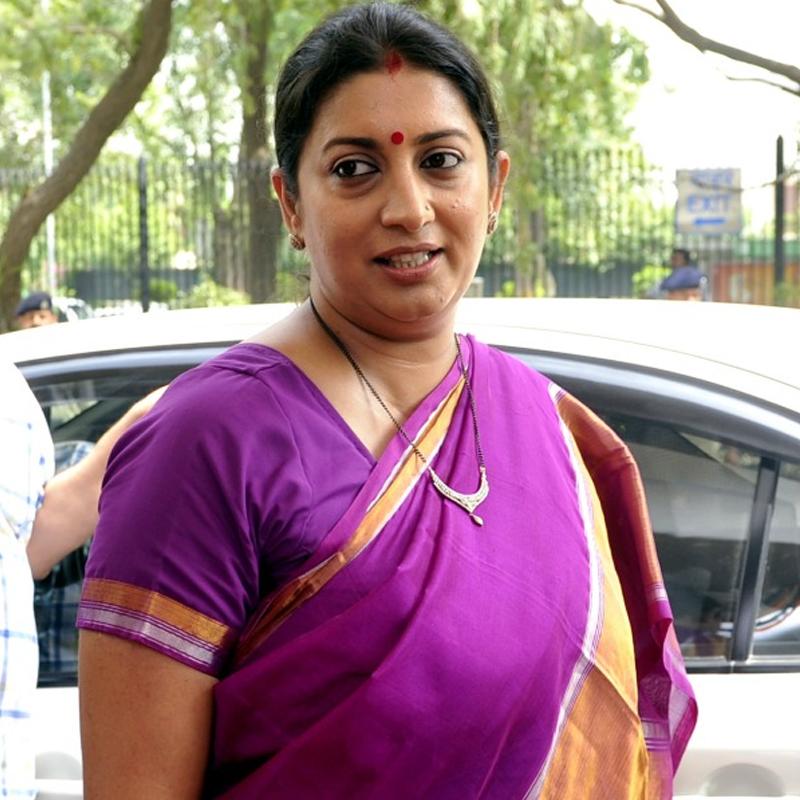
    MUMBAI: A group of more than 100 journalists and other professionals related to online media have written to the information and broadcasting minister Smriti Irani to express their concerns over the ministry’s proposal to extend traditional broadcasting rules and restrictions to the internet. The journalists include veterans of the industry such as Raghav Bahl, MK Venu, Madhu Trehan, Nalini Singh, Paranjoy Guha Thakurta, Shivam Vij, Sanjay Pugalia, Aniruddha Bahal and Raman Kirpal, as well as younger generation media entrepreneurs like Dhanya Rajendran (The News Minute), Seema Mustafa (The Citizen), Ritu Kapur (The Quint), Tanmay Bhat (All India Bakchod) and Bharat Nayak (The Logical Indian).

    In their letter, the journalists and media professionals expressed concerns that bringing legacy media structures—such as licensing and content regulation—could have a drastic impact on a medium that is widely credited with making the media and information landscape more open and democratic across the world. “Internet-based media, by its very nature, promotes broader democratic values globally and cannot be dealt with in the way national governments try to regulate or control traditional media,” said MK Venu, founding editor at The Wire, a new-generation, online-only publication. “Internet-based media and global media aggregators like Facebook, Google have changed the content and distribution landscape in ways that national governments cannot easily control. Nor should they try to. It is a free democratic space and must remain as such,” he added.

    Geeta Seshu, a journalist and a media analyst with a keen interest in freedom of expression issues, too called on the government to embrace the change the spirit of freedom brought about by the internet in media and communication sectors. “Today, digital media in India is evolving into a space, which allows for access to information, untrammelled by traditional gate-keeping structures and despite infrastructural limitations such as low broadband speeds or poor internet penetration,” she said. She expressed disappointment at the government’s attempt to ‘regulate’ online media by setting up a committee comprising mostly of government officials. “This committee hardly reflects the complexities of online media, much less represent all its practitioners,” she said. “Its mandate to regulate the dissemination of information smacks of the most alarming attempts to censor a burgeoning medium. It is ironic that one of the terms of this committee is to examine international standards when India is hailed for taking a strong and unequivocal stand on net neutrality,” she added.

    Raghav Bahl, founder of Network18 and Quintillion Media, urged the government to look at the approach taken by other democracies in dealing with issues of online content. “Any hasty action by the government will likely result in overreach,” he said. “Therefore, we believe that the starting point for the government should be to study the global best practices for online content regulation. Many advanced democracies have already debated this and come up with good frameworks that ensure free speech and transparent regulation. No need to reinvent the wheel,” he added. 

    Journalist Madhu Trehan, the co-founder of NewsLaundry, one of the earliest digital news ventures, warned about the far-reaching impact that interfering with the citizens’ freedom of expression, online or offline, can have. “Regulating the internet is a tricky thing. Its impact is enormous and far reaching,” said Trehan. “The proposal to regulate (and its need at all) must be a consultative process in the most open and transparent way.” Seema Mustafa, founder editor of The Citizen, a news and current affairs website, warned that chances of ‘online content regulation’ being used for suppression of opinions critical of the government remain very high.
    The journalists organised themselves using social media, particularly WhatsApp, spontaneously after news broke that the government had set up a committee to come up with a regulatory structure for online media “on the lines applicable to print and electronic media”. Over 100 journalists and professionals, including those from dozens of online organisations, signed the petition. A website, https://onlinefreedomfoundation.org, has also been set up to allow ordinary citizens to oppose the move to regulate online content.
     

  • MIB mandates broadcasters to display ticker for games of ‘national importance’

    MIB mandates broadcasters to display ticker for games of ‘national importance’

    MUMBAI: On 25 April 2018, the Ministry of Information and Broadcasting (MIB) issued a notice mandating all TV channels broadcasting live sports of “national importance” to display a ticker with immediate effect. The ticker would have to state that the match was also available on DD Free Dish.

    The order requires channels to run the scroll—‘This match/game can also be viewed on DD Sports channel on DD Free Dish DTH and DD’s terrestrial network on the free-to-air basis’—in appropriate colour, font and size making it prominently visible every 15 minutes.

    The MIB had earlier this year tried to get Indian Premier League (IPL) matches under the ambit of games of “national importance.” The sports ministry, however, had rejected the proposal after which, Star India agreed to share one IPL match every week with DD with one hour’s delay.

    Games of national importance constitute India playing global sporting events and the finals of top tournaments. The Sports Broadcasting Signals (Mandatory Sharing with Prasar Bharati) Act, 2007, made it compulsory for private broadcasters to provide access to sporting events of “national importance” to the largest number of listeners and viewers on a free-to-air basis.

    DD National then started getting live feed of Indian cricket matches, the Olympics and other important events and Prasar Bharati shared advertising revenues with the rights holder.

    The private broadcasters went to court and on August 22 last year, the Supreme Court asked Prasar Bharati to air the events only on terrestrial networks or on DD Free-Dish and not on channels like DD 1, which is notified as a must-carry channel for all pay TV (cable and DTH) operators according to the Cable Television Networks (Regulation) Act, 1995.

    In March last year, the MIB notified the Commonwealth Games, Asian Games, summer and special Olympics, Paralympics and certain tennis, hockey and football events as sporting events of national importance. In October 2016, the ministry declared that all official one-day internationals, Twenty20 and Test matches played by the Indian men’s cricket team, semi-finals and finals of the men’s World Cup and International Cricket Council Championship Trophy as cricketing events of national importance.


  • TRAI assures TDSAT on withdrawal of landing page order

    TRAI assures TDSAT on withdrawal of landing page order

    NEW DELHI: Broadcast carriage regulator Telecom Regulatory Authority of India (TRAI) assured the sector disputes tribunal yesterday during a hearing that a November 2017 order pertaining to landing or boot-up page of TV sets will be withdrawn within two weeks and the issue discussed with the stakeholders before any further move on the matter.

    An order of the TRAI in November 2017 banning the use of the landing page for any other activity other than promotion of a distribution platform had been challenged by a few MSOs and broadcasters on the ground that proper process wasn’t followed by the regulator before issuing the directive.

    The TRAI diktat, incidentally, had come after a clutch of news broadcasters had made allegations against a fellow TV channel of making use of the boot-up page to manipulate audience ratings and sampling of the product by viewers.

    The TRAI also informed the Telecom Disputes Settlement and Appellate Tribunal (TDSAT) that it had issued a consultation paper on 3 April 2018 to debate and discuss the landing-page issue threadbare with various stakeholders.

    The landing or the bootup page is what a viewer sees first when a TV set and the connected set-top box are switched on. This page on the screen remains for a certain period of time after which the EPG or the electronic programming guide of the distribution service provider comes up. The landing page, considered hot real estate, usually carries paid advertisements of a TV channel programme or messages (like audience measurement data relating to a particular TV channel or even initial sampling of a new channel). The commercial use of the landing page results in sizable revenue for distribution platforms.

    After the TRAI’s submission on the issue on Wednesday, the TDSAT noted that once the regulator withdrew its order, all the petitions would be treated as infructuous. Till then, the tribunal interim order staying the TRAI directive remains in force. The next date of hearing is 7 May 2018.

    While passing the directive in November, the TRAI had said it had received a number of representations from stakeholders stating the practice of placing a registered TV channel—whose audience data was recently released—on the landing page had the potential to influence the TV audience measurements.

    The Ministry of Information and Broadcasting, in a separate order, in the first week of April 2018 had directed audience measurement organisation BARC India to desist from using landing page data of any channel for its overall audience data.

    Also Read :

    TRAI initiates consultation on landing page issue

    MIB directs BARC to stop landing page impressions for measurements

    TDSAT ‘reserves’ order on landing-page case

  • MIB moves to regulate online media: various organisations join issue

    MIB moves to regulate online media: various organisations join issue

    NEW DELHI: Even as a debate on the need to regulate online news media gains momentum, various organisations have moved the Ministry of Information and Broadcasting (MIB) hoping to be made a part of the committee that will look into various aspects of proposed regulations—a panel that surprisingly doesn’t include, at present, any representation from the sector that is being sought to be brought under checks.

    According to media industry sources, Broadband India Forum (BIF), chambers of commerce FICCI and Confederation of Indian Industries (CII), Internet and Mobile Association of India and Hong Kong-based Asian media advocacy group CASBAA are amongst some of the organisations that have sought representation on the government panel to add value to the policy-making process. The MIB secretary is the convener of the nine-member panel at present.

    In an order issued in the first week of April this year, MIB had announced constitution of a committee for framing regulations for online media, news portals and online content, which would look not only look into the areas mentioned but also at digital broadcasting, entertainment and other media aggregators. The government justification has been that considering the print and electronic medium were governed by various government-mandated rules and also self-regulatory policies, online media (both news and entertainment) ought also to be brought under a similar regulatory framework.

    Though it’s not spelt out in so many words, industry observers feel that despite broadcast carriage regulator TRAI keeping away from it for the time being, video OTT and social media platforms could be brought under the proposed regulatory framework.

    The panel, despite some representation from overall media industry (Indian Broadcasting Foundation, News Broadcasters Association of India and Press Council of India), looks dominated by the government at the moment with members including secretaries from the Ministry of Electronics & IT, Ministry of Home Affairs and the Ministry of Law and Ministry of Commerce, apart from the CEO of another government organisation called MyGov.com. What raises some hope is that the convener can add representatives from any other organisation as deemed fit.

    Meanwhile, the Press Trust of India on Monday reported that the Congress attacked the Modi government over its proposal to install a chip in television set-top boxes to ascertain viewership data, dubbing the move a serious breach of privacy and the “next stage of surveillance.”

    Congress communications in-charge Randeep Surjewala alleged that I&B minister Smriti Irani wanted to now know about shows people watched within the four walls of their bedrooms. In a Twitter post, Surjewala referred to the Modi government as “surveillance sarkar” (surveillance government), raising questions over the right to privacy.

    “In a serious breach of privacy, Smriti Iraniji wants to know what show you watch on your TV, within the four walls of your bedroom, without your permission! Why? ‘Ab ki baar Surveillance sarkar’. The right to privacy broken into pieces,” PTI quoted the Surjewala tweets as stating.

    Within its lengthy views on the DTH sector, the MIB had proposed installing a chip in new set-top boxes that would provide data about channels watched and the duration of the viewing. A senior official of the ministry, according to the PTI report, said that the move was aimed at getting “more authentic” viewership figures for every channel that would “help advertisers and the DAVP (government’s media buying agency) to spend their advertising expenditure wisely.”

    ALSO READ:

    MIB forms committee to draft online media norms

    MIB proposes installation of chip in DTH boxes: Report

  • TRAI begins discussion on uplinking, downlinking guidelines

    TRAI begins discussion on uplinking, downlinking guidelines

    MUMBAI: The Telecom Regulatory Authority of India (TRAI) has set the ball rolling for consultation on uplinking and downlinking guidelines with stakeholders. The regulator convened an open-house discussion (OHD) on its consultation paper on ‘issues relating to uplinking and downlinking of television channels’ in India on 11th April 2018. A number of stakeholders, including associations, broadcasters, service providers and individuals, attended the OHD.

    The TRAI has initiated this consultation process to seek the views of the stakeholders on the issues involved. The objective of this consultation process is to review the provisions of the existing uplinking guidelines and downlinking guidelines so as to ensure orderly growth of the broadcasting sector and in turn provide impetus to socio-cultural and economic development, a release issued the telecom regulator stated.
    A total number of 38 stakeholders have submitted their comments on the issues raised in the consultation paper.

    The TRAI had floated a consultation paper on issues relating to uplink and downlink of TV channels in India mid-December 2017 on receiving a reference from the Ministry of Information anf Broadcasting (MIB) to study the particular aspect and come out with suggestions. This consultation was initiated even as the regulator had been discussing various other issues with stakeholders of the broadcast and cable sectors on ease of doing business and inputs for the National Telecom Policy (NTP) 2018. Subsequently it submitted its recommendations to the government on the ease of doing business and NTP.

    Also Read:

    MIB nod to TV channels on hold till TRAI uplink, downlink suggestions

    MIB proposes installation of chip in DTH boxes: Report


  • MIB proposes installation of chip in DTH boxes: Report

    MIB proposes installation of chip in DTH boxes: Report

    MUMBAI: In order to make the measurement process of viewership better, the Ministry of Information and Broadcasting (MIB) has proposed of an in-built chip in set-top boxes (STBs). According to a report by The Asian Age, the ministry has sought that all direct-to-home (DTH) operators should install a chip in all new set-top boxes to record data about channels watched and their duration.

    The MIB has made this recommendation to the regulatory body Telecom Regulatory Authority of India (TRAI). The proposal was squeezed into the voluminious DTH sector recommendations and the TRAI has asked for a separate and detailed proposal in regard to the matter.

    “Regarding asking DTH operators to instal a chip in new STBs, it is stated that this is a new issue and cannot be part of the reference. If the MIB desires the TRAI’s recommendation on this issue, it may send a separate reference to TRAI as per the provisions of TRAI Act 1997,” TRAI said in a communication to the ministry.

    If the step is taken, it would ensure a wider and better measurement system of viewership preferences across the country. Other than that, the move may also lead to the end of the Broadcast Audience Research Council’s (BARC) monopoly in the measurement system.

    The proposal of allowing the renewal of licences to only DTH operators that have no dues pending to government has been approved by the TRAI.

    Also read:

    TRAI bats for issuing DTH licences for 20 years

    BARC begins new subscription service PreView


  • TRAI bats for issuing DTH licences for 20 years

    TRAI bats for issuing DTH licences for 20 years

    MUMBAI: The Telecom Regulatory Authority of India (TRAI) has reiterated its recommendation to the Ministry of Information and Broadcasting (MIB) that direct-to-home licences be issued for a period of 20 years and then renewed for 10 years, and a one-time entry fee of Rs 10 crore be charged in the new DTH licensing regime.

    In July 2014, the TRAI had made a number of recommendations regarding the issues related to the new DTH licensing regime.

    However, the MIB had proposed, after considering comments from other ministries and departments, to grant DTH license for an initial period of 10 years and thereafter, renewal of license after 10 years.

    The ministry had sought TRAI’s views on the proposal.

    In its response yesterday, the telecom regulator said, “It is felt that a longer licence period would provide certainty in the market.

    Keeping a short license period may adversely affect the potential investment in the sector and would also negate the efforts of the government, inter alia, including the liberalisation of the FDI regime”.

    Stating that a longer duration of license helps in better futuristic business planning, the TRAI noted that in the telecom sector, the license period under the Unified License (UL) regime is 20 years and renewal is 10 years at a time.

    “In view of the growing convergence between the broadcasting and telecom sectors, it is logical to align the license period for DTH sector with that in the telecom sector under the UL.

    In view of above, TRAI reiterates its earlier recommendations,” it said.

    Under the UL, operators are free to provide all telecom services with one licence.

    Currently, the license is valid for 10 years.

    The TRAI also reiterated its recommendation of one-time entry fee of Rs 10 crore to be charged in the new DTH licensing regime.

    The MIB, however, proposed to increase the one-time entry fee to Rs 25 crore for the license period of 10 years.

    In its response, the TRAI said, “In order to encourage more entrants in the DTH industry, and to compete with the cable industry, wherein there is no entry fee, the TRAI recommends to retain the entry fee to Rs 10 crore”.

    Currently, the DTH operators also need to pay an initial entry fee of Rs 10 crore.