Tag: MIB

  • MIB: No deadline to TV channels on use of foreign satellites

    MIB: No deadline to TV channels on use of foreign satellites

    NEW DELHI: In what may come as a relief to TV channels, the Indian government said on Monday it has “not set any deadline” on the domestic media companies for use of transponders on foreign satellites, though it has withdrawn permission to over 200 channels for various reasons.

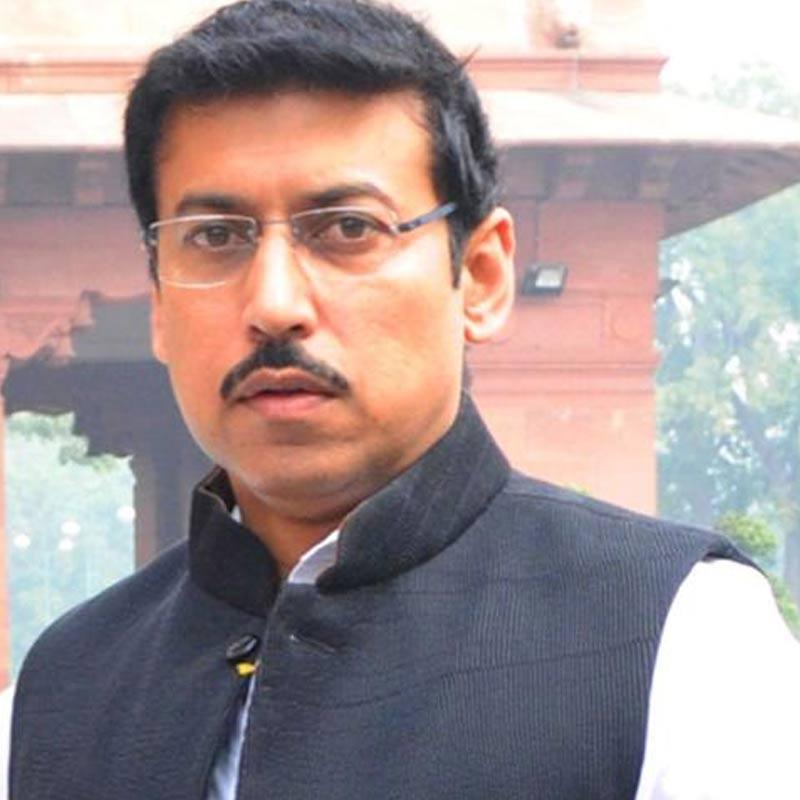
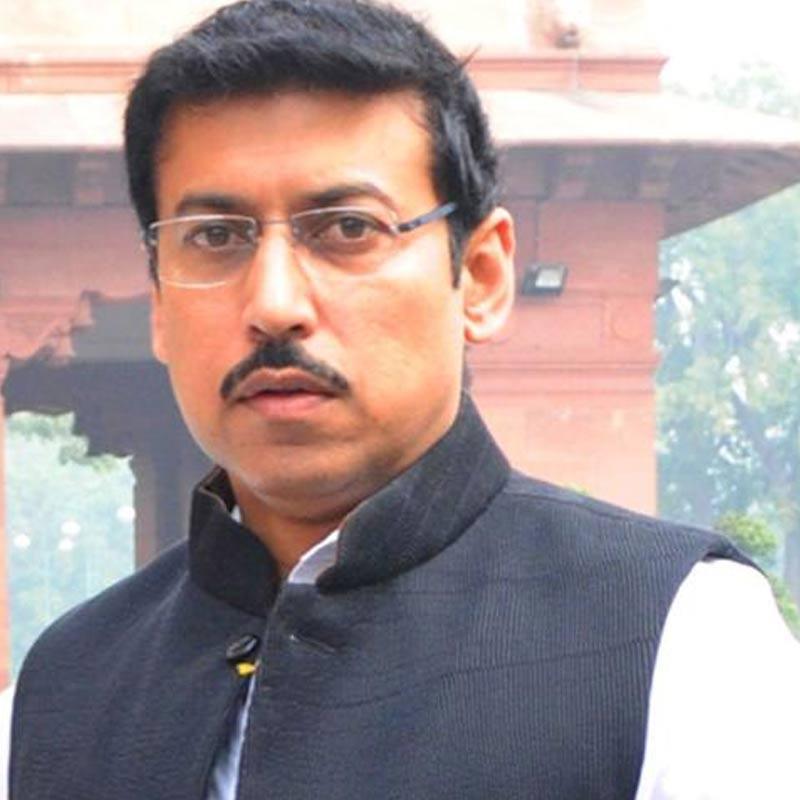
    Asked by a fellow parliamentarian whether some TV channels were using foreign transponders even after expiry of a government deadline, Minister of Information and Broadcasting Rajyavardhan Rathore told Rajya Sabha (Upper House), “The government has not set any deadline for use of foreign transponders by the TV channel owners.”

    The clarification from the MIB minister gains importance as indirect indications from various ministries — like delays in various clearances — over the last several months had been nudging TV channels to start the process of migration to Indian satellites from foreign spacecrafts.

    A senior executive of a big broadcasting company admitted last week in private that though giving Rathore a free hand at MIB was a good sign, but clearance processes in the ministry were still slow.

    Meanwhile, according to Rathore, out of the 867 private satellite TV channels having valid permission for uplinking and/or downlinking in India as of 30 June 2018, permission of 236 TV channels were cancelled due to “various reasons, including request for cancellation by the channel owner(s)”.

  • MIB’s Rathore admits to online media norms panel’s new avatar

    MIB’s Rathore admits to online media norms panel’s new avatar

    NEW DELHI: We had told you earlier, but now it’s official coming straight from the horse’s mouth. Ministry of Information and Broadcasting, led by an Olympics medal winning Rajyavardhan Rathore, has passed the baton to another government set-up to finish exploring regulations for the online media and content.

    “The Ministry of I&B had constituted a committee on 4 April 2018 for framing regulations for online media/news portals and online content, including digital broadcasting, which encompasses entertainment/infotainment and news/media aggregators,” MIB Minister Rathore said today in Parliament.

    He added: “However, since government had constituted an inter-ministerial committee on ‘Investment in Critical National Infrastructure, Digital Broadcasting and related issues’, which in its first meeting held on 10 May 2018 observed that some of the Terms of References (ToRs) and issues of the two committees are common, a decision was taken to dovetail the ToR of the committee constituted by this Ministry with that of the committee on ‘Investment in Critical National Infrastructure, Digital Broadcasting and related issues’.”

    The minister was replying to queries raised on proposed online media regulations by a fellow parliamentarian.

    The MIB panel, when constituted under the stewardship of Minister Smriti Irani, had drawn flak on many counts. One of many criticisms was that it was beyond MIB’s remit to deal with things that are internet-based as they fall within the purview of Ministry of Electronics and IT (Meity). Another drawback to the formation of this panel was that it had representatives from various government organisations, but no representation from India’s thriving and blooming online media that the committee was supposed to look into.

    The very fact that another government committee is supposed to look into matters relating to online media should continue keeping online players on their toes.

  • TRAI suggestions on uplink, downlink norms under consideration, says MIB

    TRAI suggestions on uplink, downlink norms under consideration, says MIB

    NEW DELHI: The Indian government has said broadcast and telecoms regulator TRAI’s recommendations on ease of doing business and uplink/downlink norms, some of them quite radical, are under consideration.

    “Government solicited recommendation of Telecom Regulatory Authority of India (TRAI)… they are under consideration,” Minister of Information and Broadcasting Rajyavardhan Rathore told Parliament last week without giving any time frame or clarifying whether the regulator’s suggestions on both the issues would be accepted in totality or they would be tweaked as and when legislated into regulations.

    Pointing out that because the present policy guidelines for uplinking of television channels from India and those relating to landing rights came into effect in December 2011, it was felt that the government should have them re-examined by the regulator in view of the changing broadcasting environ in the country, Rathore explained.

    However, TRAI in its recommendations on uplink and downlink norms, shot down an idea proposed by MIB that had suggested whether TV channels’ frequencies too could be auctioned on the lines of FM radio stations.

    TRAI also stuck with most of the existing guidelines and norms for uplink and downlink permissions for TV channel and teleports. However, it suggested enhancing of annual permission fees from the present levels, amongst some other changes. The recommendations on uplink and downlink of TV channels and teleports had been awaited eagerly by the industry, already reeling under pressures from various sides, including economic.

    The regulator also said that mandating encryption of broadcast of FTA TV channels was not a good idea, while suggesting that various processes for government clearances should be streamlined and completed within a stipulated time-frame.

    The broadcast industry and independent observers feel that it would help the industry if Minister Rathore’s team at MIB take a quick decision on the suggestions made by TRAI on both the issues instead of keeping the matter pending.

    However, as TRAI’s role is recommendatory, it is not mandatory for government organisations, including MIB, Department of Telecoms (DoT) and Department of Space, to accept the suggestions in any form.

    There have been instances when the regulator’s suggestions have been shot down or tweaked by the government. A recent example being TRAI’s push for its role to be upgraded to that of a converged regulator for broadcast, online and telecoms sectors, which was shot down by the DoT while formulating the final version of the National Digital Communications Policy 2018.

  • Online media regulations: action shifts to IT Ministry from MIB

    Online media regulations: action shifts to IT Ministry from MIB

    MUMBAI: If online media is readying the champagne to pop, then hold on to your exuberance. The government hasn’t given up its resolve to explore regulations for online media and content. It is only attempting to be on the right side of laid down rules and cut down on duplication of work.

    In short, the main action will be shifting from the Ministry of Information and Broadcasting (MIB) to the Ministry of Electronics and Information and Technology (Meity), while other things remain constant, which means the mandate will continue to be the same.

    A government official admitted, without saying so in so many words, that as a Meity committee, set up earlier, has the mandate to explore regulations for online media to facilitate its expansion, MIB will work along with its counterparts bringing in more synergy.

    The official insisted that the MIB committee, set up to explore regulations for online media in April 2018, is officially not being dissolved, but will work along with the Meity panel that comprises similar members.

    The 10-member panel, constituted by the MIB headed by Smriti Irani, was criticized by experts on the ground that it was outside the jurisdiction of MIB to explore regulations for online media, including OTT services, as the matter fell within the ambit of Meity — something that MIB Minister Rajyavardhan Rathore had reiterated in Parliament too. A big criticism was that a panel formed to look into matters relating to online media didn’t have a single online player as a member.

    When the MIB panel was announced it had as its members the following: MIB Secretary– Convener; Secretary, MeitY; Secretary, Ministry of Home Affairs; Secretary, Department of Legal Affairs; Secretary, DIPP; CEO of MyGov and representatives of Press Council of India, News Broadcasters Association, Indian Broadcasting Foundation, apart from representation from any other government organization or industry body deemed fit by the convener.

    The terms of reference of the committee were:

    i. To delineate the sphere of online information dissemination which needs to be brought under regulation, on the lines applicable to print and electronic media.

    ii. To recommend appropriate policy formulation for online media / news portals and online content platforms including digital broadcasting which encompasses entertainment / infotainment and news/media aggregators keeping in mind the extant FDI norms, Programme & Advertising Code for TV Channels, norms circulated by PCI, code of ethics framed by NBA and norms prescribed by IBF, and

    iii. To analyze the international scenario on such existing regulatory mechanisms with a view to incorporate the best practices.

    As criticisms mounted, the government has done what it is best at doing — located another government panel with similar or near-similar mandate in the relevant Ministry (Meity) and shifted the onus of exploration of regulations for online media to the rightful department, thereby blunting critics.

    Indiantelevision.com has always been of the opinion that rolling back of orders relating to fake news even if the Prime Minister’s Office intervened, and other such backtracking was akin to testing the waters for a bigger move to have norms for online media where content is continuously getting more edgy and experimental.

    Meity Minister Ravi Shankar Prasad, who also happens to be the Law Minister, yesterday said that it was time to talk to online stakeholders to explore formulation of policies that would govern the online media, especially social media and free messaging platforms like WhatsApp that are being blamed for incidents of lynching in the country.

  • MIB Minister tries to allay fears on online surveillance & privacy violations

    MIB Minister tries to allay fears on online surveillance & privacy violations

    NEW DELHI: The Indian government has denied that its proposed Social Media Communications Hub, under the jurisdiction of Ministry of Information and Broadcasting (MIB), will violate a citizen’s privacy through monitoring of social media footprints as the plan was more directed towards propagating the government’s policy initiatives.

    The government has also clarified that there was no proposal under consideration to get installed tracking chips in set-top- boxes through which various TV and broadband services are delivered to a large number of the 190 million-plus TV households in India.

    “The government proposes to set up a Social Media Hub to facilitate information flow regarding its policies and programmes through social media platforms, that is Facebook, Twitter, Instagram, YouTube, etc.,” MIB Minister Rajyavardhan Rathore told the Indian Parliament’s Lower House yesterday while answering queries raised by fellow parliamentarians whether such a monitoring facility is aimed at collecting and analysing data across all major social media platforms that would ultimately be a surveillance tool for the government.

    The Minister also clarified that there was no proposal to “invade an

    individual’s right to privacy, and the right to freedom of speech” through the proposed social media hub.

    In the past two years, MIB has been a facilitator in providing publicity to the flagship schemes of the government on major social media platforms and had organized various online promotional activities in this regard, Rathore explained.

    What Rathore didn’t clarify or add — as he was not asked specifically so — as to why a tender for setting up of the Social Media Communications Hub was floated in the first place and why the document’s objectives were so detailed that it alarmed civil society on its citizen surveillance aspects. The full details of the tender document can be still found online.

    Incidentally, the deadline for a tender floated to locate vendor(s) to set up the proposed social media hub — termed by critics as a surveillance tool to monitor Indian citizens’ activities and thoughts in real time — has been extended several times since April 2018 with the new deadline now being 20 August 2018 before which the Supreme Court is scheduled to hear a case against its setting first week of August.

    The apex court’s initial observations sounded critical as it said if such a monitoring hub came up it could turn India into a “surveillance state”.

    Broadcast Engineering Consultants India Limited (BECIL), an organization under the umbrella of MIB, had floated a tender to supply a software for the project. When the idea was first mooted Smriti Irani was the MIB Minister.

    “A technology platform is needed to collect digital media chatter from all core social media platforms as well as digital platforms such as news, blogs… In a single system providing real-time insights, metrics and other valuable data,” the tender document stated.

    Under the project, media persons would be employed on contractual basis in each district to be the “eyes and ears” of the government and provide real-time updates from the ground — one of the reason for extending the deadline was this condition, missing in the original tender document, got added later.

    According to critics of the project, undertaken under a seemingly harmless name of Social Media Communications Hub, however, it aimed to monitor in real times not only the social media and online activities of Indian citizens, but also seeks to deploy technology to predict behavior and possible future actions of people. This, at a time when India doesn’t have strong data protection laws.

    Amongst the many listed objectives of the media hub is this: “What would be the headlines and breaking news of various channels and newspapers across the globe— could be done with knowledge about their leanings, business deals, investors, their country policies, sentiment of their population, past trends etc. NYT, Economist, Time etc. are good examples, what would be the global public perception due to such headlines and breaking news, how could the public perception be moulded in positive manner for the country, how could nationalistic feelings be inculcated in the masses, how can the perception management of India be improved at the world for a how could the media blitzkrieg of India’s adversaries be predicted and replied/neutralized, how could the social media and internet news/discussions be given a positive slant for India.”

    One of the many critics of this project is the Internet Freedom Foundation (IFF), which has also sent a notice to the MIB to stop the project, failing which the organization would take legal action. Its concerns? “Social Media Communication Hub will also have the ability to broadcast content without any legal authority or guidance through 20 central and 716 district level social media executives. In sum, this is a system of control through surveillance and a capacity to spread propaganda,” the Foundation had said in an online campaign last month.

  • Fake news on social media: Law & IT Minister favours evolving a policy

    Fake news on social media: Law & IT Minister favours evolving a policy

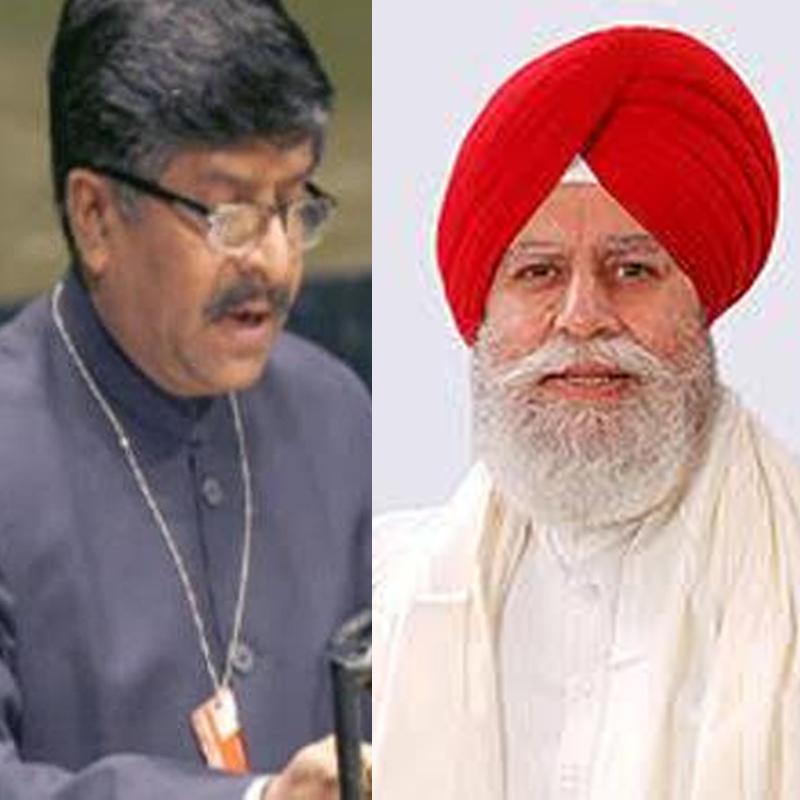
    NEW DELHI: The Indian government seems to be speaking in two voices over the menace of fake news. While law and IT Minister Ravi Shankar Prasad today said he would hold talks with stakeholders to evolve a policy, his junior SS Ahluwalia on Wednesday had told Parliament that the government doesn't propose to bring in regulations for social media.

    Law and IT Minister Ravi Shankar Prasad informed the Rajya Sabha (Upper House) yesterday that he will hold discussion with stakeholders, including political parties, to evolve a policy to deal with the misuse of social media, according to a PTI report, which also quoted a government statement saying it has been conveyed to WhatsApp in "unmistakable terms" that it was a very serious issue that "deserves a more sensitive response".

    The government yesterday also  shot off another notice to WhatsApp asking it to come out with effective solutions to curb the menace of fake news beyond just labelling forwards. It also warned the company that mediums used for propagation of rumours are liable to be treated as 'abettors' and can face legal consequences if they remain "mute spectators", the PTI report said.

    Facebook-owned WhatsApp has been under fire from the Indian government over fake news and false information being circulated on its messaging platform. The government had in the past too issued a stern warning to the company to clamp down on hoax messages designed to "provoke" and "instigate" people.

    "When rumours and fake news get propagated by mischief mongers, the medium used for such propagation cannot evade responsibility and accountability. If they remain mute spectators they are liable to be treated as abettors and thereafter face consequent legal action," a PTI report quoted an IT Ministry statement as saying. The ministry said it has approached WhatsApp to bring more effective solutions to the table, to ensure greater "accountability and facilitate enforcement of law" beyond the existing efforts towards labelling forwards and identifying fake news.

    The Supreme Court, earlier this week, asked Parliament to consider enacting a new law to effectively deal with incidents of mob lynching, saying "horrendous acts of mobocracy" cannot be allowed to become a new norm. 

    “Government doesn't regulate content on social media sites": IT Ministry's SS Ahluwalia,  

    On Wednesday, the Indian government admitted it doesn’t plan to regulate content on social media, as of now, despite the menace of fake news affecting the societal fabric. However, the government is quiet on the future of a committee set up under the Ministry of Information and Broadcasting (MIB) that has the mandate to explore regulation for online content, including those on OTT platforms.

    “Government does not regulate content appearing on social media sites, and law enforcement and security agencies may take action on specific case to case basis as per law in force,” junior Minister for Electronics & Information Technology (MEITY) SS Ahluwalia informed Parliament on Wednesday, emphasizing that the government was fully “committed to freedom of speech and expression” and “privacy” of its citizens as enshrined in the Indian Constitution.

    Ahluwalia was asked about the steps being taken by the federal government to address the problem of fake news and whether there were any plans to monitor and regulate social media content.

    According to the Minister, the Information Technology (IT) Act, 2000 has provisions for removal of objectionable online content that was “harmful, defamatory, hateful, libelous, objectionable” and affected minors, apart from the national security.

    However, as the Minister was not asked, he did not dwell on the future of  a committee —comprising representatives of various government organisations and few industry bodies too — set up under the MIB to explore online content regulations. The setting up of the panel was criticized as it was outside the remit of the MIB as the issue concerned came under the jurisdiction of MEITY.

    The said committee, helmed by MIB Secretary, is reported to have met a few times since its formation, but the details of those meetings are not public yet. Nor is the fact whether it would be disbanded or taken out MIB’s jurisdiction in favour of MEITY.

    MIB Stresses on Self-Regulation To Fight Fake News Menace On TV

    On Thursday, MIB Minister Rajyavardhan Rathore stressed on existing safeguards in laws and self-regulation to say that there was also no proposal to indulge in pre-censorship of TV channels to stop them from allegedly spreading fake news.

    “The [Cable Television Networks Regulation] Act [1995] does not provide for pre-censorship of any programmes and advertisements telecast on TV channels. However, it prescribes that all programmes and advertisements telecast on such TV channels should be in conformity with the prescribed Programme Code and Advertising Code enshrined in the aforesaid Act and the rules framed thereunder,” Rathore informed fellow parliamentarians who were concerned about some TV channels spreading fake news.

    Earlier, MIB, under minister Smriti Irani, had attempted to bring in regulations to control fake news, which had to be aborted as the Prime Minister's Office intervened in the aftermath of nation-wide criticism. Still, some critics feel that the botched attempt to bring in rules to rein in media critical of the government was testing of waters for future norms.

  • Supreme Court questions MIB’s digital chatter monitoring proposal

    Supreme Court questions MIB’s digital chatter monitoring proposal

    NEW DELHI: The government proposes, Supreme Court disposes. Well, almost. Not fully yet. Though, the apex court has questioned a Ministry of Information and Broadcasting proposal to monitor digital chatter and online footprint, observing today that if done it would be “like creating a surveillance state”.

    The top court said the government wants to tap citizens’ WhatsApp messages and sought its response within two weeks, according to a report filed by Press Trust of India.

    A bench of Chief Justice Dipak Misra and Justices A M Khanwilkar and D Y Chandrachud issued notice to the federal government on a plea by Trinamool Congress (TMC) legislator Mahua Moitra and sought Attorney General K K Venugopal’s assistance in the matter.

    “The government wants to tap citizens’ WhatsApp messages. It will be like creating a surveillance state,” the bench was quoted by PTI as having said earlier in the day.

    The bench then said it was listing the matter on 3 August 2018, before the opening of the tender on 20 August 2018 for the proposed monitoring cell. The attorney-general or any law officer for the government will assist the court in the matter. As reported by Indiantelevision.com earlier, the project’s deadline has already been extended several times.

     The project being undertaken under a seemingly harmless name of Social Media Communications Hub, however, has aims to monitor in real times not only the social media and online activities of Indian citizens, but also seeks to deploy technology to predict behavior and possible future actions of people. This, at a time when India doesn’t have strong data protection laws.

    Amongst the many listed objectives of the media hub is this: “What would be the headlines and breaking news of various channels and newspapers across the globe— could be done with knowledge about their leanings, business deals, investors, their country policies, sentiment of their population, past trends etc. NYT, Economist, Time etc. are good examples, what would be the global public perception due to such headlines and breaking news, how could the public perception be moulded in positive manner for the country, how could nationalistic feelings be inculcated in the masses, how can the perception management of India be improved at the world for a how could the media blitzkrieg of India’s adversaries be predicted and replied/neutralized, how could the social media and internet news/discussions be given a positive slant for India.”

    One of the many critics of this project is the Internet Freedom Foundation (IFF), which has also sent a notice to the MIB to stop the project, failing which the organization would take legal action. Its concerns? “Social Media Communication Hub will also have the ability to broadcast content without any legal authority or guidance through 20 central and 716 district level social media executives. In sum, this is a system of control through surveillance and a capacity to spread propaganda,” the Foundation had said in an online campaign last month.

    Meanwhile returning to the Supreme Court, earlier on 18 June 2018 the court had refused to accord urgent hearing on the TMC member’s plea seeking to stay a central government move to set up a ‘Social Media Communication Hub’ that would collect and analyse digital and social media content.

    The counsel for Moitra had said that the government is trying to monitor social media content of individuals by tracking their social media accounts such as those on Twitter, Facebook and Instagram, and their e-mails.

    Broadcast Engineering Consultants India Limited (BECIL), an organization under the umbrella of MIB had floated a tender to supply a software for the project. When the idea was first mooted Smriti Irani was the MIB Minister.

    “A technology platform is needed to collect digital media chatter from all core social media platforms as well as digital platforms such as news, blogs… In a single system providing real-time insights, metrics and other valuable data,” the tender document elaborated.

    Under the project, media persons would be employed on contractual basis in each district to be the “eyes and ears” of the government and provide real-time updates from the ground — one of the reason for extending the deadline as this condition, missing in the original tender document, got added later.

  • Comment: TRAI uplinks progressive recommendations; now MIB, others need to downlink them

    Comment: TRAI uplinks progressive recommendations; now MIB, others need to downlink them

    The approximately Rs 1,400 billion Indian broadcasting and cable sectors, reeling under the impact of a slow economy and hemmed in by erratic policy-making, would be breathing a bit easy after TRAI’s recommendations on issues related to uplink and downlink of TV channels and teleports.

    And, why not?  When the consultation paper on uplinking and downlinking guidelines was released by TRAI in December last year, the concept paper had sent alarm bells ringing in the media industry. Reason? The consultation paper had references about auctioning of satellite spectrum and TV channel permissions, introduction of AGR (adjusted gross revenue) sharing based licence fee (the concept of licensing itself was a debatable issue) and introduction of other changes.

    Most media houses sensed that an auction and AGR-based licensing and spectrum regime could have an irreparable impact on the industry, a la telecom sector, where winding down of businesses and pink slips are becoming common. Even more worrying for the sector was the assertion by TRAI — probably egged on by the Ministry of Information and Broadcasting (MIB)’s reference letter on the issue — that the administrative permissions received by TV channels under the existing norms were licences under Section 4 of the Telegraph Act, 1885, which in itself is an antiquated piece of legislation harking back to the 19th century.

    Though TRAI may not have been directly responsible for suggesting in the consultation paper, issues that rankled the industry, it did experience a rare united and collective views of the industry. Though consensus among stakeholders is rare, on this matter there was no such hesitation. And, an open house forum organised by TRAI on the issue to get further feedback could be cited as an example of this rare unity of views.

    Most attendees to the open forum conveyed loud and clear that concepts like auctioning of TV channels’ permission and AGR-based annual revenue sharing (with the government) would do more harm to the industry than any good. What’s more, some of the industry representatives reminded TRAI of its recommendations for National Telecom Policy 2018 where it had suggested “review” of all levy and fees imposed on telecom service providers.

    In the final recommendations issued earlier this week, TRAI has categorically struck down the possibility of either auctioning of permissions and/or spectrum and steered clear of AGR altogether. Rather, it has taken a highly progressive stance, which if accepted by MIB and other government organisations can inject the much-needed fuel in the industry for it to propel forward faster over the next decade.

    By not increasing any substantial financial burden on media companies in this sector, TRAI has enabled the capex to go into creating newer ventures, innovative products and business models, and other expansionary activities, rather than simply paying fees and levies. Though the suggested framework has been left mostly untouched from the perspective of administrative fees, there are a few notable changes.

    The annual licence fee for uplinking of a TV channel has been enhanced from Rs 200,000 to Rs 300,000. Similarly, the annual fee for downlinking of a TV channel has been increased to Rs 750,000 from Rs 500,000. Also, the fee for downlinking of channels uplinked from abroad has been increased to Rs 22,50,000 per annum.

    TRAI, while exhorting the likes of MIB, Department of Space and DoT to streamline processes, has interestingly suggested transfer of permissions between two companies be permitted only in the case of mergers and acquisitions as recognised under applicable laws. However, free transfer has been recommended for permission of a TV channel to its subsidiary company or holding company or a subsidiary company of the holding company. The caveat being such a company should have a valid uplinking and downlinking permission.

    A time period of only one year has been given for operationalisation of a TV channel and a lock-in period of one year from the date of operationalisation of a channel for the transfer of permission of such a channel too has been introduced.

    As for teleports, no change in the amount of one- time non-refundable processing fee levied for seeking permission for establishing a teleport has been suggested. Similarly, it has been suggested that no entry fee is levied for granting permission for establishing a teleport. However, for each antenna, a fixed annual license fee of Rs 300,000 has been recommended.

    What will also come as a relief to the teleport industry is that TRAI has refrained from restricting the number of teleports in India.

    And, once again TRAI has nudged Department of Space and Department of Telecoms to take time-bound and liberalised policy decisions relating to satellite capacity. Though not said upfront and in so many words, the regulator has pitched in for foreign satellites too. “The issue of open sky policy for Ku band frequencies may be taken up by MIB in INSAT Coordination Committee (ICC) meeting and the open sky policy should be adopted.”

    Any regulator would vouch that it’s hard to please the core constituency and stakeholders don’t always agree with its stand, but on the uplink/downlink matter the industry would agree with most of the suggestions of TRAI — and also breathe a little easy.

    Hang on, don’t pop the champagne yet. TRAI can only make suggestions — it admitted so in an open forum — and it’s up to MIB, DoT and Department of Space to accept the suggestions and implement them. And, therein lies the catch because quite a few other sets of TRAI recommendations have been gathering dust in various corridors of power.

    Also Read :

    Uplink, downlink issue: TRAI pushes for a liberal regime keeping most existing norms unchanged

    TRAI extends dates for comments on uplinking/downlinking consultation paper
  • MIB & Prasar Bharati make up, sign agreement on funds’ release

    MIB & Prasar Bharati make up, sign agreement on funds’ release

    NEW DELHI: After lot of heartburning and media statements, the Ministry of Information and Broadcasting Ministry and Prasar Bharati, which runs Doordarshan and All India Radio (AIR), have inked an agreement that was required for the release of financial allocation to the pubcaster, PTI reported today quoting an unnamed source.

    The agreement or the memorandum of understanding (MoU) was signed between the broadcaster and the ministry in the last week of May, the source added.

    Autonomous bodies getting grants-in-aid from the government are required to sign a memorandum of understanding (MoU) with the ministry concerned for the release of the financial allocations made in the Union Budget by the federal government.

    Besides Prasar Bharati, MIB has also signed MoUs with the Indian Institute of Mass Communication (IIMC), Film and Television Institute of India (FTII) and Satyajit Ray Film and Television Institute in the last week of May, the source added.

    In April, the ministry released Rs 365 crore (Rs. 3,650 million) to Prasar Bharati after it signed the MoU following months of standoff between the two sides on various contentious issues during the time when Smriti Irani was the senior minister. Subsequently she was shifted out of the ministry.

    The ministry releases an amount of around Rs 200 crore (Rs. 2 billion) to Prasar Bharati every month and a major share of it goes to payment of salaries.

    The MIB had earlier released Rs 1,989 crore (Rs. 19.89 billion) to Prasar Bharati as grants-in-aid for payment of salaries to its employees.

    In early March, Prasar Bharati CEO S S Vempati, in response to media reports, had said that Rs 208 crore released by the public broadcaster towards payment of salaries to its staff on 28 February 2018 were from its own reserves.

    Reacting to the news report, the ministry had issued a statement saying that the Prasar Bharati had not signed an MoU as required by autonomous bodies for getting grants-in-aid.

    Also Read:

    MIB calls for ‘fiscal prudence’ in Prasar Bharati

    Prasar Bharati’s policy on DD Free Dish to be out soon

    Prasar Bharati’s main role is of pubcaster, not revenue generator, says Rathore

  • Govt. mulls norms tweak on women’s portrayal in digital media

    Govt. mulls norms tweak on women’s portrayal in digital media

    NEW DELHI: The Indian government is proposing to amend relevant laws relating to representation of women in mass media with a view to make the law contemporary and keep pace with changing technologies like OTT and other digital services.

    The India government had enacted the Indecent Representation of Women (Prohibition) Act (IRWA), 1986 to prohibit indecent representation of women through advertisements, publications, writings, paintings, figures or in any other manner. Since the enactment of the Act, technological evolution has resulted in the development of new forms of communication, such as internet, multi-media messaging, cable television, over-the-top (OTT) services and applications like Skype, Viber, WhatsApp, Chat On, Snapchat and Instagram.

    According to a statement put out by the government, technological advancements has necessitated widening the scope of the law so as to cover all forms of media. The proposal to amend the Act was introduced in Parliament in 2012, which referred the issue to a Parliamentary Standing Committee.

    The Ministry of Women and Child Development (WCD) has proposed amendments to widen the scope of Indecent Representation of Women (Prohibition) Act (IRWA), 1986 keeping in mind the recent technological advancement in the field of communications.

    Based on the observations made by the Parliamentary Standing Committee and recommendation made by the National Commission for Women and wide consultations with civil society groups, the following amendments have been recommended, amongst other things, by the ministry:

    Amendment in definition of term advertisement to include digital form or electronic form or hoardings, or through SMS and MMS.

    Amendment in definition of distribution to include publication, license or uploading using computer resource or communication device.

    Penalty similar to that provided under the Information Technology Act, 2000.

    Creation of a centralized authority under the National Commission of Women (NCW). This body will have representatives from Advertising Standards Council of India, Press Council of India, Ministry of Information and Broadcasting and one member having experience of working on women issues.

    This centralized body will be authorized to receive complaints or grievances regarding any programme or advertisement broadcast or published and investigate/examine all matters relating to the indecent representation of women.

    Also Read :

    Women portrayal: Better days are emerging

    Women employment in film and television industry drops: Study