Tag: MIB

  • Comment: DNPA formation raises key questions & upsets independent publishers

    Comment: DNPA formation raises key questions & upsets independent publishers

    “When it comes to rain making, not all followers are equally valuable. Some people have a lot more influence than others,” said Areva Martin, author and autism expert, in `Make It Rain!: How to Use the Media to Revolutionize Your Business & Brand’.

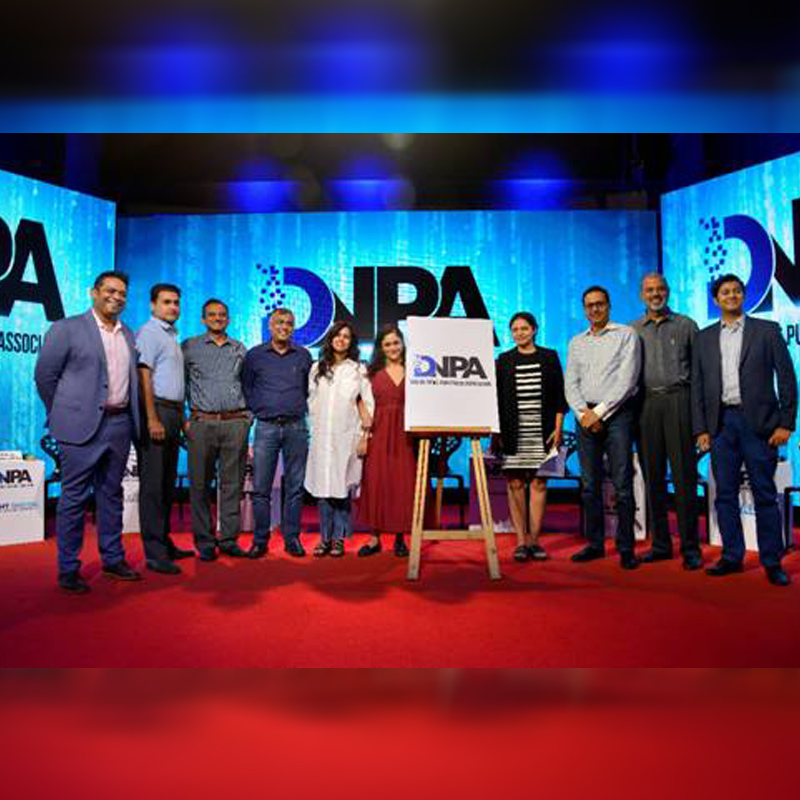
    A hurriedly called press conference, which was delayed because of last-minute deliberations in the India Today office on the outskirts of New Delhi on 21 September 2018, made public a development that resulted in more gasps on social media and WhatsApp groups than surprise from the attendant journalists at the conference to cover the event.

    And since then, the announcement of the formation of a Digital News Publishers Association (DNPA) has continued to keep various WhatsApp groups and social media users busy discussing the pros and cons of the newest entrant in the field of media industry advocacy in India. Especially because DNPA claims to be one more voice of the stakeholders amidst a plethora of already-existing industry bodies and sectoral alliances in the approximate Rs 1.5 trillion Indian media and entertainment sector.

    According to the most updated data from the India Brand Equity Foundation (IBEF), an organisation established by India’s Ministry of Commerce and Industry, the Indian digital advertising industry is expected to grow at a CAGR of 32 per cent to reach Rs 18,986 crore or $ 2.93 billion by 2020, backed by affordable data and rising smartphone penetration. FICCI-E&Y 2018 report on India’s media and entertainment sector stated 84 per cent of India's total digital population consumed news digitally in April 2017.

    Juxtaposed against the present political set-up in the country, the aforementioned data gets perspective, which was visible in the press release issued. “Ten of India’s biggest media companies who collectively serve 70 per cent of India’s online audience have today announced a new collective, Digital News Publishers Association,” the official statement read. Upfront it has been made clear that the 10 founding members of the new organisation hold sway over online audience. What was left unsaid was that such high coverage of online population also makes them important influencers.    

    The official statement also leaves another clue behind its formation: “The organisation is committed to…self-regulation and to promoting the business and editorial interests of all members.” The 10 founding members are Dainik Bhaskar, India Today Group, NDTV, Hindustan Times, Indian Express, Times of India, Amar Ujala, Dainik Jagran, Eenadu and Malayala Manorama — all traditional media houses with digital extensions to keep pace with the march of technology. Many of these organisations also own several other media ventures like TV and FM radio channels.

    With the India government, still grappling with ways to rein in rampant fake news being spread more via social media platforms and dodgy websites, has also come up with a framework for regulations — self or government mandated — for digital and online publishers of content, formation of DNPA, consisting of legacy media houses, raises important questions and has the potential of opening up of a can of worms leading to further making the country a regulatory challenge. Add to the fact that the government has mandated a committee to explore regulations for all genres of online content and that, reportedly, the committee is finding it difficult to suggest solutions that are a win-win for both stakeholders and the government making the regulatory landscape very tricky.

    Now, DNPA’s formations raises three crucial questions.

    Question No. 1: Why form another industry advocacy group when several such bodies already exist?

    For the overall development of the digital news segment and the publishers, is the official explanation. Does that mean organisations like the Indian Broadcasting Foundation, News Broadcasters Association (both these bodies have self-regulatory set-up for its members), Internet & Mobile Association of India (IMAI), Broadband India Forum (BIF), Editors’ Guild of India, Producers Guild of India, which consists of digital players too, and a host of smaller versions of these organisations are unable to deliver for the founding members of DNPA?

    It’s imperative to remember a majority of the DNPA’s 10 present members are also members of various other bodies too like the IBF, NBA and IMAI. NBA itself was formed several years back when the TV news players thought the IBF was not representing their viewpoints properly.

    An independent observer quipped after DNPA came into existence: “If the industry body is serious about its avowed goals, the members should stop giving free content to the likes of Facebook and Twitter.”

    Question No. 2: Though DNPA has admitted it’s open to other digital companies as members, why weren’t the independent and other comparatively smaller publishers of digital news initially contacted?

    Technology certainly has made innovations and entrepreneurship in digital publishing more competitive. And, this initial cold-shouldering of smaller competitors has made them question the claimed goals of the Big 10, as the DNPA founders are being labelled as.

    “Yet another big daddies club. Formed by big media companies discreetly, without the ones who spent blood & sweat to create independent internet news publishing platforms without a muscle. Despicable. I would call upon all the independent digital news publishing platforms with sizable reach to express their protest and tweet about it to I&B Minister. This [Digital News Publishers] Association should not be recognised,” rued Alok Verma in a two-part tweet last Friday. A veteran journalist who has worked in senior positions in both the print and electronic news media segments earlier, Verma is founder and chief editor of NYOOOZ.com, an online video-first platform delivering news from over 62 small and medium scale cities.

    Question No. 3: Will DNPA’s birth lead to the formation of another organisation comprising the independent digital news players?

    This is a very possible scenario and, if such an advocacy group or alliance does come into effect, it should get off the block like Usain Bolt. If it manages the inherent content and business contradictions of its members efficiently, it also has the potential to be a strong industry voice having good fire (and leveraging) power. But it’s a big IF.

    However, some of the `bigger’ independent digital publishers of news have not articulated their views — at least publicly. Owners and managers of The Wire, BloombergQuint, VICE India, Scroll.in, HuffPost India, The Print, etc. who otherwise opine on almost all industry and regulatory issues, apart from being very active on social media, have been quiet. Industry gossip says — though to be taken with a pinch of salt — feelers sent by some independent players to the likes of The Print, The Wire, BOOM, which is a part of Ping Digital Network, have elicited lukewarm response on the issue of an independent digital publishers alliance so that DNPA and its legacy members cannot start influencing the regulatory environment.

    With general elections in India lurking around the corner, the hordes of independent digital news venture gain importance as providers of news and being influencers of the hoi-polloi that may not be so exposed to the national media.

    Trying to summarise the DNPA development and its possible fallouts, Pankaj Pachauri founder and editor of mobile app based and online GoNews rued the fact that legacy players kept the DNPA formation hush-hush despite some of them being members of NBA too, just like his venture. Incidentally, NBA’s annual meeting was held earlier last week.

    “Why did India become a powerhouse in technology and software? Because at a time when the sector was in its infancy and growing, there was just one organisation, Nasscom, that championed the sector’s cause with policy-makers and did it effectively. In the media industry, especially so in the fledgeling digital space, all the players must remember that unless we present a united front, regulators can try hemming us in with restrictive legislations,” said Pachauri, who was also a media advisor to former Indian PM Manmohan Singh.

  • MIB orders CVR Health to go off air for code violation

    MIB orders CVR Health to go off air for code violation

    MUMBAI: A health channel named CVR Health had telecast a show named ‘healthy nights’ in 2016 that was considered unsuitable for the television audience for which it was asked to go off air for three days with effect from 8-11 September 2018.

    In a bid to attract audiences, the channel aired various films songs abundant with scenes that objectified women as well as movie clips that contained lovemaking scenes that were highly obscene and found unsuitable for telecast.

    A Show Cause Notice (SCN) dated 30 March 2017 was issued to the channel for telecasting the objectionable content on 29 December 2016 and 30 December 2016 in the 11.25 pm time slot.

    In response to the Ministry’s SCN, CVR Health channel commented that the reason the show was aired in the 11.25 pm time slot was that majority of children are sleeping. The program ‘healthy night’ was meant only for adult audiences.

    Furthermore, it stated that the channel wasn’t aware that telecasting a programme for adults in a late night time slot would amount to a violation of provisions of Cable Television Network Rules. The channel said its act was unintentional and was carried away by the view of leading newspapers that said that several men and women in Mumbai want to view adult content.

    It went on to say that the decision to air was taken considering Article 19A of the Indian Constitution that gives freedom of expression.

    IMC concluded that the channel had committed a clear violation of the prescribed programme code as its content bordered on pornography and indecency and hence, it needed to be given exemplary punishment for this lapse.

  • TV Today Network to replace Business Today with Aaj Tak HD

    TV Today Network to replace Business Today with Aaj Tak HD

    MUMBAI: The Ministry of Information and Broadcasting (MIB) has granted permission to the TV Today Network to change the name and logo of news and current affairs TV channel Business Today to Aaj Tak HD in a letter dated 27 August 2018. TV Today Network had written to MIB requesting for these approvals on 12 October 2017.

    “The Stock Exchange would be duly intimated before the launch of the channel ‘Aaj Tak HD’”, the company informed the Bombay Stock Exchange (BSE) today.

    Apart from the logo and name change, the channel will also witness a change in transmission mode from SD to HD and a language switch from English to Hindi.

    In the same letter, MIB also approved the appointment of India Today Group CEO Vivek Khanna, who took over the position in November last year.

    Aaj Tak is the leading channel in all the three Hindi speaking markets according to the BARC data. The channel announced a hike in its ad rates earlier this week.

    Aaj Tak recalibrated its rates after indexing inventory and latest leadership performance across parameters.

    Commenting on the latest development, TV Today CRO Rahul Shaw said, “Given its unchallenged viewership and unparalleled following, Aaj Tak is now strategically looking at lowering inventory and compensating it with a premium pricing. With leadership across hsm, all india, urban, rural, coverage and prime time and almost a quarter of  news viewership with only one news channel on big news time bands, it is important that the leader helps the genre improve yields “.

    India Today Group CEO Vivek Khanna added, “The most influential news brand of the country has been a role model for many to follow. Truth, integrity and unconventional methods of news reporting really leave no competition in sight.”

    In BARC’s week 33 data, the channel garnered 214534 impressions (000s) sum in the urban plus rural market. In the rural market, the channel’s recorded viewership was 102312 impressions (000s) sum. The urban market helped the channel register 112222 impressions (000s) sum.

  • Airtel gets regulatory approval to offload 15% from DTH arm to Warburg Pincus

    Airtel gets regulatory approval to offload 15% from DTH arm to Warburg Pincus

    MUMBAI: In a regulatory filing Bharti Airtel said that its DTH arm Bharti Telemedia has received the government’s approval for the transfer of 15 per cent stake to private equity firm Warburg Pincus. The approval has been granted by the Ministry of Information and Broadcasting.

    Earlier the telecom player said it plans to sell 20 per cent stake in its DTH arm to an affiliate of Warburg Pincus for about $350 million. The deal was announced in December 2017.

    “Bharti Telemedia Ltd, a subsidiary of the company, has been granted the approval dated 28 August 2018, from the Ministry of Information and Broadcasting for transfer of its 15 per cent stake to an affiliate of Warburg Pincus,” Bharti Airtel said.

    However, of that total 20 per cent stake while 15 per cent stake is from its DTH arm, the balance 5 per cent stake will be sold by another Bharti entity. Though the approval of 15 per cent has been mentioned in the filing, as per a Press Trust of India report the entire deal has received the clearance.

    Airtel Digital TV faces new challenges. Reliance Jio has announced it will offer a set top box for TV when it launches ultra-high speed fibre-based broadband services setting up competition in the DTH sector. If Jio comes up with aggressive pricing it will again put pressure on the average revenue per user of existing DTH players.

  • Star Sports to telecast Asia Cup in Hindi, English, Tamil

    Star Sports to telecast Asia Cup in Hindi, English, Tamil

    MUMBAI: The Unimoni Asia Cup 2018 is all set to commence from 15 September and will see Asian neighbours – India, Pakistan, Bangladesh, Sri Lanka and Afghanistan – fight for the trophy. Star Sports, the official broadcaster, has released its first film for the tournament which speaks of the unique aspect of ‘The Tournament of Neighbours’ and this very aspect is at the heart of the campaign.

    Star Sports’ “Knock Knock” campaign is based on the creative insight that one’s neighbour’s success will always be a consistent reminder of their own failure. Star Sports creative communications team is the mind behind this campaign. Nirvana Films has produced the campaign.

    The tournament’s title sponsor Unimoni is a global provider of money transfer, foreign exchange, payments and credit solutions with the global head quarters in UAE.

    The film subtly takes on the age old “Neighbour vs Neighbour” rivalry, and brings alive the neighbourhood rivalry in a way which is bound to leave viewers with a smile on their faces.

    Talking to Indiantelevision.com Star Sports CEO Gautam Thakar said, “For the Asia Cup, the channel will have the game in English, Hindi, Tamil and a different Dugout commentary. We have applied for licenses for regional languages. Our plans are ready and as soon as we get the approval we will launch the channels.”

    Star India has already sent the request to Ministry of Information and Broadcasting for permission of regional language channel, Star Sports Kannada. If the channel gets the approval the Kannada audience might also get to see the matches in their local language.

    “Asia Cup kicks off the cricket calendar for us, we have learnt many things in the past six months, particularly regional languages, which proved really successful in the recently concluded IPL and we are planning to do more throughout this year as the tournaments evolve. On the other hand, the Select Dugout was a novel innovation which I think a lot of the serious cricketing enthusiasts enjoyed. We are going to have that in Asia Cup for the first time. We will be using the same technology as used in the IPL,” he added.

    The tournament is scheduled to be held in Dubai from September 15 to 28. Nine Star Sports screens will telecast the tournament as well as Hotstar. This year, the Unimoni Asia Cup will have a few nail-biting matches between India and Pakistan, as they compete with each other in a bid to reinstate their country’s cricketing prowess.

    Unimoni Asia Cup promo

  • MIB gives permission to four new channels

    MIB gives permission to four new channels

    MUMBAI: For nearly a year, the Ministry of Information and Broadcasting (MIB) has been stingy in handing out licences to channels. But in July, four new channels got permissions and none were cancelled.

    Sony Marathi, the non-news channel, got the permission on 16 July for downlinking. Times Network’s news channels, Times Now and ET Now, got permission for both uplink and downlink on 18 July under English/Hindi and all remaining Indian scheduled languages.

    Vision Corporations has got permission for launching a new channel Indian Fashion TV on 12 July, which will have content on fashion films, reality shows related to fashion and lifestyle and TV serials. Sources told Indiantelevision.com that the channel will launch in a month’s time.

    The 14 licenses which were cancelled earlier by MIB due to security denial by Ministry of Home Affairs are still now under stay order from the court.

    After cancelling permission to 239 channels, the number of private satellite TV channels having valid permission in India stands at 868 as on 31 July 2018. While 484 channels are non-news channels, the rest i.e., 384 are news channels.

    Of the 868 permitted private satellite channels, TV channels permitted for uplink from India and also to downlink into India remains the same at 766 among which 364 are news channels and 402 are non-news channels. 11 non-news channels and five news channels are permitted for uplink from India but not downlink into the country. 86 TV channels are uplinked from abroad which only have downlinking permission in India. This category includes 15 news and 71 non-news channels.

  • MIB seeks details to simply forex payments for broadcasters, teleport ops

    MIB seeks details to simply forex payments for broadcasters, teleport ops

    MUMBAI: In what it says is aimed at further easing norms for doing broadcast business, the government has asked for particulars from TV channels and teleport operators using services of foreign satellites for uplinking and temporary uplinking so payment of foreign exchange processes could be simplified.

    Broadcasters need to provide the name of the company, name of the service provider, name of the country of the service provider, purpose for bandwidth utilization, service order number and validity of agreement, Ministry of Information and Broadcasting said in a recent advisory.

    In 2014, the Ministry of Information and Broadcasting (MIB) advised all broadcast companies and teleport operators to strictly follow the guidelines under the provisions of the FEMA Act 1999 and a notice by the RBI requiring prior approval of the MIB for making remittance of foreign exchange towards availing transponder services on foreign satellite for up-linking of TV channels/teleport services/DSNG operations/temporary events.

    The TRAI has also urged (http://www.indiantelevision.com/regulators/trai/trai-releases-recommendations-on-easing-broadcast-business-180226) the government to simplify the norms regarding licensing and clearance processes for broadcast companies. It even suggested that satellite spectrum allocation must be done through the year for the convenience of broadcasters.

    It asked for streamlining of process for granting permission, giving security clearances within 60 days and setting up an integrated portal for everyone’s convenience.

    Late last year, the ministry had asked TRAI (http://www.indiantelevision.com/regulators/trai/trai-paper-seeks-to-streamline-uplinking-downlinking-norms-171219 )to come up with a new set of rules for uplinking and downlinking norms since the previous one was six years old and technological advances have changed the broadcast sector. One of the key questions was whether there was a need to redefine the meaning of news and current affairs and non-news channels.

  • DoT seeks views on blocking mobile apps like FB, WhatsApp

    DoT seeks views on blocking mobile apps like FB, WhatsApp

    NEW DELHI: India’s telecom department has sought views of the stakeholders on technical measures that can be adopted for blocking mobile apps like Instagram, Facebook, WhatsApp and Telegram. The proposal has been questioned and criticised by a large section of the industry and civil society, including chamber of commerce Assocham.

    The Department of Telecom (DoT) on 18 July, 2018 had written to all telecom operators, the Internet Service Providers Association of India (ISPAI), industry body Cellular Operators Association of India (COAI) and others and asked for their inputs to block applications under Section 69A of the Information technology Act. Stated aim: to uphold national security and public order.

    “DoT in the letter had said that the Ministry of Electronics and IT and law enforcement agencies have raised issue around blocking of certain mobile apps like Instagram, Facebook, WhatsApp, Telecom, etc. to meet requirement under Section 69A of IT Act,” PTI quoted an unnamed government source aware of the development.

    However, a source at DoT, on condition of anonymity, told the wire news service there was no such move to block any app and the telecom department had only started a consultation process based on a reference from the Ministry of Electronics and Information technology (Meity).

    Though PTI filed a news report on the development yesterday in the second half, the story was actually broken by online news portal medianama.com, which said it had reviewed the letter.

    The Section 69A of IT Act talks about power to issue directions for blocking for public access to any information through any computer resource. The law authorises the federal government or any officer authorised by it to issue direction to block the information on Internet in the interest of sovereignty and integrity of India, defence of India, security of the state, friendly relations with foreign states or public order or for preventing incitement to the commission of any cognisable offence relating to them.

    “Meity (Ministry of Electronics and IT) has informed DoT that blocking such apps during emergency situations are difficult as they work through multiple IP addresses and on different protocols, and, hence, there is a need for a reasonable good solution to protect national security. Being the licensing authority, DoT has initiated the discussion based on a letter received from the Group Coordinator, Cyber Law Division (Meity) during the second week of July,” a DoT official told PTI.

    In response to DoT consultation, industry body Assocham said that a proposed measure to evolve mechanisms to block applications as a whole at the telecom operator level is excessive, unnecessary, and would greatly harm India’s reputation as growing hub of innovation in technology as the country needed a “clear and predictable legal framework grounded on fairness, proportionality and the rule of law”.

    Assocham said that with the development in technology, there have emerged tools such as virtual private network, which enables users to access content that may have been blocked at telecom service provider (TSP) or internet service provider (ISP) level.

    “In this scenario, blocking of applications at the TSP/ISP level may not be an efficacious solution as users can get around the same with increasing ease. Therefore, the focus on developing mechanism to block content may be unwarranted,” Assocham said in a letter to the top-most government official at DoT, which was also sent to other senior civil servants.

    Assocham has buttressed its arguments against blocking of mobile apps by stating that online apps contribute substantially to India’s digital economy. Overall the Internet eco-system is expected to contribute up to $ 537.4 billion to overall India’s GDP of which a minimum of $ 270.9 billion could be attributed to apps, Assocham has pointed out quoting market research

    Recently, there have been widespread incidents of mob lynching in the country based on rumours spread through social media apps. The popular messaging app WhatsApp has been in the eye of storm over abuse of its platform for circulation of fake news that resulted in incitement of mob fury.

    An IT ministry official, who did not wish to be named, said WhatsApp has not committed itself on “traceability” and attribution of messages, which had been one of the key demands of the government. Hence, the ministry’s concerns have not been addressed and the potential for misuse still remains, the source was quoted by PTI.
    Last month, the government had expressed dissatisfaction over measures previously listed by WhatsApp for checking fake news that have, in several cases, triggered mob violence. WhatsApp told the government it was building a local team, including India head, as part of steps to check fake news circulation.

    Over the last one year, the Indian government has been exploring various avenues to regulate online media content, some of them botched at the initial stage, while some like the setting up of a social media hub to monitor Indians’ digital footprints was scrapped by Ministry of Information and Broadcasting after Supreme Court questioned the proposal stating whether it could lead to a surveillance state. However, a government body still exists that has the mandate to look into online media norms.

  • DD has no plans to buy rights of cricket WC ’19 & Tests: MIB

    DD has no plans to buy rights of cricket WC ’19 & Tests: MIB

    NEW DELHI: Ministry of Information and Broadcasting (MIB) has stated that national broadcaster Doordarshan will continue relying on existing laws to air live and shared signals of relevant international cricket matches, the rights for which may be with some private broadcaster, while clarifying there were no plans to directly acquire rights for Tests or the cricket World Cup 2019.

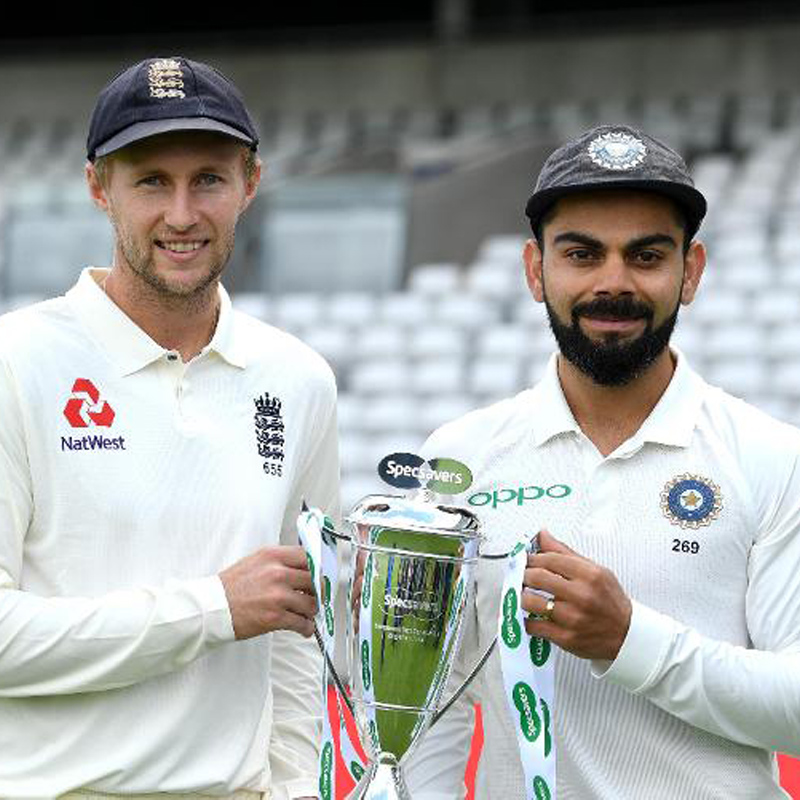
    Quoting inputs from Prasar Bharati, parent of Indian pubcasters DD and All India Radio, MIB Minister Rajyavardhan Rathore told fellow parliamentarians that “live telecast of cricket matches” was being done on Doordarshan Sports channel under the Sports Broadcasting Signals (Mandatory Sharing with Prasar Bharati) Act, 2007, which was passed by the Parliament and notified the same year. These matches included the ongoing cricket series between India and England comprising three T20s and three one-dayers.

    “The Act enjoins upon the rights holder to share with Prasar Bharati, live broadcasting signals of sports events of national importance for which they hold broadcast rights to enable Prasar Bharati to re-transmit the same on its terrestrial and DTH networks,” Rathore explained.

    However, the government did not explain as to why it did not insist on shared TV feeds of five-day Test matches.

    Incidentally, Star India, managers of several sports channels and rights holders of IPL and several other cricket properties, which were acquired on payment of several billions of dollars, had filed a case in the Supreme Court against unencrypted signals of DD’s satellite-delivered channels not only spilling over to other countries, but also pirated by distribution platforms within India too during cricket matches. Star got a favourable directive from the apex court in 2017, though Prasar Bharati had described it as an opportunity. as it helped it to bring the focus back on DD Sports channel.

    Meanwhile, answering to other queries raised by parliamentarians on cricket, Rathore admitted there was “no proposal to acquire the broadcast rights” for live telecast of Test series between India and England, and the Cricket World Cup in 2019. The broadcast rights for India region for the ongoing England tour of India lies with Sony Pictures Networks India.

    DD Can’t Be Compared To Private Sector TV Channels’

    Pointing out that DD’s programming is more focused on issues of public interest like health, education, empowerment, social justice, etc., the Minister said that the pubcaster’s programmes could “not be be compared” with private channels as both have totally different objectives and programming formats.

    However, Doordarshan is striving to provide “impactful and meaningful” programmes to become the “preferred channel of choice of people”, Rathore said, adding it was a constant endeavour of DD to modernize its infrastructure and improve the quality of programmes.

    “Doordarshan has undertaken a comprehensive plan to improve the programme content, and look and feel of all national and regional channels in DD network,” the Minister said, highlighting that efforts were being made to empanel creative agencies that can work for better look and feel of the channel(s).

  • MIB cancelled 14 channels’ permissions on MHA advice

    MIB cancelled 14 channels’ permissions on MHA advice

    MUMBAI: The Ministry of Information and Broadcasting (MIB) is getting strict on giving channel licences, even cancelling some. 14 channels, whose licence was cancelled by the MIB due to security denial by Ministry of Home Affairs (MHA), challenged the decision and have got a stay order from the High Court.

    Out of these fourteen channels, twelve channels are news channels and two are non-news channels. Mahua Media Private Limited, Mavis Satcom Limited, STV Enterprises Limited, Alliance Broadcasting Private Limited are the concerned parties.

    After cancelling permission to 236 channels, the number of private satellite TV channels having valid permission in India stands at 867 as on 30 June 2018. While 384 channels are news channels, the rest i.e. 483 are non-news channels.

    According to earlier statistics, the total number of private satellite and pay TV channels stood at 875 as on 28 February, 2018. In the last one year, there has been a dearth of licences being handed out. The earlier part of 2018 saw the addition of just two channels namely Discovery Jeet HD and DSport HD.

    Of the 867 permitted private satellite channels, TV channels permitted for uplink from India and also to downlink into India are 766 among which 364 are news channels and 402 are non-news channels. Five news and eleven non-news channel are permitted for uplink from India but not downlink into the country. 85 TV channels are uplinked from abroad which only have downlinking permission in India. This category includes 15 news and 70 non-news channel.