Tag: MIB

  • MIB directs TV channels to run scroller against objectionable ads

    MIB directs TV channels to run scroller against objectionable ads

    MUMBAI: The Ministry of Information and Broadcasting has directed all TV channels to support self-regulation for grievance against objectionable ads. In a recently released advisory, the ministry has asked channels to run a scroller against offensive content to create mass awareness.

    The scroller will ask the viewers to complain against objectionable advertisements to the Advertising Standards Council of lndia (ASCI) via a dedicated WhatsApp number and email id.

    The advisory reads, “Attention of TV channels is invited to Rule 7(9) of the Cable Television Networks Rules, 1994 which states that ‘No advertisement which violates the code for self-regulation in advertising, as adopted by the Advertising Standards Council of lndia (ASCI), Mumbai for public exhibition in lndia, from time to time shall be carried in the cable service.’”

    The ministry has also directed all broadcasters to ensure that all programmes and advertisements being telecast on TV channels and being transmitted/ retransmitted through the cable TV network adhere to the Programme and Advertising Codes prescribed under the Cable Television Networks (Regulation) Act.

  • Comment: Self-regulation a positive step for OCC platforms, but…

    Comment: Self-regulation a positive step for OCC platforms, but…

    At a high profile event in Delhi last week, a section of the Indian digital industry, comprising some of the biggest global players and domestic thoroughbreds who now define themselves as online curated content (OCC) platforms, announced a self-regulatory code — distancing itself from user-generated content or UGC platforms.

    That the formal launch of the self-regulatory code, signed by nine platforms till now, was preceded by a bit of drama, backroom politics and media leaks involving the content and phrasing of the code — highlighting the proponents and critics of the self-regulatory mechanism — is another tale worthy of another time and place as the devil always lies in the fine print, though a Reuters report did bring out the divergent views. 

    The objectives of this OCC Code, drafted by an industry body Internet and Mobile Association of India (IAMAI) after consultations with the stakeholders are as follows: 

    • Empower consumers to make informed choices on age-appropriate content; 
    • Protect the interests of consumers in choosing and accessing the content they want to watch, at their own time and convenience; 
    • Safeguard and respect creative freedom of content creators and artists; 
    • Nurture creativity, create an ecosystem fostering innovation and abide by an individual’s freedom of speech and expression; and 
    • Provide a mechanism for complaints redressal in relation to content made available by respective OCC Providers. 

    Though highly laudable and praiseworthy a move, there’s no denying the fact that with curated content getting increasingly edgy in India in an hitherto unregulated environment, the government, nudged by the judiciary, has been actively toying with the idea of setting government-mandated guidelines, a fact that has been officially denied in and out of the parliament. The looming general elections in a few months time has made the government, probably, more circumspect.

    But it would be interesting to analyse the move of the fledgling OCC industry that boasts of several billions of investments in original Indian content by international and domestic players like Netflix, Amazon Prime Video, Hotstar, Zee5, Voot, Reliance Jio, etc. 

    Types of streaming services

    The online video industry primarily has two segments:

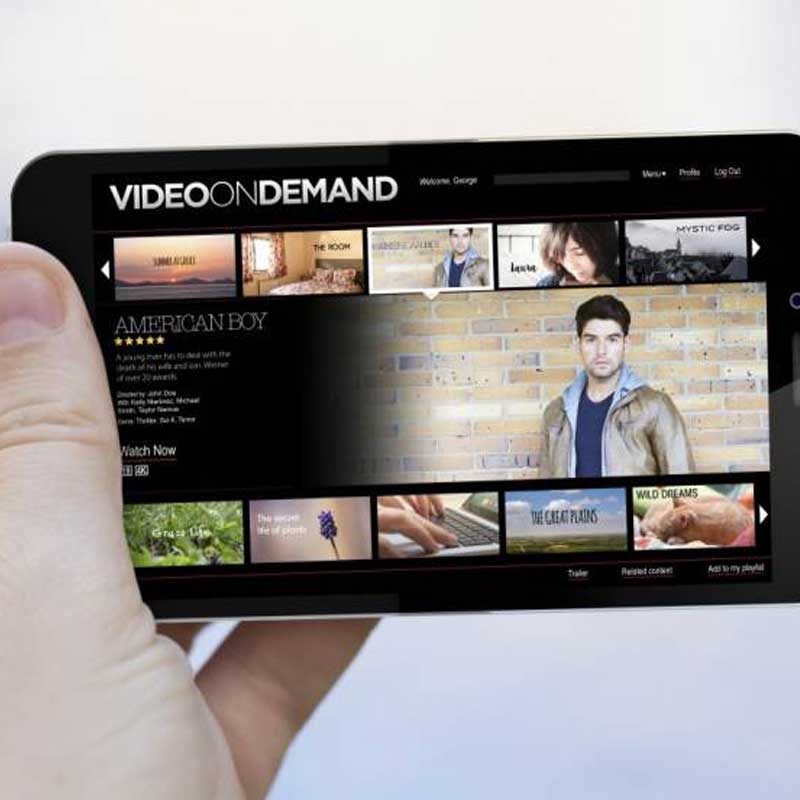
    # Curated video on demand (VoD) applications, which refer to digital applications that provision proprietary content for which application/platform concerned indulge in curating the content made available. 

    # UGC platforms/applications refer to those platforms/applications that allow users to upload content and make it available for other users to stream. In this case, the entity owning the application performs no role in curating/editorialising the content made available through its platform.

    # There’s a third category too of streaming services that are a hybrid of curated and UG content.

    As the professional video streaming applications exercise editorial control (curation) over the content made available through their platforms, they are liable for such content.

    On the other hand, UGC platforms enjoy certain protection within the Indian law framework as they can be classified as “intermediaries” under Section 79 of the IT Act, 2000. They shall not be held liable for the content distributed through their systems if they did not initiate the transmission; select the receiver of transmission and select or modify the information contained in the transmission.

    However this provision is not a blanket protection as the platform can in no situation escape the responsibility to act in conformity with law as the same section clearly states “the intermediary observes due diligence while discharging his duties under this act and also observes such other guidelines as the central government may prescribe in this behalf” and “the intermediary has [not] conspired or abetted or aided or induced, whether by threats or promise or otherwise in the commission of the unlawful act”.

    The said safe harbour continues to operate only for 36 hours, which means the intermediary has only 36 hours to acknowledge the receipt of complaints from the aggrieved user and a period of 30 days to respond to the same.

    While Section 79 of the IT Act was originally intended to provide time to intermediaries to act in alacrity with the law and get their act in order, however, in practice it has been abused by UGC and social media platforms that have used it as a protective wall to prevent any action against them.

    Existence of self-regulatory mechanisms for content industry

    Self-regulatory/co-regulatory mechanisms for content regulation have long held field for governance of editorialised or curated in content in India.

    The print media has Press Council of India (PCI); the news and current affairs broadcast has News Broadcast Standards Authority (NBSA); non-news broadcast has Broadcast Content Complaints Council (BCCC) under the Indian broadcasting Federation and advertisement sector has Advertising Standards Council of India (ASCI).

    TV content, generally, is regulated in multiple ways that range from statutory regulation to self-regulation. The content or programmes on these channels are regulated by the Cable Television Networks (Regulation) Act, 1995, which consists of a programme and the advertising codes that all content transmitted or retransmitted on television must adhere to. The programme and the advertising codes are collectively called “codes” and are mentioned in the Cable Television Networks (Rules), 1994.

    The programme code largely regulates the content that should be shown on TV. For example, the programme code prohibits airing any content that may not be suitable for public viewing that may be otherwise prohibited under the Cinematograph Act, 1952. This code also prevents the airing of content that may be in contravention of prevalent policies such as obscenity, communal disharmony, child pornography, etc.

    However, to ensure the independence of the media, a self-regulating provision has also been acknowledged by the state. To that end, IBF and NBA’s guidelines for regulating all content on TV across all forms of transmission — cable, terrestrial, DTH, IPTV, etc. — have helped, but have raised some questions too. The self regulatory codes will be applicable on NBA and IBF members who can be penalised by the self-regulatory bodies, but what about the non-members? Not all the 650-odd on-air TV channels out of the 800+ government permitted channels are members of IBF or NBA or both. 

    Still, the need and importance of self-regulatory mechanisms in India was observed by the Supreme Court of India in the case of Common Cause vs. Union of India where it affirmed and recognised the self-regulatory mechanism put in place for advertising content by ASCI. 

    Case for self-regulation by OCC platforms

    As envisioned by the Indian government’s Digital India initiative, access to digital services (government and entertainment services included) is now at the centre of India’s collective rise transcending urban/ rural, income and gender divides. 

    At present the OTT space is being regulated by the Ministry of Electronics and Information Technology (MeitY), which, as per government rules, is the ministry in charge of making policies in all matters relating to information technology, electronics and internet except licensing of Internet Service Providers. It is also in charge of matters relating to the Information Technology Act, 2000. 

    Information Technology Act, 2000 as India’s primary cyber law legislation provides for punishment for new offences such as publishing or transmitting obscene materials, materials containing sexually explicit acts and materials depicting children in sexually explicit acts.

    Moreover, intermediaries are subject to the Information Technology (Intermediary guidelines) Rules, 2011, which require intermediaries to publish rules and regulations as well as a privacy policy, and terms and conditions or user agreements that inform users not to use the platform to upload or transmit information that is grossly harmful, harassing, blasphemous, defamatory, obscene, pornographic, paedophilic, libellous, invasive of another's privacy, hateful, or racially, ethnically objectionable, disparaging, relating or encouraging money laundering or gambling.

    Well aware of any government’s leanings towards an Orwellian Big Brother-regime, Supreme Court has noted the value and importance of the internet as a medium, and has warned against excessive censorship underlining the importance of keeping the internet open and free. This is notably evidenced by the striking down of Section 66A of the Information Technology Act 2000 in a historic case few years back, which upheld the freedom of speech and expression. The court held that words like ‘offensive’, ‘annoying’, ‘menacing’, ‘insulting’ used in the section as grounds for restriction on speech on the internet were too vague and that this would have a chilling effect on speech on the internet. 

    Presently, there is no single regime regulating online content. This makes online content platforms soft targets and vulnerable in the whole scheme of things as they are subject to multiple existing criminal and civil laws. Some media reports some time back highlighted the self-censorship of content being undertaken by some OTT platforms – much before the self-regulatory code were announced and by those platforms that have not yet signed on for the last week’s announced codes. 

    Implementing a framework for self-regulation for curated VoD platforms could work as a guiding principle for OCC platforms and could ensure that the stakeholders regulate their content in a responsible and professional manner, protect users from illegal, infringing and discriminatory content (after all pirated content too cannot be allowed a free run as it results in loss of big time revenue), while being mindful of the need to nurture creativity, foster innovation and abide by the citizens’ freedom of speech and expression, and their right to receive information.

    To create an environment of responsibility in the online video space, it is necessary for the VoD industry to appreciate the genuine need of consumers for a safer viewing experience. In the Indian context, the needs of consumers get enhanced due to emphasis on family viewing as multiple-devise or solo viewing is still not a mass phenomenon.

    In the Indian scenario, the industry shall have to contend with the diverse socio-cultural and economic strata that exist within our society that bring along a complex set of different sensitivities. 
    With such a background, it is important, that the curated VoD industry agrees to a common set of principles, which reflect the following:

    # Empowering consumers to make informed choice regarding appropriate content for their families and themselves;

    # Protecting interests of consumers in making available content they want to view;

    # Safeguarding the freedom of creative community, while achieving the above two objectives. 

    The self-regulatory code for OCC platforms made public by IAMAI does address most of the aforementioned points, but also raises questions like:

    # Will the days of edgy domestic and international content for Indian consumers be soon over?

    # Will it lead the government to crack the whip via mandated guidelines if such self-regulation fails to rein in the errant ones?

    Questions that only the future can answer as we at Indiantelevision.com still haven’t laid our hands on a future-predicting crystal ball.

    However, enlisted below are some self-regulatory regimes from other parts of the globe that seem to be working? These global practices around regulations in curated VoD space indicate that many regulators and governments have refrained from imposing heavy regulatory control to avoid burdening the segment with legacy regulations and allowing it to grow optimally. Importantly, user choice and control have been prioritised over blocking of content to ensure protection of minors. Built in safe guards (like age filters and proper messaging about content type) have helped prevent access to objectionable content on an opt-in basis.
     
    Comparative Summary of OTT-Content Regulatory Frameworks

    Jurisdiction

    Regulatory Approach

    Description

    Canada

    Self-Regulation

    Canada has a strong system of self-regulatory practices which encourage industry partnerships with government as well as with each other to come up with codes of practice. The Canadian Association of Internet Providers (CAIP) became one of the first industry associations to come up with a code of conduct and this has been leveraged as a template for a number of online-industry designed codes to address various concerns like protection of personal information and protection of consumers of E-commerce.

    Japan

    Self-Regulation

    In the absence of an independent regulatory commission, Japan’s internet industry is another jurisdiction to have embraced self-regulation. Non-governmental, non-profit organisations have been formed, with the support of for profit organisations, to regulate the industry. This includes the Content Evaluation and Monitoring Association and the Internet Content Safety Association

    Australia

    Australian Communications and Media Authority (ACMA)

    Co-Regulation

    Legislative scheme requires ACMA, which is the converged regulator for broadcasting, telecom and the internet, to give the industry an opportunity to develop co-regulatory solutions before other forms of intervention are considered, with the regulator maintaining reserve powers to intervene when co-regulation has not adequately addressed issues of concern.


  • MIB gives licences to 5 new channels

    MIB gives licences to 5 new channels

    MUMBAI: The Ministry of Information and Broadcasting (MIB) gave licenses to five new channels up until 31 December 2018. The channels are P Plus, PTunes, Living Travelz, Star Movies Kids and Star Movies Kids HD.

    Graphisads Private Ltd got the permission for uplinking and downlinking P Plus and PTunes (non-news) on GSAT-17 satellite in Hindi, English and all Indian scheduled languages on 27 December 2018.

    Essel Group-owned Living Entertainment Enterprises (LEEPL) got the permission for uplinking and downlinking Living Travelz (non-news) on Intelsat-20 in Hindi and English language on 9 December 2018. Going by the name, Living Travelz, mostly will be a lifestyle channel which will compete against FYI TV18, TLC, Fox Life. The teleport operator of the channel will be Dish TV India.

    Surprisingly, Star India is planning to target the kids' audience and got the permission for Star Movies Kids and its HD version on Asiasat-7 satellite. The competitors for the broadcaster in the kids industry are Nick, CN, Pogo, Hungama, Disney and Discovery Kids.  

    The number of private satellite TV channels having valid permission in India stands at 883 as on 31 December 2018. 497 channels are non-news channels and the remaining 386 are news channels.

    Of the 883 permitted private satellite channels, TV channels permitted for uplinking from India and also to downlink into India are 785. Nine non-news channels and five news channels are permitted for uplinking from India but not downlink into the country. 84 TV channels are uplinked from abroad which only have downlinking permission in India. This category includes 15 news and 69 non-news channels.

  • MIB may nod in favour of self-regulation code for online video streamers

    MIB may nod in favour of self-regulation code for online video streamers

    MUMBAI: An upswing in online streaming platforms in India has drawn attention of authority as well as stakeholders on regulation. As per industry sources, most of the major players have agreed to a code of self-regulation that may receive an endorsement from the Ministry of Information and Broadcasting (MIB).

    While Netflix, Star India’s Hotstar, Reliance Jio, Zee5, AltBalaji, SonyLiv and Times Internet Limited-owned MX Player are ready to follow the codes, giant international players Amazon Prime Video, Google and Facebook are not in agreement. According to sources, there are some differences over details of grievance redressal mechanisms among the players who are ready to accept the code.

    Indiantelevision.com has learnt of the existence of a document called “Code of best practices for curated online video platforms” which depicts the principles, objectives as well as the codes of the self-regulation.

    The key objectives of the code is to empower consumers to make informed choices and protect the interests of consumers. It also looks at the creative freedom of content creators and artists. Providing mechanism for grievance redressal in relation to content made available by the platforms has also been highlighted under the objectives.

    As per the said draft, the code properly defines prohibited content and age-inappropriate or sensitive content. Any content showing disrespect to the national emblem or national flag, child engaged in sexual activities, outrages religious sentiments, promotes terrorism will be prohibited.

    “The signatories to this code seek to protect the consumers’ ability to choose the content that is appropriate for themselves and their families. The objective is to use information and technological tools to equip consumers with requisite knowledge and awareness, to enable informed decisions on the consumption of content,” the draft is said to mention.

    Discussions on grievance redressal mechanism have also acquired an important place in the document. There is suggestion to internally institute as part of their operational systems an independent Standards and Practices (S&P) department to receive, objectively address any online consumer related concerns and complaints in relation to content made available.

    There are also suggestions that the signatories of the code shall establish a grievance redressal body – the Content Committee, which shall address grievances from users on violations of the code. The detailed process, functioning and powers of the Content Committee will be institutionalised in due course. However, ZEE5 and Netflix have not agreed to complaint redressal codes yet.

    Although the voluntary censorship code is aimed at maintaining creative freedom, the rules under the code highly reflect the model of TV content censorship. According to earlier reports, The Internet and Mobile Association of India (IAMAI) has supposedly drafted the code.

  • MIB restricts eligibility for temporary uplinking for non-news events

    MIB restricts eligibility for temporary uplinking for non-news events

    MUMBAI: In a fresh notice, the Ministry of Information and Broadcasting (MIB) has laid out a new norm for temporary uplinking applications for live coverage of non-news and current affairs TV channels. Now, only those channels and teleport operators that are already permitted by the MIB will be eligible to apply for temporary permits. This notification comes into effect immediately.

    It reiterated that no other entity apart from permitted broadcasters and teleport owners will be given permissions for uplinking in the case of temporary live events.

    The Telecom Regulatory Authority of India (TRAI) had suggested its recommendations to ease norms for uplinking and downlinking of TV channels. The MIB later stated that these suggestions were under consideration but did not give any time frame for making them into regulations. These norms last came into effect in 2011.

  • SC upholds licence cancellation of Digi Cable Network, SCOD 18 Networking

    SC upholds licence cancellation of Digi Cable Network, SCOD 18 Networking

    MUMBAI: Cancellation of licences granted to two MSOs Digi Cable Network and SCOD 18 Networking has been upheld by the Supreme Court on security ground. Before moving to apex court the petitioners had approached the Bombay High Court where their pleas challenging the cancellation order by Ministry of Information & Broadcasting (MIB) were dismissed.

    Earlier, the licences issued to these cable TV service providers were cancelled by the MIB on the ground that the Ministry of Home Affairs denied issuance of "security clearance" to them.  The apex court bench comprising Justice Abhay Manohar Sapre and Justice Indu Malhotra security agreed that security clearance is a mandatory requirement as per Cable Television Network (Amendment) Rules.

    The Union of India filed the copy of the reasons in a sealed cover which was made basis to deny security clearance to the appellant. Referring to the document, the bench observed that the order of cancellation was passed in conformity with the requirements of Rule 11C.

    “It is clear from mere reading of the Rule 11C (1) that grant of permission is subject to issue of security clearance from the central government to the applicant… Since the grant of permission was subject to obtaining of the security clearance from the concerned ministry, the competent authority was justified in cancelling the conditional permission for want of security clearance," the court said.

    The appellant also argued that they were not afforded any opportunity of hearing before cancelling the permission. They added that the order was passed without following the principle of natural justice and fair play.

    “In a situation of national security, a party cannot insist for the strict observance of the principles of natural justice. In such cases, it is the duty of the court to read into and provide for statutory exclusion, if not expressly provided in the rules governing the field. Depending on the facts of the particular case, it will, however, be open to the court to satisfy itself whether there were justifiable facts, and in that regard, the court is entitled to call for the files and see whether it is a case where the interest of national security is involved. Once the State is of the stand that the issue involves national security, the court shall not disclose the reasons to the affected party,” the judgement read.

    The bench also observed that the principles of natural justice were not violated in this case. The appeal has been dismissed finally as it was found to be devoid of any merit. 

  • MIB hikes ad rates for print media by 25%

    MIB hikes ad rates for print media by 25%

    MUMBAI: The Ministry of Information and Broadcasting (MIB) has taken a decision to revise the advertisement rates for print media by announcing a hike of 25 per cent over and above the existing rate structure for advertisement in print media by the Bureau of Outreach and Communication (erstwhile DAVP). The decision will be valid for a period of three years, i.e. until January 2022.                                               

    The last such revision had taken place in 2013 when an increase of 19 per cent had been announced over and above the rates of 2010.

    This decision has been taken based on the recommendations of the 8th Rate Structure Committee constituted by the MIB which took into account several factors, including the increase in the price of newsprint, processing charges and other factors which go into the computation of advertisement rates.

    The ministry states that the decision will be of great benefit especially to the medium and small newspapers including a large number of such papers in regional and vernacular languages.

  • MIB proposes amendment to Cinematograph Act to combat piracy

    MIB proposes amendment to Cinematograph Act to combat piracy

    MUMBAI: No online content is free of the hassle of battling piracy in India. The multi-million dollar film industry is arguably the most affected by piracy. Therefore, the Ministry of Information and Broadcasting feels a necessity to have an enabling provision in the Cinematograph Act, 1952.

    In a press release, MIB has proposed for the introduction of the Cinematograph Act (Amendment) Bill for the inclusion of a new sub-section (4) of section 7 of the act while penalties for contravention of provisions for certification of films for public exhibition are given under section 7.

    MIB has also sought comments from the general public on the amendment by 2 February 2019. Comments can be submitted via email and in exceptional cases, submissions by post will be accepted.

    The new sub section has been proposed with the following text:

    “Notwithstanding any law for the time being in force including any provision of the Copyright Act, 1957, any person who, during the exhibition of an audiovisual work, cinematographic in an exhibition facility used to exhibit cinematograph films or audiovisual recordings and without the written authorisation of the copyright owner, uses any audiovisual recording device to knowingly make or transmit or attempt to make or transmit or abet the making or transmission of a copy or visual recording or sound recording embodying a cinematograph film or audiovisual recording or any part thereof or a copy of sound recording accompanying such cinematograph film or audiovisual recording or any part thereof during subsistence of copyright in such cinematograph film or sound recording, shall be punishable with imprisonment not exceeding three years and shall also be liable to fine not exceeding Rs.10 Lakhs, or to a term of imprisonment for a term not exceeding three years or both.”

  • MIB yet to finalise new DTH policy; interim extensions granted

    MIB yet to finalise new DTH policy; interim extensions granted

    MUMBAI: Direct-to-home (DTH) operators of India will have to wait a while if they were expecting something from the Ministry of Information and Broadcasting (MIB) regarding new DTH policy guidelines. In response to a question in the Parliament, Minister of State for MIB Rajyavardhan Rathore said that the government hasn’t yet finalised the new DTH policy.

    Rathore also added that the licenses of those DTH operators whose interim renewals were getting expired on 31 December 2018 have already been granted interim extension up to 30 June 2019.

    Last year TRAI had reiterated its recommendations to the Ministry on new licensing conditions for DTH players. The regulatory body had recommended that licences be issued for a period of 20 years and thereafter should be renewed every 10 years.

    Earlier it was reported that MIB was looking to send the new DTH policy for Cabinet approval by the end of 2018.

    The decades old DTH policy is being updated keeping the present scenario in mind, including fast changing technology and a slowing economy. Last month, MIB Secretary Amit Khare said that some sops would be handed to the DTH operators. However, he refused to comment on whether those sops would include financial rationalisation too like slashing of the annual revenue sharing with the government that is calculated at the rate of 10 per cent.

    In the past, the DTH industry has demanded, among other things, cut in annual revenue share percentage to 6-8 per cent and other financial adjustments (like removal of content acquisition cost and an adjusted gross revenue) while calculating gross revenues.

    Jawahar Goel, managing director of India’s biggest DTH operator (in terms of subscribers) Dish TV had written to policy-makers in October highlighting once again the industry’s woes and pleading for rationalisation of costs and taxes.

  • Digitisation has increased M&E revenue: MIB’s Rathore

    Digitisation has increased M&E revenue: MIB’s Rathore

    MUMBAI: The Ministry of Information and Broadcasting (MIB) is patting its back for the digitisation success in India. Minister of State for MIB Rajyavardhan Rathore endorsed the growth of the media and entertainment industry and the benefits of digitisation.

    In response to a question raised in the Lok Sabha, he said that digitisation has led to enhanced revenue generation in the industry as it enhanced benefits to consumers as well as transparency in the subscriber base. The government passed the Cable Television Networks (Regulation) Amendment Act in December 2011 for digitisation of cable television networks in a phased manner.

    He also added “Digitisation enables efficient utilisation of the spectrum bandwidth and enhances the capacity to carry channels on the cable. The consumers get a wider choice of channels, improved quality of content and added services and the states benefit from lowered incidence of evasion of taxes. Cable TV digitisation has also given a boost to the indigenous manufacturing of set top boxes (STBs) and it also results in skill development & employment generation in digital environment."

    Rathore cited the Federation of Indian Chambers of Commerce & Industry (FICCI) report which estimated the growth of the industry at Rs 1660 billion in 2018 from Rs 1473 billion in 2017, while the figure stood at Rs 1026 billion in 2014.  

    Indian M&E sector has not only seen investments from foreign behemoths only but from large domestic conglomerates. In addition to that, the current digital wave is boosting the growth faster.