Tag: MIB

  • In TRAI-BARC India stand-off, flashes of regulatory overreach

    In TRAI-BARC India stand-off, flashes of regulatory overreach

    MUMBAI: One of the most intriguing side acts during the implementation of the Telecom Regulatory Authority of India's (TRAI) new tariff order has been the sector regulator's face-off with TV audience measurement firm BARC. The latest flashpoint in this impasse involved TRAI issuing a show-cause notice to BARC.

    At the core of this issue is TRAI’s insistence on BARC publishing its weekly findings on its website and the latter's sustained inaction on that front.

    While BARC continues to supply data to advertisers, broadcasters and agencies, it has stopped publishing weekly ratings of shows and channels on its website due to vagaries linked to the rollout of the new regulatory framework for the broadcast sector. 

    The decision was taken after due and appropriate deliberations to protect the interest of trade, subscribers and consumers, BARC had said.

    TRAI’s argument, however, is that data at any given point in time reflects ground realities and there’s no valid reason for not putting it out in the public domain. TRAI, according to sources, believes consumers will use the ratings on the BARC website to make channel selection.

    With this stand-off now stretching into its third month, it’s important to understand what really is at centre of this controversy. Is TRAI right in directing BARC to publish the data or is the TV ratings agency justified in taking the position it has on the issue?

    To answer these questions, one must look at what BARC and TRAI have been entrusted to do as industry watchdog and TV audience measurement body respectively 

    Like any regulator, TRAI’s mandate is to devise and implement policies factoring in market realities for growth of the sectors it oversees. Ensuring free and fair regulation that is pro-consumer and aimed at sending positive signals to the investment community should be hallmarks of any policy it conceives. The new tariff order and consultation paper on improving BARC’s measurement system are two fine examples of responsible regulatory behaviour. These initiatives are aimed at benefiting consumers and growth of the TV broadcasting and distribution business at large.

    Encroaching into the operational domain of an independent and self-regulatory body, or even privately held entities for that matter, is a measure any regulator should try and avoid. Therefore issuing multiple directives and a show-cause notice to BARC could be categorised as a regulatory misstep by TRAI.

    BARC is a joint industry body founded by stakeholder bodies that represent broadcasters, advertisers and media agencies.

    Its job is to own and manage a transparent, accurate, and inclusive TV audience measurement system. It is mandated to ensure efficient media spends and content decisions in a highly dynamic and growing television sector. Hence, publishing weekly web data (for non-subscribers) isn’t actually a deviation from its standard operating procedures or a move away from conducting business as usual.

    In fact, publishing ratings on the website found no mention in the Amit Mitra committee’s recommendations, endorsed by TRAI post consultations with the industry, to form joint industry body (BARC) in 2013. These guidelines were then notified by the MIB in 2014, resulting in the formation of BARC.

    BARC India had registered itself with the MIB and was to conduct its operations on a self-regulatory model. Applying this fundamental tenet to the current scenario, BARC is well within its rights to not publish the weekly data on its website as long as it continues to service its subscribers.

    Based on evidence in the public domain, BARC neither seems to have flouted any norms nor hampered the seamless functioning of the broadcast or advertising sector in any manner. In short, BARC not publishing its weekly data on its website, pre or post the tariff order implementation, bears no impact on the operations of industry stakeholders. TAM, BARC’s predecessor for 15 years, too, did not follow the practice of publishing web data.

    Prima facie, BARC’s stance on the matter cannot be termed as a violation of the guidelines and/or the TRAI Act as the former does not come under the purview of the said act.

    BARC is yet to confirm the date from when it intends to publish the weekly data. In both its statements so far, the company has cited reasons behind applying restrictions to public consumption of its data without offering a clarification as to how it intends to tackle the regulator’s constant questions.

    It now remains to be seen what approach both parties adopt in breaking this deadlock. With both sides not backing off at the moment, the matter could soon take a serious legal turn.
  • NaMo TV launch under scanner as EC seeks response from MIB

    NaMo TV launch under scanner as EC seeks response from MIB

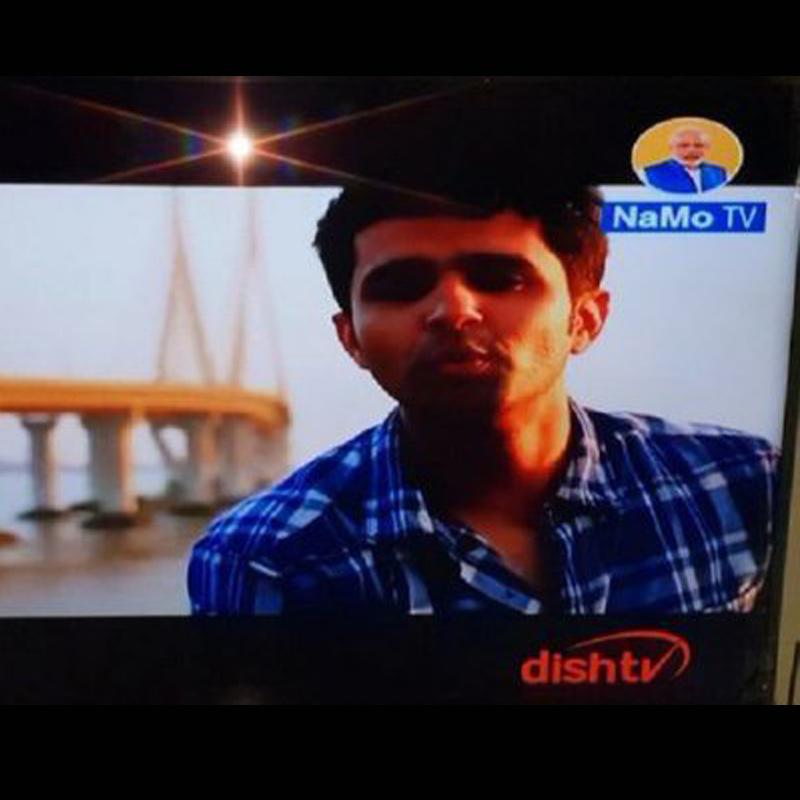
    MUMBAI: The Election Commission (EC) of India has sought a reply from the Ministry of Information and Broadcasting (MIB) on the sudden launch of NaMo TV, which was later renamed as Content TV, last week.

    Two political parties, Congress and AAP have raised the matter with the EC questioning its launch especially after the model code of conduct before elections came into force. AAP’s legal cell, in its letter to EC, also raised the question that who would monitor the content of the channel. Neither Content TV nor NaMo TV find a mention in the list of permitted satellite TV channels on the MIB website.

    After undergoing a test run for several months, the channel went live as NaMo TV. The channel had no formal launch and there isn’t any information in the public domain about its ownership.

    The channel appears to be an extension of the popular NaMo app that contains information about Prime Minister Narendra Modi's welfare schemes and other activities. NaMo TV airs programmes related to the Prime Minister, his speeches and government ads. Even BJP social media handles have been tweeting asking viewers to tune in to the channel. The channel is available on Videocon d2h, Dish TV, Tata Sky at 302, 770, and 512 respectively. It also has a picture of the Prime Minister as its logo.

  • MIB grants Viacom18 nine TV channel licenses; Star Gold 2 HD gets nod

    MIB grants Viacom18 nine TV channel licenses; Star Gold 2 HD gets nod

    MUMBAI: The Ministry of Information and Broadcasting (MIB) has issued eleven new TV licenses in the non-news category.

    While Viacom18 received nine of those, the other two licenses were bagged by Star India and Hare Krsna Content Broadcast.

    BDM, Connected, Eco-lution, Hawa Mahal, IMIX, My Tube, Pick-a-trick, Story City and Treble are the names of the Viacom18 channels, which in all likelihood are bound to be renamed when they are launched.

    From the Star India stable, Star Gold HD 2 was the beneficiary of the MIB license while Hare Krsna from Hare Krsna Content Broadcast too got the ministry’s nod.

    Earlier this month, the MIB had approved two Star India and two Sun TV Network name change applications.

    While Star India got the ministry approval to rename its licenses Star Movies Kids and Star Movies Kids HD to Star Sports 1 Bangla and Star Sports 1 Marathi, the Sun TV Network was allowed to rename Udaya News and Gemini News to Sun Marathi and Sun Bangla respectively. 

  • Pakistan bans IPL telecast

    Pakistan bans IPL telecast

    MUMBAI: The 12th edition of the Indian Premier League (IPL) that is slated to commence from today, 23 March 2019, will not be telecast in Pakistan, confirmed the country’s Minister of Information and Broadcasting (MIB) Fawad Ahmed Chaudhry.

    The decision comes a month after DSport decided to stop the live coverage of the Pakistan Super League 2019 in India, in the wake of the Pulwama attack last month.

    Chaudhry was quoted as saying, “During the PSL, the way the Indian companies and the government treated Pakistan cricket after that, we can’t tolerate that IPL is shown in Pakistan.”

    The demand to take strict action against the Indian cricket team, for sporting camouflage caps during an ODI in a five-match series against Australia, was made by the Pakistan Cricket Board (PCB) to the International Cricket Council (ICC). However, ICC confirmed that the BCCI had taken prior permission.

    “We tried to keep politics and cricket apart but then the Indian cricket team played matches wearing army caps against Australia and there was no action taken against it,” said Chaudhry

    The minister further claimed, “I feel if IPL is not shown in Pakistan, it will be a loss for IPL and Indian cricket. We are a cricketing superpower in international cricket.”

  • MIB secy Amit Khare says national broadcast policy in the works

    MIB secy Amit Khare says national broadcast policy in the works

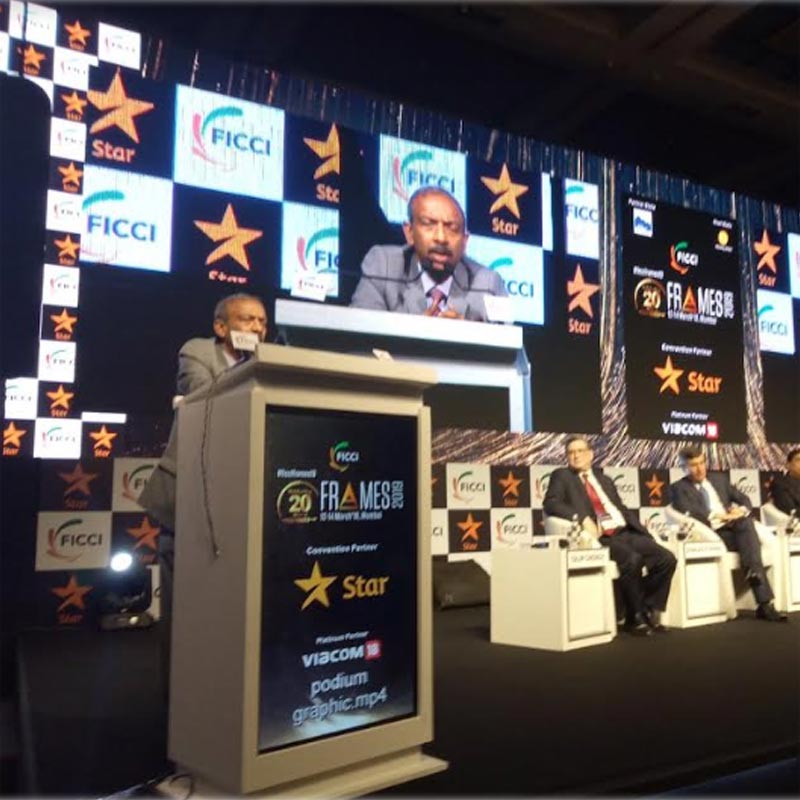
    MUMBAI: MIB Secretary Amit Khare did some plain talking here while addressing industry and said bowing to needs of the stakeholders, a national broadcast policy is in the offing.

    “We have thought of having a national broadcast policy. The draft is being prepared and we are working with FICCI and other stakeholders so that Indians can have that national broadcast policy,” Khare said at a session on the opening day of the 20th edition of FICCI Frames.

    The government official did not reveal much details, but said the policy could be in place within a few years.

    He also spoke of a strategic paper that is being prepared for the film and entertainment industry which will focus on issues like what incentives should be given by the central or the state government and the type of regulatory changes which are required for improving the screen density.

    “The way we develop, particularly in India or in other Commonwealth countries, it was platform-wise. We have different regulations for print, for online, for films and for broadcasts. But now with the technological change and the convergence that has taken place, there is a need to rethink, there is a need to beat this challenge and also which is a great opportunity in terms of the content which is viewed by the customer,” he commented while talking about the importance of change in technology for the sector.

    The  secretary also spoke about the importance of the conversations that will take place during the FICCI Frames. According to him, it will be very helpful for the government to know the views of the private sector, the stakeholders and then taking a considerate view about regulations or the type of policies that the authority wishes to have for this sector in 2025 or 2030.

  • MIB grants 4 TV channel licences to ABP News Network

    MIB grants 4 TV channel licences to ABP News Network

    MUMBAI: The Ministry of Information and Broadcasting (MIB) has given ABP News Network four new TV channel licences in the month of February. The company has received uplinking and downlinking licences under the names ABP Andhra, ABP Ganga, ABP Kannada and ABP Tamil.

    One of the licences could be used to launch an Uttar Pradesh centric news channel that the company is planning to launch. The company also operates a Punjabi digital news channel ABP Sanjha, which was then launched as ABP Asmita in 2016. ABP News Network currently owns and operates four news channels ABP News (Hindi), ABP Majha (Marathi), ABP Ananda (Bengali) and ABP Asmita (Gujarati).

    Recently, the news broadcaster had converted its pay channels to free to air (FTA) under the Telecom Regulatory Authority of India’s (TRAI) new regulatory framework. ABP Ananda and ABP Majha went FTA from 8 February.

    In the month of January and February, MIB gave licenses to other six new channels. The channels were Skystar Bangla, Skystar Telugu, PTC Music, PTC Punjabi, PTC Simran and Zee Classic. All the six channels are under non-news category.

    G-Next Media got the permission for uplinking and downlinking PTC Music, PTC Punjabi and PTC Simran on Intelsat-20 satellite in Punjabi, Hindi, and English on 7 February 2019.

    Zee Entertainment Enterprises got the permission for uplinking and downlinking Zee Classic on Asiasat-7 in Punjabi, Hindi and all regional languages on 13 February 2019. Skystar Entertainment Pvt Ltd got the permission for uplinking and downlinking Skystar Bangla and Skystar Telugu on Intelsat-20 in Hindi, English, all India scheduled languages and world language on 15 January 2019.

  • Tiranga TV criticises govt move to restrict freedom of speech of TV content

    Tiranga TV criticises govt move to restrict freedom of speech of TV content

    MUMBAI: Tiranga TV has criticised the government’s move to censure it, saying it is unjustified. Recently, the Ministry of Information and Broadcasting (MIB) sent a notice to newly launched news channel Tiranga TV regarding telecast of a media briefing of Pakistan army spokesperson major general Asif Ghafoor on the Pulwama terror attack.

    “We have made it clear in our reply that we strongly condemn the attack on our forces and have in unequivocal term criticised Pakistan for patronising terrorism. However, we feel, by issuing the show cause notices to channels for airing the press briefing of Pakistani army spokesperson, the government once again is sitting in judgement upon content of free speech, expressed through the medium of television broadcast,” Veecon Media and Broadcasting Ltd president Deepak Choudhry commented in a reply to the notice.

    After the telecast, MIB warned Tiranga TV for violating the programming code of the Cable TV Networks Act by telecasting prohibitive content. The ministry also laid the logic that for the entire duration, there was no clarification or intervention from the channel on the correctness of the claims being made.

    As per reports, 12 other channels have also received such notices including ABP News, Surya Samachar, Zee Hindustan, TOTAL TV, ABP Majha, News18 Lokmat, Jai Maharashtra, News18 Gujarati, News24, News Nation, Sandesh News and News18 India.

    In a 14 February directive, the MIB warned all private TV channels to strictly adhere to programming guidelines, which came in the wake of the J&K attack. Channels were told not to show content that is likely to encourage or incite violence or contains anything against maintenance of law and order or which promotes anti-national attitudes and/or contains anything affecting the integrity of the nation and ensure that no such content is telecast which is violative of the codes. This was even passed around to channels by NBA, NBSA and IBF.

    The MIB said that Tiranga TV is in violation of the code and also this advisory by telecasting the news piece. Tiranga TV is backed by Congress leader Kapil Sibal and was recently given the permission by the Telecom Disputes Settlement Appellate Tribunal to change its name from Harvest TV to Tiranga TV.

  • Tiranga TV gets MIB show cause notice for airing Pakistani army press conference

    Tiranga TV gets MIB show cause notice for airing Pakistani army press conference

    MUMBAI: The Ministry of Information and Broadcasting (MIB) has warned Tiranga TV for violating the programming code of the Cable TV Networks Act by telecasting prohibitive content. The notice says that Tiranga TV telecast a media briefing of Pakistan army spokesperson major general Asif Ghafoor on Pulwama terror attack between 3.41- 4.02 on 22 February 2019.

    The ministry says that for the entire duration, there was no clarification or intervention from the channel on the correctness of the claims being made. Because of this, it violated two rules:

    Rule 6[1] (e): No programme should be carried in the cable service which is likely to encourage or incite violence or contains anything against maintenance of law and order or which promote anti-national attitudes

    Rule 6[1] (h): No programme should be carried in the cable service which contains anything affecting the integrity of the nation

    In a 14 February directive, the MIB warned all private TV channels to strictly adhere to programming guidelines, which came in the wake of the J&K attack. Channels were told not to show content that is likely to encourage or incite violence or contains anything against maintenance of law and order or which promotes anti-national attitudes and/or contains anything affecting the integrity of the nation and ensure that no such content is telecast which is violative of the codes. This was even passed around to channels by NBA, NBSA and IBF.

    By telecasting the news piece, the MIB says that Tiranga TV is in violation of the code and also this advisory. The channel has been given seven days to respond with a reason why action should not be taken against it.

    In response, Veecon Media and Broadcasting (which runs Tiranga TV) president Deepak Choudhry said, “We were surprised to receive the notice from the I&B ministry. Like all Indians, we are outraged by the terror attack in Pulwama and stand firmly with the armed forces. Our programming has focused on how Pakistan must pay for its patronage of terrorism. The press conference of the Pakistan army spokesman was only carried as part of overall news coverage. We do not subscribe to his views at all and many of our special programs explicitly countered his views. That said, we wonder if we are being targeted. There are channels that have done big interviews with Pervez Musharraf who was responsible for Kargil as well as Shiekh Rashid a known India baiter. These channels have not received any notice. In our channel we have not been calling Pakistani guests for these discussions at all.”

    Tiranga TV is backed by Congress leader Kapil Sibal and was recently given the permission by the Telecom Disputes Settlement Appellate Tribunal to change its name from Harvest TV to Tiranga TV.

    As per reports, 12 other channels have also received such notices including ABP News, Surya Samachar, Zee Hindustan, TOTAL TV, ABP Majha, News18 Lokmat, Jai Maharashtra, News18 Gujarati, News24, News Nation, Sandesh News and News18 India. 

  • TRAI clarifies tariff regime didn’t restrict Ind-Aus T20I match

    TRAI clarifies tariff regime didn’t restrict Ind-Aus T20I match

    MUMBAI: The thrilling last ball finish in the T20I match between India and Australia on 24 February grabbed the attention of many but was not accessible to the consumers of cable TV networks. This was apparently due to the implementation of the new regulatory framework prescribed by the Telecom Regulatory Authority of India (TRAI), according to reports in certain sections of the media and other social platforms.

    However, TRAI clarified that the tariff regime, in no way inhibited or restricted the telecast of India and Australia T20I cricket match. It stated, “The non-availability or non- transmission of the recent cricket matches (T20I and ODI) being played between India and Australia over the cable networks has nothing to do with implementation of new regulatory framework of TRAI for broadcasting and cable services.”

    TRAI also pointed out that the transmission are governed by the Supreme Court judgement dated 22 August 2017.

    It also quoted the Supreme Court’s direction stating, “Under Section 3 of the Sports Act, 2007 the live feed received by Prasar Bharati from content rights owners or holders is only for the purpose of re-transmission of the said signals on its own terrestrial and DTH networks and not to cable operators so as to enable the cable TV operators to reach such consumers who have already subscribed to a cable network.”

    After the decision of the Supreme Court, Ministry of Information and Broadcasting (MIB) issued a notice dated 12 April 2018, asking all the DPOs to display a caption, during the broadcast of sports events of national importance, on DD Sports channel that “The match/ game can be viewed in free-to-air mode on DD Sports channel, on DD FreeDish and DD terrestrial network”.

    Therefore, the distribution platform operators (DPOs) have to switch off the DD Sports channel from their cable networks during the period of the matches under the recent India-Australia T20I and ODI series.  

    “Therefore, the rumours circulating in some sections of the press or in social media platforms holding TRAI regulations responsible for non-transmission of the cricket matches in cable networks are baseless and incorrect,” TRAI concluded.

    Recently, TRAI extended the deadline for consumers to pick their television channels under the new tariff regime till 31 March. The subscribers that don’t opt for new channel would be moved to ‘Best Fit Plans’, which would be developed as per usage pattern, language and channel popularity.

    According to TRAI, close to 100 per cent of cable subscribers and 57 per cent of DTH subscribers have been shifted to new packs.

  • MIB gives licences to 6 new channels

    MIB gives licences to 6 new channels

    MUMBAI: The Ministry of Information and Broadcasting (MIB) gave licenses to six new channels in the month of January and February. The channels are Skystar Bangla, Skystar Telugu, PTC Music, PTC Punjabi, PTC Simran and Zee Classic. All the six channels are under non-news category.

    G-Next Media got the permission for uplinking and downlinking PTC Music, PTC Punjabi and PTC Simran on Intelsat-20 satellite in Punjabi, Hindi and English on 7 February 2019.

    Zee Entertainment Enterprises got the permission for uplinking and downlinking Zee Classic on Asiasat-7 in Punjabi, Hindi and all regional languages on 13 February 2019.

    Skystar Entertainment Pvt Ltd got the permission for uplinking and downlinking Skystar Bangla and Skystar Telugu on Intelsat-20 in Hindi, English, all India scheduled languages and world language on 15 January 2019.

    The number of private satellite TV channels having valid permission in India stands at 885 as on 21 February 2019. 505 channels are non-news and the remaining 380 are news channels.
    In December 2018, MIB gave permission to five channels.