Tag: MIB

  • Media must do self-regulation to tackle fake news: I&B minister Prakash Javadekar

    Media must do self-regulation to tackle fake news: I&B minister Prakash Javadekar

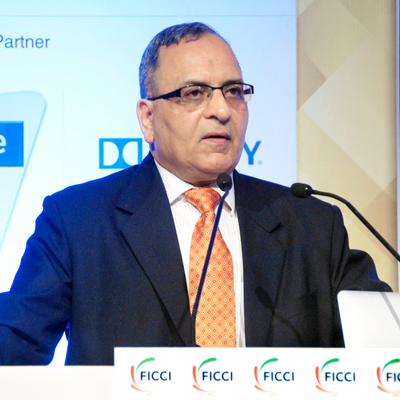
    KOLKATA: Fake news has become a huge issue in the age of social media. While the mass easily falls prey to it, Information and Broadcasting minister Prakash Javadekar called for self-regulation while publishing digital content to curb the menace.

    Addressing the delegates at the 16th Marketing Conclave organised by the Internet and Mobile Association of India (IAMAI), he said that fake news is a deadly virus, and emphasised on the importance of self-regulation.

    Terming fake news as more dangerous than paid news, the minister said that the government has taken an initiative to curb fake news by setting up a fact check team which checks and verifies information being floated in the digital medium.

    "We are definitely taking note of fake news and therefore we started one attempt in 2019 October, PIB Fact Check Unit. We have established PIB Fact Check units in all the states," Javadekar said.

    Seeking greater accountability from social media platforms, he said misinformation weakens the functioning of a democracy and there should be a calibrated approach to thwart the spread of lies and misinformation. With all villages in India set to be connected through Bharatnet, there is a greater need to educate the masses about the detection of fake news.

    Speaking about the importance of the digital medium, the minister said, “We must understand the pace with which it is growing and with the increasing number of smartphones users, digital content and advertising has become very important because of its reach and speed. Even the government has started to leverage the medium and using it to advertise.”

  • I&B ministry grants registration to 15 new MSOs in July

    I&B ministry grants registration to 15 new MSOs in July

    NEW DELHI: The ministry of information and broadcasting (MIB) has granted registration to 15 new multi-system operators (MSOs) in the month of July. As per data released by the MIB, the total number of registered MSOs now stands at 1679 as on 3 August 2020.

    MIB issued six MSOs in the month of March, two in April, six in May and four in registrations in June (till 24 June). A total of 48 MSOs have been granted registration in 2020 until now. There are two provisionally registered MSOs now.

    All the granted registrations are valid for a period of 10 years. The name of the companies that were added in the registration list in the two month includes Bharta Cable Network,  Maa Jagdamba Network,  Shiva Cable Communications,  Moka Malleshara Cable Network, New Skynet Digital Services, Vijaynagara Cable Network,  MS Digital Cable Network,  Induandmahadev Broadband, World Phone Infrastructure Services, Shri Vitthal Rukmini Cable Net Service, 4k Digital Communications Pvt Ltd.; Balaji Cable Network, Multicast Communication and Distribution Limited, Rohin Connect and Yupptv Digital India Pvt Ltd.

    The ministry has cancelled three MSO applications in July 2020. 

  • I&B ministry’s print media advertisement policy 2020: BOC to empanel publications suitable for issuing ads

    I&B ministry’s print media advertisement policy 2020: BOC to empanel publications suitable for issuing ads

    NEW DELHI: The information and broadcasting ministry issued the print media advertisement policy 2020, effective from 1 August 2020. The objective of the policy guidelines is to maintain a list of approved publications for release of advertisements by empanelling acceptable publications. The bureau of communication and outreach (BOC) will empanel publications which are found suitable for the issue of advertisements of the government of India.

    Publications have been divided into three categories: small publications (circulation up to 25,000 copies per publishing day), medium publications (circulation between 25,001 and 75,000 copies per publishing day) and big publications (circulation of above 75,000 copies per publishing day).

    The policy further explains the procedure of empanelment of publication. It states that there shall be a panel advisory committee (PAC) for considering applications of publications: The composition of the committee will be additional director general (MR & C), BOC- chairman; additional director general (media & communication) in the press information bureau (PIB) – member; press registrar/additional press registrar- member; director/deputy secretary/under secretary in the ministry of information and broadcasting dealing with print media – member; additional director general/director, BOC, in charge of print media policy as convener/member secretary and one representative each from the big, medium and small category of newspapers nominated by the ministry of information and broadcasting–non-official member. The tenure of the non-official member of the PAC would be two years from the date of their nomination by the government.

    The guideline discusses the advertising rates too. It says that the rate structure for advertisements against advertisements released by BOC will be worked out as per recommendations of the rate structure committee. The rates will be related to certified circulation of a publication. It further states that the payment against advertisements released by BOC will be worked out as per rate for advertisements in print media issued by the ministry of information and broadcasting dated 8 January 2019 or any subsequent order in this regard. The rates for advertisements by Maharatna and Navratna public sector undertakings (PSUs) will be 1.5 times the normal BOC rates. For advertisements of other PSUs, normal BOC rates will apply. And lastly, it says that the rates will be valid for three years from the date of revision.

    In the rate contract section, the draft further reads that all empanelled publications will enter into rate contract with BOC on the basis of rate offered and other terms and conditions, as laid down from time to time, to ensure proper and timely publication of BOC advertisements. The rate contract will be valid for a period of two years.

    It specifies if the publication is found to have deliberately submitted false information regarding circulation or If the publication is found to have discontinued its publication, changed its periodicity or its title or have become irregular in publication or changed its address of publication without due intimation and more then it can be suspended from empanelment by Pr. DG/DG, BOC with immediate effect for a period up to twelve months.

  • Dish TV reports higher op profit for FY 2020 and Q4 2020

    Dish TV reports higher op profit for FY 2020 and Q4 2020

    BENGALURU: Indian DTH major Dish TV India Ltd (Dish TV) reported 30.9 percent year-over-year (y-o-y) growth in consolidated operating profit (EBITDA) for the quarter ended 31 March 2020 (Q4-2020, quarter under review) as compared to the corresponding year ago quarter. Consolidated EBITDA for the year ended 31 March 2020 (FY 2020) was 3 percent higher than the previous year (FY 2019).

    Dish TV reported operating revenue of Rs 3,556.34 crore for the year under review. For FY 2019, Dish TV had reported operating revenue of Rs 6,166.13 crore and programming and other costs of Rs 2,278.83 crore. Hence Dish TV’s adjusted operating revenue (operating revenue minus programming costs) works out to Rs 3,887,30 crore. With programming cost becoming a pass-through item in the new tariff regime, subscription and operating revenues for the quarter and fiscal are not comparable with the corresponding period last year says the company in its FY 2020 and Q4 2020 earnings release. For FY 2020 and FY 2019, consolidated operating EBITDA numbers were Rs 2,105.97 crore (59.2 percent of operating revenue) and Rs 2,044.27 crore (33.2 percent of operating revenue and 52.6 percent of adjusted operating revenue) respectively.

    Dish TV reported operating revenue of Rs 869.06 crore for Q4 2020 and Rs 1,398.75 crore for Q4 2019.  Dish TV ‘s consolidated EBIDTA for Q4 2020 and Q4 2019 was Rs 543.22 crore (62.5 percent of operating revenue) and Rs 414.97 crore (29.7 percent of operating revenue) respectively.

    Profit before tax and exceptional items for FY 2020 was Rs 128.15 crore and for FY 2019 profit before tax and exceptional items was Rs 26.85 crore. For Q4 2020 PBT without exceptional items was Rs 55.53 crore, while Dish TV had reported a loss before tax and exceptional items of Rs 82.34 crore for Q4 2019.

    The company has reported exceptional items for FY 2020 in the standalone financial results which included (a). Impairment of goodwill: R. 1,91,5.50 crore (FY 2019 – Rs 1,543 crore) and (b). Impairment of loans/advances to Dish TV Lanka Pvt Ltd (a subsidiary Company): Rs 3.66 crore (net) (FY 2019 – Rs 141.99 crore). Dish TV says that the goodwill acquired pursuant to merger of the company with the erstwhile Videocon d2H Ltd is periodically tested for impairment to ensure that it is carried at no more than its recoverable amount.

    Due to these exceptional items, Dish TV reported a loss of Rs 1.654.84 crore for FY 2020 and a loss of Rs 1,163.41 crore for FY 2019. Losses due to exceptional items in Q4 2020 and Q4 2019 were Rs 1,456.25 crore and Rs 1,361.30 crore respectively.

    Let us look at the other numbers reported by Dish TV for FY 2020 and Q4 2020

    For FY 2020, total expenditure was Rs 3,441.80 crore. The major expenses in FY 2020 were operating expenses of Rs 787.30 crore; employee benefits expense of Rs 193.11 crore; finance costs of Rs 565.22 crore and other expenses of Rs 466.51 crore.

    For Q4 2020, total expenditure was Rs 816.49 crore. The major expenses in Q4 2020 were operating expenses of Rs 172.10 crore; employee benefits expense of Rs 58.13 crore; Finance costs of Rs 143.30 crore and other expenses of Rs 95.32 crore.

    Though y-o-y, finance costs in Q4 2020 were down 2.9 percent as compared to Rs 147.62 crore in Q4 2019, they were up 4.7 percent higher quarter-on-quarter (q-o-q) as compared to Rs 136.91 crore in the immediate trailing quarter Q3 2020. Dish TV said in its earnings release for FY 2020 and Q4 2020 that it has paid balance of the overdue loan amount of Rs. 250 crore during the quarter. The company paid Rs. 445.90 crore in total during the quarter thus reducing its overall debt to Rs. 1817.50 crore at the end of fiscal 2020 as compared to Rs. 2769.50 crore at the close of fiscal 2019.

    Company Speak

    Dish TV group CEO Anil Dua said, “Though our revenues were positively impacted

    by the higher number of win backs and recharges during the initial days of the lockdown, we could not be complacent during such trying times and went all out to scan every cost-centre for greater operational efficiencies. Our all-time high EBITDA and EBITDA margin recorded during the quarter was a result of operational resilience demonstrated by the business.”

  • I&B ministry looks at decriminalising minor offences under Cable TV act

    I&B ministry looks at decriminalising minor offences under Cable TV act

    KOLKATA: The ministry of information and broadcasting (MIB) is looking at decriminalising minor offences under the Cable Television Networks (Regulation) Act, 1995. As part of the ongoing exercise to reform governance, MIB has taken a decision to delete the entire provision of Section 16, Section 17 and Section 18 under the act. It has also sought comments of the general public and all the concerned stakeholders by 24 July.

    Section 16 under chapter IV of the act lays down jail term up to five years for contravention of provisions of the act which includes proper registration of a cable TV network, transmission of programmes through addressable systems, use of standard equipment, not interfering with any telecommunication system. The act also includes programme code and advertising code. Hence, deletion of section 16 will bring an end to unnecessary jail terms, legal challenges for operators. 

    Under the proposed amendment, the punishment will limit to seizing the equipment of the operator if the fault is at the level of cable operators. Any contravention of program code and advertising code will lead to cancellation of channel permission, forcible run of apology scroll. Treatment of Violations under Section 5 (Programme Code) and Section 6

    (Advertisement Code) under Section 16 shall now be shifted to under Section 11 as its sub-Section (1).

    The ministry is proposing deletion of Section 17 and Section 18 completely.  It comes under the broad exercise of the current central government which has planned to undertake a wide-ranging review of existing laws and decriminalize many” minor” offences. Earlier in June, the finance ministry on Wednesday proposed to decriminalise minor offences. 

  • I&B ministry grants registration to 10 MSOs in May, June

    I&B ministry grants registration to 10 MSOs in May, June

    KOLKATA: The ministry of information and broadcasting (MIB) has published a document listing all the registered multi-system operators (MSO) in the country. As per the document, there are 1664 registered MSOs in India as on 25 June 2020.

    Six and four MSOs were granted registration in the month of May 2020 and June 2020 respectively. A total of 48 MSOs have been granted registration in 2020 until now. There are two provisionally registered MSOs now.

    All the granted registrations are valid for a period of 10 years. The name of the companies that were added in the registration list in the two month includes Siddhi Vinayak Cable Bhainsdehi ,  Baroda Cable Network,  E-Star Digital Cable TV Network,  Bangalore Broadband Network Pvt Ltd, Meet Cable Vision, Lightfiber Telenetworks Pvt Ltd,  Modern Network Digital Pvt Ltd,  Kamdhenu Digital Network, RK Digital Cable Network and  Smart India Digital Services.

    The ministry has cancelled three applications in May and June 2020. 

  • Modi 2.0: The year gone by for I&B ministry

    Modi 2.0: The year gone by for I&B ministry

    MUMBAI: The ruling Bharatiya Janta Party (BJP) recently completed one year in its second term in office at a time when the world reels under the novel SarsCoV2 crises. Through this year, the government has taken several key decisions and measures which have kept the ministry of information and broadcasting (MIB) busy.   

    Under the leadership of Prakash Javadekar, MIB doled out various significant measures and guidelines that will have a lasting impact on the media and entertainment industry. Here are some key announcements and proposals by the MIB in the past year.  

    OTT industry in self-regulatory mode

    Javadekar stressed on the importance of self-regulation rather than setting up a statutory body for the OTT industry and also assured stakeholders such as Netflix, Amazon Prime, Zee5, MX Player, ALTBalaji, Hotstar, Voot and Jio regarding the same. MIB had asked OTT content players in March this year to set up an adjudicatory body and decide on a code of conduct within 100 days. Most OTT players are in favour of mutually agreeable terms and not an imposing statutory body.

    Fake or fact?

    In 2019, the Press Information Bureau (PIB) decided to fight fake news by setting up a fact-checking unit. Aiming for better communication around the pandemic between citizens and the government, PIB also launched a Covid2019 fact check unit. In addition to that, it launched a Twitter handle, @CovidnewsbyMIB, and started #IndiaFightsCorona to share all pandemic-related updates.

    A year of guidelines, advisories and new policies

    From issuing several guidelines and regulations to implementations of advisories and policies, MIB under Javadekar, had a lot to offer in the past year.

    In June 2019, the ministry issued an advisory to all private television channels to carry end credits of the programmes in the language that they are being telecasted in. The step was an initiative towards promoting Indian languages.

    Following this, MIB announced the implementation of accessibility standard for TV programmes for those with hearing disability. It became mandatory for all news channels to carry at least one programme a day with sign language broadcast and subtitles, while other channels were asked to have at least one show a week with similar features.

    MIB also recently issued draft policy guidelines stipulating that social media platforms with 25 million monthly unique users will be eligible for government ads. Under the new policy, the bureau of outreach will also partake in the bidding process, including buying inventory or space for government messaging. To bring community radios at par with TV channels, Javadekar proposed to raise advertisement air time to 12 minutes from seven minutes.

    The ministry has also been issuing advisories to private satellite TV channels to adhere to the Programme and Advertising Codes as prescribed in the Cable Television Networks (Regulation) Act 1995.

    Staying informed

    In an effort to keep spirits uplifted during the pandemic, the MIB directed broadcasters and distribution platform operators (DPOs) to ensure uninterrupted supply of services to subscribers and to cooperate with other players. It also requested all states and union territories to provide a constant flow of authentic information for the public by ensuring operational continuity of the print and electronic media.

  • I&B ministry extends deadline to submit comments on draft policy guidelines for uplinking, downlinking

    I&B ministry extends deadline to submit comments on draft policy guidelines for uplinking, downlinking

    MUMBAI: The ministry of information and broadcasting (MIB) has extended the time till 7 June for submitting suggestions or comments on draft policy guidelines for uplinking and downlinking of television channels. MIB published the guidelines on 30 April.

    The last guidelines for uplinking and downlinking of satellite television channels were issued by the ministry in 2011. 

    MIB drafted the suggestions after consulting with stakeholders and also invited comments on the draft from them within the 15 days of publishing it. But some of the stakeholders expressed inability to draw up the response within the time limit requesting a further extension of the deadline. 

    Here are the major guidelines issued by MIB:

    Online application on Broadcast Seva for teleport or TV channels 

    A company or Limited Liability Partnership (LLP) may apply on Broadcast Seva on payment of processing fees for setting up a Teleport or Teleport Hub and uplinking, downlinking of a news TV channel or a non-news TV channel. The online application shall be processed from the standpoint of eligibility conditions and shall be subject to clearance and approval by the department of space, ministry of home affairs, and whenever considered necessary, by the department of revenue, ministry of finance. However, if considered necessary, the ministry may cause inspection of the physical premise or location.

    Regulations for logo and name of a channel

    For uplinking a news channel or a non-news channel, it has to furnish the proposed name and the logo of the channel along with a trademarks registration certificate regarding the ownership of the name and logo during applying. A company/LLP shall display on the permitted TV channel only that name and logo which has been approved by the ministry. Hence, display of name and logo which has not been permitted or the display of dual logos would be treated as a violation of the guidelines.

    Operational status of a permitted TV channel

    A TV channel is required to remain operational during the currency of the permission.  Where a TV channel is unable to remain operational for a continuous period of more than 60 days, the company/LLP shall inform the ministry of the status along with reasons for the channel remaining non-operational. Provided that failure to inform the ministry regarding non-operational status of a channel beyond a continuous period of 60 days will be deemed to be a violation under the guidelines. Moreover, the channel shall not remain non-operational for a continuous period exceeding 90 days.

    Live telecast of events

    · A news channel which is given permission under these guidelines may uplink news and current affairs content by using the Satellite News Gathering (SNG)/ Digital Satellite News Gathering (DSNG) equipment permitted to it, or hiring such equipment owned by any other permitted news channel owner or a teleport operator, after registering such hiring by means of an application on Broadcast Seva portal.

    ·  A non-news channel having permission under this guideline may, for the purpose of broadcasting an event live (other than an event which is in the nature of news and current affairs), irrespective of the technology used for uplinking the event, register itself online on Broadcast Seva, at least five days preceding the first date of a live event, furnishing such details and documents as may be specified in the application for registration, including the following date, time, venue and name of the event; the channel’s/ teleport’s willingness to broadcast/ uplink the proposed programme/event; due authorization of the event owner along with specific dates and timings of the proposed programme/event, a valid WPC license issued to the teleport operator, where a SNG/DSNG equipment or any such technology is used requiring WPC license, where an equipment or technology other than SNG/ DSNG is used, detailed specifications thereof.

    ·  A foreign news channel/agency may be granted permission up to one year at a time for live uplinking from time to time through a pre-designated teleport, by way of an application made in this regard online on the Broadcast Seva Portal.

    Transfer of permission of a television channel or teleport 

    A TV channel or a teleport can be transferred by a company/LLP, to another entity only with prior approval of the ministry. However, transfer under the sub-section shall be permitted under the following situations:

    Merger/demerger/ amalgamation duly approved by the court/ tribunal in accordance with the provisions of the Companies Act 2013, and the company/LLP files a copy of the order of the court/tribunal sanctioning the said scheme; transfer of business or undertaking in accordance with the provisions of applicable law, and the company/ LLP files a copy of the agreement/ arrangement executed between itself and the transferee company/LLP; transfer within group company, and the company files an undertaking stating that the transfer is within the group companies.

    Uplinking of television channels for viewing only in foreign countries

    TV channels operating in India and uplinked from India but meant only for foreign viewership are required to ensure compliance of the rules and regulations of the country for which content is being produced and uplinked.

    A channel owned by a foreign company/entity may be allowed to uplink its content to be viewed outside India by using the facility of a permitted teleport operator by way of an online application on Broadcast Seva furnished on its behalf by the concerned teleport operator.

  • I&B ministry recommends 5% cap on DTH platform services; TRAI stays firm at 3%

    I&B ministry recommends 5% cap on DTH platform services; TRAI stays firm at 3%

    MUMBAI: The Telecom Regulatory Authority of India (TRAI) is firm on its position to cap the number of platform services (PS) by DTH platforms to three per cent subject to a maximum of 15 channels. This comes in the wake of the ministry of information and broadcasting (MIB) recommending a five per cent cap with no channel limits.

    The MIB sent a letter to the regulatory body on 13 May approving TRAI’s recommendations on platform services offered by DTH platforms with modifications. The inter-ministerial committee suggested that the cap be increased to five per cent of its total channel carrying capacity without any limit on the maximum number of PS channels. 

    TRAI was of the view that since DTH operators have a limited channel carrying capacity and with the availability of a huge number of permitted satellite TV channels (900+) in all regional languages and genres, there is no pressing requirement for a large number of PS channels. Further, DTH operators are primarily carriers of the content produced by broadcasters; not content producers. 

    “An upper limit of 15 channels is also important so that even if the channel carrying capacity gets increased in future, it should be given to broadcasters who are waiting for the channel capacity. As broadcasters are not permitted to reach to consumers directly, they are dependent only on the distributors. Allowing more channels as PS will put an artificial restriction on the broadcasters to launch new channels and in turn, they will be discouraged to bring new channels in the sector which will adversely affect the public interest at large,” it added. 

    TRAI mentioned that since DTH operators have pan India presence by the virtue of technology
    and availability of satellite footprint, they don't have to cater to the requirements of any local audience or a particular demography. PS are generally meant for MSOs to carry some local community interest programme.

    With regard to allowing more PS channels to DTH operators, TRAI said that the operators will block a large capacity for their own use which can seriously jeopardise the availability of slots not only for new broadcasters but also for government mandatory channels.

    TRAI had also recommended that the programme transmitted by the DTH operator as a platform service shall be exclusive and should not be shared directly or indirectly with any other distribution platform operator (DPO). In case of violation both TRAI or MIB can send notices, but the ministry wants to restrict this power to itself. However, TRAI had said that the MIB reserves the right for cancellation of registration of such PS of the DTH operator.

    The authority has reiterated its earlier recommendation for this clause as well citing the need for consistency between the TRAI act and DTH licence requirements.

    The industry watchdog also recommended that the DTH operator shall be bound by orders/ directions/regulations issued by it in respect of DTH services including platform services provided by the operator. In response, the committee recommended that the issues pertaining to DTH licences should be regulated by the MIB. However, it may be desirable that DTH operators may also abide by orders/directions/regulations of TRAI issued by TRAI from time to time relating to interconnection agreement/ tariff/quality of service.

    To this, TRAI said, “MIB should not put any artificial restriction in the license condition. It is essential that DTH guidelines should have one overarching clause clearly stating that the DTH operator shall be bound by orders/ directions/regulations issued by TRAI in respect of DTH services…It is very important that the DTH license should have an explicit provision that the DTH operator shall be bound by orders/directions/regulations issued by TRAI in respect of DTH services including platform services provided by the operator," it added. The regulator cited several court cases by which it has been given approvals to ensure regulations for the whole DTH sector.

  • I&B ministry drafts policy guidelines to improve govt’s social media outreach

    I&B ministry drafts policy guidelines to improve govt’s social media outreach

    MUMBAI: The Ministry of Information and Broadcasting (MIB) has come up with policy guidelines for empanelment of social media platforms with Bureau of Outreach and Communication (BOC). The new policy guideline is aimed at improving the social media outreach along with putting in place a policy framework which enables ministries and BOC to engage with social media platforms on the basis of various criteria, terms and conditions and processes stipulated in the guidelines.

    “A number of ministries and departments of government of India have a substantial presence as well as organic reach across various social media platforms which they utilise to connect to the members of the public. However, the organic reach is limited to only such people who have connected with the social media handle of the concerned ministry/department. At times, the need is felt to reach or connect to people who are not connected/linked with social media handle of the concerned ministry/department,” MIB stated.

    “It is important for the ministry to determine modalities for engaging social media platforms for assured reach. Hence there is a definite need for policy guidelines for engagement of social media platforms so that assured reach may be attained on payment basis to increase visibility of socially relevant messages,” it added.

    The new policy guidelines will remain valid for a period of five years.

    Media planning and execution of campaigns:

    BOC will determine which social media platform(s) is/are relevant in light of planned outreach activity of the client ministry/department based on target audience, theme and content of proposed activity, budget and duration of the campaign.

     In doing so, preference may be given to the social media platforms which are based in India without affecting the desired outcome from the campaign activities.

     BOC will prepare a media plan within the indicated budget wherein the suggested platforms and the expected deliverables would be indicated to the ministries/ departments along with the tentative cost. However, since the models are based on dynamic pricing/auction/bidding, the actual delivery (as against expected deliverables) and the actual buying rates (as against indicated in the plan) would be found out on the final completion of the campaign. 

    The difference between the media plan conveyed to the client and the media plan actually executed will be communicated to the client ministry/department post execution with details. These terms shall be communicated by BOC to the client Ministry/Department before execution and their acceptance would be obtained before executing the media plan. 

     The client ministry/department shall indicate social media page/handle which will be designated for the campaign activity. The ministry/department will also be required to share the credentials (such as password) of the page/handle. Thereafter, the BOC and client ministry/department will nominate personnel to execute and monitor the campaign. 

    BOC will schedule the activity in such a manner that more deliverables may be generated at a lesser cost wherever timelines for undertaking the activity permits such scheduling. 

    The ministries/departments would have to convey approval for outreach activity to BOC at least five days in advance for the campaign to get started. 

    The ministries/departments would place 100 per cent funds in advance with BOC for campaign to be run. This is non-negotiable as default in payment by one ministry/department may adversely impact social media campaigns of other ministries/departments of the government. If the actual expenditure exceeds the planned expenditure, the balance shall be paid by the client ministry/department to the BOC.

    Follow Tellychakkar for the consumer facing news & entertainment