Tag: MG Radhakrishnan

  • Reporting from the frontline: Journalists battle with Covid second wave

    Reporting from the frontline: Journalists battle with Covid second wave

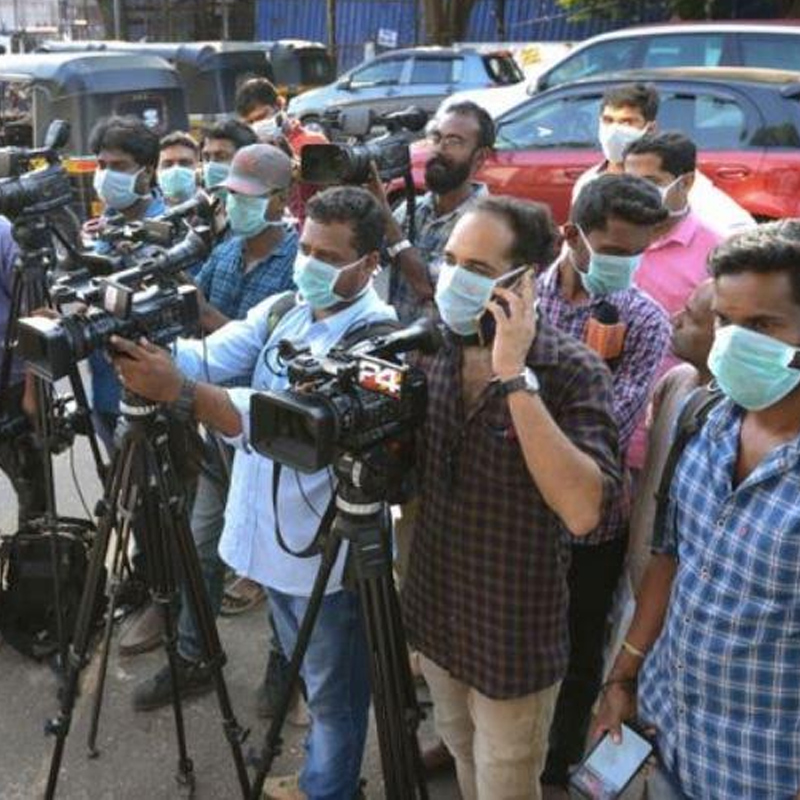
    NEW DELHI: With India engulfed in the firestorm that is the second wave of Covid2019, journalists in the country are putting their lives on the line to keep the public informed and abreast of the latest developments regarding the fatal pathogen, and the measures that should be taken to curb its spread. But in spite of these noble efforts from the news media community, the government has not classified scribes as frontline workers who are entitled to priority Covid vaccination. It’s a fact that while working round the clock to provide Covid updates from the frontlines, several journalists have lost their lives. 

    According to data released by the Press Emblem Campaign (PEC), a non-profit organisation focused on press freedom and journalist safety, 51 Indian journalists have died due to coronavirus. The data released by PEC was dated 29 December, and the current death toll among the news media community could be much higher, especially at this time where the resurgent virus is on a killing spree through India. 

    Request from Editors Guild of India

    Recently, the Editors Guild of India urged the government to declare journalists as frontline workers and be allowed priority Covid vaccination.

    “News organisations have been relentlessly covering the pandemic, elections, and other current affairs in an effort to ensure that the flow of news and information to readers continues unabated. News media is included in essential services. Therefore it will only be fair that journalists be given this cover of protection, especially in the face of the number of infected rising to astronomical levels,” the Editors Guild of India said in a statement. 

    Extending support to newspersons in the country, Delhi chief minister Arvind Kejriwal also urged the central government to classify media personals as frontline workers. 

    “Journalists are reporting from most adverse situations. They should be treated as frontline workers and should be allowed vaccination on priority. Delhi government is writing to the Centre in this regard,” tweeted the AAP supremo. 


    Tamil Nadu MP B Manickam Tagore also appealed to prime minister Narendra Modi to declare all journalists as frontline workers. In a memorandum, Tagore shockingly revealed that India has the highest fatalities among journalists dying due to Covid infection across Asia and the second-highest across the world. 

    Industry experts react

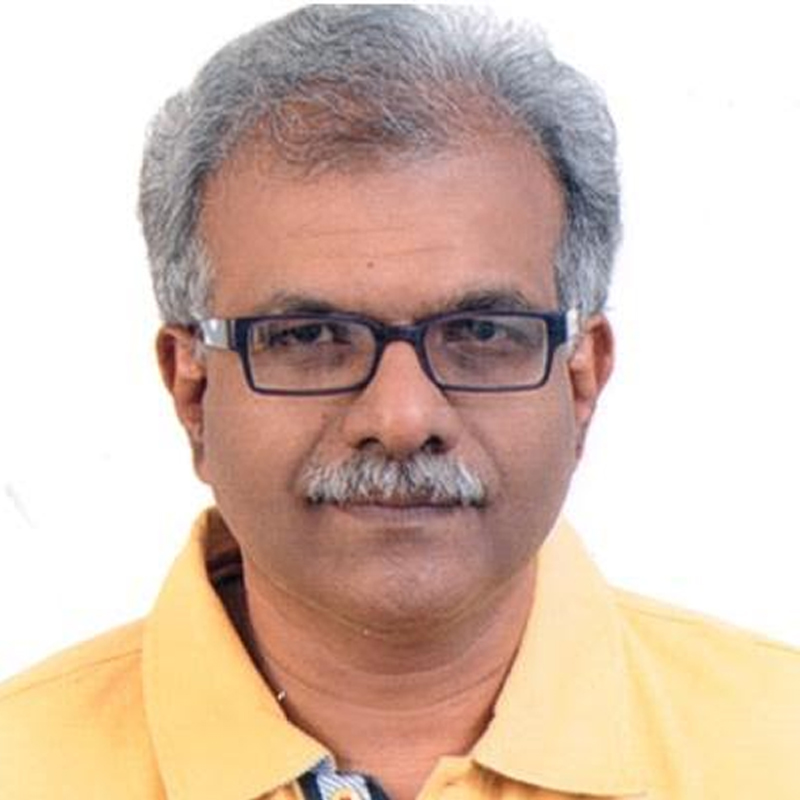
    Calling journalists ”frontline warriors”, Asianet News editor-in-chief MG Radhakrishnan stated that several journalists contracted the novel Coronavirus at his channel. 

    “At least 25 journalists working in Asianet News have been infected with the coronavirus. Like any other frontline workers, journalists are also risking their lives to keep people informed about the pandemic and our role in this war against the invisible enemy should not be ignored,” said Radhakrishnan.  

    Talking about the challenges during news reporting, he added, “Unlike other instances of calamity, we are putting families too at risk.” 

    Mathrubhumi Group managing director MV Shreyams Kumar shared that his company has been trying hard to give all protection measures for journalists since the pandemic outbreak. 

    “We have an effective operational standard maintained, the reporters are given shifts on a rotational basis and they are regularly examined and tested. The office space is well sanitised, and safety factors are taken into consideration.  The government has been quite supportive to the media industry, they have well adhered to the fact that newspapers are playing a very important role in delivering credible news to its readers and the general public at large,” he noted. 

    Senior media consultant and veteran journalist Mohan Nair echoed the sentiment, going on to add that reporters who are on the field are more prone to occupational hazards despite taking precautionary measures, and urged the government to give prioritised vaccines to journalists irrespective of their age. 


    PIB’s relief efforts and Uttarakhand government’s empathetical step

    In a major relief, the Uttarakhand government has decided to classify journalists as frontline workers. Uttarakhand chief minister Tirath Singh Rawat has also ordered the vaccination of all journalists and representatives of media organisations. The Telangana government has also decided to give financial assistance of Rs 2 lakh each to the families of journalists who have succumbed to Covid. 

    To help the families of journalists who have passed away due to Covid infection under the Journalist Welfare Scheme (JWS), the PIB is collecting information of newspersons who lost their lives during the pandemic time. The central government has also approved the proposal of the Press Information Bureau’s journalist welfare committee to provide financial relief of Rs 5 lakh to deceased journalists’ family. As a part of this plan, the families of 39 journalists will receive this financial relief. 

    As hundreds of journalists have succumbed to Coronavirus in India, the Network of Women in Media India (NWMI) recently paid tribute to newspersons who lost their lives during the pandemic.

    “Media houses need to actively ensure the safety and health of journalists who work for them and those who, as independent stringers or freelancers, supply vital information, photographs and videos to them. Media houses must stop forcing journalists to travel in dangerously unsafe conditions to work in offices instead of encouraging them to work from home,” said NWMI in a statement. 

    On 26 April, India witnessed more than 3,23,000 Covid positive cases and 2,771 Covid-related deaths. Medical experts believe that the double and triple mutant variants of the deadly virus are responsible for the sudden surge in cases in India. 

  • Asianet News drives Covid awareness as anchors appear on air with masks on

    Asianet News drives Covid awareness as anchors appear on air with masks on

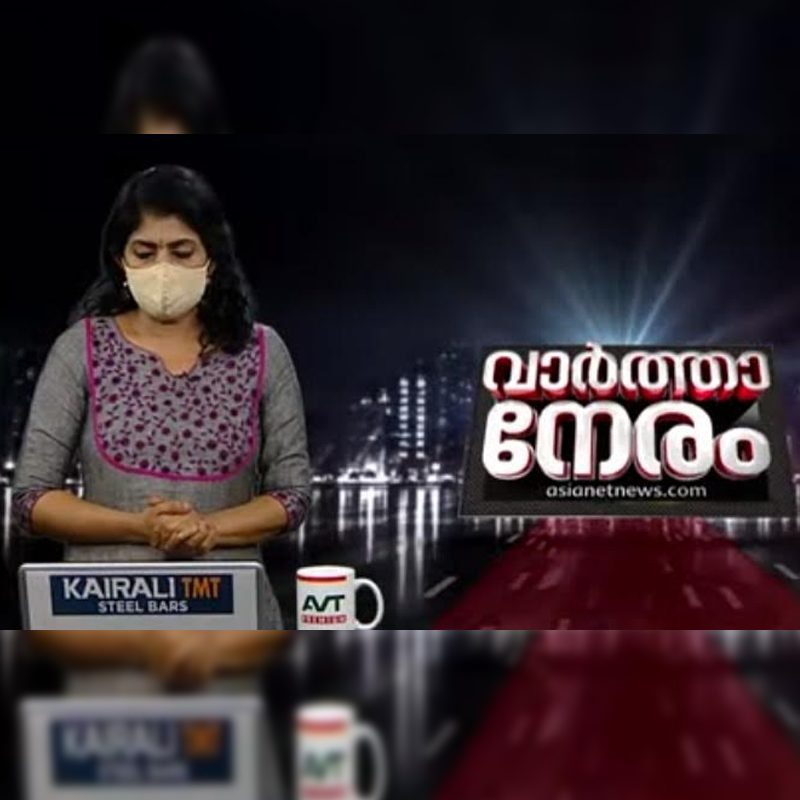
    MUMBAI: In an attempt to raise awareness among the general public regarding the usage of face masks to combat the spread of Covid2019, Asianet News anchors have been using face masks while on air over the past few days. The move by Asianet is now receiving positive responses from all corners, as this is for the first time in Indian television that all the news anchors in a channel are appearing on screen with their masks on. 

    “The primary aim of this move is to create awareness among the general public. We have been discussing for a long time that all reporters and news anchors should wear masks, as it will give a positive message to the public. Moreover, we are also giving masks to guests who are attending the news shows without a face mask. This message has to go deep down, and that was the intention behind this mask-wearing campaign,” said Asianet News editor-in-chief MG Radhakrishnan. 

    Following Asianet’s lead, a few other Malayalam news channels are also planning to make their news hosts wear masks when they go live. 

    “I am very happy about the fact that a message has been conveyed to people regarding the vitality of wearing masks. Moreover, I feel glad that Mathrubhumi News has also followed our path after two days since our news anchors started wearing masks,” added Radhakrishnan. 

    Talking about the challenges of wearing face masks while news reading, the media veteran said, “We pretty much know that news reading is all about communicating with the general public. Some people told me that communication is not effective when news anchors are wearing masks. However, we have a bigger message to convey, especially at this time of pandemic, and I believe we have succeeded in our attempt.” 

    Radhakrishnan also underscored the necessity of giving journalists the status of frontline workers who should get priority in the vaccination rollout program. 

    “The government should do something to classify journalists as frontline workers, as media people have been working from the front since the day of the pandemic outbreak. Media personnel are getting infected by Covid, and it is very much necessary to classify the entire community as frontline workers. The government should consider us as frontline warriors, and should give vaccination,” he concluded. 

  • Asianet News celebrates glorious 25 years of broadcast

    Asianet News celebrates glorious 25 years of broadcast

    NEW DELHI: In 1993, journalist Shashi Kumar and his businessman uncle Reji Menon launched Asianet, one of the very first private television channels not just in Kerala but in India as a whole. The arrival of Asianet to the market was warmly welcomed by Keralites, as the channel offered an all-new visual treat to the viewers who were dependent on state-owned Doordarshan offerings that had only a handful of programs airing in Malayalam. On 30 September 1995, Asianet moved a step ahead and aired its first news bulletin at 07.30. 

    Glorious 25 years of news broadcasting

    The journey of Asianet was not an easy walk, especially in its initial days. During those times, the number of viewers was very limited for a regional language like Malayalam, and the households that had television sets were also very few.

    "Right from the beginning, it was an adventurous journey. At that time, when compared to Hindi and Tamil, the market for a Malayalam satellite channel was very small. Hindi and Tamil channels had an international market as well, while our market was very narrow. However, Kerala and Malayalam always have that great tradition of being vibrant towards media outlets. Secondly, the media penetration in Malayalam was the highest, even during the time of print," said Asianet News editor-in-chief MG Radhakrishnan. 

    The media veteran also lauded founder Shashi Kumar for trusting the Kerala audience while starting a channel exclusively in Malayalam. 

    "The gulf diaspora had also played a crucial role in determining the success of Asianet News. By that time, Kerala's economy was coming out of its long tradition of stagnation. During those times, the per-capita income of Keralites started overtaking the national average; thanks to globalisation and gulf money. All these factors helped Asianet to find a perfect market. Slowly, advertisers also started trusting us, as they understood that there was a section of people who watch our channel. By that time, Kerala's consumption rate also grew. Kerala was a huge consumption market. Kerala was actually treated as one metro by big companies," detailed Radhakrishnan. 

    Challenges faced by Asianet

    In 2008, Asianet and Asianet News parted as separate companies. Now, Asianet News is based at Housing Board junction, TVM- The Studio and newscasting happens from there, which is taken by an optical fiber link to the uplink facility in Noida, UP. 

    In the meantime, several news channels including Manorama News, Mathrubhumi News, Kairali News, and 24 News hit the airwaves. Amid heavy competition from channels and online news portals, Asianet continues to dominate the news industry in Kerala. 

    "Asianet always has that early bird advantage. Post-2000, several news channels like Indiavision, Manorama News, and Mathrubhumi News entered the market. It should be also noted that Manorama and Mathrubhumi have a rich tradition of being top leaders in print. Indiavision was the first exclusive news channel. Now, 24 News has also entered the market,” stated Radhakrishnan.

    Despite all these challenges, Asianet News has maintained its leadership position, while the second and third are way behind, he remarked. Additionally, the channel’s growth has been augmented by a strong digital presence.

    “When it comes to social media, we have a very strong website, and we are one of the top names in the country when it comes to regional websites. As television is the number one news source, our 25 years of experience in the industry is helping us to maintain the top position," added Radhakrishnan. 

    The Asianet News editor-in-chief also talked about new technologies which are being widely used in news reporting and news presenting. Staying in step with the changing time, shooting, distribution, and archiving are going to be in HD format soon, he revealed.

    "All the major programs including the News Hour are being telecasted from a green studio. But why we became a bit late is because we have a legacy technology which dated back to the 1990s. As most of the other channels started their operations post 2000, they could actually start with greenfield technology. Right from the beginning, they have new technology. But now, we actually are on par when it comes to technology with all other channels," concluded Radhakrishnan. 

  • Asianet News ropes in MG Radhakrishnan as editor

    Asianet News ropes in MG Radhakrishnan as editor

    MUMBAI: Kerala’s largest broadcasting network has just had a change of editor for its News channel Asianet News. MG Radhakrishnan has taken charge as the new editor.


    Radhakrishnan has over 32 years of experience in journalism with his last stint being associate editor of India Today magazine as well as Malayalam newspaper Mathrubhumi. He has also authored two books ‘Damshtrayum   Nettikkannum Theliyumpol’ and ‘Bhayam Premam Sangeetham’. He is a post graduate in Economics and has specialised in politics, economics, sports and culture.


    Radhakrishnan has won various awards including state award for development journalism, K Balakrishnan prize for excellence in journalism and the Kerala state film award for best writing on cinema.


    He will now report to Asianet News editor in chief TN Gopakumar.