Tag: mFilterIt

  • Mfilterit showcases homegrown tech powering India’s digital defence

    Mfilterit showcases homegrown tech powering India’s digital defence

    MUMBAI: They say prevention is better than cure and mfilterit is proving that adage true in the digital age. The homegrown digital trust and fraud prevention company is turning heads at the Global Fintech Fest 2025, where it’s showcasing its cutting-edge investment scam detection tool, built entirely in India and designed to safeguard the nation’s fast-growing digital ecosystem.

    With online scams rising at alarming rates, mfilterit’s latest AI-driven solution is arming banks, regulators, and government agencies with the intelligence to detect and disrupt fraud in real time. From mule accounts and phishing rings to high-risk transactions and fake investment schemes, the platform identifies and neutralises threats before they spiral into financial loss.

    Every single day, the company’s technology flags more than 125 high-risk scamsters and 30,000 mule accounts, empowering financial institutions to act swiftly and protect consumers. Its systems also intercept fake websites, phishing networks, and fraudulent transaction flows, reinforcing trust in India’s booming digital economy.

    As a made-in-India success story, mfilterit embodies the spirit of innovation and digital sovereignty. Its AI-driven vigilance even played a key role during the Kumbh Mela, helping authorities and banks detect scams in real time, a feat that safeguarded millions of digital transactions during one of the world’s largest gatherings.

    “Our journey is about safeguarding trust and empowering every Indian to participate in the digital world with confidence,” said mfilterit co-founder and CEO Amit Relan. “We’re showcasing the power of made-in-india innovation to tackle one of the biggest challenges of our time digital fraud.”

    Powered by a blend of AI/ML models, OSINT, NLP, and big data analytics, mfilterit’s solutions span ad traffic validation, brand protection, affiliate monitoring, and BFSI transaction intelligence, giving organisations a cross-funnel view of digital risk.

    As India accelerates towards a cashless future, mfilterit is ensuring that progress doesn’t come at the cost of security. By building globally relevant tech that’s both “Made in India” and “Built for India”**, the company is quietly rewriting the rulebook on digital resilience — one algorithm at a time.


  • Bengaluru roundtable by Indiantelevision.com & mfilterit concludes on a high note

    Bengaluru roundtable by Indiantelevision.com & mfilterit concludes on a high note

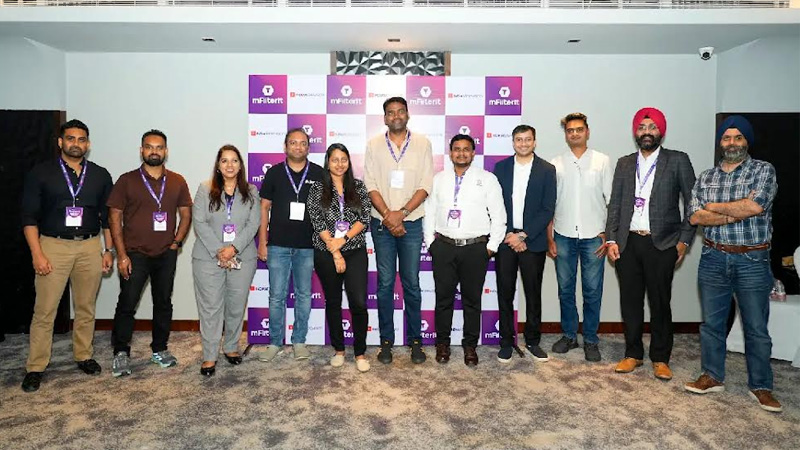
    BENGALURU: The Bengaluru edition of Indiantelevision.com Group and mfilterit’s closed-door roundtable proved to be a power-packed and highly successful gathering of India’s app economy leaders. Themed “Build winning app acquisition & engagement strategy using AI & analytics”, the event on 12 September brought together an exclusive panel of senior voices from well-established brands. With candid conversations, practical insights, and real-world case studies, the session set a new benchmark for dialogue around the future of app marketing in India.

    Indiantelevision.com Group chief business officer Soumitra Sahu said, “At Indiantelevision.com, we see ourselves as enablers of meaningful conversations that move the industry forward. The Bengaluru roundtable was a reflection of that, bringing together diverse voices from India’s thriving app economy to candidly address both opportunities and blind spots. What stood out was the willingness of leaders to go beyond surface metrics like installs and really dig into questions of quality, transparency, and long-term engagement.”

    “By partnering with mFilterIt, we wanted to create a forum that doesn’t just spotlight challenges but also equips marketers with actionable insights to build sustainable, growth-focused strategies. Judging by the energy in the room and the quality of ideas exchanged, this event was a resounding success and a step toward shaping a stronger digital ecosystem for all,” Sahu added.

    The forum underscored how the conversation in today’s attention-deficit era has shifted: installs alone no longer define success. Instead, cleaner traffic, genuine engagement, and sustainable ROI are the new imperatives. Moderated by  WPP Medi national head – performance marketing Satheesh Kumar, the powerhouse panel included industry moguls from Phonepe’s Indus Appstore, Ajio, Rapido, Pocket FM, Jar, redbus, Payrupik, Stable Money, My Growth Club, and mfilterit.

    Durgesh Rathore of mFilterIt highlighted the session’s depth and practical value, noting that discussions around KPIs, media mix, and the challenges posed by SRNs and third-party channels made the forum highly engaging. He emphasised that despite reliance on standard validation metrics, brands still face gaps due to opaque models, underscoring the need for robust checks and AI-driven solutions.

    Rathore also valued the opportunity to exchange insights with industry veterans. “Presenting in front of a focused group of industry peers was a proud moment. The insightful exchanges with veterans like Pawandeep Singh and Utkarsh Garg provided diverse perspectives and a deeper understanding of the evolving digital ecosystem,” he noted.

    Reflecting on the value of the discussion, Phonepe Indus Appstore VP product Rohit Utmani said, “The discussion was an insightful, high-quality exchange. The most valuable aspect was the focus on real-world examples and best practices from the panelists’ companies.”

    “It was refreshing to learn from their practical experiences on scaling, rather than relying on a traditional market research approach. It was also great to hear the positive reception to Indus Appstore and the enthusiasm that developers in the ecosystem have about exploring our platform as a new way to acquire users,” he added.

    For moderator Satheesh Kumar, the event exceeded expectations. 
    “My expectation was to have a candid, insightful discussion around the opportunities and challenges in the app ecosystem, particularly on growth, fraud prevention, and attribution. The session absolutely lived up to that, with panelists openly sharing their practical experiences and perspectives.”

    “What I enjoyed most was the diversity of viewpoints, each panelist brought a unique lens from their respective industries, which made the discussion rich and well-rounded. It even went to the extent where the panelists started building on each other’s points of view, turning the session into a super engaging conversation rather than a typical Q&A. What made it truly insightful was that the dialogue wasn’t limited to just app marketing, it naturally expanded into broader aspects of marketing, product, and business strategy,” Kumar added.

    From highlighting fraud patterns like CTIT anomalies, invalid OS versions, and click hijacking, to stressing the importance of independent AI-powered validation, the session offered a roadmap for marketers to move beyond vanity installs toward growth-focused, transparent, and efficient strategies.

    For Indiantelevision.com Group, co-hosting the roundtable augmented its role as a trusted knowledge partner for the industry, while for mFilterIt, it further demonstrated its leadership in shaping cleaner, more accountable digital ecosystems.

  • Indiantelevision.com, mFilterIt co-host Bengaluru roundtable on AI-led app marketing

    Indiantelevision.com, mFilterIt co-host Bengaluru roundtable on AI-led app marketing

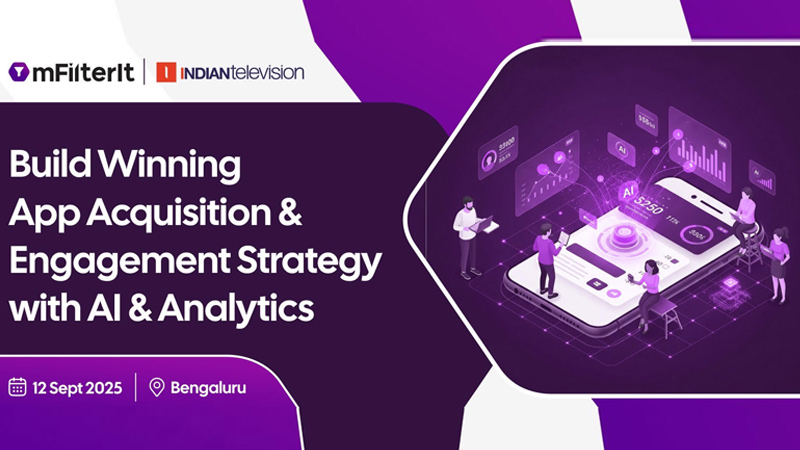
    BENGALURU: With India’s app economy mushrooming and companies locked in a race for clicks and engagement in an era of attention deficit, the question is no longer just about investing in app marketing, it’s about making every install count. To address this challenge, Indiantelevision.com Group and mFilterIt co-hosted a closed-door roundtable in Bengaluru on September 12, themed Build Winning App Acquisition & Engagement Strategy Using AI & Analytics.”

    “In an ecosystem, where installs alone no longer define success, it is critical to focus on cleaner traffic, sharper strategies, and genuine engagement. That’s why we are delighted to co-host this forum with mFilterIt—a partner whose expertise in AI and analytics has been pivotal in redefining transparency and trust in the digital ecosystem. By co-hosting this forum with mFilterIt, we aim to equip marketers with insights that go beyond the numbers and help shape sustainable, growth-focused approaches for the industry,” noted Indiantelevision.com, chief business officer, Soumitra Sahu.

    The invite-only forum brought together senior voices from leading brands to discuss sharper strategies for app marketers. The focus was not only on driving installs but also on ensuring genuine user engagement, maintaining cleaner traffic, and improving key efficiency measures such as cost per install (CPI) and cost per engagement (CPE). 

    The shifting ground of app acquisition

    With user acquisition campaigns increasingly driven by affiliates, India’s top brands are beginning to face blind spots in their frameworks. Attribution platforms may be able to measure installs, but optimisation and bot detection often fall outside their scope. This is where independent validators such as mfilterit have entered the picture, deploying AI-powered algorithms and layered checks that uncover wasted ad spend and fraud patterns usually missed by traditional systems. 

    A powerhouse panel

    The discussion was moderated by WPP Media, national head – performance marketing, Satheesh Kumar and featured senior leaders including Rohit Utmani of Phonepe’s Indus app store, Manas Prakash of Ajio, Pawandip Singh of Rapido, Akansha Kumari of Pocket FM, Utkarsh Garg of Jar, Satheesh Chinnappan of redbus, Saravanan G of Payrupik, Kirtiman Phadke of Stable Money, Rajat Srivastava of My Growth Club, Durgesh Rathore of mfilterit, and Jagmeet Singh of mfilterit. Together, they brought perspectives from diverse verticals of India’s booming app economy.

    Cracking the code

    The agenda stressed on some of the toughest questions in app marketing today. Among them was how brands can detect wasted ad spend and improve ROI, what critical metrics validate app ad traffic and highlight potential risks, and how incent walls distort campaign outcomes. A key theme: why marketers must challenge the data they receive from platforms and affiliates instead of taking it at face value. Fraud samples, like unusual CTIT patterns, installs from invalid OS versions, click hijacking, incent traffic, and even fake orders, further demonstrated how affiliate monitoring and real-time validation can uncover non-compliant activities and wasted spend. By highlighting these real-world patterns, the session demonstrated how independent checks bring more rigour, transparency, and efficiency to app marketing campaigns. 

    Why it matters

    By the end of the session, participants gained a clearer view of the blind spots in user acquisition and a sharper understanding of how AI and big data can improve campaign outcomes. They also walked away with a roadmap to elevate their strategies with real-time insights, helping ensure that every install delivers value rather than vanity. For Indiantelevision.com group, co-hosting the event reinforces its role as a knowledge partner to the industry. Together with mfilterit, it aims to provide marketers with a forward-looking agenda at a time when the quality of engagement, rather than sheer quantity, defines sustainable growth.

  • mFilterIt and PayG Solutions forge a techno-strategic collaboration

    mFilterIt and PayG Solutions forge a techno-strategic collaboration

    Mumbai– In a decisive move mFilterIt, a global leader in digital Ad fraud detection and preventive solutions, has announced a techno-strategic collaboration with Customer PayG Solutions, a pioneer in payment technology services.

    In an era where financial crimes are getting sophisticated, this joint venture aims to proactively identify and mitigate risks associated with digital financial transactions to enhance defense machines to combat financial fraud. 

    The Core of this collaboration is monitoring and assessing high-risk merchant accounts and the mule networks. By leveraging mFilterIt OSINT capabilities, these assessments enable the identification of threats at an early stage, ensuring that the financial digital platforms remain secure from fraudulent transactions.  

    The profound impact is expected to be seen in the BFSI sector. mFilterIt and PayG solutions anticipate a significant reduction in money laundering incidents. This will in turn fortify the digital financial ecosystem.

    mFilterIt CEO Amit Relan said, “This partnership marks a significant step in our mission to combat financial crime and enhance the security of the digital economy. By joining forces with a leading payment aggregator like PayG, we are committed to delivering innovative solutions that protect our clients from evolving threats and uphold the integrity of the financial ecosystem.”

    PayG CTO Shivam Tiwari said, “In collaboration with mFilterIt, we are introducing powerful tools to combat the increasing sophistication of financial fraud. Our joint efforts will provide PayG with unparalleled protection against emerging and existing threats, ensuring a safer and more secure financial environment.”  

  • Social media monitoring: Social media monitoring for brand protection

    Social media monitoring: Social media monitoring for brand protection

    Mumbai: Sleeping on social media mentions? Are you aware of what your audiences are saying? They could be praising you…or tarnishing your reputation. Navigating the digital landscape is like walking on a tight rope, a foot wrong can ruin all your efforts. What has been said about you, who is talking about, what is being said – all these sentiments need to be tracked, monitored for quality, theme and insight to take prompt action.

    Let’s explore what it takes to protect your brand in the digital ecosystem and what top brands are doing to protect their brand integrity. 

    Need of Social media Monitoring for Brand Protection 

    Is your brand safe online? ️

    Brands are required to keep a close eye on social media activity as it’s a breeding ground for negativity and you never know how quickly something could escalate and do massive damage to the brand reputation. Here are some key steps that brands should take to protect their brand image.

    Automate the process of Spotting brand mentions

    Identify both positive and negative sentiments with the automated process and tech to spot brand mentions across the web and social media. This could help to acknowledge the expressions of the customers.

    Track online reputation to avert potential crises

    Real-time, proactive social media monitoring can help avert a potential crisis. For instance, trending hashtags, people mentioning brands on X, Instagram, and/or Facebook, dissatisfied with some brand activity or product. Brands can reach out to them to clarify their stance or resolve a grievance if they act promptly and monitor brand mentions. This process needs to be automated with real-time alerts and actionable insights.

    Brand Infringement Protection

    Brands spot brand impersonation using the brand intellectual property to create fake websites, social media handles impersonating brands, fake customer care, job offers, promotional offers, etc. Advanced AI, ML tech, and Open-source intelligence with capabilities like Natural Language Processing and Frame Recognition for identifying images, text, logs, emotions, etc. 

    How top brand protecting the reputation with social media monitoring

    A major construction firm, who was facing concerns with intellectual property violations, infringement issues & major frauds happening across social media & digital platforms. With the digital landscape being so vast they were not able to track and monitor violations manually.

    With AI-ML and OSINT powered tech they were able to automate social media monitoring, and infringement protection. Open-Source Intelligence tech was deployed, scanning both open web across several platforms. Processes were established using ML-based automation for cleaning, tagging & categorizing data collected. ML driven confidence scores were generated for images, videos & texts harvested from OSI. The ones having low ML confidence scores were manually reviewed. Analysis, cases and insights for fake websites, social media handles, misleading posts, negative brand mentions, fake customer care number were identified across social media channel and the web. As a result, between Jan-April across 5 platforms 1,177 cases were detected with 905 successful takedowns with 1-2 days of detection. 

    Brand Protection on social media and beyond

    One of the largest FMCG brands actively monitors social media for brand mentions, or any fraudulent activity that could damage its brand reputation or dupe its customers. With our social media brand and infringement protection tool, we highlighted the cases of intellectual property infringement, fake social media handles, APK copycat apps, phishing websites, fake posts using brand logo.

    Another instance were brands, we audited brand social media and web mention was for a popular motor vehicle brand and found brand infringement where brand site gets clones using brand logos without authorization give attractive offers prompt user to enter personal details which is used for fraudulent purposes. Infringement ads on adult sites when brand ads were shown on adult sites it sullies brand repute. It also shows that affiliates are wrongly targeting the ads but are being paid for it. Fraudulent use of brand keywords affecting brand reputation. The brand ended up paying twice as much for the same activity with increased bidding cost. Fraudulent sites, social media handle posts job offers to attract and defraud interested job seekers. This ends up hurting the brand.

    Conclusion

    Even a minor lapse on social media can turn into a major catastrophe for brands. Brands need to add automated social media monitoring to act as sword and shield, taking down malicious activities and protection for negative brand mentions and fraudulent acts.  A social media marketing campaign needs to back proactive measures powered with advanced tech to not only protect brand but also ensure trust and transparency.

    The author of this article is mFilterIt co-founder & CEO Amit Relan. 

  • Supreme court mandates ad self-declaration certificates to ensure creative compliance

    Supreme court mandates ad self-declaration certificates to ensure creative compliance

    Mumbai: The Supreme Court of India has issued a new directive requiring self-declaration certificates for all advertisements released after 18 June 2024. This mandate aims to ensure that advertising content is free from misleading claims.

    The directive exempts existing advertisements from the self-declaration requirement, applying only to new ads. Failure to comply could result in legal repercussions.

    mFilterIt, a global leader in brand safety and ad fraud prevention solutions, empowers brands to protect their brands, maximize campaign effectiveness, and achieve their marketing goals in a safe and transparent digital environment. The company’s TickR, an AI-powered solution, simplifies creative compliance by offering automated checks for adherence to various guidelines, including those set by the Advertising Standards Council of India (ASCI), the Ministry of Home Affairs, the Surveyor General of India, brand-specific guidelines, and advertising platform best practices.

    TickR automates compliance monitoring, ensuring all ads are reviewed within minutes. This saves advertisers valuable time and resources while guaranteeing adherence to best practices, ultimately leading to higher returns on investment (ROI).

    “This new mandate underscores the importance of transparency and responsible advertising practices,” said mFilterIt CEO & co-founder Amit Relan. He further added, “Advertisers who fail to comply risk legal repercussions and damage to their brand reputation. mFilterIt goes beyond regulatory compliance by offering influencer monitoring. This feature helps identify potential digital advertising and brand guideline violations like ad disclosure mention, etc.”

    By leveraging TickR, advertisers can safeguard their brand reputation, optimize creative performance for better results, and avoid legal implications from non-compliance. Furthermore, TickR streamlines and automates the ad creative compliance checking process before rollout and makes the self-declaration certificate submission process seamless with help build trust and transparency in the advertising ecosystem.


  • mFilterIt unveils its evolved brand identity

    mFilterIt unveils its evolved brand identity

    Mumbai: mFilterIt, a pioneer in ad traffic validation and brand protection solutions, is proud to announce its rebranding initiative, unveiling a revamped and evolved identity that reflects the company’s growth, innovation and commitment to adding trust to digital.  

    The company’s rebranding efforts are in response to the rapidly evolving digital ecosystem. The pioneering name in the ad verification market, mFilterIt has undergone this comprehensive rebranding process to reinforce its dedication to providing a trusted and transparent digital ecosystem.

    Over the past eight years, mFilterIt has been the partner of trust and transparency for more than 100+ brands including some of the industry giants in BFSI, FMCG, and e-commerce sectors. With an evolved branding, the company aims to become the epitome of reliability and trust in the digital ecosystem leveraging cutting-edge technology and data.

    As part of their rebranding strategy, they have developed a new visual identity with a refreshing and evolved logo, and brand colors that exude a sense of reliability, innovation and evolution. They have revamped their website retaining the core values and objectives with a mix of advancement, growth and efficiency.  

    mFilterIt CEO and co-founder Amit Relan states, “Our rebranding marks a significant milestone on the completion of an 8-year journey of empowering digital brands with trust and transparency. We are excited to introduce our new and enhanced identity, which represents our commitment to bringing a revolution in the digital ecosystem with the power of data, intelligence and technology to serve our clients better than ever before and help them advertise fearlessly.”  

    Staying in the front rows with the dynamic changes in the ecosystem, mFilterIt has expanded its product portfolio and introduced a collaborative V.O.P framework which represents verify, optimize and protect.  

    mFilterIt CTO Dhiraj Gupta further adds “This framework is created to revolutionize digital advertising with transparency, efficiency and protection at every touchpoint and combat the ever-evolving nature of threats and opportunities in the digital ecosystem.”

    With a revamped identity, mFilterIt reaffirms its commitment towards creating a clean digital ecosystem and empowering brands with true data, transparent measurements and intelligent decision-making.  


  • GUEST ARTICLE: Why do brands need to be more vigilant about brand infringement attacks?

    GUEST ARTICLE: Why do brands need to be more vigilant about brand infringement attacks?

    Mumbai: The meaning of brand safety has evolved over time for marketers. In traditional marketing, a marketer’s focus was to ensure their trademarks and copyrights were protected.

    When it came to brand safety, brands primarily focused on making sure their advertisements appeared in a safe environment.

    With the evolution of the digital era, things became complicated for brands. Today, brand safety is more than just safe ad placement. It has grown to the point where it is necessary to take the right measures to combat infringement attackers who target unsuspecting and trusting customers of the brand.

    The evolution of threats in the digital era

    As digital technology took a revolutionary leap, fraudsters also took bigger and smarter steps to con marketers. They have used the digital realm as a medium to steal the trademarks and intellectual property of brands and use them against them.

    In most cases, this digital theft leads to the theft of money or information from people who are loyal to the brand.

    The fraudsters look for one loophole to seep through the brand’s protected assets and use them for their own benefit. And with the evolution of the digital arena, fraudsters are becoming smarter. With time, infringement attacks have gone beyond just tampering with the intellectual property of a brand.

    Some of the evolving infringement threats looming on the brands are:

    ATO attacks: The fraudsters have mastered the skill to replicate and misuse the brand’s domain, website, and logo. They have broadened their level of attacks from just intellectual properties to stealing the brand’s consumer data.

    One of the highest-growing infringement threats to brands is account takeover attacks, where a fraudster gets access to a person’s online account. Generally, the fraudster takes over the account of the user and locks them out of their own account. According to a recent report, ATO attacks have increased by up to 90 per cent in the past two years.

    The consequences of the ATO attacks are not limited to consumer data leaks. It leads to the brand losing the trust of a loyal customer. When a user’s account is compromised, they are unable to access the brand’s website or services.

    The user’s data is a gold mine for fraudsters, as they use it to steal payment details and make purchases. Either the money is directly taken from the accounts or the points on shopping sites and apps are used to buy goods and services.

    While the pandemic has caused a surge in ATO attacks, it has also made it necessary for brands to be more vigilant to protect their consumers’ data. To bring trust and safety to the entire customer experience journey, brands must take charge and ensure consumer data protection.

    Fake customer care numbers: Fraudsters have hacked not only consumer data but also brand customer service numbers. With the growing demand for being online, brands have started putting their customer care numbers online. And the con artists have discovered yet another winning pot from which to profit.

    The number of cases where people have been duped by a fake customer care executive has increased. When a consumer searches for the number online, they find the customer care number available. But here is the catch.

    The fraudsters put fake customer care numbers under the name of a legitimate brand. And when consumers call on these numbers, they are often fooled into transferring money.

    Eventually, the fraudster gets the money, the consumer loses the money, and the brand name used to dupe them loses its reputation without their knowledge.

    Spam emails: The search engine is no longer necessary because fraudsters can now enter the inbox without raising suspicion. The fraudsters can use a brand’s email template, and logo to reach out to their consumers, just like a legitimate brand. In most cases, they lure users with things like an “extravagant offer” or an “urgent message” to take quick action.

    Usually, the user is either asked to share their personal information in exchange for the offer or asked to download an app or visit a website. When the user takes the action, the fraudsters get access to their information and can misuse it for their own gain.

    This is a wake up call

    As digital marketing is set to take new leaps, cyber risks are also looming in the digital era, which is going to impact both brands and their loyal consumers. And with the growing threats, the need for brands to incorporate a shield for their new digital world has become a necessity. Thus, the brands have to go beyond the traditional definition of brand safety. To uphold the brand’s reputation, the brands have to focus on a solution to protect not just their brand but also their consumers and stakeholders.

    The author of this article is mFilterIt director and co-founder Amit Relan.