Tag: Metros

  • Reliance Retail cashes in: revenues, stores, and smiles on the rise

    Reliance Retail cashes in: revenues, stores, and smiles on the rise

    MUMBAI: Reliance Retail Ventures Limited (RRVL) is showing no signs of slowing down, posting a robust quarterly revenue of Rs 88,620 crore, up 15.7 per cent year-on-year, while EBITDA climbed 14.3 per cent to Rs 6,711 crore. Profit after tax soared 30.4 per cent to Rs 3,519 crore, fuelled by operating muscle and clever brand plays.

    The retail titan opened a staggering 1,085 new stores in 4Q FY25, nudging its total footprint to 19,340 stores across 77.4 million square feet. The registered customer base swelled to 349 million — almost the population of the United States — with transactions hitting a record 361 million for the quarter.

    EBITDA margins remained healthy at 8.5 per cent despite a slight dip, while depreciation eased 3.4 per cent, and finance costs stayed flat. Digital and new commerce channels kept humming, contributing 18 per cent of total revenues.

    Quick commerce via JioMart recorded a jaw-dropping 2.4x quarter-on-quarter growth in gross daily orders, with 4,000+ pin codes now covered. Meanwhile, the consumer brands unit clocked Rs 11,450 crore in revenue, staking its claim as the fastest-growing FMCG outfit in India.

    Consumer electronics stayed hot, thanks to an early summer and cooling deals, while JioMart Digital expanded its merchant partner base and racked up a 76 per cent year-on-year revenue spike.

    Fashion and lifestyle flexed with the launch of Trends 3.0 and the splashy arrival of Shein on AJIO, offering “global fashion at affordable prices” to Indian shoppers. Premium brands got an omni-channel boost, with ‘out-of-store’ sales now contributing 8 per cent to luxury turnover.

    Grocery stores continued to punch above their weight, boosted by FreshPik, GoFresh, and a strong showing from Metro’s wholesale business, which posted a 37 per cent jump in HoReCa sales.

    JioMart pushed the pedal on quick deliveries, scaling to 2,100+ stores and introducing slick “Quick” and “Scheduled” tabs. Subscription services also boomed, with app visits up 37 per cent. 

    For the full financial year ended 31 March 2025, gross revenue rose 7.9 per cent year-on-year to Rs 330,870 crore, while EBITDA nudged up 8.6 per cent to Rs 25,053 crore — a steady climb powered by store expansion, customer growth, and bold new bets in e-commerce and brands.

    Despite the noise around rising costs elsewhere in the economy, RRVL tightened its margins, improving EBITDA margin by 20 basis points to 8.6 per cent on revenue from operations — a small but significant win in a cut-throat retail landscape.

    Profit after tax stood at Rs 12,392 crore, up a healthy 11.6 per cent from last year, even as finance costs dipped 4.1 per cent, and depreciation rose modestly by 7.7 per cent, reflecting investments into expanding and upgrading its footprint.

    * Store expansion: RRVL opened 2,659 new stores in FY25. After accounting for rationalisation and consolidation, total stores stood at 19,340 across 77.4 million sq ft.

    * Customer base: Registered customer base expanded 14.8 per cent to 349 million — practically one in every four Indians.

    * Transactions: Total transactions hit 1.39 billion, up 10.6 per cent year-on-year — a clear sign of rising basket sizes and growing loyalty.

    * Digital Commerce and New Commerce: Now contributing a strong 18 per cent of total revenues, signalling that Reliance’s “phygital” strategy — physical plus digital — is working.

    * Consumer Brands: Emerging as India’s fastest-growing FMCG arm, notching up revenues of ~Rs 11,450 crore in just its second full year. New launches like Spinner (sports drink) and the acquisition of Velvette (personal care) added fresh fizz.

    * JioMart: Quick commerce went into hyperdrive, with daily order volumes climbing 2.4x quarter-on-quarter by the end of the year.

    * Fashion and Lifestyle: AJIO kept its cool, onboarding trendy brands, launching Shein, and expanding its same-day delivery service across 26 cities. Own brands like Netplay and Avaasa saw strong growth.

    * Consumer Electronics: Helped by heatwaves and heavy promotions — AC and cooler sales soared, while service brand resQ expanded into 300 cities.

    * Grocery: Metro acquisition turbocharged staples and beverage sales, while FreshPik and GoFresh catered to the rise of premium tastes.

    A few headwinds to watch:
    * Area shrinkage: Operated area fell slightly by 2.1 per cent year-on-year, suggesting a tightening of low-performing outlets.
    * Margin pressures: Though margins are healthy, the retail battlefield (especially online quick commerce) is brutal and will test profitability resilience.
    * Luxury sales: Omni-channel initiatives helped bridge-to-luxury and luxury sales, but “distance selling” models will need constant tweaking to match evolving customer behaviours.

    RRVL executive director Isha M. Ambani  said: “Reliance Retail delivered strong growth in revenue and profits, powered by improved efficiencies, innovative formats, a sharper product mix, and continued investments in technology and customer experience. We remain focused on shaping the future of retail with agility and purpose.”

  • All about cats and dogs and their Indian pet parents

    All about cats and dogs and their Indian pet parents

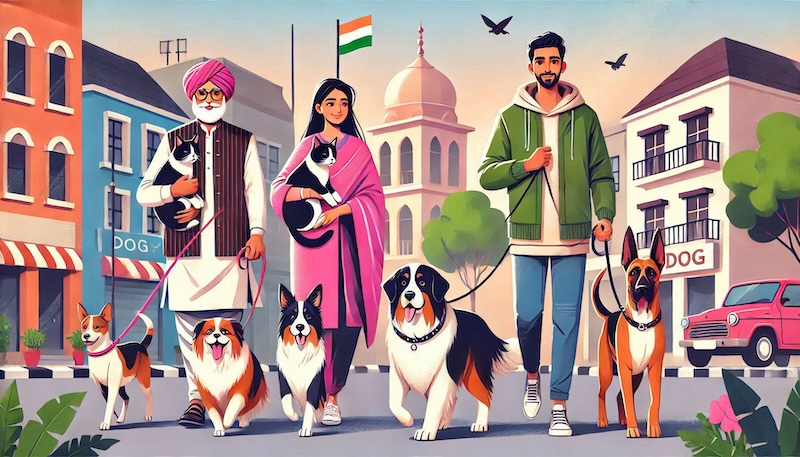
    MUMBAI: Indians are increasingly welcoming animals into their home. That’s something which is more than reflected in major metros and urban areas where you find pet owners walking their furry friends on the sidewalk at dusk or at dawn.

    A global pet parent survey by pet care and nutrition company Mars Petcare totally reaffirmed this. 20,000 pet (cats and dogs)  parents were contacted  – 1,000 of them from India – and two thirds of them expressed that their feline or canine companions  are the most important thing in their lives.

    For Gen Zs and millennials,  pets are companions who provide unconditional love, alleviate stress, and make great companions to bond with. More than 64 per cent of young dog owners and 60 per cent of young cat owners in India reported that their pets helped reduce stress and anxiety. These numbers reveal that pets are an integral part of their life. Pet adoption starts at least three months or younger, with 67 per cent of them being puppies and 70 per cent, kittens.
     
    The survey reveals that there’s still a journey ahead in raising awareness about adoption. Only six  per cent of puppies and four per cent of kittens are adopted from shelters, with 17 per cent of puppies and 10 per cent  of kittens being acquired through breeders and, maximum, through pet shops, with 23 per cent  of puppies and 19 per cent of kittens. This indicates a significant opportunity to promote adoption and responsible pet ownership, potentially leading to a more compassionate pet care culture in India.
     
    Mars Petcare India managing director Salil Murthy acknowledged that a new generation of Indian pet parents- especially young Indians-  are adopting pets in record numbers and are also prioritising the emotional and mental benefits these relationships bring. “At Mars Petcare, we are obsessed with pet parents and are always listening and learning from them. The Mars Global Pet Parent Study reflects our commitment to learn and share awareness about how pet ownership is evolving worldwide. It’s no longer ownership; it’s become a lifelong relationship. India is no different. Just as they care about their own health, Gen Z is equally committed to the health and nutrition of their pets,” he added. “We ensure every product in our portfolio provides 100 per cent complete and balanced nutrition wherever pets are. Beyond nutrition, we aim to ease pet parents’ challenges and build a better world for pets. Our initiatives like building better cities for pets, organising national adoption weekends, deploying mobile shelters across key metros, and partnering with animal welfare organisations in multiple cities are a testament to our commitment to this purpose.”

    Couple cuddling with their cats and dogs
     
    Globally, Mars Petcare’s survey revealed similar trends in pet ownership, with 56 per cent  of people worldwide identifying as pet parents, and nearly half of them being first-time owners. Around 37 per cent  of global pet parents view their pets as the most important thing in their life, showing that this deep bond between people and pets extends beyond borders. With insights like these, Mars Petcare continues to innovate and evolve its offerings to meet the needs of pet parents around the world.
     
    Conducted over 30 days in early 2024, Mars Petcare’s study surveyed 20,000 pet parents across 21 countries, including Canada, USA, Mexico, Brazil, Spain, UK, France, Germany, Italy, Poland, Turkey, South Africa, China, Thailand, Indonesia, Philippines, Japan, Australia, New Zealand, and India. This study—the largest of its kind—reveals how pets profoundly impact lives worldwide and the evolving priorities of today’s pet parents.

    Following are some of the highlights of the survey”
     
     Pet Ownership is Expanding and Evolving
    * Growing pet ownership globally: Over half (56 per cent) of respondents globally are pet parents;  47 per cent being first-time owners. In India, first-time pet parents rise to 69 per cent
    * Pet prioritisation: Gen Z and millennials lead a more emotional approach to pet ownership, with 47 per cent of global Gen Z dog owners and 43 per cent of cat owners saying their pets are “the most important part of their lives.” In India, this number is a remarkable 66 per cent for dog and cat owners.
    * Younger pets for younger generations: Globally, 70 per cent of puppy owners and 72 per cent of kitten owners are Gen Z or millennials, reflecting their desire to start early bonds. 

    Pet Parents’ Satisfaction and Challenges
    * High satisfaction with pets’ impact: Globally, 37 per cent of pet parents feel their pets are central to their lives, with India showing an even stronger bond at 68 per cent. Dog owners value unconditional love (42 per cent in India) and family completeness (40 per cent), while cat owners highlight entertainment (43 per cent) and stress relief (41 per cent).
    * Guilt around leaving pets alone: One-third of global dog owners (33 per cent) and 32 per cent  of Indian dog owners feel guilty about leaving pets alone. For cat owners, this rises to 38 per cent in India.
     
    Barriers to Pet Ownership and Pet Friendliness
    * Key barriers: Globally, challenges include unsuitable living conditions and the commitment level. In India, emotional pain from pet loss (23 per cent) is a top reason for not owning a dog, while living conditions and furniture concerns impact cat ownership.
    * Pet-friendliness of neighborhoods: While 42 per cent globally find their neighborhoods pet-friendly, India ranks higher, with 56 per cent viewing it positively. However, nine per cent of Indian respondents still hold negative sentiments about having pets in their neighborhood.
    * Pet adoption: Most pets are acquired through friends, family, or breeders, with minimal adoption rates. In India, 23 per cent of dogs and 19 per cent of cats come from pet shops, while adoption rates remain low at six per cent  for dogs and four per cent for cats.

  • News broadcasters finally surf the wave as Chennai drowns

    News broadcasters finally surf the wave as Chennai drowns

    MUMBAI: A natural disaster in Mumbai or Delhi even if not too severe in nature immediately gets the Indian broadcast news media in overdrive mode. “Breaking News” updates are pushed to the viewers every hour if not every few minutes. Everything else takes a backseat as television journalists and cameramen scamper through water or rubble… whatever the case may be.


    But sadly, only the Indian metros of Mumbai and Delhi command that kind of a clout from the Indian news channels, specially the English ones.


    As one of the most senior Indian journalists Rajdeep Sardesai recently said in a blog post, Indian news channels need to know that there is an India that exists beyond the Vindhyas.


    With incessant rains in Chennai over the last few weeks, the situation there is glum to say the least. However, English news channels have only just woken up to this natural disaster. It was only when news poured in of the Chennai airport shutting down due to water logging on the runway, did many realise the gravity of the situation down south.


    The natural calamity has left more than 250 people dead and thousands have been rendered homeless. 


    After waiting for some kind of push, news channels are now also participating in aiding the victims who have been stranded in the most inundated areas across the rain-battered Tamil Nadu. News channels are attempting to provide the nation with timely updates about the torrential rains of Chennai… albeit a tad too late in the day.


    In his blog, Sardesai discussed the issue and blamed the lack of coverage by national news channels on the tyranny of distance.” Since most national bureaus are located in Delhi, news around the national capital gains prominence than those in other parts of the country. According to him, the only solution behind this ignorance by the national media towards such a serious incident was by combining local and national content i.e by giving space to local news in the national news channels. “Maybe we need to have two national bureaus, one in Delhi and one south of the Vindhyas,” he suggested.

    News channels have evidently shown the divide between the coverage of news from the north to south of India. Indiantelevision.com tried to get hold of a few news channels that have invested some efforts in reporting the incident.


    Take a look…


    CNN-IBN


    CNN-IBN has sent two of their senior editors Karma Paljor and Shreya Dhoundial to cover the Chennai rains. The channel has also dispatched a group of five reporters who are there at the ground zero in Chennai. The other journalists on ground are Anna Isaac, Deepa Balakrishnan and Jude Sannith who are continuously bringing the latest update of the rains, the damage caused and the difficulties that the people of Chennai are facing.


    Speaking on the Chennai rains, CNN-IBN managing editor Radhakrishnan Nair said that the entire emphasis of the channel right now is on helping Chennai and connecting the needy and the good samaritans. He added that till normalcy is restored, CNN-IBN will keep the focus on ‘Help Chennai.’


    The channel has been flashing helpline numbers and email ids where people can contact for any kind of assistance. CNN-IBN has tied up with Twitter for people to reach out to their loved ones in Chennai and those who are looking for help. Their social media handles are also posting regular updates about the rains and regarding all the help that can be provided to the people stranded in the city.


    India TV


    The news channel has deployed three senior reporters covering the floods extensively in Tamil Nadu, which includes the bureau chiefs from Hyderabad and Bangalore and a senior defence correspondent from Delhi. Apart from this, the channel is continuously getting information and news from their local stringer network.


    India TV is also carrying out continuous coverage with regular updates on rescue operations, updates from the MET Department, Indian Army, NDRF and from government officials. The channel is covering the floods by way of regular and special programmes in a bid to inform viewers about the situation in Tamil Nadu. The channel’s correspondents, along with the rescue teams are going on aerial surveys to show the extent of devastation and the ground realities.


    NDTV 24×7


    The channel has its resident editor – South Uma Sudhir in Chennai from the day Tamil Nadu was hit by the torrential rains. The channel has also deployed five reporters to cover the entire incident.


    “The Chennai Floods have been NDTV’s main focus since the time the state was hit by the natural calamity and still remains the focus of all our bulletins, including prime time programming, both Left, Right and Centre and The Buck Stops Here have done Chennai related stories. We are also passing on all requests for help to relief officials,” informs NDTV 24×7 managing editor Manika Ahirwal Raikwar.


    Times Now


    Times Now has its senior editor Vivek Narayan spearheading the coverage in Chennai. The channel has also sent a team of eight reporters covering and reporting minute details about the situation in Chennai. The reporters are spread across the city, reporting from districts like Thiruvallur and Cuddalore.


    Additionally, the reporters are also trying to get messages of distress across to the relief teams in a bid to salvage the situation. The channel has also tied up with Twitter and leading news portal of south India News Minute to ensure that these messages reach officials as quickly as possible. “Times Now has been broadcasting non-stop coverage of the situation and has dedicated several hours of programming to the floods in Tamil Nadu,” adds a senior spokesperson from Times Network.


    As Sardesai rightly points out, hopefully such situations wouldn’t take a flood for national media channels to discover the India that exists beyond the Vindhyas. The entire nation hopes that this geographical division would not affect our motherland in the future.

  • News channels record increase in OTS in metros

    News channels record increase in OTS in metros

    MUMBAI: Connectivity of a television channel is something that every executive is concerned about in the industry – whether in the media or broadcast sector or cable TV. And pioneering this data and analytics information is Delhi-based Chrome Data & Analytics which keeps a tab on around 73 million TV homes nationally in analogue cable TV, digital cable TV and DTH.

    We take a look at what the opportunity to see (OTS) was for various television genres and channels in week 48 of the year. It appears it was a week of the news channels, both business and general English news, as far as the eight metros are concerned.

    The reach of English news channels grew by 1.5 per cent and business news channels witnessed a 1.1 per cent gain. However, the English entertainment channels in the eight metros witnessed a drop of 0.3 per cent while the English movie channels saw a 0.6 per cent rise.

    Tarun Tejpal’s alleged misconduct with a journalist colleague in an elevator in a five star hotel in Goa, raised not only eyebrows of most urban Indians but also their interest as they tuned into news channels to catch up on the latest with the iconoclastic senior scribe.

    Hindi GECs in the Hindi speaking markets (HSM) saw a drop of 0.9 per cent, while Hindi movies and Hindi news dropped by 0.1 per cent and 0.8 per cent respectively. Only the religious channels saw a 1.4 per cent increase in HSM.

    The all India performance of sports and infotainment channels dipped in week 48. While sports recorded a one per cent drop, infotainment witnessed 2.6 per cent shaving respectively. Only the position of the kids’ channels in the all India market remained stable.


    The top Hindi GEC channel in HSM was Star Plus with a 97.8 per cent OTS. Zee TV and Colors were not too far behind with 97.4 per cent and 97.3 per cent OTS respectively. Life OK lagged behind in the race with 94.9 per cent OTS.

    Amongst the Hindi movie channels in HSM, Star Gold was the biggest gainer with 96.7 per cent OTS, while UTV Movies lagged at 88.8 per cent.

    ABP News was the leader in the Hindi News genre with an OTS of 93.2 per cent. And with 88.9 per cent, CNN-IBN was leading in the English news genre in eight metros, while CNBC Awaaz topped in the business news genre.

    Undoubtedly, it has been an interesting week for the channels. Let’s wait and watch how things unfold for the channels in the coming week.

    Click here for the full analysis

  • Grazing Goat Pictures looks at digital pastures

    Grazing Goat Pictures looks at digital pastures

    MUMBAI: To keep up with the age of contemporary advances, Akshay Kumar and Ashvini Yardi’s production banner Grazing Goat Pictures recently launched ‘Grazing Goat Digital’. The first venture to emerge is the YouTube channel ‘FOMO Fashion On My Own’, India’s first Hindi fashion channel which lets trend-conscious women transform into a glamorous avatar without having to step into a salon.

    The fashion channel will cater to women aged between 15 and 34 and will provide them with the latest trends, tips and tricks of the fashion trade. The channel broadcasts step-by-step tutorials on such subjects as hair styling tips, make up tutorials, getting the look of your favourite celebs and more. The channel will be broadcasting videos in Hindi and English, and will upload new episodes every Monday.

    Commenting on the launch of their new digital channel, Grazing Goat Pictures co-founder Ashvini Yardi said, “Grazing Goat Digital is proud to present FOMO Fashion On My Own, India’s first Hindi fashion channel in association with YouTube, targeted at women not only in metros but even in smaller towns who have the fashion sense but not the required facilities at their disposal. FOMO will be catered in Hindi to reach a wider audience and will also available in English. It’s not very cost effective for women to visit a salon each time they desire a particular look hence they can watch it anywhere at any time and still manage to look a million bucks!”

  • Radio listenership growth slowing down in metros

    The message is loud and clear: growth of radio listenership in the two metros of Mumbai and Kolkata is slowing down. Even Delhi is seeing single-digit growth.

    Mumbai has seen a marginal 0.7 per cent quarter-on-quarter rise at 5 million while Kolkata grew 1.14 per cent at 4.24 million.

    Delhi beat this trend with listenership jumping 8.1 per cent to stand at 6.23 million.

    This is the latest findings of the Media Research Users Council (MRUC) commissioned Indian Listenership Track (ILT).

    The MRUC listenership data takes into account the age group above 12 years. The field work was conducted between 17 February and 28 April, 2007, covering a sample size of 4500 in each metro. The research firm uses the day-after-recall (DAR) method.

    What is particularly disturbing is that listenership is tending to stagnate in the advertisement-rich market of Mumbai. FM radio operators promote their stations heavily in the Mumbai market.

    Radio Mirchi Deputy CEO Prashant Panday contributes the overall slowdown to the absence of differentiated content. “The listeners can not differentiate one radio channel from the other. There is need for us to provide them with a varied programme mix. Niche radio station is required to widen the listenership base.”

    Agrees Red FM COO Abraham Thomas, “Segmentation of content is the only solution for speeding up listenership growth.”

    AC Nielson director client service ND Badrinath, however, attributes the slow growth to no adequate efforts from radio broadcasters to ‘shake up.’ He explains ‘shaking up’ as aggressive marketing and brand promotion. This is despite new players entering into the marketplace, he adds.

    How the players stack up?

    In Mumbai and Delhi, the big gainers are Radio City 91.1 FM and Radio One 94.3 FM. While Radio City has seen a 19 per cent quarter-on-quarter rise of listeners in Mumbai and 3.6 per cent in Delhi, Radio One’s listenership has gone up 23.8 per cent and 10.7 per cent in these two metros. Both these broadcasters have no operations in Kolkata.

    “Despite having no marketing actvities, our growth is relatively stronger. After the shift of Radio One’s frequency, there was a huge set back in our listenership. But we have come back,” says Radio One VP programming and brand Vishnu Athreya.

    Radio Mirchi, however, stays at the top. In Delhi it has 3.65 million listeners. Red FM lags behind at 2.11 million while Radio City is at 1.66 million.

    The gap is narrower in Mumbai with Radio Mirchi having 1.97 million listeners followed by Radio City at 1.85 million.

    Radio Mirchi, however, has lost a good amount of listenership in Mumbai and Kolkata. The number of Radio Mirchi listerners in Mumbai declined from 2.23 million to 1.97 million (11.73 per cent fall). In Kolkata, Radio Mirchi lost 16.94 per cent from 2.53 million to 2.10 million listeners. But in Delhi it has achieved a growth of 4.5 per cent.

    Admits Panday, “We have recognised the decline, but we never look at a single city data. We are the largest network and with the widest coverage. One reason for the dip could have been because we overplayed on cricket during the World Cup. Nobody was really interested after India’s exit. Listeners basically want music from FM stations.”

    Big 92.7 FM, a late entrant, has something to cheer about in Mumbai with a quarter-on-quarter growth of 31.1 per cent (1.22 million). But the disturbing trend is in Delhi and Kolkata where it has slipped by 8.2 per cent and 14.5 per cent respectively, according to the ILT data. Delhi, in fact, is one market where it has still to make a major impact with 0.6 million listeners.

    Big FM COO Tarun Katial dismisses such conclusions, “I am not aware of any such data. We do not subscribe to MRUC. I am waiting for the RAM ratings from TAM Media Research which will use the diary method. Only then we will get a clear picture.”

    A big gainer in the Delhi market has been Red 93.5 FM which has seen a 17.5 per cent rise. While in Mumbai it has gone up 8 per cent (1.56 million), it has shed 1.4 per cent in Kolkata.

    Industry observers, however, feel that this may be a temporary setback. Listenership can expand in the three metros with heavy marketing, they say.

    And many, like Katial, are waiting for the diary radio measurement system before they come to any hasty conclusions. Till then, they would like to believe that they are growing radio listenership in the three metros.

  • Trai rejects MSO plea for a la carte rates for new pay channels

    Trai rejects MSO plea for a la carte rates for new pay channels

    MUMBAI: The cable and broadcast regulator has rejected a proposal from the MSO Alliance that would have required broadcasters to offer new pay channels only as individual channels (a la carte).

    The Telecom Regulatory Authority of India (Trai), in its order issued today, noted that “there have been developments in the area of DTH in terms of likelihood of a competing operator and the decision of the Delhi High Court on implementation of CAS in the Metros of Delhi, Mumbai and Kolkata.” In the light of these developments Trai has come to the conclusion that the proposal to provide for new pay channels only as individual channel WOULD NOT lead to better consumer choice in the absence of addressability at the consumer end. Trai has decided that the only amendment that is required in the Tariff Order of 1 October 2004, is to provide for a framework to benchmark the prices of new pay channels.

    Accordingly, Trai has added a new section 3B to the 1 october 2004 order stating that in determining the similarity of rates of similar channels while benchmarking the price of a new pay channel, the factors such as the genre and language of the new pay channel /converted FTA to pay channel, range of prices ascribed to the channel of similar genre and language in the price of bouquets that existed on 26.12.2003, range of prices of individual channels of similar 
    genre and language as existing in CAS areas would be taken into account.