Tag: MeToo

  • Titus Upputuru’s short film shines bright at Indian Cine Film Festival 2022

    Titus Upputuru’s short film shines bright at Indian Cine Film Festival 2022

    MUMBAI: “Nip in the bud”, a short film by the media conglomerate, Times Internet, has won big at the Indian Cine Film Festival. Written by famous adman, Titus Upputuru, it has been awarded the Best Screenplay award and the Best Public Service award at the event.

    Titus is the man behind the screenplay and has also directed the film. Elaborating on the win, The Titus Upputuru Company founder and chief creative officer Titus said, “Wow, I am so thrilled! I thank God for these awards and dedicate them to every voice that had the courage to share the abuse that happened at their workplaces. I am also glad that a film like this has been recognized and awarded at so many award shows as I believe that voices like these influence, inspire and contribute towards rooting out this very diabolic, sickening culture from our society.”

    The film opens on a young girl weeping profusely and with a determined look, she knows what she wants to do. The very fact that her business role model, a business tycoon, tried to get awkwardly close to her, breaks her apart. But it obviously doesn’t break her confidence and grit to make sure that the world knows about his misdeeds – she walks into a café and pens a note on social media to share the horrific experience. The film takes a twist when we see the post being read by a woman, realising to her horror that it was the same man who abused her years ago. A photograph on the mantle reveals that the two women were related and happen to be mother and daughter. The film ends with the message ‘If you are delaying, you may be encouraging’.

    For the record, “Nip in the Bud” also won the prestigious DadaSaheb Phalke Award earlier this year.

  • #MeToo: Taproot Dentsu & iDiva pay ode to the movement

    #MeToo: Taproot Dentsu & iDiva pay ode to the movement

    NEW DELHI: What started as an  exposé on the predatory behaviour of Hollywood film mogul Harvey Weinstein became a global movement as women took to social media to share their experiences of being sexually harassed with the hashtag 'Me Too'. The movement took the world by storm, with the hashtag acquiring different forms and meanings in different places; but the essence of the stories being told held a common note – of men in positions of power or trust, wielding their influence to take advantage of women and, in some cases, other men.

    The movement highlighted how the culture of silence and complicity perpetuated a highly toxic and exploitative system where victims of molestation were afraid to come forward. ‘Me Too’ not only encouraged women to break this vice of silence, it also helped them heal and overcome.

    Now, Taproot dentsu and women’s lifestyle community iDiva have come together to pay ode to the #MeToo movement through a powerful film that puts the spotlight on the conundrum of reporting abuse.

    Read more news on Taproot Dentsu

    The digital film titled Nip in the Bud shows an aspiring young woman, fresh out of college, going to meet a powerful tycoon. Her interactions with him quickly go awry as he intrudes into her personal space. The young woman initially gives him the benefit of doubt – perhaps he was treating her like his daughter. Until he crosses the line of propriety and begins to touch her inappropriately in earnest. When she puts a stop to this and attempts to leave, much to her dismay, he threatens that she would not make a career with this kind of attitude. The young woman goes into a café and tweets about the horrible experience. Here’s where the story takes a turn. Her tweet is read by a woman, who realises with horror that it was the same man who abused her years ago. In the end, the camera pans to show a photograph on the mantle where we see that the two women happen to be mother and daughter.

    Taproot Dentsu Gurgaon creative head Titus Upputuru said about the film: “It wasn’t an easy subject. One had to keep in mind the sensitivities involved. What happens between a man and a woman within the confines of a professional environment is between them. There are no witnesses. There are no cameras. Nip in the Bud is a tribute to every single woman who had the courage to speak about what happened in a moment where there was no one to corroborate the story.”

    Upputuru, who is also the writer and director of this riveting film, went on to say: “Unfortunately, many women took years to report and this allowed the men concerned to continue with the predatory behaviour. Hope this digital film inspires women across the world to nip it in the bud.”

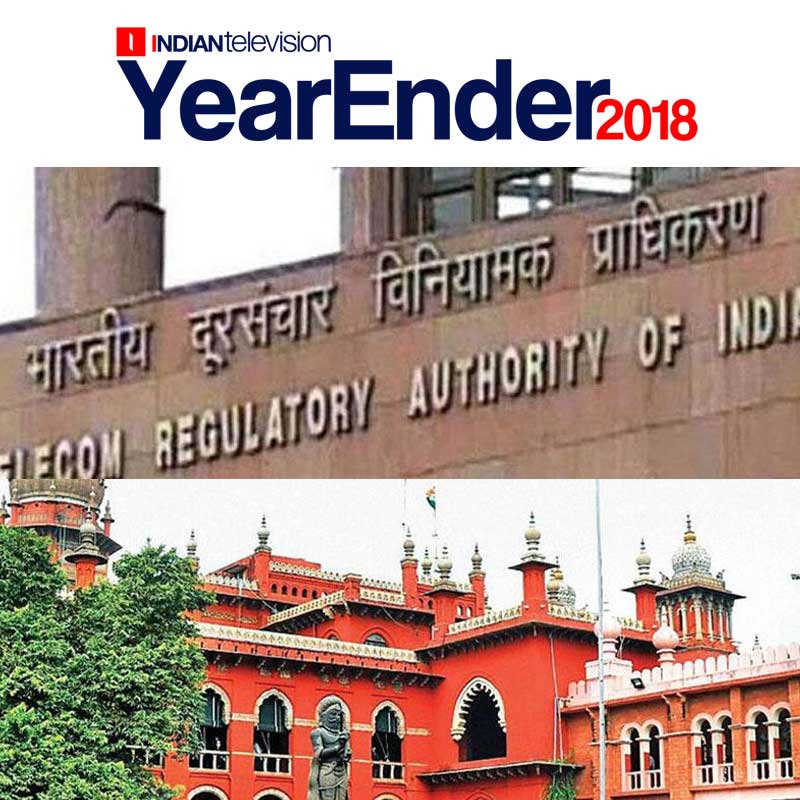
  • A year when OTT onward march & TRAI tariff issue hogged limelight

    A year when OTT onward march & TRAI tariff issue hogged limelight

    MUMBAI: 2018 could have been easily dubbed as the Indian year digital or OTT, with its chaotic growth continuing and multi-million dollars being poured into programming by global and local players, however, the new tariff and regulatory regime for the broadcast and cable sector occupied as much mind space.

    Though these are early days for a sure shot business model for digital space emerging as players continue to experiment with AVOD, SVOD and combination of several other models, there’s no denying OTT has more than a foot inside the door in India.  

    According to a report by market research firm Media Partners Asia, online video revenue, comprising net ad spend and subscription fees, will grow at an 18 per cent CAGR across Asia Pacific between 2018 and 2023, climbing from $21 billion 2018 to $48 billion by 2023. While China will account for the lion’s share of industry value, with more than 60 per cent of Asia Pacific online video revenue and more than 75 per cent of direct-to-consumer SVOD subs by 2023, other big markets by revenue would include India, Japan, Australia, Korea and Taiwan.

    So, though traditional pay TV is not dead yet and will continue to grow in India as the saturation point is still far from over (BARC India estimates there are about 197 million TV homes in India over 100 million still to be covered), traditional media players have realised OTT and other forms of digital delivery of video — professional or user generated — will continue to grow and put pressures on ARPUs and other numbers as more Indians take to smartphones and devises with broadband infrastructure slowly improving and cost of data plummeting in the short term.

    The inroads into India in 2018 made by Chinese mobile companies have been impressive while raising fears of tracking and data misuse too.

    “With 160 million shipments of smartphones in 2019, apart from being the only market to grow in this sector, India will also be the most potential market for global content creators,” Zeel MD Punit Goenka tweeted last week. This observation is testimony to traditional media players waking up to the competition from OTT platforms for eyeballs.

    The growth of online platforms also means the continued search for both original and library content too will grow as it did in 2018. Not only global players like Netflix and Amazon announced big-budget investment in original content starring leading Hindi film stars like Shah Rukh Khan and Saif Ali Khan, local companies too have upped the ante realising the potential of the digital space. Star India’s digital arm Hotstar claimed 100 million viewers for the IPL cricket and ZEE5 has come out with some refreshing non-fictional programming.

    If online video distribution is growing in India, so has the demand for content regulation. Even as Indian policy-makers struggle to understand the business model(s) for digital players, the cry for regulation to suit Indian sensibilities (or lack of it) too has increased. Netflix Indian original Sacred Games is still fighting out a legal case, while informal warnings have gone to other Indian OTT platform too to tone down edgy programming being streamed.

    Bouncing amongst several government organisations (MIB, TRAI and Meity), the issue of online content regulation was a hotly debated topic in India with a large section of the industry pushing for self-regulation like those prevailing for TV content.

    If not in 2018, some sort of content regulation for online video will definitely come. The only thing that matters is whether in 2018 or it will be post general election in 2019.

    The action in the online video segment and its delivery mode was catalysed by the arrival of Reliance Jio that has expanded from just being a player to becoming a behemoth in a short period of time, handing out services at comparatively low prices. The rollout of Jio Giga fibre network in 2018 has sharply woken up legacy distribution players, including telcos who went on a partnership spree to source content.   

    And, if the regulators in India struggled with the issue of online  content, TRAI’s new tariff regime, proposed first quarter 2017, continued to cast a shadow in 2018 with confusion relating to some aspects (like a 15 per cent cap on discounts to consumers for TV channels) lingering on like a unfinished record playing out discordant notes. While TRAI has sought clarification from the Supreme Court on the discount issue (the next hearing is sometimes in January 2019), it has simultaneously cracked the whip on broadcasters and distribution platforms to fall in line with its new tariff regime by end of the present year.

    The formulation of a new telecom policy or the National Digital Communication Policy 2018 could also be said to be a milestone as India stopped just short of creating a mega communications regulator overseeing the realms of TV broadcast, online and telecoms, depending on having increased synergies amongst these segments and their regulatory regimes.

    Increased mergers & acquisitions seen in 2018 would continue consolidating the market and players. But such activities also raised doubts on possible creation of monopolies. Disney takeover of most of the media businesses of Rupert Murdoch’s 21st Century Fox, including Asia biggie Star, played out in India too even as Mukesh Ambani’s Reliance Industries and its various arms went on a shopping spree buying sizable stakes in content makers (Balaji Telefilms, Eros, for example), distribution platforms (Hathway, DEN Networks) and other media assets. That Subhash Chandra-founded Zee too is looking for an investor spiced up the mergers and acquisitions space.

    Channels continued to be launched in 2018 with almost all networks rolling out new offerings in regional languages – a trend which began over 2016 and 2017. Colors Tamil, Sony Marathi, Star Sports 3, Zee Keralam were unfurled for viewers by the major players. What's keeping broadcasters buoyant is the annual expansion in advertising continues unabated at about nine to 10 per cent annually. 

    While legacy media players (like cable TV, MSOs/LCOs, DTH) in India have started a fight for survival and improved bottomlines in the aftermath of online’s growth, the #MeToo effect in 2018 did not leave the media and entertainment untouched.

    Though #MeToo in 2018 more impacted the advertising and film segments with some big names becoming casualties, the ripple effect in the broadcast sector was low. But the movement has opened up a can of worms in the Indian media, entertainment and advertising segments.

    The industry is on tenterhooks in an election year, wondering whether the BJP or NDA will make a comeback in April-May 2019 or yield to the Congress. Will the policy regime continue or will there be changes? These are questions that seem to be creasing many a brow. 

    But on the whole, will the trends continue in 2019? Of course, yes as it too promises to be quite a roller-coaster.