Tag: metaverse

  • XP&D, Zoo Media, and Noesis.tech launch web3.0 platform ‘xp&adland’

    XP&D, Zoo Media, and Noesis.tech launch web3.0 platform ‘xp&adland’

    MUMBAI: XP&D, Zoo Media & Noesis.tech have launched on Wednesday xp&dland, a next-generation platform for brands on the metaverse.

    xp&dland will enable web3.0 strategies for brands and look at evangelizing communities and companies from the real or web2.0 world to pivot to the metaverse, for their product showcases, events, and activations.

    The xp&dland platform is focusing on building the O2O2M (Offline ⇋ Online ⇋ Metaverse) consumer experiences for brands. This platform is using technology (Noesis. Tech) as a common enabler, building community strategies (Zoo Media), and enabling shared and social experiences for consumers (XP&D).

    xp&dland co-founder Sukrit Singh said, “Metaverse is said to be the next big technology platform and is expected to become an $800 billion market by 2024. It is expected to see the collision of three worlds – Web 2.0 (or the Mobile and social internet as we experience it today), Web 3.0 (powered by 5G, enhanced computing, and the blockchain), and Live Social and Shared experiences. With xp&dland, we want to harness this opportunity, by bringing together the best in each of these domains and giving brands the best opportunity to succeed in the Web3.0 world.”

    The initial focus of xp&dland is to build experiences for brands in the Metaverse and get consumers to interact with them. xp&dland is built on Spatial.io giving brands an opportunity to experience the metaverse firsthand. The motive is to build similar experiences for brands and bring communities from the real world (events & activations) and the web2.0 world to the Metaverse.

    Elaborating on the past experience with brands testing the Metaverse space, xp&dland co-founder Pratik Gupta said, “Whilst these are very early days of the metaverse, we already have proof of concept. Our sports-focused vertical, TCM Platform has enabled over 70,000 people to enter the metaverse and interact with the Gujarat Titans during their logo launch. Our hypothesis of taking engaged communities and building long term web3.0 strategies has paid off and we have now launched the Titans Locker Room on Spatial where players such as Shubman Gill & Rashid Khan do live meet and greets with fans, we have the history of the franchise and are continuing to build on their success. We are confident of being the go-to web3.0 platform for brands given the diverse skill sets we all bring to the table.”

    The platform has curated a team of over 100 people, focused on delivering metaverse community strategies and outcomes for brands. The team includes animators, artists, developers, web3.0 planners, and community managers across Discord, Twitch & Reddit.

    xp&dland co-founder Siddharth Bhansali said, “We are in talks with all major platforms and marketplaces to collaborate. xp&dland will be platform-agnostic and will enable consumers and brands to play, socialize and transact in the metaverse world. Version 1.0 of xp&dland is built on Spatial.io. Currently, there are no barriers to experiencing xp&dland. It will be accessible on all devices including mobiles, tablets /devices, and wearables. We hope to change the landscape for brand marketing in times to come.”

    With its headquarters in the Metaverse and physical offices in Mumbai, Bengaluru, Gurgaon, Dubai, and New York. xp&dland plans to own and build spaces on all metaverse platforms, including Spatial, Decentraland, Sandbox, Roblox, Horizons, Mesh, and Alt VR among others.


  • There is a growing awareness of Metaverse and it is the future, reveals Wunderman Thompson Intelligence’s survey

    There is a growing awareness of Metaverse and it is the future, reveals Wunderman Thompson Intelligence’s survey

    Mumbai: There has been an increasing awareness of the metaverse recently. It was revealed in Wunderman Thompson Intelligence’s latest survey ‘New Realities: Into the Metaverse and Beyond’, that 76 per cent of people feel the metaverse will allow authentic self-expression and however, the market is becoming aware of the advantage of it.

    The survey shows brands and agencies a clear direction in a tech field where 74 per cent of people feel metaverse will be the future. The analysis presents a roadmap for adland which expands upon the groundbreaking into the metaverse study.

    Its 2022 metaverse survey ‘New Realities: Into the Metaverse and Beyond’ for which research was fielded in March – from over 3,000 people aged 16-65 in the US, UK and China – shows that awareness of the metaverse has more than doubled in less than a year. While less than a third (32 per cent ) had heard of the term in July 2021, by March 2022 almost three quarters (74 per cent) had heard of the term.

    Although awareness has increased, understanding remains low. The research also finds that there is a lack of clarity around what the term means, with only 15 per cent stating that they know what it is and can explain it to someone else.

    Despite being unable to explain the metaverse, consumers believe that it promises to impact our lives significantly and among those who know what the metaverse is, two-thirds believe it will be life-changing.

    Wunderman Thompson Intelligence’s global director and author of the report Emma Chiu said, “As ever-greater portions of our lives move into the virtual realm, it’s becoming increasingly clear that the metaverse will be instrumental in our collective future, with our follow-up survey uncovering widespread expectation that the metaverse heralds enormous changes to almost all industries.”

    Areas in which consumers are expecting to see innovation include entertainment where 90 per cent of respondents held this belief, followed by advertising and retail. Meanwhile, 85 per cent believe the metaverse will impact the fashion industry and also the world of work.

    With many still assessing the impact of new screen-based habits, alongside the continued blurring of the virtual and physical worlds, the latest, companion report includes fresh data and several other critical insights:

    • Retail brand analysis shows the development of digital and physical shopping alongside one another, sharing case studies including Nike in Roblox, Forever 21’s Shop City and Fred Segal’s Artcade.

    • The finance section of the report outlines the top banks, credit companies and crypto literacy projects along with research into the growth of virtual currencies. The outcome is that these currencies are becoming a significant economic force both for business and for countries as several get involved in experiments with nationally regulated crypto.

    • Health and Wellness shares insights into deepening connections between digital and physical care for bodily and mental health. Explore case studies from Sims to CVS.

    • Food brands have jumped into the metaverse with restaurants and beverage brands leveraging the link between food and social connection. From Coca-Cola’s Indian wedding to the Flyfish member’s only restaurant where NFTs are exchanged as verification, this sector shows real creative flair.

    Wunderman Thompson Global Chief Marketing and Growth Officer Naomi Troni said, “Brands must establish a roadmap for entry into the metaverse. However, there are concerns too around privacy, security, and safety.”

    “So, while our latest findings indicate almost limitless opportunities for brands — enabling them to re-imagine what their products, services and consumer engagement could and should look like – they must also enter this new world carefully,” she added.

  • Epic Games, WPP partner to accelerate innovation for clients in the metaverse

    Epic Games, WPP partner to accelerate innovation for clients in the metaverse

    MUMBAI: WPP and Fortnite developer Epic Games on Thursday announced a new partnership to deliver a new era of digital experiences for brands in the metaverse, according to a press statement.

    The partnership will include a new training program to upskill thousands of WPP creatives and technologists on how to create custom brand experiences in Fortnite, and how to use Unreal Engine for real-time 3D creation and virtual production. “This new metaverse curriculum will consist of three separate tracks for executives, creative practitioners, and media experts and strategists,” said the statement.  

    “Early to invest in the tools and talent needed to succeed in the metaverse, WPP believes that brands and creators have a tremendous opportunity to meet the need for connection and unlock unlimited creative potential within interactive virtual spaces. For brands embarking on this journey, success in the metaverse is dependent not only on creative excellence but deep production capabilities, sound strategies for amplifying digital experiences and expert knowledge of a complex online safety and privacy landscape,” it said.

    As a part of this partnership, WPP teams will work closely with experts at Epic to learn how to build next-generation interactive experiences leveraging Unreal Engine, an advanced real-time 3D creation tool used across a range of industries including games, film, architecture, fashion, automotive, music and live events.

    WPP teams will be able to take advantage of training and tools to create new experiences in Fortnite, where creators can build imaginative worlds for brands inside of one of the most globally popular online games.

    Earlier, WPP has collaborated with SuperAwesome, an Epic Games company, to produce innovative work such as the immersive Island built for Adidas in Fortnite for its Ozweego sneaker line.

    WPP will also work with SuperAwesome to deepen its understanding of online safety and privacy to help its campaigns engage younger audiences safely.

    WPP executive VP strategic partnerships Nilufar Fowler said, “We think of WPP as the creative transformation company, one that embraces new environments like the metaverse and sees the potential for clients. Epic’s technology is world-class, and we are delighted to partner with it to raise the bar for social experiences in virtual worlds on behalf of our clients.”

    Epic Games VP Metaverse development Matthew Henick said, “The collaboration between Epic, WPP, its clients and the creator community will accelerate the building of diverse social entertainment experiences that players across the world will love. This partnership with WPP bolsters our mission to educate more trailblazing brands and creators on how Epic’s tools across Fortnite, Unreal Engine, and 3D marketplaces like ArtStation and Sketchfab can be used to bring their metaverse visions to life.”

    This partnership follows WPP’s recent announcement of The Metaverse Foundry, a new global metaverse offering through Hogarth, its specialist creative content production company.

  • Colors adopts metaverse, launches 360-degree campaign for ‘Dance Deewane Juniors’

    Colors adopts metaverse, launches 360-degree campaign for ‘Dance Deewane Juniors’

    Mumbai: As the world goes digital, brands across domains follow the trend! Tapping into the trend Colors has developed a specially curated immersive, multichannel, and multiplatform digital and marketing campaign for its new kids’ dance reality show “Dance Deewane Juniors.” The show is set to premiere on 23 April at 9 p.m and will feature Neetu Kapoor, Nora Fatehi, and Marzi Pestonji as judges while Karan Kundrra will be the host.

    With this campaign, the channel, for the first time, will adopt metaverse technology for the show’s promotions. The plan will span across TV, print, OOH, radio, events, outdoor activations, digital and social media. Reinstating the show’s promise of ‘Deewangi More, Dance Hardcore,’ the channel has taken various steps to extend the deewangi for dance to its viewers and conduct activities in various markets backed by high-end technology.

    Colors aims to optimise the show’s reach by allowing viewers to interact with the judges and host through augmented reality, virtual integrations, and on-ground activations ahead of the launch. Further strengthening its digital realm, the channel has become the first general entertainment channel to enter the metaverse for the show’s promotions, said the statement.

    While for traditional mediums, a robust promotional outreach has been planned across platforms like TV, print, outdoor, radio, digital and social media, Colors has also leveraged different ways to expand its reach.

    Metaverse

    “Dance Deewane Juniors” is the first non-fiction show in India to have its metaverse. By clicking on the link https://ddj.v-verse.space/ the audience can take a virtual tour by entering the grand Metaverse Pathway. Before entering the metaverse, users can choose their avatar and indulge and experience various activities whilst in the chosen avatar. They can also experience the magnitude of the stage in a virtual format and participate in various activities like a photo booth, game zone, dance masterclass and watch shows’ behind-the-scenes within the metaverse.

    AR Dance with ‘Nora Challenge’

    The viewers across the key markets got an opportunity to shake a leg with judge Nora Fatehi through augmented reality. Nora was seen teaching dance moves of her popular tracks including the DDJ title track to the participants, followed by a Dance battle between her and the participants. The participants also received short videos of the activity to share and promote on social media. In some markets, the viewers also got a sweet surprise with host Karan Kundrra interacting live virtually with the participants.

    On-ground #KidsTakeOver

    In keeping with the theme of the show, various kids took to the streets of Mumbai and showcased their deewangi for dance. Unsuspecting passers-by at Carter Road were enthralled to see a dance flash mob of kids who set the promenade on fire with their hardcore dancing skills on Dance Deewane Juniors’ title track. This mob of kids then moved to Infinity Malad for another eye-catching performance. They were also spotted at various radio stations showcasing their passion for dance.  The activity will be amplified on various platforms.

    #NachoHardcoreChallenge for COLORS Golden Petal Club members

    Colors also gave a platform to the kids of the Colors Golden Petal Club (CGPC) members in select cities to showcase their Deewangi for Dance and win prizes. A fun-filled evening with a dance competition for kids and engagement games for their parents were hosted in Kanpur, Lucknow, Agra, Varanasi and Dehradun. Host Karan Kundrra also visited one of these markets to add to the excitement.

    Digital and influencer outreach

    Top influencers Sonali Bhadauria, Melvin Louis, Aakriti Sharma, Vedika Agarwal joined the judges Nora Fatehi, Marzi Pestonji and host Karan Kundra to dance to the hook step of Dance Deewane Juniors. A digital paid plan has been implemented on Facebook and Hotstar with placing spots in IPL matches along with mid-rolls on Jio, YouTube and Voot. Apart from this, interesting content around the show will be posted on Colors social media using baby filter, urban dictionary, comic style and reels.

    https://instagram.com/mridul_sharmaa?igshid=YmMyMTA2M2Y=

    https://instagram.com/shirin_sewani?igshid=YmMyMTA2M2Y=  

    Commenting on the campaign, Viacom 18 head of marketing and digital, Hindi mass entertainment, Sapangeet Rajwant said, “The marketing space has seen a dynamic and unprecedented shift in the recent past with ‘digital- first’ becoming the new mantra.  The advancement in technology has enabled brands to connect and communicate with our viewers across the country in real-time thus enhancing their reach manifolds. At Colors, we have always been at the forefront of innovating and tapping into newer avenues to put across our message and with Dance Deewane Juniors, we intended to design to build an immersive ecosystem in both online and offline mediums. Along with several other innovations, we have for the first time set foot in the metaverse arena by creating various virtual and experience-led touchpoints. We have mounted our campaign to bring alive the joy and excitement amongst the audience.”

  • Gubbare to premiere its first 3D show ‘Roro Aur Hero – Bhoot Mast Zabardast’

    Gubbare to premiere its first 3D show ‘Roro Aur Hero – Bhoot Mast Zabardast’

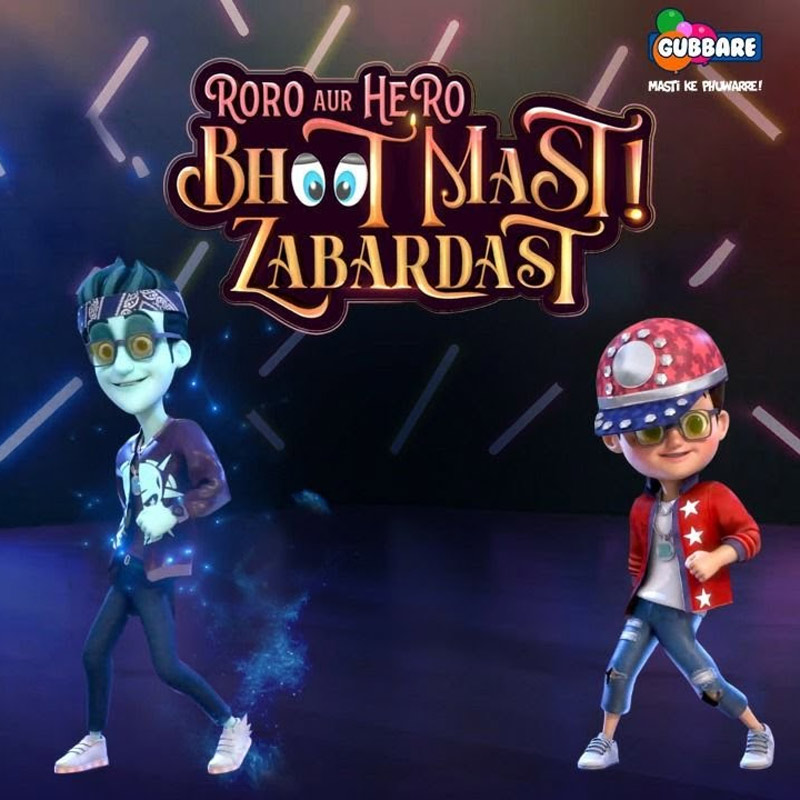
    Mumbai: As summer vacations are just around the corner, IN10 Media Network’s kids entertainment channel Gubbare is all set to launch an inventive and laughter-filled original. To entertain its target audience, the channel will present the premiere of its first 3D show “Roro Aur Hero – Bhoot Mast Zabardast.”

    The show will air everyday starting 24 April at 12 pm-5 pm on Gubbare in Hindi, English, Tamil, and Telugu.

    With the exclusive launch of the show, the channel will enter the metaverse to give children an experience to be part of the magical world. It will allow users to create virtual avatars and enter the space and enjoy the title song video along with show characters. The viewers can also engage with the show via special games, filters, and gifs created around the theme.

    Keeping in mind the changing content consumption pattern, the show will also be available on the network’s OTT platform Epic On.

    With this show, Gubbare forays into the naughty-magical-friend genre. The show revolves around a ten year old mischievous boy Roro and his twelve year old “ghost” friend Hero. As Roro attracts problems and gets into complex situations, Hero comes to his aid as a goofy saviour, who uses his powers to make things easier but instead makes the situations messier! The two come together as a ‘zabardast’ duo to get out of the chaos.

    Speaking about the show, Gubbare AVP-content Brian D’costa said, “After the launch of our first original, Akki Jaanbaaz, in the action genre, we wanted to strengthen our character-verse. “Roro Aur Hero – Bhoot Mast Zabardast” will be our first-ever 3D show that will add a new genre to our library. At Gubbare, we always try to raise the stakes.”

  • CAMM Summit 2022: ‘Ad-tech to allow brands to take control of consumer experience’

    CAMM Summit 2022: ‘Ad-tech to allow brands to take control of consumer experience’

    Mumbai: Facebook rebranded to Meta in October last year and threw the marketing world into a frenzy by coining a new buzzword ‘metaverse.’ Marketers are often quoted saying that technologies such as AR/VR, blockchain, cryptocurrency, non-fungible tokens (NFTs) will have a transformative effect on the advertising industry but the implementation of these technologies at scale still has ways to go.

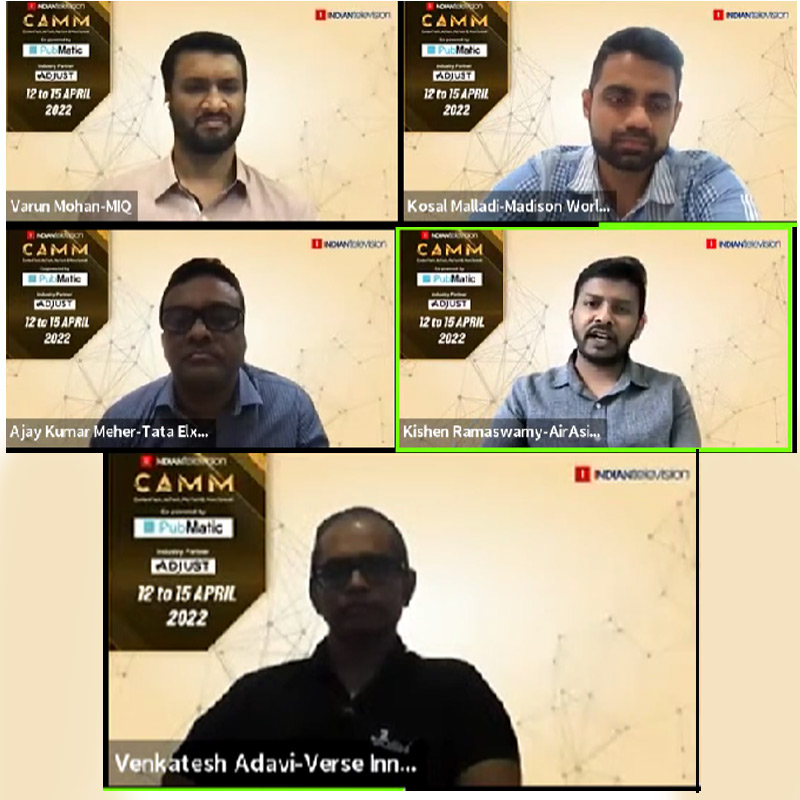
    “In digital media, we’ve been comfortable talking in terms of reach, frequency, leads but suddenly there is a challenge that we’re all facing,” said Madison World vice president Kosal Malladi during a panel discussion held recently. The discussion was on ‘new technology experiences in content-tech, ad-tech and mar-tech’ organised by IndianTelevision.com during its Content-Tech, Ad-Tech, Mar-Tech and More (CAMM) Summit and Exhibition 2022. The virtual event was co-presented by PubMatic and industry partner Adjust.

    The challenge we’re facing, explained Malladi, is that while there are a lot of people giving ‘gyaan’ about the metaverse, blockchain and everything associated with it, they don’t know how to implement it. “Adtech and martech is evolving so quickly that if we don’t keep pace with the change, we’ll become dinosaurs.”

    The discussion was joined by eminent marketers, technologists and media strategists including AsiaAsia India lead product marketing and brand communications Kishen Ramaswamy, Tata Elxsi global practice head for media and new media Ajay Kumar Meher, Verse Innovation vice president monetisation, growth strategy and partnerships Venkatesh Adavi and MIQ India and SAARC head of growth and revenue Varun Mohan.

    Starting off the discussion on the applications of blockchain technology, Tata Elxsi’s Ajay Kumar Meher said, “There are people who’re asking the fundamental question of what is the practical use of a blockchain.”

    “Blockchain is a shared immutable ledger,” he explained. “It is a process of recording transactions that is unchangeable. It also helps in tracking assets that may be digital assets such as NFTs. Should the asset only be digital in nature? Not necessarily. The sale of a house may be recorded and registered on a blockchain so that the owner can be defined. This would prevent the same property from being sold multiple times to different people.”

    In the media and entertainment industry, “blockchain can manage content micropayments. Suppose a broadcaster is buying the rights to a movie and an artist has recorded a song that is played in the movie, then that artist can be paid a specific micropayment every time the movie is played,” said Meher.

    He added, “If a content owner would like to sell the rights to his content to various stakeholders via the blockchain then he will be able to track whether the content is being used as stipulated in the agreement. Another level of usage are royalty payments where we can define all the stakeholders in the piece of content and precisely know what is to be paid for a particular usage.”

    “Artists who are creating a lot of digital assets may leverage NFTs to define their ownership of that asset,” Meher further said.

    Meher shared several use cases on how blockchain could be deployed in the media industry including creating a blockchain-based exchange between advertisers, agencies and publishers to measure exactly how many ads are displayed on the publisher side.

    “The wastage of media will be controlled with far more engagement opportunities unlocked by ad-tech,” remarked MiQ India and SAARC head of growth and revenue Varun Mohan. “Ad-tech will play a vital role on the measurement side. Today, If I take the FMCG category as an example, they are facing a lot of challenges in monitoring data that is coming from offline channels. With ad-tech, brands will take ownership of consumer behaviour and engagement via multiple touchpoints that will help them plan their media activation.”

    Next Verse Innovation’s Venkatesh Adavi spoke about the use cases for AR/VR in India. He said, “AR is quite ahead in terms of adoption compared to other technologies. It is being used by both people who consume content as well as marketers and media companies who want to talk about their brands and products.”

    He added, “VR still suffers from issues such as proliferation of equipment, bandwidth and network coverage that needs to be there to enable the ecosystem. There’s still some heavy lifting required in terms of development of VR content and from an access point of view.”

    “AR technology is growing fast as there is a processor and camera in everyone’s hand via the smartphone. What we see on short video app Josh is that users live creating content that can be layered on AR. Brands are also catching up. We get a lot of brands who want to create AR effects, so that they can be a part of the content that consumers create.

    “The holy grail of marketing is engagement and AR gives a canvas to marketers to enable their products to be utilised in the videos that consumers are creating. If millions of consumers create videos using brands’ AR effects, then you get so much earned media,” surmised Adavi.

    AirAsia’s Kishen Ramaswamy spoke about potential use cases of the metaverse in the airline industry. “Metaverse is a combination of AR/VR but with a real-world economic model. Today, in general, people are more open to having virtual meetings over physical ones, especially in the corporate segment. This opens up people to have experiences outside the workplace. That is important for us as a brand and we’ve been focusing on creating experiences that our audiences would appreciate,” Ramaswamy said.

    “For a first-time flier booking a ticket, checking-in and picking your seats can be an intimidating experience,” he stated. “Why not create a metaverse experience where our customers can explore doing those things and learning on their own. For a brand, it is an opportunity to show what they can expect. We expect this use case to become a reality in the near future.”  

    Watch the panel discussion here:

  • GUEST COLUMN: Film and TV revolution through NFTs and metaverse

    GUEST COLUMN: Film and TV revolution through NFTs and metaverse

    Mumbai: Technology and entertainment have historically gone hand in hand. For every new technology that came about, the world of entertainment has usually been at the forefront and adapted it to its advantage. Take the example of any technology in the past, starting from VCRs to DVDs to Blu Ray and now to 3D cameras, Imax cinemas; the entertainment industry has always made the best use of it.

    Today, as we see newer forms of technologies like NFT’s, blockchain and metaverse emerge, the entertainment space is already eyeing different ways how to make the optimum use of it. Ranging from sports collectibles to music collectibles, in-game purchases in video games and NFT sales rose to more than $17 billion globally in 2021.

    Bollywood and NFTs

    The Indian entertainment sector, too, has started to explore ways in which it can include these new, pathbreaking technologies. Given the connection that Indians share with Bollywood, it is no surprise that we have seen a lot of interest when it comes to collectibles featuring celebrities. Domestic marketplaces are turning over both physical and digital assets, and the collectors who are bidding for these assets are spending big.

    In terms of revolutionising the entertainment space, NFTs have allowed studios to find another avenue of monetisation. Big Budget films that are made for hundreds of crores, now have another way of recovering their costs by selling digital assets. Additionally, studios that have a ton of memorabilia from films that are a part of our social and cultural fabric, now have the option to convert these collectibles into NFTs and add another source of revenue to their existing models. Smaller films too have an additional avenue to recover costs through selling NFTs to fans. With NFTs, even smaller films that have a cult following can reap decent amounts of revenue.

    Bollywood enters metaverse

    There are many questions about the metaverse. Can things be worth anything in a virtual place that does not even exist in reality? While that can be said for social media as well, Bollywood has literally marked its territory in the metaverse. Producer VashuBhagnani’s Pooja Entertainment recently purchased virtual land on metaverse for $5,613. The production house is calling the space Poojaverse and it plans to provide users with a movie theatre-like experience. Another example is singer Daler Mehndi who bought land-titled ‘Balle Balle Land’ for an undisclosed amount. The singer plans to open an NFT store in the space where he plans to sell both digital art and merchandise as both virtual and digital products. Reportedly, the singer will have live concerts in the virtual space and even have interactive games.

    Another exercise of the entertainment industry’s tryst with metaverse is the ALTBalaji’s reality show titled “Lock Upp.” Even though it is using the metaverse as a way of marketing rather than being an actual metaverse based on a blockchain, it does have features where viewers can experience the unique world of the show, complete tasks, and win real money. With viewers always looking for a personal connection with celebrities, connecting with their favorite actors or artists in the metaverse becomes something very special for them.

    While NFTs are faring much better than the metaverse space, as technology evolves, the entertainment sector, like always, will not fail to take advantage of this unique opportunity and cash in on this revolution.

    (About Author: Abhayanand Singh is the Vistas Media Capital and Fantico group CEO and co-founder)

  • Haptik appoints Praful Krishna as chief product officer

    Haptik appoints Praful Krishna as chief product officer

    Mumbai: Jio Haptik Technologies, a conversational AI company and subsidiary of Reliance Jio Platforms has appointed Praful Krishna as its chief product officer (CPO). 

    In his new role at Haptik, Krishna will drive the transition of businesses from web to the conversation economy, resulting in significantly improved customer experience. “Krishna will spearhead Haptik’s strategic vision and be the driving force behind building the brand’s suite of products. He will also oversee product requirements, design, messaging, pricing, reliability, and customer engagement,” said the statement.

    “In addition to being an ex-entrepreneur, Praful has a proven record of success in both startups and large companies and his arrival marks a critical moment in Haptik’s growth journey,” said Haptik CEO and co-founder Aakrit Vaish. “I am confident that under his leadership, the product will be making even further strides in solving customers’ biggest pain points across the conversational commerce journey; and accelerate our journey towards becoming a global leader in the conversational AI economy.”

    Krishna comes with 20+ years of cross-functional experience in developing, digitising, marketing, and investing in AI and NLP-driven products at startups and Fortune 500s. He was previously founder & CEO at Coseer, a company helping data science teams in enterprises with intelligent process automation tools. Before entering the world of AI and products, he was at a hedge fund and a consultant with McKinsey & Company. 

    “I truly believe Haptik is poised to be a global leader in enabling conversational commerce for brands by meeting the user wherever they are – from metaverses to phone lines – and helping them throughout their journey – from acquisition to advocacy. It has already seen incredible momentum: not everyone can boast 500+ million users served with billions of interactions,” remarked Krishna.

    Krishna is an alumnus of IIT Bombay and Harvard Business School. Currently, he lives in San Francisco.

  • GUEST COLUMN: How will metaverse redefine the advertising industry?

    GUEST COLUMN: How will metaverse redefine the advertising industry?

    Mumbai: The recent advent of the metaverse—a continuous and virtual 3D world where users may interact with one another, hold meetings, and even shop for items—has been a popular topic of discussion in recent months. The opportunity for advertisers to target metaverse users with branded material and other sales strategies is evident.

    When it comes to advertising in the metaverse, immersion will be the key selling point. This implies that marketers will not only be able to provide better, broader, and more sophisticated branded experiences, but they will also be able to do it without appearing intrusive because customers will already be immersed in a virtual environment.

    But how will that manifest itself on a practical level?

    Brands should see the metaverse first and mainly as a new Advertising channel. The metaverse, like any other channel, will provide advertiser’s with unique chances that will lend themselves nicely to richer, more immersive narrative experiences. Advertisements in the metaverse have already taken on some common forms, such as product placement.

    Here are some instances of how brands may utilise the metaverse to advertise themselves:

    Characters and virtual real estate

    It’s understandable to wonder if businesses may own virtual real estate and have branded characters in the metaverse. This is how it might work: World of Virtual Reality, a company can purchase VR world for its specialty and incorporate a storefront / experience center for consumers to visit and shop, as well as an exercise space where people can compare items side by side. Many businesses have built branded characters and venues, as well as reproduced their services, within the virtual world. Interestingly, advertising has blended in seamlessly with surroundings.

    Avatars in metaverse

    When you first started using the internet, you probably came across avatars. They are virtual representations of our physical identities and may provide a great chance for advertising industry to establish its presence in the metaverse. Avatars are an essential component of the metaverse, and they would be crucial in a variety of metaverse advertising use cases. Once you’re able to totally immerse yourself in a world using your holographic glasses, your avatar will be the first ‘connection’ you’ll be able to wear and feel. Branded avatars, one of the most engaging and participatory methods to advertise a business, would play a significant role in upgrading your avatar’s appearance. In the future, businesses may give their new collections to customers virtually before they are released. It is easy to see the dual benefit of having avatars as tools for allowing customers to evaluate things.

    Massive Interactive Live Events (MILE)

    Massive Interactive Live Events, or MILEs, employ a single simulation to bring together a large number of participants on a single platform. Events are the next big thing that will provide chances for marketing in the metaverse. The power of live events is already being used by numerous businesses, but it has the potential to be taken to a whole new level in the metaverse. Events may be used to build interest in a product, market new products or services, and teach employees. Advertisers seeking to attract the attention of a large audience might utilise events to generate interest in new items that will be offered at a later date.

    Diversity and inclusion

    Finally, the most essential element influencing chances for metaverse advertising examples would be inclusion and diversity. These characteristics are critical to metaverse adoption since they not only provide a chance to get more users into the systems but also allow users to have a better understanding of who they are and how they interact with other users. As part of a wider campaign to promote the benefits of the metaverse among current users, these features must be reinforced through advertising possibilities. The metaverse, on the other hand, may enable companies to break through such barriers by allowing customers to construct their own experiences. Brands may seamlessly enter consumers’ metaverse experiences, making them feel connected.

    In the end, the metaverse provides a unique marketing platform. If the advertising industry can create an atmosphere in which people can engage with brands it will make their communications more real. This may lead to increased retail and other business development, as well as more interactions with customers when they are on-site. Brands may reach a worldwide audience for advertising objectives by using SL avatars and user-generated content. While the structure of SL and OS projects may not be as prominent in mainstream advertising as video or social networks, the metaverse is a perfect place for the advertising industry to experiment with new advertising strategies and concepts.
    However, every new marketing channel or technology has its own set of obstacles. So one should proceed with extreme caution when it comes to metaverse advertising. 

    (About Author: Arun Fernandes is the founder and CEO of Hotstuff Medialabs)

  • Nickelodeon’s metaverse twist to Kids’ Choice Awards 2021

    Nickelodeon’s metaverse twist to Kids’ Choice Awards 2021

    Mumbai: Viacom18’s kids channel Nickelodeon has announced the 2021 edition of Kids’ Choice Awards (KCA). Interestingly, the awards show will come to life in a screening at Decentraland, the place of the first ever metaverse concert. The voting for the awards commenced on 7 February.

    This innovative idea was conceptualised and crafted by Wavemaker India for Perfetti Van Melle India in partnership with Viacom18.

    The awards will be based on fun gaming themed night where Nicktoons will be seen  playing a lot of arcade games while also presenting awards to super stars and kids favorites like Badshaah, Deepika Padukone, Siddharth Malhotra, Sara Ali Khan, Kiara Advani, Rashmika Mandana and  influencers  like Anushka Sen and more. The event will also see olympians, paralympians amongst others being celebrated for their inspiring achievements. 

    Category first & insight-driven: Viacom18 kids cluster’s approach to marketing explained

    Along with the metaverse, the awards will witness the biggest simulcast this year across 14+ multiscreen platforms- on TV with Nick, Sonic, Nick HD+, Tata Play on Viacom18’s OTT platforms Voot, Voot Kids along with Jio TV and Jio TV+ and on digital platforms such as YouTube, Facebook and Instagram on 27 March 2022 at 8.30 p.m. The screening will allow users to create virtual avatars and experience the slime fountains, ride on the blimp and play fun games while being virtually immersed at the event, said the statement.

    Speaking on this creative theme, Viacom18 Hindi mass entertainment and kids TV network head Nina Elavia Jaipuria said that KCA reiterates the company’s commitment towards empowering and encouraging young audiences to voice their choice. “Nickelodeon has created new benchmarks for innovation in the category and KCA 2021 is all set to provide a seamless unified experience to consumers on a platform of their choice including the first ever metaverse screening in the category,” she added. 

    “Associating with a category first metaverse event allows us to augment our engagement with our audience, make it more meaningful and tech forward. In times when every child is engaging with a screen this clutter breaking association allows us to be ahead of the curve in striking a connection with families,” stated Perfetti Van Mell marketing director Rohit Kapoor.

    Speaking about the emerging trend of metaverse, Wavemaker India chief content officer Karthik Nagarajan said, “Content marketing on metaverse platform is the next wave in digital marketing. Our philosophy is to positively provoke our clients and create industry-first innovative work for our brands.”

    With several cutting-edge additions and pioneering initiatives, the run up to the seventh edition of the awards witnessed many ground-breaking influencer and digital outreach campaigns. 

    To fan the frenzy, the KCA gang of influencers engaged in conversation live on twitter spaces about their favourite nominees which included kid influencers, young adults, and mom bloggers such as Siddharth Nigam, Cahat Tewani and Saru Mukherjee to name a few.

    Pulling out all stops, KCA 2021 also curated a special treasure hunt for its fans on Instagram along with the KCA gang, to win special hampers and vouchers. Specially curated superfan contests and sessions entertained kids across Instagram and YouTube. Platform specific engagements across MX Taka Tak, Instagram and other short format content platforms encouraged young fans to groove to the KCA shake. 

    Taking the overall marketing initiative, a step forward, Nickelodeon exclusively partnered with 99 Pancakes to curate special limited edition meals. Through partnerships with Red Wolf and Nirula’s, KCA 2021 offered discounts to people who cast their votes.

    ​​​​​​