Tag: Meta

  • Mass layoffs undoubtedly tarnish a brand’s image

    Mass layoffs undoubtedly tarnish a brand’s image

    Mumbai: Seems like Elon Musk’s takeover of Twitter has proved to be ominous! Ever since the business tycoon took the reins of the social media company in his hands and sacked a hefty number of employees, the news hasn’t been too favourable for the workforce of most digital and information technology (IT) companies. Not that it was any better before that. The last three months have been exceptionally bleak for IT personnel in India and across the globe. In a conversation with Indiantelevision.com, industry experts gauge factors concerning brand image and brand trust in such a situation.

    To put things in perspective, as per Layoffs.fyi Tracker, around 787 companies across the world have let go of a total of 1,20,699 employees this year. Majority of them owe this to the global recession that the world is undergoing.

    Meta, which had employed 87,000 people across the globe as of September, has fired the most number of employees ever done by any organisation—it sacked more than 11,000 employees, which is about 13 per cent of the social media firm’s global task force. Its Indian counterpart was affected too. The company has also decided to freeze hiring until Q1’24. The company’s feeble Q3 performance and a rise in the overall costs of the firm by a fifth in the previous quarter made Meta CEO Mark Zuckerberg take such a step.

    After Musk stepped in at the helm of Twitter, he dismissed about 3,700 employees (including the top-level management of the firm), which amounts to about 50 per cent of the company’s overall working strength. The marketing and communications team of the social media company’s India bureau was shown the exit door; a total of 180 people were fired from the Indian office. Musk reasoned that he couldn’t let the firm lose four million dollars a day.

    Very recently, media and entertainment conglomerate Walt Disney announced a layoff as well as a freeze in its hiring process. The firm’s chief executive, Bob Chapek, made this decision as part of a cost-cutting measure as the firm’s streaming business goes through losses.

    Computer software major, Microsoft, fired around 1,000 employees across multiple divisions last month, owing to setting business priorities and making structural adjustments. According to some media reports, chip maker Intel, was also considering job cuts by 20 per cent in the previous month. The organisation went through a dip in sales and profits in its second quarter performance this year.

    Salesforce, an enterprise software company that had previously thought of sacking about 2,500 people, has let go of about 1,000 personnel. In what could be termed as a hypocritical scheme of events, edtech company Byju’s has fired about 2,500 employees in the name of cost-cutting and in turn hired one of the most expensive brand endorsers in the world, celebrity footballer Lionel Messi, for its social initiative.

    Unacademy, the SoftBank-backed edtech giant, laid off about 10 per cent of its workforce, or about 350 employees, in accordance with the current funding crisis that is being faced by start-ups.

    Udaan, a B2B e-commerce platform that raised $120 million last month, decided to forego hiring about 350 employees.

    Also, media reports suggest that Snap, the company that runs Snapchat, was considering downsizing its staff by 20 per cent, in August. This was due to the 80 per cent drop in its stock price this year.

    Affecting brand image

    Considering that these are not just sizeable firms but also successful brands in their respective domains, how does this chain of mass layoffs affect the brand image of these companies?

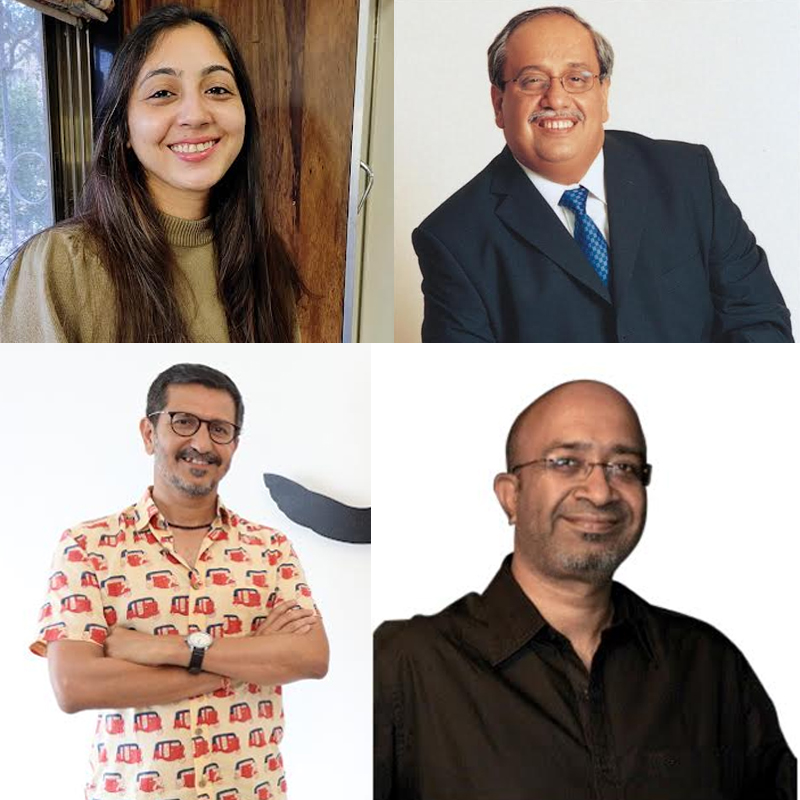
    Brand guru and Samsika Marketing Consultants founder, chairman & managing director Jagdeep Kapoor explains that every company represented by a brand has two types of customers. External customers who are consumers. Internal customers who are employees.

    “The brand’s image gets affected by both external customers (consumers) and internal customers (employees). Brands are built in the minds and hearts of customers. Any such large layoffs affect and shake hearts and minds, and hence the brand image does get affected,” he cites.

    He adds, “Ultimately, companies are showcased through brands, which are served by employees and consumed by consumers. This kind of ‘earthquake’ leads to a ‘shake’ of internal and external confidence and faith. Instead of the brand being in the ‘make’ mode, it goes into the ‘shake’ mode.”

    Sideways Consulting co-founder Abhijit Avasthi agrees that for certain brands, the image gets dented. “For the established tech companies, the consumer brand might not be affected that much, but the employer brand will take a beating for sure. For the newer ones, like the edtech ones, the consumer brand will suffer big time as well because it will raise questions about their ability to deliver the service well,” he points out.

    Communications consultancy, Treize Communications founder & CEO Sonam Shah believes that while this does affect the brand’s image to a certain extent, employees today are more accepting of the fact that they can lose their jobs at any time.

    She believes that if this is handled sensitively, the brand will not have a difficult time managing its public image. She goes on, “Public memory is short, and there is enough and more for the audience to read and talk about. Once people get new jobs and the situation gets better, the brand can work on reviving its brand image easily.”

    Advocacy platform, Socxo chief marketing officer Ajit Narayan, feels that the layoffs all around will have a negative buzz, as is natural. And these are not one or two but in thousands. “People will talk about it. For a while. But then, as with everything else, people’s memories are short. And life goes on as usual. Depending on the company and how they manage the situation. And if they do turn around. Then all will be forgotten,” he emphasises.

    He spells out, “The ‘be negative’ impact will be temporary. More like a setback. The ones that ease out of it better will be the ones that show empathy for those being told to go. And then there will be those who will be ego-driven. And if the turnaround does not bring results, they will carry the negative image with them.”

    Building trust

    By taking such harsh steps in terms of downsizing, how easy or difficult will it be for these firms to revive their brand name and build trust after being splashed about so negatively in the media and undoubtedly through word-of-mouth too?

    Avasthi is of the opinion that it will take a fair bit of time. “Companies very often confuse increasing awareness with trust. Big budget splashes can help you build awareness, but earning trust takes time and patience and consistently delivering the goods with integrity,” he reiterates.

    “Trust is another word for a brand. It takes decades to build brands and trust. It just takes a moment to let it slide. Building a brand or an organisation is difficult. Re-building it is even tougher because a lot of intangibles like feelings, emotions, and sentiments also need to be rebuilt, not only of internal and external customers but also of their families,” Kapoor highlights.

    On the contrary, Shah thinks, “It will not be a very difficult road, but a lot of this depends on the business model of the company and if the company needs to restructure its core offerings or work on escalating the current ones.”

    Narayan, too, thinks that this is a temporary phase, and most of the brands will come out of it over the next few quarters. “Also the market reality and future plans will have a major impact. There is a recession looming large, and this and other stories now will be washed away if that becomes a reality,” he specifies.

    Layoffs particularly in the digital and IT industry

    There is an economic recession across the globe, which has affected and continues to affect a lot of industries. Surprisingly, most of these layoffs seem to be happening in the digital and IT industries. What could be the reason behind this?

    Avasthi mentions that the reasons for the layoffs vary from company to company, so one can’t attribute them to any generic reason. However, he brings out, “Broadly speaking, for some of the newer venture capital (VC) funded startups, it’s simply because they were badly run businesses that were trying to move ahead of themselves—trying to do too much in too little time—chasing unrealistic, unsustainable growth. There is a sense of misplaced arrogance that some of the founders had; it’s catching up with them.”

    “For the big, established tech giants, I feel it’s another manifestation of insatiable capitalist greed. I can understand layoffs to save a sinking ship, but if you are sitting on billions of dollars, I can’t comprehend why it’s not okay to make a little less money for a few years and let people keep their livelihoods till optimal solutions are found. But then that’s a larger philosophical debate,” he expresses.

    According to Narayan, tech is the industry which has given large scale employment and also the large paychecks. “The industry has been driven by the scale and adoption idea and not profitability. To achieve scale and the speed at which it is being envisaged, it needs people. So they hired for scaling plans,” he brings out.

    Further, he points out, “The ‘what if’ of growth not leading to profitability had been discounted. And that is what is playing up as access to capital dries up. And demand for profitability goes up. Business is driven by profits. And the leaders of the business will have to keep that in focus as they run their businesses. Not just fancy talk of scale, growth, and adoption. This is the hard truth.”

    Shah sheds light on some facts – the layoff spree has been frequently happening within the start-up and tech space. There was a phase for a few years, pre-pandemic, where IT companies and even start-ups had a series of layoffs. Pink slips were shown to employees.

    She says, “The market and economic conditions are too dynamic for job stability, especially in the IT and tech sector. People who join here are aware of this. So what’s important here is how the process is executed and if all the HR policies and compensations are in place or not.”

    “These things have happened in many industries. But the service sector, which is dependent on people, gets affected and highlighted more. But these companies and brands will rebound back after a time lag. One will have to watch to see whether these companies and brands have a permanent layoff or just a time lag off,” Kapoor signs off.
  • Meta lays off 11,000 employees which equals 13% of its workforce

    Meta lays off 11,000 employees which equals 13% of its workforce

    Mumbai: Meta CEO Mark Zuckerberg has sacked about 11,000 employees, which is about 13 per cent of the company’s workforce.

    As per media reports, in an official statement, Zuckerberg said, “Today I’m sharing some of the most difficult changes we’ve made in Meta’s history. I’ve decided to reduce the size of our team by about 13 per cent and let more than 11,000 of our talented employees go. We are also taking a number of additional steps to become a leaner and more efficient company by cutting discretionary spending and extending our hiring freeze through Q1.”

    This is considered to be one of the largest layoffs in the US this year. As of September, Meta employed over 87,000 people across the globe.

    As stated in media reports, Zuckerberg informed employees on Tuesday about the job cuts. The social media company is looking at slashing costs after its feeble Q3 performance and due to the rise in the overall costs of the firm by a fifth in the previous quarter.

    He added, “I want to take accountability for these decisions and for how we got here. I know this is tough for everyone, and I’m especially sorry to those impacted.”

    This mass firing comes some weeks after one of Meta’s largest shareholders, Altimeter Capital, wrote to Zuckerberg highlighting the need to cut costs at the company.

    In an open letter, Altimeter Capital founder & CEO Brad Gerstner mentioned, “Meta has drifted into the land of excess—too many people, too many ideas, too little urgency. This lack of focus and fitness is obscured when growth is easy, but deadly when growth slows and technology changes.”

    He had suggested that Meta would have to cut jobs and reduce capital expenditure to stay on track. This comes at a time when the social media firm is struggling with the current economic slowdown.

    The social media company, Twitter, under the new reign of Elon Musk, laid off a hefty number of employees across its offices. Biggies like Amazon, Google, and Microsoft have also announced a freeze in hiring.

  • At ‘Creator Day’ in Delhi, Meta highlights its commitment to the Indian creator economy

    At ‘Creator Day’ in Delhi, Meta highlights its commitment to the Indian creator economy

    Mumbai: Meta (formerly Facebook) highlighted its commitment to creators in Delhi and across the country by organising its first ‘Creator Day’ in Delhi-NCR.

    ‘Creator Day’ is Meta’s annual flagship event to celebrate creators and provides an opportunity for them to create, collaborate, and learn from each other. The 2022 version of the event is unique because it took place across five cities: Mumbai, Hyderabad, Kolkata, Chennai, and Delhi, which was the city for the event finale. It is also the first time, at ‘Creator Day’, that Meta provided the fans an opportunity to meet and interact with creators – an engagement aimed at strengthening their relationship.

    In the run-up to the event, creators Komal Pandey, Saloni Gaur, Vishnu Kaushal, Sushant Divgikr, RJ Abhinav, Avneet Kaur, Aksh Baghla, Game Guru, and Shlok were ambassadors for ‘Creator Day,’ with them featuring on outdoor ads that were visible in different parts of the city. Over 350 creators finally attended the event and had the opportunity to sit through sessions on collaborating with each other in the best possible manner, on brand partnerships, and on inspirational creator growth stories.

    Meta highlighted the way creators from the north of India like RJ Karishma, Shubham Gour, Amulya Rattan, and Naveen Singh aka @bihariladka are pushing culture through their content and building loyal communities all through their content on reels.

    Facebook India (Meta) director & head of partnerships Manish Chopra said, “Young people across India, and what some call Bharat, are expressing themselves on reels and being discovered by audiences across the country. They’re becoming the new generation of creators, with a national following, in the process shaping culture and influencing trends. For this reason, we believe a key pillar of India’s new economy is going to be built and fuelled by creators. And with reels, everyone has a stage to be a global icon of tomorrow.”

    Actor Varun Dhawan was a part of the opening keynote, as he shared the way he’s inspired by creators as well. He said, “It’s impressive the way young people are showcasing their talent on reels, and how they’re breaking through every day, every moment. Being authentic and keeping experimenting is the best advice I can give creators. From Student of the Year to the upcoming Bhediya, these are two principles I’ve lived by and maybe that’s something you could follow too. I wish you the best in finding your own path and being advocates for your collective success. I’m glad Meta’s providing you with opportunities like Creator Day, and I’m happy I got to be a part of it too.”

  • Mark Zuckerberg expects Meta to return to healthier revenue growth trends next year

    Mark Zuckerberg expects Meta to return to healthier revenue growth trends next year

    Mumbai: In a conference call with analysts to discuss the third quarter 2022 results, Meta CEO Mark Zuckerberg said that in terms of the business, total revenue grew slightly this quarter on a constant currency basis. “We’re still behind where I think we should be, but we believe that we will return to healthier revenue growth trends next year. That said, it’s not clear that the economy has stabilised yet, so we’re planning our budget somewhat more conservatively.”

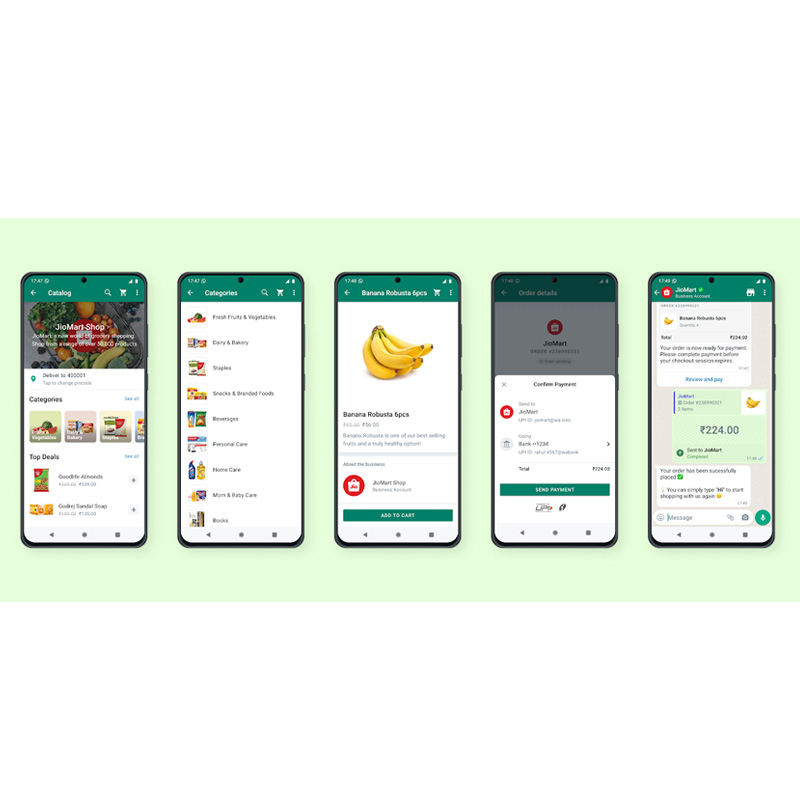
    He noted that the company in the quarter had launched JioMart on WhatsApp in India. “It’s our first end-to-end shopping experience that shows the potential for chat-based commerce through messaging.” He said that beyond Reels, messaging is another major monetisation opportunity. “Billions of people and millions of businesses use WhatsApp and Messenger every day, and we’re confident we can connect them in ways that create valuable experiences.”

    For the record, Meta’s share price fell by 20 per cent in after-hours trading after it reported its fourth straight quarterly decline in profit. Analysts want Meta to cut costs. Some analysts describe Meta’s investments as being confusing and confounding.

    Zuckerberg also said that Meta’s product trends look better than what the commentary that he has seen suggests.

    “Our community continued to grow this quarter. We now reach more than 3.7 billion people monthly across our family of apps. And while we continue to navigate some challenging dynamics—a volatile macroeconomy, increasing competition, ad signal loss, and growing costs from our long-term investments—Iq have to say that our product trends look better from what I see than some of the commentary I’ve seen suggests.”

    He said that three of the areas that Meta is very focused on are the AI discovery engine, the ads and business messaging platforms, and the future vision for the metaverse. “I believe the tougher prioritisation, discipline, and efficiency that we’re driving across the organisation will help us navigate the current environment and emerge an even stronger company.”

    Reels, which is its short-form video platform, continues to grow quickly across apps—both in production and consumption. “There are now more than 140 billion reels played across Facebook and Instagram each day. That’s a 50 per cent increase from six months ago. Reels are incremental to time spent on our apps. The trends look good here, and we believe that we’re gaining time spent on competitors like TikTok.”

    While analysts are unsure about whether the big bets on areas like the Metaverse will pay off, Zuckerberg expressed confidence in the work being done in the Metaverse space. “We just had our Connect conference and announced Quest Pro, which we just started shipping. It’s our new high-end VR headset that delivers high-resolution mixed reality so you can blend virtual objects into the physical environment around you. It’s pretty amazing when you see it, and it’s going to enable all kinds of new experiences in socializing, gaming, fitness, and work. I’m really looking forward to seeing what people build with this new capability.

    Working in the metaverse is a big theme for Quest Pro. There are 200 million people who get new PCs every year, mostly for work. Our goal for the Quest Pro line over the next several years is to enable more and more of these people to get their work done in virtual and mixed reality, eventually even better than they could on PCs.”

    He dwelt on the importance of partnerships. “To deliver a great work and productivity experience, I’m excited about the partnerships we announced with Microsoft bringing their suite of productivity and enterprise management services to Quest, Adobe and Autodesk bringing their creative tools, Zoom bringing their communication platform, Accenture building solutions for enterprises, and more.

    “There’s still a long road ahead to build the next computing platform, but we are clearly doing leading work here. This is a massive undertaking, and it’s often going to take a few versions of each product before they become mainstream. But I think our work is going to be of historic importance and create the foundation for an entirely new way that we will interact with each other and blend technology into our lives, as well as a foundation for the long term of our business.”

  • Tourism Australia’s new ad campaign invites India, the world to come and say G’day

    Tourism Australia’s new ad campaign invites India, the world to come and say G’day

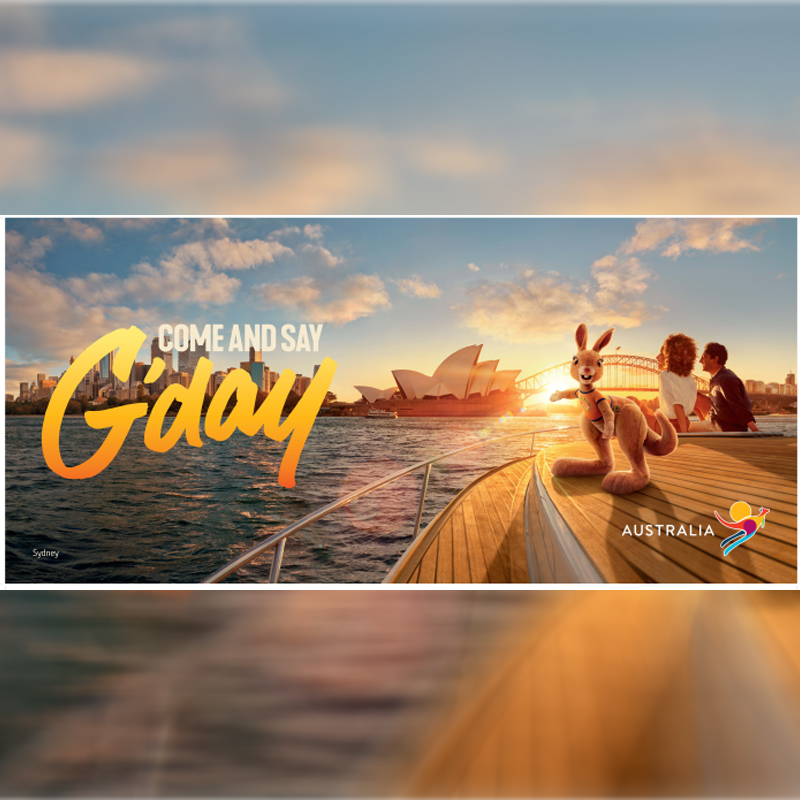
    Mumbai: With the Twenty20 World Cup currently taking place in Australia, the eyes of cricket fans in India are down under. Looking to capitalise on this momentum, Tourism Australia has created a live-action short film with CGI animated characters. The short film, G’day, is part of a new global tourism campaign inviting international travellers, including those in India, to come and say G’day, and plan and book an Australian adventure of their own. Directed by Australian director Michael Gracey (The Greatest Showman) and produced by Finch, G’day, the short film shows the unlikely adventure of a plush souvenir kangaroo named Ruby, voiced by Australian actor Rose Byrne, and a toy unicorn, Louie, voiced by actor Will Arnett.

    The short film follows Ruby and Louie as they ‘break out’ of a gift shop on the Great Barrier Reef and take an incredible adventure around Australia, visiting iconic sites including Sydney Harbour, Melbourne’s laneways, and stunning natural landscapes like Uluṟu and Nitmiluk Gorge. Along the way, they explore the magnitude of travel experiences Australia has to offer, connect with Australia’s Indigenous cultures, and learn why every great adventure starts with the unmistakably Aussie greeting, “G’day!”

    The campaign can be seen on YouTube, Meta’s properties Facebook and Instagram, and on other programmatic video platforms. The goal is to target high-yield travellers.  On 9 November, the campaign will launch on the OTT platform Disney+Hotstar for a one-month period. This deal could be extended. OOH and in-cinema advertising will also be used. Billboards across Mumbai, Delhi, and Bengaluru are being used. Print is also being used. For now, television is not being used.

    The campaign video is the first iteration of a campaign that will run for three years. In terms of marketing, 10 influencers from India have been taken down. They will see the India versus Pakistan clash on Sunday at the MCG and will partake in a variety of activities. They will create content around it for their followers to consume and promote Melbourne and Australia as a destination. Tourism Australia has also taken 20 travel agents to the country for the T20 World Cup. On the ground, there will be Ruby On Tour roadshows across seven cities in India next month and in December.

    The campaign video will be edited into nine minutes, one minute thirty seconds, and fifteen seconds. In some markets, like Japan, the campaign is being fine tuned through the use of local talent. Tourism Australia added that visitor arrivals from India have reached 86 per cent of pre-covid in the April-August 2022 period compared to the same period in 2019. The aim is to go to 100 per cent in the coming few months. Earlier, Tourism Australia had set a target of 18,000–20,000 visitor arrivals from the country to see the T20 World Cup. While the International Cricket Council (ICC) will officially reveal visitor figures at a later date, Tourism Australia is confident that its target will be achieved. The marketing programme is pretty robust, it added.

    In fact, visa processing is still going on for Indians who want to travel to see Sunday’s clash between archrivals India and Pakistan. In the long run, the goal is for one million Indians to visit Australia each year by 2030. For that to happen, direct aviation capacity will have to rise fourfold at least. In 2019, the number was 4,00,000. Moreover, since Australia re-opened its borders and commercial flights restarted, India has been the number two market. Earlier, it was number seven. Australia’s neighbouring country, New Zealand, is the number one market. Singapore, the UK, and the US round out the top five markets. China was earlier number one in terms of visitors to Australia, but it has been badly affected by the pandemic.

    Tourism Australia MD Phillipa Harrison said, “Come and Say G’day is unashamedly and unmistakably Australian. After a challenging time around the world, our uplifting and joyful campaign will stand out in what is a highly competitive international tourism market.”

    The campaign activity will be further amplified by partnership activity with airlines, state tourism organisations, and key distribution partners, including Thomas Cook, SOTC, PickYourTrail, and Kesari Tours, among others.

    G’day, Indigenous cultures and peoples are at the heart of the story, and their warmth can be felt throughout, explains tourism in Australia. The musical score, written by Australian composers Jonathan Dreyfus and Amy Andersen, features Indigenous Australian musicians including William Barton, Frank Yamma, the Marliya Gondwana Indigenous Girls Choir, and the Iwiri Choir. Notably, the film features a fresh new cover of the classic Aussie song Down Under, which was produced in collaboration with Men At Work’s Colin Hay for the campaign and film.

    Harrison concluded, “Another hero of the campaign is the remake of the Australian classic song Down Under by up-and-coming Australian band King Stingray, who sing in both English and Yolŋu Matha, an Indigenous language from northeast Arnhem Land in the Northern Territory.”

    Tourism Australia regional GM South, South East Asia Brent Anderson said, “ The campaign is a genuine, warm Aussie welcome. It is about how the world sees us. What is appealing about us? We did a huge amount of research during COVID. Ruby is an absolute icon that cannot be used by any other country in the world. She comes through really quickly in the advertising. India, among other South and Southeast Asian (SSEA) markets have been critical in Australia’s recovery and I’m really excited to reveal our new campaign to inspire even more Indian travellers to explore Australia. Through Ruby and Louie’s adventures, we are inviting travellers to Come and Say G’day – where they can build new authentic connections with friendly Australian locals and communities, our incredible nature, wildlife, islands and beaches, and enjoy our delicious food and drink. We are ready and can’t wait to welcome back our valued travellers from India. We are excited to announce that we have Qantas as our major airline partner across multiple markets, including here in India. You might see Ruby hopping on a Qantas plane in the near future.”

    With issues like stagflation, inflation, the Russia-Ukraine crisis, and interest rates going through the roof, the world is a bit messed up. The world is a strange place. It needs a bit of laughter, lightness, beautiful scenery, and wide open spaces. That is the result of research conducted. Tourism Australia, he explained, studied what people look for in a vacation. Therefore, in the campaign, one sees things like wide open spaces. He said the campaign also focuses on the indigeneous experience. He added that the reason why India is the fastest growing market for Tourism Australia is that the Indian team pushes hard. There is also healthy competition from the Singapore team.

    He also noted that the department of home affairs’ personalised and streamlined visa services offered for corporate incentive travel and the ICC’s official travel and hospitality agents will ensure sustained growth when it comes to MICE arrivals as well as for the on-going T20 World Cup. There has also been a tripling of direct aviation capacity. Besides India the other markets that Tourism Australia invests money in include Singapore, Malaysia, Indonesia, Japan, South Korea, Hong Kong, Germany, France, Italy, the UK, the US and New Zealand.

  • Concept Communication launches Avtr Meta Labs for genZ

    Concept Communication launches Avtr Meta Labs for genZ

    Mumbai: Concept Communication has announced the launch of India’s first content-driven meta influencer company Avtr Meta Labs.

    Avtr Meta Labs (AML) intends to launch on Instagram, YouTube, and other social media platforms to create digital/meta avatars aimed at generation Z, as well as to carve out a distinct place in content and influencer marketing.

    AML’s focus will be to create short-form, snackable content for audiences to experience episodic content specifically tailored for social media platforms.

    It launches Naina, a 20-year-old Digital Avatar hailing from Jhansi on Instagram and YouTube. “Like many other girls of my age group, I have come to Mumbai to fulfil my dreams of becoming a successful actor. I invite you all to follow me on Instagram and YouTube, become a part of my life journey and share my experiences. I have just come to Mumbai and I will need all the help I can get and I am counting on you all,” she commented.

    “With the launch of Avtr Meta Labs, we have once again delivered on our promise of investing in innovative and emerging technologies. Today, we have our investments and key people in artificial intelligence backed content creation, cloud storage, real-time tracking, consumer data and analytics, martech, etc. with companies like DigiBoxx, Concept BIU, 0101, and now, Avtr Meta Labs, all under the Concept umbrella, providing our clients with the best of creative tools and marketing technologies to empower sales,” said Concept Group chairman Vivek Suchanti.

    AML co-founder and CEO Abhishek Razdan added, “At AML, our focus will always be on creating quality content that our audiences can relate to and that adds great value to their lives. We also understand that today’s generation is stretched for time and, therefore, we are introducing two-three minutes of episodic content, giving storytelling an altogether new dimension. While, globally, the meta influencer space is well established, it’s still a whole new category in India and with the launch of our first digital avatar, Naina, we are giving marketers and advertisers an entirely new playfield.”

  • Create campaigns to increase engagement and attract customers:Disney+ Hotstar’s EVP & CMO S Shakdher

    Create campaigns to increase engagement and attract customers:Disney+ Hotstar’s EVP & CMO S Shakdher

    Mumbai: In today’s world, creating the best marketing campaign means the company not only aims to attract consumers towards ads but engage them too, expressed Disney+ Hotstar executive VP and CMO Sidharth Shakdher. He was speaking at The Advertising Club’s third edition of D-CODE, held in Mumbai recently.

    He discussed the effectiveness of funnel marketing for Disney+ Hotstar, which led to the conversion of 95 million engaged viewers from an overall spike of 140 million viewers. In 2019, the viewership increased to 112 million.

    Shakdher further explained that in funnel marketing, a potential consumer goes from becoming aware of your brand to purchasing the goods or services.

    “While building a funnel, two things were important to us: to have a better experience and to maximise the spike. We wanted to reverse the narrative that digital drives people,” he said. “We created this funnel as there was a spike happening and the challenge was to convert them into engaged consumers.”

    “And every time a person got converted, they would negate, and then iterate the recommendations again and show him another set of recommendations so that he could convert from spiked to engaged,” he added.

    Sidharth further advised that in all marketing campaigns, advertisers have to be able to pivot the right objectives, so, if they’re looking at a conversion-based campaign then it is requisite that advertisers have an action-based campaign in place.

    “Your conversion could be a purchase, but your action could be an add to cart, reading a product retail page, or anything. Always know what works best for you in terms of conversion is concern,” he added further.

    Mentioning about the creative ads on Disney+ Hotstar, he highlighted the local superheroes advertisements that have Indian middle-class power. The professional campaign titled “Superheroes” was published in India in October 2020. Disney + Hotstar had built the creative where “superheroes” were shown as common people, and they were using superpowers to stop their friends from going out and watching a match with them. An interesting campaign indeed!

    He discussed further on ‘moment marketing’- a strategy for advertising that concentrates on reaching potential customers and where an advertiser takes advantage of ongoing events by delivering relevant and relatable content. Disney+ Hotstar reaped potential benefits matching it up during the IPL matches- an important cricket event. The broadcaster picked those moments on the controllable prioritisation matrix. The broadcaster prioritized its promotional technique based on trending things happening during the event and used social media to create connections and marketing opportunities.

    Shakdher mentioned that Disney+ Hotstar has built a prioritisation matrix and established 15 rules, which led to the incorporation of 15,000 dynamic creatives. In order to produce effective results, dynamic creatives optimise a variety of ad components (such as pictures, videos, titles, descriptions, and CTAs).

    There are instances, where a batsman is nearing a half-century of run, the other was a batsman’s strike rate went up above 150 percent , and there were two wickets falling in a row. In all the cases, ads used to appear automatically & matched with the situation when wickets were down, or batsmen were playing well & hitting sixes, which led consumers to click & engage with ads while watching matches.

    “We were able to serve up in real-time while the match was going on,” claimed Sidharth. “That led to a 200 per cent improvement in cost per click (CPC), and we were able to reach 80 million viewers.”

    Dynamic creative optimization (DCO), a real-time display advertising technology, was used by Disney+ Hotstar to personalise ads based on viewer information at the time of ad serving. Every time something similar occurs in a match, it appears on visual display, in static campaigns, performance marketing campaigns, or programmatic campaigns.

    “Always have practical objectives for the campaign. If your message is that a particular product serves a particular need, then we also have sub-segments like pricing, convenience, etc., so run these smaller campaigns within the larger campaign and find out the segments that gave the best result,” he concluded.

  • Meta and Jio Platforms team up to launch JioMart on WhatsApp

    Meta and Jio Platforms team up to launch JioMart on WhatsApp

    Mumbai: In a global first, Meta has partnered with Jio Platforms to launch an end-to-end shopping experience on WhatsApp, where consumers can shop from JioMart right within their WhatsApp chat. JioMart on WhatsApp will enable users in India, including those who have never shopped online before, to seamlessly browse through JioMart’s entire grocery catalogue, add items to their cart, and make the payment to complete the purchase – all without leaving the WhatsApp chat.

    Meta founder and CEO Mark Zuckerberg said in a Facebook post, “Excited to launch our partnership with JioMart in India. This is our first-ever end-to-end shopping experience on WhatsApp—people can now buy groceries from JioMart right in a chat.”

    “Business messaging is an area with real momentum, and chat-based experiences like this will be the go-to way people and businesses communicate in the years to come,” he added.

    Making the announcement, Reliance Industries chairman and managing director Mukesh Ambani said, “Our vision is to propel India as the world’s leading digital society. When Jio platforms and Meta announced our partnership in 2020, Mark and I shared a vision of bringing more people and businesses online and creating truly innovative solutions that will add convenience to the daily lives of every Indian.”

    “One example of an innovative customer experience that we are proud of developing is the first ever end-to-end shopping experience with JioMart on WhatsApp. The JioMart on WhatsApp experience furthers our commitment to enabling a simple and convenient way of online shopping for millions of Indians,” he further said.

    The launch is part of a strategic partnership between Meta and Jio Platforms to accelerate India’s digital transformation and provide people and businesses of all sizes opportunities to connect in new ways and fuel economic growth in the country, the company said in its statement.

    Consumers can start shopping on JioMart via WhatsApp by simply sending ‘Hi’ to the JioMart number on the networking app, it added.

  • We keep talking about digital & technology, but at the end of the day it’ll always be about people: Dentsu’s Amit Wadhwa

    We keep talking about digital & technology, but at the end of the day it’ll always be about people: Dentsu’s Amit Wadhwa

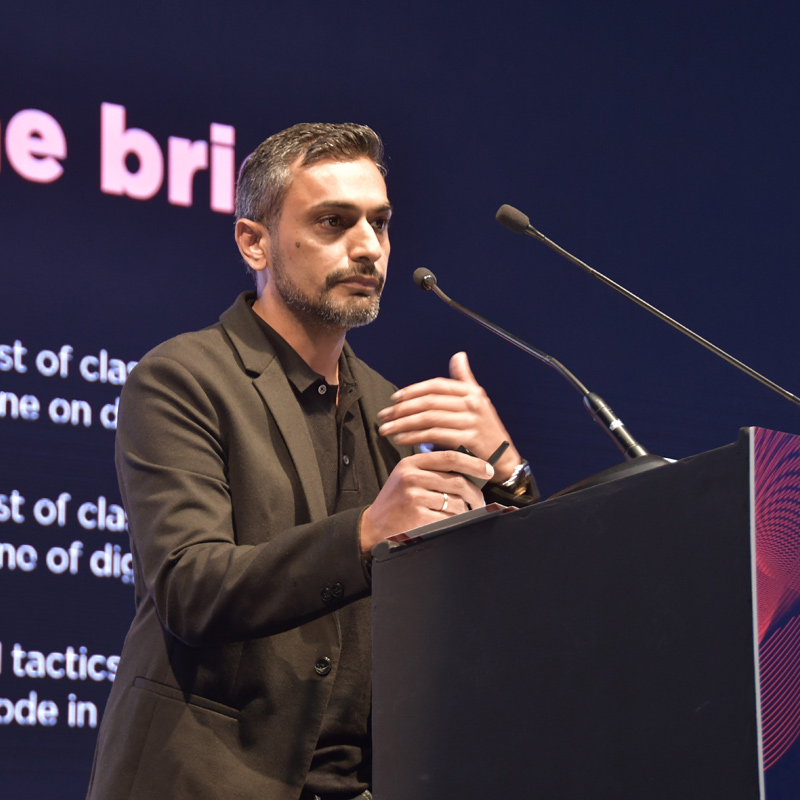
    Mumbai: The ever-changing digital ecosystem has altered the game of advertising and marketing as we once knew it. Digital marketing has developed into a significant platform for some profound work and brand case studies. Whether it’s digital or non-digital, every creative needs to emanate from a strong idea, said Dentsu Creative India CEO Amit Wadhwa, sharing his insights on the digital space and what works in the medium at the third edition of The Advertising Club’s D: CODE held recently in Mumbai.

    We keep talking about digital and technology, but this will always be about people at the end of the day, Wadhwa emphasised. “People are needed for ideas. People are needed to create technology. People are needed to run and understand the medium. That is the most important consideration.”

    At the Tac’s annual digital review, ten digital evangelists from the advertising and marketing fraternity shared key takeaways that brands and their digital custodians can make use of.

    Repersenting dentsu creative, the winner of the Agency Of The Year award at Cannes this year, Wadhwa shared the two pieces of work that stirred him. Or, in his own words, like a true advertising professional, he “stuck to the brief” – where the brief given was to showcase one best-of-class work from their own stable, along with one work that truly inspired them. He started with a creative coming from Dentsu’s stable, called The Protest March.

    Speaking about exactly why he chose this particular piece of work, Wadhwa said, “Who says protests have to be on the street… who says protests have to be violent or there has to be aggression? This is cricket and this is a protest-you can’t get a bigger and better idea.” More importantly, he added, this idea is digital at its core. The whole reason this is happening is that digital is there as a platform.

    Pointing out the third important element, Wadhwa said, “And I strongly believe in the third power—that’s purpose. I think it’s important for everything to have a purpose. And look at the purpose this one had. Taliban taking over, rights being taken away and I think you can’t have a stronger purpose than that.”

    Titled ‘The Protest Match’, the initiative recreated the Afghanistan women’s cricket team virtually, replicating the exact team that was unfairly banned from playing in real life. With an objective to pledge support and protest the injustice caused to the Afghan Women’s Cricket team, on 3 April 2022 – the day the ICC Women’s World Cup finals took place in New Zealand, Global eSports, in partnership with Isobar India Group, re-created the finals—one that could have happened.

    Talking about the next piece of work that inspired him, titled ‘Backup Ukraine,’ Wadhwa said, “When I went to Cannes this year, there was a team from Ukraine presenting this idea. And it hit me so hard that it remained with me.”

    The project was led by Virtue Worldwide, a Vice Media-owned creative agency, and centres on a digital and mobile platform that enables people in Ukraine to capture and digitally preserve 3D images of historical artefacts, monuments, and other culturally-relevant structures and objects at risk of being damaged or destroyed in light of the ongoing war with Russia. The tool employs technology developed by 3D imaging startup Polycam to create realistic digital replicas and store the digital blueprints of the artefacts they capture in the cloud.

    “I feel equally important to “what” we show on digital is “when” we show it. The timing is key,” Wadhwa said, adding that timing is key in any medium, but more so in digital.

    Wadhwa also mentioned how, nowadays, the brief itself states, ‘We want a stronger integration on digital.’ “I don’t think we need a stronger integration of digital—digital is all around us. If the idea is good, it will finally land on digital,” he asserted, adding that the moment you start trying too hard, you will see it going wrong somewhere.” Talking about the one thing that’s really spoiled us, Wadhwa says that with this medium, everything is possible, and that’s what the medium is all about.

  • Metaverse is an incredible opportunity infront of marketers currently: Meta India marketing director Avinash Pant

    Metaverse is an incredible opportunity infront of marketers currently: Meta India marketing director Avinash Pant

    Mumbai: Things are moving towards an immersive connection, which is being powered by technology. One can share an incredible amount of information with an incredible frequency. The metaverse will change our conception of the world’s businesses, industries, brands, and creators. Some devices can help you get there, but more technology will come.

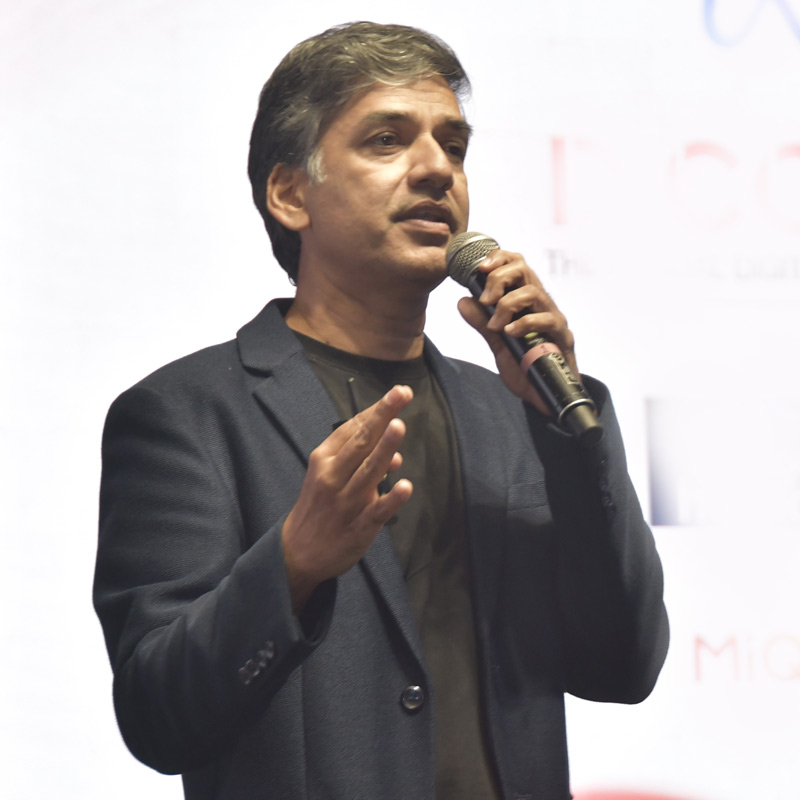
    At The Advertising Club’s third edition of D:CODE Meta India, marketing director Avinash Pant enlightened the audience about the evolution of social connections and the exponentially growing metaverse space, empowering meaningful experiences.

    He said, “Metaverse will take what we love about the internet today, which is about connecting with someone not present in the physical space, and take it to another new level. This is an incredible opportunity in front of marketers.”

    A “metaverse,” he added, is a set of interconnected digital experiences that are able to make you feel present. One can do this from any device, with anyone and anywhere. But the myth he burst is that it is a dystopian reality where people are engrossed in headsets and are completely removed from the real world. That is not the case.

    All technologies put together will make things real and present. There will be a virtual home or many homes. There will be many social experiences. One could work with colleagues in the metaverse. The metaverse does not have to be a representation in the virtual world of one’s physical world. It does not have to follow any of those rules of time, space, or physics. He continued, “The ability to create incredible experiences provides a fascinating opportunity in terms of creativity, storytelling, brand narrative, and commerce.”

    He expects avatars to be synonymous with our digital identity. One way to think about today is that the digital identity is the Instagram handle. Ten years ago, it was an email address. The expectation is that, in time, the avatar will become the digital identity. How do you make it lifelike and more representational? How can it help you present yourself in the digital world? These are things to be considered by digital marketers.

    Felt presence, he said, is one of the concepts of the metaverse. One can be with a friend at a concert through things like a hologram or VR. It will provide an incredible personal social feeling, but you can also share that experience. Even in a professional environment, you can do your dream job while sitting anywhere.

    He further noted that Meta has a workroom product. You feel present because you see someone’s body language, get an idea of their expressions, and how they react as well. The potential this has in commerce is huge. When a consumer can fully immerse himself in an experience, it becomes a powerful tool for a brand.

    But it’s not just about showing off a physical product. He explained that if consumers are living in that reality, then brands have to rethink the concept of who they are. What is the business the brand is in? There is much more significant potential. The metaverse is not predicated on 2D screens. A more immersive setup is possible.

    He gave the example of helping students understand concepts like the solar system better. Meta has done work with the CBSE in this regard regarding the curriculum. He feels that Meta has a fantastic foundation in terms of technology and the platforms that it has built. The work being done in communities, creators, and commerce puts it in a great position to leverage the metaverse. The idea of community itself is evolving. On the creator side, Meta is doing a lot of work to build the creator economy. Also, the idea of storytelling is evolving. People want to interact with content, play with it, not just consume it.

    He also gave the examples of Instagram Reels and AR. In terms of commerce, he said that there was a time when if one had to buy something, you would walk over to the market. Then you started searching online. Today, it has moved from search and buy to discover and buy. People discover brands and services on social media. This spells a massive opportunity when you connect the dots to the metaverse. As a brand, you have to think about it to power demand. Digital collectibles are being unlocked on Meta. All this is coming to bear at a super speed. The ecosystem will be revamped.