Tag: Meta

  • Insured in the moment Generali’s here now backs life’s bold new beginnings

    Insured in the moment Generali’s here now backs life’s bold new beginnings

    MUMBAI: There are moments when life changes in a heartbeat, a new home, a long drive, a daring dream dusted off and revived. In those in-between moments, Generali Central Insurance and Generali Central Life Insurance want to be right there not watching from the sidelines but here now.

    With the launch of its first-ever joint brand campaign, aptly titled ‘Here Now’, Generali Central has brewed together its life and non-life arms under one vivid red umbrella. The campaign marks a new chapter for the brand after the Central Bank of India joined the Generali Group as a joint venture partner earlier this year, a union that marries European legacy with Indian trust.

    And it’s not just another glossy corporate film. From a father teaching his son to drive to a woman chasing fitness goals, the campaign celebrates ordinary people doing extraordinary things choosing hope, courage, and a future shaped by intention.

    “‘Here Now’ is a celebration of new beginnings, those brave, hopeful moments when people choose to move forward,” said Generali Central Insurance chief marketing, customer & impact officer Ruchika Malhan Varma. “Our promise of being a Lifetime Partner means standing beside our customers with empathy, protection, and unwavering support.”

    The idea is as simple as it is emotional that the future isn’t something distant and abstract, it’s built right here, in the choices we make now. “Life insurance is deeply personal, it’s about the people you love and the life you’re building,” added Generali Central Life Insurance chief marketing officer Geetanjali Chugh Kothari. “With Here Now, we wanted to speak to people on a human level, celebrating the everyday moments that make life meaningful.”

    The creative baton for this cross-category campaign was passed to VML India, while Dentsu Media India handled media duties. The result? A sleek, emotionally grounded film that trades boardroom jargon for genuine connection. Visually, it carries Generali’s global signature red wings, now framing life’s pivotal moments, a symbol of presence, partnership, and protection.

    In true Generali style, the campaign doesn’t just live on television screens. It rolls out nationwide in nine languages, spanning TV, print, digital, outdoor, and social platforms. To take it closer to consumers, the insurer has forged smart tie-ups with Uber in Mumbai and Delhi, the Mumbai Metro’s Ghatkopar–Versova Line 1, and even Swiggy’s Food and Instamart apps, a clever blend of mobility, daily life, and digital discovery.

    The brand is also going full throttle on sports and entertainment. Expect to spot Here Now during ad breaks in the India–Australia T20s and India–South Africa ODIs, as well as within Kaun Banega Crorepati and popular news shows tapping into audiences where emotion and engagement run high.

    With a national rollout strategy spanning premium OTT platforms like Youtube and Meta, Generali Central is betting big on both reach and recall.

    But beneath the red wings and media muscle lies something more timeless, a brand philosophy that began centuries ago in Trieste and now beats steadily in India’s heartland. “A Lifetime Partner who is always Here Now” isn’t just a tagline; it’s a promise stitched through the campaign’s storytelling, a reminder that protection isn’t about policies, but about presence.

    So as Generali Central steps into its rebranded avatar, its message lands softly but surely: life doesn’t wait, and neither should your insurance.

    Because the best time to be there for your dreams, your people, your tomorrow is here now.


  • TRAI rings the spam alarm as digital consent and 1600-series plans take charge

    TRAI rings the spam alarm as digital consent and 1600-series plans take charge

    MUMBAI: Spam beware, India’s digital regulators are tightening the screws. The Telecom Regulatory Authority of India (TRAI) convened the 9th Joint Committee of Regulators (JCoR) at its New Delhi headquarters on October 16, 2025, marking another decisive step towards a safer, cleaner digital ecosystem.

    The high-level meet brought together representatives from the Reserve Bank of India (RBI), Securities and Exchange Board of India (SEBI), Pension Fund Regulatory and Development Authority (PFRDA), and the Ministry of Electronics and Information Technology (MeitY), alongside officials from the Department of Telecommunications (DoT), Ministry of Home Affairs (MHA), Ministry of Consumer Affairs (MoCA), and the National Payments Corporation of India (NPCI). Industry heavyweights including Google, Meta, GSMA, and COAI were also present to discuss collective measures against spam and cyber fraud.

    Central to the deliberations was the progress of the Digital Consent Acquisition pilot, currently underway at 11 banks under joint supervision by TRAI and RBI. On track for completion by February 2026, the pilot aims to ensure consumers have greater control over consent for commercial communications, a key tool in fighting spam.

    Meanwhile, TRAI pushed ahead with plans to fully adopt the 1600-series numbering system for banking, financial services, and insurance (BFSI) communications, with a phased sunset timeline agreed in collaboration with sector regulators. The committee also flagged the need for flexibility for small-scale businesses, with TRAI set to issue guidance soon.

    Other significant outcomes included mandatory whitelisting of all URLs, OTT links, APKs, and callback numbers used in SMS communications. This initiative, paired with a crackdown on shortened links and blacklisting errant entities, aims to curb fraudulent messaging at scale. The committee also discussed enhanced PE-end security measures, including real-time credential validation and CAPTCHA enforcement for OTP systems, to bolster trust and safeguard users’ digital interactions.

    TRAI chairman Anil Kumar Lahoti highlighted the importance of collaboration. “In a digitally connected economy, cooperation among regulators for digital services, financial services, consumer protection, and law enforcement is paramount. The JCoR continues to be a crucial platform for ensuring orderly digital connectivity and cracking down on spam and cyber fraud. Today’s decisions underscore our shared commitment to a secure and transparent digital communication ecosystem,” he said.

    The committee’s discussions also reflected an emphasis on public deterrence, with plans for TSPs and TRAI to publish blacklisted entities involved in spamming activities. Such transparency is expected to reinforce compliance while warning potential violators.

    By combining regulatory oversight, technological interventions, and industry collaboration, TRAI and its partners aim to transform India’s digital messaging landscape making spam less profitable, fraud less frequent, and user trust more robust. With these initiatives, the 9th JCoR meeting set a precedent for proactive governance in India’s rapidly evolving digital communication space.

  • IAS launches AI-driven brand safety for Meta Threads

    IAS launches AI-driven brand safety for Meta Threads

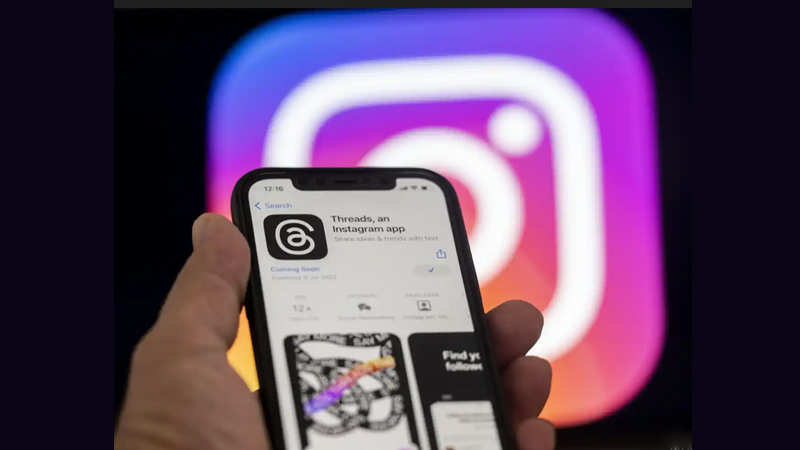
    MUMBAI: Integral Ad Science (IAS), the global ad verification powerhouse, has stitched together a new layer of protection for advertisers by launching AI-driven brand safety and suitability measurement on Meta’s fast-growing platform, Threads. The move marks the first time advertisers get third-party, independent brand safety checks on Threads, giving marketers peace of mind as they scroll through their media plans.

    Backed by its clever total media quality (TMQ) tech, IAS isn’t just skimming the surface. It’s digging deep into video, audio, images and text, frame by frame, to give advertisers crystal-clear content analysis at scale. So, whether a post has a cheeky meme, a trending video or a suspicious-sounding voiceover, IAS’s AI is watching (and listening).

    “IAS’s AI-driven content-level analysis enables advertisers to drive performance and confidently scale their investments with trusted, third-party, independent measurement,” said IAS CEO Lisa Utzschneider. “We continue to innovate and deepen our relationships with global partners like Meta to provide end-to-end campaign support for advertisers across every screen and channel.”

    Threads isn’t just another platform in the Meta empire, it’s a rising star, now boasting over 400 million monthly active users globally as of August 2025. With this new IAS integration, advertisers can finally breathe easy as their campaigns reach wider audiences. The new solution offers third-party validation to ensure ads appear next to safe and suitable content on Threads, with detailed content-level insights available through the IAS Signal dashboard. Advertisers can access industry-aligned classification across risk categories, customise suitability preferences, and assess the performance of Meta inventory filters. Uniquely, IAS’s multimedia tech analyses content at the frame-by-frame level, blending video, image, audio, and text signals, making its classification impressively precise. Even better, it works across 34 languages, giving brands truly global peace of mind.

    IAS and Meta have been on a bit of a roll lately. This Threads launch follows a string of brand safety milestones, including content block lists introduced in October 2024 and misinformation safeguards rolled out across Facebook and Instagram earlier this year.


  • Appsflyer lights up post-Diwali growth for marketers

    Appsflyer lights up post-Diwali growth for marketers

    MUMBAI: From Diwali sparks to a nine-week growth blaze. India’s festive season is no longer a one-week sprint to Diwali, and Appsflyer is showing marketers how to keep the momentum glowing. The global marketing measurement leader has released its 2025 India Festive Report, revealing that high-intent app activity now stretches across a nine-week window, offering brands extended opportunities for growth.

    Analysing 20.5 million app installs and over 576 million dollars in user acquisition and remarketing spend, the report highlights booming post-Diwali activity. Gaming and food & drink apps saw post-peak install growth of 29 per cent and 16 per cent respectively, while Android remarketing spend in travel jumped 40 per cent. Ios Shopping engagement surged with session volume up 20 per cent, boosted by extended deals and gift redemption cycles.

    “India’s festive season has evolved into a sustained momentum period that demands smarter campaign pacing and post-Diwali re-engagement,” said Appsflyer general manager INSEA and ANZ Sanjay Trisal. “Android delivers long-tail value when remarketing is timed right, while Ios needs sharper sequencing and early conversion. Brands that invest in lifecycle strategies and fraud protection at key moments can maximise both growth and efficiency.”

    Key takeaways from the report show that top shopping apps grew share of paying users by 32 per cent year-on-year, while post-festival fraud rates spiked, particularly in food & drink on Ios (up 176 per cent) and entertainment on Android (up 74 per cent). Remarketing budgets should be reallocated to the post-Diwali period, with segmented push campaigns and reactivation flows between Days 10 and 14 ensuring retention beyond the first week.

    Meta vertical head of gaming, tech, health & education Rishad Chindamada added, “Mobile platforms drive rapid acquisition and re-engagement, enhanced by AI tools optimising campaigns. Brands that leverage full-funnel marketing across channels can turn festive season spikes into lasting loyalty.”

    Appsflyer’s report underscores a shift in festive marketing strategy, it’s not just about winning Diwali week, it’s about sustaining the spark long after the lamps go out.

  • AI writes the next scene in storytelling

    AI writes the next scene in storytelling

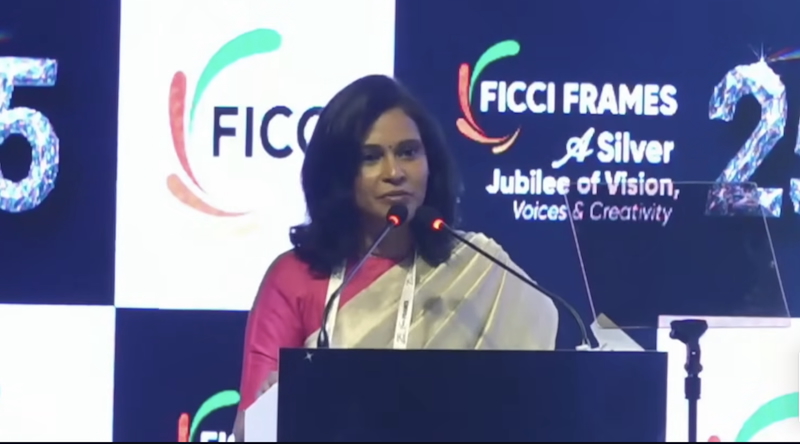
    MUMBAI: From scripts to circuits, storytelling just got smarter. At FICCI Frames 2025, the stage buzzed with ideas as tech titans from Jiohotstar, Meta, and Google explored how artificial intelligence is reshaping the way India watches, interacts, and connects with stories.

    In a session titled “The AI-Powered Media Revolution: From Personalisation to Interactive Storytelling,” the panel featured Jiohotstar chief product officer Bharath Ram, Meta India group director – finserv, media, travel and services Shweta Bajpai, and Google India head of industry for tech, media & telecom Siddharth Shekhar, moderated by NDTV Entertainment editor Abira Dhar

    Bharath Ram highlighted how Jiohotstar’s India-built AI is revolutionising both content and advertising. “The biggest advantage of developing AI solutions in India is the ability to iterate fast, learn fast, and build products rooted in local sensibilities,” he said, adding that Jiohotstar’s vast catalogue, from Special Ops to Bigg Boss, provides fertile ground for AI-driven insights.

    “Our AI helps us decode what truly captures viewers’ imagination and connects brands to audiences more meaningfully,” he explained, noting that smarter prediction models are already enabling advertisers to reach the right audience at the right moment.

    Taking storytelling beyond the screen, Bharath also spoke about the rise of fandom participation, where viewers don’t just watch content, they live it. “People want to be part of the story. The future lies in building interactive experiences that let fans express their passion,” he said, hinting at Jiohotstar’s plans to boost audience engagement across its entertainment properties.

    The discussion painted a vivid picture of a media landscape in motion, one where AI transforms viewers into collaborators, and platforms like Jiohotstar, Meta, and Google are scripting a new era of personalised, participatory entertainment.

    Because in the age of AI, the story doesn’t just unfold, it evolves with you.

  • Meta maps India’s digital evolution from creators to AI and micro dramas

    Meta maps India’s digital evolution from creators to AI and micro dramas

    MUMBAI: At the 25th edition of Ficci Frames, Meta’s top leadership: Sandhya Devanathan, vice president, Meta India, and Meta India managing director and country head Arun Srinivas, laid out a comprehensive view of how India’s digital, entertainment, and creator ecosystems are evolving at breakneck speed. 

    From the rise of Gen Z as the dominant consumer force to the explosion of short-form video, AI-driven content, and micro-dramas, both leaders stressed on how India is not just adapting to global digital trends, it is carving them. 

    “India’s growth is unique and inevitable,” Devanathan said, opening her session on New Age Tech Platforms: Redefining Access, Innovation and Scale. “One trillion dollars of our future economy will be driven by digital.”  

    With over four billion reels shared globally every day, she noted, India stands out as both the largest creator market and a leader in the innovation of content. 
    That digital drive, she explained, rests on India’s growing online base of over 650 million social media users and 270 million online shoppers. Yet, she noted that to make prosperity more inclusive, more small businesses need to come online. Only about five million of India’s 65 million SMEs are currently digitally enabled.
    “The Indian creator economy is among the most vibrant in the world,” Devanathan noted. “Creators here aren’t just entertainers, they are entrepreneurs, cultural catalysts, and small businesses rolled into one.”

    Meta, she explained, continues to invest heavily in tools that empower creators to monetise their craft: from performance insights and AI-powered production aids to immersive advertising formats that help brands connect authentically with their digital-native audiences. 

    Devanathan also highlighted the versatility of “many Indias”: the digitally savvy India, the vernacular-first India, and the emerging India Each requires its own approach to content, access and engagement. “Winning in India,” she said, “means understanding these layers of India and building for all.”
    Meta, she noted, sits at the heart of this digital revolution. India is now home to the largest community of Instagram creators and the biggest user base for Meta AI worldwide. The country also boasts one of the world’s largest Whatsapp communities, with over 200,000 small businesses using “Click to Whatsapp” to drive sales every month.
    Beyond platforms, Meta is investing in digital infrastructure, from the Project Waterworth subsea cable (a subsea cable network that will span 50,000 kilometres and will reach depths of up to 7000 metres) to supporting data centres that fuel AI innovation. Devanathan also spoke about Meta’s work with the Nudge Institute and Pragati AI for Impact, which harnesses artificial intelligence for social good. 

    Building on that foundation, Arun Srinivas focused on the behavioural shifts defining media and entertainment consumption in India today, particularly among Gen Z and gen Alpha audiences.

    “Gen Z isn’t the future; they’re the present,” he exclaimed. “They are already shaping how content is discovered, processed, and shared.”

    According to Srinivas, the average Gen Z consumer processes information three times faster than previous generations and takes less than 1.5 seconds to decide whether to engage with a piece of content. “They need less attention, but more repetition,” he noted, explaining how frequency, rather than single exposure, now drives brand recall and conversions.

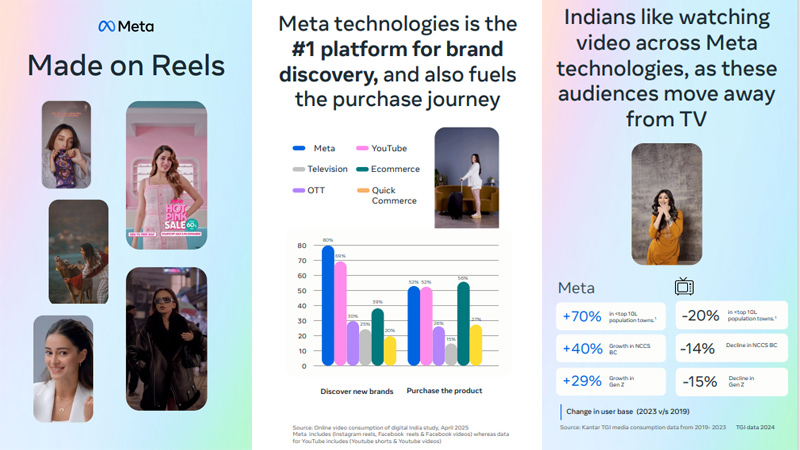
    He also pointed to India’s massive short-form video boom, with 97 per cent of Indians watching short videos daily, surpassing television viewership. “Linear TV time is declining month on month,” he said, adding that this isn’t limited to urban India, “rural and small-town audiences are consuming just as much, if not more.”

    Among the new frontiers Srinivas spotlighted was the rise of micro dramas: serialised short videos running between one and five minutes per episode.

    “This is storytelling redesigned for the mobile-first world,” he said. “India’s short-form drama market could touch 10 billion dollars by 2030, driven by vernacular content and tier-II and tier-III audiences.”

    Startups and creators are already experimenting with dubbed Korean and Chinese mini-series adapted for Indian viewers, marking a new phase in the fusion of entertainment and digital innovation.

    Both Devanathan and Srinivas emphasised the transformative role of artificial intelligence across Meta’s platforms, from content creation and personalisation to ad optimisation and discovery.

    “AI isn’t replacing creativity; it’s amplifying it,” Devanathan said. “It’s enabling creators to produce higher-quality work faster, and helping brands find the right audiences with precision.”

    Srinivas added that more than four million advertisers globally used AI-generated creatives last quarter, producing over 15 million ad assets  and achieving double-digit ROI improvements compared to campaigns created by humans. 

    Outlining Meta’s larger ambition, he noted that the company aims to make Meta AI the world’s most widely used personal assistant. “With more than 100 billion dollars invested in AI in just four years, we’re building systems that make digital creativity more accessible and intelligent for everyone,” he said.
    Bringing that vision to life, Devanathan closed her session with an AI-generated video: a vivid cascade of colours that unfolded into the words, “Change is the canvas from which opportunity paints its masterpiece.” 

    Both leaders saw eye to eye on one message, that India’s digital future will be built at the intersection of creators, commerce, and connection.

    Srinivas highlighted how Meta’s latest tools, such as the Edits app for easy video production and new AI-powered creative platforms, are enabling India’s vast creator base to thrive. Meanwhile, Devanathan emphasised Meta’s partnerships with brands, small businesses, and policymakers to foster a sustainable, inclusive digital ecosystem.

    “Our goal,” she said, “is to ensure that India’s creative economy doesn’t just grow in size, it grows in diversity, opportunity, and global influence.”

    Concluding the session, Srinivas offered a peek into Meta’s newest innovation, the Ray-Ban Meta smart glasses, designed to merge content, communication, and AI assistance in one device.

    “These glasses are a glimpse of a future where connection becomes truly immersive,” he said.

    As both Devanathan and Srinivas made clear, India’s digital landscape is entering a new chapter, one driven by speed, creativity, and intelligence. With the next generation of consumers redefining how content is created and consumed, Meta’s vision is not just to keep pace, but to help build the infrastructure of tomorrow’s digital culture. 


  • Google taps Raveesh Dev to chase small business growth across the Americas

    Google taps Raveesh Dev to chase small business growth across the Americas

    NEW DELHI: Climbing the ladder at Google takes stamina. Raveesh Dev has just demonstrated plenty of it. After nearly ten years shuttling between roles at the tech giant, Dev has been named head of en-Americas, SMB growth, a position that puts him in charge of scaling Google’s small and medium-sized business operations across the Americas from the company’s Gurugram office.

    The promotion, announced in October 2025, caps a rapid ascent through Google’s commerce division. Dev spent the past two years as head of commerce for India, leading go-to-market strategy for advertisers in travel, retail, beauty and healthcare. Before that, he briefly helmed multichannel and consumer packaged goods operations. His track record includes steering a business generating hundreds of millions of dollars in annual recurring revenue and winning Google’s 2024 APAC sales leader award.

    Dev’s 15-year career spans media and technology. Before joining Google in 2016, he cut his teeth in advertising sales at Times Television Network, where he rose to associate account director, and earlier at Red FM and Reliance Broadcast Network. His pitch is straightforward: scale businesses, mentor teams, drive operational excellence. It’s corporate speak, but his promotions suggest he delivers.

    The Americas SMB role is no easy brief. Small businesses are notoriously fickle customers, quick to churn when platforms don’t deliver immediate results. Google’s challenge is keeping them hooked on advertising products whilst fending off rivals like Meta and Amazon. Dev’s experience in India’s chaotic, price-sensitive market may prove useful, though the Americas present their own headaches.

    Dev’s LinkedIn post struck the obligatory note of gratitude—thanking mentors, celebrating teams, expressing excitement. What matters more is whether he can translate India’s lessons into growth across vastly different markets. Google clearly thinks he can. Time will tell if they’re right.

  • WARC ad forecast: Digital giants to gorge on global bonanza in 2025

    WARC ad forecast: Digital giants to gorge on global bonanza in 2025

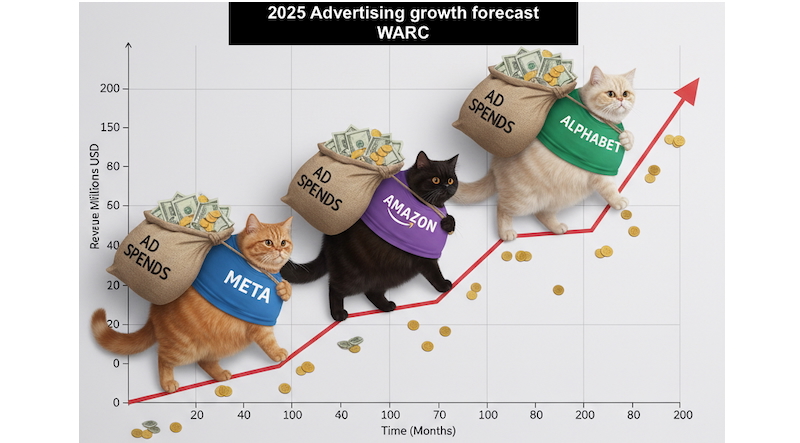
    MUMBAI: Global advertising expenditure is set to surge by 7.4 per cent this year to $1.17trn, according to WARC’s latest forecast—the first upward revision in more than a year. The research firm has boosted its projection by 1.2 percentage points since June, driven by what it calls a “social media windfall” and frenetic pre-tariff spending.

    The bonanza is heavily skewed towards a handful of technology titans. Meta, Alphabet and Amazon are forecast to hoover up nearly two-thirds of all advertising growth in 2025, cementing their stranglehold on the global marketing purse strings. Outside China, the trio already commands 55.8 per cent of all advertising spend—a share set to exceed 60 per cent by 2030.

    Digital platforms are cannibalising traditional media with ruthless efficiency. Nine in every ten new advertising dollars are flowing to online-only platforms, leaving legacy media owners—even those with digital arms—to scrap over what WARC likens to “the equivalent of Facebook’s monthly revenue.”

    Social media has emerged as the single largest advertising medium globally, gobbling up 40.6 per cent of new marketing dollars. Spending on the channel is projected to rocket by 14.9 per cent to $306.4bn this year, representing more than a quarter of total global advertising expenditure. Meta remains the chief beneficiary, capturing 60 per cent of all social media advertising spend.

    The spending spree was particularly pronounced in the second quarter, when social media expenditure jumped 20.2 per cent year-on-year—well above WARC’s initial projection of 12.4 per cent growth. The surge was driven by retailers rushing to stockpile inventory and promote value ahead of expected price hikes, with retail now the largest category on both Instagram and TikTok.

    Search advertising is attracting around 22 per cent of new dollars, while retail media platforms are capturing another 21.5 per cent. Amazon is poised to claim over a third of the retail media pie, which is forecast to grow 13.7 per cent to $175bn in 2025.

    The momentum is expected to accelerate further, with global advertising spend projected to rise 8.1 per cent to $1.27trn in 2026 and 7.1 per cent to $1.36trn in 2027. The market is on track to nearly double in value since the pandemic, underscoring advertising’s remarkable resilience despite economic headwinds.

    “This includes disruption to global trade and reduced purchasing power among consumers, brands are doubling down on Meta, Alphabet and Amazon,” said WARC director of data, intelligence and forecasting James Mcdonald. “The global market is set to nearly double in value since the pandemic, underscoring the resilience of advertising in a tougher economic climate.”

    The rosy outlook contrasts sharply with some other industry forecasts. eMarketer recently slashed its projections for American digital advertising spending, citing the impact of trade wars on automotive and retail sectors. But WARC’s global perspective suggests the digital advertising juggernaut shows no signs of slowing.

  • Instagram reels tops India’s short-video charts

    Instagram reels tops India’s short-video charts

    MUMBAI: It’s reel life, not real life, that has India hooked. Five years since its debut, Instagram reels has danced its way to the top of the short-video throne, leaving rivals trailing behind.

    A new IPSOS study commissioned by Meta shows that reels has become the country’s favourite short-form video platform. Out of more than 3,500 people surveyed across 33 Indian cities, a staggering 92 per cent picked reels over other formats, making it more popular than television, Youtube or any competing app.

    The numbers are eye-catching. Nearly everyone watches short-form video daily, and 95 per cent of those surveyed say they watch reels every day, putting it at least 12 points ahead of other platforms. It’s not just a Gen Z craze either. Reels is also the go-to for urban audiences in higher-income households.

    Meta India’s boss Arun Srinivas puts it simply. “India is leading the world in video adoption, and Reels is at the centre of this shift.”

    From viral dance-offs to grwm tutorials and witty memes, Reels has become the cultural engine of India’s internet. The study found that viewers flock to content in fashion, beauty and film, consuming 20–40 per cent more of it here than on other platforms. For creators, reels is even more powerful. Engagement levels are about one third higher compared to competing apps.

    It’s not just entertainment. Reels is also driving business. Eight in ten Indians say they discover new brands on Meta’s platforms. Ads on reels are proving potent too, with twice the top-of-mind recall and four times the message association of long-form video ads.

    In short, reels is more than a passing trend. It has reshaped how India consumes video, spurred creators to new heights and become a launchpad for brands. For marketers, the message is clear: think in reels or risk being left out of the picture.


  • IndIAA Awards toast 10 years of creativity with grand Mumbai celebration

    IndIAA Awards toast 10 years of creativity with grand Mumbai celebration

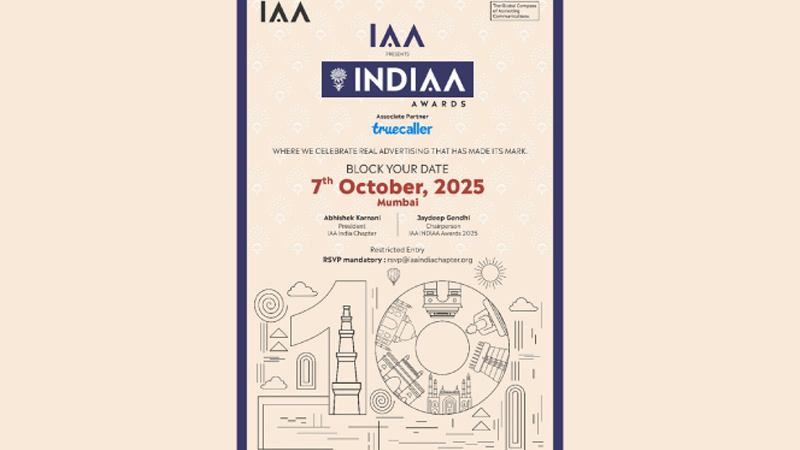
    MUMBAI: Advertising rarely gets a standing ovation outside boardrooms, but the Indiaa Awards have spent a decade proving that creativity deserves the spotlight. On 7 October in Mumbai, the International Advertising Association (IAA) will host the 10th edition of its flagship celebration of creative excellence.

    The milestone year brings together a distinguished jury, chaired by Meta managing director & country head Arun Srinivas and featuring heavyweights including Mohit Malhotra (CEO, Dabur India Limited), Kalpen Parekh (MD & CEO, DSP Mutual Fund), Anindita Veluri (director of marketing, Adobe India), Neil George (former MD, Nivea India / Abbott Nutrition India), and Promeet Ghosh (MD & CEO, Crompton Greaves Consumer Electricals Ltd). Their task: to evaluate work that has already proven its mettle in the marketplace.

    That’s the IndIAA difference. As IndIAA Awards vice president IAA and chairperson Jaydeep Gandhi explains, entries aren’t submitted by agencies or brands at all. Instead, a panel of senior editors from the marcom trade media handpicks the campaigns that have stood out in the clutter, ensuring that only the most impactful work makes it before the jury. From there, deliberations identify the winners campaigns that didn’t just win awards, but won over consumers first.

    “This year marks a significant milestone as we celebrate the 10th edition of the awards for creative excellence,” said IAA president Abhishek Karnani, underscoring the spirit of the event.

    Winners will be unveiled at the grand IndIAA Awards Nite, where not just agencies and brands, but all co-creators of the winning campaigns will be felicitated. It’s a nod to the industry’s collaborative DNA, where strategists, storytellers, directors, and designers together craft work that resonates.

    With ten years behind it and countless campaigns celebrated, the IndIAA Awards remain a rare show where the applause is as authentic as the advertising it honours.