Tag: messenger

  • Anand Chandrasekaran joins Celesta Capital as managing partner

    Anand Chandrasekaran joins Celesta Capital as managing partner

    MUMBAI: Anand Chandrasekaran’s  is quite a familiar face to those  in the media and entertainment tech industry. A geek to the core, he has also been recognised as a shrewd observer and investor in the evolution of tech. Recently, it was announced that he joined Celesta Capital in the Silicon Valley  as a managing partner. 
    Celesta was founded and is led by Nicholas Brathwaite, Sriram Viswanathan, and Michael Marks,  and primarily invests in early-stage deep tech, companies with high potential hardware and software technologies that have a clearly identified market application. 

    Anand knows how to pick winners. At one stage, he led Yahooi in its mobile and search division as senior director, a position he held for three years. He led product development at Airtel and created the Wynk music app for Airtel. 

    Soon thereafter,  he joined Snapdeal as chief product officer, a position he let go of within a year. He then went on to work with Facebook (now Meta) as director of platforms partnerships at messenger which he followed up with a sojourn at Five9. 

    He then went on to  go on board General Catlayst as an investor and partner. Along the way he seed invested in several start ups and has been recognised as one of India’s top seed investors for three years consecutively. 
    Most recently, he co-founded Celesta Capital portfolio company Crescendo, helping to incubate and grow the company to over $50M in revenue and a $500M valuation in less than a year.

    “We are fortunate to expand the firm’s team with such an accomplished investor, technologist, and operator. In getting to know Anand through the process of investing in his latest entrepreneurial venture Crescendo, it became clear that he shares Celesta’s passion for advancing important technologies, company creation, and the huge growth potential within the US  – India tech corridor,” said Viswanathan in a note welcoming him to the company on Linkedin.

  • Meta launches 3D avatars for facebook, instagram & messenger users

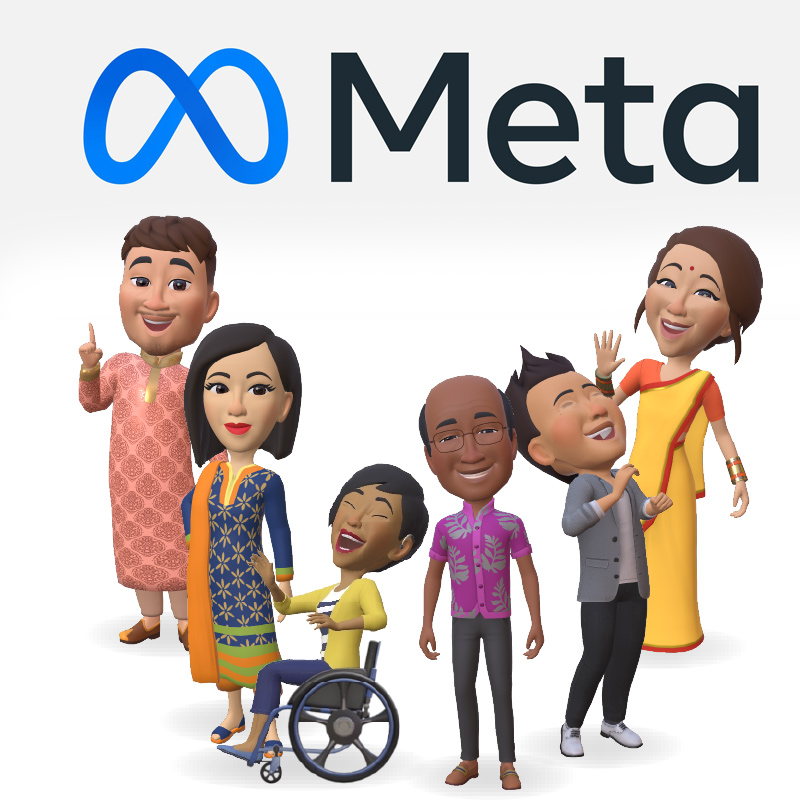
    Meta launches 3D avatars for facebook, instagram & messenger users

    Mumbai: Meta has launched on Tuesday updated 3D Avatars in India for Facebook and Messenger. The new avatars will also be available on Instagram. The new avatars are expressive, customizable and diverse.  

    The new update adds Cochlear implants and over-the-ear hearing aids (for one or both ears) in a variety of colors, and on all platforms including VR. It also includes wheelchairs, which will appear in stickers on Facebook, in Messenger chats and in DMs on Instagram. Meta will continue to add more options over time based on feedback from the community.

    With this development, people in India can show up as their virtual self across apps via stickers, feed posts, facebook profile pictures, and more.

    To better reflect the billions of unique people on this planet, Meta is adding new facial shapes and assistive devices for people with disabilities. Meta is also improving the look of Avatars. Subtle adjustments have been made to certain facial shapes and skin shaders to make avatars more authentic.

    While speaking on the launch of new avatars, Meta India director and head partnerships Manish Chopra said, “Representations in the metaverse should reflect the diversity of the real world. Avatars are just the first step toward enabling everyone to express themselves in their unique ways. When you create your avatar you can choose the right facial features, body types, clothing styles, and more to create your virtual self. We offered more than one quintillion different combinations when we launched our updated avatars last year, and we’re continuing to add more options to give people even more ways to express themselves.”

  • Gupshup adds Messenger API for Instagram to help businesses engage better

    Mumbai: Messaging services company Gupshup on Friday announced the addition of the Messenger API for Instagram to its platform. This will now allow Gupshup businesses to benefit through a richer two-way conversation with their followers on Instagram at scale.

    Gupshup has a longstanding collaboration with the Facebook family of messaging platforms; having collaborated with Messenger in 2017, and as one of the earliest to adopt WhatsApp for business service in 2018. According to Instagram research1, 90 per cent of people on Instagram follow a business and 50 per cent are more interested in a brand when they see ads for it over Instagram.

    “We are delighted that Gupshup is launching the Messenger API support for Instagram. The Messenger API for Instagram is now available for all developers who make it possible for brands to improve and enhance messaging experiences with customers,” said Messenger’s vice president, platform partnerships, Konstantinos Papamiltiadis. “By integrating the Messenger API for Instagram, businesses and developers can effectively scale messaging workflows to better own the customer experience and build more authentic relationships.”

    “Gupshup is committed to helping businesses engage their customers better through conversations across multiple channels” explained Gupshup’s co-founder and CEO Beerud Sheth. “We are now making available our rich set of tools, powered by conversational AI, to help businesses make their Instagram conversations rich, contextual and personalized. Using these tools, businesses and celebrities and influencers with business accounts on Instagram will now be able to build stronger customer relationships, improve customer satisfaction, develop new business models and drive greater revenues.”

     Gupshup, with the Messenger API for Instagram for conversational messaging, is now available to its businesses who may access the same at www.gupshup.io

  • WhatsApp, Facebook and Instagram restored after global outage

    WhatsApp, Facebook and Instagram restored after global outage

    KOLKATA: WhatsApp, Facebook and Instagram were inaccessible all over the world for a brief period on Friday. In India, services went down around 11 pm (local time) and were restored by 11.40 pm approximately.

    “Earlier today, a technical issue caused people to have trouble accessing some Facebook services. We resolved this issue for everyone, and we apologise for any inconvenience,” a Facebook spokesperson said in a statement.

    During the outage, messages were not being delivered on WhatsApp and Messenger and no content could be loaded on Instagram.

    “Some people were having issues with their Instagram accounts earlier, but we're back now. The issue's been fixed and we're sorry for the trouble,” the photo-video sharing app tweeted.

    According to the website DownDetector, more than 100,000 users reported issues with Instagram, over 24,000 users reported issues with Whatsapp, while 5,000+ users reported issues with Messenger.

    Facebook Gaming also said it has restored services. In a tweet, it has urged users to contact support or report directly from the stream if they continue to have issues going live, or see issues on a stream.

    Hashtags like ‘Facebook down’ and ‘WhatsApp down’ started trending on Twitter, with the widespread service outage giving fuel to meme makers. Some took a dig at the Mark Zuckerberg-owned family of apps by saying they were now more motivated to or had already switched to rival apps like Telegram and Signal.

    “Signal registrations are through the roof; welcome everyone. Solidarity to the folks working on the WhatsApp outage. People outside of the tech industry will never understand how weird it sounds when someone says that they are "looking forward to some weekend downtime," Signal tweeted while many users complained about the outage.

  • Facebook’s Asia-Pacific numbers lesser impacted than other regions in pandemic quarter

    Facebook’s Asia-Pacific numbers lesser impacted than other regions in pandemic quarter

    BENGALURU: As people across most of the globe retreated indoors under the lockdown announced by most of the countries to reduce the growth rate of Covid2019, world economies were badly hit. Officegoers had no other option but to use media to keep themselves occupied as the amount of work-to-do shrank. With the closure of education institutions, theaters and malls and hotels, etc., misplaced suspicion about the safety of newsprint, no new television/film content being produced, news and movies on television, OTT, internet, social media, became the new tools for entertainment and information, for networking and socialising distantly, education, occupying minds, etc.  

    Social media networking major Facebook or FB reported its numbers for the first quarter ended 31 March 2020 (Q1 2020, quarter or period under review). Facebook reported 15.87 per cent lower Q-o-Q numbers for the quarter under review as compared to the previous quarter (quarter ended 31 December 2019, Q4 2019), but 17.64 per cent higher Y-o-Y than the year ago quarter Q1 2019. FB has witnessed Q-o-Q revenue declines in the first quarter earlier – in Q1 2018, revenue declined 7.76 per cent as compared to Q4 2018 and in Q1 2019 it declined 10.86 per cent as compared to Q4 2018. Overall, Facebook numbers have shown an increasing trend, the Covid2019 quarter is just a slightly bigger than the normal bump in its path to growth.

    FB reports revenues from four major geographical regions in the world – the largest in terms of revenue being the US-Canada region, followed by Europe, Asia-Pacific (A-Pac) and the Rest of the World or RoW. The US-Canada region contributes about 48 per cent, the Europe region about 24 per cent, APAC region about 18 per cent and RoW about 10 per cent to FB’s revenues. Please refer to the figure below for FB revenue breakup.

    Advertisement is the major revenue stream for FB that contributes to more than 98 per cent to its overall revenues. The figure below shows contribution in terms of percentage of ad revenue to total ad revenue from these geographical regions. As is obvious, the APAC region is the only one that has shown growth in contribution to FB’s ad revenues during Q1 2020 – It contributed 17.56 per cent to FB’s ad revenues in the previous quarter and its contribution to ad revenue increased to 18.56 per cent  in Q1 2020. As a matter of fact, the APAC region has shown only two downward blips in its contribution to ad revenue during 9 quarters (the quarter under review and its preceding 8 quarters). These two blips happened in Q1 2020 and Q4 2018.

    Growth in contribution to revenue from the APAC region has generally been steadier than the other regions. When FB’s revenues have declined Q-o-Q, the decline in revenues from the APACregion has been lower than the other regions during these nine quarters. The APACregion’s total revenue declined 11.13 per cent Q-o-Q in Q1 2020 as compared to declines of 16.45 percent, 17.54 per cent and 17.21 per cent from US-Canada, Europe and RoW regions respectively. Y-o-Y, revenues grew 17.16 percent, 16.55 percent, 21.44 per cent and 15.80 per cent in Q1 2020 from FB’s US-Canada, Europe, APAC and RoW regions, respectively.

    Facebook’s Daily Active Users or DAU grew 4.65 per cent in Q1 2020 to 1.734 billion as compared to 1.657 billion in Q4 2019. The APAC region has a major chunk of humanity, consequently, the company’s largest DAU are from the APACregion, and the number of these APACusers in Q1 2020 has grown 5.77 per cent Q-o-Q. Comparatively, the US-Canada, Europe and RoW regions have seen DAU growth in the quarter under review versus the immediate trailing quarter of 2.63 percent, 3.74 per cent and 4.51 per cent respectively. Please refer to the figure below:

    The US-Canada region has the least DAU  among the four FB regions, however, this region has FB’s highest ARPU or average revenue per person, as well as the highest Family Average Revenue Per Peson or ARPP. Facebook defines a monthly active person (MAP) as a registered and logged-in user of Facebook, Instagram, Messenger, and/or WhatsApp (collectively, FB’s "Family" of products) who visited at least one of
    these Family products through a mobile device application or using a web or mobile browser in the last 30 days as of the date of measurement. 

    With drop in revenue, Facebook’s ARPU in Q1 2020 dropped 12.89 per cent Q-o-Q world wide. Q-o-Q FB’s APAC region ARPU declined 6.08 percent. ARPU drops of 13.6 per cent by US-Canada, 13.02 per cent by Europe and 10.43 per cent by RoW also happened in the quarter under review. Please refer to the figure below:

    Excerpts on what the company has to say

    "Our work has always been about helping you stay connected with the people you care about," said FB founder and CEO Mark Zuckerberg, "With people relying on our services more than ever, we're focused on keeping people safe, informed and connected."

    Impact of Covid2019 on Outlook

    On Revenue: Our business has been impacted by the Covid2019 pandemic and, like all companies, we are facing a period of unprecedented uncertainty in our business outlook. We expect our business performance will be impacted by issues beyond our control, including the duration and efficacy of shelter-in-place orders, the effectiveness of economic stimuli around the world, and the fluctuations of currencies relative to the U.S. dollar.

    After the initial steep decrease in advertising revenue in March, we have seen signs of stability reflected in the first three weeks of April, where advertising revenue has been approximately flat compared to the same period a year ago, down from the 17 per cent year-over-year growth in the first quarter of 2020. The April trends reflect weakness across all of our user geographies as most of our major countries have had some sort of shelter-in-place guidelines in effect.

    On Expenses:We expect to realize operational expense savings in certain areas such as travel, events, and marketing as well as from slower headcount growth in our business functions. However, we plan to continue to invest in product development and to recruit technical talent. In addition, we have committed over $300 million to date in investments to help our broader community during the crisis, which will have an impact on our financial performance this year. As a result, we expect total expenses in 2020 to be between $52-56 billion, down from the prior range of $54-59 billion. While this reflects a moderate reduction in the planned growth rate of total expenses, our overall expense growth in the face of expected revenue weakness will have a negative impact on 2020 operating margins.

    On Capex: Our significant investments in infrastructure over the past four years have served us well during this period of high user engagement. We plan to continue to grow our capex investments to enhance and expand our global infrastructure footprint over the long term. In 2020, we expect capital expenditures to be approximately $14-16 billion, down from the prior range of $17-19 billion. This reduction reflects a significant decrease in our construction efforts globally related to shelter-in-place orders. Given the strong engagement growth and related demands on our infrastructure, this year's capex reduction should be viewed as a deferral into 2021 rather than savings.
     

  • Facebook ad biz weakening despite upsurge in users

    Facebook ad biz weakening despite upsurge in users

    MUMBAI: Streaming services, social media services and apps are emerging as the unwitting beneficiaries of an unprecedented situation which has forced people to stay at their homes. The usage of Facebook has gone up in many of the countries hit hardest by the novel coronavirus. Total messaging has increased more than 50 per cent over the last month. Moreover, in places hit hardest by the virus, voice and video calling have more than doubled on Messenger and WhatsApp. Despite the spike in usage, however, Facebook's ad business seems to be weakening.

    Facebook shared in its blog post that much of the increased traffic is happening on its messaging services, but it has also seen more people using its feed and stories to get updates from family and friends. 

    “At the same time, our business is being adversely affected like so many others around the world. We don’t monetise many of the services where we’re seeing increased engagement, and we’ve seen a weakening in our ads business in countries taking aggressive actions to reduce the spread of COVID-19,” Facebook stated.

    According to Cowen & Co analysts' estimate, the two internet giants, Facebook and Google, together, could lose more than $44 billion in worldwide ad revenue. Facebook ad revenue for the year is expected to slide by $15.7 billion to reach $67.8 billion for the year. 

    “During this emergency, we’re doing everything we can to keep our apps fast, stable and reliable. Our services were built to withstand spikes during events such as the Olympics or on New Year’s Eve. However, those happen infrequently, and we have plenty of time to prepare for them. The usage growth from COVID-19 is unprecedented across the industry, and we are experiencing new records in usage almost every day,” it added further. 

    The social media giant also noted that maintaining stability throughout these spikes in usage is more challenging than usual as now most of the employees are working from home. However, it has mentioned that the team is working to keep the apps running smoothly while also prioritising features such as COVID-19 Information Center on Facebook as well as the World Health Organization’s Health Alert on WhatsApp.  To help alleviate potential network congestion, Facebook is temporarily reducing bit rates for videos on Facebook and Instagram in certain regions. 

  • Yahoo Messenger to shut operations from 17 July

    Yahoo Messenger to shut operations from 17 July

    MUMBAI: The emergence of new messenger apps in the smartphone era has brought down the closure of decades-old instant messaging application, Yahoo Messenger. Verizon subsidiary Oath, operator of Yahoo, recently announced the wrap up of Yahoo Messenger with its services coming to an end on 17 July. 

    One of the earliest messaging app, it started its journey in 1998. Yahoo Messenger, once a very popular player witnessed its declining user base eventually due to several new services including smartphone chat apps such as Whatsapp, Skype, Facebook Messenger among others. Existing users now have six months in hand to download their chat history before the service becomes unavailable. 

    In a statement issued on Friday, Yahoo said, “There currently isn’t a replacement product available for Yahoo Messenger. However, we are constantly experimenting with new services and apps, one of which is an invite-only group messaging app called ‘Yahoo Squirrel’ which is currently in beta form.”

    While avoiding any specific reason behind the shut down of the Messenger, Yahoo said, “As the communications landscape continues to change over, we’re focusing on building and introducing new, exciting communications tools that better fit consumer needs.”

    Also Read:

    Snapchat partners four IPL teams

    YouTube web series to showcase road safety awareness across India