Tag: Merger

  • Omnicom Group in advanced talks to acquire Interpublic Group – WSJ Report

    Omnicom Group in advanced talks to acquire Interpublic Group – WSJ Report

    MUMBAI: The headline in the Wall Street Journal was loud and clear just as the west was waking up and we in the east  were getting into bed –  two large marketing solutions providers – Omnicom group and Interpublic group –  were nearing a merger as their talks were at an advanced stage. The Omnicom group which is valued at about $20 billion would cough up about $13-14 billion to swallow IPG in an all stock deal.  

    Both groups had not commented on the news, but it sent shivers down many a senior media observer’s spine. For memories of the merger frenzy that overtook the ad world  in yester-years was still sharp in their minds. 

    Excepting this time, advertising and media agencies are being upended and transforming themselves in response to gut-wrenching technological changes brought about due to the internet and tech giants which are transforming how consumers are shopping, watching movies and series, ordering daily necessities and what have you. Direct to consumer digitally  – that’s the mantra that’s reshaping the world of products and brands. 

    Back to the merger, the proposed coming together would create the world’s largest marketing and advertising solutions company with net revenues of $20 billion, way ahead of WPP which reported  $15.1 billion in revenue.
    Growth in the world of advertising  and towards traditional media has slowed down – in some cases it has de-grown – and it is increasingly being gnawed away by spends on digital by Google,  Amazon and Meta where the consumers are. 

    Omnicom group’s latest revenues have grown just 6.5 per cent in Q3 2024 to $3.9 billion, while IPG’s growth graph was horizontal with revenues of $2.24 billion. 

    Almost every ad agency worth its salt has been chasing start-ups or firms with some gee-whiz tech solutions which would help them respond to the requirement brought about by digital acceleration and brand custodians’ demand for data driven marketing solutions.

    Ditto with both Omnicom group and the Interpublic group – which have been making announcements regarding investments  in technology and digital transformation. The Interpublic group recently pocketed Mumbai-based  retail analytics company Intelligence Node for nearly $100 million, while it also announced the launch of its marketing intelligence engine – incorporating generative AI – Interact.  Omnicom, on its part, has also been seen fishing for tech buys and recently caught  Flywheel Digital. 

    An Omnicom-IPG wedding would give scale to the two, plus it would help them consolidate their strengths in technology – whether data or analytics or artificial intelligence – in financial resources as they seek to remain relevant in an increasingly digital world. 

    The  year has seen seismic account shifts with Amazon dividing its advertising business between agencies Omnicom, IPG, WPP. ebay moved from Group M’s Essence Mediacom to Dentsu’s iProspect. Hershey dropped a cluster of agencies like Omnicom, Horizon, Dentsu and awarded its account to Publicis. Kellanova (earlier Kellogg’s) too went in for agency reviews. As did General Mills.  These shifts and re-looks too were on account of evolving marketing strategies driven by  digital transformation, data-driven insights, and the demand for creative excellence in a competitive global landscape.

    If the fusion of the two does come about, it could lead to another wave of mergers, acquisitions, consolidation, layoffs in a global economy which is already facing challenging times. Also, one will have to watch how other agency groups like Publicis and WPP react. Will they also throw their hat into the ring? Will they give counter offers? Interesting times ahead. Painful for some possibly! (updated 9 December 2024, 7 am)

    (The image was generated using Canva. No copyright infringement is intended)

  • DirecTV drops Dish acquisition deal

    DirecTV drops Dish acquisition deal

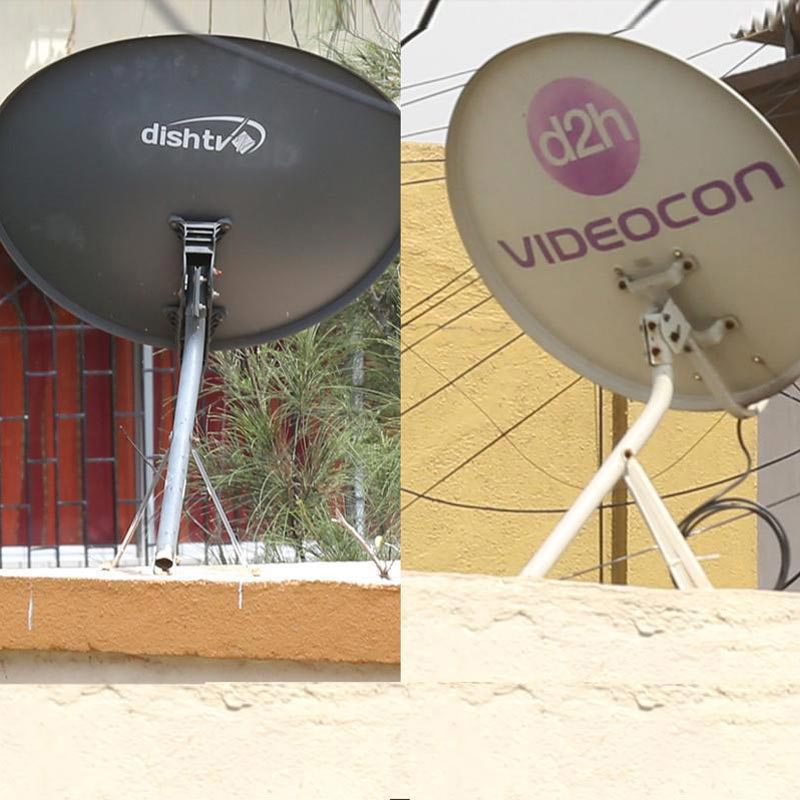
    MUMBAI: Pay TV is going through its travails. A second attempt to create one of the largest pay TV operators in the US  fizzled out on Thursday with DirecTV terminating its plan to acquire rival Dish Network. Bondholders rejected the debt swap proposal that Direct TV made as part of the buyout. 

    The deal construct required DirecTV to pay a nominal $1 for equity and Dish’s bondholders to swap $9.75 billion of existing debt into roughly $8 billion of new bonds, thus asking the latter to take a 20 per cent discount.

    The offer was sweetened by reducing the loss to Dish by around $70 million, which was also rejected. DirecTV then gave Dish the ultimatum to accept the deal by 22 November, following which they would walk out of the door. Which it did when Echostar (the owner of Dish) did not come to an agreement.

    DirecTV CEO Bill Morrow said that the decision was taken to terminate the transaction “because the proposed exchange terms were necessary to protect DIRECTV’s balance sheet and our operational flexibility. We will advance our mission to aggregate, curate, and distribute content tailored to customers’ interests by pursuing innovative products and providing customers with additional choice, flexibility, and control. We are well positioned for the future with a strong balance sheet and support from our long-term partner TPG.”

    With this failed merger, the two will continue to battle with each for other for subscribers in an already shrinking pay TV market place. Both Dish and DirecTV have lost more than half their subscribers since 2013 when pay TV was at its peak. 
     

  • Network18: mixed financial performance in Q2 FY 2025

    Network18: mixed financial performance in Q2 FY 2025

    MUMBAI: That the television industry is going through a rough phase has been talked about ad nauseum. Normally, the June-September quarter is subdued -especially in media and entertainment – with the monsoons setting in and most categories slowing down on their ad spends. But, in 2025, the spends were even further muted despite some tentpole properties being shown on television. Or at least that’s what the media pundits are saying. And this is reflected in the Q2 FY 2025 consolidated financials of the Reliance Industries-owned Network18 Media.

    Network18 Media’s losses have climbed to Rs 1520 million as against Rs 1190 million in the corresponding period of FY2024. Revenues too have marginally dropped to Rs  18,250 million (Rs 18,6600 million in Q2FY 2024). For Q2 FY2025, the company has tightened its belt and reduced its operational costs to Rs 10,670 million (Rs 12,380 million). However, its marketing, distribution and promotional expenses have climbed to Rs 5020 million (Rs 3,720 million); its finance costs have escalated to Rs 1,700 million (Rs 660 million).

    On a half yearly basis, the financials to 30 September 2024 look more respectable. H1 FY2025 profit is at Rs 490 million as compared to a loss of Rs 270 million in H1 FY 2022. The company has turned up a profit despite a drop in revenues to Rs 49,660 million (Rs 51,040 million). It has managed to put a handle on operational expenses which fell to Rs 33,690 million (Rs 36,040 million). However, its marketing, promotion and distribution costs have shot up to Rs 10,120 million (Rs 8,970 million). Employee benefit costs too have risen to Rs 7010 million (Rs 6650 million). Finance costs have more than doubled to Rs 3,200 million (Rs 1,340 million).

    The company said in the a press release posted on the Bombay stock exchange that the news portfolio revenue grew only six per cent primarily driven by growth in digital segment ad revenue across all platforms (Rs 4450 million against Rs 4220 million in Q2 FY 2024). TV advertising was soft during the quarter as industry advertising volumes for the news genre declined by 20 per cent YoY. News’ share in overall advertising inventory consumption also declined by over 200 bps YoY and QoQ.

    Its entertainment vertical  under Viacom18 saw a decline in operating revenue of five per cent during Q2 FY 2025  primarily due to the drop in movie segment revenue. In Q2FY24, Viacom18 Studios had released two big-ticket movies whereas there were no movies released this quarter, which had an impact of Rs 3300 million on the revenue. Growth in ad revenue was primarily driven by digital, across both sports and non-sports segment (Rs 4450 million vs Rs 4200 million). Entertainment TV revenue was shaved to Rs 13,390 million (Rs 14,160 million). This was largely offset by growth in subscription revenue (Rs 7,330 million vs Rs 5110 million) aided by new pricing as well as the increased monetisation of its sports portfolio.

    JioCinema’s recently launched SVOD plans witnessed strong traction and helped it become the fastest-growing subscription-based OTT platform in the country.

    The good news for the company is that The scheme of arrangement for the merger of Network18, TV18 Broadcast Ltd. (TV18) and e-Eighteen.com (E18) became effective on 3 October 2024.  The merger creates India’s largest platform-agnostic news media powerhouse with the widest widest footprint across languages, straddling both TV and digital.  

    The network has a monthly reach of over 350 million on TV and around 250 million monthly unique visitors across its digital portfolio. As consumers and advertisers increasingly gravitate towards omni-channel experiences across different aspects of their lives, having a deep and integrated presence across both TV and digital media will enable the merged entity to serve them better.  The combination of the businesses will result in operational synergies, cost optimization and opportunities for increased revenue realization.

    “We are happy to have completed the merger of our news businesses. With a strong portfolio of TV channels and digital platforms, covering the breadth of the country and catering to its linguistic diversity, we are ideally positioned to become the most preferred news network of India. We are committed to push boundaries of and lead the growth of the industry as we build on this strong foundation,” said Network18,chairman Adil Zainulbhai.
     

  • Zee denies report of cancellation of merger

    Zee denies report of cancellation of merger

    Mumbai: The much-anticipated merger of Zee and Sony has come in a different mode on Tuesday. Zee clarified to the stock listing department about news led by the Economic Times and dismissed all claims of termination of the merger agreement costing Rs 10 billion.

    The company also said the report is baseless and factually incorrect. The news was published in ‘Economic Times’ titled, ‘ The Insider story of what went wrong over two years’. While clarifying these aspects, ‘ We wish to reiterate that the company is committed to the merger with Sony and continuing to work towards a successful closure of the proposed merger.’ Zee said in its released notification.

    Zee also clarifies to abide by commitment for all compliances to SEBI (Security Exchange Board of India) as per Listing Obligations and Disclosure Requirements) Regulations 2015 and will continue to make disclosures in accordance with the same. Zee company secretary Ashish Agrawal shared disclosure clarification.

    After the closing bell shares of Zee Entertainment were down by 8 per cent. ET reported on January 9 regarding potential calling off the deal between Sony and Zee.

  • If not Sony, then who for Zee?

    If not Sony, then who for Zee?

    Mumbai: It’s on. It’s off. It’s on again. It’s off again. The yes and no speculation about the Zee Entertainment merger with Culver Max Entertainment (Sony in India) has been crazy enough to  blow one’s brains in almost every direction.

    Yesterday, Zee-baiters and haters must have gone all gleeful when Bloomberg broke the news that Sony is dis-inclined to go ahead with the fusion courtesy all the brouhaha that has been created around allegations that father Subhash Chandra and son Punit Goenka personally pocketed company-borrowed money. This despite, Punit was loathe to agree to Sony’s demand that he accede his position as CEO of the merged entity to Sony India head NP Singh. Indian media bit the bait of the “failed merger” news and went to town and proclaimed the death of the merged entity. Both Zee and Sony kept their lips zipped officially.  

    Towards evening came a report that a partnership might yet be in discussion splitting the odds equally. The reason: a penalty of $100 million will have to be paid out to Zee TV by Sony should they pull out of the merger, said a few newspaper reports. Others suggested Zee had failed to live up to many conditions precedent in the merger agreement documents between the two and hence a tremendous trust deficit has been built up between the two.  (These reports have since been denied by Zee in a regulatory filing and it has claimed that it is continuing to pursue the merger agreement).

    Sony has to respond to  Zee’s last month’s merger proposal and new conditions by 20-22 January and agree or disagree to the terms; it still has a lot of time to decide. Then why be in a rush to have anonymous sources make the revelation that its interest was off the table? Did the Bloomberg journo misquote the source? Or was Sony just testing how Zee would react to its disgruntlement? Would the latter take advantage of the stringent exit clause and howl or would it just walk away quietly?

    Whatever be Sony’s rationale, it’s imperative that it gets clarity sooner than later. That’s because a megalith is being created with the signing of an agreement between Mukesh Ambani’s Jio (Viacom18) and Disney’s India operations under Disney + Star India. The agglomeration of the two will create a giant which will control a sizeable chunk of the market by viewership. That’s something which many are saying could  harm the development of the media & entertainment vertical in the long term, especially placing oodles of power in the hands of one giant.

    Sectors do better when there is an equally fit No 2 giving the No 1 a run for its dollars. And a No 3 and a No 4. Muscle is needed to fight muscle. Sony, Zee, Sun TV on their own will be dwarfed in front of the Jio-Disney combine. Yes, we have gorillas like Netflix, Amazon, Google, Microsoft operating in India.  But one is not clear about how they will play their hand going forward. A few smaller players will innovate and through their nimble-footedness score a few points. But the advantage of scale of capital, content creation, distribution, and advertising inventory will lie with one major – Jio-Disney.

    We have seen how Jio has changed the dynamics of the telecom as well as streaming business, thanks to its humongous 400 million plus telco subscribers. Making premium sports and entertainment content available for free to subscribers can be a good customer acquisition strategy. But for how long will that go on and that too unchallenged?

    Cable TV operators have been crying foul to the regulator TRAI as the same content on cable TV and DTH is being levied at a fee to subscribers. True, the government wants to make TV available to many more though its free to air service DD FreeDish. For obvious reasons. It wants to be able to address large swathes of the  population across the nation on one platform, rather than have to engage with many more outlets. And it wants it to say what the powers-that-be want to say.

    In such a scenario, it’s imperative that consolidation in the industry is encouraged. So that balance and sanity are maintained.

    Let’s suppose that Sony is willing to let go of a hundred mill in penalties for calling off the merger. Will a corporate raider swoop in jostling out the promoters? Doubtful, considering media is a specialized business which is transforming so rapidly that no non-strategic corporate will be willing to lose billions of dollars in trying to set things right at Zee. Especially considering that its margins have been under pressure and how much cleaning up it needs on several fronts.

    Then, what are the white knight options left for Zee to get scale and get out of its financial commitments to debtors as well as get infusion of cash for growth.

    Private equity? Hedge funds with mountains of resources? They might be cautious, considering how Sony has fled from getting into bed with it.

    Could Adani be interested? He is yet digesting his news venture NDTV and digital acquisitions, so interest from his side might be lukewarm.

    Or could it be Kalanithi Maran’s Sun TV?

    It seems like a good fit. Both Chandra and Maran -run entrepreneurial organisations. Both are pioneers and the latter has so much cash, he does not know what to do with it. Sun TV is strong in the south, Zee TV has strengths in Hindi and some regional languages. Sun TV is nurturing a Hindi language entertainment channel. A joint venture will see lots of benefits accruing to both. The two business groups will have to keep aside the personal and professional differences of the promoters and look at long term survival and growth.

    But that’s in the future. Now, if Goenka and Chandra can find ways to assuage the miffed mood amongst executives in Sony headquarters, the story might have a fairy tale ending like the two want.

    The author is a media analyst. The views expressed in the comment piece are his own and indiantelevision.com need not subscribe to them.

  • Warner Bros Discovery and Paramount Global are into talk for merger – Sources

    Warner Bros Discovery and Paramount Global are into talk for merger – Sources

    Mumbai: Us-based International conglomerates Warner Bros Discovery and Paramount global chiefs met on Wednesday, sources told Reuters. Both companies attributed to making international content are planning to collaborate for upcoming potential projects. For that purpose, Warner Bros Discovery CEO David Zaslav met Paramount Global CEO Bob Bakish allegedly on Wednesday.

    Still, it is not clear that Warner Bros may buy Paramount Global or its parent company ‘ National Amusements Inc ‘(NAI) as per sources speak to the news agency Reuters. According to the Axis report talks between both conglomerates are in the initial stage, so talks have not converted yet into a deal. Paramount is under the management of Shari Redstone led media which owns 77 per cent stakes in Paramount class A.

    In April last year, Warmers Media unit and Discovery merged and formed Warner Bros Discovery, a portfolio that included Discovery Channel, Warner Bros. Entertainment CNN, HBO, Cartoon Network streaming services Discovery+, HBO Max, and franchises such as Batman and Harry Potter. Earlier Bloomberg News reported Paramount was in talks to sell its Black Entertainment Television network to a management-led investor group.

    As per the Bloomberg report old media companies struggle with the transition to streaming. Both companies can collaborate to build infrastructure for film studios and TV networks. If these two media merged it could become the largest media house other than Disney.

  • Elon Musk makes a human appeal to advertisers few hours before Twitter deal

    Elon Musk makes a human appeal to advertisers few hours before Twitter deal

    Mumbai: Elon Musk, the billionaire businessman, donned a serious hat with his human appeal on Twitter, just hours after his amusing entry at the company’s headquarters in San Francisco, California, with a toilet sink in his hand on Thursday. He also posted a video on the social media platform with the caption, ‘Entering Twitter HQ-Let that sink in.’ And this time around, the Tesla chief is determined to seal the $44 billion deal on 28 October, which is reflected in his Twitter bio as it now reads “Chief Twit.”

    In his most recent post, Musk expresses his concern, has requested advertisers to work together, and says that he is buying Twitter to help humanity. The post reads, “I wanted to reach out personally to share my motivation for acquiring Twitter. There has been much speculation about why I bought Twitter and what I think about advertising. Most of it has been wrong.”

    He goes on, “The reason I acquired Twitter is because it is important for the future of civilization to have a common digital town square, where a wide range of beliefs can be debated in a healthy manner without resorting to violence. There is currently a great danger that social media will splinter into far right-wing and far left-wing echo chambers that generate more hate and divide our society.”

    As Musk points out in his post, “In the relentless pursuit of clicks, much of traditional media has fueled and catered to those polarised extremes, as they believe that is what brings in the money, but, in doing so, the opportunity for dialogue is lost.”

    Citing his reasons for buying out the social media platform, he explains, “That is why I bought Twitter. I didn’t do it because it would be easy. I didn’t do it to make more money. I did it to try to help humanity, whom I love. And I do so with humility, recognising that failure in pursuing this goal, despite our best efforts, is a very real possibility.”

    He adds, “That said, Twitter obviously cannot become a free-for-all hellscape, where anything can be said with no consequences! In addition to adhering to the laws of the land, our platform must be warm and welcoming to all, where you can choose your desired experience according to your preferences, just as you can choose, for example, to see movies or play video games ranging from all ages to mature.”

    “I also very much believe that advertising, when done right, can delight, entertain, and inform you; it can show you a service or product or medical treatment that you never knew existed but is right for you. For this to be true, it is essential to show Twitter users advertising that is as relevant as possible to their needs. Low relevancy ads are spam, but highly relevant ads are actually content,” brings out Musk.

    He wraps up his post with, “Fundamentally, Twitter aspires to be the most respected advertising platform in the world that strengthens your brand and grows your enterprise. To everyone who has partnered with us, I thank you. Let us build something extraordinary together.”

    Musk originally offered to buy the social media company earlier in April. But later backed out of the deal in July. After Twitter sued the 51-year-old billionaire, he offered to complete the deal. The court ordered Musk to do so by 28 October 2022.

  • Rupert Murdoch to merge Fox Corp and News Corp?

    Rupert Murdoch to merge Fox Corp and News Corp?

    Mumbai : Media baron, Rupert Murdoch has begun the process of reuniting his media empire, according to News Corp and Fox Corp, which announced on Friday that they would consider combining at his request, nearly a decade after the companies split.

    Both have formed special committees to review potential merger proposals, they said.

    If the merger goes through, Murdoch will have more control over his media assets and the companies will be able to cut costs. Media companies are competing with deep-pocketed social media and content websites for users’ attention while experiencing decades-low growth in advertising sales.

    After years of global expansion, Murdoch split his empire in 2013, putting the print business under the newly formed public entity News Corp and the TV and entertainment business under 21st Century Fox.

    Murdoch stated at the time that his vast media holdings had become “increasingly complex,” and that a new structure would make operations easier. The separation also protected Fox’s entertainment assets from any potential financial consequences of a phone hacking scandal involving the media conglomerate’s now-defunct News of the World publication in the United Kingdom.

    According to a person familiar with the decision-making process at the time, the thinking was that separating the companies would ultimately generate value for shareholders. In 2019, Fox sold the majority of its film and television assets to Walt Disney Co for $71 billion.

    According to Wall Street analysts, the sale focused Fox on live events such as news and sports rather than “disruptive” scripted entertainment content on streaming platforms. The major streaming services, on the other hand, have begun to breach the protective moat. Apple Inc. and Amazon.com Inc, two tech behemoths with deep pockets, have begun bidding for sports rights, securing the rights to stream major league baseball, soccer, and football games.

    Fox recently renewed a long-term contract with the NFL to continue broadcasting Sunday afternoon games, but gave up Thursday Night Football to Amazon. According to a person familiar with the proposal, reuniting Fox and News Corp would give the combined companies greater scale to compete and complement their assets. The combined companies would generate approximately $24 billion in revenue.

    Murdoch, currently owns nearly all of the stock in both companies. Lachlan Murdoch is the chairman and CEO of Fox Corporation. Companies that use such arrangements typically require subsequent mergers to be approved by a majority of shareholders who are not related to the controlling shareholder, though it is unclear whether this will be the case in this case.

    According to Refinitiv, as of Friday’s market close, News Corp. had a market cap of $9.31 billion and Fox Corp. had a market cap of $16.84 billion. In after-hours trading, News Corp shares rose 5 per cent , while Fox rose about 1 per cent.

  • WPP acquires remaining stake in MediaCom India from Sam Balsara & Lara Balsara Vajifdar

    WPP acquires remaining stake in MediaCom India from Sam Balsara & Lara Balsara Vajifdar

    Mumbai: WPP announced that it has purchased the remaining 26 per cent stake in MediaCom Communications in India from Sam Balsara and Lara Balsara Vajifdar. 

    According to the deal signed, Sam Balsara and Lara Balsara Vajifdar entered into a discussion with the network agreeing to exit MediaCom in the interest of its clients to enable the merger.

    Sam Balsara and his family first entered into a contract with WPP in 2008 under which the Balsara family held 51 per cent. The Madison promoters sold 25 per cent of the business in 2017.

    Speaking on the agreement, Sam Balsara said, “This innovative partnership we invested in nearly 15 years ago has been a great success for all parties. It has established MediaCom in India as a fast-growing and highly respected agency by advertisers.”

    MediaCom Global CEO Nick Lawson commented, “It has been a pleasure working with Sam Balsara and Lara Balsara as we grew this successful business in India. We will build on that legacy to deliver the agency model our clients want for the future – founded on brilliant strategy and brand-building capabilities, with pioneering digital expertise running throughout.”

    This acquisition is a part of WPP’s strategy of investing in fast growth markets, new media and digital. On 26 April 2022, WPP announced that global agencies MediaCom and Essence would merge to form EssenceMedia.com. 

  • CCI approves Sony-Zee merger ‘with certain modifications’

    CCI approves Sony-Zee merger ‘with certain modifications’

    Mumbai: On Tuesday, the Competition Commission of India (CCI) announced the amalgamation of Zee Entertainment Enterprises (ZEE) and Bangla Entertainment (BEPL) with Culver Max Entertainment (CME), formerly known as Sony Pictures Networks India.

    The amalgamation has been approved “with certain modifications,” the commission said in an official release.


    According to a statement, CCI stated, “The proposed combination relates to (i) amalgamation of each of Zee and BEPL with and into CME; and (ii) preferential allotment of certain shares by CME to Sunbright International (earlier known as Essel Holdings), and Sunbright Mauritius Investments.”

    Also read: NCLT seeks shareholder nod for Zeel-Sony merger

    Commenting on this development, Sony Pictures Network India said “We are delighted to receive CCI approvals to merge ZEEL into SPN. We will now await remaining regulatory approvals to finally launch the new merged company. The merged company will create extraordinary value for Indian consumers and eventually lead the consumer transition from traditional pay TV into the digital future.”

    In December, Sony and Zee agreed to merge their television channels, film assets, and streaming platforms to form a powerhouse in a key growth market of 1.4 billion people, challenging rivals such as Walt Disney Co.