Tag: Mercedes-Benz

  • Mercedes-Benz India plans to expand its retail footprint with pop-up stores to connect with the youth

    Mercedes-Benz India plans to expand its retail footprint with pop-up stores to connect with the youth

    MUMBAI: In a bid to attract more customers and create brand consumerism, Mercedes-Benz India is coming up with 7 retail pop-up stores. One of which has already been inaugurated in Lower Parel in Mumbai, there are 6 more stores which will be opened in Delhi-NCR, Bangalore, Pune, Hyderabad, Chennai and Goa. 

     For the year 2016, with the brand philosophy ‘Winning with Mercedes-Benz’, the company is reaching closer and making its presence felt to its esteemed and discerning customers. The idea is to win the heart and the mind of consumers based on these innovative initiatives to create more awareness, brand recall and connect with consumers on an interpersonal level. The locations of these pop up stores are selected strategically, based on consumer mapping and behavioural patterns. 

    These pop-up stores will be positioned in places like lounges, pubs, cafes and restaurants to reach out to a larger target audience, this way Mercedes-Benz will be able to reach to youngsters in metros and Tier I markets. These pop-up stores will see sections such as branding and audio-visuals which will enhance consumer interest towards brand Mercedes-Benz. The customers will be able to engross themselves through special Mercedes-Benz applications and merchandise available at these stores.

    Roland Folger, Managing Director and CEO, Mercedes-Benz India said, “The pop-up stores will increase our visibility in the market as we plan to tap the young generation through it. This is a novel way to create a brand connect with youngsters who are extremely enthusiastic about cars. We are opening pop-up stores in multiple places to understand the likeability and choices of today’s outgoing generation. This further helps us in expansion of such initiatives that will give a sense of exclusivity to our customers and build a positive affinity towards the brand.”

    These innovations will help to compete in a market where traditional luxury norms become lesser relevant day-by-day. The year 2016 has a strong line-up of product launches from Mercedes-Benz including 12 new offerings and 10 new dealership inaugurations across markets. Mercedes-Benz aims at a sustained double digit growth in this year too.

  • Mercedes-Benz India plans to expand its retail footprint with pop-up stores to connect with the youth

    Mercedes-Benz India plans to expand its retail footprint with pop-up stores to connect with the youth

    MUMBAI: In a bid to attract more customers and create brand consumerism, Mercedes-Benz India is coming up with 7 retail pop-up stores. One of which has already been inaugurated in Lower Parel in Mumbai, there are 6 more stores which will be opened in Delhi-NCR, Bangalore, Pune, Hyderabad, Chennai and Goa. 

     For the year 2016, with the brand philosophy ‘Winning with Mercedes-Benz’, the company is reaching closer and making its presence felt to its esteemed and discerning customers. The idea is to win the heart and the mind of consumers based on these innovative initiatives to create more awareness, brand recall and connect with consumers on an interpersonal level. The locations of these pop up stores are selected strategically, based on consumer mapping and behavioural patterns. 

    These pop-up stores will be positioned in places like lounges, pubs, cafes and restaurants to reach out to a larger target audience, this way Mercedes-Benz will be able to reach to youngsters in metros and Tier I markets. These pop-up stores will see sections such as branding and audio-visuals which will enhance consumer interest towards brand Mercedes-Benz. The customers will be able to engross themselves through special Mercedes-Benz applications and merchandise available at these stores.

    Roland Folger, Managing Director and CEO, Mercedes-Benz India said, “The pop-up stores will increase our visibility in the market as we plan to tap the young generation through it. This is a novel way to create a brand connect with youngsters who are extremely enthusiastic about cars. We are opening pop-up stores in multiple places to understand the likeability and choices of today’s outgoing generation. This further helps us in expansion of such initiatives that will give a sense of exclusivity to our customers and build a positive affinity towards the brand.”

    These innovations will help to compete in a market where traditional luxury norms become lesser relevant day-by-day. The year 2016 has a strong line-up of product launches from Mercedes-Benz including 12 new offerings and 10 new dealership inaugurations across markets. Mercedes-Benz aims at a sustained double digit growth in this year too.

  • CES 2016: Technology is enabling a super-connected consumer journey

    CES 2016: Technology is enabling a super-connected consumer journey

    MUMBAI: Advances in data-driven technology are creating the foundations for a super-connected consumer journey, offering marketers new opportunities to create powerful, seamlessly integrated brand experiences. This is ZenithOptimedia’s key insight from the Consumer Electronics Show (CES) 2016.


    At this year’s CES, a multitude of new technology was being exhibited, and while there was huge variety in terms of form and function, a common thread was apparent: the sophisticated use of data in order to provide utility or entertainment for consumers. And many of the tech companies developing these new types of technology were taking time to explain to delegates how their products and services took their place in the emerging, highly-connected technological ecosystem.


    The Internet of Things promises a wealth of new data connection points, with each technology platform or application playing its part in creating a new highly-connected consumer journey, mapped out with engaging experiences and time-saving functionality.


    This new highly-connected consumer journey starts with the mobile consumer, and there was an array of new devices on display at CES to enable mobility and to satisfy the needs of the mobile consumer. Once again, wearable devices – that connect online and are linked to other platforms and devices – where everywhere at CES. Of note, Fossil announced that it is rolling out 100 connected devices this year. Many of the wearables were focused on health and fitness. For example, Huawei’s Honor Band Z1 helps you track your fitness, performing tasks such as counting your steps and keeping a record of how you sleep.


    The car will become an increasingly important platform in the new connected consumer journey. Several hi-tech connected cars were unveiled this year. VW unveiled two connected and all-electric concept cars of the future: the e-Golf Touch and the Budd-e microbus, which will perform functions such as letting you know if a visitor is at the front of your house or what’s in your fridge. BMW’s Open Mobility Cloud is a true vision of the car’s rightful place in The Internet of Things. BMW’s new technology shows how the car can be seamlessly integrated into the connected home, enabling the driver to control things such as lighting, heating and appliances from within the car.


    Toyota announced at CES that it was stepping up its Toyota Research Institute efforts to develop artificial intelligence that can help cars communicate with each other without human interaction. It also displayed some of its new concept cars that are powered by Hydrogen. And Mercedes-Benz showed off its brand new Touch Pad steering wheel mounted sensors that allow the driver to effortlessly toggle through menu options for two HD screens.


    The ‘connected home’ is central to the Internet of Things and will play a key role in the integrated experiences brands can offer consumers. A wealth of new smart and connected household appliances were on display at CES, such as Samsung’s new Family Hub fridge, and Whirlpool’s new Smart Washer and Dryer, which integrates Amazon Dash functionality to enable easy, automatic restocking. The development of the Internet of Things means that the home has been identified as a new battleground, and the data collected by our household purchases and our conversations with our devices will be just as valuable as data collected from the Internet. So, Google’s Nest and its Weave platform is now in direct competition with Amazon and its Alexa platform.


    In terms of the ‘connected home’, arguably the most important – and talked about – announcement at CES this year came from Netflix, which is adding 130 countries to its streaming service, making it available all around the world. This is a huge step by Netflix as it looks to become the dominant global internet TV service.


    Robotics will play an increasingly important part in the automated home and in connecting consumer experiences. There were more robots on display at CES this year than ever before. There was much hype about Segway’s partnership with Intel to create a hoverboard butler. And Double Robotics has brought out a new version of its telepresence robot – an iPad incorporated into a mobile robot which live streams back to the user.


    And, critical to the success for brands in this new highly connected consumer journey will be having the payment facilities that best meet the needs of the mobile consumer. Mobile payment will play a key role in converting seamless consumer experiences into sales. Samsung used CES this year to announce that its Samsung Pay facility, currently available in South Korea and the US, would be launching in Australia, Singapore and Brazil. And Coin announced that it is teaming up with MasterCard to help companies integrate mobile payment into their wearable devices.


    ZenithOptimedia chief digital officer Stefan Bardega said, “Many of the exciting technology products and solutions on display at CES this year indicate that we are on the verge of new era of highly connected consumer experiences, fuelled by data and empowered by the Internet of Things. In some instances, companies from different industries are now working collaboratively to develop new technologies and to drive connectivity. All of this is good news for marketers looking to create valuable brand experiences that deliver ROI.”
  • ‘India is one of the few markets where making positive impact is possible’ : Wolff Olins MD Charles Wright

    ‘India is one of the few markets where making positive impact is possible’ : Wolff Olins MD Charles Wright


    Q. Why has Wolff Olins not set up shop in the rapidly growing market of India when it has caught the attention of every big global agency?
    We have no such plans to enter India soon as Mumbai is a very expensive real estate city. We do work for a lot of clients in India. But we have created Dubai as a hub from where we serve a much wider region. We service India from Dubai as a base.


    Q. So how do you get a feel of the local needs of the Indian clients?
    In our Dubai office, we have Westerners, Indians and Arabs working together. The mix is very important. If we only have an American or European team, there would have been huge cultural misunderstandings. So what we are offering clients is the best of both worlds. The benefit from this is that clients can be assured that while we are adding an international flavour, we are also taking into account the local needs.

    Q. Isn’t India a difficult market from a brand perspective as it is very price sensitive?
    I think we have now figured out a model for working in India. You have to, if you are to do business here. Everyone here likes to negotiate. People will bargain even if they don’t need to. I have seen people haggle when you think “why are you even bothering?” But I guess it’s a cultural thing.

    Q. So how do you deal with this?
    Initially, it was irritating but now I enjoy it. That is, perhaps, because Indian businesses do not have the luxury of money. The idea of everything being done frugally is something I have learnt from here. If you were working for a big corporation in America, you would be accustomed to spending large amounts of money. So you could do all sorts of things which here would be considered to be frivolous. It’s something like an athelete that has trained hard and we have now become fitter at running the race the Indian way.

    ‘We have no such plans to enter India soon as Mumbai is a very expensive real estate city. We have created Dubai as a hub from where we serve a much wider region‘

    Q. What other lessons have you learnt from here?
    Having Indians on the team have helped because people are direct even with me and say, “Don’t do that!” What I have learnt working here is that while in Europe modesty is a virtue, here modesty is a weakness. We have to be more forceful. As a foreigner, one might mistake forcefulness for rudeness, but it’s not so! It’s being just honest. I am still learning to be much more direct. There is a big positivity that comes from working in India.

    Q. What about growth?
    There are a number of clients that are super ambitious. Here more than most of the countries I have worked in, making positive impact is possible. It’s not easy, but it’s possible.

    Q. Do Indians value brands as much as the matured consumer markets?
    The word brand identity has been devalued today to mean logo – not just in India but everywhere. Having said that, I find there is a lot of interest in branding in India. You have special supplements and shows about advertising and branding. In the US, which is the most developed market, there are no TV shows on this topic. There are columns in the newspapers and trade magazines like Advertising Age, etc. Perhaps the reason behind this is that the stuff is fairly new here following liberalisation. More people can afford more things, so there is that interest in the topic. There is a curiosity about lots of things. India is like a sponge soaking up stuff not just about branding but a lot of things.

    Q. Isn’t that good news for a branding company?
    Being a branding company, we create or refresh brands. What makes us special is that first of all we try to work for companies that are ambitious and want to do something important. From our point of view, we also want that the work has a big impact. Our internal line is that we are optimistic and ambitious for our clients. So we are looking for clients that are looking at doing good for the world rather than just making money.

    Q. Are Indian brands receptive to this? 
    Hero is a company we have worked with and if you see the ads, they all tell a story or sing a song about how each of us is a hero. I think where we got to our work is that the motor bike isn’t the point. The point is what the two-wheeler or the bike can do for the guy. This ad is a dramatic example of what I am talking about; it reflects the optimism and the ‘doing good for the world’ concept. When you give a young guy or a young couple a bike when they get married, their life takes a different shape. And that, in a small way, is about celebrating the common man as opposed to the high fancy stuff, which to my mind is brilliant.


    In a similar way but in a different segment, Tata Docomo talks about enabling ordinary people to do stuff that they couldn’t do before. The common thread in these two brands is the positive impact we are trying to create.


    I would love to do work in the healthcare sector and financial services. Why is there no big financial group from India like in America and Europe? How come so many families do not have access to clean water? We would love to work with companies that are addressing the big issues of our times. We want to do stuff which has positive impact.

    Q. How do you select brands?
    We want to work with ambitious Indian clients. It could be a small company of designers or it could be companies that know about digital stuff. But they should allow us to do interesting stuff in tune with our philosophy.

    Q. Doesn’t this sound like you were born in a different age and era?
    The company is a child of the 60s. It was the decade of the Beatles in England. In fact, they were one of the first clients of the company. That was the time when the mood was for optimism, equality and freedom. One of the characteristics of the 60s was a desire to do good. There is a sense that the culture from back then has still lived on. These kind of things get us excited – and the good news is that there is lots of such work to do in India.

    Q. With such independent thinking, wouldn’t you have been better off staying separate rather than selling to Omnicom?
    A small group of us actually bought out the company in the mid 90s from the founders. We had an office in London and were active in Europe. We had another office in Spain and one in Portugal. But we had the dream of going fully international. We, thus, set shop in New York and started doing business in Japan because we thought that Asia would be the future.


    America, however, was a very tough market. So we approached Omnicom and told them that we needed their help to go international. We were willing to be acquired but wouldn’t want to be bulldozed because it’s the way that we work that makes us successful and not the size of what we do. So if we get acquired, it is on the understanding that the culture is what makes us successful and Omnicom has to trust us on this one.


    Omnicom agreed to our terms. The way it works is that at the start of the year we tell them what we are going to achieve and as long as you do that, they leave you alone. It is a very fertile environment for us.

  • Mercedes-Benz Fashion Show by Anita Dongre

    Mercedes-Benz Fashion Show by Anita Dongre

    Concept: MusicScapes

    This year, the fashion showcase at the Mercedes Golf Tournament is all about rhythm and music put together in a distinctive style. An excellent way to express rhythm is through stylized fashion showcase.

    Music is a poignant way to express depth and simplicity. Fashion is the finest way to express style and elegance. The theme Music Scapes celebrates both music and fashion on the same platform in a simple yet elegant entertainment format.

    The Collection:

    The collection has been specially designed keeping in mind the theme for the Mercedes Trophy. Each of the five sequences represents a different style of music and rhythm.

    The collection is inspired by the Mercedes-Benz attributes of Attitude, Technology, Tradition, Different Definition and Sophistication.
    Each of these attributes are linked to a distinctive genre of music and presented as a musical élange of fashion excellence.

    Designer: Anita Dongre

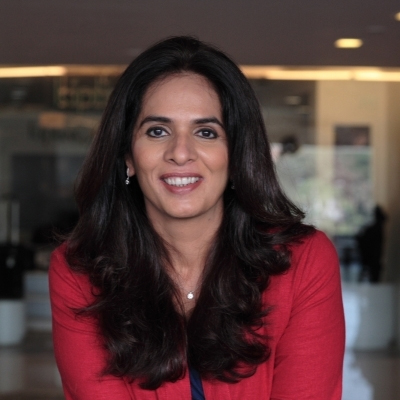
    Anita Dongre is renowned designer, who has been a part of the fashion industry over 15 years. Both her couture label and pr?t line ‘AND’ are available across India. Anita’s clothes have always been synonymous with elegance and sophistication.