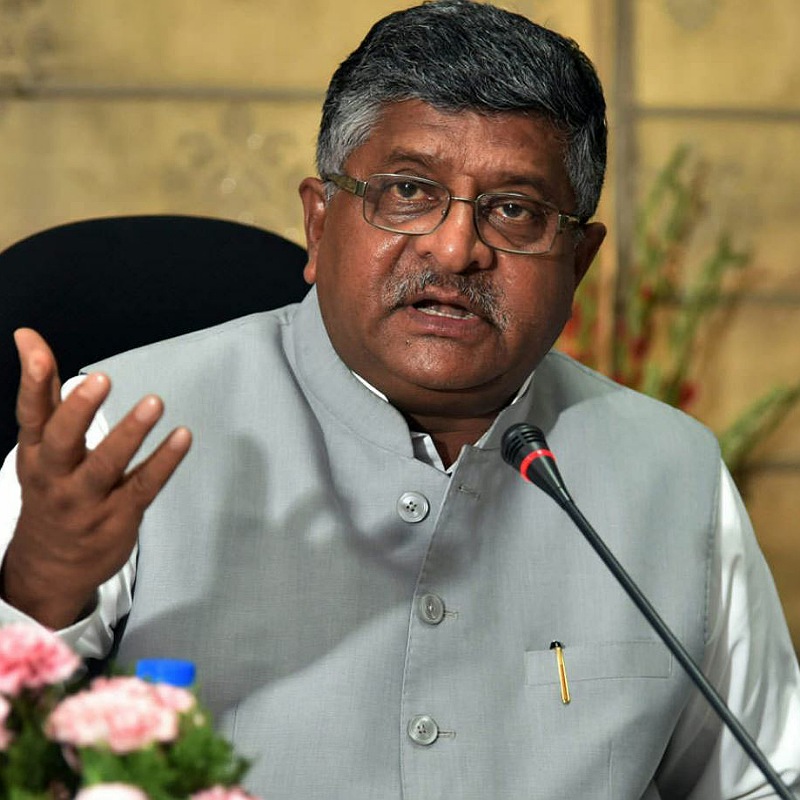
Tag: MeitY

  • Govt’s Digital India Act to monitor OTT, social media & metaverse

    Govt’s Digital India Act to monitor OTT, social media & metaverse

    Mumbai: The Digital India Act (DIA), India’s upcoming digital regulatory framework, will have jurisdiction over OTT and social media platforms like Twitter, Facebook, and the Metaverse, according to media reports.

    Any violations of content guidelines by OTT platforms such as Netflix and Amazon Prime, such as spreading misinformation or inciting violence, will be monitored by the DIA.


    The ministry of electronics and IT (MeitY) is working to replace the existing IT Act 2000 by the winter session of parliament. MeitY is rushing to finish the legislation by the deadline, which will include specific rules for women’s and children’s online safety.

    The Digital India Act will cover social media, OTT platforms, and online apps, as well as web3 applications such as the metaverse and blockchain.

    It was previously reported that the proposed Digital India Act would oversee laws dealing with cybercrime and e-commerce, but new reports indicate that the government has broadened the scope of the DIA.

    In order to create the Digital India Act, the regulators have studied similar internet laws from other countries, including the General Data Protection Regulation (GDPR) in Europe and laws in Singapore and Australia.

    The government has also formed a special committee to review the rules from a technological and legal perspective.

    The government will have the ability to request that OTT platforms remove content that transgresses the aforementioned rules, with the DIA serving as the highest authority in this regard.
  • I&B ministry forms Joint Working Group for audience measurement sampling

    I&B ministry forms Joint Working Group for audience measurement sampling

    Mumbai: The ministry of information and broadcasting (MIB) has formed a Joint Working Group to formulate a mandate for exploring data capturing capabilities in Set Top Boxes (STBs) for audience measurement sampling.

    With Prasar Bharti CEO Shashi Shekhar Vempati as the chairman and DTH association president Harit Nagpal as a member, the joint working group will have one representative each from MeitY, BIS, Barc India, and AIDCF. It will submit its report to the I&B ministry within the next four months.

    The current guidelines for the TV Rating Agencies prescribe the use of panel homes, drawn by establishment survey and representative of the TV viewing population, for carrying out the Audience measurement. However, the latest recommendations from the Telecom Regulatory Authority of India (Trai) and TRP committee headed by Prasar Bharati CEO suggested combining traditional sample-based statistical approaches with big data approaches like Return Path Data in STBS.

    The new working group has been entrusted to study different aspects of the data capturing including Return Path Data (RPD) in the context of the audience measurement, international practices, and security of the viewership data. “It will also study successful global best practices in RPD, like that of Canada, the models undertaken by Barc India and other independent experiments by DTH operators and other relevant stakeholders,” said the ministry on Wednesday.

    The Group will specify minimum standards for RPD capable STBS, SOPs for certification and audit of the same, and specify common protocols, data standards, and modifications to current rating methodology so that data from RpD capable STBS could be integrated into the current TV ratings system.

    Additionally, it will specify minimum standards for any smartphone-based Apps to augment the above proposed RPD system for integration into the current TV ratings.

    -Specify SOPs for certification and audit of the same.

    -Evolve a consensus for how such different data sets including RpD/ smartphone-based data collection will be priced/ costs shared within the framework of the TV ratings system.

    -Specify consent-based privacy framework to govern all such data collection and use within TV ratings.

    -Establish timelines for rollout of above with a clear roadmap to guide all stakeholders while laying out points of responsibility for the same. 

  • MeitY releases FAQs to address queries on IT rules 2021

    MeitY releases FAQs to address queries on IT rules 2021

    Mumbai: The minister of state for electronics and information technology Rajeev Chandrasekhar has released a document clarifying the doubts and explaining the nuances of the due diligence to be followed by intermediaries as part of Information Technology (Intermediary Guidelines and Digital Media Ethics Code) Rules, 2021 (IT rules 2021).

    The FAQs are limited to part II of these rules to be administered by MeitY.

    “The government is committed to providing open, safe and trusted, and accountable internet to all users whose number is increasing both in urban and rural areas,” said Chandrasekhar.

    The FAQ consists of four sections, namely – Section I: Basic Information; Section II: Basic Terminology and Scope of the Rules; Section III: Due Diligence by an Intermediary; Section IV: Additional Due Diligence by Significant Social Media Intermediaries (SSMI); Section V: Non-Compliance to Intermediary Rules.

    Section I comprises of the basic information like- the objective of these rules; effective date; process followed in evolving these rules; major changes over the erstwhile Intermediary Guidelines Rules 2011; how these rules can be leveraged for enhancing the safety of women and children from potential harms; how these rules are also consistent with the requirement of safeguard against user’s privacy, freedom of speech and expression being fundamental rights; how a user can be benefitted, etc.

    Section II comprises the basic terminology and scope of the rules like – which entities can qualify as ‘intermediary,’ which intermediaries qualify as a ‘social media intermediary,’ and ‘significant social media intermediaries’ (SSMI), etc.

    Section III comprises the nuances of the due diligence to be followed by intermediaries like- information to be provided by the appropriate government, what and how much user information to be retained by an intermediary, prominently publishing of grievance officer details, adherence to various prescribed timeframes by an intermediary, etc.

    Section IV comprises the nuances of the additional due diligence to be followed by SSMI like- modalities in appointing designated manpower resources based in India, details of monthly compliance reports and their level of granularity, etc.

    Section V comprises the grounds of non-compliance to intermediary rules.

  • Twitter appoints interim chief compliance officer in India

    KOLKATA: Microblogging site Twitter has appointed an interim chief compliance officer in line with the new IT rules which came into effect on 26 May. The company will share the details with the IT ministry soon, it said on Tuesday.

    The company “continues to make every effort to comply with new guidelines and is keeping IT Ministry apprised of progress at every step,” reported PTI quoting a Twitter spokesperson.

    Earlier the US company said that it has assured the government that it is making every effort to comply with the new IT media guidelines.

    Twitter’s move comes days after the government issued “one last notice” to the company.

    “The provisions for significant social media intermediaries under the Rules have already come into force on 26 May and it has been more than a week but Twitter has refused to comply with the provisions of these rules,” the ministry of electronics and information technology (MeitY) had written to Twitter’s deputy general counsel, Jim Baker.

    As per new rules, any failure to comply with the guidelines could lead to exemption from liability under section 79 of the IT Act, 2000. This essentially means that the platform could be held responsible for content posted by the users.

    The rules recommend a three-tier mechanism for the regulation of all online media. As per the rules, each significant social media intermediary is required to appoint a chief compliance officer, a nodal contact person for 24×7 coordination with law enforcement agencies, and a resident grievance officer. All three should be resident Indians.

  • MeitY seeks compliance details of new IT rules from large social media platforms

    MeitY seeks compliance details of new IT rules from large social media platforms

    KOLKATA: Fears of social media platforms being switched off for not complying with the  new Indian  IT rules applicable to them from today (26 May) proved unfounded. However, they cannot rest easy as the ministry of electronics and information technology (MeitY) has written to “Significant Social Media Intermediaries” (SSMI) asking for details of compliance.

    Under the new “the Information Technology (Intermediary Guidelines and Digital Ethics Code) Rules, 2021,” SSMIs have been defined as social media companies with more than 50 lakh registered users. Hence, Twitter, Facebook, Facebook-owned WhatsApp and Instagram fall under the SSMIs category.

    The government has asked all SSMIs to provide name of app/ website/ service falling within the scope of significant social media intermediary, the details of chief compliance officer, nodal contact person, resident grievance officer and the contact details of all the officers. It has also sought details of compliance status of these rules.

    MeitY has asked for a prompt reply, “preferably today itself.”

    The new set of guidelines came against the backdrop of growing tensions between the government and the social media platforms. “The basic essence of these guidelines is a soft touch oversight mechanism, where we are insisting upon the platforms to develop a robust mechanism for timely redressal of grievances,” said union information technology minister Ravi Shankar Prasad.

    According to the government data provided at that time, India has 53 crore WhatsApp users, 44.8 crores Youtube users, 41 users on Facebook, 21 crores users on Instagram and 1.75 crores on Twitter.

    As part of new IT rules, the government also asked the significant social media intermediaries providing services primarily in the nature of messaging “to enable identification of the first originator of the information.”

    This is something that has riled messaging service  WhatsApp which has filed a lawsuit in the Delhi High Court on Tuesday against the rules that will require it to “trace” the origin of messages sent on the service, which it says is a violation of privacy.

  • Rollback WhatsApp’s new privacy policy: GOI to Facebook

    Rollback WhatsApp’s new privacy policy: GOI to Facebook

    KOLKATA: The union ministry of electronics and information technology (MeitY) has sought the withdrawal of the controversial new privacy policy sought to be introduced in India by the Facebook owned messaging service platform WhatsApp.

    A notice issued to the social messaging platform has sought a reply by May 25, 2021, while noting that an unsatisfactory response may prompt legal action against the internet based application. The Indian government has previously banned several (similarly popular) web supported gaming applications emanating from neighbouring China after the Chinese military incursions into India’s sovereign territory resulted in lives of military personnel on both sides being lost.

    The new privacy policy was initially expected to come into effect on 8 February but was deferred to 15 May in the wake of a severe backlash from users. WhatsApp intended to make it mandatory for users to agree to new data-sharing norms including one, it is alleged, that would result in sharing of data from WhatsApp business chats with third-party applications including its parent Facebook. 

    The advisory issued by the ministry on Tuesday noted, “The deferral (to May 15) does not absolve (read indemnify) it from respecting Indian users’ choice, the value of data security and informational privacy.”

    MeitY is also unhappy with WhatsApp’s alleged discrimination between Indian and European users in the context of the same policy. According to the ministry, it is highly irresponsible of WhatsApp to leverage its position to impose unfair terms and conditions on the large number of Indian users using the messaging application for day-to-day communication purposes.

    “In fulfilment of its sovereign responsibility to protect the rights and interests of Indian citizens, the government of India will consider various options available to it under laws in India,” the notice further stated. India constitutes the largest consumer base of WhatsApp with over 400 million subscribers resident here. 

    The private messaging platform has previously tried to allay fears over the privacy update stating that it was restricted to users of its business services and would in no way compromise the end-to-end encryption services offered by the application. “We’ve spent the last few months working to clear up confusion and misinformation. As a reminder this update does not impact the privacy of personal messages for anyone,” WhatsApp has repeatedly stated through recently issued advisories.

  • Centre asks Twitter & other SNS to delete posts critical of India’s Covid response

    Centre asks Twitter & other SNS to delete posts critical of India’s Covid response

    NEW DELHI: Twitter and other social media platforms have removed about 100 posts and URLs after the Indian government asked them to remove content that was critical of its handling of the current Covid2019 crisis or spreading fake news around the pandemic.

    Twitter said it has notified the impacted account holders of its action taken in response to a legal request from the Centre, while Facebook did not comment on the issue. According to media reports, the microblogging site censored tweets from a member of parliament, an actor, a former journalist, and West Bengal’s minister of labour and law on the government’s behest. It wasn’t immediately known what the removed posts were.

    The action comes after the ministry of information and technology, on the recommendation of the ministry of home affairs, asked social media platforms to remove the posts and URLs to “prevent obstructions in the fight against the pandemic” and disruption of public order due to the said posts.

    They added that the order was issued in view of the misuse of social media platforms by certain users to spread fake or misleading information and create panic about the pandemic in the society “by using unrelated, old and out of the context images or visuals, communally sensitive posts and misinformation about Covid protocols”.      

    Twitter removed or restricted access to more than 50 posts in the past one month at the behest of the government, including tweets that criticised its handling of the pandemic. Other posts removed showed pictures and videos of a recent Maoist attack in Chhattisgarh.       

    A Twitter spokesperson said when it receives a valid legal request, it reviews it under both Twitter Rules and local law.

    “If the content violates Twitter’s Rules, the content will be removed from the service. If it is determined to be illegal in a particular jurisdiction, but not in violation of the Twitter Rules, we may withhold access to the content in India only. The legal requests that we receive are detailed in the biannual Twitter Transparency Report, and requests to withhold content are published on Lumen,” the spokesperson said.

    Earlier this year, more than 500 accounts were suspended and access to hundreds of others in India blocked after the government ordered the microblogging platform to restrain the spread of misinformation and inflammatory content related to farmers’ protests.

    India is currently dealing with one of the worst Covid2019 outbreaks globally. On Sunday, the number of new Covid infections touched 3,49,691 cases and 2,767 fatalities, according to the Union health ministry data. 

  • Centre urges Delhi HC to restrain WhatsApp from implementing new privacy policy

    Centre urges Delhi HC to restrain WhatsApp from implementing new privacy policy

    KOLKATA: The Union government has urged the Delhi high court to restrain messaging app WhatsApp from implementing its controversial new privacy policy, stating that the terms are not in alignment with IT rules 2011.

    “WhatsApp may be restrained from implementing its new privacy policy and terms of service dated 4 January 2021 from 8 February 2021 or any subsequent date pending adjudication by this hon'ble' court," an affidavit by the ministry of electronics and information technology (MEITY) said.

    The ministry also said in the court that the policy does not specify what type of sensitive personal data is being collected. WhatsApp has also failed to notify user details of collection of sensitive personal information under new guidelines, MEITY noted. Moreover, the policy does not leave an option to review or amend information, or withdraw consent retrospectively. Further, it does not guarantee further non-disclosure by third parties.

    MEITY filed the affidavit in response to a petition filed by Dr Seema Singh, Meghan and Vikram Singh. The petition stated that the new WhatsApp privacy policy is violative of the fundamental right to privacy under Article 21. It does not even provide the users to have an option to protect their personal data by opting out of their policy, the petition contended.

    Earlier this week, minister of state for IT and communications Sanjay Dhotre informed the Lok Sabha that the government has asked WhatsApp to review the proposed changes.

    The next hearing in the matter has been posted for 20 April.

    Earlier this month, in response to another petition on the issue, the Centre had sought more time to examine WhatsApp's new privacy policy which is slated to come into effect from 15 May. It had informed the court that the government is already working on a data protection bill. It also suggested that the high court should take note of the differential treatment given to users in regards with the new privacy policy as compared to the instant messaging application's policy in the European Union countries.

    WhatsApp's new privacy policy was introduced on 4 January and was initially expected to come into effect on 8 February, but was later deferred to 15 May amid severe backlash from all corners. The app plans to make it mandatory for users to agree to its new data sharing norms, a key point of which is allegedly sharing data from WhatsApp business chats with Facebook. Since there was no opt-out option, there were apprehensions about privacy which led people to migrate to alternate messaging apps, like Signal and Telegram.

  • ‘No proposal with MEITY to appoint a regulator for social media

    ‘No proposal with MEITY to appoint a regulator for social media

    KOLKATA: Amid the babel over increased regulation of social media in the country, the government has revealed there is no proposal with the ministry of electronics and information technology (MEITY) to appoint a regulator for social media.

    “In order to provide enhanced user safety as also accountability of social media platforms, government has released the Information Technology (Intermediary Guidelines and Digital Media Ethics Code) Rules, 2021 under the Act (IT Act) that specifies the due diligence to be followed by all the intermediaries including the social media intermediaries. The social media platforms are enjoined to develop a robust grievance redressal system,” Union minister Ravi Shankar Prasad informed the Parliament today.

    When asked if the Centre has conducted any study regarding the impact of its control over social media, Prasad stated that no such study has been undertaken. However, he reiterated his oft-mentioned remark that the government welcomes criticism, dissent and also the rights of people to ask questions on social media.

    “This needs to be acknowledged that the fundamental right of speech and expression under article 19(1) is also subject to reasonable restrictions under article 19(2) of the Constitution which can be imposed in the interest of security, safety and sovereignty of India, public order, friendly relations with foreign countries etc,” he noted.

    Prasad mentioned that it is equally important that social media should not be abused or misused to defame, promote terrorism, rampant violence and compromise the dignity of women. It is for these challenges that the intermediaries are expected to remove or disable content as and when brought to the knowledge of  intermediaries either through a court order or through a notice by appropriate government or its agency or when directed under section 69A of the IT Act 2000, following due process of law, he detailed.

    On 25 February, the Centre notified new, stricter guidelines for social media intermediaries which enables setting up of grievance redressal mechanisms and makes these platforms more pliable in assisting government agencies in investigation as well as taking down unlawful or fake content. Experts, while lauding the new "well-intended" rules, noted that these guidelines could undermine the principles of open and accessible Internet and violate the right to privacy and free speech of users, particularly in the absence of robust data protection law.

    It's worth recalling that the new rules came close on the heels of a tussle between the government and Twitter over removal of certain content related to the ongoing farmers’ protests.

  • Parliamentary panel questions legality of new digital media rules

    Parliamentary panel questions legality of new digital media rules

    KOLKATA: The parliamentary standing committee on information and technology grilled officials from the ministry of information and broadcasting (MIB) and the ministry of electronics and information technology (MEITY) on the new rules for monitoring over-the-top (OTT) platforms, digital media and social media intermediaries.

    The parliamentary panel headed by Congress MP Shashi Tharoor questioned the legality of the new regulatory framework, according to media reports.

    Several questions on framing the guidelines were raised – whether industry stakeholders were consulted before framing the guidelines, if opinions were taken from intellectual people, civic society, and the judiciary. Another key point flagged was whether the rules are in conformity with the existing framework. 

    In their deposition, ministry officials have assured the panel that due process was followed before the new rules were introduced. They justified the need for such rules in changing times and also explained the rationale behind them.

    Earlier in a meeting, the panel told MIB officials that it hoped the ministry would implement the rules with due regard to the importance of promoting creativity and protecting freedom of expression while maintaining a robust oversight mechanism.

    On 25 February, the Centre notified an expansive framework to govern online content, titled Information Technology (Guidelines for intermediaries and digital media ethics code) Rules 2021. It gave online content providers between 30 to 90 days to comply with the same. Under the new guidelines, a three-tier oversight mechanism for online content has been put in place.