Tag: MeitY

  • India pitches homegrown large language model as AI summit pre-events kick off

    India pitches homegrown large language model as AI summit pre-events kick off

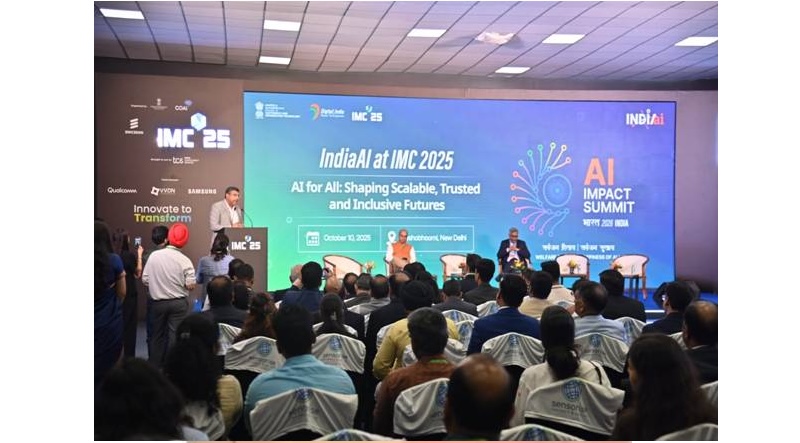
    NEW DELHI: India is making a play for AI self-reliance. At pre-summit events for the India–AI Impact Summit 2026, held during the India Mobile Congress in New Delhi, the government announced plans to launch an Indian large language model by year-end, aiming to cut dependence on foreign systems.

    The IndiaAI Mission, approved last year, is already delivering results: 38,000 graphics processing units are now available at Rs 65 per hour, whilst 12 companies are developing foundation models. “We envision to launch an Indian Large Language Model by year-end, reducing dependence on foreign systems,” says ministry of electronics and information technology additional secretary,  chief executive of IndiaAI and director general of the National Informatics Centre Abhishek Singh. 

    The pre-summit events drew leaders from government, industry and academia to explore how AI can drive inclusive growth across telecom and digital infrastructure. Four panels tackled AI’s role in telecom impact, trustworthy deployment, workforce development and social empowerment. Representatives from Reliance Jio, Tata Consultancy Services, Google, Airtel, Amazon Web Services and Microsoft joined government officials for the discussions.

    MeitY secretary S Krishnan framed India’s approach as both innovative and frugal. “We have adopted innovative means by learning from the experiences of others to build viable projects and products that will truly make a difference for us,” he says. “A number of international agencies have also found our approach very appealing, to build a model which can be used for the rest of the global South.”

    IndiaAI Mission chief operating officer and scientist G at MeitY Kavita Bhatia highlighted AI’s potential in telecom—from spectrum management to fraud detection. “AI in telecom holds immense potential. It can ensure reliable connectivity in rural areas, enhance resilience against network disruptions, and power new services across various sectors.”

    The main India–AI Impact Summit 2026 is scheduled for 19-20 February at Bharat Mandapam in New Delhi. Organised around three “sutras”—people, planet and progress—and seven thematic “chakras”, the summit will position India as a global convener on responsible AI deployment.

    Whether India can deliver a competitive LLM by December—or merely another government deadline—will test its ambitions. For now, the rhetoric is running ahead of the code.

  • TRAI dials up a united front as regulators join forces to fight digital spam

    TRAI dials up a united front as regulators join forces to fight digital spam

    MUMBAI: If spam calls and scam messages are the villains of our digital age, India’s top regulators are teaming up like superheroes. On 25 April 2025, TRAI hosted a meeting of the Joint Committee of Regulators (JCoR) at its New Delhi headquarters, bringing together heavyweights from RBI, IRDAI, PFRDA, SEBI, MoCA, MeitY, and special invitees from DoT and MHA to chart a stronger, cross-sector response to unsolicited commercial communication (UCC) and fraudulent activities.

    Opening the session, TRAI Chairman Anil Kumar Lahoti stressed the urgent need for a collaborative approach. Highlighting the mounting threat to citizens, particularly senior citizens, Lahoti praised the JCoR’s progress but warned that “the challenges ahead demand even greater synergy and vigilance.”

    Key issues topping the agenda included the nationwide rollout of 1600 series numbers for transactional and service calls from government and financial entities. Members agreed to push for swift onboarding within their respective sectors and monitor progress closely. The Council of Administered Telecommunications (CoAT) also presented a solution offering a unified 1600-series CLI for seamless call identification across networks.

    Another major move discussed was the onboarding of commercial communication senders onto the Digital Consent Acquisition (DCA) platform. Regulators pledged to work with principal entities to ensure compliance, aiming to empower consumers with more control over who contacts them.

    Fraudulent communications and the rise of “digital arrest” scams were a serious point of concern. I4C proposed measures including deletion of unused SMS headers, swift action on fraudulent SMS identifiers, and blocking of mobile numbers and IMEIs used for scam messages. Members pledged to develop clear modalities for rapid action.

    Emerging threats from OTT and Rich Communication Services (RCS) platforms also grabbed attention. Recognising that spammers are shifting to newer communication channels, the committee decided that MeitY would engage with stakeholders to roll out spam mitigation strategies mirroring those in traditional telecom.

    The session closed on a determined note, with JCoR members agreeing to intensify collaboration across sectors. The goal? A safer, more secure digital communication ecosystem for India’s consumers, one where fraudsters find it harder to hide and trust travels faster than spam.

  • Vikatan website blocked; MD B Srinivasan to take legal action if he fails to get block removed

    Vikatan website blocked; MD B Srinivasan to take legal action if he fails to get block removed

    MUMBAI: Tamil media publication Vikatan managing director B Srinivasan was a little taken aback when on 15 February his website became inaccessible to him and the 80 lakh readers who access it daily. A notice displayed on the home page said the website had been blocked  as per the direction of law enforcement agencies. 

    On what grounds? 

    Well, the publication had put out what it considered a harmless political satirical cartoon on 10 February, which depicted prime minister Modi in chains alongside US president Trump . This apparently upset BJP Tamil Nadu president K Annamalai who filed a formal complaint with the ministry of information & broadcasting (MIB) and the Press Council of India, claiming the cartoon was objectionable on 15 February. 

    By 6:00 PM that evening, Vikatan’s website became inaccessible to many users, though the organisation received no immediate explanation for the outage.Since then, the website either has taken forever to open or when it does, it says it is an insecure website and a security risk. 

    The 99-year-old publication, which has a history of standing up to government pressure, promptly sought clarification from the ministry of electronics and information technology (MeitY) and the National Informatics Centre (NIC) regarding the domain blockage. Officials from the Press Bureau of India also visited Vikatan’s registered office to enquire about the print availability of Vikatan Plus, which was confirmed to be a digital-only publication.

    The MIB subsequently informed Vikatan about an upcoming inter-departmental committee meeting under the IT Rules, 2021, scheduled for 20 February to review the blocking of content. While granting Vikatan until this date to prepare their response, the ministry maintained that the emergency blocking orders would remain in effect.

    Vikatan has stated it will present its case at the hearing and is prepared to pursue legal action if the decision conflicts with press freedom principles. The publication cited its long history of speaking truth to power, noting previous instances of government action, including being shut down by the British in 1942 and having its editor imprisoned in 1987.

    The case has drawn significant attention as it may set a crucial precedent for media freedom in India, with Vikatan emphasising the need for transparency in actions against media houses.

    The blocking has drawn widespread condemnation from political leaders across party lines. Tamil Nadu chief minister M.K. Stalin, along with prominent figures including MDMK general secretary Vaiko, actor Kamal Haasan, and author Arundhati Roy, have denounced the action as an attack on press freedom.

    Said: Srinivasan  “For over a century, Vikatan has been a steadfast advocate for freedom of expression and has consistently upheld journalistic integrity.”

  • Prime minister Modi chairs celeb laden Waves advisory panel meeting

    Prime minister Modi chairs celeb laden Waves advisory panel meeting

    MUMBAI: It’s happening. It’s not. It’s postponed. It’s not. With all the confusion going around prime minister Narendra Modi’s  pet project to promote India as a cultural and entertainment capital, Waves, he has decided to take the bull by the horns by himself.

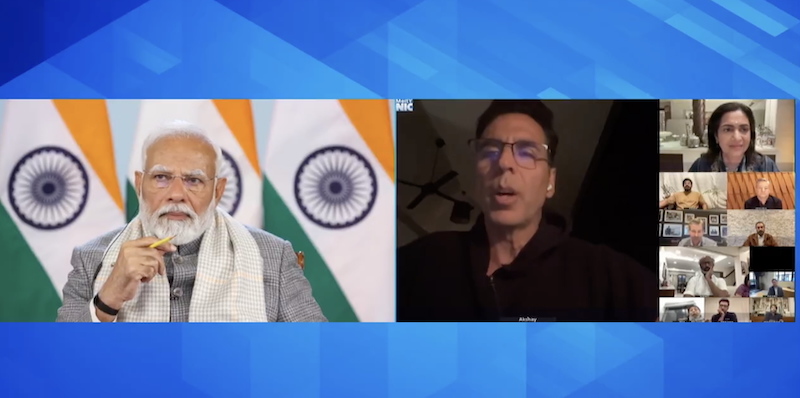
    He had a meeting with the Waves advisory board on 7 February with minister Ashwni Vaishnaw in attendance. The meeting was conducted under the umbrella of Meity. Among those included in the video call figured: Amitabh Bachchan, Aamir Khan, Anupam Kher, Ted Sarandos, Anil Kapoor, Akshay Kumar, Shah Rukh Khan, Shekar Kapur, Anand Mahindra, Hema Malini, Chiranjeevi, Mithun Chakravarty, Ekta Kapoor and many other celebrities.

    Let’s hope, some consensus was arrived at this time to avoid the embarrassments that two date changes have brought to Waves, to the ministry of information and broadcasting and to the country as a whole. . 
     

  • The Role of Digital Identity Verification in Ensuring Safer Online Play

    The Role of Digital Identity Verification in Ensuring Safer Online Play

    In early 2024, Greek game developer Kaizen announced a partnership with biometrics experts Jumio to streamline its user bank account verification. This type of arrangement is being adopted across the global gaming industry and shaping the future of identity verification in gaming.

    For an average gamer, gaming is all about knowing the rummy and poker game rules and excelling in the games. But real money games like poker involve fund transfers and withdrawals. Gamers also share personal information on the gaming platforms that they would want to be kept protected. In a nutshell, online gaming sees the exchange of personal and financial data whose protection is paramount. Digital identity verification is a step forward towards this protection.

    Braving an Identity Crisis

    Know Your Customer (KYC) and Know Your Transaction (KYT) procedures have helped financial institutions secure their business from mismanagement and malpractices. This is what is needed in the gaming industry as well, as reiterated by Jumio’sAsiaPac VP, Frederic Ho, at the 6th ASEAN Gaming Summit. Banks have used advanced online verification processes to transition from face-to-face to online interactions. Gaming companies, on the other hand, are having to face the challenges of the cyberworld upfront.

    In most countries, only adults are allowed to play real money games. Gaming platforms must ensure that appropriate age checks are in place to ensure this. Games also need to eliminate bots at all times and counter sophisticated challenges like AI-generated deepfakes. Concerningly, AI-powered deepfake scams have increased by 10 times between 2022 and 2023.

    Besides, the perennial threat of identity theft and fraud is also present in the gaming industry. Fraudsters even go on to take over gaming accounts through phishing and exploit them. Scammers also create multiple accounts to overwhelm users with fake bonuses and offers.

    Identity theft and hacking are two of the most common forms of fraud encountered by 67% and 61% of gamers, respectively. Upgrades in digital identity verification are, therefore, vital for gaming platforms.

    How Does Digital Identity Verification Help?

    Companies are going for various identity verification systems, even if it comes at a cost. For a few cents to a dollar per verification, these systems are securing identifications in various user-heavy industries. Verification service providers offer packages where companies buy services for a certain volume and, again, later if required.

    18% of young Indians in the age group of 5 to 14 engage in online games. To discourage financial misuse among these gamers, age verification becomes vital in real money games. Identity verification nowadays uses facial biometrics and cross-checking the results with the identity documents. This reduces the chances of a minor’s entry into the gaming ecosystem. Advanced facial biometrics is also important, considering that 73% of all frauds detected in Q1 2024 were selfie mismatches.

    Gaming platforms must ensure ease of use when deploying these processes. A streamlined digital identity verification process combines security with minimised clicks and fast account opening.  
    According to a study, 29% of web traffic in online gaming is caused by bad bots. These days, verification processes can even confirm the presence of a real human in front of the camera. Liveness detection technology detects human presence in the game to eliminate the threat of bots and deepfakes. This technology can also ensure that the face with impressive expertise in pokergame rules is not just an image, a video or a replay.

    Ticking the Right Boxes

    With safety as the primary focus, digital identity verification processes also enhance the user experience. These systems are curtailing the identity verification process and its waiting time. A smaller number of gamers end up abandoning the verification process midway through the process.

    User retention and conversion rates are important metrics for online gaming platforms. A fast and streamlined verification process keeps these rates high. Their role in maintaining top security standards is vital at a time when fraud in online gaming has been increasing at 64% year-on-year in the last two years. Apart from the selfie mismatches and the AI deepfakes, the cyber world also bears more grave threats, such as money laundering, be it in poker matches or multiplayer battle royales.

    For gaming companies, using an advanced digital identity verification process is not just about safety and uninterrupted user experience. Gaming companies in India now need to follow stricter KYC mandates, thanks to recent Ministry of Electronics and Information Technology (MeitY) regulations. The MeitY regulations expect that gaming companies address the pertinent fraud issues faced in the industry, such as multi-accounting, account takeover, counterfeiting of documents, money laundering, etc.

    Advanced identity verification tick boxes that go beyond safe gameplay.

    Towards Total Safety

    The sophisticated innovations in verification systems have given gaming platforms a great opportunity. Along with safe online play, seamless account usage and regulatory compliance are achievable for platforms with one smart infrastructural investment. 
     

  • TRAI convenes meeting of Joint Committee of Regulators (JCoR)

    TRAI convenes meeting of Joint Committee of Regulators (JCoR)

    Mumbai – TRAI convened a meeting of the Joint Committee of Regulators (JCoR) on 27 August 2024, at its headquarters in New Delhi. Members  of the JCoR from IRDAl, PFRDA, RBI, SEBI, MoCA, MeitY, and TIAI attended the meeting. Additionally, DoT and MHA representatives joined as special guests. The JCoR serves as a collaborative platform to examine regulatory implications in the digital age and work collaboratively on regulatory frameworks.

    In his address, TRAI chairman Anil Kumar Lahoti stressed the need for a joint effort to tackle the problem of spam messages and calls. He urged the regulators to discuss and enable implementation of (i) whitelisting of URLs, APKs, O’IT links and call back numbers to be sent in SMS, (ii) migration of existing telemarketers making promotional calls to 140 series on DLT platform, and (iii) declaration of entire chain of telemarketers engaged by them for PE-TM chain binding.

    The meeting explored potential collaborative efforts and strategies to address UCC and fraud through telecom resources. The key issues discussed are as given below-

    “Role of Entities in Whitelisting of URLs, APKs, OTF links, and call back numbers in the content templates and ensuring the traceability of all the messages from senders to recipients – Many instances of misuse of headers and templates have been observed. Fraud takes place through the transmission of malicious links using the variable parts of the messages. In case of misuse of headers and content templates, it is difficult to find the entity that pushed the traffic. Therefore, mandatory whitelisting of URLs, APKs, O’Vl’ links, or call back numbers, and declaration of the entire chain of telemarketers engaged by them for PE-TM chain binding as per the timelines fixed by TRAI’s latest Directions needs to be enforced.

    “Addressing the issue of entities using PRI/ SIP channels for making unsolicited calls – Many business entities make commercial voice calls using SIP/ PRI lines with hundreds of indicators in violation of TRAI’s regulations. These entities should be migrated to the designated 140 series for making promotional calls. Also, there is an urgent need to take firm action, without further delay, on spammers who are using PRI/ SIP/ bulk connections for making promotional voice calls! Robo calls! Pre-recorded calls. 

    “Leveraging the DCA system established by digital service providers to obtain digital consent from consumers – DCA system will be of great value to the entities, not only for messaging services, but also for voice calls. It permits the delivery of messages and calls to the recipients despite their DND preference. The technical infrastructure for DCA is now in place. Regulators were requested to ask the entities under their jurisdiction to start using this facility in a time bound manner.

    “Use of 160 series by the Entities for making service and transactional calls for easy identification by the consumers – 160 series has been allocated exclusively for Service and Transactional Calls. A Pilot Study was commissioned by TRAT and RBI to determine the technical feasibility of various options, the outcome of the same was discussed. Enhancing information exchange among regulators to control frauds using telecom resources – Emphasis was given to exchange information available with various regulators on their platforms and for its effective utilisation to control frauds.

    By addressing these issues collectively, the JCoR aims to protect consumers from the harms of spam and fraud while ensuring a more secure and efficient telecom ecosystem.

  • MeiTY & Railways minister Ashwini Vaishnaw gets I&B additionally

    MeiTY & Railways minister Ashwini Vaishnaw gets I&B additionally

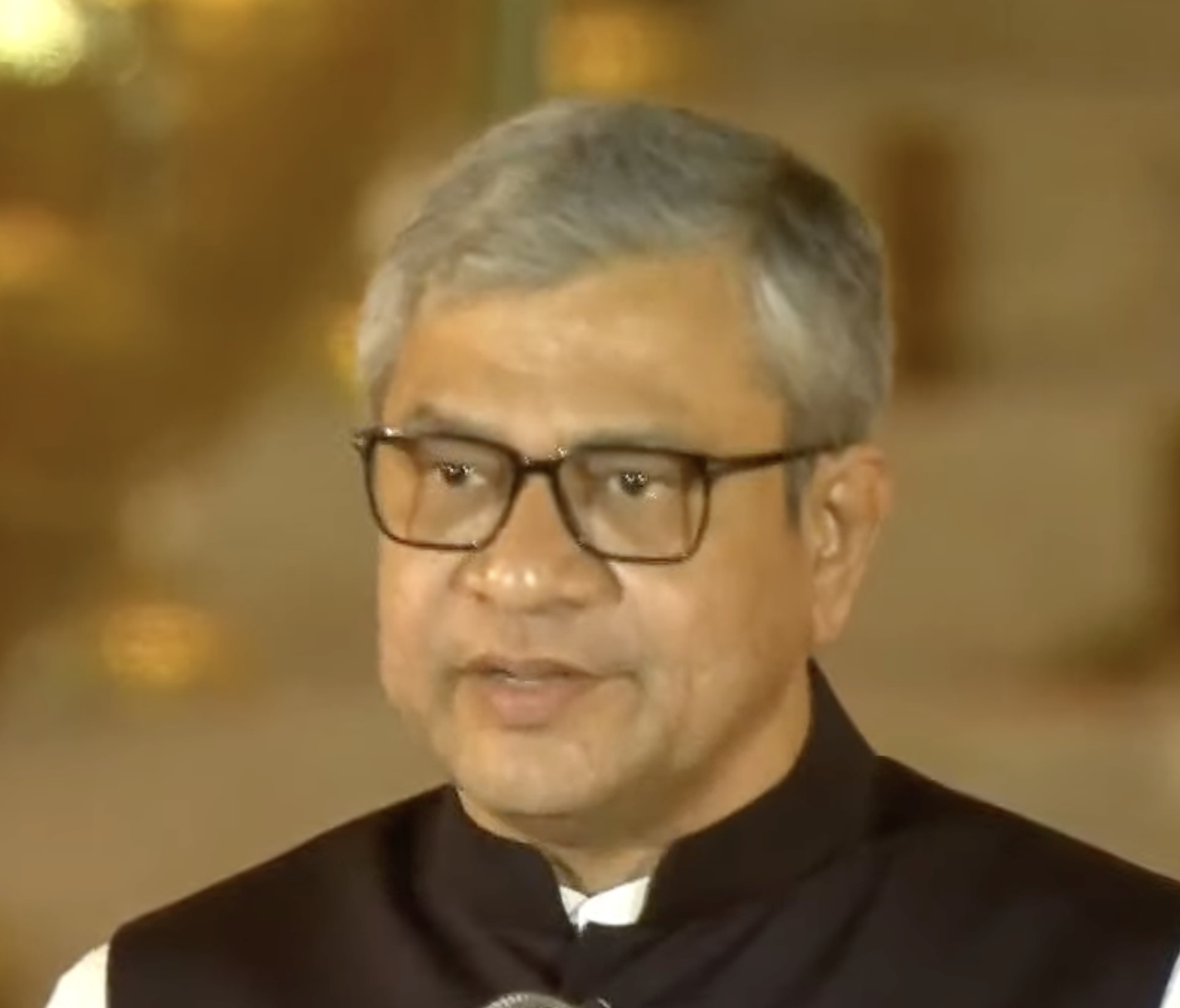
    MUMBAI: Ashwini Vaishnaw made his mark in the Modi 2.0 government by holding two portfolios –  the minister of electronics and information technology as well as that of the railways. Now a third one has been added to his list of responsibilities: in Modi 3.0  that of the ministry of information and broadcasting in Modi 3.0. He replaces  Anurag Thakur who ran the ministry during Modi 2.0, and was kept out of the cabinet, despite winning from his constituency. 

    Vaishnaw will have his hands full with the various ministries. But there is some overlap between the MeITY and I&B ministry, especially considering that both are concerned with the ballooning video streaming business with around 60-70 apps in operation.

    Public pressure has forced the government to regulate the video entertainment streamers, something which MeiTY has done effectively. With the content ecosystem – which is the preserve of the I&B ministry- coming under his supervision, it could well make things easier for him. 


    The minister will have his work cut out for him: on the one hand, Vaishnaw will have  to put in his best efforts to somehow ameliorate the popular perception that the Modi government has been manipulating the media to its own ends, through a carrot and stick approach.  Then Prasar Bharti needs some amount of direction going forward, even as Doordarshan needs to be reinvented and modernised in keeping with the needs of modern viewers who are today spoilt for choice. Decisions on viewership monitoring too have to be taken. 


  • PIB’s fact check unit to track fake news for central govt (updated)

    PIB’s fact check unit to track fake news for central govt (updated)

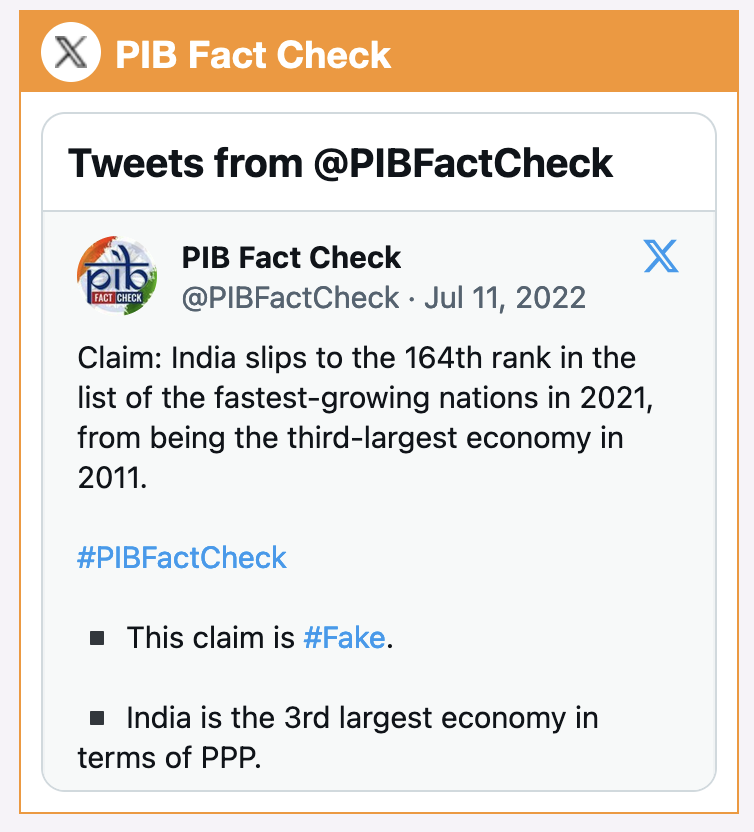
    MUMBAI:  Fake news perpetrators against the government in Delhi – whether on television, online or in print – had better watch out. The ministry of electronics and information technology (MeitY) along with the ministry of information and broadcasting has notified that the fact check unit (FCU) under the Press Information Bureau (PIB) shall be the central government’s watch dog. This has been done so under rule 3(1)(b)(v) of the of the Information Technology (Intermediary Guidelines and Digital Media Ethics Code) Rules, 2021 (IT Rules 2021). 

    Since November 2019, the FCU established under PIB has been effectively working with the purpose of tackling fake news pertaining to government policies, schemes, rules and regulations, programmes, initiatives, etc. Through an established rigorous fact-checking procedure, the PIB FCU’s goal is to help in dispelling myths, rumours and false claims, and provides accurate and reliable information to the public.

    Meanwhile in an update, the chief justice of India today stayed the notification of the FCU, stating that a challenge to the impugned rule involves serious constitutional questions. “The impact of rule on freedom of speech and expression will fall for analysis by the high court.” 

    (updated at 3:43 pm on 21 March 2024.)

  • Grand Jury ready to mark new chapter for DNPA Conclave & Award 2024

    Grand Jury ready to mark new chapter for DNPA Conclave & Award 2024

    Mumbai: In the ever-evolving landscape of the media industry, the Digital News Publishers Association (DNPA) is set to host the DNPA Conclave & Awards 2024, exploring the profound impacts of digital transformation. The conclave, scheduled for 6 February 2024 at Shangri-La, New Delhi, promises to be a ground-breaking event, with a Grand Jury meeting on 15 January 2024, laying the foundation for an insightful and impactful gathering.

    Storyboard18 is the “Knowledge Partner” for the “DNPA Conclave & Awards 2024”.

    Jury Powerhouses: Steering the Course of Digital Transformation

    Distinguished leaders from across industries will be a part of the jury meet.

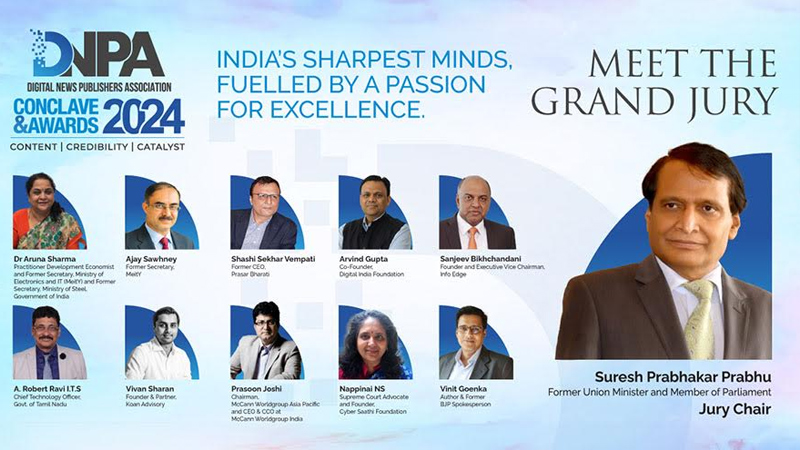
    The jury will be chaired by senior politician, and former senior parliamentarian of India, Suresh Prabhu.

    The Grand Jury includes Sanjeev Bikhchandani, founder and executive vice chairman, Info Edge; Ajay Prakash Sawhney, former secretary, MEITY, Government of India, Shashi Sekhar Vempati, former CEO of Prasar Bharati; Dr Aruna Sharma, former secretary, MEITY, Government of India and Practitioner Development Economist, Arvind Gupta, co-founder, Digital India Foundation; Robert Ravi, chief technology officer, Government of Tamil Nadu; Prasoon Joshi, chairman, McCann Worldgroup Asia Pacific and CEO & CCO at McCann Worldgroup India; N.S. Nappinai, Supreme Court advocate and founder of Cyber Saathi Foundation; Vinit Goenka, author and former BJP spokesperson; and Vivan Sharan, founder and partner, of Koan Advisory Group.

    Their collective expertise will significantly enrich the deliberations of the DNPA Conclave & Awards 2024.

    The Grand Jury will focus on outstanding contributions in navigating India’s digital transformation and fostering innovation. The DNPA Awards serve as a platform to honour cutting-edge digital initiatives that have had a profound contribution to the nation’s progress. The awards recognise the extraordinary innovations made in various sectors including health, education, finance, and media, alongside pivotal areas like women empowerment, environmental protection, governance, and administrative reforms, acknowledging those who have been instrumental in India’s digital journey and inspiring continued innovation and excellence, while setting global standards.

    As the credibility, transparency, and excellence custodians, DNPA is committed to ensuring that the awards bestowed reflect a thorough and meticulous selection process.

    “DNPA Conclave and Awards bring together the best minds in India to select the country’s cutting-edge digital initiatives that are transforming the lives of millions of people and taking India to greater heights. It gives me immense pride to share that some of India’s most credible names are part of this year’s grand jury. I am certain that DNPA Conclave and Awards 2024 Jury Meet will be a great success” commented Tanmay Maheshwari, Chairman, DNPA.

    “As we gear up for the DNPA Conclave & Awards 2024 Grand Jury meet, there’s a buzz of anticipation in the air. It’s not just a meeting; it’s a deep dive into digital impact. With industry leaders coming together, these awards are all about celebrating excellence and fostering innovation as we navigate a brave new world driven by human intelligence and technology,” commented Sujata Gupta, Secretary General, DNPA, emphasizing on the importance of the Grand Jury meeting and awards.

    The DNPA Conclave Agenda: Navigating Digital Transformation in the Media Industry

    The conclave scheduled in February, will delve into critical facets of the ongoing revolution in media. Dialogues and discussions will dissect the role of online intermediaries in shaping public trust, the impact of misinformation on a diverse society like India, and the readiness of the Indian media industry to embrace technological disruptions. Equitable monetization models, advancements in generative AI, and the future of job prospects in the media and entertainment sector will be central to the discussions.

    It promises to be a day of engaging discussions and insightful keynotes by the most notable leaders from corporate and media spheres, and policymakers, culminating in the DNPA Digital Impact Awards (DDIA) ceremony. Tanmay Maheshwari, Chairman of DNPA and managing director of Amar Ujala, will set the stage for the awards’ proceedings, where the winners will be honoured, signifying their endorsement of outstanding contributions.

    The DNPA Conclave & Awards 2024 promises to be a landmark event, bringing together the brightest minds and visionaries to navigate the digital transformation of the media industry which is foundational to India’s progress, and set the tone for a dynamic and innovative future.


  • Explurger App downloaded by 1.3 mn users; expands footprint to 50+ countries

    Explurger App downloaded by 1.3 mn users; expands footprint to 50+ countries

    MUMBAI: Explurger, an AI-powered intuitive social media app that lets users connect and share their moments with friends and family online said that it has crossed several milestones in a short span of time. The gamified social media app has expanded its footprint to over 50 countries, been downloaded by 1.3 million users, and seen a three-fold increase with over 900,000 new members being added in just three months itself.

    Explurger App highlights:
    • Downloaded over a million times from the App Store and Play Store
    • Gained over 900,000 new users in three months
    • Over 226 million people have been invited by registered users
    • Users are on average spending 15-minutes on the app, which is at par with other popular social media apps
    • Over 612,897 ‘Explurger-ins’ (location check-ins) have been posted by users so far via the app
    • Users have cumulatively covered 63,179,971 miles, which is equivalent to circumnavigating the globe more than 2,537 times
    • A total of 190,794 rewards have been accessed through the app

    Till date, over 75 per cent of users who installed Explurger have synced their contacts with it, showing that they trust and enjoy this social media app and want their friends to join them as well. This has resulted in over 226 million invites being sent out by registered Explurger users to those who are not yet on this platform.

    Explurger founder & CEO Jitin Bhatia said, “Our sign-up rate increased substantially post-launch in June. We are seeing higher traction in engagement, with an increased number of posts per day. We appreciate the enthusiasm of our user community, which has steadily risen and has crossed the one million download mark in less than three months. There is no doubt the numbers will grow exponentially as our users continue inviting more people to come and create thriving travel communities on our platform.”

    Explurger also has an 80 per cent sign-up rate with an average engagement time of over 15 minutes, which is at par with other global social media apps. The app also claims to have a 90 per cent retention rate of users who have travelled over 1,000 miles and have AI-based travelogues in at least three cities.  

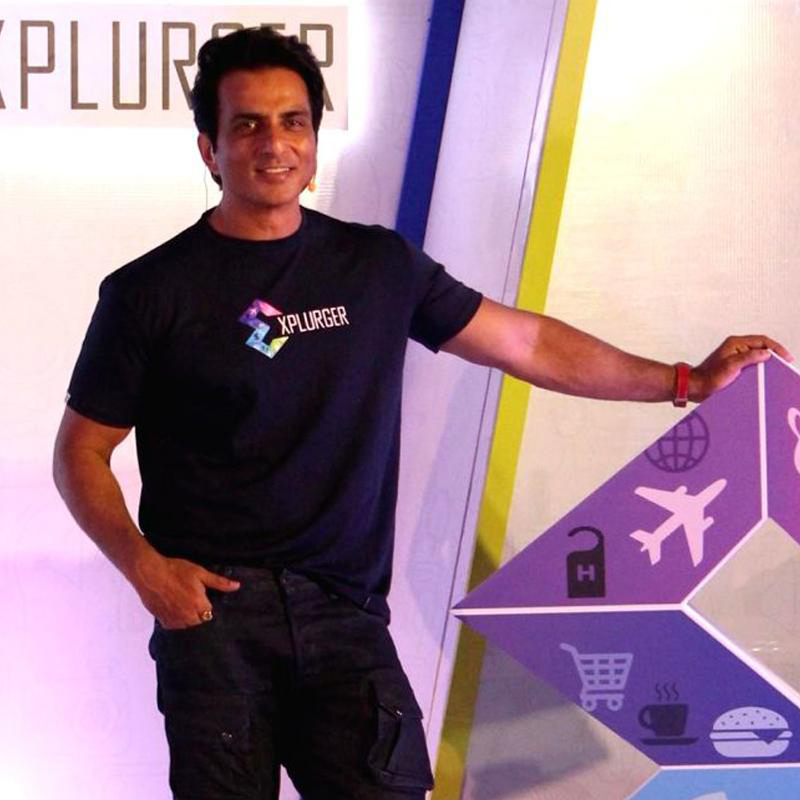
    “The bucket list has also turned out to be a popular feature in Explurger. If you see someone Explurge-in at an interesting place, you can add that place to your bucket list. This isn’t your run-of-the-mill bookmarking feature. The app will automatically remind you when you are in that area. So even if it happens after years and you have forgotten, Explurger will notify you that you had saved it in your list,” shared Explurger co-founder Sonu Sood.

    Explurger has been selected by Google as one of the top 100 promising startups and top 30 mobile startups in India. An AI-powered social media app with a gamified user experience, it lets users connect and share their moments with friends and family online. The app goes beyond just sharing pictures and videos, it uses cutting-edge AI to automatically create travelogues of the memories users share on their profile. Whenever a user creates a post or ‘Explurge-in’, the app’s AI updates the travelogue, so every mile, city, country, pub, and club gets added.

    Each user’s Explurger level goes up as in-app engagement increases, leading to more recognition on the platform. Users accrue rewards based on their activity, which in turn can be redeemed later. Currently, Explurger has more than 40 top brands on board as part of its rewards system and over 190,794 rewards have been accessed by users.

    Explurger has been part of the Appscale Academy, a growth and development programme launched by MeitY and Google, where Indian start-ups are mentored on building high-quality apps for a global audience. The social media start-up was also recently recognised by Google in its Top 10 Innovative Apps in India list.