Tag: media

  • Wow Skin Science onboards Varman M as GM – media, research & corporate comms

    Wow Skin Science onboards Varman M as GM – media, research & corporate comms

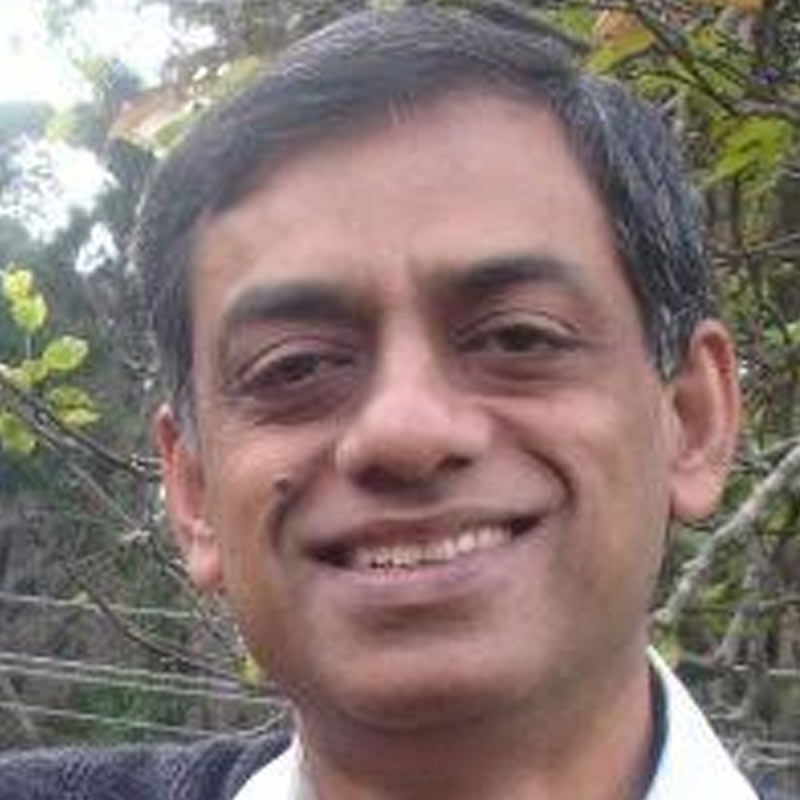
    Mumbai: FMCG personal care brand Wow Skin Science has announced the onboarding of Varman M as general manager – media, research and corporate communications. 

    In this role, Varman will be responsible for defining a media investment plan to drive maximum ROI for Wow Skin Science, Wow Life Science and Body Cupid. “His role will also entail amplifying the corporate communications for all the brands through brand awareness, brand messaging and capitalising on opportunities to elevate the positioning of the brands,” said the company in a statement.

    “We welcome Varman to the Wow family,” said Wow Skin Science co-founder Manish Chowdhary. “With his hands-on experience and knowledge in establishing strategies, I believe his leadership skills will help Wow Skin Science in the path of growth, innovation, creativity and development.” 

    In his career spanning over 13 years, Varman has donned multiple hats from the agency to the advertiser side of the business. His core competencies lie in developing a data-driven media strategy for FMCG, automobile, e-commerce and electronics industries. 

    He has led both offline and digital media to drive integrated media planning and delivered investment strategies for clients like TVS Motor Company, Cadbury, and Flipkart. He also led the media and brand PR for Himalaya Wellness Company prior to joining Wow Skin Science.

    “With the escalation of social media and the exponential rise in content generation across platforms, what sets a brand apart, is the strategic planning, data-driven multimedia approach that ensures a holistic growth, thus driving maximum eyeballs,” said Varman M. “I am looking forward to building Wow Skin Science in a way that helps us elevate our positioning through trends and analytics and of course creativity.”

  • Budget 2022: A clear push towards a digital economy, start-ups

    Budget 2022: A clear push towards a digital economy, start-ups

    Mumbai: Finance minister Nirmala Sitharaman on Tuesday presented the Union Budget 2022 in Parliament. The minister said that the country is set to clock an economic growth rate of 9.2 per cent in the current financial year, in what was her shortest Budget speech yet. While the budget made no tax concessions for the salaried class, some of the key areas it focussed on was a push towards a digital economy, and start-up ecosystem.

    The FM proposed a 30 per cent tax on income from transactions of cryptocurrencies and other virtual assets. Also, to bring such assets under the tax net, Sitharaman proposed a one per cent TDS (tax deducted at source) on transactions in such asset classes above a certain threshold, while also including gifts in crypto and digital assets in the to-be taxed list.

    Sitharam also said that the Reserve Bank of India (RBI) will launch a ‘Digital Rupee’ based on blockchain technology in 2022-23. The Central Bank Digital Currency (CBDC), according to the finance minister, will provide a significant boost to the digital economy and lead to a more efficient and cost-effective currency management system.

    The FM also announced the extension of the Emergency Credit Line Guarantee Scheme (ECLGS) that provided additional credit to over 1.3 crore MSMEs till March 2023. Additionally, its guarantee cover has been expanded by Rs 50,000 crore to Rs 5 lakh crore. Apart from this, in a year riddled with mental health well-being concerns amid the pandemic, FM Sitharaman announced the launch of a ‘National Tele Mental Health Programme’ for better access to quality mental health counselling and care services, in a move that signifies the normalising of mental health as a legitimate area of focus for us as a nation.

    Industry reactions on the Union Budget have been pouring in, and most of the industry stakeholders saw the twin announcements of the digital rupee and the taxation on “virtual digital assets” as a focused drive from the government to regulate the crypto space. Some felt that regulating a decentralised space is a paradox in itself, and took the cautious approach by saying how this plays out needs to be seen.

    Here is what the industry experts had to say:

    CoinSwitch founder and CEO Ashish Singhal who is also the co-chair of Blockchain and Crypto Assets Council (BACC) welcomed the government’s decision to introduce central bank digital currency (CBDC) to accelerate digitisation. Calling it the ‘the gateway to the future decentralised world, aka Web3.0’, he said, “The budget provides clarity on taxation and shows the government’s intent to take a business-friendly approach while protecting the interest of consumers and the exchequer. The regulatory guidance on tax from the government furthers the mainstreaming excitement of this emerging asset class with over $6bn worth of investments in India. Hopefully, this will induct more digital-savvy Indians into the financial ecosystem willing to explore newer forms of investing and wealth creation.”

    OKX.com CEO Jay Hao believes that India is slightly lagging in the digital currency race mainly due to the regulatory hurdles and reluctance in accepting the growing popularity of digital assets/digital currency around the world. “If we look at the global scenario, central banks around the globe have already launched or are about to launch their digital currency,” said Hao, adding that he hoped the announcement made regarding CBDC is implemented without any further delay as it will give a much-needed push to the blockchain industry in India. He also asserted that higher taxes may discourage investors from choosing crypto as an investment avenue and delay the mass adoption of crypto assets in India.

    CoinDCX co-founder and CEO Sumit Gupta hailed taxation of Virtual Digital Assets or Crypto as a step in the right direction. According to him, this will give a much-needed clarity and confidence to the industry. The introduction of CBDC sends a clear signal of India being a digital-first, efficiency-driven, and transparency-led system, he added.

    Mudrex CEO and co-founder Edul Patel also termed it as a progressive step towards boosting crypto adoption in the coming years. The sentiment was shared by other industry executives who felt the government legitimatised crypto assets in India in an indirect way by coming out to tax the same.

    Dentsu India chief client officer Narayan Devanathan said the budget is “future-focused, aiming at the distant vision of India@100”, instead of being focussed on the present. Expressing dismay over the omission of much-needed concessions in critical sectors like health, Devanathan said, “A punishing 2021 for the aam aadmi with more-than-usual expenditure on health and sustenance meant the general populace was looking for immediate relief that would place more cash in their household budgets. That did not happen. Nor was there any extraordinary investment in relieving the healthcare expenditure burden. Even the MSME sectors were only handed a slightly longer lease of life with the extension of the ECLGS, but there was no real move to stimulate consumption by placing more cash at consumers’ disposal, for example, extending LTA claims to restaurants (and not just accommodation).”

    According to Blink Digital co-founder and COO Rikki Agarwal the government sent mixed signals with its proposed announcement of a new digital rupee powered by blockchain technology and taxing digital assets. While the move has cleared the impending ambiguity around the cryptocurrencies in India, signifying its acceptance as an asset and legalising it to boost the economy, imposing heavy taxes on digital assets is an indication that the government intends to discourage the same, he says, adding, “We will wait for more clarity on the regulations.”

    Wunderman Thompson South Asia CEO Shams Jasani said the budget highlighted that government is finally recognising that digital is getting to be bigger and bigger. “With so much talk on digitisation I think the digital revolution has already come in India. And the sheer push on digital infrastructure in the country will help a lot more content consumption and a lot more content creation as well. Also, the reach of the medium is going to grow into the rural areas and smaller towns & cities,” he said, adding that, “Governments across the world are going to ultimately get into the digitalisation of currencies, backed by Crypto technology or blockchain technology, and that is the future of currencies. So that is going to take off and that will also legitimise the whole idea of cryptocurrencies in India.”

    DDB Mudra Group chief operating officer and chief financial officer Anurag Bansal opined that the Union Budget looks neutral, with no major changes in taxation, adding that the launch of digital Rupee based on blockchain technology is a big move to bring in official cryptocurrency in India. Managing the Fiscal deficit while pushing for growth and investments is a great balancing act taken on by the government, he feels; one that will give a boost to capital investments and infrastructure development.

    White Rivers Media CEO and co-founder Shrenik Gandhi termed the budget as ‘fairly balanced’ in that there is sufficient emphasis being laid on up-skilling, and making right investments in tech which is the need of the hour. Speaking of the expected benefits, he added, “Let’s not forget that this is India’s #Budget and not a Big Bazaar scheme announcement. So, the immediate benefit may not be seen right now but considering the long-term narrative, it is a fairly established budget.”

    According to Publicic Groupe South Asia CEO Anupriya Acharaya, the Budget was positive, growth-oriented and with reforms in the right direction. “The advent of 5G is sure to transform communications – for our industry it will help the creation of better AV, voice and AR/VR experiences. It will also fuel digital payments, streaming entertainment, gaming, e-commerce, tele-medicine etc which in turn will aid more Unicorns! From e-passports, to battery swapping for electric vehicles, setting up of optic fiber in villages, setting up of a digital university and skilling through an e-portal, the big push is for technology, digital infrastructure and empowerment,” she added.

    Parle Products senior category head Mayank Shah said putting money in the hands of consumers really helps, so they go out and buy products. “So that was more on the front of ensuring that the demand remained robust given that we have gone through two years of pandemic. That was something that industry expected, either by tax cut, or by increasing the slabs tax brackets or by probably increasing the standard deduction limit. Those were the things that we expected but not much has been done there.”

    Thomas Cook (India) MD Madhavan Menon said the budget was disappointing from a Travel & Tourism perspective. “The Budget made no reference to the industry’s recommendations to aid revival, including rationalisation of taxes (a complete GST holiday, exemption of TCS on outbound tours, reduction in indirect taxes), removal of SIES benefit capping of Rs 5 cr,” he said.

    Mad Over Donuts ED Tarak Bhattacharya also rued that the budget gave no attention to the hospitality industry in particular. “Our industry continues to bear the brunt of the pandemic, probably more than a lot of other sectors. We were hoping for some relief or some measures that would help the industry in the months and years to come,” he said.

    Food and Beverage startup Wat-a-Burger co-founder & CEO Farman Beig said the government has been supportive towards the F & B sector and did announce some steps to help the sector bounce back by shifting the GST compliance onto online food delivery partners on behalf of the restaurants. “However, some relief in terms of ITC (Input tax credit) would have further catalysed the recovery of the sector which otherwise is on the bleeding end. Currently, when the industry is struggling to manage the fixed cost with GST, it requires immediate boost, and cutting down ITC would have worked wonders,” he added.

    TCL India head of marketing Vijay Kumar Mikkilineni welcomed the FM’s increased focus on the consumer electronics industry and formation technology. “The 2022 Union Budget allocated 1.97 lakh crore ($26 billion) for PLI projects, notably electronic components, which are among the 13 vital sectors that would undoubtedly help our economy expand. Furthermore, reduced customs taxes will encourage electronics manufacture, which will benefit the electronics industry,” he said.

    CEO of SPPL – exclusive licensee of Thomson in India Avneet Singh Marwah said, “This budget has been more like announcements and slogans. I’m surprised how FM missed on health and education, which are two main pillars of the economy, despite the pandemic. On one hand the government talks about how electronics will contribute one trillion to the economy and on the other for consumer electronics no major announcements, no roadmaps have been given to the industry.”

  • Budget 2022: I&B ministry allocation slashed to Rs 3980.77 crore in FY23

    Budget 2022: I&B ministry allocation slashed to Rs 3980.77 crore in FY23

    Mumbai: The Union Budget 2022 has earmarked a total sum of Rs 3980.77 crore for the ministry of information and broadcasting in the fiscal year 2022-23. This amounts to a decrease of Rs 90 crore from last year.

    With the exception of the Press Council of India that saw an increase of Rs 7 crore, up from Rs 20 crore in FY22 to Rs 27 crore for FY 23, the budgets for all other autonomous bodies under the MIB were slashed.

    Allocation for Prasar Bharati’s declined to Rs 2,555.29 crore from Rs 2,640.11 crore in the last financial year. The same was the case with The Films and Television Institute of India (from Rs 58.48 crore last year to Rs 55.39 crore this year), the Indian Institute of Mass Communication (from Rs 65 crore to Rs 52 crore), Children’s Film Society of India and the Satyajit Ray Film and Television Institute.

    Allocation for broadcasting under the social services head has also gone down from Rs 2,921.11 crore to Rs 2,839.29 crore. There was also a reduction in the budget for ‘information and publicity’ from Rs 971.26 crore to Rs 942.04 crore.

    ‘Information and publicity’ covers establishment expenditure of media units in the country such as the Bureau of Outreach and Communication, Press Information Bureau, Publications Division, New Media Wing, Registrar of Newspapers for India (RNI), Films Division, National Film Archive of India, Electronic Media Monitoring Centre and others.

    Hailing the budget as “beneficial”, information and broadcasting minister Anurag Thakur said that it is a blueprint to fulfil the hopes and aspirations of a new India in the 100th year of its independence.

    The annual budget for 2022-23 was presented by finance minister Nirmala Sitharaman in Parliament on Tuesday.

  • Nxtdigital board gives in-principle nod for digital, media biz to be acquired by Hinduja Global Solutions

    Nxtdigital board gives in-principle nod for digital, media biz to be acquired by Hinduja Global Solutions

    Mumbai: Nxtdigital Board on Friday accorded in-principle approval for its digital and media businesses comprising broadband, HITS, digital cable television, content syndication & teleshopping to be acquired by Hinduja Global Solutions Limited (HGSL).

    The proposed acquisition is subject to all statutory or regulatory approvals and approval of the shareholders.

    The move is set to fuel and accelerate Nxtdigital Ltd (NDL)’s planned expansion across the digital ecosystem through synergies with HGS’ strength in digital processing and back-end expertise. “NDL will focus on harnessing the best of emerging technologies, whilst expanding its portfolio of digital solutions across geographies,” it said in a statement on Friday.

    The proposed acquisition will include the management team, employees, all businesses and technology across the entire media, communications and broadband spectrum.

    According to the details available, the proposed acquisition will result in shareholders of NDL receiving shares of HGS as per an independent share swap valuation, subject to applicable regulatory approvals.

    The media vertical of the global Hinduja group, Nxtdigital has launched some innovative solutions in the recent past and planned significant expansion in the emerging digital solutions space. “This move will provide much needed synergies, by leveraging the inherent expertise of HGS in the digital back-office and processes space, while allowing the media business to focus on digital expansion. This is also in line with NDL’s vision and mission of being a significant digital platforms company, harnessing the best of emerging technologies, whilst expanding its portfolio of digital solutions across geographies,” it said in a statement.

    The company said it will appoint independent valuers to carry out the valuation exercise and submit the report including share exchange ratio; besides also appointing other key intermediaries to facilitate the proposed move.

  • Acko launches new print campaign for its paperless service

    Acko launches new print campaign for its paperless service

    Mumbai: Acko, a new-age insurance company has released a print campaign with Ogilvy India to communicate the advantage of using its paperless services over traditional insurance providers, to the digitally-savvy youth.

    Insurance companies in India are known for the truckloads of paperwork they make their customers fill for submission for their records. The hassle of obtaining a claim becomes a huge hindrance because of this. As a result, paperwork becomes an enormous and a real pain point for insurance holders.

    Acko wanted to exaggerate the pain point. In this case – paperwork. “We created a setting of the typical brick and mortar offices in India – in a decrepit state, with piles of files and folders.  Through this execution, we represented how horrifying the paperwork with other insurance companies is to customers – as opposed to the smooth, paperless process that Acko offers,” said the brand in a statement.

    Ogilvy India (South) chief creative officer Mahesh Gharat said, “With Acko, there is zero paperwork. Our creative idea and execution was born out of this simple product insight. We wanted to dramatise the pain point and highlight the horrifying experience one has to go through while dealing with traditional insurance companies.  To see the campaign come alive on print was truly gratifying. Acko believed in the idea, and to see brands like Acko investing in the craft and not just the message, is great to see.” 

  • Govt blocks several social media handles circulating fake/inciting content

    Govt blocks several social media handles circulating fake/inciting content

    Mumbai: The government has blocked several social media handles for allegedly circulating “fake and inciting” content, said minister of state for IT Rajeev Chandrasekhar.

    “Taskforce on safe and trusted internet at @GoI_MeitY at work. Handles that tried to push fake/inciting content on Twitter, YouTube, Facebook, Instagram, have been blocked,” tweeted Chandrasekhar on Saturday. 

    The minister said owners of such accounts are also being identified as per law, and the action taken by the platforms will also be scrutinised. According to media reports, the government has suspended as many as 73 Twitter handles, and four YouTube video posts.

    Last year in February, the government had notified Information Technology (Intermediary Guidelines and Digital Media Ethics Code) Rules, 2021 (IT rules 2021) which came into effect on 26 May. The stringent rules were designed to make social media platforms accountable to end-users, and take down any offensive content following a complaint, and assist in investigations.

    The rules also recommend a three-tier mechanism for the regulation of all online media portals and publishers, over-the-top (OTT) platforms, and social media intermediaries. According to them, each significant social media company with over 50 lakh users is required to appoint a chief compliance officer, a nodal contact person for 24×7 coordination with law enforcement agencies, and a resident grievance officer. All three should be resident Indians and their details be put on the company’s website.

  • GUEST COLUMN: Social media will play critical role in building brand awareness in 2022

    GUEST COLUMN: Social media will play critical role in building brand awareness in 2022

    Mumbai: As India continues to fight Covid-19 and Omicron, and people continue to fear venturing out, digital initiatives in both advertising and marketing will become more prevalent in 2022.

    According to the most recent statistics, there are around 3.78 billion social media users globally. The number of such users is expected to climb again next year. Social media trends will rule the advertising and brand strategies in the coming year. Marketing and business will become more varied, inclusive, and responsive to real client requirements in the future. While AI and data-driven marketing will continue to advance, the primary focus will remain on people rather than technology.

    Using social media for brand recognition

    Traditional in-person events and promotions have given way to virtual spaces in brand awareness initiatives. We live in a world of social media marketing, and every company understands the value of social media. Whether you are leveraging influencers, referrals, or simply providing good content, social media has proven to be an important part of building brand recognition. This is due to the fact that social media is an excellent venue for brands to maintain client interactions while also increasing their chances of discovering new leads. In reality, many people become aware of new businesses after hearing about them via a friend on social media. Social media sites are a place where people may interact with one another. As a result, it’s an excellent area for you to interact with clients and build a relationship with them.

    Going ahead, 2022 will witness a greater emphasis on highly personalised one-to-one advertising, mobile advertising with in-app and in-game ads, video advertising, video-embedded display banners, native advertising, accelerated automation, programmatic advertising, and even cookie-less advertising, among other things.

    Here are the top 3 social media trends to watch out for in 2022.

    Metaverse and its virtual universe

    Facebook’s name has been changed to Meta. The company has planned a range of new products for virtual and augmented experiences as part of Metaverse. This is a major gamble on the web’s future, and it has the potential to change social media space. Companies will be able to benefit from new features which Meta will introduce. With the help of new emerging social media trends, they will be able to expand their product reach and visibility.

    Influencers market will continue to grow

    Influencer marketing is expected to reach $13.8 billion in 2021, with growth expected to continue in 2022. Influencer marketing efforts add a personal touch to the product, making it more relevant to the user. Thus, B2B brands will continue to embrace influencers in light of current trends.

    LinkedIn will grow in importance as a social networking platform

    In the digital world, LinkedIn is still a growing star. The company just launched a Hindi version to cater to the 600 million Hindi speakers throughout the world. With 82 million members in a global community of 800 million, India is a key market for LinkedIn’s growth and the second-largest market in terms of members after the United States. Since the pandemic, India’s member base has expanded by more than 20 million (15 percent year-over-year), and participation and talks on the platform have increased dramatically. This will continue to be a great way for brands to reach out to their target demographic.

    In conclusion

    Building brand recognition may require some trial and error, but having a dedicated awareness plan will surely help in your brand’s visibility. By following the latest social media trends, you may position yourself to become a brand that stands out in the eyes of your customers.

    (Rishi Kajaria is MD Kajaria Bathware and JMD of Kajaria Ceramics. The views expressed in this column are personal and Indiantelevision.com may not subscribe to them.)

  • Nextgen TV powered by ATSC 3.0 to be the focus for CES 2022

    Nextgen TV powered by ATSC 3.0 to be the focus for CES 2022

    Mumbai: The Consumer Electronics Show (CES) is all set to open in Las Vegas on 5 January with ATSC again taking exhibit space to showcase the expansion of next-generation TV by broadcasters and the growing list of consumer technology companies who are supporting the effort with integrated ATSC 3.0 receivers.
     
    With the recent expansion of Nextgen TV service in Los Angeles, CA and Washington DC, the next-generation broadcasting now reaches nearly half of all American viewers, it said on Monday. Stations in 46 US markets now offer Nextgen TV powered by ATSC 3.0, and market-by-market service launches are expected to continue throughout 2022.

    “With South Korea in its sixth year of ATSC 3.0 services, Jamaica launching commercial services in 2022 and other countries also considering the ATSC 3.0 broadcasting standard, next year is promising to carry forward the tremendous momentum of 2021,” said ATSC President Madeleine Noland.  “We’re excited to carry that message to CES in Las Vegas, as the consumer technology industry gathers to mark new innovations for the coming year.”

    Over 2200 exhibitors are confirmed to exhibit in person at CES 2022, which is set to begin on 5 January. According to organisers, in the last two weeks, 143 additional companies have signed up to exhibit in person. The event will also close one day early on January 7 in view of the current health protocols.

  • India’s M&E industry to reach $55-70 bn by 2030: CII – BCG Big Picture 2021 Report

    India’s M&E industry to reach $55-70 bn by 2030: CII – BCG Big Picture 2021 Report

    Mumbai: Currently valued at around $27 bn, India’s media and entertainment industry is all set to grow at 10-12 per cent CAGR to become a $55-70Bn industry by 2030, the Confederation of Indian Industry (CII) and Boston Consulting Group (BCG) have projected in their new report, released on Thursday.

    Ending the year on an optimistic note, the report highlighted how the industry has already revived to pre-Covid levels and its next phase of growth will be led by OTT, gaming, VFX and animation.

    “Our industry has always been at the forefront of disruption and we will continue to innovate over the next decade. We will now need new answers and will need them fast, even on the most fundamental things like talent pool to run our companies and methodology for measuring the impact we are delivering to advertisers on our platforms. We will need to continue to embrace change going forward,” said CII National Committee on M&E – chairman and The Walt Disney Company India and Star India president K Madhavan.

    Robust growth for TV

    According to the report – ‘Blockbuster Script for the New Decade: Way Forward for Indian Media and Entertainment Industry’, TV as a medium is expected to remain robust given its function as a platform for family viewing, strong user base, and the evolution of content to meet everyone’s needs. Unlike global markets, India’s TV penetration has remained flat and ARPUs have also been steady, with both trends expected to continue in the medium term. Subscriptions will be driven by the strong performance of regional channels and cost advantage vis-à-vis OTT. Cord cutting is nascent and is expected to be limited in the medium term. TV ad volumes have bounced back to pre-Covid levels, and are expected to continue growing in the future, driven by an increase in advertising on regional channels & growth in new advertisers.

    OTT sector in the scaling stage

    The Indian OTT segment is currently in scaling stage with strong subscription growth and increased investments in premium & original content, stated the report. More affordable data has led to an increase in internet access and digital payments, thereby improving access to OTT platforms and digital videos. The industry is one of the most competitive amongst emerging markets with 40+ players representing all types of content providers. SVOD revenue has seen a remarkable surge over last few years and is expected to overtake AVOD in the coming years.

    “The share of traditional media is slowly declining with increased digital adoption but there is still high headroom for penetration with only 54 per cent of Indian households having a pay TV connection compared to more than 70 per cent in China. For many households, TV continues to be the center of the home and a significant part of family time,” said BCG India MD and partner Mandeep Kohli.

    Film industry’s road to recovery

    According to the report, the film industry has shown encouraging signs of recovery post a difficult 2020. There are a few growth factors for the future – continued growth in regional, direct to digital releases and the rise of “content films” and others. The Indian Postproduction, VFX and Animation industry accounts for <10 per cent share of the global market and has the potential to be a booming sector this decade on the back of several Central and State Government initiatives.

    “After a long period of shutdown, cinema halls are now back in business with a bang. A record number of big-ticket movies are lined up for release well into 2022. That augurs well for the sector but caps on occupancies, closures of cinemas and modified audience behaviour might impact the speed of recovery,” said CII National Committee on M&E co-chairman and founder & MD Roy Kapur Films Siddharth Roy Kapur. “On the other hand, streaming has provided new avenues for screening and broad-based the options available for producers, artistes and technicians. Along with the rise of regional cinema, this marks the start of a truly fantastic decade ahead for the Indian content business.”

    Way ahead for the industry

    According to Technicolor India country head Biren Ghose, who is also CII National Committee on Media and Entertainment vice chairman, the success of India’s media and entertainment will ultimately depend on the ability to scale world-class creative talent in order to capitalise on the global opportunity, especially in the gaming sector.

    The projections showed that the industry is at a critical juncture of transformation, offering rapid growth in some areas. “But, to realise this growth, companies must tweak their strategies to take advantage of the current market situation,” said BCG India MD and senior partner Kanchan Samtani. “In addition to investing in content and technology to improve user experience, companies should also leverage suitable distribution models to enhance reach, focus on providing integrated ad solutions and offer innovative marketing formats to enhance the value proposition to advertisers.”

    “This year’s report put together by BCG with the help of CII Media and Entertainment Committee, looks at the decade ahead, and will help businesses chart their growth path and aide the government in framing enabling measures to facilitate further expansion of the sector,” said CII director-general Chandrajit Banerjee.

  • GUEST COLUMN: Paradox of Choice – How to influence consumers to pay attention to your brand

    GUEST COLUMN: Paradox of Choice – How to influence consumers to pay attention to your brand

    Mumbai: Twenty-four hours in a day and a zillion media choices to be made! This is the new regular day in the life of a consumer.

    From numerous apps to dime a dozen platforms along the consumer journey, audiences and advertisers are facing a present-day that is rife with limitless choices. Why? But of course, thanks to the internet, data, technology, and personalisation – things we have all become accustomed to. But there is a subtle undercurrent these trends ride on the back of – a paradox of choices!

    The internet has increased connectivity, and penetration is only expected to scale higher with time. The pandemic is accelerating pre-existing industry trends and altering consumer behaviours. In the context of the visual culture, we live in, courting the consumer with packaged and positioned choices is the first step, in the series of many, on the path to forging long-term relationships with them. And this journey is full of the subtle art of choosing.

    Evolving M&E landscape

    With the growth of the Indian digital segment, Television, online video, and social media are emerging as the top entertainment media. According to IBEF, internet browsing has gone up by 64 per cent with increased uptake of news, music, and AVGC. There is a marked shift from offline to online consumption for news with 45-minutes to an hour spent on news on social media and apps.

    Content to Commerce is the new consumer purchase journey. With cumulative time spent over two and a half hours per day, Indians are flocking to their social media accounts and consuming content in genres of news, comedy, the art of cooking, and culture. Then there is influencer-led content and shoppable ads here to delight consumers through the journey of content consumption across social channels.

    OTT Triggered Growth

    OLV and OTT platforms have witnessed a meteoric rise as the new entertainment destination. As per a report by Deloitte, popular platforms have garnered a 45-55 per cent increase in paid subscriptions after the outbreak of the pandemic with audiences spending 95-minutes daily on OTT channels. Rising demand for content and affordable subscription packages has triggered this growth. AVOD segment is anticipated to grow more by 2025. Vernacular adoption has also been accelerated during the pandemic and the momentum is here to stay with more than 13 per cent growth as compared to pre-Covid-19 levels, mostly from the hinterland of India.

    E-commerce Search Engines

    E-commerce and social apps are changing how consumers discover new products. Influencers have emerged as the new brand ambassadors and have evolved as a new marketing channel from discovery to conversion. Video commerce and social commerce are key and emerging conversational commerce-enabling brands are driving their D2C model through messaging apps like WhatsApp that the consumer is already acquainted with and uses extensively.

    The influx of short-form video apps is a testimony to this growth. Current statistics show that Indians spend five times more time on homegrown short video apps than global Instagram reels and YouTube shorts. Apps like Trell, Chingari, Sharechat, Roposo, etc. trail only Google and Facebook ecosystem in terms of time spent by Indians. Voice-based technology is breaking the literacy barrier in India. Searches on voice are expected to grow to 50 per cent, a 10x Increase in multilingual voice assistants is expected.

    All of the above trends indicate that the touchpoints to expose a probable consumer to a product have exploded. Meticulous decisions are required by industry mavens to validate the choices they make on one end. On the other, the consumer is scavenging for informed, yet simple choices to make better decisions, faster.

    For instance, at OMD, we balance the act with attention planning. In a world that is chaotic with choices, brands and advertisers need to be present on platforms their audiences are – adapting to consumer sentiment, being nimble, and providing a media mix of digital solutions to brands not hinged on a tall order but realistic metrics – distinctive packaging to cut through the clutter with creativity. After all, with the impact that the pandemic has had on inventory and ad rates, 2022 in the advertising world is going to be more about influencing the consumer to pay attention to your brand versus competitors and the journey will be interesting.

    (Sulina Menon is the chief client officer at OMD India. The views expressed in this column are personal and Indiantelevision may not subscribe to them.)