Tag: media

  • Indian media and entertainment firms script growth story in FY’10

    After a lull driven by the recession, the media and entertainment sector is on a strong rebound amid restructuring.

    The combined turnover of 40 listed M&E companies stands at Rs 174.42 billion for the fiscal ended March 2010, up 13.18 per cent over the earlier year, as the stresses and strains of the economy eased during the 12-month period.

    Adjusting to the changing business landscape and absorbing the pain of massive staff layoffs, the sector also improved its profitability. The drive in the last few years was just the reverse as companies stretched to expand their footprint and kept their eye on valuations as raising capital was far easier in a bull-run phase.

    The jump from a FY’09 revenue of Rs 154.1 billion was led by broadcasting, distribution and publications companies.

    Zee Entertainment Enterprises Ltd was ahead of the pack with an income of Rs 22 billion during the fiscal.

    Companies continue to focus on cost-cutting drives, a main corrective step after going on an expansion overdrive. Overall expenses dropped to Rs 127.91 billion, from Rs 146.55 billion in FY‘09, falling by 12.72 per cent between the fiscals.


    Print cut expenses by 92.18 per cent, while production houses dropped costs by 13.4 per cent.

    At an operational level, the sector has had the most remarkable turnaround story between the two fiscals as operating profit rose 198.9 per cent higher in FY’10 over the year-ago period. The FY’10 operating profit of Rs 24.05 billion looked healthier than the earlier year’s Rs 8.04 billion.

    The companies who had the highest operational efficiency in the fiscal are Sun TV (Rs 7.7 billion), ZEEL (Rs 5.8 billion) and Deccan Chronicle Holdings (Rs 4.4 billion).

    In FY’10, broadcast news, production houses, cable TV distribution, specialty retail and radio were in the red as far as bottom lines go.

    However, the media and entertainment sector as a whole posted a net profit of Rs 9.08 billion in FY10, as against Rs 4.86 billion a year ago. This 86.98 per cent jump in bottom line came at the back of strong performances from Sun TV (Rs 5.2 billion), ZEEL (Rs 4.8 billion), Deccan Chronicle (Rs 2.6 billion) and HT Media (Rs 1.2 billion).

    TV18, IBN18, WWIL, Dish TV and Reliance Mediaworks notched up losses of over Rs 1 billion each during the fiscal.

  • ‘A generational shift is happening in the TV news space’ : BAG Films and Media CMD Anurradha Prasad

    ‘A generational shift is happening in the TV news space’ : BAG Films and Media CMD Anurradha Prasad


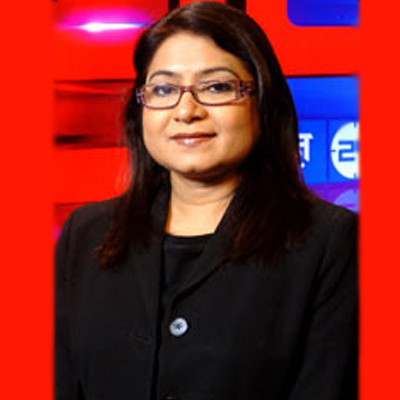
    BAG Films and Media founder-promoter Anurradha Prasad has put up a mighty fight. Not many would have dared take her seat a year back as she had to fend for her two newly-launched channels amid an epic global economic downturn.


    News24 was fighting for space in a crowded Hindi news TV market. The top tier – Aaj Tak, India TV, Star News and Zee TV – had settled. Just down below were IBN7 and NDTV India, both big brands and threatening to pace up.


    Prasad promised hard news, a gap that wasn‘t being serviced too well. But down the road she realised that news consumption was changing. Riding the cyclic wave was important. So she changed gears without compromising the basic ethics of journalism. “We have to bring in the interesting element. India is a youth population. We have to show news that appeals to them,” she says.


    News24‘s market share improved, inching close to seven per cent. E24, the Bollywood news channel, was also gaining currency. While the slowdown allowed her to trim costs, revenues also started looking up. The net result: bringing down the broadcasting business‘ operating loss to Rs 122.36 million during the first nine months of FY‘10.


    The struggle, though, is far from over. The broadcasting business is still bleeding while the TV content production, which used to rake in revenues of around Rs 600 million, is almost blank.


    In an interview with Indiantelevision.com‘s Sibabrata Das & Gaurav Laghate, Prasad says the broadcasting business will operationally break even this fiscal and the focus will be to revive the content production business.


    Excerpts:


    Bag Films recently raised $17.4 million. Is the funding complete with that or you will need more capital?

    We have raised Rs 804.5 million ($17.4 million) through a GDR issue to fund our existing broadcasting business. The board had taken an approval to raise $30 million over two years. We will need new capital when we decide to launch two more channels.


    But aren‘t the two existing channels bleeding while the TV content production business is almost a blank?

    Yes, we are still posting losses, but they are much less than the earlier fiscal. The two channels will be operationally breaking even this fiscal. We will be raising our ad rates by at least 20 per cent while we have brought down the costs.


    Won‘t there be a shortfall even then as your cash burn rate is about Rs 700 million?

    For News24, the cash burn is around Rs 600 million, while our revenue at this level is Rs 400-450 million. We are starting with a hike in ad rates in the first quarter of the fiscal, but expect to post more growth during the course of the year. We will also be tapping more clients. As for E24, we are already very close to being in a break even state.


    When you announced your broadcast plans, you said you needed a funding of Rs 4 billion. How much have you completed so far?

    We had raised Rs 2.4 billion from India Bulls promoter Sameer Gehlaut, High Growth Distributors and Fidelity. Add to this the Rs 804.5 million we have just raised. There is still a shortfall but the original plan included the launch of four channels. We have put the launch of two channels on hold.


    Recession hit the industry just as you made an entry into the broadcasting space. Were your plans upset in a major way?

    We deferred the launch of our two channels. Our revenue projections also went for a toss. But the slowdown actually acted as a blessing in disguise. We could rationalise our costs very early into our expansion into the TV broadcasting space. We transferred our E24 operations from Mumbai to Delhi. This was a bold step as we had to take the risk of running a Bollywood news channel from Delhi, but we succeeded. We also initiated multitasking at the junior level.


    ‘The two channels will be operationally breaking even this fiscal. We will be raising our ad rates by at least 20% while we have brought down the costs by 30% on a monthly basis‘


    Did this also mean trimming manpower?

    Our peak staff strength came down from 900 to 650 people. But I did not make any compromise on the editorial and we did not ask anyone to leave. By restructuring operations, we brought down our costs by 30 per cent on a monthly basis. And now with the market improving, we see ourselves ready for growth.


    News24 has managed to improve its market share in the Hindi news channel space to around 7 per cent. Just before launch, you had said that you would focus on serious news. Have you had to dilute from your original position to gain market share?

    We have had to change along with the tastes of our viewers. So we brought in the “interesting” factor in news without compromising on our journalistic ethics. For example, we aired a story on prostitutes dancing on a cremation ground in Varanasi. We wouldn‘t have shown this two years back. Visually, it was a great story. We must remember that India has a dominant youth population and they consume news so differently. And why blame them? It is a twitter age.


    So is news getting redefined?

    Let‘s face it. A generational shift is happening in the TV news space. And there are cyclic waves of viewing preferences. After the Mumbai terror attack, all channels started ‘Pakistan bashing‘ while the ‘bhoot-pret‘ (ghosts and demons) element came down. And audiences loved that.


    Indians love experimentation in every aspect. I also believe that though English has become the link language, Indians typically think in Hindi. Which is why some of the English news channels are also changing.


    In such a cluttered Hindi TV news market, how will News24 wing its way up?

    Our focus this year will be on distribution. We feel we have a strong chance of going up the ratings ladder among the second tier of Hindi news channels once this is taken care of. I firmly believe that chaos leads to creation.


    We see a high growth and revenue potential for News24 as there are still over 200 advertisers to tap. And the effective rate of advertising is still the lowest in the broadcasting sector. We believe the market will expand to accommodate more players.


    Also, the sporting events like Commonwealth Games, T20 World Cup and ODI World Cup will generate a lot of excitement, which will help the news channels.


    Do you have plans to launch your channels in international markets?

    We have international expansion plans for our broadcasting business. We plan to launch both the channels in the Middle East by the first quarter of this fiscal.


    We already give the feed of E24 to DirecTV in USA for two hours daily.


    How do you plan to revive your TV content production business that was raking in about Rs 600 million?

    Since our broadcasting business is under control, we will bring back our focus on the TV content business. We understand that side of the business very well. We will make soaps as they are the staple diet of all Hindi general entertainment channels. Non-fiction content is expensive and the RoI (return on investments) is not good; broadcasters are realising this. 


    On the FM radio front, will you bid for phase III once the government comes out with a policy for it?

    We have 10 operational radio stations at this stage. We will take a call on bidding for more stations once there is clarity on regulation. There are still question marks on royalty and permission of news on radio. Since we are already in TV news, we believe permission of news on radio will give us a definite push and advantage.


    Are we going to see Bag Films being active on the movie production front this fiscal?

    We will wait for further price corrections. Recent movies like LSD (Love, Sex aur Dhoka) are good business models.

  • India more lenient towards media’s coverage of economic downturn: Study

    India more lenient towards media’s coverage of economic downturn: Study

    MUMBAI: While the world stands to blame the media for keeping them blindsided to the severity of the economic crisis, about a third of Indian respondents do not rest all blame on media, reveals the latest 52-nation online survey conducted by The Nielsen Company.

    India figures ninth on the list of countries who disagree with the view that news media did not do a good job of informing them of issues that led to the economic downturn in India.

    The general consensus among consumers across much of the world is that the media did a poor job informing the public about the issues leading up to the current financial crisis. In India too, 45 per cent of the respondents agreed that media coverage was inadequate but the number of people who disagree is also quite large.

    The two regions where consumers were most dissatisfied were Europe and North America. Not surprisingly, these were the areas hit the most by the current economic crisis. On the other hand, consumers in many Asia Pacific nations, where the impact on the economy hasn’t been as harsh, were generally less critical of the media.

    “In the recent Nielsen Global Consumer Confidence study India was ranked third on confidence levels. The comparatively high level of confidence that Indians have in their economy might be a reason why Indians have shown more mercy towards media coverage during the downturn than the rest of the world. Also the fact that India didn’t face a full blown downturn helped the media to save itself from consumers’ ire,” said The Nielsen Company India associate director – consumer research Vatsala Pant.

    The study states that not only do fewer Indians blame media for its past coverage of the downturn, but with 70 per cent votes, India is ranked third in the list of countries who think that the current media is doing a good job in helping them understand the issues affecting the global economy. Indian respondents also agree that media is helping them to better understand what the governments are doing to solve the economic problems at hand (61 per cent – 6th highest globally).

    Attitudes about early media coverage were most positive in the Philippines, Pakistan, Indonesia, Venezuela and India, all of which scored above the global average.

    Factors that drove the failure to communicate were varied.

    Some critics have argued that the financial media was too close to those it covered. Moreover, the speed of negative events following the Lehman Brothers bankruptcy filing caught not only journalists by surprise, but also economists and government officials.

    Globally, many of the 25,000-plus consumers polled believe media performance has improved over time. In much of the Asia Pacific region, the public thought the media was doing a good job in providing information about what the issues are and what governments are doing to address them.

    57 per cent Indian respondents think that the amount of current news coverage of the global financial crisis is just about right for them, 23 per cent think it’s not enough for them and 20 per cent think there is too much coverage.

  • Govt will not take any step to compromise with freedom of media: PM

    Govt will not take any step to compromise with freedom of media: PM

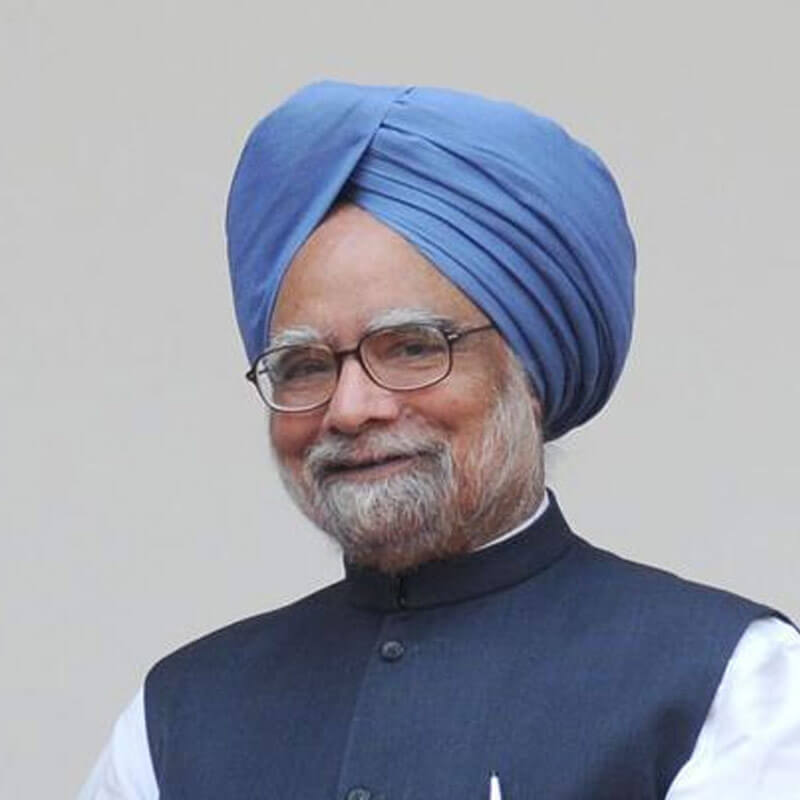
    NEW DELHI: Prime minister Manmohan Singh once again assured the editors of news channels in a meeting today that the government “would not take any step that would compromise with the freedom of the media.”

    The prime minister met the editors of television news channels to discuss the proposed changes in the Cable TV Networks (Regulation) Act.

    Earlier, the editors of 15 news channels had sought for a meeting with the PM. The editors had shown concern and were of view that “the spirit of self regulation must prevail.”

    On 14 January, Singh had hinted at a broader consultation with all stakeholders before coming out with any amendments that would put curbs on news coverage.

  • STB duties waived, duty on convergence products cut to 5%

    NEW DELHI: In the 2008-09 budget, the Union Finance Minister P Chidambaram has no major giveaway to the media and entertainment sector except in the areas of convergence and digitalisation.


    The budget has waived duties on the set-top boxes, giving a boost to the cable TV, direct-to-home (DTH) and IPTV operators. Chidambaram has also reduced duty on convergence products from 10 per cent to 5 per cent.

    Presenting the budget, Chidambaram said specific parts of STBs and specified raw materials for use in IT and electronic hardware industry have been fully exempted from customs duty.

    The minister also announced that to establish parity between devices used in the information/communication sector and the entertainment sector, he was reducing the customs duty on convergence products by half.

    While the announcement partly meets the demand by the Indian Broadcasting Foundation relating to STBs, it has failed to meet the long-standing demands of the film industry articulated through various organisations including Ficci and representations to the Information and Broadcasting ministry.

    Noting that India‘s music, literature, dance, art, cuisine and especially films are attracting huge interest around the world, Chidambaram announced a provision of Rs 750 million to the Indian Council of Cultural Relations to design and implement a programme to project these in a sophisticated and subtle manner. He described this as the ‘soft power‘ of India.

    In a move that may help the printing and newspaper industry, Chidambaram announced reduction of the excise duty from 12 to 8 per cent on “paper, paper board and articles made therefrom manufactured out of non-conventional raw materials by units not having an attached bamboo/wood pulp making plant.” There would be a further reduction on clearances up to 3,500 tonnes from 8 per cent to nil. Furthermore, the excise duty on certain varieties of writing, printing and packing paper will be reduced from 12 per cent to 8 per cent.

  • News as trivial pursuit

    News as trivial pursuit

    We have been rising to majestic heights in our indignation over the proposed Broadcast Bill. Control us? The mature, responsible, credible Indian media? Curtail our freedom? Nonsense! And then we are outed by the police. A fake ‘sting operation’ by Live India (née Janmat) TV ‘exposed’ Delhi schoolteacher Uma Khurana supplying schoolgirls for prostitution. A lynch mob attacked Uma and the police clapped her in jail. The drama was dutifully recorded by the media. Uma was swiftly sacked. A week later, we hear that she had been framed.


    How shocking, said the media, but it’s an exception. We still don’t need your content code, thanks, we know what’s best. Keep your blipping Broadcast Bill away from us.


    However, voluntary self-regulation is tricky. Maybe the Press Council of India should be expanded to include TV and radio and given some teeth – dentures would do – to effectively regulate the media. For as a mortified media professional I have to admit that this scam is not an isolated example of the media’s bad behaviour. Our determined move from news as information to news as entertainment has blurred both our vision and the once inviolable line between reality and drama. Now we offer gossip, titillation, trivia and unreal aspirations as news, brushing aside boring issues of social concern, trampling sensitivities, infringing privacy, tossing aside ethics and humanity in our effort to be the hottest honey-trap available.


    Media as a trivial pursuit erodes public trust
    _______________****__________________

    Take some big stories of the recent past: Uma is framed, ex-model Gitanjali is re-discovered as a beggar, athlete Santhi Sounderajan apparently attempts suicide, freed Sanjay Dutt goes to Vaishno Devi, freed Salman Khan goes home, and MPs and journalists continue to pick bones with Ronen Sen’s ‘headless chicken’. Meanwhile, floods claim almost 700 lives and affect millions in Bihar, and displace over 70 lakh in Assam; farmers continue to kill themselves in Maharashtra, Andhra Pradesh, Karnataka and Kerala. We gave them short, customary coverage like brief, dutiful visits to elderly aunts, and returned quickly to our riveting game of trivial pursuits.


    Unfortunately, the freedoms we enjoy are for our role in educating and informing our audience, for helping them make informed choices that sustain democracy. Media as a trivial pursuit erodes public trust.


    We urgently need self-regulation by a representative body like the Press Council to get back to being a responsible and ethical media
    _____****_____

    And Live India’s scam is not even journalism, it is a criminal act of misrepresentation, using media as a weapon for personal vendetta, fabricating footage to wilfully defame and destroy a victim and incite violence. It doesn’t merit another debate on sting operations, this was not one. It needs to be dealt with as a crime.


    But the other examples represent bad journalism. Former model Geetanjali Nagpal is spotted begging in Delhi. Instantly, she is headline news, portrayed as a drug addict. The media rips the last vestige of dignity off the unfortunate woman, invading her privacy, sensationalising, offering details of her private life, presenting speculation as fact. She turns out to be mentally ill, not an addict. We cannot look beyond gossip value, cannot discuss larger issues of mental health, social security or homelessness. (We have an estimated 18 million street kids, plus possibly as many adults as street dwellers, but they aren’t sexy enough.)


    Santhi Sounderajan’s attempted suicide is gossip, too. Headlined as ‘Tainted athlete’ or ‘Sex-test failed athlete’ Santhi’s identity as an excellent sportsperson is erased by that of a curiosity of unspecified gender. After her failed gender test robbed her of her silver medal at the Asian Games last year, our media had shown no sensitivity. Even now, we don’t go beyond the curiosity factor to look at the third sex’s lack of rights and opportunities.


    Ronen Sen’s fowl story illustrates irresponsible journalism again. Getting your source into trouble for the sake of a delicious quote harms the atmosphere of trust and openness essential for constructive journalism. And then, larger issues of strategic partnership were obfuscated as we lost our head over a chicken. It didn’t help citizens to take informed decisions on the nuclear issue. Such frivolous frenzy reduces democratic decision-making to taking sides based on ignorance and muscle-flexing. Besides, it showed an embarrassing ignorance of English idiom. ‘Running around like a headless chicken’ means thoughtless rushing about; it doesn’t imply you’re a chicken. Like ‘as cool as a cucumber’ doesn’t accuse you of being a cucumber.


    Leading you through an exciting maze of trivia and gossip, the media confuses your priorities. So when a lowly constable hugs Sanjay Dutt he is instantly suspended, but no action is initiated against the policemen and politicians accused in the Bombay riots even after 14 years.


    We are losing our grip. We urgently need self-regulation by a representative body like the Press Council to get back to being a responsible and ethical media. We cannot protect our own freedoms unless we protect the freedoms and rights of others.


    (The Author is Editor, The Little Magazine. She can be reached at sen@littlemag.com)


    This article was first published in DNA (Daily News & Analysis) on 11 September 2007.


    (The views expressed here are those of the author and Indiantelevision.com need not necessarily subscribe to the same)

  • ‘The challenge in a high growth economy is shortage of talented, trained manpower’ : Arvind Sharma – Goafest Committee chairman and Leo Burnett chairman India sub-continent

    ‘The challenge in a high growth economy is shortage of talented, trained manpower’ : Arvind Sharma – Goafest Committee chairman and Leo Burnett chairman India sub-continent

    As the sun and sands of Goa beckon the Indian advertising, media and marketing community for the AAAI organized ad festival Goafest from 19 – 21 April, apart from the celebration that lies in its wake, the event seeks to address more critical issues faced by the industry. Amidst all the hectic last minute schedules, Goafest Committee chairman and Leo Burnett chairman India subcontinent Arvind Sharma very co-operatively took time out to share his perspective on the current standing of the Indian advertising community, the progression towards growth and expansion and the pitfalls that need to be resolved.

    In an exclusive tete-a-tete with Indiantelevision.com’s Renelle Snelleksz, Sharma highlights the point that the fundamental objective for the festival is “to provide a platform for conversations, debates, ideas and celebrations between the rock stars and the aspirants.”

    Excerpts:

    What are the key proponents that necessitate AAAI’s endeavor to capture an untapped area of the Indian advertising fraternity through Goafest?
    As a member of the executive committee of AAAI, it was early last year that we decided to host a National Ad Festival. National because we recognized that epicenters have a way of moving and so different advertising capitals keep springing up across the country. At one point Kolkata was at the helm but today Delhi is huge, only 20 per cent smaller than Mumbai. Therefore AAAI endeavors to promote advertising work from across the country.

    Secondly, there is a fundamental difference between a one off award function and a festival. The former is largely focused on the work of the individual but we chose to go with a festival because it allows an opportunity to display the work and think of ways in which it can be bettered. Unlike award shows, the festival has been designed to not focus on the ‘agency of the year’ concept which selects one winner and a dozen losers. As an industry that is growing at 20 per cent we would rather have 1,000 winners and our attempt is to encourage and nurture those winners.

    By design, there will be no agency of the year but instead a Grand Prix award to recognize work that represents excellence. This will help develop the industry more rapidly. The fundamental objective for the festival is that it aims to provide a platform for conversations, debate, ideas and celebration.

    What are the key differentiators for Goafest as a festival, as compared to existing one off award functions?
    This takes shape in four ways – Firstly, the work that has been entered is displayed so that delegates have the opportunity to make their own judgment on the entries that have won and those that have not. The festival also brings successful International speakers and local jury members as well as aspiring youngsters to exchange their thoughts and ideas.

    Secondly, there are a host of formal seminars and thirdly, apart from the exchange between the aspirants and the rocks stars, the festival brings 2,000 people from various locations, specialist fields intermingling and sharing their experiences.

    Lastly, it brings the rising stars from across India to Goa. As is known, all industry functions like these are expensive and only the senior executives get to go, which ultimately makes development of the industry slower because the exposure is less. Thus we have provided a special package for 800 under 30 year-olds.

    While Goafest is an event of celebration, what are the larger underlying industry issues that the event is looking to address? How can these be remedied?
    The challenge for the advertising industry in a high growth economy is the shortage of talented trained manpower and this will be the primary focus at the event.

    The Ad Conclave that precedes the festival will get 150 leaders of the industry and much like town hall sessions, will get them thinking together. On an every day basis, the nature of competition exists, but this is a platform where we can all put our heads together to finds ways to cope with the existing issues.

    At an individual level, there will be competition but we need to work collectively on this front. The gurus of today spent their first 10 years in a pre-television environment with DD as the only means of TV. Youngsters on the other hand, are acquainted with the growing multimedia environment, though they may not know the craft. It is fundamental for us to listen and learn from them just as much as they learn from us.

    The industry faces a shortage of talent. It is believed that AAAI plans to unveil an ad campaign that would lure youngsters towards the profession. Is that still on the cards?
    Yes, it is still very much on the cards and will follow closely after Goafest.

    What is the growth that the industry has seen over 2006?
    Various sectors have grown differently – The creative agencies have grown at 15-20 per cent, the marketing services at about 30 per cent and the specialist’s media agencies at 25 – 30 per cent. So overall, the industry has grown by 20 -25 per cent and from a global point of view India features in the top five advertising industries. Although our base may be small, our growth rate is impressive.

    Creative agencies
    have grown
    15-20%, marketing services at about
    30% and the specialist’s media agencies
    at 25-30%

    In order to leap ahead in the next three to five years, as the Ad Conclave theme suggests, it would require the combined effort of the industry at large however; two mammoth agencies O&M and Lowe seem to stay aloof? What would be your advice to them?
    In any industry, one hopes for 100 per cent participation. But we have received enthusiastic support across centres and agencies. Sometimes people choose to wait and watch, but as and when they decide to join in we will welcome them. We will go forward with what we believe in, we will just have to give the others time.

    What is your opinion on a having a common Indian advertising body and a single credible award function, a proposition that many professionals have vouched for?
    Our belief is in an advertising festival and not just an award show that will include seminars and interactions. However, there will always be a second and third viewpoint.

    You mentioned earlier that an investment of Rs 50 million was being pumped into the event. You also have a big kitty of sponsors, what will be their contribution to making the event a success?
    Goafest is a non profit event and while no association has complete funding of its own, the whole industry has supported us directly through sponsorship money. We are extremely excited and grateful for their contribution.

    What are the logistics that have to be taken care of when planning an event on such a lavish scale? When did the planning commence and how long has it taken you to set up the agenda?
    The logistics are extensive as one has to get International speakers and coordinate dates that are convenient, to book hotel rooms and check availability. To accommodate and make arrangements for the 800 under 30 delegates as well as senior executives has been a real challenge. We started planning and preparation six month ago.

    With the inclusion of media awards and with a host of International experts and commentators – what are your expectations of the event this year?
    We are hoping to prove to ourselves and to the world that we are capable of hosting an advertising festival comparable to any in the world.

    What advice would you give to the 2,000 media, advertising and marketing professionals that are gearing up to come to Goafest this year?
    (Laughs) My only advice is to come and freely share your thoughts and ideas, as I believe this will finally help to catalyze the growth of the industry as a whole.

  • Ficci faults increase in indirect taxes as wrong signal to corporates


    NEW DELHI: The president of Ficci, H Khorakiwala, I congratulated the finance minister’s “terrific budget” on the social sector front, but said he has lost an opportunity due to the indirect taxes imposed, which has given a wrong signal to the corporate world.

    He specially lauded increased spendings on health, education and agriculture, and also the GDP spending that has been raised.

    He said however that the corporate sector is not happy with the indirect and direct tax burdens, especially various instances of multiple taxation, and it would have been better had he taken measures to ensure keeping the growth rate at 9.2 per cent.

    Responding to a question, he refused to term this as an anti-growth budget, stressing that not that there will be no growth, but it would have been better had he taken this opportunity.

    He also said that the inclusive economic development is sustainable in the long term.

    There will be somewhat retardation in the IT sector due to the taxes imposed and this is a disappointment for the sector.

    Ficci Secretary General Dr Amit Mitra further clarified the body’s stand, saying that it is not as if the 9 per cent growth rate will slow down, because that has happened due to the private sector and corporates, as well as public participation, but the industry had expected something in the budget that would perhaps push the growth rate beyond what is there now, to 10 per cent.

    “That is an opportunity that the finance minister has missed and this is disappointing,” he said.

    Specifically on the IT sector, Mitra held the imposition of MAT is “too premature. The government could have done this when the IT industry would turn more mature, when we started dealing with imbedded technologies, rather than the preliminary technology we are dealing with now.

    He also said that the tax on stock options for employees is also a deterrent for the industry.

    “The government could have lowered taxes and asked for better collection and that would have helped industry, since the minister admitted that tax collection has increased. Instead, he imposed taxes, which is not the right thing.

    However, he said that the reduction of the fiscal deficit, “for the first time in 25 years, will help curb inflation, added with the benefits that the farm sector has been given, which lies at the core of inflation.

  • Citizen journalism, blogging to grow in importance in journalism in the US: Survey

    MUMBAI: A majority of Americans (55 per cent ) in an online survey said that bloggers are important to the future of American journalism. 74 per cent said that citizen journalism will play a vital role. The results are contained in a new We Media — Zogby Interactive poll.

    Most respondents (53 per cent) also said that the rise of free Internet-based media pose the greatest opportunity to the future of professional journalism and three in four (76 per cent) said the Internet has had a positive impact on the overall quality of journalism.

    The We Media survey results were released by iFOCOS and pollster John Zogby as part of an iFocos conference on media innovation hosted by the School of Communication at the University of Miami, with major support from the John S. and James L. Knight Foundation. In the national survey of adults, 72 per cent said that they were dissatisfied with the quality of American journalism today. A majority of conference-goers who were polled on the subject agreed — 55 per cent said they were dissatisfied, and 61 per cent said that they believed that traditional journalism is out of touch with what Americans want from their news.

    Nearly nine out of 10 media insiders (86 per cent) believe that bloggers will play an important part in journalism’s future. The US is now seeing mainstream acceptance of what the survey calls the Power of Us – – the value, credibility, and vital expression of citizen and collaborative media, Until recently, many traditional news enterprises have been skeptical about We Media. They were either fearful or dismissive of our 2003 research forecasting and documenting the change in the media ecosystem. Now the Zogby poll provides additional evidence that “We Media” is an essential component — perhaps the essential component — for the agenda for news and information into the future.

    iFocos co- founder Andrew Nachison says, “The research documents the widespread recognition that control and influence on how we know what we know is shifting to a vastly more distributed network of empowered individuals and organisations. This obviously will have a big impact on how media organisations evolve and conduct business, but it’s really about how we all discover, create, share and apply information, and that’s important to all industries, to entrepreneurs, to non-profits, to governments, to individuals and to society as a whole. We are all part of the ecosystem.”

  • Ofcom reviews the role of public service broadcasting on kid’s TV in UK

    Ofcom reviews the role of public service broadcasting on kid’s TV in UK

    MUMBAI: With the exploding children’s media landscape in UK, Britain’s content regulator Ofcom has announced a project to review the future of children’s programming with specific reference of public service broadcasting (PSB).

    The project will look at the state of children’s media in the UK and examine the role of television within this.

    The research will commence this month and a research report will be published in summer 2007.

    A full PSB Review is expected early in 2008.

    Currently, 18 dedicated children’s channels are available on multi-channel platforms hence, the review will examine the extent to which the purposes of PSB on television have been fulfilled. “It is proposed that the final focus of the project be on children’s television programming across PSB and non PSB channels; we ultimately aim to assess the desirability and scope of any public service interventions in this market.”

    The project, will also attempt to address some of the geographical issues relating to children’s programming like “the role of PSB children’s programming in reflecting the cultural diversity of the different nations and regions of the UK.”