Tag: media

  • 2012: Fighting for change in the media and ad biz

    2012: Fighting for change in the media and ad biz

    2012 proved to be a year when the broadcasters, media and ad agencies were fighting for change. The year began with the hunt for a TV ratings system that would take care of the changing environment and the launch of the Broadcast Audience Research Council (BARC) was announced that would be acceptable to all the stakeholders of the industry.

    Another head turner event came in the form of NDTV filing a case against TAM and its holding companies in the New York Supreme Court. The move opened conversations regarding the reliability of data provided by TAM and saw the industry bodies converge and work in tandem with the ratings agency to improve the state of affairs.

    It was a dull year for media spends as a poor GDP growth rate dampened the market sentiment which ultimately led to the advertisers tightening the purse strings. As a result, the advertising expenditure forecast was downgraded at the half year mark. The festive season also failed to lift the spirits in the ad market.

    Even as the industry was battling ad slowdown, the Telecom Regulatory Authority of India (Trai) came up with its ill-timed ad regulation that had the broadcasters, particularly news channels, up in arms. Trai’s attempt to regulate ad duration on television though could not fructify as Tdsat stayed its implementation till further orders.

    Taking advantage of the wave of creative entrepreneurship that has hit India in the past few years, global media communications conglomerates came shopping to the country. Publicis led the pack with four acquisitions in a year while Dentsu snapped up the prized Taproot.

    Ad slowdown

     -GroupM downgraded India‘s ad expenditure growth to 6.6 per cent in 2012. It revised India‘s advertising expenditure in July 2012 to Rs 355.92 billion, from its January estimate of Rs 373.97 billion.
     -As per the GroupM report for TV, the Telecom category cut down spends substantially in the first half of the year. Financial services were adversely affected by poor market conditions here as elsewhere in the world. Even consumer durables spent less in the first half of 2012 than the prior year period.
    – During the festive season in October, the ad spends were not as anticipated. The slowdown since the beginning of the year did not see any remarkable recovery.

    NDTV v/s TAM

    -The legal dispute between NDTV and TAM Media Research, India‘s sole TV audience measurement agency, speeded up the movement towards the setting up of Barc. Incidentally, this was the first time that an Indian broadcaster went to the court against the ratings agency.
    -On 26 July 2012, New Delhi Television (NDTV) moved the court against TAM, its parent companies Nielsen and Kantar Media Research and senior officials of the companies. The case was filed in the Supreme Court of the State of New York.
    – NDTV claimed that TAM is employing an inadequate sampling size for the Indian market, and also of using inadequate security measures to protect its data.The Indian broadcaster also alleged that the lack of security led to an atmosphere of widespread corruption, with different networks bribing sample households to watch them.
    -The NDTV lawsuit in New York against TAM Media spurred the pubcaster to join hands. Prasar Bharati blamed the current television ratings system for not being able to capture Doordarshan‘s audiences in its correct light, despite the pubcaster enjoying the largest reach in the country.
    -Though the allegations were not conclusive, it also led the Advertising Agencies Association of India (AAAI) and Indian Society of Advertisers (ISA) to arrange a meeting with TAM officials on 16 August to understand directly from the ratings agency what the facts (regarding the NDTV lawsuit) were.
    -As a result of the meeting, TAM outlined six key action steps it would take to correct the shortcomings in its current system. These included: appointment of a security officer and agency; expansion in number of meters in the existing 6 top metros; a review by the industry of research processes that determine what TAM reports in its weekly reports; what meter homes are left out of reporting for being data outliners; getting the homes independently audited; faster panel rotation; and an internal audit team to be put in place as soon as possible.
    – WPP and group firms filed for dismissal of lawsuit against them.
    -The final word is yet to come from the court on the validity of NDTV‘s charges.

    BARC

    -Even as the legal discourse continued, the stakeholders were busy shaping up BARC.
    -In March 2012, the IBF, ISA and AAAI announced the launch of Broadcast Audience Research Council (BARC), with IBF holding 60 per cent, and AAAI and ISA equally holding the balance 40 per cent.
    -Government asked IBF, the AAAI and the ISA to ensure adequate representation to Prasar Bharati.
    -Barc formed a three-member technical committee comprising IPG Mediabrands India CEO Shashi Sinha, India TV strategist Paritosh Joshi and Unilever head of CMI South Smita Bhosale.

    Deals dot the landscape

    -The biggest acquisition made in the year was the buyout of creative hothouse Taproot India by Japanese communications major Dentsu.
    -Aegis Media, which was bought by Dentsu, acquired performance marketing and search agency Communicate2.
    -The multinational agencies shopped more for Indian digital firms. WPP’s JWT Singapore acquired 51 per cent stake in Hungama Digital Services.
    -Publicis Groupe’s Leo Burnett snapped up Indian digital agency Indigo Consulting in April to enhance the ad agency’s digital capacity in India. Continuing with the inorganic growth route, Publicis bought out digital agency Resultrix. And it ended 2012 by gobbling up iStrat and Marketgate.
    -The publishing arm of Bertelsmann AG Gruner + Jahr acquired digital agency Network play in March. Networkplay, in turn, acquired mobile ad network company Seventynine in November.

    A Few Key Movements

    -Vikram Sakhuja, CEO of GroupM for India and South Asia, was appointed as global CEO of Maxus in August. It was the first time that the CEO of Maxus was to be based out of India and it is also the first instance where an Indian has been appointed the global CEO of a media agency.
    -Shashi Sinha appointed IPG Mediabrands India CEO as Lynn de Souza quit as CEO of Lintas Media Group to pursue social entrepreneurship.
    -CVL Srinivas quit Starcom MediaVest Group (SMG) as CEO and joined GroupM to succeed Vikram Sakhuja as its South Asia CEO.
    -Punitha Arumugam quit Madison Media to join Google India as Director – Agency Business.

    Ad regulation

    -The Telecom Regulatory Authority of India (Trai) came out with a consultation paper on ad regulation that capped ad duration at 12 minutes per hour for free-to-air (FTA) channels and six minutes per hour for pay channels.
    – Broadcasters lashed out at Trai for the ‘untimely’ ad regulation amid fear that regulation will have an adverse impact on business models particularly news and sports.
    -Notwithstanding opposition from broadcasters, Trai notified ad regulation at 12 minutes per clock hour, asking broadcasters to maintain a minimum time gap of at least 15 minutes between two consecutive ad breaks and 30 minutes in case of movie channels. Sports channels could air ads only during breaks (eg during half-time or after an over).
    -Aggrieved News Broadcasters Association (NBA) challenged the Trai regulation in Telecom Disputes Settlement and Appellate Tribunal (Tdsat), which stayed the implementation of ad regulation for five weeks.
    -The sector regulator told Tdsat that it was willing to discuss the ad regulation issue with broadcasters and would look into their grievance.
    -Tdsat directed Trai not to implement the ad regulation till further orders.
    -Trai softened its stance by proposing to delete the clause that required the gap between ads.

  • IAA announces categories for Leadership Awards

    MUMBAI: The International Advertising Association‘s (IAA) India chapter has revealed the categories for the first IAA leadership awards.

    The categories cover a wide spectrum of verticals from auto, banking, media & entertainment and telecom to FMCG.

    The IAA Leadership Awards categories are — Media Agency Head of the Year, Creative Agency Head of the Year, Marketer of the Year: Media & Entertainment, Marketer of the Year: Banking, Marketer of the Year: Insurance, Marketer of the Year: Auto Passenger Vehicles, Marketer of the Year: Auto Commercial vehicles, Marketer of the Year: Household Products, Marketer of the Year: FMCG – Food & Beverages, Marketer of the Year: FMCG – Personal Care, Marketer of the Year: FMCG – Consumer Durables, Marketer of the Year: Telecom Products, Marketer of the Year: Travel & Hospitality, Best CEO, News Anchor of the Year, Media Person of the Year, Editor of the Year and Hall of Fame.

    IAA leadership awards aim to bring together the disciplines of Marketing, Advertising and Media under one roof. The awards will recognise and honor “outstanding” individuals in the fields of Marketing, Advertising and Media.

    Presented by Hindi general entertainment channel (GEC) Colors, the award is scheduled to be held in Mumbai on 2 February.

    IAA president Srinivasan Swamy said, “The IAA Leadership Awards salutes the hard work put in by individuals to make a difference to the brands they work for. The categories have been selected to ensure that individuals from various sectors are covered.”

    In order to ensure the process is seen as transparent, IAA has appointed the experienced marketing research company AC Nielsen to execute the nomination and voting process.

    Further Ernst & Young has been appointed to conduct audit and validate the entire process. The winners will be decided in a two-stage selection process; the first stage will include nominations and shortlisting by seasoned marketing, media and advertising professionals; and the second stage will be the final selection of winners by a voting process among the shortlisted nominees, by respective senior industry peers.

    In the first edition of the annual awards, Information and Broadcasting minister Manish Tewari will be present as the chief guest.

  • Bengal TV ad market to touch Rs 19 bn by 2016

    MUMBAI: The total advertising spend on Bengali television is projected to reach Rs 19 billion by 2016 from an estimated Rs 7.8 billion in 2012, according to a Deloitte report on the media and entertainment industry in West Bengal.

    Out of the Rs 7.8 billion in the current year, about Rs 6 billion was cornered by the Bengali general entertainment channels (GECs) while the rest is split between news, movies and other channels.

    The report says GECs continue to dominate the canvas of West Bengal television market, with high production values, a robust content bank based on movies and local programming, helping them propel ahead.

    The industry, the reports contends, could not realise its complete growth potential this year due to scaling back of operations by a few channels in a veiled reference to the shutting down of ABP Group‘s Bengali GEC Sananda TV.

    However, phased digitisation and continued interest of audiences in Bengali TV is expected to revive the growth in coming years through investment from newer players like Network18 (post ETV investment) and newer ventures of national producers like Sphere Origin (Chirosathi) and Balaji Telefilms, it said.

    According to Deloitte, West Bengal also generated an estimated Rs 9.5 billion in subscription revenues during 2012, which is expected to grow at a fast pace due to digitisation roll-out.

    “Advent of Digital Addressable System (DAS) is expected to help the broadcasters increase their subscription revenues, reduce distribution expenses and add to the health of the industry,” the report states.

    The other salient features of the report:

    Trends in Content

    The diversity of content in Bengali television is expected to increase going forward. Digitisation is expected to be an important lever enabling this over the next 5 years, especially if the timeline beyond Kolkata is maintained.

    Increased investment from various players based on the reach and growth potential of the Bengali television market is also expected to act as an enabler.

    Driven by strong investment in content, Bengali channels have managed to garner a bigger share of eyeballs in West Bengal, the report noted.

    The production budgets of content for Bengali GECs are roughly 25 per cent of what is spent on national GECs.

    However, creativity under budgetary constraints has allowed Bengali content to almost match the production values of any other national or regional content. As the national players in the Bengali TV space lay emphasis on the Bengali television, the production budgets of content are expected to increase

    Emergence of niche channels

    With digitisation expected to support more channels, players in West Bengal are getting ready to explore niche content and channels. The launch of Bengali movie channels by Zeel and Star India are portends of this trend.

    The TV industry may also see launches of music channels with Bengali film and non-film music; lifestyle channels; youth entertainment channels and channels focusing on content around Rabindranath Tagore or Satyajit Ray, amongst others.

    The existing channels are likely to begin testing such content through dedicated time slots before launching full-fledged channels based on the content‘s acceptability and popularity. A similar trend was sampled in the 90s‘when the national GECs started testing the waters with Bengali content in the evenings before launching full scale Bengali channels.

    Rise of flagship, non-mass programming

    Though the primary focus of GECs continues to be around mass market, they have also started exploring newer formats. This is due to changing consumer preferences driven by younger audiences and lack of distinctive content in the soaps/serials space.

    With digitization working in their stride, broadcasters are likely to have more resources to plough back into content. As a result, short series and telefilms are expected to grow. Moreover, many in the industry sense a space for flagship programs (e.g. such as ‘Satyamev Jayate‘ on national airwaves) on Bengali GECs, which are aimed at creating buzz, starting conversations and attracting newer audiences.

    National players in production will look to play a bigger role

    While national players like Sphere Origins (e.g. Chirosathi on Star Jalsha) and Reliance are already looking at producing content for the Bengali GECs, this trend is likely to accelerate going forward. It will be driven by higher budgets of Bengali GECs as well as the rise of niche channels with their own need for content.

    Cross-pollination of content and formats from other languages
    Bengali GECs have been able to maintain a program mix based on adaptations of successful national content, along with original content inspired by rich Bengali literary heritage.

    Fiction shows, which are preferred to closely resemble the local everyday life and culture by the Bengali audiences, are perceived as more challenging to adapt from successful stories in other languages than a commercial film. Bengali channels have been able to portray a very authentic but aspirational depiction of customs, rituals and traditions that are omniscient – in their homes, roads, markets, and in the hearts of Bengalis for their successes.

    On the other hand, there have been adaptions of Bengali success stories for national television: e.g. “Ma” and “Sansaar Shukher Hoy Romonir Gune” were adapted for larger Hindi audience. This displays the best-in-class creative skills and high quality of technicians in Bengali television industry, which have been able to create national quality content even at the fraction of costs as compared to the national television.

    Increase in online engagement

    Like in other traditional mediums, online presence will play an increasingly important role for promotion and engagement with viewers for television as well. Existing engagement like Facebook pages are largely aimed at urban audiences. Going forward, the Bengali television industry is looking at closer integration (e.g. Zee Bangla exploring online auditions for Sa Re Ga Ma Pa), which will encompass the population from larger districts audiences as well.
    Star and Zee, amongst others, currently distribute their bouquet of channels globally and Bengali television has seen acceptance from the larger Bengali diaspora. This is expected to increase as the television content becomes available and easier to monetize through multiple screens.

    In parallel, channels are also looking at newer ways to increase their adoption in Bangladesh. Zee Bangla8 has been engaging audiences in Bangladesh through holding auditions for its shows like ‘Mirakkel‘ in Dhaka. This trend will accelerate in sync with use of online medium, which can take such participation to more places around the globe.

  • Everyday objects to become smarter, finds JWT trends forecast

    MUMBAI: The world will see everyday objects become smarter as technology gets embedded into everything from eyeglasses to socks to bikes helping measure, navigate and augment the surroundings.

    This is one of the key findings of WPP-owned global marketing communications brand JWT‘s eighth annual forecast of key trends that will drive or significantly impact consumer mind-set and behaviour in the approaching year.

    The forecast also predicts that smartphones will become de facto fingerprints as they evolve into wallets, keys, health consultants and more. It also puts a spotlight on health, with two separate trends examining the rising awareness around the impact of stress and happiness on well-being and how businesses are addressing it.

    JWT‘s “10 Trends for 2013” is the result of quantitative, qualitative and desk research conducted throughout the year. It includes input from nearly 70 JWT planners across more than two dozen markets and interviews with experts and influencers across sectors including technology, health and wellness, retail, media and academia.

    The following trends have been outlined by JWT

    1. Play as a Competitive Advantage: Adults will increasingly adopt for themselves the revitalized idea that kids should have plenty of unstructured play to balance out today‘s plethora of organized and tech-based activities. In an age when people feel they can‘t spare time for pursuits that don‘t have specific goals attached, there will be a growing realization that unstructured time begets more imagination, creativity and innovation-all competitive advantages. (Example: Spacious, a recently formed organization in Washington, D.C., champions the idea of adult play and has sponsored events such as an “adult recess” that included pie-throwing and games of Twister.)

    2. The Super Stress Era: While life has always been filled with stressors big and small, these are mounting and multiplying: We‘re entering the era of super stress. And as stress gets more widely recognized as both a serious medical concern and rising cost issue, governments, employers and brands alike will need to ramp up efforts to help prevent and reduce it. (Example: Recognizing that the drive to succeed for white-collar workers in Chinese megacities has led to intense pressure and long working hours, outdoor brand The North Face created a campaign advocating that people escape-if only for a weekend-to nature.)

    3. Intelligent Objects: Everyday objects are evolving into tech-infused smart devices with augmented functionality. As more ordinary items become interactive, intelligent objects, our interactions with them will get more interesting, enjoyable and useful. (Example: Designed for skiers and snowboarders, Oakley‘s new Airwave goggles use GPS sensors, Bluetooth and a display so that skiers can see their speed, location, altitude and distance traveled, and can also read text messages or emails on the screen.)

    4. Predictive Personalization: As data analysis becomes more cost efficient, the science gets more sophisticated and consumers generate more measurable data than ever, brands will increasingly be able to predict customer behavior, needs or wants-and tailor offers and communications very precisely. (Example: As a part of its “Know Me” program, British Airways relies on a database of passenger info it gathered from many sources over the course of several years to give highly personalized service to its VIP frequent flyers.)

    5. The Mobile Fingerprint: Our smartphones are evolving to become wallets, keys, health consultants and more. Soon they‘ll become de facto fingerprints, our identity all in one place. (Example: A commercial from Indian telecom Idea Cellular reflects the notion that a mobile number can serve not only as an identifier but as an equalizer: A group of men having an argument approach the head of their town council, who declares that to end name-calling and fighting over caste status, people will be identified by their mobile number.)

    6. Sensory Explosion: In a digital world, where more of life is virtual and online, we‘ll place a premium on sensory stimulation. Marketers will look for more ways to engage the senses-and as they amp up the stimuli, consumers will come to expect ever more potent products and experiences. (Example: Dunkin‘ Donuts installed a technology in buses around Seoul that released coffee aromas whenever the brand‘s jingle was played.)

    7. Everything Is Retail: Shopping is shifting from an activity that takes place in physical stores or online to a value exchange that can play out in multiple new and novel ways. Since almost anything can be a retail channel, thanks largely to mobile technology, brands must get increasingly creative in where and how they sell their goods. (Example: During the 2012 holiday shopping period, Mattel and Walmart Canada created a “virtual pop-up toy store” in Toronto‘s underground walkway, featuring two walls of 3D toy images accompanied by QR codes; consumers could use their smartphones to scan the codes and pay, then the items would be delivered.)

    8. Peer Power: As the peer-to-peer marketplace expands in size and scope-moving beyond goods to a wide range of services-it will increasingly upend major industries from hospitality and education to tourism and transportation. (Example: Peer-to-peer lodging companies, such as Airbnb, Wimdu and 9flats, are challenging traditional hotels by enabling consumers to host travelers in a wide variety of often unique and affordable accommodations, from couches to rooms to full homes.)

    9. Going Public in Private: In an era when living publicly is becoming the default, people are coming up with creative ways to carve out private spaces in their lives. Rather than rejecting today‘s ubiquitous social media and sharing tools outright, we‘re reaping all the benefits of maintaining a vibrant digital identity while gradually defining and managing a new notion of privacy for the 21st century. (Example: Argentina‘s Norte Beer ensures that “What happens in the club stays in the club” with the Photoblocker beer cooler, distributed to local bars: When it detects the flash from a photo, the cooler emits a bright light, making potentially incriminating images unusable.)

    10. Health & Happiness: Hand in Hand: Happiness is coming to be seen as a core component of health and wellness, with the rising notion that a happier person is a healthier person-and, in turn, a healthier person is a happier person. (Example: In Australia, Nestlé‘s “Happily Healthy Project” is a bid to educate consumers about the health-happiness link. The campaign‘s website lets users take a test to measure their HHQ, or Happily Healthy Quotient, which asks about lifestyle, behaviors and attitudes.)

    JWT director of trendspotting Ann Mack said, “In our forecast of trends for the near future, new technology continues to take center stage, as we see major shifts tied to warp-speed developments in mobile, social and data technologies. Many of our trends reflect how businesses are driving, leveraging or counteracting technology‘s omnipresence in our lives, and how consumers are responding to its pull.”

    JWT Worldwide chairman and CEO Bob Jeffery said, “JWT recognizes the need to anticipate and actively participate in the changes that will fundamentally define the future of our business and our clients‘ businesses. Our annual trends forecast helps us to do just that. With our Worldmade outlook, we identify emerging global opportunities that we can leverage on behalf of our multinational roster of brands.”

  • Havas Q3 revenues grow 10.6% year-on-year

    MUMBAI: French media communications agency Havas has reported a 10 per cent rise in its revenues in the third quarter ended 30 September to €428 million from €387 million a year earlier.

    The group‘s organic growth was 2.0 per cent in the third quarter and 2.5 per cent for the first nine months of the year. Revenues from new businesses in the third quarter were €304 million, which includes new clients, clients retained after a competitive review, and new product or brand expansions for existing clients.

    The Asia Pacific and Africa region grew at 11.8 per cent with India and China being the forerunners in the growth. The region witnessed a number of significant new wins in this period like Tata Motors in India, Playstation and Study Adelaide in Australia, Sugon and YFY Investment in China. Danone opted for Havas digital agencies in Melbourne and Kuala Lumpur.

    Havas CEO David Jones said, “The macro-economic environment continues to be challenging. Notwithstanding, the Group‘s organic growth in North America, Latin America and Asia-Pacific increased in the third quarter, and we continued to generate healthy net new business. Not surprisingly, Europe slowed in Q3 though the Group continued to gain market share in the region, reflecting our competitive strength in this market. Digital continues to accelerate and is an increasingly important driver of the business.”

    In September Havas rebranded 316 of its creative agency Euro RSCG Worldwide offices to Havas Worldwide to underscore the group‘s unique integrated structure.

    Havas said growth slowed across the whole of Europe in the third quarter. France declined slightly in the third quarter due to a limited number of clients reducing spend. The UK, too, was down slightly as last year‘s loss of certain accounts continued to affect this quarter, although the losses have now been almost entirely offset by new wins.

    Performance in the rest of Europe was mixed, with growth driven by Belgium, Italy, Ireland, Germany and Russia in particular, plus a return to growth for Spain. The performance delivered by BETC London, a start-up launched just over a year ago, deserves special mention, as do recently acquired agencies such as Boondoggle and Creative Lynx.

    The growth rate for North America accelerated in the third quarter, a particularly pleasing performance given the high comparative base in Q3 2011.

    Double-digit growth in Havas‘ Asia-Pacific operations was driven mainly by China and India, with all business lines contributing to this strong performance.

    Havas said growth in Latin America accelerated considerably and continues to deliver solid performance, driven mainly by digital, media, advertising and healthcare communication. Brazil in particular delivered strong performance in the region.

  • WPP: NDTV lawyers probed status of settlement

    WPP: NDTV lawyers probed status of settlement

    Mumbai: WPP, the global marketing communications agency, is making its confrontation with NDTV over alleged corruption in TAM’s television ratings louder.

    The agency, in a late night statement on Monday, made further revelations to prove that NDTV was seeking a settlement rather than pursue a costly legal battle in the US.

    WPP, which owns half of TAM Media Research in India through subsidiaries, disclosed that on 21 August NDTV’s lawyers wrote to Kantar’s lawyers enquiring about the possibility of a settlement meeting.

    It said the precise working of the email from NDTV lawyers was: “…..please let us know what the current status is in relation to settlement possibilities and/or a meeting, which we believe is the subject of certain email communications between Eric Salama of Kantar and Vikram Chandra of NDTV.”

    Kantar is a wholly-owned subsidiary of WPP and is engaged in media research in several countries as TAM Media Research is in India. Nielsen, the other 50 per cent owner of TAM, too is a media research agency and is a rival of Kantar globally.

    WPP stressed that in addition to Vikram Chandra’s email attempting to initiate a settlement meeting, NDTV’s lawyers have also referred to the possibility of settlement discussions on other occasions.

    The email was sent by Chandra to Kantar cEO on 27 July 2012, a day after the lawsuit was filed in the Supreme Court of New York.

    Though WPP welcomed NDTV‘s statement that it has no desire to get into a prolonged trial by media, it claimed it has issued statements only in order to correct selective and misleading statements in the media.

    WPP has selectively leaked some information in their feud with NDTV since it first issued a statement on 22 August but says it would not resort to an exchange of media statements over the questions posed to the communications agency by NDTV.

    WPP has taken up the cudgels against NDTV, which has accused Nielsen, Kantar, TAM, WPP and its officials of knowingly turning a blind eye to corruption in TAM’s ratings system. The other defendants in the lawsuit have so far kept silent and have not reacted to the lawsuit.

    As for the lawsuit, It said: “We remain of the firm view that it has not been served, the claims in that lawsuit have no merit whatsoever, and that it has been issued in an entirely inappropriate jurisdiction. However, we will deal with those issues in the courts, at the appropriate time.”

  • Media pro V. Ramani passes away, tributes pour in

    Media pro V. Ramani passes away, tributes pour in

    MUMBAI: It came a as a bolt from the blue when the news broke out that media professional V. Ramani had passed away. And it shocked all from the industry; especially those who had not been in touch with him for a while. At the time of writing, his cremation was on in Mumbai and a prayer meeting is scheduled to be held on Friday.

    For all those who knew him, the bald, mustachioed and bespectacled Ramani was an extremely forward thinker, going by the fact that he set up Mediaturf – an agency to spread the gospel of online advertising space at a time when the dot com boom went bust. That he moved on from the agency later is another story but his drive to get advertisers to recognise the online space as a legitimate medium has to be lauded.

    Ramani on his part continued with his serial entrepreneurialism by founding Ignitee and later Parietal Innovative Solutions. He started his career with Lintas in 1982, moved onto McCann Erickson in Delhi, Ulka Advertising, Contract Advertising and then Euro RSCG later.

    Ramani had been ailing and was admitted to hospital suffering from multiple complications (one of them being water accumulation in the lungs) around a month ago. Things took a turn for the worse on 30 July and he breathed his last in the noon of 1 August 2012.

    Industry professionals and colleagues were shaken on hearing that Ramani had passed away when contacted by indiantelevision.com. Says Colors CEO Raj Nayak: “I am shocked, it is still sinking in and I can‘t believe our Ramani is no more. The last I met him was at a mutual friends party a couple of months ago. He was full of life, always smiling and greeted you with a Big Hug…You could meet Ramani after years but you always felt as if it was yesterday. He had this great ability to stay connected even in absentia. I have very fond memories of working closely with him on many projects during his days at Contract and later at Euro RSCG. He had the ability to think Big and take risks. He was always ahead of his time always rearing to do things differently. In Ramani‘s death, I will miss a dear friend and a leader in our industry.”

    Adds Times Television Network MD and CEO Sunil Lulla: “I am shocked. I have worked with him and he was one gutsy fellow and I remember his smile and laughter. I hope he is going to a happy place.”

    Points out OOH CEO Ishan Raina (a close friend and somebody who worked with him for many a year): “His contribution overall in media is tremendous. He was passionate about media and all its forms. The original or first concept programme on television – Phillips Top Ten was done by him when he was at Contract I believe. He was always a very very intellectually honest professional apart from being a true and loyal friend.”

    Says Draftfcb+Ulka executive director & CEO M G Parameswaran: “Ramani was a larger than life personality who lived life to the full. I remember inviting him to Chennai [when he was with our Delhi office] to do a media workshop for our South Offices. He handled the workshop, two days, all alone, did not for a minute let the attention flag. And he was ready to drink and make merry with the participants late into the night, every night. Ramani was one of the early pioneers in the Indian digital advertising space; he saw the opportunity when many of us were still living on trees. We will truly miss him and his energy for life.”

    Expresses DDB Mudra Group COO Pratap Bose: “I used to know Ramani when he was in his hey days if i may say so. I think he was really, in a sense, the pioneer on the digital medium before anyone really took it seriouslY. He had an extremely go-getting and sort of ‘whatever-it-takes‘ attitude. A very aggressive guy, but in a positive way, he was one person who I think really saw the power of digital and its implications both from the agencies‘ and advertisers‘ point of view. He saw it far ahead than most of us. A lot of credit goes to him. In fact a lot of media, especially the digital media people who are around today, at some point in time were his prodigies and have worked under him when he was the boss. He was extremely well respected in the online space. I think he a part of a breed of people who understood digital at the core of it. It is extremely sad that he passed away at a comparatively young age.”

    For Nimbus Communications executive chairman Harish Thawani, he has lost not just a friend but a fellow sports man. Says he: “He used to work in Lintas around the same time when I worked in the agency. Ramani had a very generous heart, was a fun loving person. I will not just miss him, but also the titanic table tennis matches that we used to play.”

    “Immerse yourself completely in the world of the digital consumer. Be curious. Be hungry to learn. Be passionate,” that was Ramani‘s advice for aspiring digital marketers.

    With him no more, the world of digital has lost one of its true champions and media is indeed poorer. Indiantelevision.com salutes this digital advertising and marketing pioneer! RIP Ramani!

  • Cinemax CEO Sunil Punjabi quits

    Cinemax CEO Sunil Punjabi quits

    MUMBAI: After helming the exhibition business of multiplex chain Cinemax for almost two years as its chief executive officer, Sunil Punjabi has decided to call it quits.

    He had joined the company in July, 2010.

    “Yes, I put in my papers last Monday and will be on the job till next Friday (25 May). Right now I am exploring opportunities,” said Punjabi who had joined the company in July 2010.

    An engineering graduate and an MBA, Punjabi earlier worked with Sony where he was responsible for business development for sports, movie and music TV channels. He was also looking after new media, telephony and syndication divisions.

    Prior to joining Sony, Punjabi headed the film production & distribution strategy at Fox Star Studios India for a period of two years.

  • Media creating negative impressions in reportage: PM

    Media creating negative impressions in reportage: PM

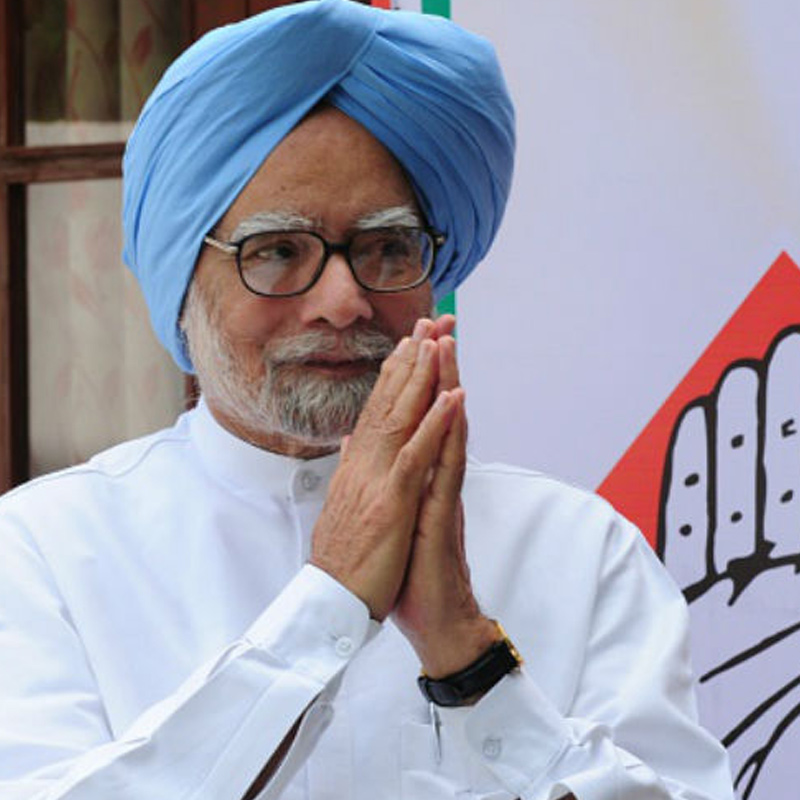
    NEW DELHI: Prime Minister Manmohan Singh today said the coverage of various scams by the electronic and print media in the past few months had unfortunately created an impression that ‘we are a scam-driven country and that nothing good is happening in our country.’

    Singh added that in the process, “I think we are weakening the self-confidence of the people of India. I do not think that it is in the interest of anybody in our country.”

    At the same time, he lauded the media for drawing the country’s attention to some aberrations whether in the form of allocation of 2G spectrum, the Commonwealth Games and more recently some developments in the Space organisation, and the Adarsh society affairs.

    “I think the media has played a very important role in drawing the country’s attention to these issues which require corrective action’. He also remarked about the media referring to him as a ‘lame duck Prime Minister.”

    Dr Singh was making opening remarks to editors from the electronic media in the capital. Later he answered questions relating to various issues including the scams and the economy.

    He said: “The media has an obligation, the Government has an obligation, the Opposition has an obligation that we work together in a spirit that India as a whole has to march forward.”

    He concluded: “So I would wish to mention to you that in reporting the affairs of our nation, we must not focus excessively on the negative features, important though it is that the government should deal with them, to take effective action and you have my assurance that wherever such corrective action is required, our government will take that action and will bring the wrong doers to book.”

    The media has, he said, a very important role to play in a functioning democracy that India is and “let us work together to revitalise the spirit of rejuvenation, spirit of self confidence that we have problems, but we also have credible mechanisms to overcome them.”

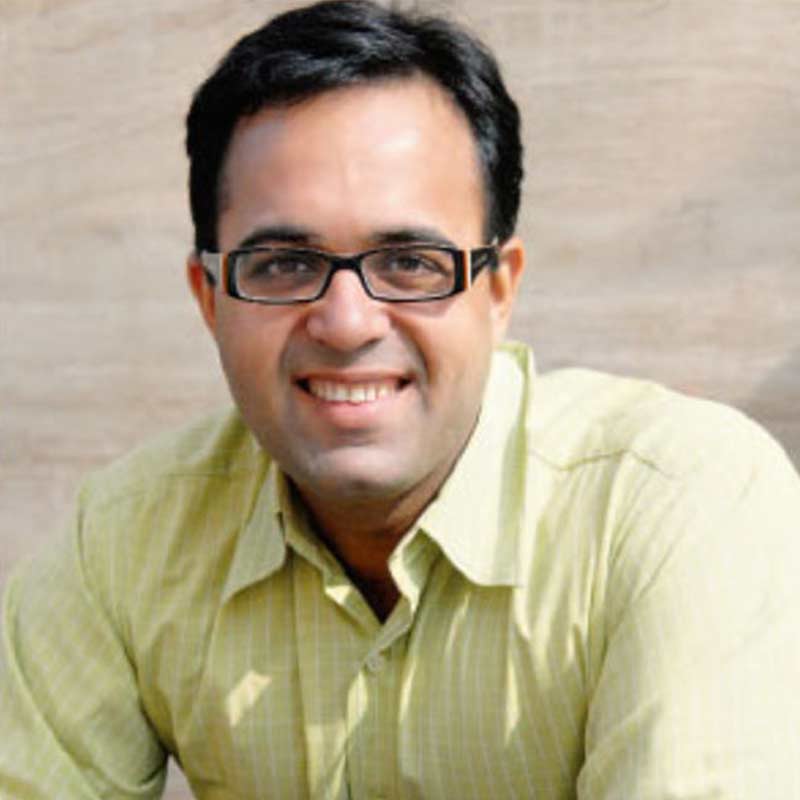
  • ‘Our aim is to become the currency tool for media research’ : Ormax Media co-founder & CEO Shailesh Kapoor

    ‘Our aim is to become the currency tool for media research’ : Ormax Media co-founder & CEO Shailesh Kapoor

    Ormax Media, the consumer knowledge and consulting firm for the media and entertainment industry, was launched jointly by Vispy Doctor, the managing director of Ormax Consultants, a specialist in qualitative research, and former Filmy business head Shailesh Kapoor in July 2008.

    The company has expanded across categories like television, radio, films, and media agencies. It has launched various tools, which can predict the future of a show or a film.

    The expansion plan includes doing research in the news and South Indian market. The aim is to establish Ormax Media as the currency tool for media research.

    In an interview with Indiatelevision.com‘s Gaurav Laghate, Kapoor sheds light on the research needs in the media and entertainment industry and Ormax Media‘s drive to plug the gaps.

    Excerpts:

    You have worked with companies like Sony, Zee, Zoom and Filmy in roles across marketing, content and business strategy. So what led to Ormax Media?
    The idea was always there, I wanted to start something of my own. And I wanted to set up something which combined the media and entertainment industry where I came from with the marketing and consumer understanding that was always my interest.

    The exciting part is that we are working on multiple categories – like GECs (general entertainment channels), niche channels, movies, radio and digital. So there is a wide variety that makes the learning experience far more dynamic than it would have been in a traditional media role.

    What the company has achieved in these two years?
    Since it has been a new company, the first year focus was on consolidation and the second year was really of growth and expansion into new categories, businesses and clients.

    We started with TV. It was for two reasons – a far more organised industry in the M&E sector and also because of size.

    In 2009 we started with GECs, then moved on to niche channels and radio. During this time, we also started creating specific products.

    How did you identify the need for the product offerings?
    As we met more and more people, we recognised that there were common needs across the category. For example, there was common need for tracking marketing campaigns for TV programmes. This resulted in a tool – Showbuzz.

    You said you are in expansion mode. What all categories are you looking at?
    Initially, we spent time on developing tools, products and methodology. Then our focus was clearly on categories where we had strength. Like Bollywood – so we launched Cinematix. We are planning to launch a structured product of test screening of Hindi movies soon.

    How has the film industry responded so far?
    We have already worked on 7-8 movies in the last six months. And I think for an industry which is still getting used to the idea of research, it‘s a pretty healthy number. Going forward, the film industry will continue to be the focus. First we were trying to get them on board and trying to make them understand the whole idea of research. And we were pleasantly surprised. Once they (film industry) were exposed to this; they were more than willing to receive research in a far more flexible manner.


    What are the challenges you have been facing for getting clients?
    The biggest challenge has been to meet more and more people and give them the flavour of what research can give them. And once they get the right flavour and do one project, they certainly understand the importance of it.

    Apart from films, what are the other areas you will be focusing on now?
    The areas which we are going to focus on now are specific categories – like South and news.

    What opportunities do you see in the southern regional market?
    South is a very big market for both TV and cinema industry. The fundamentals of TV and film research are not different. And we have teams in the four southern states.

    And what are your plans for the news industry?
    The news market is one that largely relies on Tam. But at the category level, there may not be any tools and products available. So we are looking at that option.

    News is also a big category in terms of revenue. It is a category where the advertiser buying is often based on decisions based not directly on the function of the ratings. Particularly English news channels where many different parameters come into play.

    All your tools basically try to asses and predict the future – cinematix or showbuzz?
    A lot of our work is going into putting tools and analytics in place. We are trying to create ways in which future prediction and future analysis can be made rather than just looking at the past and getting a sense of that.

    Research is not just looking at today and giving feedback at what people are liking or not liking. I think the more important area, where a lot of our energies are focused on, is to predict the future.

    So what all services you offer to clients?
    We have three kinds of products. Syndicated products are owned by us like Showbuzz, Cinematics, Characters India Love, RJ Files. We do them at our cost, irrespective of who is subscribing or not subscribing to it. This is data which is registered and trademarked to us. Whoever subscribes to it, gets it.

    These products are most cost effective for all as they are common to the industry. Multiple people are subscribing and paying for it . It cannot be affordable for someone wanting to do it alone.

    Second is commissioned research, which could be qualitative or quantitative research. These are need based research.

    We also do consulting work, which is specifically beyond consumer research and is more advisory in nature. But it is not our main area of work. We are primarily a consumer understanding firm.

    How much market share are you looking at acquiring in future?
    We hope to be controlling at least 75-80 per cent of the research market in a couple of years. That doesn‘t mean we are going to compete with already established systems such as Tam, Ram etc. We are going to complement the information available through them. So if Tam gives the viewership, we will add value by explaining the viewership understanding. We are more about adding value beyond the measurement systems.

    If some other similar company starts working on the same lines, what will be your plan of action?
    See, eventually, in a category like this, one becomes currency. We have seen that in case of Tam. The second player to come will have a disadvantage. It is difficult to say at this stage who will become currency, but my sense is that till the time other players will come, we will be established as the industry currency. We are moving in the right direction.