Tag: media

  • Gaon Connection: Going beyond the village

    Gaon Connection: Going beyond the village

    It‘s seeking to further its connection with its core audience: those from rural India or those interested in it. Rural newspaper,Gaon Connection which hit the stands just as 2012 was ending, is now looking at going transmedia with an audio feed planned for handsets and short TV snippets on the anvil for TV news channels, and also spreading internationally.

    Founded by veteran journo and lyricist Neelesh Misra, along with his buddy Karan Dalal, with the aim of catering to the rural readers of India, Gaon Connection operates across Uttar Pradesh, Bihar and Madhya Pradesh.

    The Lucknow-based publication has a team of 15 full timers and scores of stringers all over India. Gaon Connection’s circulation has gone up from 7,000 copies at inception to 10,000 as of now, according to Misra. The 14 page Rs 5 priced weekly has a claimed readership of around 120,000.

    He says the Rs 5 tag is not too high as rural Indians spend about Rs 30 a month for their feature phone services. Therefore, Rs 20 a month for a newspaper which keeps them informed about developments important to them is quite reasonable.

    Misra has plans to increase readership of Gaon Connection and has drawn up ground activities to enable that to happen. Reading sessions are planned for schools and at panchayat gatherings, where reporters will read out the newspaper to locals.

    Additionally, it is roping in milk companies and SIM card distributors to further the availability of Gaon Connection.

    A small marketing and sales team in Delhi and Lucknow has been pitching the publication to advertisers and pulling in revenue from mainly local ones. Now Misra‘s gameplan is to attract large multinational brands and he is in conversation with agencies such as GroupM and Mindshare for the same.

    Misra got UP Chief Minister Akhilesh Yadav‘s support who dropped in at the newspaper‘s launch in December

    He believes that Gaon Connection will create job opportunities for rural youth. “For instance, we are planning to call in young people in Kanaura village in UP and train them to be journalists and distributors. What this will do is if you have a reporter and distributor in every block, you are able to create a lot of white collar talent which will give a voice to those regions,” says Misra.

    Misra believes it is now time to take the voice of Indian villages across transmedia platforms such as television and the mobile. An in-house team is in the process of scripting snippets to be telecast on news channels. Talks are on with two national channels for the same, he says, without revealing the names.

    “The ideas for the television snippets will grow from the newspaper. The vision is to eventually have a rural TV channel,” he shares. Misra plans to launch the TV snippets by end of the year.

    Gaon Connection has got rural readers asking for more; Misra is targeting a huge jump in readership

    Additonally, on the anvil is what he calls India‘s first audio newspaper. Misra (who is an experienced radio “story teller” courtesy his show on Big FM 92.7) is gearing up to create a dial-in audio feed for mobile users. The service will work on a subscription basis and will be available in the next four to five months. Talks are on with several telecom service providers.

    Going forward, Misra plans to take Gaon Connection overseas catering to the non-resident Indians (NRIs). “We are looking at setting up Gaon Connection chapters worldwide. We have received interest from folks in Singapore, Washington, London,” he elaborates.

    Misra used his personal savings – and even sold his home in New Delhi – to launch Gaon Connection. He now hopes to rope in investors to help take his pet project to the next level. His wife Yamini who joined him sometime back to look after distribution and building the business, believes in his vision. Now all that he has to do is make those with bulging pockets also fall in line.


  • TRAI to get another advisor in Broadcasting and Media

    TRAI to get another advisor in Broadcasting and Media

    NEW DELHI: Often accused of being more telecom-centric, the Telecom Regulatory Authority of India has decided to recruit more persons who are experts in broadcasting and media.

    The regulator has advertised for the post of Advisor (Broadcasting and Media) ‘on deputation on foreign service terms’. According to the TRAI website, the initial deputation will be for two years.

    TRAI already has one Principal Advisor,N Parameswaran, and two Advisors, Wasi Ahmed and Raj Kumar Upadhyay.

    The work entails to the non-technical aspects of broadcasting – covering general management, economic and social dimensions of all forms of the media. Economic work relating to wholesale and retail tariffs and interconnection will form part of the work of the new Advisor.

    The work will also entail specialisation in the digitisation of the media and interaction with all stakeholders.

    TRAI had been set up for the telecom sector in 1997 but was given the work of broadcasting in 2004 at the time of the introduction of the Conditional Access System.

  • A research by GfK reveals a rise in cord cutting in the US

    A research by GfK reveals a rise in cord cutting in the US

    MUMBAI: A research conducted by GfK Media & Entertainment shows that the estimated number of Americans relying exclusively on over-the-air (OTA) television broadcasting increased to 59.7 million, up from 54 million just a year ago. The percentage of TV households currently OTA reliant has grown from 14 per cent in 2010 to 19.3 per cent in the current survey, a 38 per cent increase in just four years. The survey also found that the demographics of broadcast-only households continue to skew toward younger adults, minorities and lower-income families.

    The 2013 Ownership Survey and Trend Report, part of The Home Technology Monitor research series, found that 19.3 per cent of all US households with TVs rely solely on OTA signals to watch TV programming; this compares with 17.8 per cent of homes reported as broadcast-only last year. Overall, GfK estimates that 22.4 million households representing 59.7 million consumers receive television exclusively through broadcast signals and are not subscribing to a pay-TV service (i.e. a traditional pay-TV service such as cable, satellite, Verizon FIOS or AT&T U-Verse).

    “Over-the-air households continue to grow, making up an increasingly sizeable portion of television viewers,” says GfK Media & Entertainment senior VP David Tice. And, the proportion of households that have never paid for cable or satellite service also continues to grow. “Our research reveals that over-the-air broadcasting remains an important distribution platform of TV programming; this year‘s results confirm the statistically significant growth in the number of broadcast-only TV households in the US, which we identified in 2012.”

    According to the 2013 study, 5.9 per cent of TV households “cut the cord” in their current home at some point in the past. Among households that eliminated pay-TV service responding to the 2013 survey, most report overall cost-cutting or not enough value for cost as the reason for doing so (respondents could give more than one reason). These were also the top reasons given in the 2012 survey for eliminating pay-TV service.

    Homes headed by younger adults are also more likely to access TV programming exclusively through broadcast signals. Twenty-eight percent of homes with a head of household age 18-34 (up from 18 per cent in 2010) are broadcast only, compared with 19 per cent of homes in which the head of household is 35-49, or 17 per cent of homes in which the head of household is 50 years of age or older. Two out of ten (21 per cent) younger over-the-air households have never purchased a pay TV service according to the current survey.

  • Media’s independence needs to be zealously guarded: Narayan Rao Executive Vice Chairperson at NDTV

    Media’s independence needs to be zealously guarded: Narayan Rao Executive Vice Chairperson at NDTV

    Freedom of the media is a fundamental component of a vibrant democracy. It is what differentiates a democracy from a dictatorship and all forms of totalitarianism. Indeed a democracy cannot function without a free media while the latter can only exist in a democratic state.

    As Lord Northcliffe, owner of The Times during the First World War once said, “News is something someone somewhere wants to suppress”. As a free media in the world‘s largest democracy, it is our job to ensure that nothing ever gets suppressed. Also, dissemination of news is really the performance of a public service. We seek to inform and educate and to do it with independence….from Government and from revenue considerations. Our responsibility is not to the Governors but to the governed.

    While a free media is an absolute need, it is also necessary to stress that with freedom comes responsibility. Responsibility to ensure that one is always accurate and credible and respectful of the privacy of an individual.

    It is in this need for freedom with responsibility that talk of regulation comes up every now and then. I would like to state with all the emphasis at my command that the only regulation that is acceptable in a democracy is self regulation. And by this I do not mean that each news organization regulates itself by following its own editorial policy and standards which would naturally be of varying levels from channel to channel, but to have a structured self regulatory mechanism that watches over a common expectation of what constitutes good, responsible journalism.

    While a free media is an absolute need, it is also necessary to stress that with freedom comes responsibility. Responsibility to ensure that one is always accurate and credible and respectful of the privacy of an individual.
    _____****_____


    I honestly believe that the News Broadcasters Association (NBA) has made remarkable progress in this regard. We created a common code of ethics, a wonderful document of journalistic good practices and expectations, which is available for all to see on the NBA website. We then set up a News Broadcasting Standards Authority (NBSA) with a Chairperson and several eminent members to monitor and ensure that this code is followed by all our member channels. Our first Chairperson was the most ethical, learned and highly regarded, late Justice J S Verma. He ensured along with the eminent members, that the NBSA is truly independent. It also needs to be noted that the NBSA is the “standards authority” and not merely the complaints authority.


     

    The aim is to improve standards of news broadcasting over a period of time and we are well on the path to realizing that aim. In probably the only such example of its kind in the world, every member channel carries a scroll several times a day, exhorting viewers to approach the NBSA if they have any complaint against a channel. The decisions of the NBSA can be seen on the NBA website and over time action has been taken against several of our channels. We also have some Editors sitting on the NBSA for fixed terms and on a rotational basis as it is believed that self regulation flourishes and standards improve when it is known that, among others who will look at the quality of your content, will be your own peers.

    We will miss Justice Verma immensely. But the show must go on and I am honoured and delighted to announce that Justice R V Raveendran, former Judge of the Supreme Court of India, has very graciously accepted our invitation to be the next Chairperson of the News Broadcasting Standards Authority.

    Justice Raveendran brings with him incredible legal and judicial ability, a wealth of experience and outstanding reputation in upholding democratic institutions and values through strict and fair implementation of the law of the land. He very ably takes the baton from the late Justice Verma to chart out the next leg of our mission to establish that the media must function through structured self regulation.

    In such a robust system where is the need for a media council? With all due respect to our Parliamentarians in the Standing Committee and some others, very erudite people who have pushed for such a Council, my counter question to them is what for? When we have the NBSA which is doing such magnificent work in an independent and strict manner, what is it that a media council will do? Who will appoint such a media council? Government? How can that be acceptable?

    We will miss Justice Verma immensely. But the show must go on and I am honoured and delighted to announce that Justice R V Raveendran, former Judge of the Supreme Court of India, has very graciously accepted our invitation to be the next Chairperson of the News Broadcasting Standards Authority.
    _____****_____

    The media is the fourth estate, the fourth pillar of democracy, and has to be independent of the other three. And like the three zealously guard their independence of each other and safeguard their positions, as they must and should do, so should the media zealously guard its independence.

    That in part means, no Government appointed body to oversee the media. 
    Some complain that the NBSA does not have statutory powers. I would urge that they only take a look at the NBA website to look at the powers that the NBSA has been given. These range from censure to asking offending channels to carry apologies, retractions and corrections on the same slot where the offense was first carried (if, for example, the offending story was in the 9 pm news, the retraction/apology has to be carried in the 9 pm news as well), a fine that can be up to Rs one lakh, and finally, the power to recommend to the licensing authority that the license of a particular channel should be suspended, even cancelled. Isn‘t that power enough?

    (To take a dekko at some of the decisions that the NBSA has taken click here)

    Also, it needs to be noted that in the Cable Act, when it comes to the advertising code, the Advertising Standards Council of India (ASCI) has been mentioned as the standard under which advertising can take place. Similarly, for programming, why can‘t the same be the case with the NBSA for news and the BCCI for other categories of television? In fact this has been one of our long pending requests to the Ministry of I&B.

    What is necessary is to ensure that all laws are implemented strictly and speedily by our courts. We have laws against defamation and libel but the general feeling is that there will be no decision in most such cases for 20 years. That can sometimes make our journalists complacent about essential things like accuracy. If one knows that the law will be applied with effect and expeditiously, one will be far more conscious of the need for absolute accuracy. We have the laws. Please implement them.

    (The views expressed in the comment are in author‘s personal capacity and do not represent the corporate viewpoint)

  • Maxus drives off with Redbus.in media biz

    Maxus drives off with Redbus.in media biz

     MUMBAI: Maxus has the WON the media business on redBus.in in the recently conducted pitch process. Redbus.in, an online bus ticket-booking site recently started advertising on television and other mass media.

    The development follows a highly contested pitch with Mindshare, Madison, ZO and Mudramax.

    Maxus is on a roll yet again in 2013 with the wins like Nestle Digital in Delhi, Tata Tea in Bangalore.

    Redbus.in, an online bus ticket-booking site recently started advertising on television and other mass media.

    Maxus South GM Sanchayeeta Verma said “redBus is a highly reputed name in the travel space. We are very excited with this win and believe our role is to help our clients navigate & maximize the opportunities of change in an always-on, fully digitized media world. And we’re looking forward to partnering redBus in their exciting journey towards exponential growth”.

    Redbus.in CMO LK Gupta said, “As an ecommerce travel brand launching in mass media for the first time, we were looking for the right blend of aggressive presence, yet delivering efficiently for the business. In Maxus, we found a partner that showed innate understanding of what our business needs are, and complementing it with sound planning & buying capabilities in media. We’re excited to embark on this exciting journey during which we’re sure Ajit and his team will be big contributors.”

  • Spikes Asia calls for entries

    Spikes Asia calls for entries

     MUMBAI: The Spikes Asia Festival of Creativity, Asia Pacific’s awards and festival for the creative communications industry, is now open for entries for its 2013 awards.

    Entries are being accepted into a total of 16 categories: film, print, outdoor, radio, media, direct, promo and activation, digital, print and poster craft, film craft, design, pr, mobile, integrated, branded content and entertainment and creative effectiveness.

    Nine juries will be present in Singapore, home to Spikes Asia, to judge and award work entered from across the region. Winners of this year’s awards will be revealed and honoured at the annual awards ceremony which will bring the Festival to a close on 17 September.

    “It’s exciting opening for entries for a new year. We get to see the trends and initiatives that are coming out of the region; a region that is currently experiencing huge growth and development, and is setting the creative bar high. It will be interesting to see who emerge as the winners of Spikes Asia 2013,” Lions Festivals chairman Terry Savage said.

    A number of special accolades will also be presented including, network of the year, independent agency of the year, Spikes Asia agency of the year, media agency of the year and the Spikes Palm Award, which is given to the most awarded production company. The Spikes Asia advertiser of the year, given to clients who have distinguished themselves by the quality of their campaigns or who inspire innovative marketing of their products or services, will also be honoured on stage.

    This year, the media agency of the year Award has been realigned so that only a media agency will be eligible to win the award. Advertising agencies, clients, media owners and others can continue to enter and win a Spikes Media award but they cannot compete for the media agency of the year honour.

    All of the shortlisted work will be on display through exhibitions and screenings throughout the Festival offering attendees the chance to see a showcase of the best work coming out of the Asia Pacific region.

  • Lukup Media introduces on-demand TV service

    Lukup Media introduces on-demand TV service

    MUMBAI: Lukup Media has launched on-demand TV service powered by the Lukup Player, a hybrid set top box that delivers both mainstream TV channels and a large catalogue of content that can be viewed on demand.

    The on-demand service is exclusively available on the Lukup Play.

    Lukup Media Director Kallol Borah said, “The Lukup Player is designed to empower the viewer to personalize and take control of their media experience. They get to choose the time, place and device to view the content of their choice.”

    The Lukup Player can be used as an extension to existing set top boxes from DTH and cable operators. It will enable subscribers to view content on multiple TV screens in their homes using a single connection. The Lukup Player will also serve as a wireless hub inside homes, making it capable of streaming content to laptops, tablets and mobile phones. Subscribers can choose to view content on their devices outside home as well.

    According to the company, the Lukup Player’s touch screen based remote control personalises content search, enables personalised channels by importing content from cloud based services, social media sharing, intelligent alerts and recommendations, and multi-touch gaming.

    The product is expected to start shipping from June and will charge users a subscription fee for content that is bundled along with it. It is also available for pre-ordering. Some salient technical features of the product are- HD 1080p and 3D display, support for existing satellite, cable and terrestrial TV connections, WiFi, Ethernet based IP connectivity, unlimited recording and capacitive multi-touch remote control.

  • Sanjay Dutt asserts he will complete his films, says he respects the judicial system

    Sanjay Dutt asserts he will complete his films, says he respects the judicial system

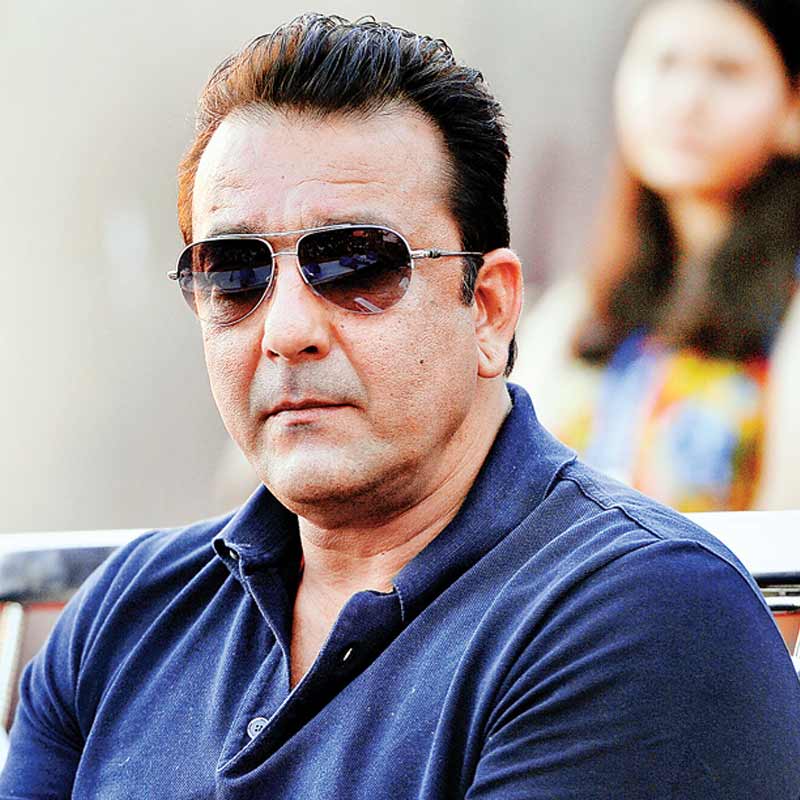
    NEW DELHI: Even as Press Council of India Chairman Markanday Katju has appealed to the Maharashtra Governor to K Sankarnarayanan to grant parole to Sanjay Dutt and the Union Government feels the ball is in the Governor‘s court if he receives an appeal, the actor himself has said "I have always respected the judicial system and will continue to do so, even with tears in my eyes."

    In a statement, Dutt who has been held guilty of being in possession of arms said "I have already suffered for 20 years and been in jail for 18 months. If they want me to suffer more I have to be strong. I am heartbroken because today along with me, my three children and my wife and my family will undergo the punishment."

    He said he was going to complete all his films and would not let anyone down.

    "I am overwhelmed by the support of my fans the industry people, the media and all the well wishers. They have always stood by me and supported me. I know in my heart that I have always been a good human being, respected the system and always been loyal to my country."

    He added, "My family is very emotional right now and I have to be strong for them. I am shattered and in emotional distress. I am sorry I can‘t come down and meet you all. God is great and he will guide me through this."
    Law Minister Ashwani Kumar indicated that the matter will be looked into and an "appropriate" decision taken once such a plea is made by the actor. "The Governor will use his discretionary power when there will be an appeal to him. He has the power to pardon. We should not comment on it," he said.

    Information and Broadcasting Minister Manish Tewari said the authorities will take cognisance of the matter at the appropriate level.

    "Justice Katju has been a very eminent judge of the Supreme Court. Whenever he articulates a position on an issue, people both inside and outside the government listen to it carefully," Tewari told reporters outside Parliament.

    "But there are various aspects to the issue and I am sure that those people within government whether at the state government or level of various other instrumentalities of government, who are seized with the responsibility of dealing with the issue, take the cognizance of the statement and then, if required, formulate an appropriate response and then come back," he added.

    In a letter to Maharashtra Governor, Justice Katju sought pardon for Dutt, whose six years sentence was reduced to five years by the Supreme Court in an arms case related to the 1993 Bombay blasts.

  • America’s local media ad revenue to reach $148.8 bn in 2017

    MUMBAI: America‘s independent media research company BIA/Kelsey has forecasted the local media advertising revenues to climb from $132.5 billion in 2012 to $148.8 billion in 2017 representing a compound annual growth rate (CAGR) of 2.3 per cent.

    In its newly released U.S. Local Media Forecast (2012-2017), the firm reports national brands accounted for 32.1 per cent or $42.5 billion of the $132.5 billion spent on local media advertising in 2012. National‘s share of local ad spending is expected to grow to nearly $51 billion by 2017.

    “Local media has become a key channel, not only for local small businesses, but for regional businesses, national franchises and national brands targeting locally. This is clearly seen in our tracking of market shifts in mobile, social, search, promotions, coupons and deals, native ads and sales transformation,” said BIA/Kelsey VP and chief economist Mark Fratrik.

    Digital media continues to increase its share of total local media revenues, growing from 17.4 per cent in 2012 to 27.6 per cent in 2017.

    The firm expects traditional local media revenues to decrease from $109.4 billion in 2012 to $107.6 billion in 2017 (CAGR: -0.3 percent). As anticipated, traditional media revenues experienced a bump in 2012 from political advertising.

    The political ad spend cycle contributes to a drop in revenues in odd-numbered years. Despite the year-over-year political advertising seesaw effect, traditional media revenues remain remarkably steady throughout the forecast period.

  • Tewari says govt pursuing Phase II digitisation deadline

    Tewari says govt pursuing Phase II digitisation deadline

    MUMBAI: Information & Broadcasting (I&B) Minister Manish Tewari said the government will pursue implementation of the second phase of switchover to digital delivery of television channels in 38 cities with population of one million.

    The government has mandated digitisation in the 38 cities by 31 March, after going ahead with the first phase of digitisation in Mumbai, Delhi and Kolkata. The switchover to digital delivery in Chennai is stuck in court proceedings initiated by Tamil Nadu cable operators against digitisation itself.

    “We will stay the course,” Tewari said in response to a question about digitisation in the 38 cities when he was in the city to give away the first edition of International Advertising Association’s leadership awards. He further said, “Phase II digitisation is on track.”

    He said the government has the learning from the implementation of phase I digitisation and expected all the stakeholders to be firmly backing the effort.

    Addressing the advertising fraternity, advertisers and the media, the I&B Minister dwelled on the issues concerning the media and advertising industries. These included freedom of speech with reasonable restrictions, imperfect television audience measurement model, the need to observe advertising regulations on television and self-regulation vs statutory regulation of content.

    He asked all concerned to think whether content can remain in the self-regulation domain, while suggesting an overarching statutory mechanism to address issues related to convergence across media, entertainment and telecom.

    Tewari assured the media and advertising industries that they will be taken into confidence before taking any decision on any of the contentious issues.