Tag: media

  • Eros Investments acquires ENT global, partners with L3COS

    Eros Investments acquires ENT global, partners with L3COS

    Mumbai: Eros Investments on Tuesday announced the acquisition of ENT Global to form a strategic partnership with L3COS for the mass adoption of the web3 creator ecosystem.

    Later this month, L3COS will launch the world’s first ever fiat-on-chain (FoC) with three initial currencies-EUR, GBP, and USD-all of which are fully one-to-one cash backed and safeguarded by central banks.

    FoC will be used for payments and transactions by launch partners AgriDex, the global supply chain marketplace for the agriculture and food industry, and ENT Global, the digital rights management company now owned by Eros Investments.

    Eros Investments said that this partnership with L3COS will pioneer technological disruption of two trillion dollars in the sports and entertainment industry

    The closed-loop native marketplace for celebrities and creators will be live soon, with an initial $500 million of FoC deposits. Every participant transacting on the L3COS platform will have a KYC/AML screened unique and verified digital identity, to enable individuals, businesses, and governments to interact and trade in a safe and regulated way on a global scale. This frictionless trade is facilitated using smart contracts and the currencies of the end user’s choice. Revolutionary FoC technology delivers real-time settlement (real-time gross settlement) of all transactions within the L3COS ecosystem.

    Eros Investments and ENT Global will power the entertainment and sports marketplace with digital rights management in partnership with L3COS. The collaboration allows the companies to collaborate to build the first web-based entertainment ecosystem, allowing creators and fans to interact directly for the purchase, sale, and trading of various digital assets.

    Eros Investments chairman Kishore Lulla said, “As we ready ourselves for this industry evolution, Eros is pleased to be able to create a first-of-its-kind worldwide marketplace that eradicates barriers to entry for consumers transacting on a blockchain ecosystem. With central bank safeguarding, consumers will be able to confidently, for the first time, transact in an entertainment digital marketplace with fiat on chain capability. This is the next stage of evolution in commerce, and we are excited to pioneer disruption with L3COS.”

    “We are extremely excited about our new partnership with Eros Investments and ENT Global to offer our web3 solution for the entertainment and sports industries, which brings together creators, athletes, and entertainers and allows them to develop and trade digital intellectual properties – from event tickets, art, games, and merchandise – directly with their fans worldwide, without any middlemen or risk of fraud,” added L3COS founder Zurab Ashvil.

  • MIB invites entries for ‘75 Creative Minds of Tomorrow’

    MIB invites entries for ‘75 Creative Minds of Tomorrow’

    Mumbai: The ministry of information and broadcasting (MIB) has opened applications for the ’75 Creative Minds of Tomorrow’ competition. The segment is an annual platform at the International Film Festival of India in Goa for identifying, encouraging, and nurturing young creative talents from various aspects of filmmaking.

    The initiative is in its second year, having begun in 2021 to commemorate India’s 75th anniversary of independence as part of the ‘Azadi Ka Amrit Mahotsav’ celebrations.

    The number of filmmakers recognised represents the years of Indian independence. It is expected that the number of youths participating in ‘creative minds’ will increase by one in the coming years in order to keep the spirit of the endeavour alive.

    An eminent jury will shortlist and select the 75 creative minds under the auspices of the National Film Development Corporation ahead of the 53rd edition of the International Film Festival of India.

    This programme identifies young budding film makers and provides them a platform to interact and learn from national as well as international film makers during the period of IFFI Goa.

    This is a one-of-a-kind platform, with the largest gathering of young creative minds chosen through a competition at any premier film festival around the world. It was conceived in 2021 by union minister for information and broadcasting, youth affairs, and sports Anurag Singh Thakur to provide a platform and connect young talent with industry masters from the media and entertainment sectors.

    The selected ’75 Creative Minds of Tomorrow’ will also attend workshops and sessions specially curated by the masters of cinema during the festival event in Goa. Furthermore, each team will take part in a group competition to make a short film in 53 hours. The themes of the short film will be inspired by the spirit of Azadi Ka Amrit Mahotsav, in which the teams will present their vision of India@100.

    The selected creative minds will be divided into seven teams in collaboration with Shorts TV, the initiative’s programming partner. The films created by the seven teams will be screened theatrically at IFFI on 24 November followed by an award ceremony to recognise the winning film. Everyone who takes part in the competition challenge will be recognised.

    The initiative is also another step toward making India a global content and post-production hub by identifying, nurturing, and up-skilling young talent and preparing them for industry connections and readiness. The initiative is nurturing and developing an ecosystem of young filmmakers, allowing them to network and collaborate from the start.

    The ministry intends to implement productive interventions so that participants can take advantage of this opportunity for gainful employment in the media and entertainment sectors.

    The entries will be accepted from 5 September 2022 till 23 September at: https://www.iffigoa.org/creativeminds.

  • AVOW onboards Sandeep Negi as associate director of sales, India

    AVOW onboards Sandeep Negi as associate director of sales, India

    MUMBAI: Mobile OEM user acquisition specialist, AVOW has appointed Sandeep Negi as its new associate director of sales, India. Negi will lead all of AVOW’s business development initiatives in the country as part of the company’s domestic expansion plans while positioning AVOW as a household name in the mobile OEM marketing ecosystem in the region. He will operate out of AVOW’s branch office in Bengaluru, and become its fifth member in this local office.

    Negi joins the company with 10-plus years of experience cutting across the agency, mobile, and online advertising arenas, with an extensive focus on international business development and global growth strategies. Prior to this, Negi had successful stints across some of India’s leading media companies, including Bennett Coleman and Co. (Times Group), Star TV Network (now part of Disney), and 9X Media. In his previous roles, Negi has played a pivotal role in assisting some of India’s most prominent players in the mobile app industry to access new markets & significantly scale their revenues.

    Speaking on the new appointment, AVOW co-founder Ashwin Shekhar said, “We are pleased to have Sandeep on board in the senior management team. AVOW is on a hyper-growth path in the mobile OEM marketing space. Within a short period of two years since entering the Indian market, AVOW has serviced many leading industry players such as Amazon Prime, Navi, upGrad, Byju’s, Matrimony.com, MPL, and WazirX, among many others, offering incremental user growth and engagement for their mobile apps.”

    “In line with our growth plans, we needed an experienced top management muscle to drive our expansion plans aggressively in India. Sandeep’s in-depth industry experience in business development, strategy, and strong expertise in driving growth are great value additions to AVOW and our team. He will play an important role in our efforts to educate mobile marketers and app developers about the benefits of mobile OEMs when integrated into their mobile marketing mix,” he added.

    In his new role at AVOW, Negi said, “AVOW’s one-stop solution for mobile OEM aggregation is steadily growing its presence in the mobile app ecosystem in India. Strengthening the company’s status as the most viable and lucrative advertising alternative to traditional play stores will be on top of my agenda. We are witnessing an increased interest from players within the financial, health, edutech, gaming, and m-commerce sectors in this market.”

    “Our aim will be to provide mobile app companies with a unique opportunity to access untapped mobile advertising inventory at scale and deliver a powerful consulting service by advising on how mobile marketers and app developers can best invest their marketing mix across alternative advertising channels for incremental user growth and engagement. I am delighted to be a part of AVOW’s growth trajectory in India and to be able to contribute to its mission,” he further said.

  • Media experts are concerned about changing policies impacting their digital media buys: Report

    Media experts are concerned about changing policies impacting their digital media buys: Report

    Mumbai: Integral Ad Science (IAS), in collaboration with YouGov and a market research firm, has released its report ‘2022 Future of Privacy-First Advertising.’

    IAS surveyed 346 digital media experts and 1,131 consumers about their opinions on the future of ad targeting, upcoming changes to online data and privacy policies, and how media quality solutions can help marketers be more effective.

    The findings revealed that consumers have serious concerns about the security of their personal information when using the internet; that they are unaware of the laws governing the collection and use of their personal data; and that they are very uncomfortable when their online activity is used for advertising.

    IAS Global chief commercial officer Yannis Dosios said, “With upcoming online data and privacy policy changes coming down the pipe, privacy continues to be a priority for both consumers and media experts.”

    He further added, “IAS is well-suited to help ease the concerns of privacy policy transitions through our contextual targeting solutions that will help advertisers reach their ideal audience at scale, all while respecting their privacy.”

    The report explores a gap between what organisations are actually doing to deal with these changes and how crucial it is for media professionals to understand data privacy policies, as well as how concerned they are about how these policies will affect their work.

    The report also examines how brands are currently dealing with cookie depreciation through contextual, privacy-first advertising strategies that don’t use individuals’ personal information to target customers.

    Online data privacy 

    One of the report’s key findings was that while consumers value online data privacy, their trust in the security of their online data is low.

    While consumers agree that data privacy is important, only half (50 per cent) are confident in the security of their online data while surfing the web. More than two-thirds (67 per cent) of consumers also claim to be more cautious than ever when it comes to their privacy and online data.

    Targeting techniques 

    The study also discovered that consumers are aware of various targeting techniques. However, they might feel uncomfortable with their data being used for advertising.

    Although the majority of consumers (68 per cent) are still uncomfortable with personalisation, despite the fact that 90 per cent (nine in ten) of users are aware that websites and apps collect and share their data for advertising purposes.

    Brands have the chance to change the targeted ad experience so that contextual relevance is the driving factor. This would result in a better user experience for consumers and better results for advertisers.

    Privacy policy 

    Although the majority of media experts are concerned about evolving privacy policies, many are unaware of them and the majority lack a clear management strategy.

    Almost two-thirds (62 per cent) of media experts concur that this year it is important to understand data privacy, and an overwhelming majority (89 per cent) say that brands are particularly concerned about PII privacy.

    However, only about half of digital media experts are knowledgeable about privacy policy-related topics pertaining to browsers (53 per cent), regulations (51 per cent) or mobile identifiers (45 per cent).

    Furthermore, only 36 per cent of media experts claimed that their company had set up a team to handle upcoming policy changes, while 29 per cent said that they had taken no action.

    Contextual content

    The report suggested that brands should match their advertisements with contextually relevant content that appeals to consumers more.

    After seeing a targeted advertisement, 66 per cent of consumers said they are likely to visit a brand’s or product’s website.

    Considering consumers’ privacy concerns and desire for relevance, contextual targeting is an easy option for advertisers, but only 29 per cent of media experts have used this tactic.

    The majority of media experts (51 per cent) concur that ad buyers and sellers must actively cooperate throughout privacy changes and that media quality solutions will become more crucial for ensuring the right audiences are reached.

  • I&B minister Anurag Thakur launches Bharat24

    I&B minister Anurag Thakur launches Bharat24

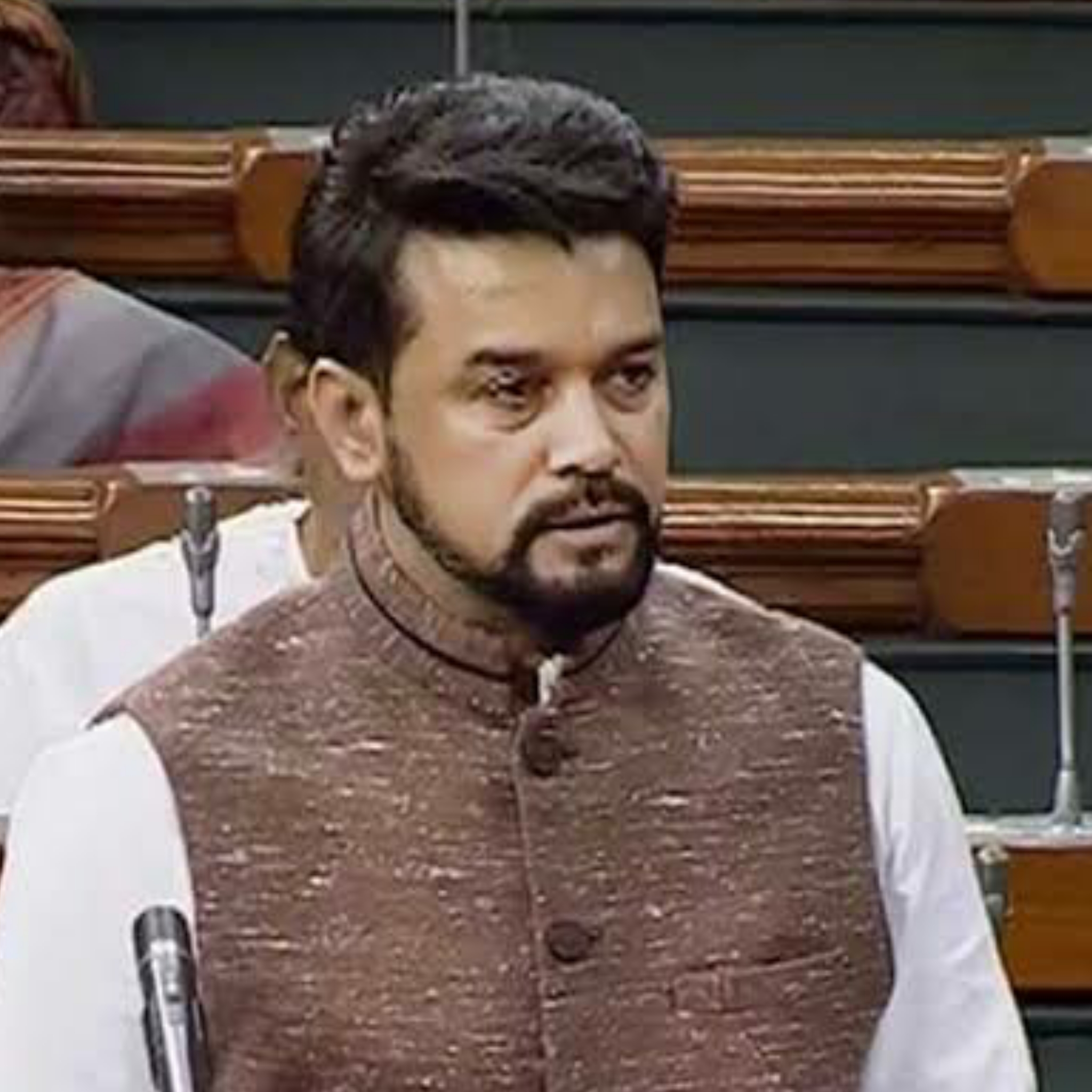
    Mumbai: The union minister for information & broadcasting and sports & youth affairs Anurag Thakur, launched the new national Hindi news channel, The tagline of the channel is “Vision of new India!”

    Speaking at the launch event on Sunday, Thakur wished all the best to the team. “I congratulate Dr Jagdeesh Chandra and the entire team of Bharat24 on this new venture. The media is the fourth pillar of democracy and should work as a bridge between the government and the public and I am sure Bharat24 will execute this responsibility with utmost seriousness,” he said.

    Bharat24 CEO and editor-in-chief Dr Jagdeesh Chandra commented, “We assure the minister that Bharat24 will reflect the aspirations of the youth, the multi-polarity of emerging India and will work as a bridge between our audience and the government.”

    Bharat24 managing editor Ajay Kumar, Bharat24 chief business officer & strategic partner to the board Manoj Jagyasi, Bharat24 senior editor Syed Umar, Bharat24 senior anchors Mimansa Malik, Sachin Arora, Naina Yadav and Poornima Mishra, editorial consultant Shashikant Sharma, political editor Aditi Nagar, and others were present during the launch.

    Kumar said, “The union government of India, various state governments, multilateral agencies, and international partners of India, all together, have come a long way in building the New India. We, Bharat 24, believe that a positive connection between the governments, state policies & the people at large is the need of the hour.”

    Adding to this, Jagyasi commented, “With bureaus in all states, Bharat 24, will set a benchmark for news reporting and branding. It is a matter of pride that on the first day of launch, the channel has opened with many credible advertisers and we shall only grow bigger and better as time goes on,” he added.

    Bharat24 will be available on all major DTH & cable platforms, including Tata Play – 531, Dish TV – 667, D2H – 750, Airtel DTH – 373, DEN – 318, Radiant – 308, RM Network – 109, Siti Network – 312, Hathway – 217, ICNCL WB – 175, Digiana Cable – 308, Haldwani Digital Services – 110.

  • GUEST COLUMN: The role of AI and ML in the media industry

    GUEST COLUMN: The role of AI and ML in the media industry

    Mumbai: There is truly no such thing as “show business!” We have seen the world of entertainment and media shape shift over the last few years, and more dramatically ever since the world around us changed in the wake of the pandemic. The entertainment industry showed a massive fillip during the lockdown years, but not in the way that was expected. The new age of media and social media platforms have transformed the way entertainment is consumed today, and the role of technology has become far more intrinsic along the way too. Everything from how we create, publish, and share textual, audio, and video content to the increasing accessibility of production technologies such as high-resolution cameras, content development software, and smartphones is changing. The landscape is burgeoning with tech-driven innovation both from the delivery and consumption ends of the spectrum.

    With revenue expected to exceed $9.5 billion in 2022 when video ad tech is taken into account, the importance of AI and ML in the media and entertainment sector can no longer be dismissed. While it may not have been an obvious use case earlier, today, harnessing AI and ML to better target homes with advertisements, automate more operations, and secure the operators’ content and services is only the tip of the iceberg. AI has already demonstrated its promise in the music business by producing beautiful tunes and in the world of art with a strong aesthetic influence. It will be interesting to see how AI in entertainment is likely going to have a marked influence on how people interact with movies, television shows, videos, sports, and games.

    Glimpses of this shift are already apparent today. Media firms realise the growing competition they face with new players in the market, right from OTT platforms to social media platforms, vying for the consumer’s attention. There is a swelling urgency to not only produce more content more rapidly but also ensure that the quality and intrigue of the content produced remains top-notch.

    Enter AI and ML.

    There are myriad applications for these two cutting edge technologies, to enable a massive uptick for media and entertainment businesses, right from beta testing of content to gauge interest to creating interactive content to even assessing the right platform for maximum success and viewership. There is a role for AI and ML to play the hero that saves the day at every juncture.

    Some of the emerging areas of application for AI and ML are:

    Knowing your audience: With increased choices comes the problem of plenty too. Audiences that were previously limited to a few platforms for satiating their entertainment appetite are inundated with a plethora of choices. In such a landscape, knowing audience preferences becomes business critical, and media companies that can harness the power of machine learning to understand their audiences more keenly are going to have a definite advantage as we move ahead by being able to provide relevant and engaging content to each individual every single time.

    Feel with your audiences: It’s not enough to just know who your audience is. A step up from the data intelligence that AI and ML provide is understanding how audiences feel each time they view content that is produced by you. Testing your audience’s emotions can help you dive deeper into how the content was consumed and perceived in order to make future bets that are likely to help you win viewer share and also ensure stickiness in an era when customer/viewer acquisition costs are only climbing up.

    Deliver to your audiences: How many times have you heard the phrase “right place, wrong time”? Marketing leaders understand the critical importance of timing in reaching out to customers. The same content that finds resonance at a particular time can have a diametrically opposite response when you catch the consumer at the wrong hour. Emotion AI can help you not only understand how much of the content delivered is falling on the right side of the scale to ensure better results for your targeted campaigns. Retiring the spray and pray approach could be very possible if advertisers and marketers can tap into the hidden potential that emotion AI helps unlock for all the video content that is being produced for their brands’ success currently.

    Engage your audience: If only we could read the minds of our users to know exactly what they have understood and where the gap remains, all our efforts to produce better content in any context would be multiplied. This function is offered by all major corporations, like YouTube, Netflix, Spotify, etc., to improve the dependability and usability of their services.

    AI is also capable of adjusting video quality for internet speed. AI can analyse the internet connections of various viewers in various regions to handle this issue, and it can compress videos without sacrificing their quality to provide a buffer-free streaming experience.

    Advertising and the media

    Advertising, design, and content promotion are just a few of the marketing and trade applications of artificial intelligence in the entertainment industry. The greatest AI algorithms to use when developing solutions for advertising and marketing that are results-driven. With the use of AI-driven marketing software apps, companies may address the needs and preferences of their audience, develop marketing plans, and create efficient customer-centric digital solutions. For instance, AI in the media sector may quickly produce hundreds of eye-catching graphic designs for advertising. Thanks to such cutting-edge and revolutionary technology, manual labour has been substantially reduced, and productivity has increased. Using emotion AI, the advertiser can understand the best demographic to pinpoint their campaign towards to get maximum output.

    For example, if the emotion AI indicates that a person gets the feelings of passion and attachment while watching a football match, it can help the sportswear company understand that this particular audience and this medium work best to reach them through their campaign. By checking the pre-launch creative intelligence output and post-launch creative intelligence output, the campaigns will become more focused.

    Development of AR/VR

    As we are already seeing with the usage of AR in advertising, it’s important to note that in addition to the fundamental use of AI in entertainment, AR and VR app development will also make this area more compelling and immersive. We will be able to watch events from all angles, enabling us to have experiences that are richer and better. AI will assist us in comprehending the sensation of the actual, live event. AI may, however, be used to produce interactive content for AR and VR. With a set of goggles and AI technology, the entertainment sector may work miracles and produce magnificent scenes.

    Consumer interest is naturally drawn to the creation of virtual reality content for cooking shows, reality shows, and live events and programmes based on artificial intelligence. Watching television and movies with true emotional effects won’t be a pipe dream with all these modern technological advancements; it will certainly become a reality. To make this a reality and to understand the concrete effect of the content, Emotion AI will be a tool that will be pathbreaking and extremely important for advancements in terms of what kind of content would be precise for different pieces and scenarios.

    Harnessing Emotion AI

    For any piece of content to succeed, gaining and sustaining the attention of the audience in question is key. If the audience isn’t engaged from the beginning, one has already lost the plot. It, therefore, becomes imperative that the industry puts its best foot forward by testing creatives before the final launch—it helps to gauge the potential. Pre-testing content using Emotion AI helps empower the creators to better understand how pre-launch video creative intelligence can help drive better business outcomes. Emotion AI testing with a pre-defined target audience helps content creators ascertain whether the content is evoking the right kind of reciprocal emotional response. It empowers the creators to understand zones of high and low engagement and modify content for maximum engagement. The organisations can have the emotional AI response outputs mapped to multiple variables of age, gender, geography, time of day, etc., ensuring that the content is never out of flavour.

    Subtitles and automatic transcription

    International media companies should provide material that is relevant to audiences in different locations. As a result, businesses must offer precise and appealing multilingual subtitles for their video content platforms. It may take thousands of hours and effort to hand write subtitles for several films and TV series in a variety of languages. Additionally, finding the ideal applicant to accurately translate text into several languages is challenging.

    Thus, to bridge this existing gap, the powers of AI-based technologies like deep learning and machine learning are harnessed for natural language processing to transcribe movies, music videos, and TV episodes into many languages. To reach a larger audience and foster user engagement, the voice of the movie is translated into several languages with subtitles and audio commentaries.

    For instance, YouTube’s artificial intelligence helps its publishers easily access their material by automatically generating closed captions for videos posted to the platform.

    Metadata tagging

    With the huge amount of content being created every minute, making this content visible to viewers can be an unnerving task for media and entertainment companies. Distributors and media producers like CBS Interactive are utilising artificial intelligence-based video intelligence technologies to thoroughly analyse the footage by detecting and framing things in order to add appropriate tags in order to carry out this task on a wide scale. As a result, any content held by media firms is easily discoverable, regardless of its bulk.

    Due to the intense rivalry and the changing nature of the market, the economic and business models needed to flourish in the digital world are difficult and call for a considerable change in mentality and approach. Customers are the core of the media industry because they are now more powerful than ever. Organisations all across the world are realising that the customer is really the king and cannot be disregarded. By unravelling and experimenting with AI and ML, media and entertainment houses are maximising their business performance and enhancing the user experience and entertainment value with greater efficiency.

    The author of the article is Lightbulb.ai co-founder and CPO Vishal Soni.

  • Female representation in mainstream film & entertainment industry is low currently: O Womaniya! 2022 study

    Female representation in mainstream film & entertainment industry is low currently: O Womaniya! 2022 study

    Mumbai: A recent report reveals that female representation in the film & entertainment sector is minimal currently. The report is conducted by Ormax Media and Film Companion and titled as O Womaniya! 2022. The report is supported by entertainment hub Prime Video.

    The report highlights on-screen and off-screen representation of women by analysing over 150 theatrical films, streaming films and series released in 2021 across eight Indian languages, including Hindi, Telugu, Tamil, Malayalam, Kannada, Punjabi, Bengali, and Gujarati.

    The report studied the representation and participation of women across three major categories—”content” which included female representation on-screen and behind the camera; “marketing” which studied female representation in promotional trailers of films and series; and “corporate” which analysed female representation in boardrooms of the top 25 media and entertainment firms. The key findings are:

    Low – representation off-screen: Behind the camera, women are underrepresented, with only 10 per cent of the head of department (HOD) positions held by women across key divisions (production design, writing, editing, direction, and cinematography). Out of the 56 theatrical films analysed across languages, not even one was directed or edited by a woman. Women held only 10 per cent of senior leadership positions in decision-making media and entertainment corporations, resulting in a ripple effect on inclusivity throughout the production and execution chain.

    Low – representation on-screen: Only 55 per cent of the movies and series passed the Bechdel Test. Even in promotional trailers analysed through the Trailer Talk Time Test, women had only 25 per cent of the talk time, with 48 titles even allocating 10 seconds or less to female characters.

    Women hire more women: The percentage of female HODs doubled when a woman greenlit a series or a film. Similarly, a higher percentage of films passed the Bechdel Test (68 per cent) and women had higher trailer talk time (35 per cent) if the title was commissioned by a woman.

    Streaming is driving the change: Streaming films and series performed better than theatrical films across all parameters, indicating the change the sector is ushering in representation on and off-screen. For instance, the representation of female HODs in streaming films and series was five times higher than in theatrical films. Similarly, 64 per cent of streaming series and 55 per cent of streaming films passed the Bechdel Test, as opposed to more than half of theatrical films failing it. Likewise, streaming films and series provided more talk time to female characters in trailers, leading theatrical films by 10 percentage points and 14 percentage points, respectively.

    The report received collaboration from multiple entities within the media and entertainment industry. This includes industry bodies like the Producers Guild of India and the Active Telugu Film Producers Guild, streaming services like hoichoi, SonyLIV, Voot and ZEE5, along with leading film studios like Clean Slate Filmz, Dharma Productions, Emmay Entertainment, Excel Entertainment, Purple Pebble Pictures, RSVP and Sikhya Entertainment.

    O Womaniya! 2022 was also supported by actor Vidya Balan, who, over the last seventeen years, has led and furthered the mandate for female-led stories across theatrical and streaming films.

    Ormax Media founder and CEO Shailesh Kapoor said, “While it’s no surprise that female representation in mainstream entertainment is low, the degree of skew, such as 10:90 on some key parameters, should be a wake-up call. While streaming titles, especially series, are more women-inclusive in on and off-screen representation, theatrical films continue to perform very poorly, and in fact, have shown no positive growth at all since the previous report, which covered content released in 2019 & 2020. We hope that this report serves as a starting point for the industry to come together and discuss ways to address the evident imbalance.”

    Sharing his thoughts on the findings, Film Companion founder and editor Anupama Chopra said, “Data is essential to understanding how drastically skewed the gender equation in the Indian film industry is. O Womaniya! provides us with the starting point for discussion and debate. Starting out as an effort by Ormax Media and Film Companion, the initiative has now found resonance with the entire industry. The support that we have received from film bodies, streaming services, and studios is heartening. We will continue to build on this momentum and hopefully lead the way to change.”

    Talking about the significance of the report, Prime Video head of originals Aparna Purohit commented, “While there have been improvements in female representation in Indian entertainment, there hasn’t been any data-backed report in India that can hold a mirror up to the current reality. O Womaniya! 2022 fills the much-needed gap with its rich insights. We are thrilled to join hands with Ormax Media and Film Companion on an initiative that is in sync with our philosophy on equitable representation. The report serves as a good starting point to initiate discussions on the need to involve more women, particularly in decision-making roles, as that has a ripple effect on inclusivity in the entire ecosystem. Change has to be persistent and intentional, and we need to take constant steps to improve these numbers year after year.”

    Elaborating on the role of streaming in improving female representation, she added, “Streaming services have certainly opened the doors for more inclusive storytelling that provides greater opportunities for women. Streaming has given voice to more female storytellers, resulting in an increase in stories that are driven by female characters with agency. At Prime Video, we have rolled out an inclusion policy playbook that has institutionalised certain guidelines to ensure equal female representation on and off-screen. These range from mandatory female representation in writers’ rooms to evaluating every script on specific parameters. I am certain that streaming is going to further lead the charge on diversity, equity and inclusivity in Indian entertainment.”

    Reacting to the findings shared in the report, Vidya Balan said, “As an actor, I have noticed the change in female representation in films in the last decade and a half. From seeing just a handful of women on sets to now having women lead film-making by taking charge of direction, editing, and other key departments, we have come a long way. While this change has been underway for a while, it’s now become stronger with streaming services that have introduced the much-needed diversity in storytelling and on sets. However, the report indicates that we still have a lot of ground to cover. And this can only happen when we have more women in the boardrooms, prompting change right at the heart of decision-making.”

    “As female actors in positions of influence, we need to push for more female representation behind the camera in order to have more sensitive, authentic and relatable representation in front of it too. I am glad to be associated with the report and commend Ormax Media, Film Companion, Prime Video, and all other entities for taking the step towards documenting female representation in Indian entertainment. We now need to move the needle from intention to action, and work towards minimising and disrupting biases,” she added.

  • Omnicom Media Group India appointed Anand Chakravarthy as its chief growth officer

    Omnicom Media Group India appointed Anand Chakravarthy as its chief growth officer

    Mumbai: Omnicom Media Group (OMG) India on Tuesday announced the on-boarding of Anand Chakravarthy as its new chief growth officer. Anand is set to use his strategic foresight and over two decades of rich industry experience to create new opportunities for growth and play an instrumental role in shaping OMG India’s future trajectory.

    He will report to Kartik Sharma, Group CEO of OMG India.

    With over 24 years of experience in marketing, advertising, media, and entrepreneurship and having worked with many reputable businesses, all of which witnessed exponential growth under his guidance, Anand has a deep well of knowledge to draw from. Prior to this, he has led many profitable businesses, including during his leadership stints at Essence Global, Wavemaker, and Reliance Broadcast Network.

    Anand’s strength lies in his ability to formulate crucial strategies that help businesses scale up and become sustainable in an extremely competitive market. Across his repertoire of experience, he has worked with global and Indian brands, including several leading D2C brands in India.

    Speaking of his appointment, Omnicom Media Group India CEO Kartik Sharma said, “I am delighted to welcome Anand on board. His extensive knowledge, values-based leadership style, and commitment to delivering results will undoubtedly be a great asset to our business going forward. His work speaks for itself and shows that he has the propensity to lead and help companies capitalise on new growth opportunities in an emerging market.”

    Anand Chakravarthy said, “I am thrilled to be a part of OMG India and get the opportunity to work with Kartik and his leadership team, for whom I have immense respect. OMG is recognised globally for its thought leadership and building future forward capabilities—a critical need in the industry today. Working in this ecosystem with this team and leveraging these capabilities to help brands evolve without any limitations is a fantastic opportunity. I look forward to fully committing to OMG’s vision and pushing the boundaries of innovation and growth.”

  • Dentsu Intl onboards broadcast vet Robert Gilby as APAC CEO

    Dentsu Intl onboards broadcast vet Robert Gilby as APAC CEO

    MUMBAI: His is a familiar face with the entire media and entertainment industry in India. More so in the broadcast sector, Singapore-based Rob Gilby – who is well-known for his fancy moves on the dance floor as he is for building organisations in Asia – will be joining Dentsu International as its APAC CEO come 5 September 2022. He will report to Dentsu International global CEO Wendy Clark.

    Rob has been mandated with overseeing the 11,600-strong Dentsu army of ad folks in 18 markets. He is stepping into the agency at a time when it has rolled out Dentsu Creative worldwide following accolades like it being awarded as the APAC regional network of the year and Dentsu Creative India being recognised as the global agency of the year at the recently concluded Cannes Lions. The agency has also been showing some fancy results with growths of 4.7 per cent in FY’21 and 5.2 per cent in Q1 2022.

    “Rob is an exceptionally well-rounded leader with a progressive approach that deeply understands the future of the industry and opportunities for growth, for our people, our clients and our business,” said Dentsu International CEO Wendy Clark. “Importantly, he demonstrated his long-term vision, values-based leadership style and passion for building high-performance, diverse teams that is fundamental to the way we do business at dentsu.”

    He has great credentials indeed with 30 years’ experience in the media and entertainment industry and has worked in Asia Pacific for over 25 years. He has a proven track-record of growing profitable businesses including WarnerMedia and The Walt Disney Co, with extensive experience in markets including Australia, China, India, Southeast Asia and Singapore.

    He joins dentsu from Nielsen where he is President, APAC responsible for building relationships with key media owners, brands and agencies to deliver audience insights across the media ecosystem. Prior to that he was CEO & founder, Blue Hat Ventures, an investment and advisory firm focussed on identifying and commercialising high-growth businesses in the digital media sector in Asia Pacific. He has held non-executive board and advisory roles at the ministry of communications & Information, the InfoComm Media Development Authority and the Singapore Media Festival.

    Robert said, “I was instantly drawn to dentsu’s compelling vision with its rich heritage as the only holding company born out of Asia. It is a privilege to be leading this region with the world looking to the Asia Pacific region as its GDP growth is forecasted to remain strong, the emerging middle-class booms and rapid digitization and investment in homegrown platforms leapfrog existing technologies. Dentsu’s ability to understand people better than anyone else and vision for horizontal creativity coupled with these market conditions creates an exciting opportunity for brands to thrive.”