Tag: media

  • Government has no intentions to impose any regulations on the media: Javadekar

    Government has no intentions to impose any regulations on the media: Javadekar

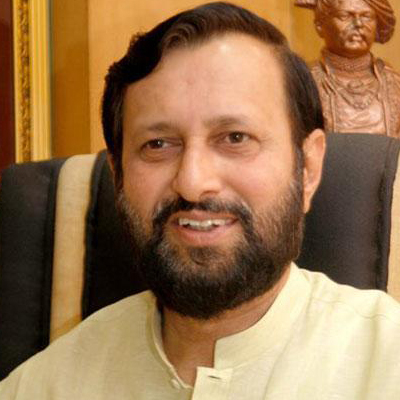
    NEW DELHI: Newly appointed Information and Broadcasting Minister Prakash Javadekar said today that freedom of the press is the cornerstone of a democracy and his first aim in his new portfolio will be to find ways to strengthen this freedom.


    Speaking soon after taking charge of his portfolio, the Minister said that the media and politicians must work together to highlight the problems of the people and bring them before the government.


    Describing himself as ‘just a soldier’, he said he had always stood for freedom of the press and had suffered a 16-month imprisonment during the national emergency in 1975 in this fight as he belongs to a family of journalists.


    Noting that the press has conducted itself in a responsible manner and set up self-regulatory bodies, he said the government would not impose any regulations on the fourth estate.


    The media in its present form gives a ‘rainbow of choices’ and even dissent has its own place in a democratic system of functioning. Constructive criticism is therefore welcome.


    Asked about the frictions with Prasar Bharati, Javadekar said he had not had time to study the issues yet but would like to work in partnership with all the autonomous media units including Prasar Bharati.


    He said in reply to a question that he did not agree with his immediate predecessor that there was no need for an Information and Broadcasting Ministry in the present context.


    Referring to social media, he said that while it presently came under the Information Technology Act, but he would study it and see how it can be helped. He said he would meet all the officials of the Ministry, understand the issues involved and then make some suggestions to the Prime Minister.


    Soon after meeting the media, he met senior officials of the Ministry and also media units, apart from Prasar Bharati CEO Jawhar Sircar and Director of Film Festivals Shankar Mohan.


    Contrary to expectations, Prime Minister Narendra Modi has not upgraded the post of Information and Broadcasting to cabinet rank.


    Like his immediate predecessor Manish Tewari, Javadekar will be a Minister of State with independent charge of Information and Broadcasting Ministry. (He has also been given charge of Environment and Parliamentary Affairs). However, he has ample experience as far as dealing with the media and its problems are concerned, since he like Tewari has served as party spokesperson for the past few years.


    Javedekar has also been one of the nominated members from Parliament to the Press Council of India and hence has dealt with media issues such as paid news. A member of the Rajya Sabha from MaharashtraJavadekar was born in Pune on 30 January 1951 and became associated with the Akhil Bharatiya Vidyarthi Parishad in his young days.


    He commenced his professional life as an employee in the Bank of Maharashtra for 10 years from 1971 to 1981 and also worked in the Rural Development Department.


    His father Keshav Krishna Javadekar was a senior leader of Hindu Maha Sabha who worked as joint editor of Marathi Daily started by Lokmanya Tilak – Kesari before having stints with some other newspapers like Tarun Bharat and Kaal as journalist. He still occasionally writes his thoughts in some newspapers.


    Javadekar has been president of GLOBE India (Global Legislators Organisation for Balanced Environment); In-charge BJP Economic Forum and Cells related to Economy; President, NOINO (National Organisation of Insurance Officers) and president, KCKU (Khadi Commission Karmachari Union).


    As a member of Parliament, he has served as member of the Press Council of India; the Public Accounts Committee; Standing Committee on Human Resources and Development; Consultative Committee for Ministry of Power; Committee on Subordinate Legislation and Committee on Wakf.


    He has earlier served as executive president of the State Planning Board in Maharashtra (1995–1999); been a  member of the Maharashtra Legislative Council from Pune Division Graduate Constituency for 12 years from 1990; chairman of the Task Force on IT in Maharashtra (1977–1999) and chairman of the Working Group on ‘IT for Masses’ of the central government.


    He has also led a delegation to Boston to negotiate Media Lab Asia Project in 2000.
  • The New Government and Indian Media: Agenda for Reform

    The New Government and Indian Media: Agenda for Reform

    I will begin by taking a cue from a catchphrase Mr. Modi used frequently in his stump speeches through the electioneering. “More Governance. Less Government.”


    If PM Modi follows this through in all those facets of the government that media industries deal with, he will simultaneously:


    • Strengthen plurality of voices and reinforce the media’s ‘Fourth Estate’ role as our democracy’s watchdog and first line of defence

    • Unlock investment interest, domestic and FDI, and quickly create thousands of new jobs in the people-intensive creative content sector

    • Give fillip to revenue growth for the centre and state governments

    • Allow freer play of market forces to accelerate growth in the still nascent media sector

    Let us look at specific examples of each of these:

    • It is nearly two decades since FM radio was first opened up to private broadcasters. Even today, licence conditions prohibit radio broadcasters from news and current affairs. In a laughable concession they are, however, permitted to retransmit, without any editing or alteration, All India Radio news bulletins. In the meanwhile, television, which reaches a much larger slice of the population, has a whole, officially recognised and duly licensed ‘news’ genre. Apart from a visceral fear of real free speech in both the legislative and administrative arms of the government, there seems to be no justification for this position. The Supreme Court admitted a public interest litigation on 17 October 2013 seeking the abrogation of this restriction. Can the new government show us that its heart is in the right place when this matter next comes up for hearing?

    • While restrictions on foreign investment in the news business are nearly universal for easily understood reasons, the government will soon be hearing petitions from several players in the electronic news media about the dire straits they are in. While clearly appreciating the need to ensure that a clear majority in a news business must remain in Indian hands, could the government not consider pushing up FDI to 49 per cent? Similarly, the related-party restrictions on investments in the cable & satellite distribution plant (DAS, DTH, HITS etc.) impede the path for many natural investors. Given the ambitious path laid out to analog sunset at the end of this year, the sector is crying out for more investment and the progress of the digitisation project to date is evidence enough for the consumer and content creator benefits it brings in its wake.

    • A very important reason for mandatory digitisation is that it lays to rest the unregulated analogue cable plant, which from the beginning, has operated in a twilight zone beyond the reach of the state. An unfortunate outcome, for central and state governments, is that incomes and profits of businesses in this segment of the media industry have stayed in the informal, ‘black’ economy. Given turnovers in tens of thousands of crore, the loss to the exchequer over the last several years is evidently sizable. The future, however, looks better. Now if the government acts to open FDI pathways into the distribution plant, this future of big service and entertainment tax revenues might be even closer at hand.

    • The Telecom Regulatory Authority of India (TRAI) was an accidental invitee to the television industry. Once it got in, though, it behaved like the well-known fable about the Arab and the Camel. On a cold night in the desert, the camel requests the Arab if it can only get its freezing nose into the tent. One thing leads to another and soon the camel is in the tent and the poor Arab is freezing out in the open. TRAI has chosen to build a complex framework to regulate tariffs between content providers and distribution platforms with all sorts of caps and restrictions. Interestingly enough, it appears that the regulations work only to protect distribution interests while doing little or nothing for the final consumer. With a multiplicity of content providers and distribution platforms, the likelihood of any player or group of players being able to exert monopolistic or even oligopolistic economic power leading to extortionate impositions on the consumer now appear far-fetched. Under the circumstances, it may be time to wind down this onerous framework. In any case, an erstwhile TRAI chairman Pradeep Baijal, had indicated that regulation would make way for forbearance soon as the last-mile was competitive. How much more competitive can it get with half a dozen DTH players, hundreds of DAS platforms and indications of other initiatives like HITS in the pipeline?

    The country has given an unequivocal mandate to Mr. Modi, his party and coalition. Expectations are stratospheric and everything that accelerates the wheels of business and commerce should be music to his and his government’s ears. BBC’s stated mission “To enrich people’s lives with programmes and services that inform, educate and entertain” is a great encapsulation of the mission of the entire media industry itself. Support this industry and you unleash a catalysing force of good, Mr. Modi.

    Because ultimately, as the Clinton Campaign in 1992 put it pithily, it’s “The Economy, stupid.”

    (These are purely personal views of Provocateur Advisory principal Paritosh Joshi and indiantelevision.com does not subscribe to these views)

  • Final deadline for entering GoaFest Abbys extended for the second time

    Final deadline for entering GoaFest Abbys extended for the second time

    MUMBAI: The awards governing council of Goafest 2014 has yet again extended the entry dates for Goafest Abbys 2014. The last date now for submission of Creative, Media, Digital, Direct, Design, Promo and Activations, PR, Publishers and Broadcasters Abbys is 23 April 2014 before 5:00 pm.


    The entry forms can be downloaded from www.theadvertisingclub.net. Goafest 2014 will be held from 29 May to 31 May at the Grand Hyatt, Bambolim, North Goa.


    Regular award entry fee is Rs 6500 and 12.36 per cent service tax (ST). For integrated campaigns the entry fee is Rs9000 and ST of 12.36 per cent. For entries from other countries in the SAARC region (single & integrated) it is $ 20 and ST of 12.36 per cent ($ 22.47).

  • IAA Conversations on role of polls and media in influencing voters

    IAA Conversations on role of polls and media in influencing voters

    MUMBAI: Election wave is on and is not sparing anyone. In the same context, International Advertising Association (IAA) in its next IAA Conversations will see political party representatives Ram Naik (BJP), Prem Shukla (Shiv Sena), Sanjay Jha (Congress) and political analyst Kumar Ketkar debating.


    The panel discussion moderated by Anand Rathi will deliberate on ‘Do Opinion Polls and Media Reports Influence Voters?’ between 4pm and 6pm on 10 April at the Nehru Centre, Mumbai.


    IAA India Chapter president & development Asia Pacific region of IAA vice president Srinivasan Swamy said, “Our objective at the IAA India Chapter is to bring about discussions on key issues concerning advertising, media and allied sectors. This edition of IAA Conversations is an attempt to deliberate on an issue that has generated much discussion in the run-up to the general elections.”


    Zee Media group CEO and chair of the event Dr Bhaskar Das said, “The role of the media in influencing public opinion cannot be denied and hence this discussion with key stakeholders will bring to the fore issues and concerns on how opinion polls and media reports can influence the masses at election time.”


    “Many senior members of the advertising, marketing and media fraternity are invited to be present at the engaging event,’ added Swamy.

  • LinkedIn’s SlideShare becomes more personalised

    LinkedIn’s SlideShare becomes more personalised

    MUMBAI: In today’s day and age, social networks are a way of life; so much so that they are the source of news for many media professionals. I happen to be one such professional who gets the beat of the industry through LinkedIn.


    Today morning I came across this mail from – LinkedIn’s presentation channel – SlideShare, stating it is integrating its Privacy Policy and Terms of Use into the LinkedIn Privacy Policy and User Agreement, effective 26 March, 2014.


    What does this mean for the user? This integration of SlideShare’s terms of service will now make it even easier for the member to discover and share content across both services. This means one’s SlideShare experience can be personalised based on his/her LinkedIn profile, their network, and their engagement with content from both services.


    The user’s LinkedIn account will power a richer experience on SlideShare’s service, and in the future may be prioritised over other sign-up or log-in options on the global presentation channel.


    “We encourage connecting your SlideShare and LinkedIn accounts, and in the future all SlideShare accounts could be merged into LinkedIn accounts. We’ll let you know ahead of time if we merge these accounts,” stated the e-mail from SlideShare.


    SlideShare was founded on the basic desire to easily share presentations on the web. This desire to help professionals around the world to discover people through content, and content through people, led it to join the LinkedIn family in 2012. Both the services claim to work on the fundamental philosophy of “members first”.

  • Quantel acquires Snell to create new force in media technology

    Quantel acquires Snell to create new force in media technology


    Quantel, the market leading innovator in news and sports production systems and high quality post, today announced that it has acquired Snell. Snell is a world leader in broadcast and media technology providing a comprehensive range of solutions for Live TV production and the creation, management and distribution of content for TV everywhere – on tablets, mobiles and web. The acquisition enables the combined business to offer customers a complete product range to create, version and deliver high quality content efficiently across multiple platforms.


    “This acquisition brings two great companies together to create a major new force in the global broadcast and media technology market. This will enable us to better serve Quantel and Snell customers around the globe,” said Ray Cross, Executive Chairman and CEO, Quantel. “Our product ranges are entirely complementary so the excellent Snell and Quantel brands and product ranges will continue. We’ll be able to combine the best in class talent and technologies from Quantel and Snell to bring exciting new products and solutions to market to help our customers transform their businesses. More local offices across the world will enable us to build closer relationships with our customers and to offer even better support.”


    “Paul Martin, Managing Director of the Snell TV Everywhere division and Robert Rowe, Managing Director of the Snell Live TV division will join the Quantel board to make sure it is business as usual for Snell customers,” continued Cross. Tim Banks, Snell Sales Director and Peter Fredericks, Snell Finance Director are also taking leading roles in the new combined organisation. “I’m really delighted that the Snell and Quantel businesses have come together to increase the scale and scope for both,” said Simon Derry, outgoing CEO at Snell. “Under Ray’s leadership the combined business will be able to write a new and exciting chapter moving forwards. I look forward to supporting Ray during the important period of transition.”


    “We will be creating a new world class facility at the company headquarters in Newbury to produce the complete Quantel and Snell product range and we look forward to the new ideas generated when the two R&D teams start to interact,” said Cross.


    The new business has the scale, talent and IP to achieve even greater success in the competitive global media technology market. With offices in 16 locations all around the globe and with combined revenues of more than $170m, Quantel and Snell is the new force in the broadcast and media technology market.

  • There is a need for self-correcting mechanisms in media: Pranab Mukherjee

    There is a need for self-correcting mechanisms in media: Pranab Mukherjee

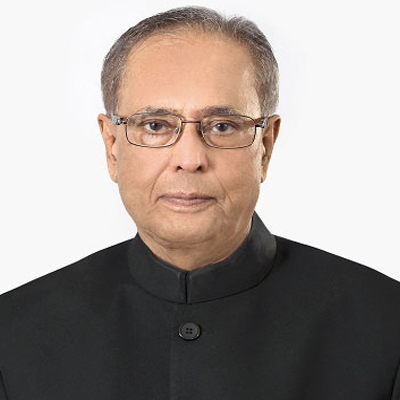
    NEW DELHI: President Pranab Mukherjee today said there was need for self-correcting mechanisms to check ‘aberrations’ like the malaise of paid news in the media.


    Inaugurating the Platinum Jubilee celebrations of the Indian Newspaper Society (INS), the President said, “It is distressing to note that some publications have resorted to “Paid News” and other such marketing strategies to drive their revenues.”


    The temptation to “dumb down” news should also be resisted, he said, stressing that the nation faces critical challenges that go well beyond the pressure of ‘Breaking News’ and immediate headlines. While newspapers must continue to be effective raconteurs, they must also be visionary nation builders.


    But he said India’s ‘vast, varied and vibrant media is a national asset and the media as a whole not only keeps people informed but also performs a very crucial function of presenting ideas and alternatives in the domain of policy formulation and implementation.’


    The President said these are changing times and it is not possible for newspapers to be spared from the consequences of the evolution of ideas and the embrace of technology. It is essential for newspapers to be alive to the challenges of technology and to harness responsibly the opportunities that present themselves.


    He said the influence, credibility and quality of the Indian media is well recognised. Newspapers must be keepers of the conscience of the country. They have to be active participants in the continuing endeavour to nurture a democratic republic committed to achieving justice and fundamental freedoms for all citizens. Journalists must bring to public notice the array of ills and deprivations that continue to beset large numbers of our people – be it malnourishment, continuance of discriminatory practices against sections of society, particularly dalits, or the burdens and tragic consequences of indebtedness. They must shape and influence public opinion even as they provide objective and balanced coverage of news.


    He said the Indian Newspaper Society has over the years met the challenges of time even as it has represented the most influential of India’s newspapers and periodicals. “75 years ago, the world was a very different place. Newspapers of the time not only survived the shortages that war brought in its wake, but also engaged themselves in the difficult task of informing people of the momentous events of a contentious period in our history. It took resolve, vision and a sense of destiny on the part of the founding fathers to have formed a society that could take up issues of common interest for its members. INS members have played a vital role in nurturing a free Press which is a critical component of our democracy,” he added.


    The President stressed that over the years, INS members have informed society and promoted debate on the important questions that confront the nation. “Be it the ravages wrought by war or those inflicted by the man-made Bengal famine, the trials and tribulations of a nation torn by partition or the building of modern day India, newspapers have played a crucial role in educating Indians and giving expression to the diversity of views in our society, upholding thereby the fundamental right to freedom of speech and expression,” he concluded.   

  • SureWaves wins BCS Ratna Award

    SureWaves wins BCS Ratna Award

    BANGALORE: SureWaves MediaTech Pvt Ltd, a next-generation media convergence company was awarded ”Best Innovative Technology” for its groundbreaking technology at the 5th BCS Ratna Awards 2014 held yesterday at New Delhi. The awards honored organizations that have been playing the role of a catalyst in Broadcasting, Media, DTH, Technology Providers & Cable TV industry in all areas.  Founded in 2006, SureWaves, with over 30 technology patents, is one of the most innovative Indian start-up in recent times based out of Bangalore.


    SureWaves’ ground-breaking technology enables large scale aggregation of audiences across multiple television channels and offers a single window interface to large national advertisers to effectively reach out to mass audiences on a market by market basis. The SureWaves Spot TV Network, one of the largest connected television networks of its kind anywhere in the world spans across 28 states and 7 union territories in India through partnerships with over 280 local TV channels that reach more than 80 million households and 400 million viewers.


    On receiving the award Mr. Mandar Patwardhan – Chief Operating Officer, SureWaves said “We are extremely delighted and on behalf of SureWaves, I thank BCS Ratna Awards and Aavishkar Media Group for having recognized us with this award. For us, to win the Best Innovative Technology award is, of course, very motivating. We pride ourselves on our innovative flagship product – SureWaves Spot TV Network, which has made advertising on local channels accountable, measurable and is enabling national advertisers to reach out to a hitherto untapped audience.”

    Since its inception in 2010, BCS Ratna Awards have become a symbol of excellence in the broadcasting and Distribution industry. This year, the awards focused not only on the excellence in the traditional media but also on path breaking initiatives in the case of new media as well. It was a one of its kind opportunity for Broadcasters, MSOs, LCOs, Technology & Content Providers, DTH stakeholders to come together on a single platform.

  • PwC report: content value, retransmission fees to boost E&M deals

    PwC report: content value, retransmission fees to boost E&M deals

    MUMBAI: If the new report released by PricewaterhouseCoopers (PwC) comes true, the media and entertainment sector could witness increasingly lucrative retransmission fees and high value for content having key influences on deal activity in the sector.


    The value of deals in the US entertainment, media and communications sector in 2013 more than doubled, driven by several “megadeals,” according to PwC’s year-end update.


    The deal volume year-to-year was relatively stable, the company reveals in its US Entertainment, Media & Communications Deal Insights report, rising by just three per cent to 866, while deal value soared from $96.2 billion to $222.7 billion.


    In broadcasting, deal volume rose from 71 to 87, with deal value soaring from $5.8 billion to $26.3 billion, driven by Comcast’s acquisition of GE’s interest in NBCUniversal. Going forward, deal activity in broadcasting is likely to be influenced by the increasing importance of retransmission revenues, as companies look to broaden their geographic reach.


    “PwC is beginning to see increased activity from US government regulators around anti-trust, intra-market media ownership and foreign media ownership regulations, which will likely be another market factor influencing deal volume,” the report says in its broadcasting 2014 outlook.


    Cable deal volume was stable at 16, but the value of deals fell year-to-year from $9 billion to $5 billion.


    Last year also saw 46 deals in film/content, up from 40, with a value of $0.5 billion, down from $9 billion in 2012. The previous year included Disney’s purchase of Lucasfilm.


    On the 2014 outlook for deals in film and content, PwC says, “The rising value of content has started an industry-wide race to acquire it. Buyers continue to look for ways to bridge the value gap and meet the premiums demanded by content providers through attractive deal structures, beneficial tax structuring and contingent consideration. Recent years have seen several major acquisitions of content assets, and despite the drop in deal value in 2013, the ongoing deal activity is likely to continue. Geographic location will hold no bar as U.S. participants look abroad and foreign players look to the United States for a means to acquire and monetize content.”

  • Indian Merchants’ Chamber (IMC) presents the much awaited Fusion 2014

    Indian Merchants’ Chamber (IMC) presents the much awaited Fusion 2014

    MUMBAI: The Indian Merchants’ Chamber is organizing its 3rd edition of ‘IMC FUSION,’ the Conference on Entertainment, Media & Sports on Saturday, February 15, 2014 at Grand Hyatt in Santa Cruz, Mumbai.  


    The IMC FUSION Conference represents convergence of today’s three most dynamic sectors – Entertainment, Media & Sports. This year, the conference is being organized under the auspices of IMC’s Entertainment Committee chaired by Mr. Manmohan Shetty.  Renowned Bollywood film, mainstream television and theatre star Kabir Bedi will be the Host of FUSION 2014.


    The third edition of IMC FUSION will feature renowned personalities as speakers from the three sectors deliberating on a wide array of topics covering current issues and trends, emerging technologies and new-age engagement with the consumer, content and creation, talent and involvement, influence of social media and App. world, technical aspects of Indian cinema, and other contemporary developments in ever evolving and dynamic sectors of Sports, Media and Entertainment. 


    Dr. J. Murali Manohar, Saundarya Rajnikant, Subhash Ghai, Rakesh Roshan, Shekhar Kapoor,  Pritish Nandy, Arnab Goswami, N. P. Singh, Annurag Batra, Komal Nahta, Suchitra Iyer, Kirthiga Reddy, Rajan Anandan, Agnello Dias, Steve Waugh, Surya Mantha, Mary Kom, Saina Nehwal, Dr. Prannoy Roy, among others will likely form panels of speakers during the day-long Conference. 


    The daylong conference will also feature Awards for Excellence in Entertainment, Media & Sports.


    The Conference will host delegates from the entertainment, Media and sports fraternity as well as young professionals and students of mass communication, journalism, film institutions and management schools. FUSION 2014 will provide a unique opportunity to the delegates to network with industry peers and share their thoughts and ideas with some of the top thought leaders of the industry. 


    Commenting on FUSION 2014, IMC President Mr. Shailesh Vaidya said, “With the exponential growth in the content industry across multiple platforms and with the dynamic trends governing its momentum, FUSION 2014 will contribute the best insights under one roof. With this conference IMC, being one of the leading industry bodies, will offer a unique platform for the industry to ponder over the course that it would take in the future and gear up for the challenges ahead. The conference proceedings as well as the Awards for Excellence will offer something for everyone connected with the entertainment, media & sports industry.”


    Mr. Manmohan Shetty, Chairman – IMC Entertainment Committee said, “This year IMC FUSION will focus on all aspects in the fastest growing sectors – entertainment, media and sports.  IMC FUSION Excellence Awards in the evening following the conference will be a star-studded event honoring winners chosen by an eminent panel of judges.”


    Veterans from the Sports, Media and Entertainment fraternity- Mr. Mir Ranjan Negi, Former India Hockey Player & National Coach, Mr. Sanjoy Chakrabarty, Managing Partner Zenith Optimedia, Ms. Bharathi Pradhan, Editor, The Film Street Journal are the Co-Chairperson’s of the Committee.


    Indian Merchants’ Chamber, as the pioneering trade body of the country since 1907, has been actively involved in promotion of the business interests of its various constituents.  In this process, our endeavour has been to reach out to different industry groups, understand their views and perspectives and present them to the policy makers and other decision makers to facilitate growth of that sector, in particular, and industry in general.


    Key issues identified during the FUSION 2014 Conference together with suggestions and outcomes from different sessions will be collated for taking up at appropriate levels.


    Registration for the limited seats and B2B exhibition space is currently open. Information about registration is available on the IMC website www.imcnet.org.


    For more information, contact:


    Malika Bhavnani

    Shraddha Teli 

    9867596309

    shraddha@fort.madisonindia.com