Tag: media

  • Content a ‘Game of Thrones’;  AT&T’s control over HBO, Cartoon Network, Warner Bros faces regulatory lens

    Content a ‘Game of Thrones’; AT&T’s control over HBO, Cartoon Network, Warner Bros faces regulatory lens

    MUMBAI: The global media landscape is resulting in a new juggernaut as an internet and cable behemoth yesterday purchased an entertainment conglomerate making the former unmatched in its size and reach to consumers through home broadband, smartphones, satellite television and a battery of movies and cable channels. This deal could lead to more cautionary flags than Comcast’s merger with NBCUniversal in 2009.

    The US$ 108.7-billion AT&T, Time Warner merger has been met with suspicion as analysts raised antitrust concerns that it would create unfair pricing and lead to further media consolidation. The
    cash-and-stock deal values Time Warner – with CNN, HBO, and Warner Bros Studios – at over $85 billion, and involves AT&T taking on its debt.

    AT&T, over a year ago, became the nation’s largest pay-TV operator when it acquired DirecTV. Now, Time Warner would give AT&T HBO, CNN, TBS, TNT, Cartoon Network and Warner Bros., Hollywood’s biggest television and film studio. The massive deal has become a subject of discussion in the US presidential campaign. Donald J. Trump, condemning the deal, said he would block it if he were the president, “because it’s too much concentration of power in the hands of too few.” Hillary Clinton has assured to be tough on consolidation and corporate megapowers.

    Although the latest merger is considered “vertical integration” as the two broadly do not compete against each other as compared to other “horizontal integration” of similar businesses, regulators could look at other ways AT&T might affect the media ecosystem if the deal were to consummate.

    AT&T may possibly make it more expensive for its competitors to gain access to HBO or Time Warner’s content or give preferential treatment to its own programming.

    A brief history of media/telecom deals

    1995
    Turner Broadcasting System and Time Warner announced a $7.5-billion merger, bringing together brands including Warner Brothers, CNN, Time magazine, and the Cartoon Network.

    2000
    AOL announced its plan to buy Time Warner for over $160 billion.

    2005
    SBC Corporation acquired AT&T for over $16 billion.

    2008
    Time Warner spins off its cable unit, which becomes Time Warner Cable (not a part of the current deal).

    2009
    Time Warner spins off AOL.

    2011
    Comcast receives regulatory nod for its $30-billion bid to buy a majority stake in NBCUniversal. Comcast took over NBCUniversalm completely in 2013, as GE divested its stake.

    2013
    Time Warner spins off its Time Inc magazine division.

    2014
    Verizon buys out Vodafone’s stake in Verizon Wireless for $130 billion, gaining complete ownership. Time Warner turns down $ 80-billion bid from Twenty-First Century Fox.

    2015
    Comcast drops its $45-billion bid to buy Time Warner Cable after the regulator opposes the merger over concerns of creating an Internet provider and a cable operator with too much control. Verizon purchases for $4.4 billion. AT&T gets government nod to purchase the satellite TV company DirecTV creating one of the largest pay-TV servicen providers to compete with Comcast.

    2016

    Regulators approved US$ 88-billion merger of Charter Communications with Time Warner Cable and Bright House Networks, creating the third-largest video provider and the second-largest broadband
    provider. (Comcast purchased DreamWorks Animation for $3.8 billion to compete against Disney.) Time Warner bought a 10 per cent stake in Hulu for $583 million.

    Yahoo and Verizon announced a $4.8-billion merger that would give the latter ownership of the former’s Internet assets. AT&T acquires Time Warner.

    Regulators could seek promises from AT&T and Time Warner to make content from HBO like “Game of Thrones” or cable networks like CNN available through apps or through streaming, not withholding them from competitors, which could be addressed in conditions attached to an approval.

  • Content a ‘Game of Thrones’;  AT&T’s control over HBO, Cartoon Network, Warner Bros faces regulatory lens

    Content a ‘Game of Thrones’; AT&T’s control over HBO, Cartoon Network, Warner Bros faces regulatory lens

    MUMBAI: The global media landscape is resulting in a new juggernaut as an internet and cable behemoth yesterday purchased an entertainment conglomerate making the former unmatched in its size and reach to consumers through home broadband, smartphones, satellite television and a battery of movies and cable channels. This deal could lead to more cautionary flags than Comcast’s merger with NBCUniversal in 2009.

    The US$ 108.7-billion AT&T, Time Warner merger has been met with suspicion as analysts raised antitrust concerns that it would create unfair pricing and lead to further media consolidation. The
    cash-and-stock deal values Time Warner – with CNN, HBO, and Warner Bros Studios – at over $85 billion, and involves AT&T taking on its debt.

    AT&T, over a year ago, became the nation’s largest pay-TV operator when it acquired DirecTV. Now, Time Warner would give AT&T HBO, CNN, TBS, TNT, Cartoon Network and Warner Bros., Hollywood’s biggest television and film studio. The massive deal has become a subject of discussion in the US presidential campaign. Donald J. Trump, condemning the deal, said he would block it if he were the president, “because it’s too much concentration of power in the hands of too few.” Hillary Clinton has assured to be tough on consolidation and corporate megapowers.

    Although the latest merger is considered “vertical integration” as the two broadly do not compete against each other as compared to other “horizontal integration” of similar businesses, regulators could look at other ways AT&T might affect the media ecosystem if the deal were to consummate.

    AT&T may possibly make it more expensive for its competitors to gain access to HBO or Time Warner’s content or give preferential treatment to its own programming.

    A brief history of media/telecom deals

    1995
    Turner Broadcasting System and Time Warner announced a $7.5-billion merger, bringing together brands including Warner Brothers, CNN, Time magazine, and the Cartoon Network.

    2000
    AOL announced its plan to buy Time Warner for over $160 billion.

    2005
    SBC Corporation acquired AT&T for over $16 billion.

    2008
    Time Warner spins off its cable unit, which becomes Time Warner Cable (not a part of the current deal).

    2009
    Time Warner spins off AOL.

    2011
    Comcast receives regulatory nod for its $30-billion bid to buy a majority stake in NBCUniversal. Comcast took over NBCUniversalm completely in 2013, as GE divested its stake.

    2013
    Time Warner spins off its Time Inc magazine division.

    2014
    Verizon buys out Vodafone’s stake in Verizon Wireless for $130 billion, gaining complete ownership. Time Warner turns down $ 80-billion bid from Twenty-First Century Fox.

    2015
    Comcast drops its $45-billion bid to buy Time Warner Cable after the regulator opposes the merger over concerns of creating an Internet provider and a cable operator with too much control. Verizon purchases for $4.4 billion. AT&T gets government nod to purchase the satellite TV company DirecTV creating one of the largest pay-TV servicen providers to compete with Comcast.

    2016

    Regulators approved US$ 88-billion merger of Charter Communications with Time Warner Cable and Bright House Networks, creating the third-largest video provider and the second-largest broadband
    provider. (Comcast purchased DreamWorks Animation for $3.8 billion to compete against Disney.) Time Warner bought a 10 per cent stake in Hulu for $583 million.

    Yahoo and Verizon announced a $4.8-billion merger that would give the latter ownership of the former’s Internet assets. AT&T acquires Time Warner.

    Regulators could seek promises from AT&T and Time Warner to make content from HBO like “Game of Thrones” or cable networks like CNN available through apps or through streaming, not withholding them from competitors, which could be addressed in conditions attached to an approval.

  • Inkspell acknowledges frontrunners in India through Drivers of Digital Awards

    Inkspell acknowledges frontrunners in India through Drivers of Digital Awards

    Inkspell announced the much awaited results of the Drivers of Digital Awards 2016 – India Chapter (DOD Awards) on 28 September, 2016. This event was conceptualized with the idea of furtherance of the ongoing digital momentum in India. The DOD Awards also aligns itself with the Government’s visionary programmes like ‘Digital India’ and ‘Start-up India’.

    Following were the Winners in various categories in the glittering DOD awards ceremony:

    Special Awards
    Best Digital Enterprise Tech Mahindra
    Digital Entrepreneur of the Year Vineet Bajpai
    Digital Person of the Year Uday Sodhi
    Digital Startup of the Year Indus OS
    Digital Agency of the Year WATConsult
    Digital Marketing Awards
    Best Engagement in a Digital Campaign Vero Moda Campaign by WATConsult
    Best Digital Integrated Campaign Reliance #KisseKamyabiKe by Fruitbowl Digital
    Best Digital Marketing Analytics HCL Technologies
    Best Display Campaign CarTrade Campaign by Sociomantic
    Best Display Campaign World TV Premiere of Singh Is Bliing by Zee Entertainment
    Best Email Marketing Campaign Via.com by Octane – The Biggest Online Travel Sale Campaign
    Best Engagement in a Mobile Campaign Myntra Mini Game by Gameloft
    Best Mobile Marketing Campaign Sumit Sambhal Lega Interactive Masthead by Star TV
    Best Performance-driven Campaign Reliance Energy Online Reputation Management by Fruitbowl Digital
    Best Search Marketing Campaign Royal Sundaram SEO by iProspect
    Best Social Media Marketing Campaign Ariel Dads Share the Load by MediaCom
    Best Viral Marketing Campaign Trumping Donald – A TE-A-ME Intervention by ARM Digital
    Best Innovation in a Digital Campaign Himalaya MEN IPL Campaign by WATConsult
    Website Awards
    Best Website – Coupons/Deals/Cashbacks GoPaisa.com
    Best eCommerce website by a Retail Brand Titan eStore by Titan Company
    Best eCommerce website in a Specialised Category Bajaj Allianz Life Insurance
    Best Website – Educational Da Vinci Learning by ADG Online
    Best Website – Entertainment ESPNcricinfo – CRICIQ by ESPN Digital
    Best Website – Financial Services/Banking YES Bank
    Best Website – Local language Aaj Tak by India Today Group
    Best Website – News content DainikBhaskar.com by Dainik Bhaskar Digital
    Best Online Classified Website IndiaMART by IndiaMART InterMESH
    Best Website – Travel AWATAR by KSRTC
    Best Website – Personal Blog/Website ShoutMeLoud by Harsh Agrawal
    Mobile Awards
    Best Mobile App – Entertainment SonyLIV App by Prodigitz
    Best Mobile App -Financial Services/Banking Moneycontrol by E-Eighteen.com
    Best Mobile App – Healthcare/Fitness Stemetil VR by Abbott Healthcare
    Innovative Mobile App Karnataka Mobile One by IMI Mobile
    Best Mobile App – Game Asphalt Airborne by Gameloft
    Best Mobile App – News The Indian Express by IE Online
    Best Online Classified Mobile App Talentrack by Fameposter Career Services
    Best Mobile App – Travel IRCTC AIR by IRCTC
    Digital Financial Awards
    Digital Bank of the Year YES Bank
    Best Digital Payment Facilitator NextGen Telesolutions
    Best Financial Innovation Leopard Integrated Tablet POS and microATM by Evolute Systems
    Best Prepaid Card/Product DCB Prepaid Cards by DCB Bank
    Best Digital Wallet Pockets by ICICI Bank

    The objective of the Drivers of Digital Awards was to motivate the agencies and enterprises to continue doing phenomenal work for the uplift of the digital economy in the country. More than 700 Brands, Agencies, and professionals were in competition for the coveted trophy. The ceremony witnessed more than 500 plus professionals from the following industries: Digital marketing, e-Commerce & m-Commerce, Media, FMCG, BFSI, Auto, Electronics, OEMs, Technology and Conglomerates.

    About Inkspell Solutions:
    Inkspell Solutions is an avant-garde business intelligence and enterprise appraisal institution.

    It was founded with the objective of untangling the business-to-business (B2B) marketing convolutions in today’s hybrid-media age and providing simple yet effective platforms and solutions for businesses to effectively reach out to and communicate with their target market.

    Through a team of experts with exhaustive industry know-how, extensive network across sectors and the proficiency to conduct comprehensive, large-scale primary and secondary research, Inkspell helps companies formulate marketing strategies pertaining to their business needs, implement the marketing plans, and deliver market performances. It operates across old-school and the new-age media in a cohesive manner to ensure that the reach of the Digital media complements the impact of the ATL and BTL channels. It also formulates research reports for industry players to map the upcoming trends and practices in the business and keep a track of changing consumer behavior and choices.

    Inkspell holds expertise in the areas of large scale conferences and summits; roundtable meetings, seminars, and discussions; employee engagement and motivation activities; MICE events: mall activations, offsite trips, innovative OOH media programs; corporate branding and media buying; research reports and whitepapers.

    Click here to visit Drivers of Digital Awards 2016 – www.dodawards.in

  • Inkspell acknowledges frontrunners in India through Drivers of Digital Awards

    Inkspell acknowledges frontrunners in India through Drivers of Digital Awards

    Inkspell announced the much awaited results of the Drivers of Digital Awards 2016 – India Chapter (DOD Awards) on 28 September, 2016. This event was conceptualized with the idea of furtherance of the ongoing digital momentum in India. The DOD Awards also aligns itself with the Government’s visionary programmes like ‘Digital India’ and ‘Start-up India’.

    Following were the Winners in various categories in the glittering DOD awards ceremony:

    Special Awards
    Best Digital Enterprise Tech Mahindra
    Digital Entrepreneur of the Year Vineet Bajpai
    Digital Person of the Year Uday Sodhi
    Digital Startup of the Year Indus OS
    Digital Agency of the Year WATConsult
    Digital Marketing Awards
    Best Engagement in a Digital Campaign Vero Moda Campaign by WATConsult
    Best Digital Integrated Campaign Reliance #KisseKamyabiKe by Fruitbowl Digital
    Best Digital Marketing Analytics HCL Technologies
    Best Display Campaign CarTrade Campaign by Sociomantic
    Best Display Campaign World TV Premiere of Singh Is Bliing by Zee Entertainment
    Best Email Marketing Campaign Via.com by Octane – The Biggest Online Travel Sale Campaign
    Best Engagement in a Mobile Campaign Myntra Mini Game by Gameloft
    Best Mobile Marketing Campaign Sumit Sambhal Lega Interactive Masthead by Star TV
    Best Performance-driven Campaign Reliance Energy Online Reputation Management by Fruitbowl Digital
    Best Search Marketing Campaign Royal Sundaram SEO by iProspect
    Best Social Media Marketing Campaign Ariel Dads Share the Load by MediaCom
    Best Viral Marketing Campaign Trumping Donald – A TE-A-ME Intervention by ARM Digital
    Best Innovation in a Digital Campaign Himalaya MEN IPL Campaign by WATConsult
    Website Awards
    Best Website – Coupons/Deals/Cashbacks GoPaisa.com
    Best eCommerce website by a Retail Brand Titan eStore by Titan Company
    Best eCommerce website in a Specialised Category Bajaj Allianz Life Insurance
    Best Website – Educational Da Vinci Learning by ADG Online
    Best Website – Entertainment ESPNcricinfo – CRICIQ by ESPN Digital
    Best Website – Financial Services/Banking YES Bank
    Best Website – Local language Aaj Tak by India Today Group
    Best Website – News content DainikBhaskar.com by Dainik Bhaskar Digital
    Best Online Classified Website IndiaMART by IndiaMART InterMESH
    Best Website – Travel AWATAR by KSRTC
    Best Website – Personal Blog/Website ShoutMeLoud by Harsh Agrawal
    Mobile Awards
    Best Mobile App – Entertainment SonyLIV App by Prodigitz
    Best Mobile App -Financial Services/Banking Moneycontrol by E-Eighteen.com
    Best Mobile App – Healthcare/Fitness Stemetil VR by Abbott Healthcare
    Innovative Mobile App Karnataka Mobile One by IMI Mobile
    Best Mobile App – Game Asphalt Airborne by Gameloft
    Best Mobile App – News The Indian Express by IE Online
    Best Online Classified Mobile App Talentrack by Fameposter Career Services
    Best Mobile App – Travel IRCTC AIR by IRCTC
    Digital Financial Awards
    Digital Bank of the Year YES Bank
    Best Digital Payment Facilitator NextGen Telesolutions
    Best Financial Innovation Leopard Integrated Tablet POS and microATM by Evolute Systems
    Best Prepaid Card/Product DCB Prepaid Cards by DCB Bank
    Best Digital Wallet Pockets by ICICI Bank

    The objective of the Drivers of Digital Awards was to motivate the agencies and enterprises to continue doing phenomenal work for the uplift of the digital economy in the country. More than 700 Brands, Agencies, and professionals were in competition for the coveted trophy. The ceremony witnessed more than 500 plus professionals from the following industries: Digital marketing, e-Commerce & m-Commerce, Media, FMCG, BFSI, Auto, Electronics, OEMs, Technology and Conglomerates.

    About Inkspell Solutions:
    Inkspell Solutions is an avant-garde business intelligence and enterprise appraisal institution.

    It was founded with the objective of untangling the business-to-business (B2B) marketing convolutions in today’s hybrid-media age and providing simple yet effective platforms and solutions for businesses to effectively reach out to and communicate with their target market.

    Through a team of experts with exhaustive industry know-how, extensive network across sectors and the proficiency to conduct comprehensive, large-scale primary and secondary research, Inkspell helps companies formulate marketing strategies pertaining to their business needs, implement the marketing plans, and deliver market performances. It operates across old-school and the new-age media in a cohesive manner to ensure that the reach of the Digital media complements the impact of the ATL and BTL channels. It also formulates research reports for industry players to map the upcoming trends and practices in the business and keep a track of changing consumer behavior and choices.

    Inkspell holds expertise in the areas of large scale conferences and summits; roundtable meetings, seminars, and discussions; employee engagement and motivation activities; MICE events: mall activations, offsite trips, innovative OOH media programs; corporate branding and media buying; research reports and whitepapers.

    Click here to visit Drivers of Digital Awards 2016 – www.dodawards.in

  • Digital India: Media, entertainment leaders join SCTE

    Digital India: Media, entertainment leaders join SCTE

    NEW DELHI: Reliance Big TV head (DTH Business) Vivek Garg, Network18 Media & Investments Ltd Group chief technology officer Rajat Nigam and GTPL-Hathway Pvt. Ltd chief operating officer Shaji Mathews have come on the governing council of broadband professionals body SCTE India for 2016-17.

    Others include Electronics Sector Skills Council of India CEO N K Mohapatra; Vodafone India executive vice president-corporate affairs and public policy Sandeep Bhargava and PPC Broadband managing mirector–Asia Pacific Gurdeep Singh Bakshi.

    The initiative was taken on the recommendation of SCTE vice president Mike Jones from the United Kingdom and national secretary Rahul Nehra.

    Nehra said, “SCTE stands to play a pivotal role in emerging Digital India from a skilling and innovation perspective and the new governing council will be the defining light of the efforts going forward.”

    Nigam added, “SCTE deserves salutation for driving technology enhancement and culture. Today, innovation is a tradition that needs to be adhered to continue the fast-paced tech journey enhancing user experience.”

    Specific goals for this year include developing technical skills in the digital space, collaborating with the policy makers to fast-track innovation and learning, driving standards in the echo-system, adopting innovation and bringing the best of Asia and Europe to the upcoming SCTE India Awards. The Society has planned to launch an India Broadband Journal which will be released quarterly thought-leader magazine.

    Industry relationships committee chairman Sandeep Bhargava said: “This shall enable focus on the needs of the broadband sector and help build relationships with various stakeholders in the government and industry and create a right policy environment.”

    Founded in 1945, the SCTE’s aim is to raise the standard of broadband engineering in the telecommunications industry. The society particularly concerns with the training and career advancement of technical professionals in the field. Headquartered in Watford (U.K.), the SCTE is a global non-profit organization that is managed by elected volunteers.

  • Digital India: Media, entertainment leaders join SCTE

    Digital India: Media, entertainment leaders join SCTE

    NEW DELHI: Reliance Big TV head (DTH Business) Vivek Garg, Network18 Media & Investments Ltd Group chief technology officer Rajat Nigam and GTPL-Hathway Pvt. Ltd chief operating officer Shaji Mathews have come on the governing council of broadband professionals body SCTE India for 2016-17.

    Others include Electronics Sector Skills Council of India CEO N K Mohapatra; Vodafone India executive vice president-corporate affairs and public policy Sandeep Bhargava and PPC Broadband managing mirector–Asia Pacific Gurdeep Singh Bakshi.

    The initiative was taken on the recommendation of SCTE vice president Mike Jones from the United Kingdom and national secretary Rahul Nehra.

    Nehra said, “SCTE stands to play a pivotal role in emerging Digital India from a skilling and innovation perspective and the new governing council will be the defining light of the efforts going forward.”

    Nigam added, “SCTE deserves salutation for driving technology enhancement and culture. Today, innovation is a tradition that needs to be adhered to continue the fast-paced tech journey enhancing user experience.”

    Specific goals for this year include developing technical skills in the digital space, collaborating with the policy makers to fast-track innovation and learning, driving standards in the echo-system, adopting innovation and bringing the best of Asia and Europe to the upcoming SCTE India Awards. The Society has planned to launch an India Broadband Journal which will be released quarterly thought-leader magazine.

    Industry relationships committee chairman Sandeep Bhargava said: “This shall enable focus on the needs of the broadband sector and help build relationships with various stakeholders in the government and industry and create a right policy environment.”

    Founded in 1945, the SCTE’s aim is to raise the standard of broadband engineering in the telecommunications industry. The society particularly concerns with the training and career advancement of technical professionals in the field. Headquartered in Watford (U.K.), the SCTE is a global non-profit organization that is managed by elected volunteers.

  • Column-Policy Cross-Connections

    Column-Policy Cross-Connections

    Point 1: With over 1.2 billion population, India is a dream market for any product or service. In short, a land of opportunities.

    Point 2: Despite economic liberalisation started in early 1990s and followed through by successive governments, including the present one in New Delhi, India is still termed a challenging market.

    Just like any other sector, India’s INR 1,157 billion media and entertainment (M&E) industry too gets affected by the two aforementioned points.

    That the M&E industry holds immense potential can be easily seen in various crystal-ball gazing done.

    Indian Government Economic Survey 2016, an annual report card for Indian economy released every February, states the M&E recorded “unprecedented growth” over the last two decades making it one of the fastest growing industries in India. It is projected to grow at a CAGR of 13.9 percent to reach INR 1964 billion by 2019, the Survey states, adding digital advertising and gaming are projected to drive the growth of this sector in the coming years.

    The FICCI-KPMG annual report on Indian M&E sector, released in March, also reiterates the optimism. According to the report, the sector is expected to be worth INR 2,260 billion by 2020 and the advertising sector grew by 14.7 percent from INR 414 billion in 2014 to INR 475 billion in 2015.

    But then what’s holding back big bang investments not only from Indian investors but also foreign ones? Especially when China, the only other market in Asia that outstrips India in terms of size and opportunities, is mostly closed for foreign investors with stringent rules relating to M&E sectors.

    My theory is that despite successive governments from 1990 (it was in 1991 that economic liberalisation was set in motion in India and Indians also got exposed to satellite TV in few years from then) following up on that, full benefits have failed to accrue to the country. Reason? Various liberalisation processes and easing norms of doing business get enmeshed with other policy decisions— some taken in isolation — thereby continuing to make India a challenging market.

    Take, for example, the much talked about government step in June in liberalising FDI investment norms for various sectors, including media, defence, pharmaceuticals and retail.

    FDI policy on broadcasting carriage services as of June 2016


    Sector/Activity

    New Cap and Route

    5.2.7.1.1

    (1)Teleports(setting up of up-linking Hubs/Teleports);

    (2)Direct to Home (DTH);

    (3)Cable Networks (Multi System operators (MSOs) operating at National or State or District level and undertaking upgradation of networks towards digitalization and addressability);

    (4)Mobile TV;

    (5)Headend-in-the Sky Broadcasting Service(HITS)

    100%


    Automatic

    5.2.7.1.2 Cable Networks (Other MSOs not undertaking upgradation of networks towards digitalization and addressability and Local Cable Operators (LCOs))

    Infusion of fresh foreign investment, beyond 49% in a company not seeking license/permission from sectoral Ministry, resulting in change in the ownership pattern or transfer of stake by existing investor to new foreign investor, will require FIPB approval

    (Source: Commerce Ministry)


    The government in June said that FDI in all broadcast carriage services like cable, MSO, DTH, mobile TV, HITS have been upped to 100 percent and brought under automatic route, which means bureaucratic and lengthy permission processes have been lessened.

    Small caveat in automatic route investment norms notwithstanding, Indian companies and foreign investors should have been popping the champagne bottles. But industry reactions were sober to the extent of being subdued.

    General analysis of the aforementioned decision, in short, was: the government took a big step, but not a giant one. Why?

    According to government data, total FDI flow into India since April 2000 to December 2015 stood at US$ 408.68 billion. But the media sector’s share of FDI inflows from 2000-2015 was pegged at $4.48 billion.

    Considering the burgeoning media industry and newer technologies coming in, this sector’s share of FDI during this 15-year period should have been higher.

    So, why are foreign investors hesitant in investing in India, especially when PM Modi’s dream of Digital India can dovetail into building digital infrastructure capable of delivering many media services?

    The federal government may be trying its best to ease norms of doing business in India and live up to its claim of ‘India being a fav destination for foreign investors’, other proposed and existing policy decisions not only send out confused signals, but, actually, create more impediments.

    Take, for example, broadcast carriage regulator TRAI’s two discussion papers on infrastructure sharing in TV broadcasting distribution and  set-top-box interoperability .
    TRAI’s contentions for floating these discussion subjects are to explore avenues to reduce expenditure of companies providing these services by doing away with duplication (in the first case) and examine whether interoperable STBs can largely benefit the consumers.

    Critics of both these TRAI discussion subjects opine that if followed through and converted into regulations, both measures could add another layer of restrictions on the industry.

    Hong Kong-based Asian media industry organisation CASBAA, which also has Indian members, doesn’t mince words when it said in its submission on STB interoperability that the TRAI paper was based on a “number of untested, unproven presuppositions concerning the practice of technical interoperability”.

    Countering TRAI assertions, CASBAA said, “Regulator-imposed technical interoperability requirements will impose very large burdens on Indian consumers and industry players and risk stifling innovation in development of new features of interest to consumers.”

    If a holistic view is taken of both the TRAI consultations, surprisingly aimed at bringing down media services to a common denominator having little USPs, it’s no wonder the likes of Comcast and Liberty Media or closer home the Hong Kong-headquartered PCCW, for instance, have not been enthused much to invest in Indian broadcast carriage segment despite FDI norms liberalisation and a whopping over 100 million TV homes still on the plate.

    It’s not only TRAI, but also the general layout of the taxation and financial environment, apart from other cross-media restrictions, which would deter foreign investors.

    A DTH service provider in India, for example, on an average pays 40 percent tax, including an annual 10 percent licence fee, while ARPUs range between INR 175-220 for most of the six DTH companies. Why would AT&T, parent company of American DirecTV, invest in a DTH operation in India?

    Or, for that matter, why would Comcast or PCCW invest in Indian cable TV distribution when a large number of LCO operations are still far from transparent?

    Add to that a slowing down of the digital rollout — the earlier two phases of the proposed four-phased digitisation of TV services did manage to bring about increased transparency resulting in higher tax revenues for the government — and you have a pitch that’s not conducive for fair foreign investment game.

    Singapore-based market media market research company Media Partners Asia estimates approximately $2 billion has been invested by strategic and foreign institutional investors in Indian pay-TV distribution platforms, which certainly is peanuts considering  over 250 million TV homes are target consumers.

    If confusing policy signals were not enough, stellar performer ISRO’s new-found love for Make In India and resultant insistence on weaning away all Indian users of satellite-based services from foreign satellites to INSAT — informal as of now but gaining currency — is also fodder to scare a foreign investor as such moves smack of throwback to pre-90s when India was dubbed a closed market and not an open economy.

    That’s why, I would insist, till systematic changes are brought about in the country and various government organisations and regulators also see the big picture on regulations instead of functioning within their own small islands, attempts by any Indian government to make India the most favoured destination for foreign investments will not bear ripened fruit. And, in the process, full benefits won’t accrue to the consumers.

    (1 USD= INR 67)

    (Anjan Mitra is Consulting Editor of Indiantelevision.com and will write a fortnightly column on media matters.)


     

  • Column-Policy Cross-Connections

    Column-Policy Cross-Connections

    Point 1: With over 1.2 billion population, India is a dream market for any product or service. In short, a land of opportunities.

    Point 2: Despite economic liberalisation started in early 1990s and followed through by successive governments, including the present one in New Delhi, India is still termed a challenging market.

    Just like any other sector, India’s INR 1,157 billion media and entertainment (M&E) industry too gets affected by the two aforementioned points.

    That the M&E industry holds immense potential can be easily seen in various crystal-ball gazing done.

    Indian Government Economic Survey 2016, an annual report card for Indian economy released every February, states the M&E recorded “unprecedented growth” over the last two decades making it one of the fastest growing industries in India. It is projected to grow at a CAGR of 13.9 percent to reach INR 1964 billion by 2019, the Survey states, adding digital advertising and gaming are projected to drive the growth of this sector in the coming years.

    The FICCI-KPMG annual report on Indian M&E sector, released in March, also reiterates the optimism. According to the report, the sector is expected to be worth INR 2,260 billion by 2020 and the advertising sector grew by 14.7 percent from INR 414 billion in 2014 to INR 475 billion in 2015.

    But then what’s holding back big bang investments not only from Indian investors but also foreign ones? Especially when China, the only other market in Asia that outstrips India in terms of size and opportunities, is mostly closed for foreign investors with stringent rules relating to M&E sectors.

    My theory is that despite successive governments from 1990 (it was in 1991 that economic liberalisation was set in motion in India and Indians also got exposed to satellite TV in few years from then) following up on that, full benefits have failed to accrue to the country. Reason? Various liberalisation processes and easing norms of doing business get enmeshed with other policy decisions— some taken in isolation — thereby continuing to make India a challenging market.

    Take, for example, the much talked about government step in June in liberalising FDI investment norms for various sectors, including media, defence, pharmaceuticals and retail.

    FDI policy on broadcasting carriage services as of June 2016


    Sector/Activity

    New Cap and Route

    5.2.7.1.1

    (1)Teleports(setting up of up-linking Hubs/Teleports);

    (2)Direct to Home (DTH);

    (3)Cable Networks (Multi System operators (MSOs) operating at National or State or District level and undertaking upgradation of networks towards digitalization and addressability);

    (4)Mobile TV;

    (5)Headend-in-the Sky Broadcasting Service(HITS)

    100%


    Automatic

    5.2.7.1.2 Cable Networks (Other MSOs not undertaking upgradation of networks towards digitalization and addressability and Local Cable Operators (LCOs))

    Infusion of fresh foreign investment, beyond 49% in a company not seeking license/permission from sectoral Ministry, resulting in change in the ownership pattern or transfer of stake by existing investor to new foreign investor, will require FIPB approval

    (Source: Commerce Ministry)


    The government in June said that FDI in all broadcast carriage services like cable, MSO, DTH, mobile TV, HITS have been upped to 100 percent and brought under automatic route, which means bureaucratic and lengthy permission processes have been lessened.

    Small caveat in automatic route investment norms notwithstanding, Indian companies and foreign investors should have been popping the champagne bottles. But industry reactions were sober to the extent of being subdued.

    General analysis of the aforementioned decision, in short, was: the government took a big step, but not a giant one. Why?

    According to government data, total FDI flow into India since April 2000 to December 2015 stood at US$ 408.68 billion. But the media sector’s share of FDI inflows from 2000-2015 was pegged at $4.48 billion.

    Considering the burgeoning media industry and newer technologies coming in, this sector’s share of FDI during this 15-year period should have been higher.

    So, why are foreign investors hesitant in investing in India, especially when PM Modi’s dream of Digital India can dovetail into building digital infrastructure capable of delivering many media services?

    The federal government may be trying its best to ease norms of doing business in India and live up to its claim of ‘India being a fav destination for foreign investors’, other proposed and existing policy decisions not only send out confused signals, but, actually, create more impediments.

    Take, for example, broadcast carriage regulator TRAI’s two discussion papers on infrastructure sharing in TV broadcasting distribution and  set-top-box interoperability .
    TRAI’s contentions for floating these discussion subjects are to explore avenues to reduce expenditure of companies providing these services by doing away with duplication (in the first case) and examine whether interoperable STBs can largely benefit the consumers.

    Critics of both these TRAI discussion subjects opine that if followed through and converted into regulations, both measures could add another layer of restrictions on the industry.

    Hong Kong-based Asian media industry organisation CASBAA, which also has Indian members, doesn’t mince words when it said in its submission on STB interoperability that the TRAI paper was based on a “number of untested, unproven presuppositions concerning the practice of technical interoperability”.

    Countering TRAI assertions, CASBAA said, “Regulator-imposed technical interoperability requirements will impose very large burdens on Indian consumers and industry players and risk stifling innovation in development of new features of interest to consumers.”

    If a holistic view is taken of both the TRAI consultations, surprisingly aimed at bringing down media services to a common denominator having little USPs, it’s no wonder the likes of Comcast and Liberty Media or closer home the Hong Kong-headquartered PCCW, for instance, have not been enthused much to invest in Indian broadcast carriage segment despite FDI norms liberalisation and a whopping over 100 million TV homes still on the plate.

    It’s not only TRAI, but also the general layout of the taxation and financial environment, apart from other cross-media restrictions, which would deter foreign investors.

    A DTH service provider in India, for example, on an average pays 40 percent tax, including an annual 10 percent licence fee, while ARPUs range between INR 175-220 for most of the six DTH companies. Why would AT&T, parent company of American DirecTV, invest in a DTH operation in India?

    Or, for that matter, why would Comcast or PCCW invest in Indian cable TV distribution when a large number of LCO operations are still far from transparent?

    Add to that a slowing down of the digital rollout — the earlier two phases of the proposed four-phased digitisation of TV services did manage to bring about increased transparency resulting in higher tax revenues for the government — and you have a pitch that’s not conducive for fair foreign investment game.

    Singapore-based market media market research company Media Partners Asia estimates approximately $2 billion has been invested by strategic and foreign institutional investors in Indian pay-TV distribution platforms, which certainly is peanuts considering  over 250 million TV homes are target consumers.

    If confusing policy signals were not enough, stellar performer ISRO’s new-found love for Make In India and resultant insistence on weaning away all Indian users of satellite-based services from foreign satellites to INSAT — informal as of now but gaining currency — is also fodder to scare a foreign investor as such moves smack of throwback to pre-90s when India was dubbed a closed market and not an open economy.

    That’s why, I would insist, till systematic changes are brought about in the country and various government organisations and regulators also see the big picture on regulations instead of functioning within their own small islands, attempts by any Indian government to make India the most favoured destination for foreign investments will not bear ripened fruit. And, in the process, full benefits won’t accrue to the consumers.

    (1 USD= INR 67)

    (Anjan Mitra is Consulting Editor of Indiantelevision.com and will write a fortnightly column on media matters.)

     

  • Long-term negative impact of Brexit on India negligible; short-term challenges remain

    Long-term negative impact of Brexit on India negligible; short-term challenges remain

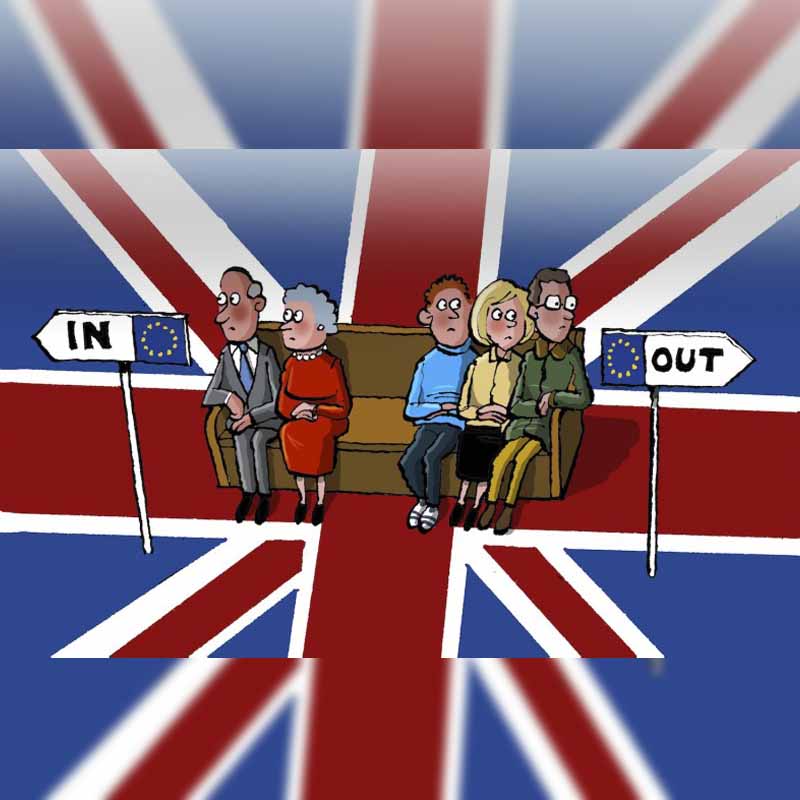
    NEW DELHI/MUMBAI: Britain’s politically controversial referendum last week to exit from the European Union, a unique economic and political union between 28 European nations, has created ripples globally, but in India the general feeling is long term impact may be negligible.

    While the British media and entertainment industry, having major exposure to European market(s), are wringing their head in dismay at possible long-term financial fallout and increased bureaucracy and paperwork, Indian media industry has been subdued in its reaction.

    Sources in both BBC World and Star India said that they were still studying the fine prints of Brexit — as Britain’s EU exit has been popularly dubbed — but added they don’t see any short to medium-term impact (except, of course, the currency exchange valuations).

    Some Indian media companies like Zee, Star, and Times TV Network do have fairly big exposure to the European markets in terms of their TV channels’ distribution and sale of Indian content and formats.

    Similarly, Hindi and increasingly Indian language film industry are shooting more in various European countries in sharp contrast to yesteryears few fav foreign locales like Holland, London and Paris.

    While organisations like The Film & Television Producers Guild of India had no statement put out on Brexit, European media & entertainment players have been very active.

    Forbes magazine quoted a statement on Brexit from Britain Stronger in Europe campaign, signed by the likes of Patrick Stewart, Benedict Cumberbatch and Keira Knightley amongst hundreds of celebrity-signatories, as saying: “Our global creative success would be severely weakened by walking away.”

    Such sentiments and falling markets and currencies, coupled with media conjectures on future of multi-billion dollar budget TV programmes like the popular Game of Thrones, made its producer HBO to issue clarifications.

    “We do not anticipate that the result of the EU Referendum will have any material effect on producing Game of Thrones,” HBO said in an official statement late last week

    Variety magazine reported that HBO had confirmed GoT received financial support from the EU’s European Regional Development Fund when it first began, but there has been no contribution to its massive $10 million per episode budget in recent years.

    That everybody is scrambling to assess the political and economical fallout of Brexit, while remaining cautiously optimistic at present, is reflected in the opinions of some industry chambers too.

    Pointing out that the “way forward, and timelines to achieve negotiated agreements with the EU and other trade partners is not yet known”, UK India Business Council said, “What is clear, though, is that the UK’s trade and economic engagement with the world’s leading countries, including India, will become more important to the nation’s future, not less.”
    Motion Picture Association of America in a statement said, “While it will take time to understand the full implications of the referendum result, we urge the UK Government to prioritize a stable environment for the film and television sector.”

    Closer home in India, some reactions did come forth on Brexit.

    Ashish Bhasin, chairman and CEO, Dentsu Aegis Network, South Asia discounted any mid or long term impact of Brexit on India.

    Pointing out short term uncertainty may lead to a “depressed business sentiment,” Bhasin said advertising gets directly influenced and often suffers when business sentiment weakens.

    According to Frost & Sullivan’s senior partner and managing director for Europe Sarwant Singh, “It is important to note that during this interim period, Britain will still be subject to existing EU treaties and laws, but will be barred from decision-making processes. Therefore, existing regulations are likely to continue until negotiations are completed.”

    The National Association of Software and Services Companies (NASSCOM), whose member-companies have billions of dollars of exposure in the European and UK market, termed the Brexit announcement as a phase of uncertainty in the near term but a mix of challenges and opportunities in the longer term.

    Meanwhile, the Indian government has assured that the Indian economy is fundamentally strong enough to withstand any immediate impact of Brexit.

  • Long-term negative impact of Brexit on India negligible; short-term challenges remain

    Long-term negative impact of Brexit on India negligible; short-term challenges remain

    NEW DELHI/MUMBAI: Britain’s politically controversial referendum last week to exit from the European Union, a unique economic and political union between 28 European nations, has created ripples globally, but in India the general feeling is long term impact may be negligible.

    While the British media and entertainment industry, having major exposure to European market(s), are wringing their head in dismay at possible long-term financial fallout and increased bureaucracy and paperwork, Indian media industry has been subdued in its reaction.

    Sources in both BBC World and Star India said that they were still studying the fine prints of Brexit — as Britain’s EU exit has been popularly dubbed — but added they don’t see any short to medium-term impact (except, of course, the currency exchange valuations).

    Some Indian media companies like Zee, Star, and Times TV Network do have fairly big exposure to the European markets in terms of their TV channels’ distribution and sale of Indian content and formats.

    Similarly, Hindi and increasingly Indian language film industry are shooting more in various European countries in sharp contrast to yesteryears few fav foreign locales like Holland, London and Paris.

    While organisations like The Film & Television Producers Guild of India had no statement put out on Brexit, European media & entertainment players have been very active.

    Forbes magazine quoted a statement on Brexit from Britain Stronger in Europe campaign, signed by the likes of Patrick Stewart, Benedict Cumberbatch and Keira Knightley amongst hundreds of celebrity-signatories, as saying: “Our global creative success would be severely weakened by walking away.”

    Such sentiments and falling markets and currencies, coupled with media conjectures on future of multi-billion dollar budget TV programmes like the popular Game of Thrones, made its producer HBO to issue clarifications.

    “We do not anticipate that the result of the EU Referendum will have any material effect on producing Game of Thrones,” HBO said in an official statement late last week

    Variety magazine reported that HBO had confirmed GoT received financial support from the EU’s European Regional Development Fund when it first began, but there has been no contribution to its massive $10 million per episode budget in recent years.

    That everybody is scrambling to assess the political and economical fallout of Brexit, while remaining cautiously optimistic at present, is reflected in the opinions of some industry chambers too.

    Pointing out that the “way forward, and timelines to achieve negotiated agreements with the EU and other trade partners is not yet known”, UK India Business Council said, “What is clear, though, is that the UK’s trade and economic engagement with the world’s leading countries, including India, will become more important to the nation’s future, not less.”
    Motion Picture Association of America in a statement said, “While it will take time to understand the full implications of the referendum result, we urge the UK Government to prioritize a stable environment for the film and television sector.”

    Closer home in India, some reactions did come forth on Brexit.

    Ashish Bhasin, chairman and CEO, Dentsu Aegis Network, South Asia discounted any mid or long term impact of Brexit on India.

    Pointing out short term uncertainty may lead to a “depressed business sentiment,” Bhasin said advertising gets directly influenced and often suffers when business sentiment weakens.

    According to Frost & Sullivan’s senior partner and managing director for Europe Sarwant Singh, “It is important to note that during this interim period, Britain will still be subject to existing EU treaties and laws, but will be barred from decision-making processes. Therefore, existing regulations are likely to continue until negotiations are completed.”

    The National Association of Software and Services Companies (NASSCOM), whose member-companies have billions of dollars of exposure in the European and UK market, termed the Brexit announcement as a phase of uncertainty in the near term but a mix of challenges and opportunities in the longer term.

    Meanwhile, the Indian government has assured that the Indian economy is fundamentally strong enough to withstand any immediate impact of Brexit.