Tag: media

  • A tale of two giant mergers and their India fallout

    A tale of two giant mergers and their India fallout

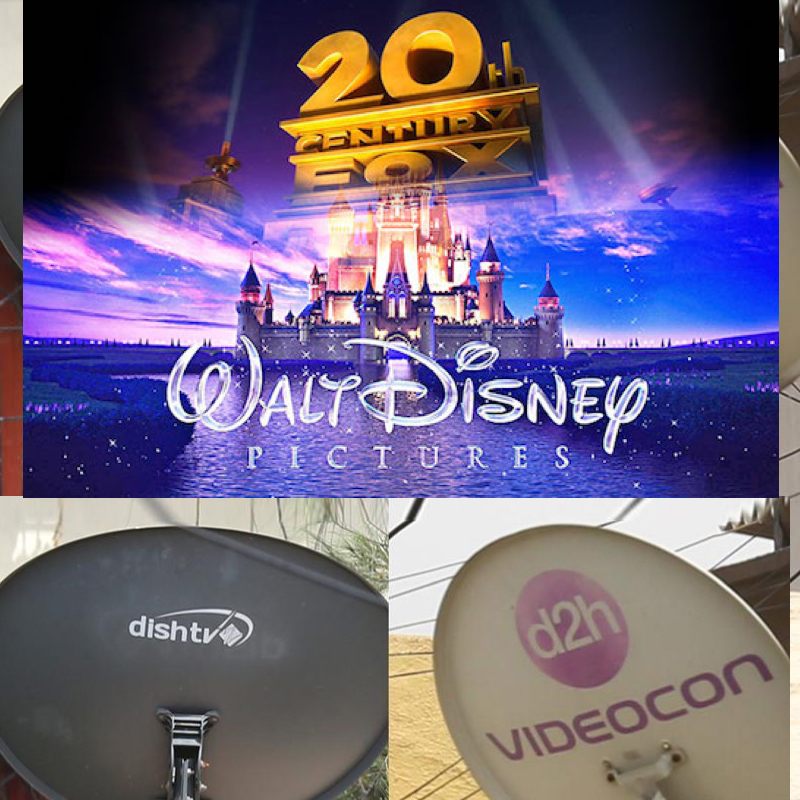
    MUMBAI: Two deals shook the world of media and entertainment last week: Disney-21st Century Fox and Dish TV-Videocon d2h. One was all about content and affects the world of media and entertainment globally including India. The second was all about content distribution and platform and impacts the world of television in India.

    Of course, the ripple effect of the first is oceanic for comparison with the other. So deep will be the impact of Bob Iger and Rupert Murdoch’s decision that the future will look back at the history of media as the pre and post-Disney-Fox and New Fox era.

    Nevertheless, it has created a behemoth in India: the new Disney, which now will house Star India, will have relationships with Tata Sky and the video streaming service Hotstar. The union of Disney and Fox is expected to bring in synergistic savings of close to $2 billion; some of that will be contributed by the Indian division, however marginal that might be.

    In India, the Dish TV-Videocon d2h merger has created the world’s second largest pay satellite TV distribution platform with 29 million subscribers, just behind AT&T’s Direct TV.

    Dish TV Videocon merged is also predicted to bring in large savings through rationalisation of the two companies’ manpower, backend resources and better combined purchasing negotiating power, distribution and infrastructure like offices etc. An estimate is that costs cumulatively will come down by about 10-20 per cent.

    The main leverage it will get is in content costs. Even though the Disney-Fox combine will be unmatchable internationally, in India, Dish TV Videocon could more than prove a match for it. With the expensive IPL under its belt, it will most probably have to kowtow to CEO Anil Dua and chairman Jawahar Goel’s diktats on how much they will pay out for carrying the Star India network’s signals, which includes its premium programming and sports.

    Also read:

    MIB clears path for Dish TV Videocon

    21st CF spins-off into new live news & sports co Fox

    With Star India, Disney emerges as India’s largest M&E firm

  • Increased revenue from traditional media boosts Shemaroo numbers

    Increased revenue from traditional media boosts Shemaroo numbers

    BENGALURU: Integrated media content house Shemaroo Entertainment Limited (Shemaroo) reported 18.3 percent higher year-on-year (y-o-y) consolidated total revenue for the quarter ended 30 September 2017 (Q2 FY 2017-18, the quarter under review) stood at Rs 1,345.7 million as compared with Rs 1,138.6 million in Q2 FY 2016-17. The company’s consolidated profit after tax for the quarter under review improved to 29.9 percent y-o-y to Rs 188.2 million (14 percent margin) as against Rs 144.90 million (12.8 percent margin) in the corresponding quarter a year ago.

    Revenue from operations increased by 18.3 percent y-o-y to Rs 1,343.7 from Rs 1135.5 million. In its earnings release, revenue from traditional media rose by 11.8 percent y-o-y during the quarter under review to Rs 1002 million as compared with Rs 896 million in the corresponding year ago quarter. Revenue from new media increased by 42.5 percent y-o-y in Q2 FY 2017-18 to Rs 342 million from Rs 240 million.

    Shemaroo’s EBIDTA, including other income, during the quarter was Rs 363.2 million (27 percent margin on total income of operating revenue) increased by 13.7 percent y-o-y from Rs 319.4 million (28.1 percent margin on total income of operating revenue).

    A look at the other numbers

    Total expenditure (TE) in Q2 FY 2017-18 at Rs 1,079.6 million (80 percent of operating revenue) grew by 19.5 percent y-o-y from Rs 903.5 million (79.6 percent of operating revenue). The company’s cost of raw materials consumed declined by 19.9 percent y-o-y to Rs 692.5 million (51.5 percent of operating revenue) as compared with Rs 864.3 million (76.1 percent of operating revenue).

    Employee benefits expense during the quarter under review grew by 35.7 percent y-o-y to Rs 98.5 million (7.3 percent of operating revenue) from Rs 72.6 million (6.4 percent of operating revenue). Other expenses declined by 7.7 percent y-o-y in Q2 FY 2017-18 to Rs 50 million (3.7 percent of operating revenue) from Rs 54.2 million (4.8 percent of operating revenue).

    Also read:

    Shemaroo makes key hires to boost business

    Backed by new media, Shemaroo reports improved numbers for first quarter

    Rahul Mishra Shemaroo’s new general manager marketing

  • Levi’s hands over media duties to OMD

    Levi’s hands over media duties to OMD

    MUMBAI: Following a comprehensive market review, Levi’s has appointed OMD India to handle its media duties from its Bengaluru office.

    The appointment builds on the media network’s global relationship with the denim brand that started in 2009 and has grown to now include over 25 markets. In India, Madison Media was the incumbent on the account.

    The partnership will involve the use of both offline and digital channels as well as sophisticated uses of data to continue engaging Levi’s consumers in relevant and innovative ways.

    OMD India CEO Priti Murthy says, “This win reflects our agency’s momentum in South India and also the quality of our global network’s campaigns for the brand since 2009. We share a similar brand DNA, one that is deeply rooted in innovation, allowing us to pursue out-of-the-box solutions and deliver cut-through for such an iconic brand. We look forward to working with Levi’s and continuing the legacy of one of India’s most ubiquitous brands.”

  • M&E industry to hit Rs8 trillion revenue by 2022: report

    M&E industry to hit Rs8 trillion revenue by 2022: report

    According to a report published by Boston Consulting Group (BCG) and Confederation of Indian Industry (CII), India’s media and entertainment (M&E) industry is expected to reach revenue of Rs7.5-8 trillion by 2022 from an estimated Rs4.5 trillion in 2017. Over the next five years, the industry is poised to grow at an annual growth rate of 11-12 per cent.

    The report highlighted that the M&E industry has the potential to generate four million jobs (direct and indirect) over the next four-five years, on the back of technology adoption, big data and analytics.

    By 2022, total employment across the industry is expected to be 6-6.5 million from the estimated 3.5-4 million in 2017. The report said that the structural changes across the industry and major shifts around adoption of technology, big data and analytics will lead to several new job roles and a massive reskilling of the current workforce.

    “The Indian M&E sector has huge room for growth and can create four-five million jobs without much spending from public infrastructure. Digital platforms are proliferating and there are tremendous opportunities that never existed before, especially for creators, storytellers and technology providers,’’ CII director general Chandrajit Banerjee said in the report.

    The report highlighted that M&E organisations need to rebuild their strategies to fit in the shifting digitally oriented landscape. “It’s the need of the hour for the industry to identify the creative, technological and analytical skills that will be required over the next five-seven years to restructure its business model for the upskilling exercise,” said Kanchan Samtani, partner and director at BCG, in the report.

    The report said that the M&E industry will require 140,000-160,000 trained/employable individuals entering the workforce every year for the next five years.

  • How iProspect’s Vivek Bhargava foresaw a digital future two decades ago

    How iProspect’s Vivek Bhargava foresaw a digital future two decades ago

    One trip to the US in 1997 was all it took for a young man’s entrepreneurial journey to begin. When this man, who was taking global trips on behalf of his family business to sell tablas and sitars, decided to sing a different tune, he was told by his father to pack his bags and get going without turning back.

    Fast forward 20 years ahead to today – 2017. This Bollywood-sounding real scene is the story of Vivek Bhargava and his successful digital agency iProspect. He actualised his idea back in 1997 when he founded Communicate 2. The company joined hands with iProspect from the Dentsu Aegis Network (DAN) in 2012 where he led iProspect Communicate 2 as the founder and managing director. The company was rebranded to iProspect India at the end of 2015 and Bhargava was made CEO. In December 2016, Rubeena Singh was made CEO and he was promoted to a larger role as CEO of DAN Performance Group.

    Indiantelevision.com spoke to the man who took a leap of faith in 1997 and the newly appointed CEO, Rubeena Singh where Bhargava speaks at length about his journey, challenges in the digital environment, talent retention and much more. Excerpts:

    How did the iProspect journey begin for you? And how did you pick digital as the medium?

    Bhargava: When one speaks of 20 years, it makes me feel really old but it has been a great journey. I come from a conventional family that sells tablas and sitars. It is called Bhargava’s Musik that was started in the year 1944. As kids, we used to go abroad for trade fairs once in every two to three months and that is where the seed of communication was sowed into our minds. What we noticed was that western countries were using technologies for marketing communication and advertising, which we didn’t see here in India. By the time I was an adult, I decided to quit my family business and start my own venture as I wanted India to make a mark in digital communication. When I gathered courage to tell my father about my decision, in an ominous tone he told me that if I quit the family business, I can never join that again. Today when I look back, I am glad I took that decision because when I went through tough times during these last 20 years, what kept me going were my father’s words.

    You decided to sell off Communicate 2 to Dentsu Aegis Network (DAN). Why did you take that route? 

    Bhargava: As an independent agency, you’re restricted in doing things. When you want to grow to a certain size to work with bigger clients and you want access to bigger technologies, you have to take the plunge and look for a bigger agency to partner with. The biggest challenge I faced in my career before joining DAN was talent attraction and that problem was solved to a great extent.

    What are the perks of working with a full service agency? 

    Bhargava: The most amazing thing about DAN is that it retains 70 per cent of entrepreneurs after the earn process (acquisition) is over, whereas that ratio is only 20 to 30 per cent in other networks. DAN gives you complete freedom, they let you have your individuality and let you run the company. They also give you the ability to approach anybody in the network to help out and we have one P&L (statement) per country and that truly creates the feeling of ‘One DAN’.

    We haven’t seen any major structural changes in your organisation which is a common practice in almost all networks and agencies today. Why is that?

    Singh: iProspect has a high-performing team and so we don’t believe in making major structural changes. We’ve just built on what we already have. We’ve launched new products and carved out new roles for people, but, on a larger level, we are trying to automate a lot of repetitive work. We are upscaling our people to spend more time thinking and looking at data in order to help clients out with their problems and offer solutions rather than doing mundane desk labour.

    How challenging is it for agencies to retain clients in today’s time? What do agencies need to do to ensure client retention?

    Bhargava: If agencies continue to deliver value and you are authentic about your capabilities, you can retain clients for a longer period. Usually, clients tend to move on because agencies are not solving the real problem, and it’s always about achieving a price or delivering a service. As my father would say to me, “Taking interest in client’s brand and taking interest in team members is the only way an agency will grow.”

    Singh: It is really important to look at both sides of the spectrum. We have been fortunate enough to work with clients that have been with us for over 10 years and we have been able to grow them and that comes from the mindset of ‘client first’. We believe in evolving our products and services in line with clients’ needs.

    Clients usually have high expectations from an agency but they keep their pockets zipped. How challenging does it become to deliver the product?

    Bhargava: We have always charged premium amount in the market. A client once refused to do business with us because he said that they couldn’t afford us. To that my reply was, ‘The problem is not that we are expensive, but that we are proud of it.’ We believe that since we charge more, we are able to deliver more value to their brand. I’ve seen a lot of agencies that started up around the same time as I did and had to wind up because they reducing rates which led to inferior talent coming on board leading to inferior output. Of course, clients left. For an agency to deliver the best output, it is very important that it prices right and does not succumb to client-satiating tactics.

    How do you ensure you meet your yearly targets? 

    Bhargava: We have always been very honest with our clients and given them honest reviews because we believe in setting realistic expectations and being on their side of the table. A lot of times agencies tend to take care of their self-interest and give different advice to clients and when numbers aren’t as promised, clients will move away.

    How different is the Indian media industry as compared to the West?

    Bhargava: Western agencies charge for every single planner. For instance, if a client is meeting an agency where six prominent people from the agencies are present in the meeting, they charge $6000 for that meeting as they believe every minute of a media planner is worth that kind of money. That is not the case in India, as here we believe in spending hours trying to solve the client’s problem and ensuring that they leave happy after the meeting. Here, it is about understanding and building a rapport with them. In India, things are less technology led but solution led. Most of the clients in the west are very precise about what they want but here it is more about solving the client’s problem where we may end up working twice as hard than what we expected but you hope that the client will take care of you.

    You’ve seen India transition and adopt technology along with digital in these 20 years. How would you say has digital evolved over the years in the Indian context? 

    Bhargava: It took 14 years for digital to come in India and as a digital agency, we have been a witness to that evolution. Earlier, no brand wanted to include digital in their marketing budget and advertising. Today, almost every brand spends around 15-20 per cent of the advertising budget on digital. Today, it is playing the role of a catalyst and it’s not limited to advertising. We are living in a digital age today as compared to doing just digital advertising. In future, people are going to stop seeing digital as digital but it will only be known as advertising just as today we don’t say, ‘cellular phone’ but we just say phone. In future, the word digital will be dropped out.

    What does the industry need to do to attract more talent and to ensure talent retention?

    Bhargava: Truth be told, the salary of a person working for a digital agency as opposed to someone working in a conventional media agency will be twice as high. Hopefully, some would be motivated by money, so if they want to earn more money, digital is the best option. It will be one of the highest paid jobs in just a few years from now.

  • Guest Column: Start-up hacks: A cheat sheet for success

    With the convergence of technology and media, we are witnessing tremendous activity in the start-up space.  From content to distribution to broadcast to affiliate opportunities, there is no dearth of new ideas and their backers.  Surprisingly not all of them are covering all their bases to crack the start-up success code.

    Having been a part of four start-ups in leadership positions along with all the insights gained through studying hundreds of others, here are 9 ways that help us better understand them and reasons that make them succeed.

    1. Start-ups are not smaller versions of large organisations. Bonsai have a different life and game plan as compared to large trees. The two should not be compared and start-ups should not be expected to emulate the large organisation. 

    2. Start-ups do not adhere to a ‘set’ business plan – in most of the cases the challenge is to find one. As Mike Tyson famously said on his opponent’s pre-fight strategies: everyone has a plan till they get punched in the face. Business Plans are a necessary evil but for a start-up they are nothing more than fictional plans and rarely do they survive their first contact with customers.

    3. Customer Plan is much more important than the business plan. This may include customer engagement, customer stickiness, brand advocacy score, net promoter score, etc. “Your most unhappy customers are your greatest source of learning,” said Bill Gates.

    4. Data is the new oil. Data undergirds everything. Period.

    5. Start-ups need to fail fast, fail often, fail cheap and fail better. Constant experimentation and continuous learning is the name of the game rather than elaborate planning. Start-ups need to keep their persistence levels high. “You don’t learn to walk by following rules. You learn by doing and falling over,” as famously told by Richard Branson.

    6. Iteration is the key word for every aspect of the business. Launch and iterate. And again. Everything is changeable except the intent to give one’s best to making it big.

    7. Repeatability and scalability are two pivots to search in the early life cycle stage. Investing in growth in stage 0 is almost a sure-shot pre-requisite. Mostly start-ups are dealing with a new concept and/or a habit change. This may initially require selling only on the strength of price (not the brand or anything else) and may call for disproportionate investments and therefore profitability may be a long way off.

    8. Turmoil and chaos are integral to the existence of a start-up. Those who cannot stand the heat, need to get out of the kitchen.

    9. Lastly as Jeff Bezos said – Entrepreneurs must be willing to be misunderstood for a long time.

    The M&E industry as much needs start-ups as the rest of the economy.  As research shows, the success quotient can go up if the above factors are kept in mind.

    public://piyu.jpgPiyush Sharma, a global tech, media and entrepreneurial leader, created the successful foray of Zee Entertainment in India and globally under the ‘Living’ brand. The views expressed here are of the writer’s and Indiantelevision.com may not subscribe to them.
  • Guest Column: M&E industry in India: 5 not-to-be-missed trends

    The Indian M&E industry is growing at 15 per cent CAGR and is expected to double in size over the next five years. Almost all the sub-segments are growing in double digits. The existing ones are those in the middle of a consumption trend like on-demand content or beneficiaries of a regulatory push like digitisation.

    Here are the five biggest trends to watch out for:

    1.OTT

    Personalisation of content and delivery and real time access on multiple devices and platforms to make OTT mainstream. Big data through instant consumer analytics to become indispensable

    2.Digital Content as growth driver

    Growth to be driven by digital content in the internet industry in India as it doubles to $250bn in 5 years. Unprecedented proliferation of digital-first media brands like AIB, TVF, etc. Existing traditional media brands may reorient themselves to being digital-only brands. Repurposing widely popular content of the past on digital for consumption across multiple content formats may be a unique sound strategy.

    3.Immersive content as lead format

    Immersive content (VR/AR) to play an unexpected big role in the future. May become larger than any other format in the years to come.

    4.Technology to disrupt more than just content

    Technology to continue to disrupt the traditional ways of buying and selling advertising as programmatic, geo-targeting, etc becomes the new normal. TV and digital measurement to converge too as marketers look for platform-agnostic strategies.

    5.Convergence of M & E & Technology to undergird everything

    With cheap economics dictating the rationale, cloud-based services to drive content faster from creation to consumption thereby re-defining movement, distribution and management of content. Rapid convergence of media, entertainment and technology is interlinking content creation, distribution and consumption experiences.

    New media – signifying interplay between technology and media – is where the real excitement is. It offers a range of opportunities in content and platforms across gaming, video and music. Other than that, there are consolidation plays in traditional media like C&S distribution, film exhibition etc.

    public://Untitled-3_17.jpg

    (Piyush Sharma, a global tech, media and entrepreneurial leader, created the successful foray of Zee Entertainment in India and globally under the ‘Living’ brand. The views expressed here are of the writer’s and Indiantelevision.com may not subscribe to them.)


  • Virtual screens to start replacing TVs & theaters in a year, consumers expect: Ericsson

    MUMBAI: Ericsson ConsumerLab has reported that seven out of 10 consumers believe that virtual reality (VR) and augmented reality (AR) will become mainstream in media, education, work, social interaction, tourism and retail. Consumers expect virtual screens to start replacing televisions and theaters in less than a year.

    For VR and AR to merge with physical reality and become mainstream, 5G is crucial to provide mobility, improve social experiences and address nausea concerns.

    Ericsson has published its latest ConsumerLab report – Merged Reality – revealing insights into how consumers expect virtual reality (VR) and augmented reality (AR) to merge with physical reality, and that 5G will be a key technology for such experiences to become mainstream. The report reveals that when boundaries between people’s perception of physical and virtual reality start to blur, this could result in a drastic impact on lives and society. The way we live, work, and consume information and media will fundamentally change.

    Realities will not merge if the user is tethered to a computer or cut off from physical reality. Early adopters of VR/AR expect next-generation networks like 5G to play a central role. Thirty-six per cent have expectations on 5G to provide VR/AR mobility through a stable, fast and high-bandwidth network. Thirty per cent of early adopters also expect 5G to enable tethered headsets to become wireless.

    Key findings of the latest report include that seven out of 10 early adopters expect VR/AR to change everyday life fundamentally in six domains: media, education, work, social interaction, travel and retail. Media is already being transformed and consumers expect virtual screens to start replacing televisions and theaters in less than a year.

    The qualitative research in the report included an innovative focus group discussion series completely in VR with participants from North America and Europe, as well as traditional focus groups with current users of VR from Japan and South Korea. A series of qualitative VR tests with 20 Ericsson employees were also done to understand how lag in VR can trigger nausea.

    In the quantitative part of the study, the report presents insights from a survey of 9,200 consumers in France, Germany, Italy, Japan, South Korea, Spain, the UK and the US, aged between 15-69 with awareness of the concept of VR.

  • Huge data growth helped brands slightly, M&E confidence score 82%, finds Publicis’ Zenith

    MUMBAI: Advertisers in the media & entertainment category are most confident about seeing growth in their category this year. They are closely followed by advertisers in pharmaceuticals & healthcare.

    This is the key finding from Zenith’s new biannual client survey. Ahead of marketers attending Cannes Lions 2017, we wanted to find out what are the key drivers of growth and to assess how confident they are about business growth in their category.

    Zenith asked clients how confident they were in the prospects for growth in their category this year. We then ranked each category on a scale from 0 to 100, where 0 means everyone expects substantial decline, 100 means everyone expects substantial growth, and 50 means the average expectation is for no growth.

    The results were as follows. Media & entertainment advertisers came out on top, with a score of 82.1, followed by pharmaceuticals &healthcare and alcohol. The lowest-scoring category was telecommunications, at 33.3, followed by food & drink and FMCG (non-food).

    Ranking of categories by advertiser confidence in growth

    Survey of 158 key Zenith clients around the world

    Category

    Confidence index


    Category

    Confidence index

    1. Media & entertainment

    82.1


    7. Travel

    61.4

    2. Pharma/healthcare

    70.3


    8. Retail

    60.0

    3. Alcohol

    70.0


    9. FMCG (non-food)

    55.7

    4. Luxury

    67.6


    10. Financial/insurance

    53.6

    5. Beauty

    67.2


    11. Food & drink

    48.4

    6. Automotive/vehicles

    63.6


    12. Telecommunications

    33.3

    Key drivers of business growth

    We then asked our clients to look at the drivers of business growth, ranking them according to how important they believed they were for their brand. From most important to least important, the factors were ranked as follows.

    Ranking of contributing factors to business growth

    Survey of 158 key Zenith clients around the world

    1. Data & technology

    2. Business transformation

    3. New competitive positioning

    4. Geographical expansion

    5. Diversification

    6. Automation

    7. Mergers & acquisitions

    The first three factors were ranked closely together, with quite a big gap between numbers 3 and 4. Adapting to the challenges of a transforming economy is clearly the main priority for advertisers.

    Translating growth in data to business growth

    We also asked clients how the huge increase in data has affected three areas of their business: buying efficiency, creating new insights into consumers, and generating profitable brand growth. For each area we gave them five options: data has made it more difficult, has had no effect, has slightly improved it, has greatly improved it, or has revolutionised it. And for each area there was one overwhelmingly popular response, with 50% or more of responses. These were as follows:

    •          The huge increase in data has allowed us to make small improvements in buying efficiency.
    •          It has allowed us to create much better insights.
    •          It has improved brand growth slightly.

    So while most clients agree that data has significantly improved their consumer insights, it has not yet transformed their buying efficiency or brand growth.

    “Brands have the opportunity to harness data and technology to transform their businesses and accelerate brand growth, but are having difficulty in turning theory into practice,” said Vittorio Bonori, Zenith’s Global Brand President. “Agencies must step up and work in partnership with their clients to unlock the true potential of this revolution in communications.”

  • Media houses warned against publicising exit polls

    MUMBAI: The Election Commission, noting violation by media houses of its fiat, has recommended them to keep away from publicising exit polls till a particular period during assembly elections in five states. EC asked the media not to air or publish such programmes in future so as to ensure fair polls.

    The strongly-worded advisory stated that “such attempts merely to score brownie points against the competitors for merely commercial reasons do not behove well.”

    In a letter to the News Broadcasters Association secretary-general and the Press Council of India secretary, the EC asked the print and electronic media to keep away from publicising exit polls or predictions about future poll triumphs.

    In the crucial advisory, the Commission has stated that use of astrology to bypass the ban on exit polls is not permitted. The advisory states that forecasts by political analysts or astrologers or tarot card readers is banned during the poll process. The media cannot publish or telecast any programme that predicts the poll outcome, the EC advisory read.

    The poll watchdog pointed to Section 126 A of the Representation of the People Act which states that “no person shall conduct any exit poll and publish or publicise by means of the print and electronic media or disseminate in any other manner, whatsoever, the result of any exit poll during such period as may be notified by the Election Commission…”

    It pointed out that in one of the channels, the panellists on the show, who were persons from different fields, had put forward the projected number of seats likely to be won by different parties in Uttar Pradesh.