Tag: media

  • Merger talks on the anvil once again for CBS, Viacom

    Merger talks on the anvil once again for CBS, Viacom

    MUMBAI: Coming on the heels of the Fox-Disney merger, CBS Corporation and Viacom Inc are inching toward formally exploring a corporate reunion of the two halves of the Redstone media empire.

    According to a Variety.com report, there is less opposition within CBS this time around compared to the last attempt by CBS/Viacom vice chairman Shari Redstone to bring the two companies back together in the fall of 2016. The early rumblings are that CBS would acquire Viacom in an all-stock transaction.

    There are still big hurdles to clear in terms of valuation for Viacom, given the systemic concerns around its lower-profile U.S. cable networks, but there is also an understanding that the media landscape is changing fast and the potential for the two sides to work together on international growth initiatives provides rationale for a reunion. Viacom’s share price has also tumbled further during the past year, making a deal more attractive on a financial basis for CBS shareholders. As of Thursday, Viacom had a market cap of $13.8 billion, with shares closing at $33.61. CBS is valued at $22.7 billion, with shares closing at $59.27.

    Sources close to the situation emphasise that neither side has yet engaged bankers or advisers to hammer out an agreement. But CBS Corp. CEO Leslie Moonves and Viacom CEO Bob Bakish have had at least one discussion about the possibility of merging, according to a Reuters report Thursday.

    CBS and Viacom were first brought together in 2000 by Sumner Redstone, now chairman emeritus of both firms. The two were split up again in January 2006 out of Sumner Redstone’s frustration with a sagging stock price.

    Also Read :

    Disney to buy 21st Century Fox assets for $52.4 billion

    With Star India, Disney emerges as India’s largest M&E firm

    Sudhanshu Vats on Viacom18’s growth strategy and why data analytics is key

  • Global appeal of Indian sports high, says Deloitte report

    Global appeal of Indian sports high, says Deloitte report

    MUMBAI: The sports media market will continue to attract more global investments due to the high potential growth according to a report by consulting company Deloitte.

    There has been plenty of foreign capital flowing into the sector, which also brought in a wave of consolidation in the sports broadcasting space.

    The best examples are Sony Pictures Networks India acquiring Ten Sports from Zee Entertainment Enterprises for USD 385 million and Star India bagging the global media rights for the Indian Premier League (IPL) for 2018-22 for a whopping Rs 1,634.75 crore after a bidding that saw as many as 24 players in the fray.

    “The sports media landscape is evolving rapidly, especially in terms of who creates the content and who has the right to distribute them,” the report stated.

    “These entities who have made the bids are not primarily in the sports broadcast business but put value on the table to acquire digital broadcasting rights of IPL. This proves the global appeal of Indian sports which is now identified as a potential growth area by global sports giants,” it added.

    With the huge popularity of the IPL, there is a significant place for domestic sporting leagues in other sports and some like football and kabaddi have already generated interest, it said.

    Also Read :

    Star India gets IPL to change match timings for 11th edition

    The BCCI India rights conundrum

    578 players to go under the hammer for IPL auction

  • 2018 will be a year of video campaigns: WATConsult’s Rajiv Dhingra

    2018 will be a year of video campaigns: WATConsult’s Rajiv Dhingra

    MUMBAI: If you see an advertisement on a website or your app, you are a well defined consumer of digital advertising. Thet ads on the website you visit are primarily revenue source for internet companies.

    Digital advertising is no longer a joke. The emails were considered pointless and annoying and banner ads used to be laughed at but today, with smartphone penetration being higher than ever and decreasing low data costs, digital advertising needs to be done and done well as the market is highly saturated and consumer’s attention span is shorter than ever.

    Some twenty years ago, digital advertising was just a couple of banners placed cleverly on websites. They were considered super annoying, as if you happened to click on one of them intentionally or unintentionally, you would soon be bombarded with banners all over your website. Today, digital advertising has become extensive with different types of online ads being produced based on the website content and target audience. Online advertising is one of the fastest growing way to reach an audience which includes banner ads to social media networking, email marketing, site takeovers, online classified ads, Search Engine Optimisation (SEO) and even

    SPAM.

    With the accessibility of internet on smartphones and low data cost, companies are now spending millions of rupees trying to find a way to advertise on digital platforms without creating an unpleasant experience for the consumer.

    Digital advertising doesn’t come cheap but it is far more affordable for marketers than traditional advertising model. There are over hundreds of different digital advertising models available today and every ad we see on digital platforms today is paid by one of those models. The most popular method though are CPA (Cost Per Action), PPC (Pay Per Click) and CPM (Cost Per Mille).

    To get some insights on the changing face of digital industry in India, Indian Television Dot Com got talking to WATConsult founder and CEO Rajiv Dhingra who has seen and been a part of the digital revolution in India and recently completed 11 years in digital advertising business.

    The company which started off as a social media specialist in 2007 has expanded its reach and portfolio to become the most sought after full service digital agency in the country. WATConsult today specialises in digital marketing, social media marketing, search marketing, mobile marketing, digital analytics and digital video production.

    How has the digital ecosystem in India evolved along with WATConsult?

    When I look back to the industry’s growth in context of the past 11 years, there has been a tremendous change in the digital industry. Digital industry has become so large today in terms of advertising yet it is only 15 per cent of the overall market advertising and there is so much more growth opportunity left. While digital has been around for around 20 years, the industry has just started to become significant in terms of advertising efficiently on the platform.

    Since the market is highly competitive today, how does associating oneself with a bigger network help since WATConsult was also acquired by Dentsu Aegis Network back in 2015?

    It is the comfort of being associated with a large network that helps in getting global processes in line. That is the core level where a global network helps. Beyond that, every agency is unique and every agency has to work hard to earn its bread. I don’t think you can credit any agency or network all the accolades they achieve and if that was the case, all agencies under a network would work equally efficiently which is not the case.

    How is the Indian digital ecosystem different from the rest of the world as it sure does have its own challenges and uniqueness?

    India is still a very small market for advertising and within the small market, it has an even smaller advertising pie for digital. But what is similar is that Indian marketers are now open to new ways of leveraging digital. Execution and creative wise digital is not a very backward market as we see some amazing work happening in digital which is globally comparable as well.

    and the challenges…?

    In India, we need to up our ante when it comes to our creative and overall work level. Only that will help in bringing more clients and get them to spend more money. Digital still needs to simplify in our country as to what it is that an agency or marketer is trying to tell and achieve. Today, there are too many people selling digital in 100 different ways. We need to focus on business and brand objectives rather than focusing on 100 different t metrics that digital brings.

    How much do you project the ad spends to increase by 2020?

    There are no doubts about it that ad spends will definitely increase on digital. Ad spends will increase by 32 per cent CAGR y-o-y  and by 2020 it is going to be 24 per cent of the market which is almost 1/4 of the advertising market.

    How soon will the shift happen where digital becomes a dominant medium over television?

    I believe for digital to become dominant over television medium will take another 5-6 years in my mind and it is not going to happen by 2020. Although it is definitely going to happen by 2022-23 and that is when it will come very close to the advertising share of television.

    We have been hearing a lot about AI, Big data and Machine Leaning and the buzzwords lately. Is the Indian media ready and understands the concepts or we still have a long way to go?

    I don’t see these as buzzwords or jargons. Social media 10 years ago was considered a jargon and a buzzword but today it is an accepted reality. 10 years from today, AI, big data and machine learning will become accepted reality. Although they may not be called what they are called today and will be referred to as something else entirely. For instance, when social media was launched, it was called, Web 2.0. Similarly, 10 years from now, these new technologies will have a huge impact not only on digital adverting but on businesses in general.

    But why are marketers still reluctant on investing in these newer technologies?

    That is imply because marketers were also reluctant about social media 10 years ago. Marketers are always reluctant because they don’t want to spend their money on or betting on future technology which may or may not happen. They want results of today and hence they will always stay reluctant. Technology moves faster than marketing moves and users move even faster as far as technology adoption is concerned. Globally marketers have got there and back in India, some mature marketers have started experimenting with the technologies. Some of the large FMCG companies in India are looking to create their own data repository data lake to make sure they have detailed data analytics. One of our own automobile client has insisted that we get a data scientist on board for their brand. These are early but significant times of how data, AI and machine learning are going to be big part of digital advertising as we go forward.

    Do you believe influencer marketing is here to stay was that just a passing phase in 2017?

    Influencer marketing is becoming more and more of a professional industry and it is going to only grow. Three to four years from now, marketers will end up spending so much more on this medium and as internet grows and the frequency grows, word of mouth is going to be even more important than paid media as it has its own challenges in terms of cost and credibility.

    Facebook recently announced that it will filter the newsfeed by removing marketing ads to ensure better user experience. Will this hamper businesses in any way?

    Facebook has always focussed on user experience. I am sure they will find other ways to make sure marketers who spend money do reach their audiences. But yes, marketers who would like to use Facebook as a free tool will be hit because clearly Facebook doesn’t think that free advertising should be allowed on Facebook itself.

    What would be the game-changer in digital adverting this year ? How does 2018 look to you?

    Video has been a huge growth factor in 2017 and it is going to continue at a break next speed in 2018. With data consumption going through the roof, you wont see a digital campaign that does not have a video. 2018 looks like a year which has a lot of opportunities and it could be the best year for digital industry ever with so many interesting things happening in the industry.

    ALSO READ:

    How iProspect’s Vivek Bhargava foresaw a digital future two decades ago

    2017 – The year of long-format ads

    Going from clicks to bricks

    Martin Sorrell on how WPP is combating ad world slowdown

    BFSI’s changing communication in the digital era  

  • TiVo’s new deal with Google includes YouTube TV

    TiVo’s new deal with Google includes YouTube TV

    MUMBAI: TiVo Corporation, a global player in entertainment technology and audience insights, today announced that Google has expanded its multi-year patent licence agreement to include YouTube TV. The agreement covers Google’s use of TiVo’s patented technologies worldwide and offers a license for Google’s products and services across internet-based platforms and devices.

    “The world of video entertainment is expanding with exciting new consumer offerings such as YouTube TV,” said Rovi Corporation (a TiVo company) EVP and chief intellectual property officer Arvin Patel. “We are thrilled to extend our relationship with Google through the licence of TiVo’s innovations and technology that further consumers’ ability to find and enjoy content on the device of their choice.”

    Also Read :

    TiVo’s next-gen solution to help cable operators retain customers

    100 mn hrs of YouTube viewed on TV: Google CEO Sundar Pichai

  • Discovery Communications to move global headquarters to New York

    Discovery Communications to move global headquarters to New York

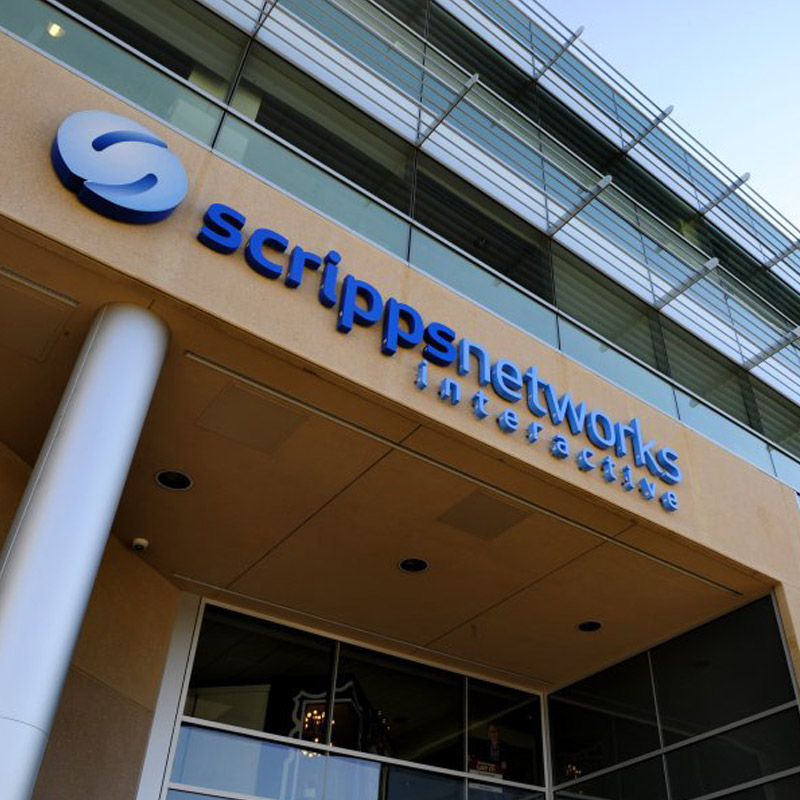
    MUMBAI: Discovery Communications, in a recent release, has announced plans to relocate its global headquarters from Silver Spring, Maryland, to New York City in 2019. Contingent upon the closing of the company’s acquisition of Scripps Networks Interactive, Discovery also will establish a National Operations Headquarters at Scripps’ current campus in Knoxville, Tennessee.

    “The media industry is rapidly evolving, increasingly global, more consumer focused and more multi-platform and Discovery must evolve with it,” said Discovery’s president and CEO David Zaslav, announcing the changes first to employees. “The decision to move our global headquarters from its founding home is one we do not make lightly. We remain unwavering in our support of the Maryland and Greater Washington, DC area and we thank the leadership of the State of Maryland, Montgomery County and, most importantly, our employees for their cooperation and understanding as we make this important next step for the long-term success of Discovery.”

    To take advantage of the proximity to business, investment and production partners in New York, the company will bring together all current Discovery and, pending closing of the transaction, Scripps employees currently located across several different facilities in New York in a new global headquarters. Planning for the space and location in New York is underway with an anticipated move to a new building by the second half of 2019.

    Following an in-depth financial and operational analysis, and based on the strengths, capabilities and advantages of the current Scripps Knoxville campus, the facility will become Discovery’s National Operations Headquarters pending closure of the transaction. Knoxville is a self-contained campus with many amenities and benefits for a National Operations Headquarters, including a low cost of living, and built-in facilities and operational capabilities. It will continue to house the major Scripps brands and creative digital teams along with corporate functions.

    Discovery’s state-of-the-art media distribution facility in Sterling, Virginia, which originates over 80 global feeds, will become a global technology centre.

    Founded in Landover, Maryland, in 1985, Discovery moved its global headquarters to Bethesda, Maryland in 1991 and then to its current headquarters building in Silver Spring in 2003. The company employs approximately 1,300 people in the Silver Spring area. Scripps’ Knoxville headquarters houses more than 1,000. The sale and closure of Discovery’s Silver Spring building is expected approximately one year from closing the Scripps transaction.

    Also read:

    Discovery Jeet gears up for Feb 12 launch

    Discovery Jeet signs content deal with Netflix

    Video consumption by premium audience on digital exploding: Karan Bajaj

  • Hinduja Ventures board okays amalgamation with Grant Investrade

    Hinduja Ventures board okays amalgamation with Grant Investrade

    MUMBAI: Hinduja Ventures Ltd’s (HVL) the board of directors  has approved the amalgamation of Grant Investrade Ltd (GIL), a wholly owned subsidiary, into the company. 

    The appointed date for the scheme of amalgamation is 1 October 2017.

    The approval has been granted subject to the approval of the National Company Law Tribunal (NCLT) at Mumbai, the approval of the shareholders and other such approvals as may be required.

    HVL has business interests in media, real estate and treasury while GIL is in the business of running channels on cable TV and treasury.

    Earlier, GIL housed the headend in the sky (HITS) business of HVL. The HITS business has now been merged with the cable TV business under IndusInd Media and Communications Ltd (IMCL), which is also a subsidiary company.

    HVL’s revenue from operations in financial year 2017 was Rs 201.7 crore while the paid-up capital is Rs 20.55 crore. GIL, whose paid-up capital is Rs 6.78 crore, had earned revenue of Rs 22.7 crore during the year.

    Since the transaction falls within the related party transaction no shares will be issued to GIL.

    Also Read:

    HVL reports lower loss for fiscal ’17, media & communications segment revenue up

    HVL receives NCLT nod for GIL’s HITS to de-merge into Indusind Media

  • Dentsu X appoints Arabinda Ghosh as CSO

    Dentsu X appoints Arabinda Ghosh as CSO

    MUMBAI: Dentsu X, an integrated media specialist from Dentsu Aegis Network, has roped in Arabinda Ghosh as chief strategy officer. He will report to Roopam Garg, chief client officer, dentsu X India and will be based out of Delhi.

    Ghosh brings with him extensive experience in research and planning spanning two decades. He has worked with big research firms in India such as the Kantar brands–IMRB, TNS, Millward Brown, and Nielsen. 

    During his last stint at Kantar, he was the key consultant to Coke and ABInBev for their branding and communication development strategy and has also guided clients on the effectiveness of cross-media impact and how to harness and optimise the consumer journey to achieve the desired brand objectives.

    Dentsu X India CEO Divya Karani said, “Having worked with Arabinda on the Tata group media mandate in the past, I am elated once again to have him aboard at dentsu X. In these intervening years, Arabinda has grown tremendously with his rich experience on BAT, Coke and other business. He brings immense value to the company’s capabilities. We are increasingly bringing on board senior talent who can carry forward the learnings of seamless integrated consumer and brand interaction to bear on our clients’ business.”

    Ghosh added,  “I find dentsu X to be the most cutting edge and innovative media company, which enables me to pursue my dream. I am excited because dentsu X’s vision of ‘experience over exposure’ encapsulates the future of the entire communication eco-system in a pithy way. I look forward to both being able to contribute and learn as we move forward.”

  • Media and marketing professionals most vacation deprived: Expedia Report 2017

    Media and marketing professionals most vacation deprived: Expedia Report 2017

    MUMBAI: Majority of media and marketing professionals are sleep-starved, according to Expedia’s new edition of Vacation Deprivation Report 2017, stating that they cannot afford to take a holiday. 

    The study was conducted online between 4 September and 15 September 2017 on behalf of Expedia by Northstar Research Partners. The company surveyed 15,081 working adults across 30 countries.

    The report states that 66 per cent respondents of those surveyed from the media and marketing sectors said they don’t take vacations because they cannot afford a holiday or get out of work.

    Millennials are the most vacation-deprived age group and also receive the least vacation time. At 53 per cent, they are also the most likely to shorten their trips due to impending workload.

    Professionals in the government and education sectors are found to be the least vacation deprived.

    The study revealed that after media and marketing sector professionals, about 62 per cent of those in the food and beverage sector said they don’t have enough holidays, followed by agriculture with 56 per cent, transportation and travel with 56 per cent, business and consulting around 55 per cent, and finance and legal at 55 per cent.

    Furthermore, the study said that professionals in government, health, transportation and travel, real estate, business and consulting and manufacturing and technology sectors have not taken a holiday in the last six months.

    Moreover, 35 per cent of professionals in sectors like agriculture, media and marketing, food and beverage, retail and education said they are vacation deprived mainly because they cannot afford to take a holiday. In sectors like finance and legal, however, 28 per cent professionals attribute it to not getting time off from work. 

    Also read: 

    Air India, Jet and Indigo’s oops moment!

    Budget ’17: Rural net will facilitate travel bookings

  • Winning awards doesn’t get you clients: Piyush Pandey

    Winning awards doesn’t get you clients: Piyush Pandey

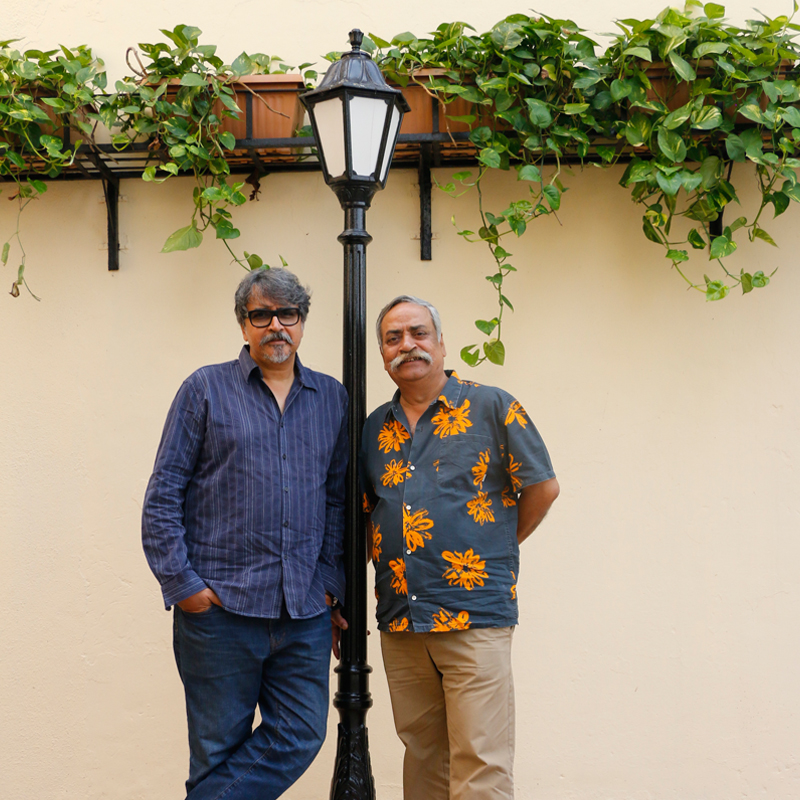
    MUMBAI: Ogilvy South Asia chairman and creative director Piyush Pandey, the man behind notable campaigns that include Fevicol, Fevikwik, Cadbury Dairy Milk, The Hindu, and Asian Paints, has been a stalwart figure in the progress of the Indian advertising industry for close to four decades. A recipient of the Padma Shri in 2016, Pandey’s contribution at Ogilvy & Mather made it the third largest ad agency in the country.

    His brother Prasoon Pandey, on the other hand, directs advertising films. Advertising Age listed him among the top 100 advertising film directors of the world. His ‘one black coffee’ ad for Ericsson was the first Indian commercial to win at Cannes.

    The duo has collaborated on a number of campaigns bagging national and international awards in the process.

    But the world has transformed significantly from the time they joined the advertising industry. The digital savvy world won’t rest unless it gets an engaging story. Traditional media is making first-time entry into interior India. Being creative but keeping the brand messaging intact is a tough nut to crack for most agencies today. While Piyush believes agencies should not consider the audience as being naive, Prasoon opines the first thumb rule of advertising is to always remember that the audience is more intelligent than the creative minds at an agency. He has always made sure to leave the creative communication open-ended and let the audience figure out their takeaways from the ad.

    Piyush joined Ogilvy & Mather in 1982 when advertising on television was in the early stages. The medium had just entered India and the creatives were highly influenced by the West. He points out that it was only towards the late 80s that India started coming up with its own creative storytelling and making stuff that was not adapted from the world. “Today, there are a number of youngsters who are doing very good work. Indians who travel abroad always come up to me and say that our advertising is much better than it is abroad. It feels good that people accept what we do,” he says.

    Recalling the advertising feel in 1980s, Prasoon adds that advertising was a little plastic back in the day and people were scared as it was a new medium. The team’s Fevicol egg was a gamechanger. “Before that notable Fevicol egg ad, there was a lot of emphasis on making a commercial look good but we were lucky to have a client that asked us to keep it real,” he adds.

    Ogilvy India is also popping open bottles of champagne and the reason for the celebration is its big boss Piyush, along with Prasoon, will be honoured with the Cannes Lions’ Lifetime Achievement Award, the Lion of St Mark. The brothers are ecstatic about the Cannes win and feels it is a recognition for India and puts a little more responsibility on them to work hard.

    They will be the first Indians to receive the prestigious award on 22 June 2018. The Lion of St Mark is the highest honour that the Cannes International Festival of Creativity bestows on creative geniuses within the communications industry. In the past, it has been awarded to David Droga, John Hegarty, Lee Clow and Marcello Serpa, Dan Wieden, Joe Pytka and Bob Greenberg. This is the 8th Lion of St Mark awarded by the Cannes Film Festival.

    The Pandey brothers do seem to agree that India’s creativity is on the rise but can still be scaled up. A majority of work is great work but the percentage of good work has increased in the last 10-15 years.

    Ogilvy & Mather recently announced its new consulting arm OgilvyRED, which will bring together senior strategic specialists to consult on digital transformation of brands in India. The agency will help tackle the toughest business, brand and innovation challenges of its clients to drive growth and enable digital transformation while enabling the clients to find solutions in a disruptive world where brands are struggling to connect with consumers. OgilvyRED consulting has been hugely successful in North America, Europe, Latin America and Asia Pacific.

    It will offer digital transformation consulting, data and marketing analytics consulting, marketing technology consulting, innovative and e-commerce consulting services to its clients. While the new division is headquartered in Mumbai, it does have an office in Bengaluru. Comprising five people at the moment, the team is set to expand next year and will have as many as 50 people on board. Since the consulting agency is new, its only client is Aditya Birla Corporate Group but is out to bag more clients by March 2018.

    Now, more than ever, brands need to take a transformative approach to connect with consumers. There are many challenges that clients face today that cannot be solved by a traditional agency approach. Ogilvy has a long-standing history of helping clients stay ahead of the curve when it comes to all things digital. The difference with OgilvyRED is that it is a digital transformation consulting that is deeply tied with Ogilvy’s ability to execute with creativity, impact and speed.

    It is generally believed in the industry that recognition and awards lead to having bigger and better clients but Piyush seems to disagree. He says that you won’t lose clients just because you don’t bag awards but they do motivate you to do better.

    Piyush concludes that though India is a late starter on digital, we cannot satisfy ourselves by just ‘being’ on the medium but need to be great.

  • NDTV to reduce workforce by up to 25%

    NDTV to reduce workforce by up to 25%

    MUMBAI: NDTV Group is undertaking measures to prune its workforce by up to 25 per cent in a bid to bring down costs and improve profitability. The move is a part of turnaround plan that was tabled a few months ago. A part of this plan was implemented in the last  quarter  and  included the much-noted  move  to new  technologies,  including to  mobile journalism. 

    The media company has pointed out that reporters  across  the country are now using mobile phones for the most efficient delivery of breaking news.

    “The strategy we are adopting calls for a far leaner operation, which  will feed only  our core business: our English and Hindi  news  channels, and NDTV Convergence and its digital teams  that  run  our  news  and other  apps and websites,” NDTV’s release to the BSE stated.

    As a result, the company will minimise all ancillary businesses that NDTV  had  expanded  into   over   the   last  few years.  “Given our  reprioritisation, our  workforce has to be altered too. Over  the next  month, we are considering   reduction  of the  workforce by up to 25 per cent,” the release added.

    When we reached out to NDTV, they declined to comment on the release.

    Also Read:

    Hindi news channels alter programming for Gujarat elections

    NDTV Digital narrows NDTV loss in second quarter

    NDTV restructures biz & newsroom amidst reports of layoffs