Tag: media

  • Integrating data analytics, combining diverse generations are challenges for HR department of media cos

    Integrating data analytics, combining diverse generations are challenges for HR department of media cos

    MUMBAI: The digital transformation has not left any niche behind, even if it is the human resources department of the media and entertainment industry. HR has moved far beyond backend and soft skills; data analytics is now in a crucial position.

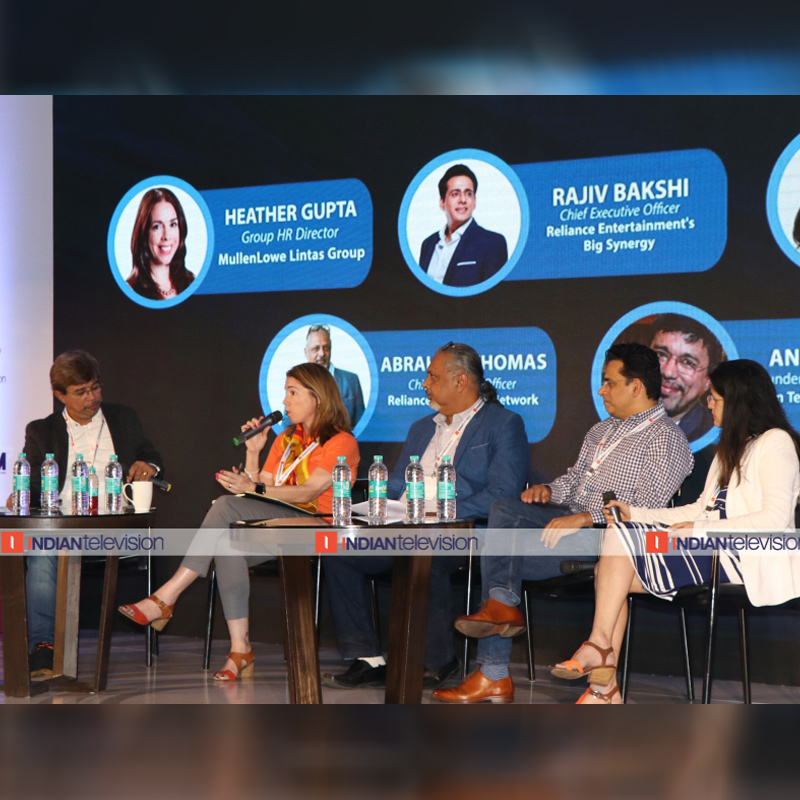
    Indiantelevision.com founder, CEO and editor-in-chief Anil Wanvari held a session “Responding to megatrends” in its first-ever Media HR Summit. MullenLowe Lintas group HR director Heather Saville Gupta, Reliance Entertainment’s Big Synergy CEO Rajiv Bakshi, Madison World executive director Lara Balsara Vajifdar and Reliance Broadcast Network Ltd CEO Abraham Thomas participated in the panel discussion.

    MullenLowe Lintas’ Gupta said that the media industry is most dynamic. Other industries do not have to deal with such face-paced movement. Adding to this, Thomas said, “Two disruptions which have actually changed our lives as consumers and professionals are digital disruption and the huge societal change that has come upon us. We currently have almost five different generations working together.”

    According to Thomas, the role of HR has become a watchdog looking for trends and insights in the industry. The HR department is like a composer, trying to scale the company goals. Thomas is of the view that HR role has suddenly become front-end and frontline. He opined that with digital, HR is the other important buzz word.

    Bakshi added that while that bastion was held by the word ‘transformation’ for the last three years, now HR has arrived to play the role of not just a partner but also an anticipator. HR has to anticipate business trends for the survival of the company.

    “HR is very important for the agency as our business is all about people. HR is not just the HR head’s responsibility; it is each and every senior management’s responsibility especially in an agency business which is full of young people coming with its own set of challenges,” Vajifdar said.

    According to her, media is getting a good share of young employees who are ambitious, impatient, have a sense of purpose for work and don’t want to listen to someone just because they are senior.  She said that they want their leaders to command respect not just demand and expect.

    Gupta’s company delves in producing 30-60 second TVCs where upscaling older employees is a challenge while millennials understand digital faster. Added to this are the budget constraints while hiring, training, recruiting and retaining employees due to smaller client budgets.

    Bakshi added that one major challenge the industry is facing is creating a value proposition which will attract multi-generation people. This means creating an organisation where there are stalwarts, experienced people as well as energetic youngsters who have to collaborate for the same project. He also added that HR needs personalisation with the help of data analytics. This can be done via customised training programmes and incentives.

    Experts also agreed that younger employees look for direct communication from authority to get a sense of what they are doing. Hence, taking out time for personalised informal communication without any agenda is important. Any key factor is HR management is to align personal goals with the company’s and get employees to look at the bigger picture with greater contribution to society.

  • Ad industry not kept pace with consumer and digital changes

    Ad industry not kept pace with consumer and digital changes

    MUMBAI: The last decade has been disruptive for media, advertising and marketing with the evolution of digital. However, Sam Balsara, the veteran in advertising industry, feels that media buying has not been able to keep pace with that change. He also said that the currency that really should be looked at from marketing point of view is cost per unit of brand outcome rather than CPRP or CPT.

    Throwing light on the magnitude of the change, Balsara said that the advertising market has tripled in size in the last ten years, moving up from Rs 20,000 crore to Rs 61,000 crore in 2018. He also added that the growth came on the back of digital while the share of the digital medium itself has reached 19 per cent from merely four per cent ten years back. According to him, digital will replace print as the second largest medium in the next two to three years.

    “The only thing that has not changed, I will say regretfully, is the way media buyers and media agencies buy media. It has, probably, not changed as dramatically as the media scene has,” Madison World chairman Sam Balsara commented in a session “Advertising, Media, Marketing: #10yearChallenge” on the third day of FICCI FRAMES 2019 while highlighting all the changes in the last decade.

    Ultratech joint executive president, marketing head Ajay Dang also expressed his concern on the same. Dang seemed sceptic about whether the industry, including creative agencies, marketers, content generators, has been able to keep pace with audience evolution. He also expressed his concern about the industry’s understanding of the needed change in storytelling and measuring the reach of the story to the final audience.

    “We are constantly in a phase of catch-up, we are falling behind. That’s my take. Because of our lack of putting it all together, at the end of the day our return on investment that we are supposed to deliver to our organisations is suffering,” he commented.

    Balsara also spoke on the “democratisation of advertising”. While the top 50 advertisers accounted for as high as 43 per cent of total adex in 2009, the number came down to 35 per cent last year thanks to the huge growth of regional brands.

    “We have to look at efficiency, effectiveness and innovation. I think today we are in a scenario where there is democratisation of data as well and data is threatening to become a deluge to drown companies if they do not do something about it. That’s largely becoming a priority for us to take up now,” Marico media and digital marketing head Ankit Desai said.

    BARC CEO Partho Dasgupta also pointed out the lack of talent in terms of media analytics tool. While sectors like BFSI and telecom have data analytics talent but in media finding people who understand the media domain and the big data tools of analytics is a big problem.

    It was also noted in the session that the FMCG brands are ever-inclined to TV despite the rapid growth of digital growth. On the issue of bias towards TV, experts think as the communication journey of many companies has been built around the medium over all these years, TV still plays the role for audience aggregator for these brands. However, it has also been said that the shift towards other mediums like digital has started.

    Viacom18 Hindi Mass Entertainment & Kids TV Network head Nina Elavia Jaipuria concluded the session calling for unity among all three parties including the media owner, advertiser and the media agency. She said that there is a need for all three to come together as the common goal is to drive market share for brands but sometimes a conflict of interest is good for the growth of the business.

  • AAAI Subhas Ghosal Memorial Lecture 2018

    AAAI Subhas Ghosal Memorial Lecture 2018

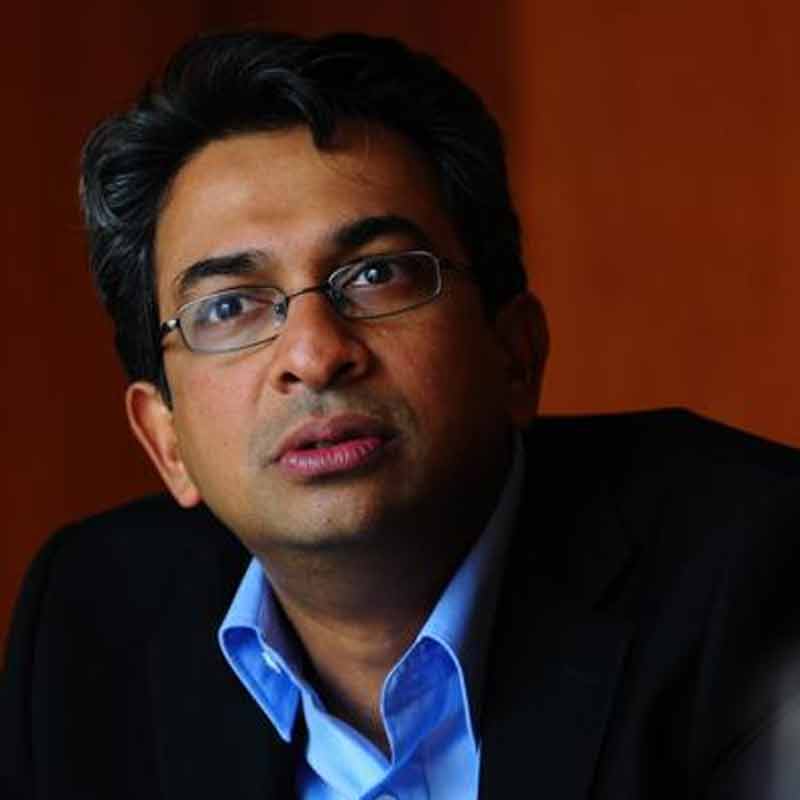
    Mumbai: The Advertising Agencies Association of India (AAAI) and Subhas Ghosal Foundation (SGF) is pleased to announce the Subhas Ghosal Memorial Lecture by Rajan Anandan, Vice President, Google India and South East Asia on Thursday, September 20, 2018 at 7:00 p.m. at Hotel St. Regis, Lower Parel, Mumbai.

    Mr. Rajan Anandan will enlighten the audience on what the new Internet User is like and what to expect in the Digital World we now live in, a few years from now. 

    Says Ashish Bhasin, President, AAAI says, “In a world that is rapidly being disrupted by digital, it will be extremely interesting to and important for everyone to prepare themselves. We at AAAI look forward to Rajan Anandan’s perspectives at the Subhas Ghosal Memorial Lecture.”

    Says Sam Balsara, on behalf of SGF, “Both Digital Natives and Digital Immigrants will find the lecture useful and enlightening.”

    All members of Advertising, Marketing, Media and Digital community are welcome. However, RSVP to Mr. Sudesh Kapoor at aaai@aaai.inis a must. If you need an invitation please send an email from your official email id to Mr. Sudesh Kapoor.

    This lecture is possible because of support from ABP LIVE, to whom the organisers are grateful.
     

  • India to enter top 10 OTT video markets in 2022: PwC

    India to enter top 10 OTT video markets in 2022: PwC

    MUMBAI: With a steadily increasing demand for online video consumption, India is set to occupy a spot in the top ten (over-the-top) video markets in the world in four years, reported the Times of India quoting a study from global accounting firm PricewaterhouseCoopers (PwC).

    The report titled Global Entertainment & Media Outlook 2018-2022 (Outlook) adds that the OTT video market in India is growing at a compound annual growth rate (CAGR) of around 23 per cent.

    According to the report, OTT video revenue in India reached Rs 2,019 crore in 2017 and is likely to hit Rs 5,595 crore by 2022.

    The report also notes that Indian entertainment and media industry is likely to reach Rs3.5 trillion (Rs353,609 crore) by 2022.

    ” India is expected to post an impressive growth in the entertainment and media Sector at a CAGR of around 11 percent, over the next five years. This is not only on the back of traditional media, such as TV subscription and advertising, cinema and advertising, expected to post robust growth, but also non-linear media such as OTT, gaming and  Internet advertising expected to  significantly high growth rates,” PwC India, partner & leader — entertainment & media, Frank D’Souza told Indiantelevision.com

    The findings of the PwC study do not come as a surprise given the flurry of activity in the Indian OTT space in the last two years. Global giants Netflix and Amazon Prime Video, local brands like ALTBalaji, and those owned by broadcasters like Star India’s Hotstar, Sony Entertainment Television’s SonyLIV and Zee Entertainment Enterprises Limited’s ZEE5 are all locked in a fierce battle for India’s OTT pie.

    Viu India country head Vishal Maheshwari said, “This report shines a great light on the OTT market. Original content will play a major role in the growth of the SVOD segment which projected to reach 81.6% of the total in 2022. If OTT players in India produce high quality content, consumers will likely end up with a handful of different subscriptions. Also, with one of the largest populations of millennials who are looking for quality and relatable alternative entertainment avenues, we believe India will surpass other nations to become the largest contributor to the growth of digital entertainment.”

    This intense competition among the Video on Demand(SVoD) platforms was the primary reason behind subscription services generating over 70 per cent of the revenue in 2017. This trend, according to the report, is bound to grow further with SvoD contributing to 79.4% of the total market revenue by 2022.

    India, however, did not find place in the top 10 global SVOD countries by revenue last year. However, for countries with the highest SVOD CAGR in 2017, India was on the number three spot after Indonesia and Philippines.

    Also Read :

    Star India mulls adding VR to PKL 6

    Star unveils Re.Imagine Awards for IPL ad campaigns

  • Zenith’s Tom Goodwin dismisses concept of a digital world

    Zenith’s Tom Goodwin dismisses concept of a digital world

    MUMBAI: The last few years have seen a major shift in consumer behaviour and the way brands interact with them through various mediums. So, the industry is evolving and changing? Well, if Zenith Media EVP and Head of Innovation Tom Goodwin is to be believed, nothing is changing.

    “All we hear now is how the world is changing and the [advertising and marketing] industry is evolving, which is not true. Nothing is changing. Our businesses will not be hampered with drones overnight. It’s easier for people living in big cities to say that the world is changing, which is not the reality,” Goodwin said.

    Speaking at Zee Melt 2018 marcom event here yesterday, Goodwin not only shattered some of the common perceptions and myths about the advertising and marketing industry but expounded too on his theories.

    Take, for example, the perceptive trend of newspaper readerships on the decline globally with people now accessing news on hand-held devices like mobile phones and tablets. Goodwin rubbished this belief by stating that newspaper readerships have increased significant, especially in countries like India and Africa.

    According to the Zenith executive, in a perfect future, passwords and payments could become a thing of the past and one would be able to unlock devices or pay a bill via face recognition software or a smile or a just a gesture. “But that’s far from today and we have to work actively in the right direction to make that happen as we, as an industry, only talk about technologies but know very little about them,” Goodwin explained, adding the industry hasn’t been able to use chatbots effectively.

    Expounding more on technology, he said people were still trying to figure out technology and its many uses in, what he calls, the “mid-digital era”. “As our expectations are high, we tend to refer [to] the past and layer it up without completely understanding it. For instance, reading newspaper should give different consumer experience on different mediums. But it doesn’t. Most newspapers today tend to copy-paste the same model of the physical paper and put it up on the internet without any innovation,” Goodwin explained.

    Pointing out that the world hasn’t “really seen any innovation in advertising since 1950”, while taking pride in being in the creative industry, he didn’t mince words: “We keep making the same mistakes”.

    While everyone talks about how the millennials were difficult to connect with, Goodwin thought they were the “easiest generation to target”. Reason? As the millennials were always connected or on their mobile phones, there, probably, hasn’t been an easier group to “reach in the entire history of humanity”. Though he’s not the only one now saying so, but Goodwin is of the opinion that “TV is not going anywhere” or dying out due to a digital onslaught simply because “TV is now being watched at more places than ever” and it was “irritating to hear” about the death of television.

    However, Goodwin certainly is not wishing away the march of digital altogether. The post “digital age” will be a world where digital will become a part of everybody’s existence and, for that to happen, “markets and agencies collectively need to create brand new experiences from the scratch”, was the advice. He added: “In order to do better business in times of chaos, brands need to transform their communication strategy by understanding people and what they need at what time.”

    While everyone talks about a digital world, Goodwin thinks there is no digital world and people were just “obsessed with the idea of digital being a thing”. Why so? He explained: “We still talk about digital as a thing and a behaviour. We have heads for digital and digital strategy and digital advertising. For the next generation, digital will be a part of their lives just as electricity is. Do we have a global head for electricity? People today don’t do internet banking but do banking in 2018, they don’t do e-commerce, they just buy stuff as and when they feel like it.”

    Not content with countering some presently held popular industry beliefs, Goodwin had some observations on brand expectations too. “Brands today like to set expectations of being the best or giving the best experience ever, which is not at all true. For instance, every bank wants to compare with every other big bank on the street,” the master said, adding, “But that’s not how a consumer judges you. They [consumers] judge you for your own service. Brands need to look into that [aspect], rather than setting high expectations.”

    Moving on to technology and companies, Goodwin advised people to apply technology correctly though they may not necessarily be technology companies. Driving home the point that beyond all the hype, consumer was the king and that every company should keep consumers at the heart of their businesses, he said, “It’s an incredible balance to be made and brands like Uber, WeWork, Whatsapp, Facebook are doing a tremendous work in that area.”

    He also noted that it was easy to presume that most companies don’t know what they were doing today, which is not the case really. “Most companies in the market today have had a large legacy behind them, and whatever and whichever version we see of them today, is a compilation of all the work they’ve been doing for so many years,” Goodwin explained, however, cautioning them of the need to “revamp and relook at their consumers” with a different lens to keep up with the changing needs and demands.

    What does he think of the present era? “It’s the most exciting time to work in business, advertising and marketing. And to be alive,” was how Goodwin summed it all up.

  • M&E to add 1 mn jobs in 5 years: Sudhanshu Vats

    M&E to add 1 mn jobs in 5 years: Sudhanshu Vats

    MUMBAI: The Indian media and entertainment (M&E) sector is likely to be worth $1.7 billion in terms of service exports. The figure was estimated by Viacom18 group CEO Sudhanshu Vats while speaking at a CII inauguration.

    India’s services exports were $163 billion which is likely to hit $320-330 billion in five years. The M&E sector is a $21 billion industry with eight per cent being exports. By 2022, the M&E sector will contribute $8.5 billion worth of export revenue. In the overall pie of service exports across industries, M&E makes up one per cent and is likely to hit three per cent by 2022.

    Vats went on to state what makes the M&E sector apt to become the next big thing after IT in the country. With job creation being a government priority, the M&E industry directly employs 1.1-1.2 million people and with indirect employment that will be 3.5-4 million jobs. India’s current total employment is about 480 million and 10-15 million being added every year. The M&E industry will easily add one million direct jobs in five years and though the number may be small, they will be quality jobs that will be future proof.

    For other sectors, added factors build onto export cost such as the cost of product development/customisation, packaging, logistics, maintaining overseas offices etc. But in M&E, this is negligible. The only costs will be QC, subtitling, bandwidth, etc. “ Overnight, I can’t start making a drama that will be loved by say the citizens of Papua New Guinea – but I can make good dramas for Indian audiences – that might resonate in Papua New Guinea as well! This has an important corollary – while it holds true for other industries as well, it holds even more true for our sector where every almost output is a tradeable item – any domestic public policy aimed at making us competitive in India, will make us competitive across the world,” he said.

    The sector has an ability of a multiplier effect on other industries such as tourism, travel, healthcare, etc., the effects of which cannot be ignored. “We have all that it takes to ensure that India takes her rightful place with the next industrial revolution – one that will make human capital, creativity and cognitive ability even more important. From one per cent of our services exports today to about three per cent by 2022 – and significant, disproportionate upside from the standpoint of India’s labour markets, social policy, economic growth and global standing – that is the promise we hold,” he concluded.

    Also Read :

    Sudhanshu Vats on Viacom18’s growth strategy and why data analytics is key

    We are becoming more platform and screen agnostic: Sudhanshu Vats

  • MIB’s Rathore signals liberalised regime for online media

    MIB’s Rathore signals liberalised regime for online media

    MUMBAI: Hardly 24 hours into his job and minister of state (independent charge) in the Information and Broadcasting ministry (MIB) Rajyavardhan Singh Rathore is saying things that could make him the industry’s and more specifically the independent media crowd’s darling.

    Speaking to reporters in New Delhi, Rathore emphasised that media has to opt for self-regulation and the government has no plans to regulate news portals and media websites.

    He said most publications and TV channels are already self-regulating at various levels, first at the reporting journalist’s level and then at the editor’s desk. He added that this was a model that the government was more than happy to continue with and support wholeheartedly.

    He clarified that media had misunderstood reports that it was setting up a committee to frame rules to regulate news portals and media news websites.

    The prime minister is very clear that the media in our country is one of the very important pillars of democracy and they have to self-regulate, Rathore highlighted.

    He said Prasar Bharati will be strengthened and high priority would be given to better and informative programmes.

    He also pointed that “it is about a collective responsibility that media becomes the voice of the people, whether it is Prasar Bharati or private network or channel. We will work in this direction.”

    Just yesterday, the baton was handed over from senior minister Smriti Irani to junior Rathore. He now has independent charge while she heads over to textiles. He has been in the ministry for the last four years as state minister and has finally got full command.

    Also Read :

    Smriti Irani moved out of MIB as Rajyavardhan Singh Rathore gets independent charge

    MIB moves to regulate online media: various organisations join issue

    Online media professionals write to Smriti Irani expressing regulation concerns

  • IT minister says won’t allow India to be centre of data pilferage

    IT minister says won’t allow India to be centre of data pilferage

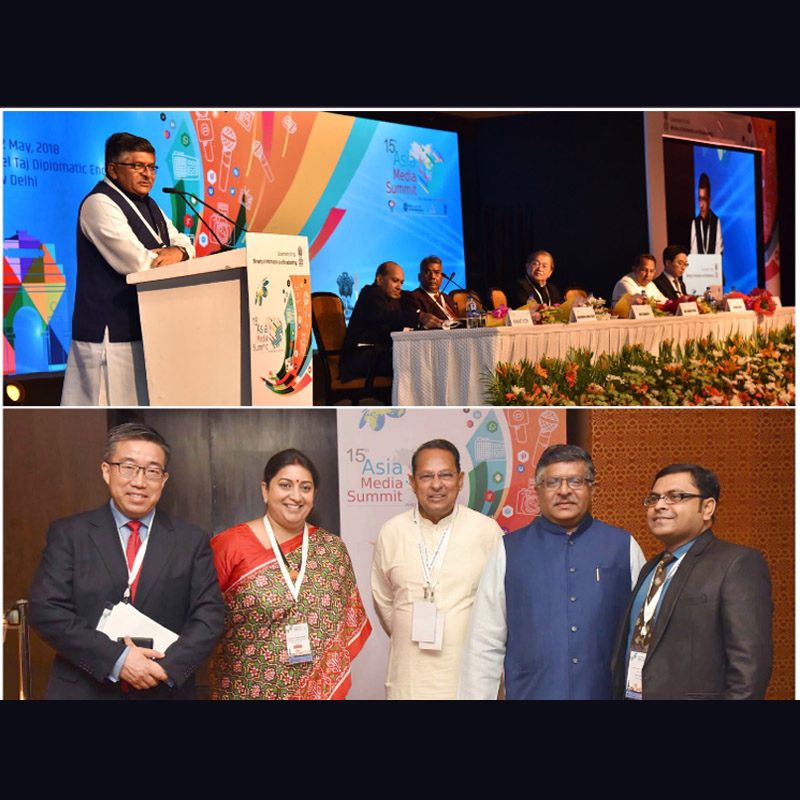
    MUMBAI: The country’s Electronics & IT and Law & Justice minster Ravi Shankar Prasad has come down sharply on data misuse. Speaking at the 15th Asia Media Summit, he said that the government would not allow the country to become a centre of data pilferage and data commerce that, through collusive methods, would be used to influence its electoral process.

    He added that all online companies, which were in the business of data commerce, must understand the nuances of accountability. When the recent controversy surrounding data privacy cropped up, with the Facebook-Cambridge Analytica scandal, the government took a firm stand. Since it is expected that India will be a big centre of data analytics, there is a need to have a proper coordination on data availability, data utility, data innovation, data anonymity and data privacy. Prasad also mentioned that a committee headed by a retired Supreme Court judge was looking into the issues and would soon come out with a data protection law.

    Though social media poses several challenges, Prasad said that the government was committed to the freedom of press but there was a need to segregate the real from the dangerous. The media, he said, had all the rights to inform, circulate, criticise, advice and counsel but the constitution allows for reasonable restrictions to be placed.

    He stated that he was in favour of self-regulation by media along with adherence to the IT Act, which says that content should not be dangerous, libellous or impinge upon the security and integrity of a country or encroach upon copyrights.

    Also Read :

    Efficient digital transition; MyGov.in pockets citizen engagement award

    FB reveals CA harvested data of up to 87 mn people

  • Emerald Media buys minority stake in Global Sports Commerce

    Emerald Media buys minority stake in Global Sports Commerce

    MUMBAI: Emerald Media, the Pan-Asia company backed by global investment firm KKR, has acquired a significant minority stake in sports technology and management company Global Sports Commerce (GSC) through a combination of primary and secondary investments.

    The aggregate US$80 million investment will include the secondary purchase of Asia-focussed private equity firm FidelisWorld’s stake in Techfront and the primary growth capital. The growth capital will enable GSC and its global affiliate Techfront to explore inorganic acquisition opportunities, develop next generation technologies for the sporting eco-system, and expand its operations in the fast-growing digital sporting solutions markets across the globe, the release issued by Emerald Media, which invests in media, entertainment, consumer tech and B2B industries, stated.

    FidelisWorld, which had invested in Techfront in 2014, will be fully exiting the business as part of the current transaction. Asia-focused private equity firm ADV Partners, which invested in GSC in 2015-16, will continue to hold a significant minority stake in the company.

    Emerald Media MD Rajesh Kamat said that the introduction of digital technology into the world of sports had helped amplify fans’ appreciation of the games and had helped to create an alternative source of revenue for clients, besides the games themselves. “GSC has transformed sports tech in India and across the globe by enhancing the way sports franchises interact with fans and capitalising on the ardor of their fan base. With GSC, we are excited to add sports to our eco-system of assets,” he said.

    Headquartered in Singapore, GSC combines cutting-edge technology solutions in the fields of LED signage, sponsorship management, premium consulting, fan engagement, AR/VR, drone-based data acquisition, wireless tech and data-sciences. It offers clients these comprehensive sports technology and management services by leveraging its network of companies that include Techfront, ITW, Qubercomm, Sportsgateway, Media Bay, Beyond Boundaries, Cartoon Mango and Nanoyotta.

    Since inception, the company has cultivated strong relationships with franchises across the sporting world with the aim of enhancing the commercial value of its sporting clients and creating new avenues for commerce. The franchises that GSC has partnered with include FIFA, the English Premier League, NRL Australia, Australian Football league, IPL, Formula 1, Big Bash League, New Zealand Cricket, Cricket Australia, IMG and Asia Sports. The companyoffices in 16 cities in 10 countries including Australia, Hungary, India, New Zealand, South Africa, Switzerland, the UAE, UK, and the US.

    GSC CEO M S Muralidharan said, “We are very happy to have a strong partner in Emerald Media, whose team’s extensive investment experience and critical connections across the globe will help deepen GSC’s engagement with the world of sports. This investment further contributes to the consolidation of sports commerce worldwide via use of technology, and it helps us expand our international footprint.”

    Also Read :

    Emerald Media buys controlling stake in Cosmos-Maya

    2017: The year OTTs went regional in India

    Amagi: KKR-backed Emerald leads US$35 million funding; buys stake

  • APOS 2018: speakers & themes unveiled for annual summit of local, regional & global leaders In media, entertainment & telecoms

    APOS 2018: speakers & themes unveiled for annual summit of local, regional & global leaders In media, entertainment & telecoms

    HONG KONG/SINGAPORE: Some of the biggest brands across the local, regional and global media, entertainment and telecommunications industries will participate at this year’s APOS summit, hosted by Media Partners Asia in Bali, Indonesia from April 24-26. APOS 2018 brings together key players across the value chain with a particular focus on how broadband connectivity is combining with local economies and ecosystems to transform prospects for the production, distribution and monetization of content, games and IP across Asia Pacific.

    Speaking about the line-up and the event’s themes, MPA executive director Vivek Couto said: “APOS 2018 brings together key brands and leadership striving to create, distribute, monetize and invest at scale across media, entertainment, telecoms and related sectors, as they forge new paths to value and enter into partnerships to drive engagement and share of spend.”

    Key speakers and themes at this year’s APOS summit include:

    Race To Scale: Local Challenges For Global Leaders
    Media, telecoms, entertainment and technology ecosystems are colliding across Asia Pacific, as the quest for local, regional and global scale picks up pace. APOS 2018 highlights the paths to value and partnerships that matter for global brands as they seek to drive engagement and share of spend across the diverse region and beyond.

    Confirmed speakers

    Bob Bakish, President & CEO, Viacom
    Uday Shankar, President, 21st Century Fox Asia
    JB Perrette, President & CEO, Discovery Networks International
    Ricky Ow, President, Turner International Asia Pacific
    Mahesh Samat, SVP & MD, The Walt Disney Company, South Asia
    Gina Brogi, President of Global Distribution, Twentieth Century Fox Television Distribution
    Sudhanshu Vats, Group CEO, Viacom18 Media 

    Broadband Economics: The Way Forward For Telcos
    Having opened up the broadband opportunity, Asia’s telcos now want a bigger piece of the pie. APOS 2018 weighs up the future for telcos in the region as they invest in content, partnerships, networks and services, seeking to ward off disruptors while chasing a bigger share of consumer spend.

    Confirmed speakers

    Somchai Lertsutiwong, CEO, AIS
    Ernest Cu, President & CEO, Globe
    William Yeung, CEO, HKBN
    Allen Lew, CEO, Optus
    Manuel Pangilinan, President & CEO, PLDT
    Ririek Adriansyah, President Director, Telkomsel 

    Streaming Dreams & Reality: Ambition, Growth, Competition 
    The next chapter is being written for premium online video in APAC. APOS will take a snapshot of the latest competitive dynamics and revenue opportunity in online video, as global, regional and local services size up prospects for growth, profitability and market leadership, as well as their appetite for risk.

    Confirmed speakers

    James Farrell, Head of Content, Amazon Prime Video Asia Pacific
    Ajit Mohan, CEO, Hotstar
    Peter Bithos, CEO, Hooq
    Kazufumi Nagasawa, HJ Holdings (Hulu Japan)
    Mark Britt, CEO & Co-Founder, Iflix Group
    Roma De, Director, Platform Products, Netflix
    Tony Zameczkowski, VP, Business Development, Netflix Asia
    Janice Lee, MD, PCCW Media (Viu)
    Jong-Won Kim, SVP & Head of Oksusu, SK Telecom
    Esther Nguyen, Founder & CEO, Pops Worldwide
    Fred Cheong, Group CEO, WebTVAsia
    Gaurav Gandhi, CEO, Viacom18 Digital Ventures (Voot) 

    Opportunities In Southeast Asia: Growth In Uncertain Times
    Despite volatility and uncertainty across many markets in Southeast Asia, local ecosystems continue to evolve, promising to enrich companies that can adapt. APOS 2018 picks out some key opportunities and the companies attempting to capitalize on them, while evaluating the impact of these changes on local investment, competition and monetization.

    Confirmed speakers

    Rohana Rozhan, Group CEO, Astro
    Carlo Katigbak, President & CEO, ABS-CBN
    Hary Tanoesoedibjo, Founder & Chairman, MNC Group
    Tham Loke Kheng, CEO, Mediacorp
    SK Cheong, Executive Director & GM, TVB

    The Evolution of Entertainment: Making New Stories Pay
    Studios and storytellers and that can keep audiences tuned in are in demand, as competition for consumer time intensifies. APOS 2018 looks at the different strategies production houses, broadcasters and online video services are taking to capture audience segments and maximize returns from their content bets.

    Confirmed speakers

    Ma Zhongjun, Chairman & President, Ciwen Media 
    Suyoung Lee, Director, JTBC
    Mark Linsey, Director, BBC Studios
    Joko Anwar, Independent TV & Film Director
    Wicky Olindo, Founder, TV & Film Producer, Screenplay Productions
    Ritesh Sidhwani, Film Director & Co-Founder, Excel Entertainment
    Michael MacMillan, Co-Founder & CEO, Blue Ant Media
    Sunil Samtani, Producer, Rapi Films
    Hyun Park, Co-Head, TV Production and Acquisitions, Korea, Warner Bros
    Jay Ji, CEO, Huayi Brothers Korea
    Hosi Simon, CEO, Vice Asia Pacific 

    The Investor View: Risks and Returns In Media
    Strategic, private equity and financial investors are making deep bets across telecoms, media and technology, helping fuel the next cycle of competition in content and distribution. APOS 2018 will highlight the thinking behind these decisions, globally, regionally and locally, with a particular focus on online video, payment infrastructure, and traditional film and TV.

    Confirmed speakers

    Li Ruigang, Founding Chairman & CEO, CMC
    Paul Aiello, MD, Emerald Media
    Deborah Mei, Partner & Co-Founder, Raine
    Nick Swierzy, Strategic Advisor to Group CEO, Axiata Group
    David Goldstein, Senior Advisor, TPG Capital