Tag: media

  • MIB advises private TV channels to abide by programme code

    MIB advises private TV channels to abide by programme code

    KOLKATA: A new trend in reportage of recent incidents has put media into the spotlight for violating basic ethics. Amid the strong criticism that the industry is facing, the ministry of information and broadcasting (MIB) has issued an advisory asking all the channels to abide by the programme and advertising codes.

    Read more news on MIB

    The ministry has emphasised on the provisions that restrict programmes containing anything obscene, defamatory, deliberate, false and suggestive innuendos and half truths; criticizes, maligns or slander any individuals in person or certain groups, segments of social, public and moral life of the country.

    It has also mentioned a recent case in the Delhi High Court which issued a notice following a petition by the actor Rakul Preet Singh. The court also stated that it hoped that media houses and TV channels would show restraint and abide by the program code and other guidelines while making any report in connection with the actor.

    At that time, the high court also directed Prasar Bharati and News Broadcasters Association, apart from the centre, to consider Singh's petition, " as a representation and decide it expeditiously, including any interim direction that ought to be made.”

  • Veteran media professional DK Bose passes away

    Veteran media professional DK Bose passes away

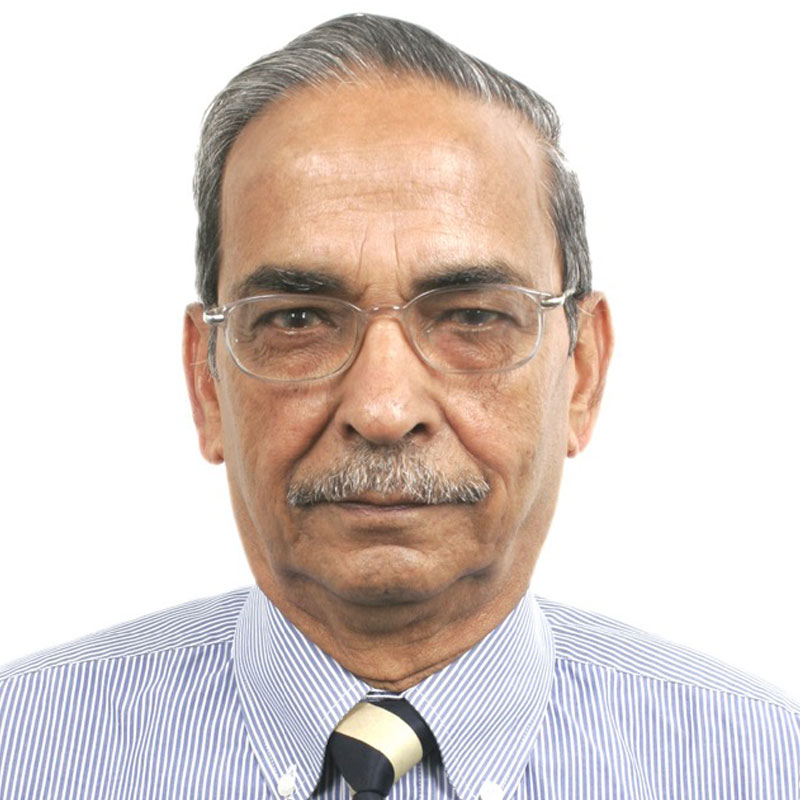
    MUMBAI: Veteran media professional DK Bose passed away on Friday. He was a pioneering advertising and media professional who laid the foundation for media planning function in the Indian industry. The industry mourned his loss.

    In a career spanning five decades, Bose was associated with several leading companies. Together with his team, he was crunching numbers and calculating the reach for brands at a time when no excel sheets were accessible. He trained many media professionals during his career.

    Bose was a media director at Hindustan Thompson Associates between 1984 and 1991. He later moved to JWT Delhi for a period of nearly four years in the capacity of a VP. After his stint at JWT, he joined RK Swammy BBDO as an executive director and then in a few years moved to Ogilvy Outreach as a president. He served in the latter role between 1998 and 2001.

    For the last 14 years, Bose had served as a consultant in the field of rural and social marketing. He recently got his biography Life Unstoppable published through Amazon.

  • Guest Column: TRAI needs to focus on sectoral hygiene rather than economic regulation

    Guest Column: TRAI needs to focus on sectoral hygiene rather than economic regulation

    MUMBAI: A silent crisis has been brewing in the residential segment of TV viewing sector. Even as its viewership increased during the Covid-induced lockdown, sectoral revenues took a severe hit. While Covid was termed an act of god, TV’s current state appears to be a man-made disaster. TV is an integral part of media, the fourth pillar of democracy. Therefore, it is crucial to respect and preserve it.

    TV accounts for over 40 per cent of the Indian media and entertainment ecosystem’s revenues, making it the sector’s largest contributor. As per pre-pandemic estimates, the M&E industry was slated to grow at 10 per cent CAGR to touch $34 billion by 2022. Covid’s impact has slowed down that march, particularly because advertisement revenues have shrunk, production of new entertainment programs remained suspended and the addition of new subscribers, by direct marketing, has become difficult. The alternative lies in adopting a subscription-led model.

    Broadcasters source content from content producers and manage its distribution over electronic media for viewer consumption. There are costs involved in this management such as content editing, server storage, opex for uplinking, transponder rentals and taxes. Broadcasters rely on meeting these expenses through advertisements inserted into and cheek by jowl with content.

    Besides these, distribution platform operators (DPOs) charge broadcasters a fee to carry programs and their placement in their electronic program guides (EPGs). TV players  have to pay this fee even for channels which are free for viewers. Advertisement revenue covers approximately 60 per cent of such costs. The DPOs, in turn charge subscribers for connectivity and pay content charges besides taxes.

    Read more news on Trai

    Since the nineties, business models were skewed in favour of ad-driven revenues because the amount of video content to be distributed over the  networks exceeded network capacity. Further, business practices were not transparent as broadcasters were unable to verify how many subscribers were watching their channels.

    2011 onwards, the TV digitisation process was supposed to usher in transparency and help overcome capacity constraints by relaying encoded and encrypted program streams from broadcasters to consumers via approximately 1,500 MSOs and over 60,000 cable operators. Digitisation improves picture and sound quality and allows more content to be transmitted using the same resources, thus enhancing consumer choice. Coupled with encryption, this system is called the digital addressable system (DAS), which means the facility to enable or disable program viewing selectively and remotely. Encrypted broadcasting signals can only be decoded via a set top box (STB) programmed uniquely for each consumer as per their indicated choice. Consequently, consumers can access and watch only those programs that they have chosen and pay accordingly. Empowering consumers to exercise choice was the intended first step to enable a subscription-led industry model.

    While the government claims that the entire digitisation process was over in March 2017, the truth is otherwise. MIB tracked DAS implementation using only the number of STBs reportedly shipped out of headend service providers’ warehouses. It did not consider if these STBs had been programmed to show only those channels that viewers had opted for. The STBs, therefore, functioned only as digital to analog converters that enabled viewers to watch all programs in the network’s stream. The task force to oversee DAS implementation did not seek proof to verify that ‘addressability’ had actually been implemented in the subscriber management system, which was the very essence of DAS implementation. Thus, a lot of TV subscribers do not have STBs which allow them to watch only those programs that they opt for.

    In 2017, TRAI issued a tariff order that supposedly aligns regulations with the new digital regime. However, the explanatory memorandum of the tariff order is full of contradictions, attributable to limited knowledge of ground realities.

    One possible infirmity, in TRAI’s demonstrated inability, could be that their staff consists of bureaucrats and professionals from the IT enabled services sector. Telecom generically facilitates one-to-one communication without any concern for the content it carries. The charges too cover fixed and variable levies based on usage time. With such a background, TRAI has been entrusted with regulation of broadcast, which is based on content that is intended for mass consumption.  Since 2004, they have not been able to acquire information about how broadcasters price their content.

    Read more news on broadcasters

    In the explanatory memorandum to the tariff order from March 2017, TRAI says that content pricing is a dynamic process, best understood by broadcasters. At the same time, it restricts them from deciding the price of pay programs included in bouquets. A commercial approach to determine prices requires an understanding of the expected channel viewership, and the cost of producing or acquiring content. Addressing ground realities is important to gather accurate data on channel viewership.

    One must understand that most subscribers use cable operators’ networks, which are local monopolies. Such operators get STBs issued in bulk without requisite programming and pairing them with subscriber details. These STBs enable access to all programs contained in the stream net casted from the MSO, since they are not individually programmed to cater to consumer choice. The cable operators then started charging subscribers a fixed monthly sum without any bill or receipt.

    To address this situation, multiple suggestions were made to TRAI. An important one was to incorporate broadcast expertise, which differs from telecom, into regulation. This is especially important for content handling to ensure that the deployed distribution networks meet desired addressability and content security norms. This author too has suggested that an eminent person, with broadcast video distribution experience, should conduct a demonstrative audit for all empaneled auditors. However, TRAI remains reluctant to change its telco-oriented mindset, where the concern for content has never factored in. The most glaring example is  the regulator’s latest list of auditors to audit the digitalization process. Almost all of them are charted accountants with no experience in broadcast audit. The regulations prescribe the employment of a graduate engineer in the empaneled auditors’ teams, without even mentioning his/her educational background. Finding suitable talent is also challenging, as broadcast engineering, in general, and wired line broadcasting, in particular, are yet to find a place in Indian academia. To sum up, one can’t get the TV business right without getting the number of consumers right.

    TRAI will therefore do well to pay attention to the safe and secure delivery of content, rather than economic regulation that is confined to subscription fund flow audits. As it is, the regulator’s misadventure since March 2019, has resulted in a loss of estimated 26 million subscribers, besides reported closing down of multiple video broadcast programs. It can’t and shouldn’t create a situation where more programs are forced to go off air.

    (The author of the article is Lt. Col. V C Khare, a cable TV expert. The views are personal and Indiantelevision.com may not subscribe to them)

  • Virtual Fireside Series: Catch Eros STX Global’s Pradeep Dwivedi live on 18 Sep

    Virtual Fireside Series: Catch Eros STX Global’s Pradeep Dwivedi live on 18 Sep

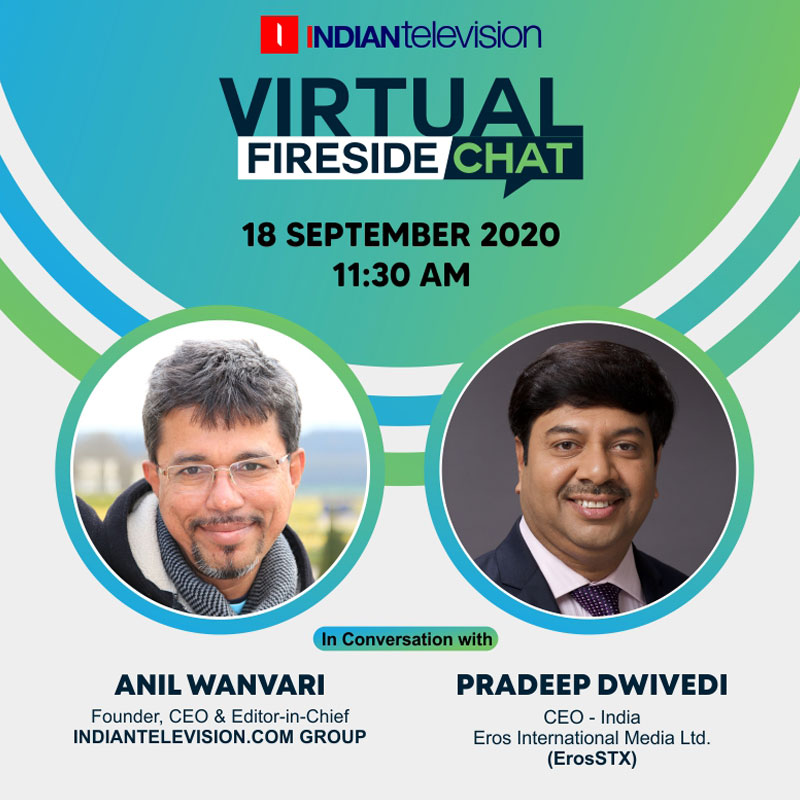
    KOLKATA: Taking ahead its virtual fireside series with eminent professionals of the media and advertising industry in India, Indiantelevision.com will be hosting Eros STX Global CEO-India Pradeep Dwivedi on Friday 18 September at 11.30 am. The session will be helmed by our founder, CEO, and editor-in-chief Anil Wanvari.

    Dwivedi is an industry veteran with nearly three decades of experience across media, marketing, publishing and advertising. He has worked at multiple brands and publishing houses in different capacities and played a key role in the growth. Dwivedi started his career with Eicher Motors, and went on to work with GE Capitals, Standard Chartered Bank, and American Express. His longest stint has been with Tata Tele Services which extended just a little over eight years. Post that he served with Dainik Bhaskar Group as chief corporate sales and marketing officer and later served in the capacity of chief executive officer with Sakal Group.   

    Watch more Virtual Fireside Chats

    Eros International recently changed its corporate name to Eros STX Global Corporation recently following the completion of rare Bollywood-Hollywood merger. The opportunities are flaring up for both sides of the business – OTT and studio segment. At this crucial juncture of the business, Pradeep Dwivedi is spearheading the Indian market of the newly merged entity.

    Read more news on Eros

    Dwivedi will be sharing his experiences of sailing through the times of pandemic, the changing landscape of the media environment, new trends and developments in the content space, merging of Bollywood and Hollywood at Eros STX Global and leadership & life lessons.

  • WarnerMedia ropes in TheSmallBigIdea as its social media agency for HBO and WB brands in India

    WarnerMedia ropes in TheSmallBigIdea as its social media agency for HBO and WB brands in India

    MUMBAI: TheSmallBigIdea has been appointed as WarnerMedia’s social media agency for HBO and WB, the global media and entertainment company’s two English-language movie channels in India. Their mandate includes Facebook, Instagram, and Twitter. 

    The full-service digital agency is tasked with increasing reach by using social media to build brand awareness in new markets, strengthen affinity in existing markets through relevant engagement and by developing a distinct voice to drive publicity.

    The agency will create localised and bespoke communication to build viewer interest within newer audience demographics in tier 2 and 3 cities. 

    WarnerMedia entertainment networks South Asia MD Siddharth Jain said, “TheSmallBigIdea will elevate our social media strategy for the vibrant English-language entertainment portfolio. HBO and WB already have a huge fan following on social, but with the agency’s strategic support, creative and data-driven approach, we’re looking forward to taking this to the next level.”

    TheSmallBigIdea CEO and co-founder Harikrishnan Pillai added: “TheSmallBigIdea and the team at WB and HBO are all aligned to our goals. While maintaining the current conversation with the core audience base in metros, we intend to reach out and build a new audience base. We have formulated a market-specific strategy, built on the back of some of the world’s leading blockbusters.”

    Earlier this year, the agency rolled out a multi-language campaign for HBO to promote ‘Godzilla: King of the Monsters’. 

  • Why IPL2020 makes sense for marketers and brands

    Why IPL2020 makes sense for marketers and brands

    MUMBAI: The countdown to the 2020 season of India’s biggest sports extravaganza – the Indian Premier League (IPL) – has begun. Come 19 September, more than a billion eyes will be riveted on their TV screens as the first ball of the first match between Mumbai Indians and Chennai Super Kings is bowled at 7.30 pm.  It does not get better than this for IPL fans, for whom it will be a revisit of the 2019 finals when the Mumbai lads beat the southern team by a whisker of a run, in a heart-stopping duel.

    The 2020 league, which is one of the most premium in the world, is coming at a time when brands sorely need to get back into the consumer’s mindset. Most marketing mavens believe there has been an erosion in brand love among consumers.  Thanks to the disruption in supply chains, consumers have hitherto been okay with buying products rather than their favourite brands. The percentage of shoppers buying online has leapfrogged, footfalls in brick and mortar stores have dived. The humungous response to the Flipkart and Amazon sales in the past two weeks shows customers want to spend and that demand is there.

    Observers believe that big brands which have refrained or cut back their communication with consumers need to get back with their mesmerising and engaging TV and digital commercials so that the consumer connect gets forged once again.

    “Even as the cases are going up, consumer confidence is slowly but surely coming back,” says Group M head of entertainment and sport Vineet Karnik.

    As time goes by, consumers will increasingly go out, spend and the economy will surely follow, or that is the corollary.

    “Marketers believe the IPL is a good opportunity to give a boost to that consumer sentiment even further,” says IPG Media Brands CEO Shashi Sinha

    Sinha had been quoted sometime back in an interview that the IPL is a tentpole property, the biggest in India. “Television is anyway fragmented. The highest ratings come on IPL in India. IPL is the only platform which allows you that single window to reach masses, audiences. Our brands have consistently used it for some time now,” he had said.

    What will make cricket an even bigger audience builder this year is the fact that viewers have not got to watch Rohit Sharma, MS Dhoni and Virat Kohli play for a large part of 2020. Clearly, the desire for sports has been bottled up and is expected to explode into a frenzy of viewing between September and November. Fans are raring to go and have been tweeting, posting their joy, annoyance and opinions on every social media and blogging platform. 

    All thanks to being locked down courtesy the virus, India and Indians have been consuming more content – video, audio, games and what have you – in heavy doses and binges. Data shows that TV consumption is up over 15 per cent (source: BARC) as compared to pre-Covid2019 times, and it is unlikely to slow down, and in fact will sharply accelerate northwards.

    The BCCI has also rejigged the match timings, which should augur well for TV viewers and advertisers. Instead of 2019’s 4 pm and 8 pm starts, the matches in the UAE will now commence at 3.30 pm and 7.30 pm IST respectively. The 3.30 slot will end up extending into early prime, while the 7.30 pm match will end during peak primetime when audiences will also be at their peak. 

    The biggest USP of the IPL, a media observer points out, is that it provides for a very good advertising environment with less clutter. Ad breaks average 50 seconds, means that four to five TV commercials can be played out.  The free commercial time per hour during the IPL is also limited at 800 seconds per hour, as compared to other genres where it crosses 920 seconds and some time goes up to as high as 1,120 seconds. All this works well for brands as the OTS on commercial and engagement goes up.

    Sinha is as optimistic – if not more – today with IPL’s prospects than he was three months ago. “I genuinely believe the IPL will do very well with viewers,” he said. “Some of our smaller brands are also asking us to put their spends behind it. The advertisers will definitely give it a good shot at giving a good push to their businesses.”

    Shall we say amen to that?

  • Quash Maharashtra govt’s age limit on sets: IMPPA to Bombay high court

    Quash Maharashtra govt’s age limit on sets: IMPPA to Bombay high court

    MUMBAI: The Maharashtra government allowed shootings to resume but barred people above the age of 65 from participating, deprived them of a livelihood and because of which they are facing starvation, said the Indian Motion Pictures Producers' Association (IMPPA) in its petition, urging the Bombay high court to quash the state government's directive.

    The association represents thousands of film and television producers, short films, programmes, artists and technicians. IMPPA’s petition comes a day after the high court, on a petition by artist Pramod Pandey, questioned the basis of the state government's restriction.

    IMPPA’s petition, filed with the help of advocate Ashok Saraogi, stated that prior to the lockdown, thousands of cast and crew members aged above 65 years participated in the shooting of programmes. But now, the shootings of such films and programmes have been left in between due to non-availability of such people.

    IMPPA president TP Aggarwal stated that for all senior producers, directors, actors and technicians the creative medium is the only source of income and the guideline was not practical and was not fair as in no other profession this condition was imposed. He added, “After sending requests many times, we had to move to the high court for demanding the rights of earning one’s livelihood for these senior people from the fraternity.”

    The IMPPA petition cites how the Karnataka high court had been specifically informed by the central government that individuals above 65 years of age had all the rights to carry out their work and the said restriction was only an advisory to stay at home. Hence, it isn't a binding order and every individual has the right to work for his livelihood and the government could not impose such regulations.

    The petition also informed that the entire trade has come to a standstill and several members who are associated with the film trade are starving and many have committed suicide.

    Follow Tellychakkar for the consumer facing news & entertainment

  • Analysts bullish on broadcasters’ stock rebound thanks to ad revenue recovery

    Analysts bullish on broadcasters’ stock rebound thanks to ad revenue recovery

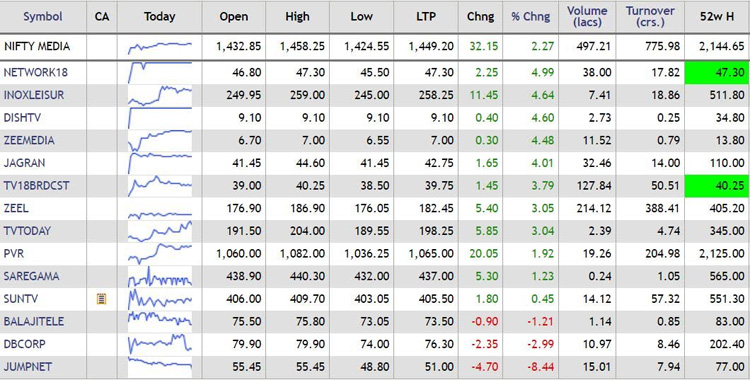
    KOLKATA: The Covid2019 pandemic hit the media and entertainment industry due to pressure on advertising revenue, uncertainty in subscription and closure of multiplexes. As the lockdown eases, operations have started normalising leading to a recovery in the business. On Tuesday, Nifty media index advanced 2.27 per cent while companies like Network18, Inox Leisure, Dish TV, Zee Media and Jagran Prakashan saw four to five per cent gains.

    Network18 was the highest gainer in the Nifty media index, advancing 4.99 per cent. Moreover, its stock has been gaining for eight days consecutively as of Tuesday.  It touched a new 52-week high hitting Rs 47.3 during the day while it ended the day at Rs 47.30. TV18 Broadcast stock has been gaining for the last three days as of Tuesday and has risen 10.45 per cent returns in the period. Its shares rallied 3.79 to end at Rs 39.60 , after touching a new 52-week of Rs 40.3. Zee Media Corporation Ltd (ZMCL) also gained 4.48 per cent on Tuesday. While Zee Entertainment Enterprises Ltd (ZEEL)’s gain was comparatively lower, both ZEEL and ZMCL have been gaining for the last two days as of Tuesday. 

    Figure: Nifty Media Index on Tuesday 

    Analysts are also bullish on the rebound of broadcasters’ stocks on the back of higher advertising revenue. “Now that advertising is coming back after unlock, there will be some rebound on the expectations of advertisement revenues. You may see media stocks getting better but not all stocks, particularly multiplexes, because malls have not opened up. But if you look at pure broadcasters, the valuation may go up. Depending on the how soon the recovery happens, there will be an upside. The cable operators, who are facing disruption in payment, will see things easing down," says SBICap Securities institutional equity research head Rajiv Sharma.

    “Print media will take a lot of time to rebound because advertising revenue has taken a hit and people are not taking newspapers. Broadcast will be the first segment to recover. Once fresh content comes in, there will be bigger recovery in advertising revenue. In the case of print and radio, this is more of relief rally. Structurally, radio and print are going to suffer even after Covid2019,” Elara Capital VP – research analyst (Media) Karan Taurani says.

    Among DTH players, Dish TV stock has been gaining for the last 17 days and has risen 125.47 per cent returns in the period. DEN Networks has gained 9.69 per cent on Tuesday. Another major multi system operators, Hathway Cable and Datacom has also gained 7.67 per cent.