Tag: media

  • HC notice to Karnataka govt, MIB over obscene content in media

    HC notice to Karnataka govt, MIB over obscene content in media

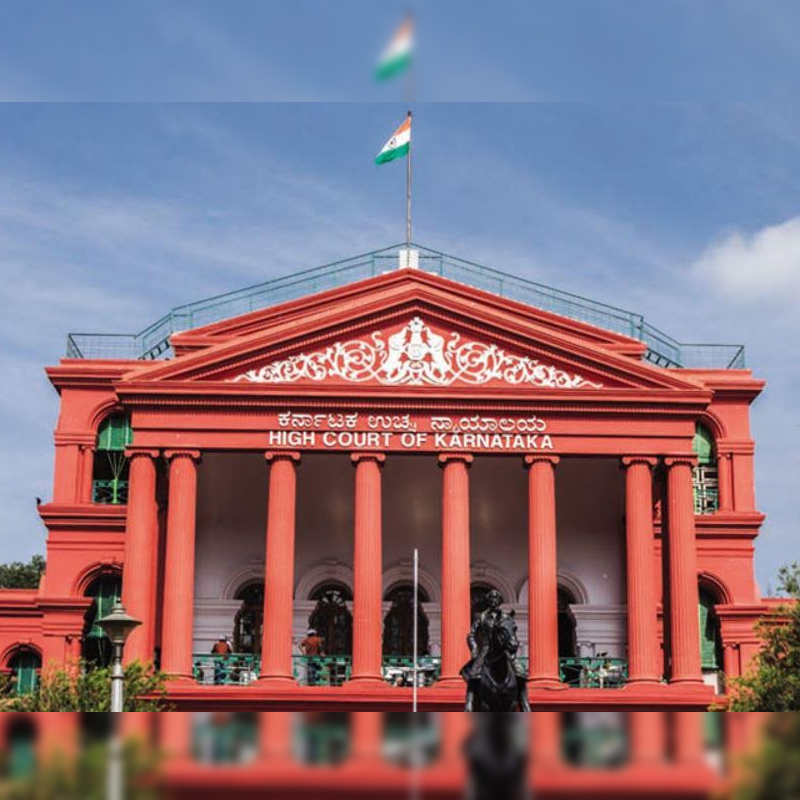
    New Delhi: The Karnataka high court has sought the state government’s response in a public interest litigation (PIL) to issue directions to frame statutory rules to prevent publication of indecent and obscene content as part of the news programme in electronic and print media.

    The court also issued notice to the ministry of Information and broadcasting (MIB) and state police in this regard.

    According to the petitioner, various media houses publish obscene videos and partially blurred nude photographs and videos of several incidents as part of news programmes. Some TV anchors also repeat the vulgar language used in the video clips to make it loud and clear so that the public can understand the language that is used by the compromised individuals, he stated in his plea, as reported by Bar and Bench.

    Though Section 5 of Cable TV (Regulation) Act-1995 provides that no person shall transmit or re-transmit through a cable service or any programme unless such programme is in conformity with the prescribed programme code, there is no definition for programme code, he submitted before the court.

    The petitioner prayed that publication of such content should be made a cognisable offence, which will have a reasonably deterrent punishment. Apart from framing guidelines, he also sought directions to prevent the electronic media from analysing the sub-judice matters before the court and direct the state police not to leak information collected during the course of investigation regarding any case to the press, public or media.

    The matter will be next heard on 7 June.

  • Digital media, gaming dominated M&E deals in 2020

    Digital media, gaming dominated M&E deals in 2020

    KOLKATA: Over the last few years, the media and entertainment industry has seen a number of major deals with the rapid change in the business. Some of the global merger and acquisition activities have impacted the Indian M&E sector too. Along with that, Indian media companies also witnessed big deals in the traditional broadcasting space as well as increased activity in the digital segment.

    The experts were skeptical about deals in the space as the Covid2019 pandemic derailed the economy. However, the sector witnessed moderate activity in 2020 with 77 deals compared to 64 in 2019. However, overall deal value reduced to Rs 68 billion in 2020 from Rs 101 billion in 2019, the recently released FICCI-EY report revealed.

    The decline in deal value has been attributed to the absence of big deals with only two deals crossing the $100 million threshold as compared to four such deals in 2019. But even before the pandemic, there were fewer high value deals in 2019 compared to earlier years. The overall deal value was significantly lower at Rs 101 billion as compared to Rs 192 billion in the previous year.

    The lockdown during the pandemic boosted the uptake of digital media and gaming. Hence, these two segments together attracted 92 per cent of the investment in 2020. New media increased its share in terms of deal value from 37 per cent in 2019 to 92 per cent in 2020. Considerably, television saw the highest investment in 2019.

    For instance, Dream11 raised $225 million from Tiger Global Management, TPG, ChrysCapital and Footpath Ventures. Dailyhunt got funding of $100 million from Google, Microsoft, Falcon Edge, Sofina and Lupa Systems.

    Moreover, a number of Chinese apps like TikTok, PUBG were banned due to political tension amid India and China. As many of the banned apps were leaders in the space, the sudden vacuum created opportunity for local apps which got investors' backing to scale up their operations.

    The audio streaming segment also saw a few important deals. While Reliance Industries bought a further 10.9 per cent stake in Saavn Media for Rs 6.5 billion from its erstwhile promoters, Gaana raised Rs 3.8 billion from Tencent and Times Internet.

    On the other side, traditional media’s contribution to overall M&E deal value plummeted to eight per cent, compared to 63 per cent in 2019. There were primarily just three deals in the space including the Eros International-STX Filmworks merger, PVR’s rights issue and Inox’s fund raising via QIP, compared to 10 deals in 2019 including four marquee deals.

    Private equity and venture capitalist firms led 70 per cent of the M&E deals in 2020, contributing to 79 per cent of the total funding received in the year. The share of deals led by strategic players fell to 27 per cent compared to 52 per cent in 2019.

    The report forecasts more investments in scalable d2c business models, digital companies with a differentiated product offering, companies with strongholds in next-gen technologies in the next few years. Traditional advertising agencies and tech giants will both continue to invest in niche martech companies. Media entities under financial stress will also look at partnering with a larger strategic player.

  • Wonder Women 100: Mindset needs to change first for more inclusion, diversity

    Wonder Women 100: Mindset needs to change first for more inclusion, diversity

    KOLKATA: Women are increasingly coming out and taking up more challenging roles against all odds. The media, entertainment and advertising industry is no exception. Despite the great strides made over recent years, there are still issues like fewer women leaders in upper management positions and salary gaps that need to be addressed for a better tomorrow.

    In a panel discussion, ‘Women, inclusivity and change’, industry leaders shared their views on the existing gaps and how that can be tackled to bring about positive change. Zee5 head-customer strategy and relationships Anita Nayyar, ABD CMO Anupam Bokey, Lodestar UM CEO Nandini Dias, NXTDigital group chief technology officer Ru Ediriwira, Madison Media Sigma – Madison World CEO Vanita Keswani, Hollywood actress and producer Rashaana Shah and Indiantelevision.com founder and editor-in-chief Anil Wanvari were part of the discussion. The session was moderated by Indiantelevision.com editorial lead Srishti Choudhary and online lead Arunima Bhattacharya.

    First off, the panelists expressed their opinions on whether corporate India has finally adjusted itself to bring more women professionals into leadership roles. Nayyar said we are miles away from where we actually should be given the kind of women leaders that are there in any industry, not only in advertising and marketing. Women have taken leadership roles in sectors like manufacturing, banking, and automobile; which most people considered no space for a woman.

    Dias brought up another important aspect of addressing the issue. While organisations across the board are hiring more women, these recruitments are happening mostly at the starting level. As time passes, the women get into different life stages, some of them even drop off. Corporates, governments do not enable their female employees to stay in the workforce, there are not enough policies to ensure they don’t quit midway because of changes like marriage and pregnancies.  

    Not everything is grey though. According to Keswani, there is not any gender if looked at from the perspective of microenvironment of media. She added that the industry believes in a person’s capability and does not uphold any bias. Moreover, it is about the individualistic approach. She also highlighted an issue that even some women don’t prefer working with women. “A lot of spirited action and ambition to move up the ladder,” she emphasised. The drive to work and climb up the ladder depends not just on an organisation’s policies, but the person’s family, upbringing, and education.

    Bokey, who works in the liquor industry where gender disparity has been prevalent, said that he joined his current organisation because it had a very transformative agenda. The agenda was not only about market share and sales but also internal management. He asserted that there is no option to not have this diversity because business or brands will suffer otherwise. Equal the numbers better would be the work, he stated.

    Hollywood actor and entrepreneur Shah said women are more well accepted in Hollywood, compared to the Indian film industry. Hollywood is much more inclusive too. She had to go through a great deal of unlearning after moving to Los Angeles. There are more women on sets these days, and there is no code of conduct expected from women particularly, making the experience more liberating. However, she faced a unique problem when she was pitching to venture capitalists to invest in her production house. The investors did not trust women with so much money, making the overall pitching much harder for her.

    The issue with such a mindset is also a big reason for the wage gap among male and female leaders. Nayyar said that everyone, including women, should stop seeing things in terms of gender. There is a wrong perception across industries that female resources can be hired at a cheaper cost. Most of the industries are not equating capability with remuneration, she pointed out. The salaries are not at par because these organisations are, by and large, headed by men. Dias shared a similar view, adding that women don’t negotiate often because they get overwhelmed after breaking the glass ceiling. Experts opined that belief in self can give them a place at the negotiation table.

    Ediriwira highlighted the lack of mentorship in many organisations is another reason for many women just stopping at middle management. “We have the responsibility to mentor and help other women who are coming up behind us,” she shared.

    “Diversity, inclusion – these are not words. These are facilities to be done, things to be done. We don’t want clones of men. A woman will think differently, she will behave in another way, her bodily function will be in a certain way. We want diversity, inclusion in the real sense of the word and that will bring nuances which are different and organisations need to facilitate that,” Dias emphasised.

    Most importantly, being true to yourself, taking care of yourself, empowering and encouraging other women, asking for help rather than going it on your own, are mandatory to bring the change from within.

  • Viacom18 appoints Kunal Gaur as chief commercial officer

    Viacom18 appoints Kunal Gaur as chief commercial officer

    Mumbai: Viacom18 has appointed Kunal Gaur as chief commercial officer. Kunal will be taking over from Utpal Das who ends his stint at Viacom18 on 31stMarch 2021.

    Through the past 7. 5 years, Utpal Das has led the commercial, facilities and corporate services functions at Viacom18. He was instrumental in not only shaping and leading these functions but also towards building Viacom18 into one of India’s top media networks through his role as a key member of the company’s leadership team.

    Kunal Gaur, a chartered accountant by qualification, has over 19 years of experience across organisations like Star India, Netflix and PWC. Prior to joining Viacom18, Gaur was a part of the Netflix India’s leadership team in the capacity of director, production finance where he was instrumental in crafting budgeting strategies and leading production finance for all original series, film, non-fiction and documentaries.

    Kunal Gaur will be reporting into Rahul Joshi, MD, Network18.

  • ZeeL debt credit rating revised

    ZeeL debt credit rating revised

    NEW DELHI: Even as Zee Entertainment Enterprises Ltd (ZeeL) CEO Punit Goenka's 4.0 vision measures are beginning to bear fruit and are resulting in a better performance for the company, credit rating agency Brickwork Ratings India has downgraded its rating and that of its debt, namely the six per cent cumulative redeemable non-convertible preference shares. These debt instruments are worth Rs 806.78 crore.

    ZeeL informed the Bombay stock exchange about Brickwork's downgrade yesterday.

    The previous rating for the six per cent cumulative redeemable non-convertible preference shares instrument was BWR AA- (credit watch with negative implications) while the new rating is BWR A (credit watch with negative implications).

    The previous issuer rating was BWR AA- (credit watch with negative implications) while the new rating is BWR A (credit watch with negative implications).

    Brickwork said it has done this factoring in heightened uncertainties on contingent liabilities/claims against ZeeL causing increase in credit risk and rating concern.

    ZeeL is one of India's largest and oldest media conglomerates with a presence in linear, OTT and digital mediums. The media house is present in multiple genres such as news, films, production, GEC and others.

  • #Throwback2020: Heavyweights in the M&E industry

    #Throwback2020: Heavyweights in the M&E industry

    NEW DELHI: In the book of life, people couldn’t wait to turn the page on 2020, but at long last, we have arrived in 2021. There is a lot of energy and zeal in the media and entertainment industry to make a fresh start and rebuild everything back to its pre-Covid2019 glory. No doubt, 2020 was tough, but it has taught us several lessons – like not taking things for granted and being ready to adapt to changes.

    Despite all the odds and challenges, content creators, production houses, service providers and broadcasters kept the ball rolling for consumers as the entertainment did not stop. It was available to the audiences in one format or the other. These professionals worked to create relentlessly fresh and differentiated content, organised live sporting events, and kept viewers engaged.

    Earlier this week, we read about some of the leading M&E professionals and how they steered the industry for better in 2020. Here is the second part of the series:-  

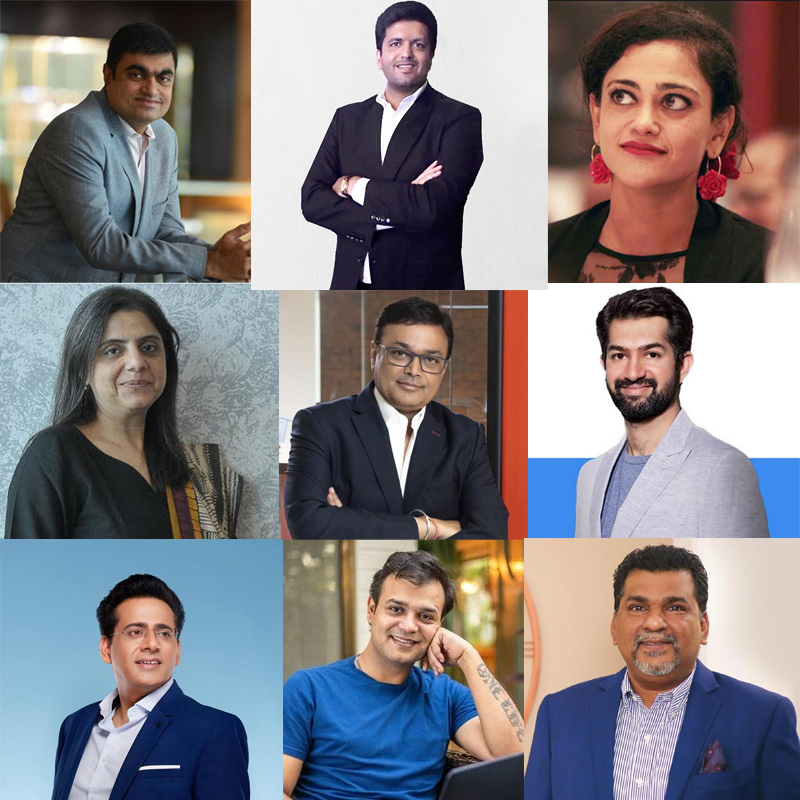
    Rajesh Iyer, Viacom18

    Viacom18 roped in Rajesh Iyer to handle its regional GEC portfolio which includes Colors Odia, Colors Gujarati, Colors Tamil, and Colors Bangla. As the network stepped into 2021, it launched two new shows in Tamil. Iyer is an old hand at Viacom18 and was part of the launch of Colors in 2008. A veteran in the industry who understands content, market, consumer and revenue, Iyer has been brought in to handle the challenges of the genre and grow the business. He is known for his leadership at Network18 and ZeeL, where he spearheaded new initiatives and launched &TV. The latter was successful in creating a niche for itself in the market within the first three years of its debut.

    Rajiv Bakshi, Reliance Big Synergy

    In the last 12 months, Reliance Big Synergy CEO Rajiv Bakshi has completely turned the course of the production house. It is no longer just a powerhouse for non-fiction but a creator of all forms of content – be it fiction, web series, direct to digital films, biographies, mythology and more – across multiple languages such as Bangla, Telugu, Punjabi, Bhojpuri, and Hindi. The man has high ambitions for the production house and aims to have a strong fiction split in its content production. Bakshi is a veteran in the M&E industry who has seen the business from the lens of a marketer, broadcaster, and creator. He has worked across TV, internet, media, telecom, and consumer durable industries in his career.

    Avinash Pandey, ABP Network

    In less than two years of donning the mantle of chief executive officer at ABP Network, Avinash Pandey took it on himself to refresh its entire functionalities, building on unique capabilities and starting a fresh chapter in its history. He rebranded ABP’s identity from a premium news network to an all-encompassing content powerhouse. The network stepped into the world of content creation, production, brand solutions, etc, investing in cutting-edge technology to facilitate best-in-class solutions for the clients. Its news channels were also given a fresh look and mission of being limitless in their coverage. Pandey has talked about his intentions to shift network services from FTA to pay.  

    Apart from these massive overhauls in the core identity of the network, Pandey also rose as a strong voice who not just demanded rights for the broadcasters but also called out the shortcomings of the news industry. He openly dissed the culture of chasing TRPs by news channels, called out the ‘outdated measurement system’ that is promoting dramatic news reporting, and batted for deregulation of broadcasting content. 

    It was under his leadership that ABP Network sailed through the unique challenges posed by the Covid2019 crisis. In fact, ABP was amongst the very few news networks that did not have to resort to pay cuts or lay-offs. 

    Nina Elavia Jaipuria, Viacom18

    An old hand at Viacom18, Jaipuria has churned out content that drew in and engaged audiences across demographics, whether it was in Hindi GEC, Hindi motion pictures, or kids genre. On the kid’s front, she spearheaded the launch of two new IPs – Bhoot Bandhus and Ting Tong on Sonic and Nickelodeon respectively in 2020. She steered her portfolio through the pandemic when adex dipped.

    On the Hindi mass entertainment side, the organisation tapped into its libraries during the lockdown, bringing back shows like Mahakali, Shani Dev, Jai Shri Krishna, Om Namah Shivaya and Mahabharat that evoked nostalgia among viewers. News shows like Pinjara Khubsurti Ka, Molkki and Namak Issk Ka were also planned during this time.

    Jaipuria is an industry stalwart with over three decades of experience. She steered the network’s growth from a lone kids channel to a cluster of channels.

    Aditya Pittie, IN10

    Anand Mahindra-and Aditya Pittie-promoted IN10 Media has a bouquet of varied media offerings such as television (Epic TV), OTT platforms (Epic On and Docubay), and production house (Juggernaut. IN10 Media Network also launched kids' channel Gubbare on Children's Day. After the success of its linear broadcast channels in their respective genres – Epic TV and ShowBox – the network ventured into the regional cinema market with Filamchi, a 24/7 linear broadcast channel for Bhojpuri cinema fans across the country.

    Meanwhile, Juggernaut Productions worked on Avrodh: The Siege Within that was acclaimed by audiences and critics alike. Pittie has kept the pricing of EpicOn and Docubay far higher than any horizontal or generic OTT. He has positioned the channels as a vertical player with a very specific offering.

    Vynsley Fernandes, NXTDigital

    An old face in the cable distribution industry, Fernandes was recently elevated as media group CEO of Hinduja group’s NXTDigital. Before his current role, he turned the struggling NXTDigital businesses to profitability within two years of taking on the position of CEO at IndusInd Media and Communications Ltd (IMCL). Now, he will not only run digital TV and HITS business but also broadband and content business.

    Fernandes is leading innovation at NXTDigital as the company looks at establishing itself as a digital service provider. While the video segment of the company has around 5.38 million subscribers currently, its broadband segment has achieved yet another milestone under his leadership by crossing half-a-million home broadband consumers. Identifying the need for bundled services, he is highly focused on synergising cable TV or HITS service with broadband that would drive the growth of all services concurrently.

    The ministry of information and broadcasting (MIB) recently amended HITS guidelines by allowing HITS operators to share infrastructure with MSOs. Hence, Fernandes has identified this as a big area of growth for NXTDigital, the only HITS service provider in the country. As infrastructure sharing can reduce the cost of connectivity significantly, he is looking at leveraging this opportunity in the B2B model.

    It was under his leadership that NXTDigital managed to continue its operations smoothly during the Covid2019 crisis under a well-structured contingency plan. It’s one of the few MSOs to have a proper digital payment method for business partners. Fernandes has advocated embracing digital payments, rolling out broadband, hybrid boxes to sustain in the long-term.

    Karan Bedi, MX Player

    Karan Bedi is heading one of the most successful OTT platforms in India. Within two years of MX Player’s launch, the service has diversified into gaming, short-video, and music segment along with its core OTT offerings. The platform, which currently has over 200 million monthly active users, emerged as the fastest growing OTT entertainment platform during the lockdown, Comscore data indicated.

    While it was already recognised as the top entertainment app in India in 2019 by a FICCI report, MX Player has seen tremendous growth during 2020. With a 5X increase in engagement during lockdown, it has also attracted 150 new brands. The platform has focused on tier-2, tier-3 markets from the beginning, which has helped it to grow more post-Covid2019.

    MX Player has replicated its OTT success in the short video format too under Bedi’s leadership. It introduced MX TakaTak within a week of the TikTok ban. Already, it boasts 70 million monthly active users and 10 million unique content creators. To solidify its position in the growing ecosystem, the platform is increasing its content library, innovating its offerings and on-boarding well-known influencers.

    Siddharth Kumar Tewary,  Swastik Productions  

    When you have ambition like Siddharth Kumar Tewary, you let nothing come in your way. So his decision to set up shooting floors in Umergaon in Gujarat were very futuristic. He was one of the first producers to begin filming after the government drew up SOPs for shoots to begin again, following the lifting of strict lockdown Covid2019 rules. That was thanks to the fact that he owned his own sets in Umergaon, with residences which could even house crew and cast, thus putting them in a safe bio bubble.

    2020 was the year, when he  broke out, getting commissioned to produce Bahubali for Netflix and a show for Hotstar, even as he continued to produce for television. Swastik Productions also launched two new series Devi Adi Parashakti for Dangal and Deva Shree Ganesha airing on Star Pravah. He recently partnered with Sony Pictures Networks India for exclusive rights to license and distribute its content catalogue in CEE/CIS countries as well as China and Japan.

    Hiren Gada, Shemaroo

    When the Maroo family – the promoter of content aggregation and distribution company Shemaroo – pole vaulted Hiren Gada as CEO in 2018, he was a little known entity. A shy reserved executive, he preferred to play a role behind the scenes, helping grow its international syndication business and keeping a sharp eye on finances. Two years into his job, he has transformed the organisation along with his sister Kranti Gada who is the COO,

    Hiren first focused on bringing in outside industry professionals into Shemaroo, thus fostering its evolution from being family owned and run to a professional one. In 2020, he took some gutsy punts, launching a free to air general entertainment channel Shemaroo TV in order to help draw in advertising money and help grow the company. He had taken even sharp risks just as 2019 was ending, by flagging off an OTT platform called ShemarooMe and MarathiBana –a Marathi language free to air channel, a little before that. He also announced his intention to help small budget films get launched on an OTT with ShemarooMe Box Office which will serve as T-VoD window for the company.

    Despite expanding Shemaroo’s portfolio of offerings, he has ensured that his content deals with other platforms are kept in place.

    Today, Shemaroo’s products cover two channels, an OTT service ShemarooMe and a T-VoD  service, making it a player which more than counts in the TV industry.

    Kalli Purie, India Today Group

    The vice chairperson of the India Today Group is one of the most powerful women in the India’s media and entertainment industry. Purie is part of several industry bodies such as Barc and NBA and has been relentlessly working towards shaping the industry for better. In 2020, she restructured the top management of ITG to ensure that the group sails through these times with minimal impact. Purie also brought back ITG’s star anchor and editor Prabhu Chawla to host the much popular show Seedhi Baat.    

    (Please note that the placement of the M&E leaders in the story is not in pecking order) 

  • IFFI announces international jury comprising eminent filmmakers

    IFFI announces international jury comprising eminent filmmakers

    NEW DELHI: The 51st edition of the International Film Festival of India (IFFI), to be held in Goa from 16-24 January, has announced its international jury. The panel comprises eminent filmmakers from across the world, like Pablo Cesar (Argentina) as chairman, Prasanna Vithanage (Sri Lanka), Abu Bakr Shawky (Austria), Priyadarshan (India), and Rubaiyat Hossain (Bangladesh).

    Pablo Cesar is an Argentine filmmaker. He has contributed to the African cinema by making the critically acclaimed films, Equinox, the Garden of the Roses, Los dioses de agua and Aphrodite, the Garden of the Perfumes.

    Prasanna Vithanage is a Sri Lankan filmmaker. He is considered one of the pioneers of the third generation of Sri Lankan cinema. He has directed eight feature films including Death on a Full Moon Day (1997), August Sun (2003), Flowers of the Sky (2008) & With You, Without You (2012). His films have won many prestigious national and international awards and also enjoyed commercial success in his country. In Vithanage’s early theatre work, he translated and produced plays by international writers, adapted works of world literature to film. He has battled against censorship in Sri Lanka and worked as an educator of cinema who has conducted many master classes in the subcontinent for young filmmakers and enthusiasts.

    Abu Bakr Shawkyor ‘A.B.’ Shawky is an Egyptian-Austrian writer and director. His first feature film, Yomeddine, was selected to participate in the 2018 Cannes Film Festival, where it was screened in the main competition section and competed for the Palme d'Or.

    Rubaiyat Hossain is a Bangladeshi film director, writer and producer. She is notable for the films Meherjaan, Under Construction and Made in Bangladesh.

    Priyadarshan is an Indian film director, screenwriter, and producer. In a career spanning over three decades, he has directed more than 95 films in various Indian languages, predominantly in Malayalam and Hindi, while also having done six films in Tamil and two in Telugu.

    A total of 224 films will be screened under different sections at the 51st IFFI, which will be organised in a hybrid format in the wake of the pandemic. Danish filmmaker Thomas Vinterberg’s Another Round, starring actor Mads Mikkelsen, will be the opening film. Japanese historical drama Wife of a Spy, directed by Kiyoshi Kurosawa, will also have its India premiere at the upcoming nine-day film gala.

  • #Throwback2020: Heavyweights of M&E industry

    #Throwback2020: Heavyweights of M&E industry

    NEW DELHI: Finally, we are over with 2020, a year that will go down in history for perhaps all the wrong reasons. While it brought businesses and industries across the board to a standstill, the time also taught everyone to come out of their comfort zone and think differently. The media and entertainment (M&E) industry was no different.

    Apart from serving regular entertainment and keeping the content pipeline steady, the industry also saw regulatory interventions, scams, big movements, great strategies, new platforms and trends emerging that challenged its status quo. Be it the coverage of Sushant Singh Rajput’s death that triggered the debate over toxicity on news channels, the release of the highly acclaimed Scam 1992, TRP racket, arrests in the news and broadcast world, or Uday Shankar’s decision to step down from Disney Star India – all these developments and more had the industry grapevine buzzing.

    Indiantelevision.com skimmed through all these conversations of 2020 and selected top heavyweights of the M&E sector of India who steered these discussions and shaped the industry – for better or worse, only time will tell.

    Arnab Goswami, ARG Outlier Media

    The MD, editor-in-chief and co-founder of Republic Media Network became the newsmaker in the second half of the year for multiple reasons. Goswami aggressively went after the police, political leaders and several lobbies in the film industry during the investigation into Sushant Singh Rajput’s death. While several industry members and advertisers questioned his style of editorial reporting, some also blamed him for spreading toxicity in the news. Goswami, however, maintained that he will be relentless in his search for the truth for his audiences. He was soon caught up in a legal storm in two separate cases as police charged his media network for rigging TRPs, and abetment to suicide of an architect and his mother. Members of the Republic, including Goswami, were arrested during this time and multiple lawsuits were filed in both matters. Undaunted, Goswami has continued with his combative editorial style and is expanding the network’s footprint in different languages both in the online and offline space.

    Sunil Lulla, BARC

    2020 has been a very busy year for current BARC CEO Sunil Lulla. He had to make some tough calls and introduced landmark initiatives that changed the course of the industry. It began with the Telecom Regulatory Authority of India (TRAI) interfering with BARC and making recommendations on its functioning, governance, transparency, accountability, operations and robustness. Lulla took a stand on the matter and clearly established that BARC is an integrated business body and is not influenced by the government.

    Later, in a landmark move, BARC came up with algorithms to mitigate the impact of landing pages, which was welcomed by the industry. Towards the end of the year, the agency has been weathering the TRP scam, which brought ignominy to the entire news broadcast industry – so much so that BARC decided to pull back the weekly ratings for the news genre. The scam got murkier with several ex-BARC employees getting arrested. The regulatory body is now drawing a new mechanism to ensure that the methodology is more precise and the industry is able to trust those ratings once again. However, amidst this entire storm Lulla is standing tall and leaving no stone left unturned to maintain the integrity and sanctity of the organisation.

    Shashi Shekhar Vempati, Prasar Bharti

    He was the man behind the uninterrupted supply of entertainment and news to the remotest corners of the country. Vempati led Doordarshan and All India Radio carried on operations uninterrupted throughout the pandemic. During the first lockdown, when fresh content dried up on GECs, Vempati’s team brought back yesteryear shows on the channel and gave everyone some respite from the wrath of the Coronavirus. This decision was so successful that it broke all viewership records of Doordarshan. The state-run broadcaster ensured that people in the far-flung areas were able to access news and updates in their own native languages via Doordarshan and All India Radio. Vempati’s team also initiated tele-classes for students so that their year does not go waste. He is now on a government committee that will closely look into the operations of BARC to assess the existing rating system (the committee was formed after TRP scam was busted).                     

    K Madhavan, Star & Disney India

    An old hand at Star India, K Madhavan, the man who was responsible for building the network’s regional business replaced Sanjay Gupta as he took on the mantle of the TV business across verticals and markets at the end of last year. The network continued to grow in 2020 and post the big announcement of Uday Shankar’s departure, Madhavan was given the responsibility of leading Star & Disney India. Madhavan was also elected the president of the Indian Broadcasting Federation 2020-2021. He will be working closely with the I&B ministry, TRAI, and other bodies to look after the broadcaster’s interest and policy implementation. Madhavan also steered the ninth CII Big Picture Summit this year with hundreds of delegates from all over the world participating in it.

    Uday Shankar, Former The Walt Disney Company

    The biggest shocker for the M&E industry came when Uday Shankar announced his departure from Disney Star India. Shankar ended his 13-year long stint at the organization on 31 December. After taking over the reins of Star India in 2007, he transformed the company into one of the largest and most successful media conglomerates in Asia. He led Star Sports to be the largest sports broadcaster in India. In the general entertainment segment, Star India has a presence in all major regional markets along with a massive dominance in the Hindi speaking market. From launching Hotstar in India to expanding Disney+’s operation in Asia as Disney APAC boss, he has left a rich legacy in the OTT segment as well.

    Adding another feather to his cap, Shankar has been elected president-elect of Ficci for 2020-21, the first-ever media and entertainment executive in India to lead a national industry chamber. 

    Pradeep Dwivedi, Eros STX

    In 2020, Dwivedi spearheaded the global ambitions of 40-year-old production house Eros Now. He led the merger of Eros Now with US-based production house STX Filmworks and uniquely positioned the combined entity Eros STX across the US, China and India. Eros STX will be a publicly traded, independent content and distribution company with global reach. It will now be able to create and distribute both Bollywood and Hollywood content. On the domestic front, Eros Now expanded into linear business and capitalised on the growing demand for OTT with its originals and existing library. Dwivedi was also chosen as VP & area director for IAA Asia Pacific.

    Ajit Mohan, Facebook

    It has been an interesting year for the social media platform in India. It inked a partnership with Jio to establish itself as a strong content player, worked towards bringing small businesses on the platform to expand its base and increase ad spends, joined the government’s atmanirbhar initiative, launched Instagram Reels, Watch on Facebook and WhatsApp pay to further offer new products to the audiences and keep the engagement going on. On the content front, Mohan has been stressing the imminent need for new rules that guide and give clarity over some of the regulatory aspects of what should be allowed and what shouldn’t. He has urged for global cooperation between Indian authorities and others to clearly set these guidelines. The platform also faced government scrutiny as it was summoned by a parliamentary committee for letting content from a right-wing outfit go unchecked. However, Mohan has staunchly denied such violations and stated that the platform takes its safety and security protocols very seriously.

    Barun Das, TV9 Network

    At the outset of the year, Das took on the News Broadcasters Association with an iron hand as the latter questioned the meteoric rise of the network. He took on the veterans and explained to them the television business in an official release. Later, the network announced its big decision to foray into the Bangla market with the launch of a news channel. However, during a discussion with Indiantelevision.com on the ongoing TRP scam investigations, Das urged for zero tolerance towards such criminal activities. He also reminded the industry that the ones who initially flouted these ratings are the ones who are now questioning it. Today, thanks to his hard drive and innovation, what was once a southern news network, is amongst the leading news networks in the country. Additionally, Barun surprised many when he went out on a limb and announced increments for his staff in September with retrospective effect at a time when the news industry was struggling.  Some say this had a ripple effect on the industry with others too rolling back their salary cuts. 

    NP Singh, SPNI

    The ongoing Covid crisis was unprecedented and had a cascading impact on the entire ecosystem. Owing to the nationwide lockdown, there was a complete cessation of content production for TV and OTT films, sports, and events. Advertising spends declined drastically but it did not deter the plans of Sony Pictures Networks MD and CEO NP Singh. He is currently basking in the success of original series Scam 1992: The Harshad Mehta Story on SonyLIV. Despite challenges, Singh expanded offerings: in sports, the recent extension of its broadcast deal for WWE content provides SPN the rights to showcase WWE Network through SonyLIV; SPN has curated content from WWE’s extensive archives library, which includes events, iconic matches, and interviews with legends, reality shows and documentaries on its own platforms. The network also continued with its flagship shows like KBC.

    Megha Tata, Discovery Communications

    Last year, broadcasters pushed the digital agenda, realigning their content strategies, business models to cater to consumers’ interests. Under the leadership of Discovery Communications India south Asia MD Megha Tata, the network entered the Indian OTT space with the launch of Discovery Plus offering premium content at an annual subscription of Rs 299 and a monthly subscription of Rs 99.

    Post pandemic, there has been a massive surge in the OTT content consumption and no network wants to miss the bus. However, as a broadcaster, Tata clearly emphasised protecting the linear business as it is still funding the digital business. She believes there is still time for digital business to reach profitability and monetisation status and TV has to play a key role in that. Contrary to the popular opinion that TV is dying, Tata noted that all linear and digital platforms will continue to co-exist. For her, both mediums are important – one is the business of today and the other is the business of tomorrow. She was also elected as the president of the India chapter of the International Advertising Association (IAA).

    Ekta Kapoor, Balaji Telefilms

    Known as the ‘Czarina’ of the TV industry, Ekta Kapoor, over the years, has emerged as one of the most powerful women entrepreneurs. This year, Kapoor was nominated to receive the fourth highest civilian honour – Padma Shri Award. Apart from dominating the Hindi GEC space, she has clearly stated her intentions for the OTT space by targeting the nation’s low- and mid-income consumers. AltBalaji is likely to release four to five of its big-budget movies in 2021 when Kapoor expects viewers to flock back to cinemas. Balaji Telefilms is set to take over the content studio Ding Infinity to produce 100 per cent premium original cut through the cluttered content. Recently the supreme court granted her interim protection from arrest in an FIR against her for alleged objectionable content in her web series XXX season 2.

    Punit Goenka/ Amit Goenka / Rahul Johri at ZeeL

    Zee Entertainment Enterprises Ltd (ZeeL), which has been going through money circulation points for over 12 months, unveiled a massive restructuring process as part of Zee 4.0 Strategy. It includes restructuring across content, revenue, and digital arms with a renewed focus on revenue maximisation and foraying into newer territories.

    Under this strategy, the company will integrate all of its digital assets under a single umbrella, which includes Zee5 (Domestic AVOD+SVOD), Zee5 Global, SugarBox and Digital Publishing. 

    ZeeL roped in Rahul Johri as president for south Asia enterprise to spearhead the built-in revenue and content material monetisation crew. In other key shuffles in the top leadership, ZeeL elevated CEO (broadcast) Punit Misra as president – content and international markets, while Amit Goenka, the younger brother of Punit Goenka, has taken over as the president – digital businesses and platforms.

    Kevin Vaz, Star & Disney

    Star & Disney India recently elevated Kevin Vaz as CEO of infotainment & kids genre. This is in addition to his regional entertainment portfolio where he is heading Star India regional channels portfolio across Maharashtra, Bengal, Tamil Nadu, Andhra & Telangana, Kerala and Karnataka. He was given the responsibility following the departure of Anuradha Aggarwal who was head of English, infotainment and kids cluster at the company.

    Anuj Gandhi, IndiaCast

    The group CEO of IndiaCast, a joint venture between TV18 and Viacom, Anuj Gandhi is heading a team of professionals for traditional and new media platforms. With a distinct understanding of content, monetisation, and market, Gandhi is a firm believer that in the world of multi-screen obsession, linear TV will remain present. In addition to Gandhi’s responsibility at IndiaCast, he is also involved with Reliance Jio as head of content acquisition for all Jio video and audio apps. IndiaCast Media in the month of March announced an agreement with Cox Communications with the launch of Aapka Colors on Contour TV.

    Sameer Nair, Applause Entertainment

    In 2020, Applause Entertainment spearhead by Sameer Nair developed a robust and varied pipeline of shows and has successfully released 18 series spanning different genres across multiple platforms. Nair has focused on creating a combination of smart originals of international formats, book to screen adaptations, and Applause Originals. The studio has created the official Indian adaptations of popular international shows including The Office, Criminal Justice, Hostages and Your Honor. It is presently developing Indian versions of the hit series Call My Agent, Fauda and Luther. They’ve developed a rich slate of original content with shows like Rasbhari, Undekhi, Bhaukaal, Hasmukh among others, and book to screen adaptations of Avrodh, Hello Mini, and the recently released Scam 1992: The Harshad Mehta Story has been successful in wowing critics and audiences alike.

    Abhishek Rege, Endemol Shine India

    Endemol Shine India, over the last couple of years, has been actively pursuing a two-pronged strategy – preserve and grow its non-scripted portfolio with newer formats and platforms; and significantly scale up the scripted portfolio. Endemol Shine India CEO Abhishek Rege believes Banijay and Endemol will continue to compete with each other, instead of amalgamating under one umbrella. For Rege, the digital streaming space will add to its revenue from the scripted content. To this end, the studio has made series like Arya for Hotstar Originals and Bombay Begums for Netflix. It is bullish on acquiring book rights – including The Sane Psychopath, based on Salil Desai’s novel, content based on American novelist Robin Cook’s books, and an original series based on Amitav Ghosh’s Ibis Trilogy. With this, Rege hopes it will catapult Endemol Shine India onto an international pedestal.

    Sunil Rayan, Disney + Hotstar

    He is not a familiar face in the media and entertainment industry but now the ecosystem has its sharp eye on him. Early in 2020, Sunil Rayan was mandated to head India’s top OTT contender Disney+ Hotstar. The position had been vacant since Ajit Mohan left in 2018. His appointment excited the industry due to his accomplishments across global brands like Google, McKinsey & Company, IBM, Mastech, Infosys.

    Rayan joined the platform at a very crucial time – Disney+Hotstar has upped its focus on originals, has been aggressively chasing Bollywood movies with big names. The platform which already has about 26 million subscribers, is also highly focused on sports and gaming, where Rayan’s tech understanding will be instrumental. 

    Sudhanshu Vats, former Viacom18 CEO

    After a stint of eight years at Viacom18, ex- group CEO and MD Sudhanshu Vats decided to quit the organisation in April. Vats charted the growth of the broadcaster to grow from a six-channel network to 54-channel media empire in India. Along with expanding Viacom18’s base in regional markets taking on Star India, ZeeL, he also steered the group’s studio business with bold bets in unconventional storytelling. Under his leadership, Viacom18 entered the digital arena with the launch of Voot. During his tenure, he proved to be an effective leader who earned admiration across the industry. While he joined Viacom18 from FMCG leader Hindustan Unilever, he has been appointed as MD and CEO at Essel Propack Ltd post-departure.

    RS Sharma, TRAI

    Industry watchdog Telecom Regulatory Authority of India (TRAI) has also undergone a change in leadership. Ex-TRAI chairman Ram Sewak Sharma stepped down from his position in October. During his tenure, the telecom industry saw a significant shift, more so than the broadcasting industry. After his term got extended in 2018, many consultation processes were initiated by TRAI would have a long-lasting impact on new technologies.

    Sharma has left behind a mixed legacy as many major reforms were taken ahead under his leadership, like new tariff order for the cable TV and broadcasting industry, net neutrality for the telecom industry. At the beginning of this year, TRAI again brought an amendment to NTO 2.0. that has been panned by the industry and legally challenged in courts. But Sharma, firm on his position, strongly defended the move till his last day at TRAI. He also led the mandate of overhauling the TV measurement system as TRAI floated a consultation paper this year. Though he has been highly criticised for the deteriorating relations between the regulator and the industry, he spearheaded technological advancements in the sector.

    Monika Shergill, Netflix

    Netflix is scaling up its local content library in India, one of its key international markets. To understand the pulse of the market, it hired industry veteran Monika Shergill as director of series in India in 2019. Now, she is handling Indian content slate for the platform as VP content. Shergill is working on what she has been doing for years with leading entertainment brands in the country, churning out stories that audiences can connect with.

    She has aided the streaming service to capture a slice of the OTT pie in India delivering original movies and series such as Masaba Masaba, A Suitable Boy, Jamtara, and Bulbul. Like her peers in the industry, Shergill has also focused on direct-to-digital releases in 2020 as theatres were shut for a long period. Backed by strong localised content, Netflix has significantly scaled its subscriber base and market revenue, according to reports. 

    Aparana Purohit/ Gaurav Gandhi/ Vijay Subramaniam, Amazon Prime Video

    The team at Amazon Prime Video has excelled in capturing the Indian market. While Amazon boss Jeff Bezos committed to double its investment in India, these three local executives have made it possible to push his Indian dream. The streaming service has rolled out a number of original series which has struck a chord with Indian viewers. It also came outshining at the Flyx Filmfare Awards which has awarded digital originals for the first time. The top executives have also ensured that it is also a frontrunner in the race of direct-to-digital releases. 

    Tarun Katial, Former Zee5 CEO

    Katial is one of the most celebrated executives in the media and entertainment business. After building up the business at Big FM from scratch, he joined Zee5 in 2018 to take the homegrown OTT to new heights. From setting up the team and business, he turned Zee5 into a leading streaming platform in the market. Before putting down papers for one of the most coveted roles in the media world, he helped Zee5 expand its offerings during the pandemic as well.

    2020 was the first year when Zee5 has contributed to its parent organisation’s overall domestic subscription revenue. It has forayed into the short video segment with the launch of HiPi, close on the heels of the TikTok ban. Moreover, Katial has worked on a self-regulation code for the OTT industry as chairman of IAMAI.

    Danish Khan, SPNI

    Khan is one of the emerging leaders of the M&E industry. His acumen at picking up trends and content preferences of the audiences is well-proven with the success that SonyLiv has enjoyed in the last year with shows like Avrodh, Scam1992: The Harshad Mehta Story, JL 50 and others. Khan has steered the success of the platform and managed to get strong subscriptions for it as the competition in the category is growing fast with both local and global players spending heavily on content creation. A seasoned professional, Khan has a great understanding of business, content, revenue and consumer.

    Sunil Taldar, Airtel DTH

    Under Taldar’s leadership, Airtel has been able to scale up its DTH business over the years, reaching 16.6 million subscribers at the end of FY20.  As Covid2019 has led more consumers to tune into OTT, the company has increased its focus on the hybrid set-top box segment. The DTH operator is sparing no effort to stay relevant in the changing industry scenario. While it is breaking into the top tier of the market with the XStream box, it is also addressing opportunities in the lower end too.

    Harit Nagpal, Tata Sky

    In an age of great disruption, Harit Nagpal has ensured that Tata Sky stays resilient through innovations. The market leader in the DTH space has reinvented its approach to acquire and retain consumers. It introduced Tata Sky Binge+, a smart set-top box earlier this year and pushed it aggressively through various campaigns. Nagpal has always been quick to adapt and evolve with market dynamics. To push its hybrid boxes, the company has struck partnerships with all major OTT platforms.
  • DTH license to be issued for 20 years, 100% FDI allowed in the sector

    DTH license to be issued for 20 years, 100% FDI allowed in the sector

    KOLKATA: The ministry of information and broadcasting (MIB) announced major key decisions for the direct-to-home (DTH) segment on Wednesday. The cabinet has revised guidelines for providing DTH service in India as well as licensing norms.

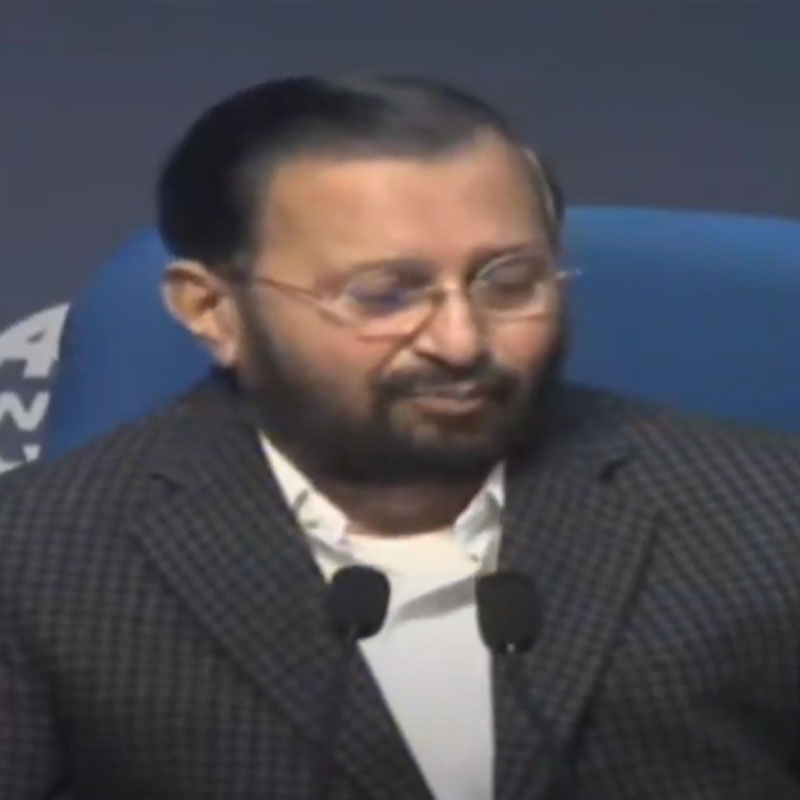
    I&B minister Prakash Javadekar stated in a briefing that 100 per cent foreign direct investment (FDI) will be allowed for the DTH sector. He also added that the decision was taken earlier by the ministry of commerce and industry but the sector could not avail the benefits due to existing MIB guidelines.

    Moreover, DTH licenses will be issued for 20 years and license fee will be collected quarterly. Further, the period of license may be renewed by 10 years at a time. The cabinet has also approved the sharing of infrastructure between DTH operators. Distributors of TV channels will be permitted to share the common hardware for their subscriber management system (SMS) and conditional access system (CAS) applications. Javadekar said that the decision has been taken to create a level playing field.

    The other salient features of the decision are:

    DTH operators shall be permitted to operate to a maximum of five per cent of their total channel carrying capacity as permitted platform channels. A one-time non-refundable registration fee of Rs 10,000 per platform service channel shall be charged from a DTH operator.

    The cap of 49 per cent FDl in the existing DTH guidelines will be aligned with the extant government (DPIIT's) policy on FDl as amended from time to time. The decision will come into effect as per revised DTH guidelines issued by the ministry of information and broadcasting.

    "The proposed reduction is intended to align the license fee regime applicable to telecom sector and will be prospectively applied. The difference may also enable DTH service providers to invest for more coverage leading to increased operations and higher growth and thereby enhanced and regular payment of license fee by them. Registration fee for platform services is likely to bring a revenue of approximately Rs 12 lakh. Sharing of infrastructure by the DTH operators may bring in more efficient use of scarce satellite resources and reduce the costs borne by the consumers. Adoption of the extant FDI policy will bring in more foreign investment into the country," the government said in a press statement. 

    The authority also added that the DTH sector is a highly employment intensive sector that operates pan-India. It directly employs DTH operators as well as those in the call centres, besides indirectly employing a sizeable number of installers at the grass-root level. The amended guidelines, with longer license period and clarity on renewals, relaxed FDI limits, etc will ensure a fair degree of stability and new investments in the DTH sector along with employment opportunities.

  • Media needs ‘auto-correction’, guidelines to restore order: Venkaiah Naidu

    Media needs ‘auto-correction’, guidelines to restore order: Venkaiah Naidu

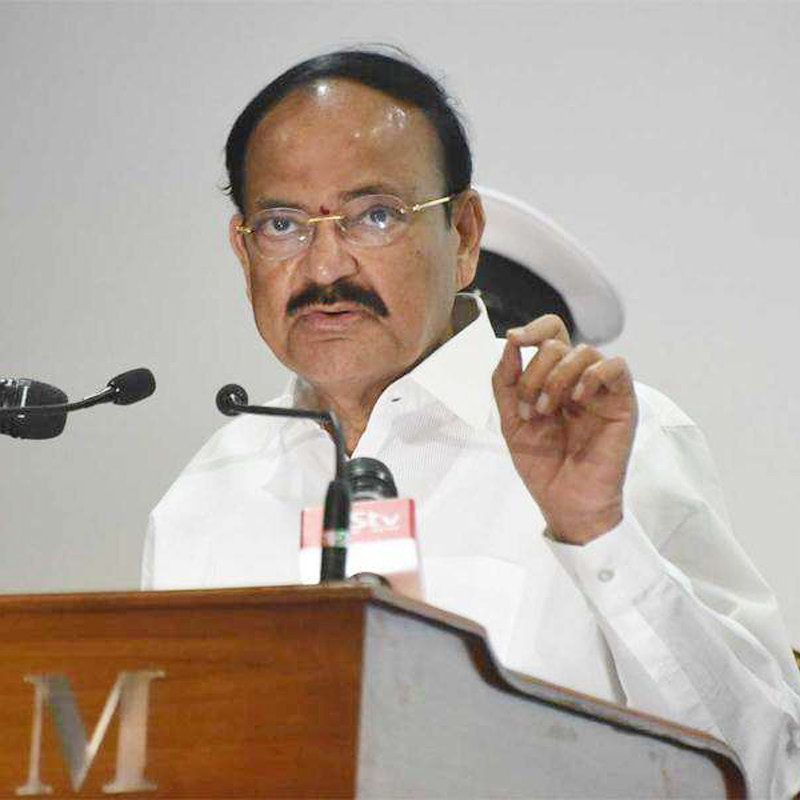
    NEW DELHI: Expressing concern over the future of journalism and the sanctity of news in the face of disruptive technological advances, vice president of India and Rajya Sabha chairman M Venkaiah Naidu urged all stakeholders to ensure credible journalism, since media is an effective tool of empowerment of people for informed public discourse.

    “While the democratisation and decentralisation that followed the rapid expansion of social media enabling freedom of expression are welcome, the world is witnessing the downside of it in the absence of self-regulation and protocols. In this era of saturated information and overabundance of news, the very news is getting devalued,” he pointed out. Naidu was speaking at the MV Kamat Memorial Endowment Lecture.  

    The vice president lamented the side effects of internet driven 'instant journalism' due to which the credibility of fact based journalism has taken a beating. He further noted that technology giants have emerged as algorithmic gatekeepers of information and the web has taken over as the main distributor of news. 

    In particular, he highlighted the financial implications for traditional media like the newspapers when their journalistic products are time and again leveraged by technology giants, who do not share the revenue back with them. 

    Some countries were taking measures to ensure revenue sharing by the social media behemoths like Google and Facebook to the print media. 

    "We also need to take a serious look at this problem and come out with effective guidelines and laws with a consensus to enable print media get their share from the huge revenues of the technology giants," Naidu emphasised. 

    Referring to the crisis situation being faced by the media and journalism for various reasons and uncertain future amidst disruptive changes, Naidu stressed that an ‘auto-correction’ is needed and in fact, inevitable for a better future. He suggested enabling guidelines and regulations for restoring order while maintaining he’s against any restrictive regulations.

    The media has always led the way in reporting and analysing the socio-political and economic transformation of the country. Naidu reminded mediapersons to be consistent in reporting such change instead of using different yardsticks for different periods. 

    He said, “I am not suggesting media to be like a chameleon. Media should use a standard set of reporting and analytical tools that capture the change without imposing respective positions. Media should not be seen by the public as discrediting the change that is happening since such a change is contrary to their long-held positions.” 

    Naidu further listed the concerns about media and journalism as issues relating to; freedom of press, censorship, flouting of norms of reporting, social responsibility of journalists, a decline in the values and ethics of journalism, yellow journalism, journalism of false crusades, reporting for profit, disinformation in the form of fake and paid news, disruptions caused by the internet and the future of media amidst these concerns and challenges.

    “Yellow journalism seeks to cloud the facts by resorting to eye-catching headlines and promotes distortion and misinformation. Journalism based on taking up false crusades as witnessed in the case of suicide of a film actor recently. Both are aimed at increasing readership and viewership and should be avoided,” he said.

    With the rapid rise and use of social media, wherein mobs can be gathered with a WhatsApp message and riots can be sparked off by a tweet, the former I&B minister stressed on the need to ensure sanity given the implications for social harmony, common good, peace, and national security. “Freedom of expression doesn’t mean unfettered outburst of anger and hate against each other that may lead to chaos,” Naidu remarked.

    He urged the media to be a part of the solution and not part of the problem since like every citizen, government and other stakeholders, media too, has a certain responsibility towards the nation.