Tag: media

  • Aiming to produce 50 % of content outside of traditional non-fiction space: Gaurav Gokhale

    Aiming to produce 50 % of content outside of traditional non-fiction space: Gaurav Gokhale

    An accomplished professional with an MBA from INSEAD (France/Singapore), and over a decade-long experience in the industry, Gaurav Gokhale has been at the forefront of handling the day-to-day operations for Endemol Shine India since October, 2018. The content production company has been credited with the success of several large format shows including Bigg Boss, Khatron Ke Khiladi, and MasterChef India in multiple languages. As the chief operating officer (COO), Gokhale is also responsible for the long-term strategy and P&L of the content production company.

    In his career spanning over 13 years, Gokhale has worked with several organisations including BCG India, where he helped organisations solve strategic issues and improve business performance. Later on, he went on to work with Nimbus Communications as head of strategy and business development. In his previous stint at Star India, he handled the strategic mandates across sports and distribution businesses. He also played a pivotal role in launching the Indian Super League and Hockey India League, and was instrumental in managing the business transition of Star Sports.

    As the OTT boom brings a content revolution in the media and entertainment industry, Indiantelevision.com got into a freewheeling conversation with Endemol Shine India, COO, Gaurav Gokhale to understand how the company is gearing up for this evolution. Gokhale also delved upon the challenges in meeting the burgeoning demand for content, growth opportunities in regional markets, and how the company is executing multiple scripted productions in parallel.

    Edited excerpts

    On the OTT boom and how it has changed the consumption patterns of viewers? Also elaborate on new opportunities that it offers in terms of content production.

    We’re seeing more of a big-bang moment in the OTT space rather than a boom. Digital content consumption is going through an exponential expansion phase. At one end, cheap data and entry-level smartphones have made streaming content easily accessible. Today, we have about 800 million smartphones in India priced from Rs 1,000 onwards. One hour of watching streamed content consumes about 500-700 MB of data and costs around Rs 7. Monthly, that’s around Rs.210, which is the average cable TV bill in the country. We can say that watching quality streaming content has now become truly democratised in India.

    Moreover, consumption of content on personal mobile devices offers better privacy and convenience over communal TV viewing. At the delivery end, streaming services and OTT platforms are bettering their streaming infrastructure and content supply to meet this burgeoning demand. A billion-dollar industry today, the OTT content ecosystem is estimated to grow 15X in the next nine years! These numbers are indicative and convey an upward move in demand and supply. As creators of content, we are happy to ride the wave and do what we do best – churn out quality content to satiate the rising consumption.

    On how media entertainment companies can meet this burgeoning demand for fresh, high-quality content, and the underlying challenges

    We need to re-invent ourselves constantly to feed this burgeoning demand and keep making investments into the sector. Media companies, producers and broadcasters need to re-think their existing models and come up with more efficient work-flows to accelerate content creation. Unlike a manufacturing process, AI and Robots cannot replace human creativity. One machine cannot substitute 10 writers and create 10X output. The only way to scale up production in a human-intensive industry such as ours, is to quickly build skills and efficiency and try and shorten the turnaround timelines.

    On the production setup, there are genuine supply-side constraints. There are a limited number of trained writers, technicians, artists and HODs who can work on OTT shows. It’s a problem the Indian IT industry faced 20 years back, and they solved it with concerted skilling initiatives across over two decades. By 2025, it is projected to become a $100 billion industry contributing in excess of five to seven per cent GDP. We need to push ourselves and aspire to reach there one day. This requires fresh thinking in the way we plan shows, the turnaround times for development, the post-production cycle and so on. These are real challenges today and over time, we need to find ways to optimise them.

    On Endemol Shine India’s plan for TV, OTT and cinema going forward

    As a production house, we produce quality content agnostic of form-factor and medium of consumption. Over the last decade, we have produced shows for TV – both fiction and non-fiction and in the last few years, we have ramped up our production for OTT platforms. We are also steadily building our films slate and have announced a few interesting collaborations in this space.

    On the balance between non-fiction factual, drama, dailies and cinema

    We have historically been known for our large format non-fiction shows such as Bigg Boss, MasterChef and Khatron ke Khiladi. These shows have given us the experience and expertise of delivering big productions in tight timelines and to a budget. Platforms prefer us for this proven track record, our audit transparency and clean operations — an emerging new factor for international platforms as they commission marquee scripted shows in India. That is a natural extension to our existing skill-sets.

    Over the last couple of years, we put in place a very efficient modular setup for executing multiple fiction productions in parallel. This year alone, we have more than 10 fiction shows on the floor. Over the next few years, our ambition is to produce 50 per cent of content outside of the traditional non-fiction space.

    On the growth opportunities in regional markets

    Regionalisation is critical for all content creators. OTT has made content language-agnostic and as we have seen from shows like Money Heist and Narcos. Good content finds its takers all around, irrespective of the language in which they are created. We must also remember that in India, nearly 40 per cent of TV viewership comes from regional markets. Over time, regional budgets have also gone up and today we have streaming services and OTT platforms dedicated to regional content. We are currently producing five versions of Bigg Boss for the regional markets (Tamil, Telugu, Marathi, Kannada, Malayalam), four regional versions of MasterChef and four regional daily fiction shows. We are producing both theatrical and finite fiction content in Tamil. There is a lot of talent and creativity in regional that is waiting to explode and the potential is huge.

    On whether co-production will become the new norm, and if yes, then the kind of financial structuring deals we might see coming in this area.

    If you look at the macro trends, we have a roughly Rs. 25,000 crore TV content industry growing at 10-12 per cent annually, and a nascent Rs. 2,000 crore OTT content industry growing at over 30-40 per cent annually. To fuel this kind of future growth in volumes of production, we need to create content hubs and content factories that can churn out shows on a large scale. This will require innovative ways of working and new kinds of investments and partnerships that bring together different individuals and entities with diverse and complementary skill-sets. In such a ‘co-production’, idea-generators join hands with execution experts like us to pitch and create multiple shows. The ‘creative producer’ then takes over development and the overall creative onus while the ‘line producer’ takes on execution onus and delivers the financial target. Such a partnership is based on implicit trust between the stakeholders but if done well, the synergies can yield hugely positive outcomes and most importantly, faster turn-arounds.

    Apart from the traditional commissioning model where platforms fund development and production and are deeply involved in creating a platform original, we are seeing a growing demand from platforms for ready-for-sale shows that help fill content gaps at relatively lower costs, especially given the longer turn-around of commissioned shows. A natural need-gap situation has emerged and offers a very interesting opportunity for an institutionalised fund play.

    Today, wealth managers and funds in India are sitting on undeployed capital and need a differentiator to sell to their HNI clients. Now, if done right, here is an opportunity to invest in a low-risk vehicle with fairly guaranteed returns and a fundamentally strong demand cycle and with an implicit X-factor. With the right production partner to bet on, I see a lot of organised financial investors wanting to participate in this asset class.

    On whether Endemol Shine India is looking at the studio model too, wherein it will work as an aggregator and distributor for smaller producers

    Strategically, our interest lies in producing shows we can actively shape. While tactical distribution opportunities may arise due to our strong relationships with platforms, our core business is to develop and produce shows that we strongly believe in, with talented writers and accomplished show-runners.

    On the company’s positioning in India

    Endemol Shine India is today an end-to-end content production powerhouse. We produce premium fiction and non-fiction shows; regional daily fiction shows and also factual content. We manage some of the largest shows produced in India and our USP is managing large productions within agreed timelines and budgets. We are well positioned to take advantage of the growing demand for more original fiction content from India. We are producing shows for all leading platforms – Netflix, Amazon, Disney+ Hotstar, Lionsgate, MX Player, Discovery Plus and AltBalaji.
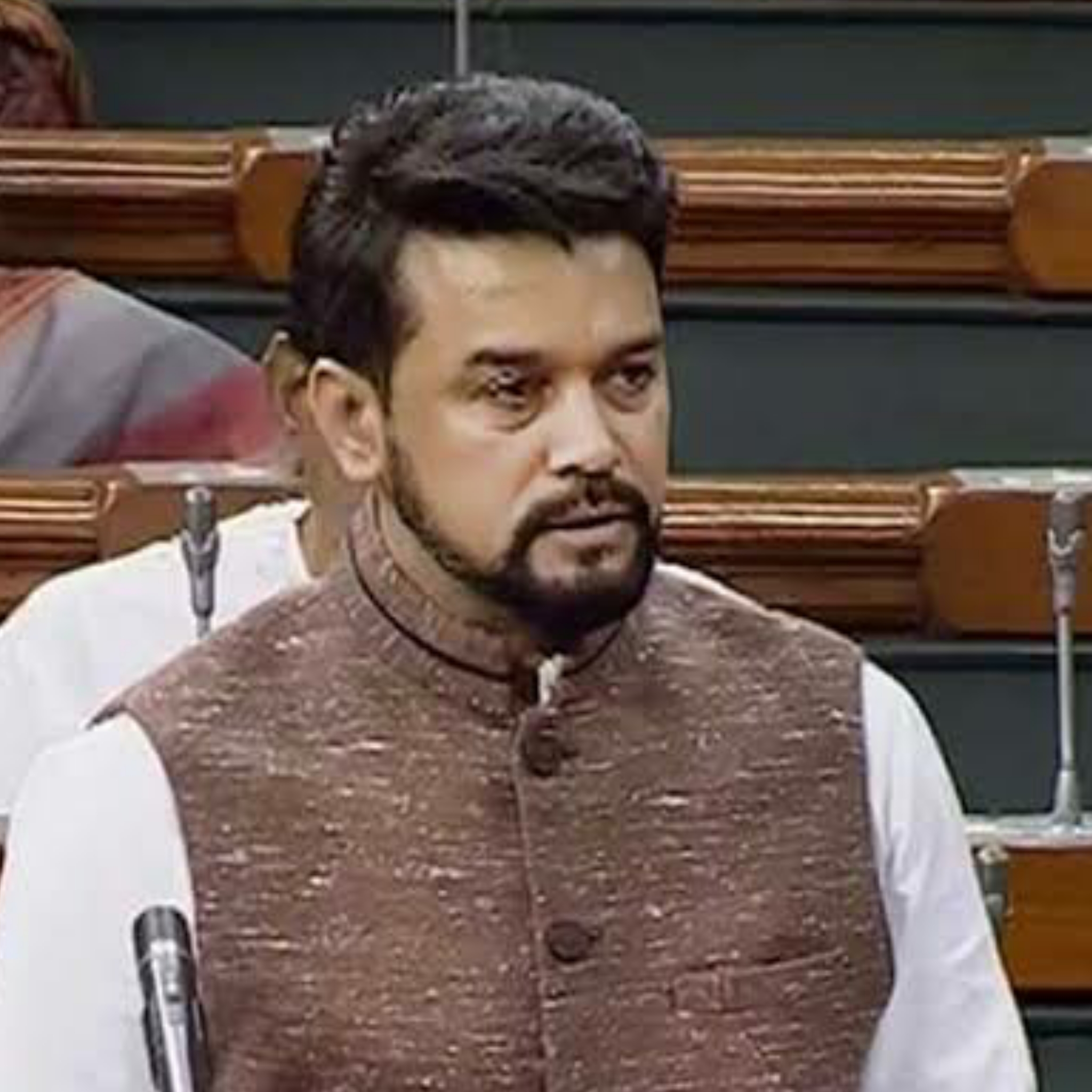
  • I&B Minister Anurag Thakur meets the NBA Board

    I&B Minister Anurag Thakur meets the NBA Board

    New Delhi : The newly appointed union minister for Information and Broadcasting  Anurag Thakur met the board members of the News Broadcasters Association (NBA) on Saturday to discuss various pertinent issues concerning news channels and the broadcast industry.

    Led by NBA president and chairman and editor-in-chief of India TV, Rajat Sharma, the delegation included ABP Network CEO  Avinash Pandey, Zee News, editor-in-chief and CEO, Sudhir Chaudhary, News24 chairperson and managing director Anuradha Prasad Shukla, India Today Group vice chairperson Kalli Purie, and NDTV editorial director Sonia Singh.

    The discussions delved into various issues including that of attaining a stable regulatory climate in the industry and other positive changes that can be introduced in the television ecosystem.

    Speaking about the meeting, spokesperson of NBA said, “Effective communication is extremely important for us to uplift the broadcast industry and implement positive changes. The discussion helped us provide direction to various issues within the industry. We are looking forward to working closely with the union minister of Information and Broadcasting Anurag Thakur to take the broadcast industry to greater heights.”

    Further, NBA members discussed the industry landscape in the post-COVID scenario and apprised the minister about their concerns. The meeting also threw light on creating a strong policy roadmap for growth in the post-Covid era for the broadcast industry. 

  • Zee Entertainment’s net profit rises 604% in June ’21 quarter

    Zee Entertainment’s net profit rises 604% in June ’21 quarter

    New Delhi: Zee Entertainment Enterprises’ consolidated net profit rose 604 per cent to Rs 213.8 crore in the quarter ended June 2021 as against Rs 30.37 crore during the previous quarter ended June 2020. The company announced its Q1 FY22 results on Friday.

    Sales rose 35.29 per cent to Rs 1774.98 crore in the quarter ended June 2021 as against Rs 1312.03 crore during the previous quarter ended June 2020. With lockdowns in most states, TV viewership again jumped during the quarter, though lower than Q1 of last year.

    Domestic ad revenues for both Q1FY22 and Q1FY21 were impacted by lockdowns. However, the impact this year was much lower, reflected in 127.9 per cent YoY growth. Compared to Q1FY20, domestic ad revenues were lower by 22.7 per cent.

    In terms of subscription revenue, the network said embargo on pricing change due to NTO 2.0 litigation continued to hurt domestic television pay revenue growth. The 2 per cent growth over Q1FY21 was driven primarily by digital business.

    The programming cost increased YoY as original content production largely continued across the states during the lockdown at alternate locations. Increase in marketing cost on a YoY basis was on account of the release of Radhe and continued investments in ZEE5. The marketing costs in Q1FY21 was lower on account of much lower original content production.

    Lower ad revenues on one hand and increase in costs due to lockdown Rs. 271mn on the other affected EBITDA for the quarter.

    Bengali, Telugu, Kannada and Hindi movies continued strong performance, however, Zee TV, Zee Marathi and Zee Tamil performance was soft during the quarter, indicating headroom for growth in key markets. The company also said it will revamp the programming line-up for Hindi, Marathi and Tamil programming in Q2.

    Streaming platform ZEE5 witnessed 80.2mn global monthly active users and 7.1mn global daily active users in Jun ’21. It recorded a total of 190 minutes’ average watch time per viewer per month in Q1. As many as 11 original movies and shows were released during the quarter.

  • Aaj Tak set to organise ‘Panchayat Aaj Tak’ in UP

    Aaj Tak set to organise ‘Panchayat Aaj Tak’ in UP

    New Delhi: Aaj Tak has announced the latest edition of its conclave – Panchayat Aaj Tak’  – scheduled to begin in Lucknow on Friday.

    The event starting at 10 AM will feature debates and discussions on various burning issues surrounding UP politics ahead of the state assembly elections due early next year.

    Several leaders from the ruling BJP government Iand from other parties like the Indian National Congress, Aam Aadmi Party, BSP, and the SP will be in attendance as speakers discussing the dynamics of civic development, electoral politics, religion, minority representation, and arts and culture in the state of Uttar Pradesh, the network said in a statement.

    The conclave will also see a host of sessions, starting with “Kaun Banega Mukhya Mantri? (Who Will Be the chief minister?)” led by the deputy chief minister of UP Keshav Prasad Maurya, moving to multi-party panel discussions like “Kaun Jaat Ho? (What’s Your Caste?)” with leaders from the BJP, Congress and the SP.

    Current cabinet minister, Satish Mahana will take a session on civic planning such as “Expressway ki Ganga”. Samajwadi Party chief Akhilesh Yadav will lead a session titled “UP Mein Khela Hoi”. Bhartiya Kisan Union spokesperson Rakesh Tikait,will be talking in the session named “Jaat Khadi Karega Khaat!”

    Bhim Army president Chandrashekhar Azad Ravan will be heading a session on Dalit vote blocs while AIMIM Chief Asaduddin Owaisi along with cabinet minister Sidharth Nath Singh will be talking in a session titled “Chunav Ka Dharam Kaanta”.

    The final session of the day will be a keynote speech from chief minister Yogi Adityanath on “Mission 300” and his vision for Uttar Pradesh.

    The event is part of Aaj Tak’s effort to bring nuanced debates to the Indian masses, in order for them to comprehend topical issues in an easy-to-access format. The event will be conducted with all Covid-appropriate protocols in place.

    The event will be broadcast live on the Aaj Tak channel and live streamed online starting 10 AM.

  • UP CM provides Rs 10 lakh aid to family of journalists who succumbed to Covid-19

    UP CM provides Rs 10 lakh aid to family of journalists who succumbed to Covid-19

    Mumbai: Uttar Pradesh chief minister Yogi Adityanath has announced financial aid to the families of journalists who lost their lives due to the coronavirus pandemic. The families of scribes were provided a cheque of Rs 10 lakh each.

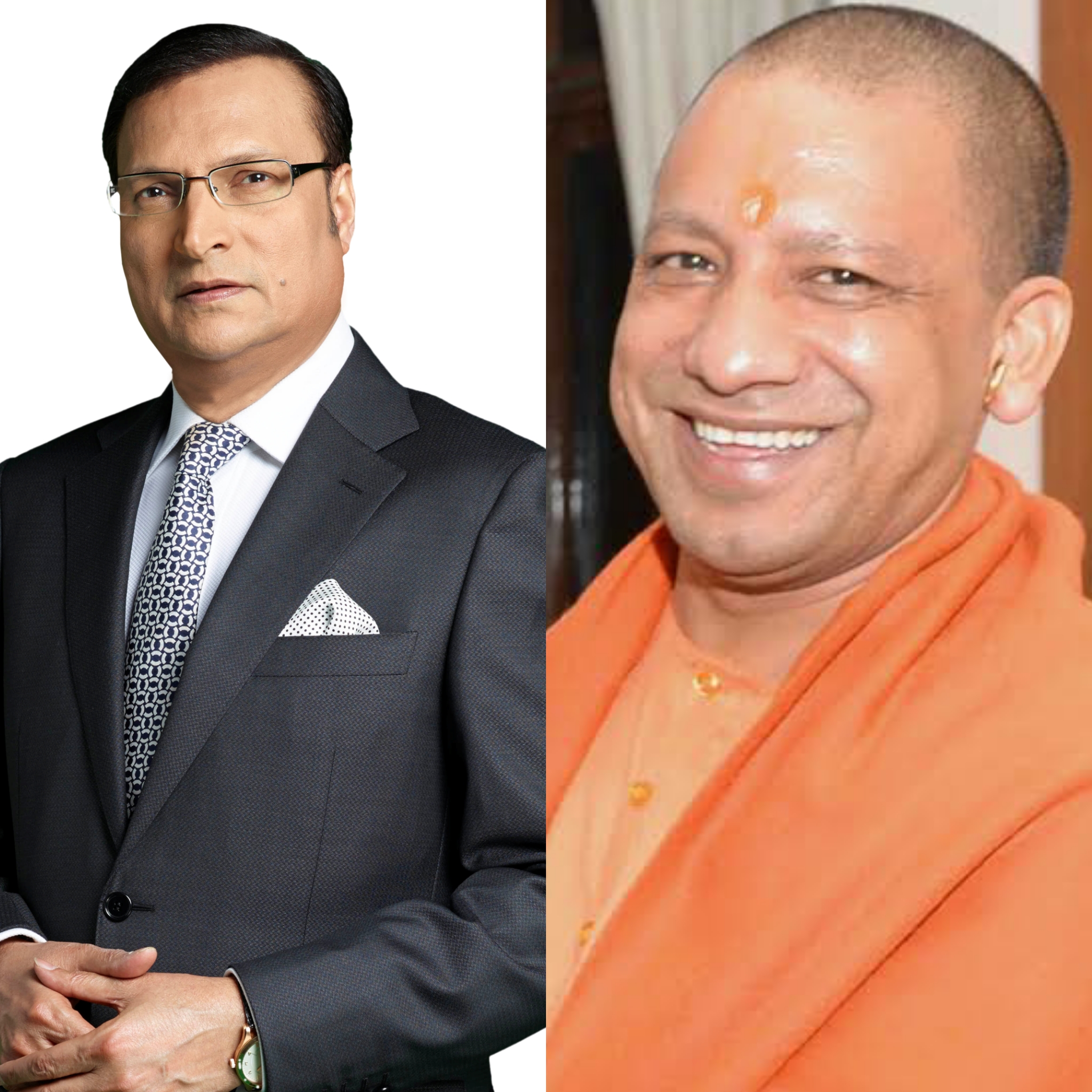
    Adityanath was accompanied by India TV editor-in-chief and chairman Rajat Sharma, who also paid tributes to the deceased journalists.

    “TV, print, digital journalists not only covered news during the lockdown, but they also worked as a bridge between the government and the common people. I am proud to say that people from the media fraternity faced the challenge bravely,” said Sharma, adding that there were also times when people stepped out of their homes but did not follow the COVID-19 protocols. “During such times too, our reporters and camera persons spoke to people and questioned them. Some even disrespected journalists upon questioning, however, they continued to do their job and even urged the people to wear masks and follow the coronavirus protocols.”

    Sharma said as the president of NBA, he had also urged the chief minister to provide vaccination for journalists. “The coronavirus pandemic is yet not over and those who have yet not received their vaccination jab should go for it at the earliest,” he added.

    “Over 25 thousand journalists were vaccinated during the drive,” said the chief minister Yogi Adityanath. During the second wave of the pandemic, many journalists across the country got infected on duty and lost their lives, leaving their families helpless, the UP government said.

  • Content Hub 2021: How OTTs met the burgeoning demand for content in 2020

    Content Hub 2021: How OTTs met the burgeoning demand for content in 2020

    Mumbai: Any talk of content in a post-pandemic world is incomplete without deliberating on the impact it has had on the OTT industry and vice versa.

    The fifth edition of the ‘Content Hub 2021 – TV, Film, Digital Video, and Beyond’ organised by Indiantelevision.com brought together the heads of three of the country’s leading OTT platforms – Viacom 18 Digital Ventures, COO – Gourav Rakshit, ZEE5 India, chief business officer – Manish Kalra, and SonyLIV, head of originals – Saugata Mukherjee – and renowned content producers – BBC Studios India’s general manager (production), Sameer Gogate and Juggernaut Productions’ COO (OTT), Samar Khan, to throw light on the evolving phenomenon. Kurate Digital Consulting, founding partner, Uday Sodhi moderated the discussion.

    The impact of the pandemic on the OTT industry is not lost on anyone. As the lockdown-induced demand for new content skyrocketed, people were motivated to sample OTT platforms. As a result, the evolution of consumers in terms of OTT adoption which would have otherwise taken at least a couple of years to happen, transpired within the course of a few months.

    The more noteworthy aspect of it, however, was that people were now willing to pay for content. According to industry experts, this marked a huge milestone as far as consumer behaviour is concerned, more so in the Indian market which was hitherto believed to be largely AVOD-driven for OTT players.

    Viacom’s Gourav Rakshit called it the second “tipping moment” for the industry, next only to cheap data. The development was extremely positive, but it came along with a big challenge of retaining consumers by providing them new, relevant and engaging content, which meant bringing quick and drastic changes in content strategies. The growth in consumer appetite for content was thus accompanied by a proportional rise in the risk-taking ability of OTT players.

    “If we didn’t genuinely think that everyone is just a mouse-click away from joining OTT, we would have never put a property like Bigg Boss on digital alone,” asserted Rakshit.

    “Despite the production troubles and scarcity of right content, the demand gave us the confidence to take big bets. For the first time we decided to bring a blockbuster like Radhe on TVOD. Although we were quite sceptical of TVOD as a model and about Indians paying for a one-time rental, the results were pleasantly surprising. 30 per cent of our Radhe consumption happened on TVOD. In the process, we kind of ‘forcefully’ moved our content strategy to movies and regional,” added Kalra.

    SonyLIV’s Saugata Mukherjee agreed that the pandemic was a huge learning curve for the industry, and the changes (VOD consumption, consumer willingness to pay, OTT movies, and long-format shows) affected by it are here to stay. “Starting out with half-a-million subscribers on 18 June, today we have crossed six million. The pandemic has really expedited OTT adoption, and we have managed to keep pace with it by dropping new shows every month despite the difficult production scenario. There have been a few good shows like ‘Maharani’ and we also had ‘Scam’ walking away with all the glory. Both were well received across segments, signifying that the right kind of story will have takers everywhere.”

    With the requirement of content growing every day, content producers found themselves in a tough position having to deal with the challenge of coming up with fresh story ideas at a mind boggling rate. “So many stories were being told that it became quite challenging for us to find the next big idea. Moreover, with every success the bar kept getting higher,” stated Juggernaut Productions’ Samar Khan.

    Gogate of BBC Studios shared a slightly different perspective. “While I don’t think there is scarcity of ideas and talent, the way we tell stories needs constant reinventing. This effectively means that the ‘premiumness’ of content in terms of writing and making, not the cost, has to get better. The second big challenge is to keep resetting the mix in accordance with the predicted demand scenario for at least six months hence. The game has become far more dynamic than what it used to be,” added Gogate.

    Talking about how the content mix on their respective platforms is changing, Kalra’s shares an interesting finding from ZEE5’s research which reveals that viewers look at OTT as a ‘buffet’. “What people watch at any given point of time is a function of their mood, and hence it is important for us to cater to all taste clusters,” he said.

    As regards the ‘buffet menu’, the panelists agreed that there is currently an overdose of ‘high-concept’ and crime shows on OTT platforms making them slightly metro and male-skewed. There’s not enough content to service the staggering demand for tentpole premium dramas suited for family viewing. Both Gogate and Khan shared the opinion that comedy, being a difficult genre, is most underserviced at present.

    Crystal gazing at the next 18 months, Kalra remarked that, “already 65 per cent of our consumption is happening on connected TV, so most of the demand is going to come from the family-viewing space. Big-screen viewing, tier two and three audiences, and regional content will be on the rise.” As believers in the potential of regional content, Rakshit and Mukherjee also agreed that the authentic and relevant stories and characters that they are looking for will come from the tier two and three, regional markets.

    “Regional scripted as a genre hasn’t taken off yet, but there is a lot of work happening on it. It could well be the next frontier in the coming six to eight months. Regional markets have a lot of talent and stories, but they are essentially individual-driven. If we can get the discipline of the big companies to percolate into these markets through collaborations, things will change overnight,” said Gogate. 

    Coming to the big question around the comparative demand for series and films and whether OTT theatricals can become a phenomenon, trends so far have shown that the demand for series is far higher. However, with an exception of Samar Khan who believes that the direct-to-digital release wave was a function of theatres remaining closed and a significant chunk of the audience will go back to them when the situation normalises, others on the panel were more hopeful about it.

    Contending that “movie-making and film distribution will not be the same again”, SonyLIV’s Mukherjee noted, “While theatres will always be around, there’s going to be some demarcation as far as the medium is concerned. A lot of scripts which didn’t find a theatre or platform to showcase will possibly come to OTT. This, in itself, is a big market opening up. Theatrical experience will become somewhat limited to the slightly bigger spectacle movies, with the more midlist category films looking for a direct-to-digital release.”

    Mukherjee and Gogate also held that being quite a young industry, the ‘OTT movie making’ grammar is still evolving, as is the grammar around making eight-hour long form series. The answers to these questions will emerge as and when more and more content starts getting made specifically and exclusively for the OTT platforms. 

    Adding to the conversation, Kalra shared that Zee5 witnessed considerable demand for regional theatricals coming from the tier two and three markets. “Although theatres shutting down had the greatest impact, producers have surely developed an appetite for risk-taking. What remains to be seen is whether the phenomenon will continue as ‘direct-to-digital’ or ‘delayed-from-theatrical’. That is something we will learn in the process.”

    Last but not the least, talking of government regulation the panelists maintained that it hasn’t disrupted life and work for them in any significant manner yet. The impact will become clear only when the first 10-15 cases arise. That being said, Rakshit opined that “one of the positive rub-offs of it is that dissent gets centralised and doesn’t run into unnecessary PILs and courts all over the country which is just negative for the industry. On that note, it’s actually quite welcome.”

    The fifth edition of Content Hub 2021- ‘TV, Film, Digital Video, and Beyond’ was co-presented by IN10 Media Network and ZEE5, and co-powered by Applause Entertainment and Tipping Point, the digital content unit of Viacom18 Studios. PTC Network is the supporting partner. 

  • Why we need good news today!

    Why we need good news today!

    MUMBAI: The commonly-held belief is that if you turn on any news channel, you will be rattled by the high-decibel cacophony that has become common as garden amongst the invited on-air guests and anchors during prime time. Every guest tries to outshout the other and the anchor, even as the latter raises his or her voice to be heard and play master conductor of the croaking symphony of voices.

    That’s on the so-called debate shows, on which supposedly suave and erudite journalists behave worse than the colourful loudmouthed politicians whenever they meet in the house for a parliamentary session.

    The so-called national conscience keepers have for some time now become the providers of everything but the truth about what’s going in the world around us, and in faraway distant lands. Political agendas, half-truths, opinions, poorly-researched reports, propaganda are spewed out daily during news bulletins on certain news channels. The intent: keep viewers and lay citizens guessing about the rightness of any action and development – thus confused – and envelop them in a shroud of fear by highlighting the impending danger.

    Can we blame the news providers totally?

    Not all of them have taken the same tack, but the entire news genre has got tarred and feathered with the same brush. But those who do, say it’s the masses of viewers who have forced them to take this path.

    Ordinary plain vanilla news and events do not really interest the common man is what they quip. But plant some controversy behind any news item and lo and behold the junta in hordes switch to news from the drama shows that they love to watch on general entertainment channels. Not just that: they stay glued to the news on telly as if their very lives depended on it.  And the ratings hit the moon!

    For the advertising dependent broadcasters this means heavy showers of moolah from advertisers who are looking to reach millions of viewers with their brand and product communications in the shape of TV commercials.

    Can this vicious perception about Indian news be broken? A laudable effort is being made by the TV Today group with the announcement of Good News Today (GNT). Not much is known about what its content will be. But its base line is that it will stay away from the negative tonality that has stained the Indian news television sector.

    The country and its 1.3 billion citizens do need many good doses of good news. The past 18 months have seen the world go through the agony of the rampage of the murderous novel coronavirus, not knowing who it will infect and kill or at least lay to waste. Millions have died, even more have been infected and many in multiples of that have had their economic stability totally upended, leading to trauma not experienced by any generation before. Depression is commonplace, sibling clashes have risen, the divorce rate is going up as the family fabric is stretched and strained under the pressure of being locked up in closed spaces without much social contact apart from our near and dear ones.

    Yes, the world is in trouble, economies are in shambles. Yes, all is not right with our finances. Yes, the way the virus and the world is being managed could be better. But do we need to be reminded about what is wrong daily? Is there nothing that’s right with our lives? Are there no good tidings for us? Has humanity lost its humaneness totally? Is there no goodness left in those that govern us?

    We all know the answer to this. Over the various millennia, it is always the good that has prevailed.  Usually, it appears as if the bad is getting the upper hand. But then from nowhere comes a savior, who gives hope to the suffering millions and even billions. And good triumphs.

    All of us remember Reader’s Digest. It was a compendium of articles and stories about how individuals overcame adversity; of heroes. It was a publication which I would rush to read, because it gave me hope as a youngster and in the early stage of my professional career. Even today it inspires me when I flip through its pages.

    Do I want to hear more and more rounds of Modi-bashing from rival parties who want to show his government and the efforts it is taking to build a new Bharat or India in bad light? Do I want to hear more about Modi and his team defending their actions or going on the offensive against the opposition? Do I want to hear that the world we are living in is totally corrupt? And that we have no hope?

    Yes, I would like to be informed about developments and announcements that impact our lives. But without it being distorted by prejudices and vested interests.  I would also like to hear about the good that is being done. I would like to hear about progress, about the improvements in our lives. About those who are sincerely working to better the lives of the common Indian. Whether it is a local councilor or a district collector or a state legislative member or a national parliamentarian or even a worker or a policeman.

    The English thinker and author James Allen once said: “You are what you think.”

    The Buddha said: “You are what you have been; and you shall be what you do now.”

    Hopefully, a news channel focusing on the good all around us and the attempts to build a better tomorrow will help in our shift towards a REAL better tomorrow.

  • Times Network forays into Hindi news with a bid to create ‘New India’

    Times Network forays into Hindi news with a bid to create ‘New India’

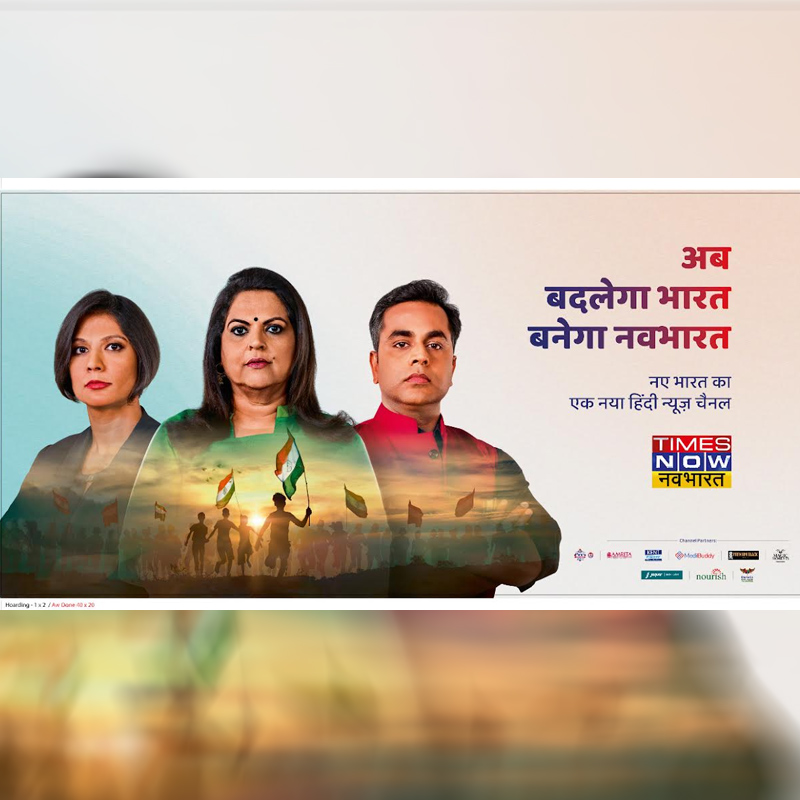
    New Delhi: Making its foray into Hindi news, Times Network on Sunday launched its new channel, Times Now Navbharat HD. The new entrant is being spearheaded by Times Now’s group editor Navika Kumar who will lead the editorial mandate and handle the overall management of the channel.

    The channel will be available across all the leading cable operators, MSOs and DTH platforms including Tata Sky, Airtel DTH, Hathway Digital, and DEN Digital, said the network. It has also launched an extensive outdoor campaign for promoting the new brand with a positioning- ‘Ab Badlega Bharat, Banega Navbharat’.

    “We are not in the race for TRP,” said Times Network MD and CEO MK Anand at the channel launch, adding that ‘Times Now Navbharat’ is part of the network’s effort to convey people’s correct and accurate message to the government and vice versa.”

    “In the world of English news channels, we have been running Times Now with the same resolution for the past 16 years. Issues which we raise at Times Now, they become a topic of discussion among people the next day and reason for a change in the society and political circles. We work tirelessly on such issues and news which are in public interest and also contribute to the welfare of the country and the society. This helps us get TRP organically,” said Anand. “We believe that news has the power to make an impact on our society and also help make it a better place to live in.”

    According to Anand a “new India” will emerge only when key and important issues are raised in a right manner, and also when there is a proper communication between people of the country and the government.

    The channel was launched with seven prime-time shows hosted by Sushant Sinha, Padmaja Joshi, Ankit Tyagi, and Meenakshi Kandwal. The primetime shows include Rashtravad at 5 pm, Log Tantra at 6 pm, Dhakad Exclusive at 7 pm, Sawal Public Ka at 8 pm, News Ki PaathShala at 9 pm, and Opinion India at 10 pm.

    The mega marketing campaign launched across Hindi-speaking markets was conceptualised by McCann Worldgroup India. The network has also unveiled a brand film highlighting the channel’s genesis and brand manifesto written by noted lyricist Prasoon Joshi.

    Apart from print ads in leading English and Hindi dailies, the network has launched an extensive outdoor promotion spanning across 400 sites across 19 cities including Mumbai, Delhi, Lucknow, Patna, Jaipur, Dehradun, Indore, Punjab, Raipur and Varanasi. Kent RO System, Century Ply, Radico Khaitan, Vedanta, Medibuddy, Amrita Vishwa Vidyapeetham, Darwin Platform Group of Companies, Mylab Discovery Solutions, Meghdoot Herbal, Kirloskar Brothers are some of the advertisers currently onboard.

  • Govt ad spend on print falls by 54 % in last 3 years

    Govt ad spend on print falls by 54 % in last 3 years

    New Delhi: The government’s expenditure on print advertisements has dropped by almost 54 per cent in the last three years.

    According to the latest data presented in the Parliament, the government had spent Rs 429.55 cr in print advertisements in 2018-19, which decreased to Rs 295.05 cr in 2019-20, and further plummeted down to Rs 197.49 cr during the pandemic in 2020-21. The data was shared by the union minister for information and broadcasting Anurag Thakur during the ongoing monsoon session of the Parliament.

    The ad-expenditure on electronic and digital media has also also recorded a significant drop over the last three years, said Thakur in a written response to a question raised by BJD MP Sasmit Patra. According to Thakur, the Centre spent Rs 514.29 crore on TV ads in 2018-19. In 2019-20, the allocation for ad expenditure on electronic media platforms was slashed to Rs 316.99 crore, which further came down to Rs 167.98 crore in 2020-21.

    All these expenditures refer to expenses incurred by the Bureau of Outreach and Communications (BOC), which acts as an advisory body to the government on its media strategy, and undertakes information, education, and communication (IEC) campaigns of the government through its empanelled media platforms as per the policy guidelines.

    The plummeting ad spends by the government come at a time when the print industry is struggling to survive the pandemic’s severe blow. The print media thrives on advertisement expenditure of industries including e-commerce, automobiles, and finance, which were also impacted by the lockdown. Many businesses ended up pulling out advertisements, as part of budget cuts and also due to a drastic fall in the circulation of newspapers and magazines. The prolonged lockdown restrictions forced several publications to limit the number of pages, shut their editions and resort to layoffs.

    Last year, the Indian Newspaper Society (INS) had also raised concerns over the rising newsprint and logistics costs and increasing preference for online content. It had also demanded a 50 per cent increase in government advertisement rates and a 200 per cent increase in the Centre’s spend on print media advertising and an immediate settlement of advertisement bills outstanding to both central and state governments.

  • Rediffusion appoints Suraj Nagappa as digital lead for south

    Rediffusion appoints Suraj Nagappa as digital lead for south

    New Delhi: Rediffusion SmartMedia has appointed Suraj Nagappa as the senior vice president. He will now take over as the agency’s digital lead in the south. Nagappa will be based out of Bangalore, and will also oversee the Chennai market, the agency said on Monday.

    With over two decades of experience in digital media strategy and planning, Nagappa has previously worked with Dentsu International, Dentsu Media, Ogilvy India, Omnicom Group, IPG Media Brands and Mediaturf Worldwide. He was last working with Isobar, a Dentsu agency which he joined in October, 2017. As head of South, he was responsible for generating insights as well as recommendations for different channels (display, SEM, email campaigns) based on data extracted from Google Analytics.

    On his new role, Nagappa said, “Rediffusion is readying a completely new team of domain experts in this space and together we hope to move the needle substantially for brands. There are so many opportunities today to more cost-effectively and cost-efficiently target consumers, which can benefit brands through the right use of tools and digital techniques.”

    Rediffusion joint president, Navonil Chatterjee said, “Suraj has many years of good digital experience. Being based in the hub of India’s Silicon Valley – Bangalore – he is ideally located to access and service all the new age brands coming out from Bangalore.”