Tag: Media Pro

  • Amit Sobti takes charge as president of Humans of Bombay

    Amit Sobti takes charge as president of Humans of Bombay

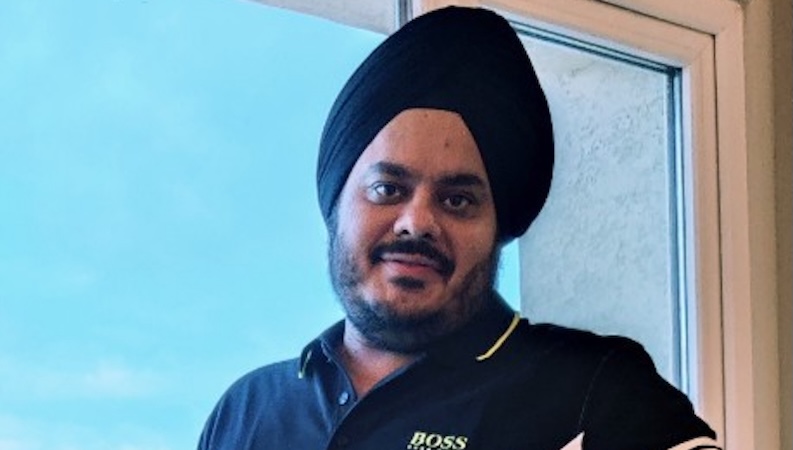
    MUMBAI: Amit Sobti has been appointed president at Humans of Bombay, the storytelling platform that has built a loyal following with its human interest narratives. In his new role, Sobti will oversee company operations and strategy, with a mandate to drive profitability, expand partnerships and monetise original IPs.

    Sobti, a revenue architect with two decades across digital media and corporate strategy, most recently served as chief revenue officer at Fork Media group, where he spent over 11 years scaling businesses, creating branded content ecosystems and building new revenue streams.

    Earlier, he held senior roles at Media Pro, JSW Ispat Steel and Reliance Broadcast, contributing to high stakes strategy, marketing innovations and large scale partnerships. Known for designing playbooks that blend innovation with legacy, Sobti says his focus now lies in building consumer first growth models.

    At Humans of Bombay, industry watchers expect Sobti to marry commercial acumen with the platform’s storytelling ethos, as it looks to expand both reach and revenues.

  • TDSAT accepts plea by MediaPro for attachment of bank accounts of Digicable, operative from next month

    TDSAT accepts plea by MediaPro for attachment of bank accounts of Digicable, operative from next month

    New Delhi, 25 March: The Telecom Disputes Settlement and Appellate has directed attachment of the bank accounts of Digicable Network (India) Ltd, accepting the plea in this regard by Media Pro Enterprise (I) Pvt. Ltd in the prayer clause in the execution application.

    However, the Tribunal said the order of attachment will become operative from 1 April, subject to the condition that Digicable Network “shall not make any withdrawal from the account, save and except for payment of salary to its staff”.

    Chairman Aftab Alam and members Kuldip Singh and B B Srivastava said a copy of the order should be sent to the concerned banks without delay.

    At the outset, the Tribunal noted that the execution proceedings are at a stage where the only course left is to make a direction for attachment of the bank accounts, head-ends and other properties of Digicable Networks. 

    However, the Tribunal said that “we wish to give one more opportunity to the respondent to try to resolve the matter amicably” before making such a direction.  

    The matter has been listed for 6 April when the CEO of Digicable should remain personally present before the Tribunal to make proposal, if any, for settlement with the respondent, the Tribunal said.


  • TDSAT accepts plea by MediaPro for attachment of bank accounts of Digicable, operative from next month

    TDSAT accepts plea by MediaPro for attachment of bank accounts of Digicable, operative from next month

    New Delhi, 25 March: The Telecom Disputes Settlement and Appellate has directed attachment of the bank accounts of Digicable Network (India) Ltd, accepting the plea in this regard by Media Pro Enterprise (I) Pvt. Ltd in the prayer clause in the execution application.

    However, the Tribunal said the order of attachment will become operative from 1 April, subject to the condition that Digicable Network “shall not make any withdrawal from the account, save and except for payment of salary to its staff”.

    Chairman Aftab Alam and members Kuldip Singh and B B Srivastava said a copy of the order should be sent to the concerned banks without delay.

    At the outset, the Tribunal noted that the execution proceedings are at a stage where the only course left is to make a direction for attachment of the bank accounts, head-ends and other properties of Digicable Networks. 

    However, the Tribunal said that “we wish to give one more opportunity to the respondent to try to resolve the matter amicably” before making such a direction.  

    The matter has been listed for 6 April when the CEO of Digicable should remain personally present before the Tribunal to make proposal, if any, for settlement with the respondent, the Tribunal said.


  • TDSAT declines to implead Star & Zee in Indusind dispute with Media Pro

    TDSAT declines to implead Star & Zee in Indusind dispute with Media Pro

    NEW DELHI: The Telecom Disputes Settlement and Appellate Tribunal (TDSAT) has rejected a petition by IndusInd Media & Communications Ltd seeking to implead Star India and Zee on the ground that petition for the dues against Media Pro relate to a time when it was the distributor and content aggregator of these two broadcasters.

    However, Media Pro gave an undertaking that in case the petition succeeds, it would discharge its lawful dues in terms of the decree.

    The miscellaneous application was filed for impleadment of Star and Zee on the ground that it related to a time when it was the distributor and content aggregator of Star and Zee but had ceased to be so with effect from 1 April, 2014 and hence the two broadcasters should also be brought on record as respondents.

    The Tribunal noted, “Needless to that that the undertaking is subject to the respondent’s right to seek its relief against the Tribunal’s judgment, in case it goes against it.”

  • TDSAT declines to implead Star & Zee in Indusind dispute with Media Pro

    TDSAT declines to implead Star & Zee in Indusind dispute with Media Pro

    NEW DELHI: The Telecom Disputes Settlement and Appellate Tribunal (TDSAT) has rejected a petition by IndusInd Media & Communications Ltd seeking to implead Star India and Zee on the ground that petition for the dues against Media Pro relate to a time when it was the distributor and content aggregator of these two broadcasters.

    However, Media Pro gave an undertaking that in case the petition succeeds, it would discharge its lawful dues in terms of the decree.

    The miscellaneous application was filed for impleadment of Star and Zee on the ground that it related to a time when it was the distributor and content aggregator of Star and Zee but had ceased to be so with effect from 1 April, 2014 and hence the two broadcasters should also be brought on record as respondents.

    The Tribunal noted, “Needless to that that the undertaking is subject to the respondent’s right to seek its relief against the Tribunal’s judgment, in case it goes against it.”

  • TDSAT directs 3 LCOs to clear Media Pro’s dues

    TDSAT directs 3 LCOs to clear Media Pro’s dues

    NEW DELHI: Media Pro Enterprise India Pvt. Ltd., Mumbai has secured orders from the Telecom Disputes Settlement and Appellate Tribunal (TDSAT) for recovering payments from three different cable operators namely Madhumati Cable Network, Shiv Cable Network, and Mauli Cable Network of Maharashtra.


    In separate judgments, TDSAT chairman Justice Aftab Alam and member Kuldip Singh directed Media Pro to file a computation of accounts up to 31 March, 2013 within two weeks in the cases of Madhumati Cable Network and Shiv Cable Network for a decree to be dawn up accordingly. The decretal amount will also carry interest at 10 per cent per annum from the date of filing of the petition till the actual payment.


    In the case of Mauli Cable Network, the petition was allowed to the extent of the claims of Rs 10,94,481.16. The amount will also carry interest at 10 per cent from the date of filing of the petition till the date of actual payment. The office is directed to make a decree accordingly.


     The petition against Madhumati is for recovery of the sum of Rs 8,03,125 along with interest at 18 per cent per annum from the petitioner as dues of subscription fee. Media Pro had executed an interconnect agreement with Madhumati on 20 June, 2012 for supply of its signals to the respondent for retransmission from 1 April, 2012 till 31 March, 2013. In terms of the agreement, the LCO was required to pay Rs 99,000.66 to Media Pro as the monthly subscription fee.


    Media Pro alleged that the LCO defaulted in payments and as a result the dues of subscription fee accumulated to Rs 8,03,125. The LCO did not appear despite service of notice.


    In the case against Shiv Cable Network, Media Pro claimed for recovery of the sum of Rs 6,28,658 along with interest at 18 per cent per annum as dues of subscription fee. According to Media Pro, the LCO executed an interconnect agreement with it on 1 January, 2012 for supply of its signals for retransmission. The agreement commenced from the date of execution and came to end on 31 March, 2013. In terms of the agreement, the respondent was required to pay Rs 99,778.31 to Media Pro as the monthly subscription fee.


    The Tribunal, which also examined witnesses in the latter cases, said there is no reason not to accept the claim of Media Pro for the term of the agreements.


    The claim of Media Pro, however, extended to 18 October, 2013 as it is claimed that it continued to supply signals to the LCOs till that date. But the Tribunal rejected this claim in the absence of any renewal agreement.


    Both Madhumati and Shiv Cable did not appear despite service of notice and hence, the petition proceeded ex parte.


    While allowing the claims of Mauli Cable Network on the basis of the Interconnect agreement, TDSAT rejected the claims made by Media Pro in respect of Zee Turner, which the Tribunal said “appears to be on a different footing. The petition filed on behalf of Media Pro is very sketchy and in so far as the alleged dues of Zee Turner are concerned.” The Zee Turner claim is for Rs 7,71,802.04 on the basis of an undisclosed agreement between the LCO and Zee Turner.


    No agreement between Zee Turner and the LCO (or for that matter for supply of signals of Zee Turner prior to 1 December, 2011), which alone can form the basis for the claim for the arrears has been produced before the Tribunal. Five invoices are produced of which the first one is dated 15 December, 2011, that is, shortly after the execution of the agreement on 8 December, 2011. It shows the payment due date as 22 December, 2011 and shows previous period outstanding as nil. Though, apart from the statement of account of Media Pro, a statement of account of Zee Turner has been filed along with the petition, it is of no help in the absence of any agreement between Zee Turner and the respondent. Moreover, the witness examined in the case identified and proved only the Media Pro statement of account and not the Zee Turner statement of account.

  • TDSAT dismisses Media Pro’s 14 petitions seeking payments from cable ops

    TDSAT dismisses Media Pro’s 14 petitions seeking payments from cable ops

    NEW DELHI: The Telecom Disputes Settlement and Appellate Tribunal (TDSAT) has dismissed 14 petitions by Media Pro Enterprise India, Mumbai against cable operators as “there is no material on record even to show what were the dues, if any, of the respondents on the date their respective agreements came to end.”


    TDSAT chairman Justice Aftab Alam and member Kuldeep Singh said in fact that three cases by the petitioner were plainly barred by limitation. 


    The judgment said, “We are satisfied that in none of the cases in the batch, the claim of the petitioner is fit to be allowed. All the petitions are accordingly dismissed with costs at Rs 5,000 per petition payable to the TDSAT Employees’ Welfare Society. A receipt showing payment of the cost should be filed in the Registry within a month from the date of the judgment.”


    The three petitions barred by limitation (time-barred) were against S.M. Advertising, Maharashtra; Nileshwar Cable TV Network, Kerala; and Tara Cable Network, Maharashtra.


    The other local cable operators (LCOs) against whom the petitions had been filed included five from Gujarat – Narmada Cable Service, Five Star Network, Star Marketing, Anjali Cable Network, and Jai Santoshi Maa; two from Maharashtra – Bhusawal Network and H.R. Entertainment; Rathore Network, Rajasthan; Apna In Cable Broad Band Services, Andhra Prdesh; Nandgaon Cable Network, Chhattisgarh; and Haridwar Cable Network, Uttarakhand. 


    Media Pro used to be the agent and intermediary of several broadcasters, including Zee Turner Ltd and StarDEN Media Services on the basis of agreements executed with the broadcasters. According to the averment made in the petition, it started its operations as their agent in July 2011. Before that the channels of the aforesaid two broadcasters were given to the distributors on the basis of agreements executed by the broadcasters themselves. 


    The 14 petitions are for recovery of different sums of money as dues of monthly subscription fees. According to the petitioner, the 14 LCOs were receiving the signals from Zee and Star DEN on the basis of agreements executed with them on different dates, on payment of different sums of money as subscription fees in terms of their respective agreements. It is further the case of the petitioner that on the basis of agreements executed with the broadcasters, it took over the control and distribution of their channels and was also authorised by its principals to collect their outstanding dues from all the distributors, including the present LCOs.


    According to Media Pro, after assuming the role of agent and intermediary, it raised invoices against the LCOs for payment of monthly subscription fees as also the past dues of the principal broadcasters. The LCOs, however, failed to make payments against the invoices and as a result dues accumulated, leading to the petitions. Media Pro has claimed the amounts due along with interest at 18 per cent from the date the amount became due till the date of the filing of the petition. 


    The Tribunal noted that in all cases, the subscription agreement had come to end before Media Pro stepped into the shoes of the agent and the intermediary of the broadcasters. Furthermore, the supply of signals to the LCOs continued for many months even after the agreements had come to end – a fact admitted in the petitions and by witnesses examined.


    None of the 14 cable operators appeared despite service of notice. Hence, all the petitions in the batch were proceeded with ex parte. As all are based on similar facts with the exception of the amounts of money claimed and the date of disconnection of signals, all were heard together. 


    The witnesses said Media Pro requested the LCOs to renew the expired agreements but the latter delayed this on one pretext or other and invoices were raised. The TV channel signals accordingly continued to be retransmitted by LCOs to their subscribers until May 2012. 


    The said retransmission by the respondent to its subscribers has been duly verified and corroborated by the petitioner through ground verification conducted from time to time and as recent as on April – May 2012.  


    However, the Tribunal noted, “the averment of Media Pro is thus directly in teeth of the clear directive of the Regulations.” 


    The Tribunal said clause 4A of the Telecommunication (Broadcasting and Cable Services) Interconnect Regulations 2004 with effect from 17 March, 2009 is clear that the Interconnection Agreements have to be in writing. It further says no broadcaster of pay channels or distributor of TV channels, such as multi system operator or headend in the sky operator shall make available signals of TV channels to any distributor of TV channels without entering into a written interconnection agreement.

  • HITS to be treated at par with pan-India MSOs; TDSAT advises TRAI to frame consolidated Broadcasting Code

    HITS to be treated at par with pan-India MSOs; TDSAT advises TRAI to frame consolidated Broadcasting Code

    NEW DELHI: In a judgment expected to have far reaching consequences on the Indian broadcasting industry, the Telecom Disputes Settlement and Appellate Tribunal (TDSAT) today said that headend-in-the-sky (HITS) players should be treated on the same level as pan-India multi-system operators (MSOs) for commercial purposes.
     

    In a judgment on a petition filed by the Noida Software Technology Park Ltd (NSTPL) against Media Pro and others, the Tribunal said its judgment would come into effect from 31 March, 2016 by which time the relevant reference interconnect offers will be revised wherever necessary.

    The Tribunal said, “It is difficult to see a HITS operator as different from a pan-India MSO and in our considered view a HITS operator, in regard to the commercial terms for an interconnect arrangement has to be taken at par with a pan-India MSO and must, therefore, receive the same treatment.”

    Expectedly, the judgment will also help Hinduja Group’s HITS platform NXT Digital, which entered into the fray earlier this year.

    TDSAT chairman Justice Aftab Alam and members Kuldip Singh and B B Srivastava said both Star and Taj, as well as the other broadcasters who have joined the proceedings as intervenors are directed to issue fresh RIOs in compliance with the Interconnect Regulations, as explained in the judgment within one month from the date this order becomes operational and effective. It will be then open to NSTPL to execute fresh interconnect agreements with Star and Taj, and with any other broadcasters on the basis of their respective RIOs or on negotiated terms within the limits.

     
    Star and Taj will have to execute fresh interconnect agreements with the petitioner within two weeks from the date of issuance of their fresh RIOs. The agreement with Star would relate back to 30 October, 2015 and with Taj to 30 June, 2015. The issuance of the fresh RIOs by the broadcasters will also give right to other distributors of channels with whom the broadcasters may be in interconnect agreement to have their agreements modified in terms of clause 13.2A.7.
     

    NSTPL had executed an RIO based agreement with Media Pro. At that time, it did not complain before the Tribunal that it was being forced into the RIO based agreement even though it had ample opportunity to do so as the Media Pro application was pending before the Tribunal. Later on, after Media Pro ceased to be an agent of the broadcasters, NSTPL, even after filing the present petition, signed RIO based agreements both with Star and Taj. The agreement with Star was for the period upto 30 July, 2015 and the two agreements with Taj were upto 31 March, 2015.
     

    NSTPL must, therefore, be held bound by those agreements till the periods of those agreements and further, three months beyond that in terms of clause 8 of the Interconnect agreement. After those dates (29 October in case of Star and 30 June in case of Taj) the arrangement will be governed by the fresh agreements.

    The Tribunal said the non-discrimination obligation, which TRAI acknowledges as the pivot of those regulations, appears inconsistent with a regime where parties are allowed full latitude to mutually negotiate their agreements and also not disclose the commercial terms of the agreement to other market participants.
     

    There is the obligation to frame a meaningful RIO in which all bouquet and a la carte rates are specified, and there is also some room for mutual negotiation (even on rates) within certain specified parameters. This will achieve the objective of introducing a transparent non-discriminatory regime whereby distributors can obtain access to content, while still retaining some latitude to mutually negotiate the terms and conditions of access. It will also make the nexus between a la carte and bouquet rates, which the regulator thought fit to introduce, applicable to all mutually negotiated agreements. Negotiations must be within the parameters to those mandatory.

     
    At the same time, TDSAT said it was conscious that the present judgment may unsettle the way in which various parties in the broadcasting sector have entered into existing agreements. “We are further conscious that while the TRAI has taken a position broadly in line with our conclusions in this case, that has not always been the case. As the Amicus Curiae and the counsel for the Petitioner have pointed out, the positions taken by TRAI in the past have not always been fully consistent. In particular, we note the observation of TRAI in Consultation Paper No.15 / 2008 that in view of the confidentiality restrictions, the automatic implementation of non-discrimination clause in Interconnect Regulation is practically difficult,” it said.
     

    Thus, as far back as 2008, TRAI was aware that the non-discrimination clause – which, in these proceedings, it has sought to place on a very high pedestal – was effectively inoperative. And yet, matters in the broadcasting sector have been allowed to lie where they are by TRAI.
     

    TDSAT said it had on past occasions as well, made similar suggestions with the hope of nudging the Regulator to take proactive steps to reduce the scope of disputes arising out of the Regulations. At the same time, the fact that regulatory intervention may be the ideal way forward cannot and should not be an excuse for this Tribunal to shirk the interpretative issues that have come before us. This is particularly so when there appears to be regulatory inertia.
     

    This was the reason for suspending the operation of this judgment till 31 March, 2016. The judgment shall take effect on 1 April, 2016. “While we are aware that this is not a common procedure, we are of the view that it is appropriate in the peculiar facts and circumstances of this case, since the effect of this judgment may be to unsettle a number of existing agreements and necessitate re-negotiation,” the Tribunal said.
     

    In the meanwhile it will be open to TRAI to undertake a comprehensive restructuring of the Regulations, which would hopefully clarify many of the issues that arise in these proceedings. “We make it clear that this Tribunal is issuing no such direction to TRAI. The delayed operation of the judgment is only to afford an opportunity to TRAI to consider the matter and act in the intervening period, if appropriate,” it further added.
     

    As a greater part of the country would come under the DAS regime with effect from 1 January, 2016 the Tribunal said it would be advisable that TRAI should try to frame a consolidated Broadcasting Code instead of the large number of Regulations dealing with different aspects of the service and each having undergone numerous amendments. In order to make a serious effort in that direction, TRAI would be required to get hold of all the negotiated interconnect agreements between the broadcasters and the distributors of channels, which the broadcasters are in any event obliged to submit to TRAI. The Regulator may even feel the need to take a re-look at the tariff orders framed by it.

     
    Needless to add that in case TRAI issues any fresh Regulations before 1 April, 2016, the petitioner and the broadcasters would be obliged to execute agreements on that basis. In case, however, no fresh Regulations are issued by TRAI, this judgment and order will come into effect from the aforesaid date and the parties would be obliged to follow the directions give above.

    Suspension of this judgment is in the larger interest of the broadcasting sector. But this leaves open the question of the petitioner’s liability to pay licence fees to the broadcasters Star and Taj for their signals received by it during the pendency of the petitions before the Tribunal and further until execution of fresh agreements in terms of this judgment or in terms of fresh Regulations, if any, framed by TRAI. And since it will not be fair that the broadcasters should continue to supply signals to the petitioner without any payment for the next several months, some interim arrangement under which the petitioner should make payment of licence fees to the two broadcasters until after execution of fresh agreements accounts are finally reconciled. For this purpose, the petition against the broadcasters was de-tagged from this judgment and kept pending.
     

    Star has already filed an application in Petition No. 314 (C) of 2015 claiming the dues of licence fees from the petitioner. Petition No. 526 (C) of 2015 is directed to be tagged with Petition No. 314 (C) of 2015. In these two petitions, the Tribunal proposes to determine the Petitioner’s liability to pay the license fees to Star and Taj on an ad hoc basis and as an interim measure until the execution of the agreements with the two broadcasters, and when the accounts of the two sides may be reconciled to determine any final liability of the Petitioner or Respondents to make any further payments.
     

    It also made clear that all future deals between broadcasters and MSO/HITS players will be bound by the RIO agreements.

     
    While the case was initially filed against Media Pro in mid-2014, NSTPL had subsequently in December last year filed another petition against Star India and Taj TV.
     

    Since the issues in both petitions were similar and any judgment would affect the broadcasting sector as a whole, TDSAT had on 30 July this year issued a public notice asking all stakeholders to present their case on the issues involved.
     

    In an earlier case in 2013 between NSTPL and Media Pro Enterprise India Pvt. Ltd. TDSAT had on 12 September, 2013 directed Media Pro to provide signals of its TV channels to NSTPL.
     

    Later, NSTPL moved the Tribunal against Media Pro in which Taj Television Ltd and Star India Private Limited were brought in. Telecom Regulatory Authority of India (TRAI) was also a party in the two petitions of 2014.

     
    The first petition 10 July, 2014, NSTPL raised some questions regarding RIO and wanted the Tribunal to declare Clause 3.2 of The Telecommunication (Broadcasting and Cable Services) Interconnection Regulation 2004, as amended from time to time should mandate that all distributors be offered the same rate per subscriber per month which is the rate specified in the broadcaster’s RIO, unless the conditions of Clause 3.6 of Interconnection Regulation are fulfilled.

     
    It also wanted declaration in terms of Clause 3.6 of Interconnect Regulation to the effect that any discounted volume related scheme must be disclosed in a transparent manner, so as to enable the similarly placed distributors to avail of the same.
     

    It demanded that Media Pro be directed to disclose the volume related schemes at which it offers TV channel signals to distributors that are similarly placed with NSTPL and permit NSTPL to avail of such schemes.
     

    The second petition on 12 December, 2014 was against Taj and TRAI, which impugned the disconnection measures that had been initiated by Taj against NSTPL on account of alleged defaults like non-payment of certain amounts of subscription fees.

  • TDSAT asks TRAI to examine HITS operators’ inter-connect agreements

    TDSAT asks TRAI to examine HITS operators’ inter-connect agreements

    NEW DELHI: The Telecom Regulatory Authority of India (TRAI), has now been asked to examine whether a broadcaster’s RIO should form the basis for negotiations to enter into an interconnect agreement with the distributor of signals.


    The Telecom Disputes Settlement and Arbitration Tribunal (TDSAT), which had earlier asked TRAI to re-examine the issue of Digital Addressable System (DAS) tariffs, also wants to know if the RIO is only a fall back basis in case the negotiations between the broadcaster and the distributor for entering into interconnect agreement otherwise fails.


    Summing up the issues that came up for consideration in two cases, the Tribunal asked whether an interconnect agreement between a broadcaster and a distributor of signals on a fixed fee basis, completely dehors the broadcaster’s RIO, can be said to be in accordance with the provisions of the Regulations.


    It also asked if it is open to the broadcaster to give discounts, concessions and facilities to distributors of signals on a deal to deal basis or is the broadcaster obliged to frame a standard scheme of discounts, concessions and facilities and make it public so that it may be available to all similarly situated distributors equally.


    The Tribunal also asked the status of a Headend In The Sky (HITS) operator vis-a-vis a broadcaster for the purpose of inter-connect arrangements, and whether a HITS operator is comparable to a large MSO operating on a pan India basis.


    TDSAT chairman Justice Aftab Alam along with members Kuldip Singh and B B Srivastava were examining two cases filed by Noida Software Technology Park Ltd against Media Pro and Taj Television.


    The Tribunal wanted a clear stand from TRAI and also directed that this order should be placed on the Tribunal website in the form of a notice with copies being sent to the Indian Broadcasting Foundation (IBF), MSO Alliance and DTH Operators’ Association, as any adjudication of these questions is likely to affect the broadcasting sector as a whole fundamentally.


    The Tribunal said it would be open to any stakeholders to intervene and address the Tribunal on the issue.


    Listing the matter for further hearing on 11 August, it said any applications for intervention may be filed within one week from today (30 July). 

  • Zee Group promotes Anil Jain as Siti Cable CFO

    Zee Group promotes Anil Jain as Siti Cable CFO

    MUMBAI: Even as Siti Cable CFO Sanjay Goyal put in his papers at the company, Zee Group has promoted Taj Television senior vice president finance Anil Jain to step into his shoes as CFO.

    As was reported earlier today by Indiantelevision.com, Zee Group was looking to internally promote one of its executives from its group companies to fill in the position left vacant at Siti Cable. 

    Jain started his new role from today (9 June, 2015) and will be reporting to Siti Cable CEO VD Wadhwa. 

    Confirming the development to Indaintelevision.com, jain says, “In the past with media pro, I was taking care of the distribution aspect and now I will endeavor more in the fianance part.”

    He further adds, “I am very excited to join Siti Cable as CFO and looking forward to working closely with the senior management and serve the company with my finance expertise.”

    Prior to the new role as CFO, Jain was with Media Pro Enterprise India Private Limited for four years (now Taj Television). Before that he headed the finance and accounts at Zee Turner Limited for more than three years. He also served one year stint with Neo Sports as GM – affiliate accounts. He started his career with Zee Telefilms as an internal auditor for two years.