Tag: Media Planning

  • What’s exciting Mimi Deb about her new role at Publicis’ platformGSK

    What’s exciting Mimi Deb about her new role at Publicis’ platformGSK

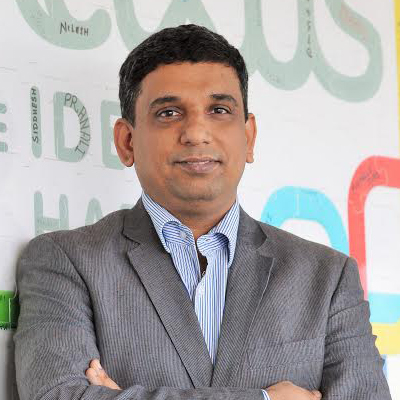
    NEW DELHI: Warming up in her new role as the leader of Publicis Media’s bespoke unit platformGSK, Mimi Deb is quite excited and enthralled to take up the responsibilities of managing the offline and digital global paid media strategy and planning of GSK in India.

    While the lady had taken up the role in early April, she still hasn’t got the chance to visit the office, courtesy the Covid2019 pandemic but has bonded really well with the team over video calls and daily chats, she tells Indiantelevision.com in an exclusive candid chat. 

    “We interact pretty regularly with our department and also intra-team meetings keep on happening. And it’s not like that we just dive into the meetings, the environment is lighter than that. We familiarise ourselves with what is happening in everybody’s lives, keep checking on each other in case of any issues. That has helped break the ice,” Deb happily notes. 

    She also shares that because she comes from a slightly different environment, her last stint being at Wavemaker, it makes the new role even more exciting for her. “It is a different energy that I am feeling here because I come from a different setup. I think here there is a lot of young energy which is exciting and the conversations are very interesting and straightforward,” Deb quips. 

    However, she is looking forward to incorporating her rich experience of over two decades working for brands like Dabur, Perfetti, Mother Dairy, RSPL, Amway, McCain Foods, and OLX at GSK which has under its umbrella some of the most successful and popular brands like Sensodyne, Eno, Iodex, and Crocin. 

    While right now her entire focus is on understanding the business and making contacts with people, both within the industry and on the client-side, going ahead, she is going to play a key role in speeding up the areas of implementation and digital transformation for GSK, while keeping their mainline strategies sharp. 

    “It (platform GSK) is a new business for the company and a very prestigious one. Initially, my focus is on familiarising myself and then look at the transformation agenda in the data and content space. Whether it is the content initiatives for some of the brands where it plays a bigger role or creating a great brand presence over the media space, everything is on my agenda.”

    An important factor in Deb’s strategies going ahead is going to be the impact that Covid2019 has left on consumer behavior and media preferences and she is keen on exploring avenues like social media and OTT more, depending on the brands.

    Deb is also glad that the client she will be working with is agile and is on its toes in adapting to the changing environment, which makes it easier for her to work with them. She is looking forward to her stint with great positivity.  

  • Amagi Mix to cost-effectively manage media for SMEs

    Amagi Mix to cost-effectively manage media for SMEs

    MUMBAI: Revolutionising the media planning and buying business in India, Cloud broadcast and targeted advertising platform provider Amagi has launched an online media planning and buying commerce platform – Amagi Mix. It is targeted at the Small and Medium Enterprises (SMEs). With this, the SMEs are a step closer to tackle the advertising heavy weights and plan to launch television campaigns at an affordable cost.

    The plat offers over 50 channels to advertisers to pick from, including regional and national channels to target a specific region. The inbuilt algorithm further strategizes media plans based on the target group, priority markets and the budget. SMEs can also choose to take Amagi’s in-house creative services are further available to SMEs to create spots. The online consultancy is also supported by an offline customer service call centre.

    Amagi cofounder Baskar Subramanian said, “We are entering a new market segment that has a great potential. With competition getting local, no brands are national today. The heterogeneity of brands is basically because of the growing demand and constant change in consumer consumption patterns. The need of geo-targeting will increase for brands even while advertising on television.”

    By next three years, Subramanian is expecting 20 per cent of advertising by SMEs to happen via Amagi Mix. The network is also launching a television and digital campaign for a month to promote the service.

  • Amagi Mix to cost-effectively manage media for SMEs

    Amagi Mix to cost-effectively manage media for SMEs

    MUMBAI: Revolutionising the media planning and buying business in India, Cloud broadcast and targeted advertising platform provider Amagi has launched an online media planning and buying commerce platform – Amagi Mix. It is targeted at the Small and Medium Enterprises (SMEs). With this, the SMEs are a step closer to tackle the advertising heavy weights and plan to launch television campaigns at an affordable cost.

    The plat offers over 50 channels to advertisers to pick from, including regional and national channels to target a specific region. The inbuilt algorithm further strategizes media plans based on the target group, priority markets and the budget. SMEs can also choose to take Amagi’s in-house creative services are further available to SMEs to create spots. The online consultancy is also supported by an offline customer service call centre.

    Amagi cofounder Baskar Subramanian said, “We are entering a new market segment that has a great potential. With competition getting local, no brands are national today. The heterogeneity of brands is basically because of the growing demand and constant change in consumer consumption patterns. The need of geo-targeting will increase for brands even while advertising on television.”

    By next three years, Subramanian is expecting 20 per cent of advertising by SMEs to happen via Amagi Mix. The network is also launching a television and digital campaign for a month to promote the service.

  • What Hotstar’s high score on IPL-9 means for television

    What Hotstar’s high score on IPL-9 means for television

    MUMBAI: It is a generally accepted fact that cricket is a religion in India. This country of 1.2 billion (120 crore) people that is further divided between different communities, states, and languages has one of the few things very much in common – cricket consumption. A case in point for this has been the repeated successful seasons of the Indian Premiere League or IPL. While different cities and its people swear loyalty for different teams, the love for the sport outshines all. Given its mass appeal it’s only natural that television is the most preferred medium to consume the sport. Advertisers and sponsors too bank on this and pour thousands of crores of rupees in sponsorship deals into the league to make the most of the promised eyeballs.

    While this was true even for the league’s 8th leg that aired in parallel on Star India’s over-the-top digital video arm Hotstar for the first time in 2015, there has been a sea change in the digital consumption of the sport in season 9 that just concluded. In a recent statement, Star India has shared some jaw dropping numbers on the overall consumption of the sport on Hotstar.

    According to data aggregated by Star India, “overall followership of IPL crossed the 100 million (10 crore) mark on Hotstar, and its associated properties, over the months of April and May. This was a dramatic increase from the 41 million (4.1 crore) users who watched IPL on Hotstar in 2015.” What’s more, the report shared by Star also cites over 4.5 billion (450 crore) interactions with fans or viewers IPL through Hotstar.

    According to several media reports, earlier in 2015, Star India bid Rs.302.2 crore to win the global Internet and mobile rights for IPL for a three-year period, beating Times Internet and Multi Screen Media (now Sony Pictures Networks). Though not profitable by itself even after doubling its viewership reach, to say that the digital rights to the tournament have been useful to Hotstar is an understatement.

    When asked to comment on these statistics, Hotstar CEO Ajit Mohan shared, “These numbers indicate a big shift in consumer behaviour. Cricket fans have firmly moved beyond just following scores and text commentary on the web to watching video on the mobile and deeply engaging with video services.”

    The dramatic growth in viewership could be attributed to a surge in cricket fans from the top metros and cities where access to mobile broadband on WiFi, 3G and 4G has seen a rapid growth over the last 2 years.

    It is but natural for the industry to wonder if digital is gaining ground and possibly on its way to establishing an upper hand over television as a preferred medium to watch sports. Currently limited to affluent metro youth – cricket fans over the age of 15 in the SEC A, B segments who live in the largest 6 cities in the country – digital , currently led by Hostar, has emerged as a primary screen with more viewers watching the tournament on the OTT platform than on television. “The first 59 matches saw 49 million (4.9 crore) fans on Hotstar while the television reach for the same period and audience was 29 million (2.9 crore),” the statement issued by Hotstar further read. While cord cutting isn’t a new thing in the more mature digital markets of North America and Europe, digital exceeding television reach is an entirely new phenomenon in India, even though for now, it is limited to the more affluent cricket fans.

    When asked if television as a medium has any reason to fear losing its loyal cricket loving viewers to digital platforms, Havas Media Group, India and South Asia CEO and veteran media planner Anita Nayyar reassured that there was a long way to go before one even needs to be concerned. “The statistics show that the significance of digital has gone up, that doesn’t mean the relevance of television as medium will go down. Television’s significance as a medium in our country will stay the way it is during many more years to come for the simple reason that is its reach. Digital as a medium by itself is growing and as we see from the stats that Hotstar is growing in popularity, but that won’t affect television.”

    Nayyar also pointed out that it is important to consider a medium’s reach throughout the country before making assumptions from these numbers. “India is a large country. When we speak of how well digital is doing as opposed to television, we forget that 50 percent of the viewership still is rural, which is not infrastructurally ready for Hotstar or other similar services. Once the entire country is taped up with a proper internet connection, maybe after Reliance Jio comes into the picture, we can think about whether digital will have any impact on television’s pie.”

    “Today, in fact, if anything, online video is complimenting television consumption,” Nayyar added.

    As far as advertisers are concerned, the growing traction for digital consumption of sports is a bit of welcome news, given the targeting of consumers that the medium allows. In fact, Hotstar had a total of seven sponsors – Flipkart, Raymond, Axe Deo, Airtel, Nestle, Amity University and Volini for the season that just went by.

    Commenting on how his company views digital as a destination for advertising Sun Pharma – Consumer Healthcare VP and global head Subodh Marwah said, “With millennial’s accounting for 65 percent of India’s population, digital as a medium is fast growing and the alternate screen penetration is far greater than TV sets. Hence, a digital led strategy was an obvious choice for Volini spray to reach its ‘sports enthusiast’ target audiences. Volini associated with Vivo IPL 2016 as the official pain relief partner on Hotstar. To our advantage Hotstar became the primary screen for this season and crossed 100 million. We are happy with our association with Hotstar for Vivo IPL 2016.”

    But not all advertisers are quick to jump the gun as yet. Some have a long term strategy. As Nayyar puts it, it is important for current advertisers to think screen agnostic. Acknowledging that the figures shared by Star India definitely are humongous enough for advertisers to turn and take notice, as a planner Nayyar pointed out that the entire audio visual picture of the landscape needs to be taken into account. “Planning can’t be done in silo for individual media, one has to do a plan for a communication on television plus digital. Because after a point when wanting to get additional reach on television becomes very expensive, that’s when the presence of online videos gives you that incremental reach at a far efficient cost. Therefore being screen agnostic and planning for both is the way forward,” Nayyar shared.

    Albeit it is too early for digital to go head to head against television, when looking at the broader picture, Hotstar’s growing popularity amongst sports fans would definitely boost prospects for the sporting fraternity in general and place far more significance to the digital rights of each of the tournaments. With several new OTT platforms mushrooming, some specifically eyeing the sports genre, the business around sports in India is to become far more interesting, given the fact that there are new leagues awaiting to be launched within this financial year.

  • What Hotstar’s high score on IPL-9 means for television

    What Hotstar’s high score on IPL-9 means for television

    MUMBAI: It is a generally accepted fact that cricket is a religion in India. This country of 1.2 billion (120 crore) people that is further divided between different communities, states, and languages has one of the few things very much in common – cricket consumption. A case in point for this has been the repeated successful seasons of the Indian Premiere League or IPL. While different cities and its people swear loyalty for different teams, the love for the sport outshines all. Given its mass appeal it’s only natural that television is the most preferred medium to consume the sport. Advertisers and sponsors too bank on this and pour thousands of crores of rupees in sponsorship deals into the league to make the most of the promised eyeballs.

    While this was true even for the league’s 8th leg that aired in parallel on Star India’s over-the-top digital video arm Hotstar for the first time in 2015, there has been a sea change in the digital consumption of the sport in season 9 that just concluded. In a recent statement, Star India has shared some jaw dropping numbers on the overall consumption of the sport on Hotstar.

    According to data aggregated by Star India, “overall followership of IPL crossed the 100 million (10 crore) mark on Hotstar, and its associated properties, over the months of April and May. This was a dramatic increase from the 41 million (4.1 crore) users who watched IPL on Hotstar in 2015.” What’s more, the report shared by Star also cites over 4.5 billion (450 crore) interactions with fans or viewers IPL through Hotstar.

    According to several media reports, earlier in 2015, Star India bid Rs.302.2 crore to win the global Internet and mobile rights for IPL for a three-year period, beating Times Internet and Multi Screen Media (now Sony Pictures Networks). Though not profitable by itself even after doubling its viewership reach, to say that the digital rights to the tournament have been useful to Hotstar is an understatement.

    When asked to comment on these statistics, Hotstar CEO Ajit Mohan shared, “These numbers indicate a big shift in consumer behaviour. Cricket fans have firmly moved beyond just following scores and text commentary on the web to watching video on the mobile and deeply engaging with video services.”

    The dramatic growth in viewership could be attributed to a surge in cricket fans from the top metros and cities where access to mobile broadband on WiFi, 3G and 4G has seen a rapid growth over the last 2 years.

    It is but natural for the industry to wonder if digital is gaining ground and possibly on its way to establishing an upper hand over television as a preferred medium to watch sports. Currently limited to affluent metro youth – cricket fans over the age of 15 in the SEC A, B segments who live in the largest 6 cities in the country – digital , currently led by Hostar, has emerged as a primary screen with more viewers watching the tournament on the OTT platform than on television. “The first 59 matches saw 49 million (4.9 crore) fans on Hotstar while the television reach for the same period and audience was 29 million (2.9 crore),” the statement issued by Hotstar further read. While cord cutting isn’t a new thing in the more mature digital markets of North America and Europe, digital exceeding television reach is an entirely new phenomenon in India, even though for now, it is limited to the more affluent cricket fans.

    When asked if television as a medium has any reason to fear losing its loyal cricket loving viewers to digital platforms, Havas Media Group, India and South Asia CEO and veteran media planner Anita Nayyar reassured that there was a long way to go before one even needs to be concerned. “The statistics show that the significance of digital has gone up, that doesn’t mean the relevance of television as medium will go down. Television’s significance as a medium in our country will stay the way it is during many more years to come for the simple reason that is its reach. Digital as a medium by itself is growing and as we see from the stats that Hotstar is growing in popularity, but that won’t affect television.”

    Nayyar also pointed out that it is important to consider a medium’s reach throughout the country before making assumptions from these numbers. “India is a large country. When we speak of how well digital is doing as opposed to television, we forget that 50 percent of the viewership still is rural, which is not infrastructurally ready for Hotstar or other similar services. Once the entire country is taped up with a proper internet connection, maybe after Reliance Jio comes into the picture, we can think about whether digital will have any impact on television’s pie.”

    “Today, in fact, if anything, online video is complimenting television consumption,” Nayyar added.

    As far as advertisers are concerned, the growing traction for digital consumption of sports is a bit of welcome news, given the targeting of consumers that the medium allows. In fact, Hotstar had a total of seven sponsors – Flipkart, Raymond, Axe Deo, Airtel, Nestle, Amity University and Volini for the season that just went by.

    Commenting on how his company views digital as a destination for advertising Sun Pharma – Consumer Healthcare VP and global head Subodh Marwah said, “With millennial’s accounting for 65 percent of India’s population, digital as a medium is fast growing and the alternate screen penetration is far greater than TV sets. Hence, a digital led strategy was an obvious choice for Volini spray to reach its ‘sports enthusiast’ target audiences. Volini associated with Vivo IPL 2016 as the official pain relief partner on Hotstar. To our advantage Hotstar became the primary screen for this season and crossed 100 million. We are happy with our association with Hotstar for Vivo IPL 2016.”

    But not all advertisers are quick to jump the gun as yet. Some have a long term strategy. As Nayyar puts it, it is important for current advertisers to think screen agnostic. Acknowledging that the figures shared by Star India definitely are humongous enough for advertisers to turn and take notice, as a planner Nayyar pointed out that the entire audio visual picture of the landscape needs to be taken into account. “Planning can’t be done in silo for individual media, one has to do a plan for a communication on television plus digital. Because after a point when wanting to get additional reach on television becomes very expensive, that’s when the presence of online videos gives you that incremental reach at a far efficient cost. Therefore being screen agnostic and planning for both is the way forward,” Nayyar shared.

    Albeit it is too early for digital to go head to head against television, when looking at the broader picture, Hotstar’s growing popularity amongst sports fans would definitely boost prospects for the sporting fraternity in general and place far more significance to the digital rights of each of the tournaments. With several new OTT platforms mushrooming, some specifically eyeing the sports genre, the business around sports in India is to become far more interesting, given the fact that there are new leagues awaiting to be launched within this financial year.

  • ‘Not taking anything for granted is our guiding philosophy’: Maxus MD Kartik Sharma

    ‘Not taking anything for granted is our guiding philosophy’: Maxus MD Kartik Sharma

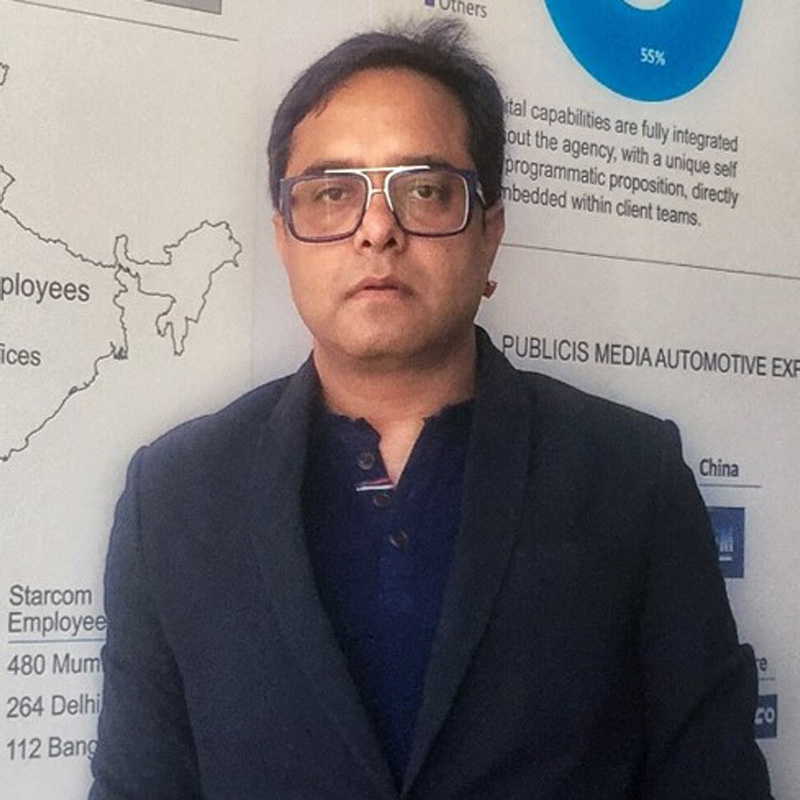
    ‘No room for complacency’ is a motto Maxus South Asia managing director Kartik Sharma as well as his team follow strongly when it comes to upholding the philosophy of not taking their position in the market for granted. In a market where traditional media practices are being challenged every now and then by a new start up or biz solutions provider, Maxus isn’t too worked up, says Sharma, but is definitely not taking it easy.

    With client retention being top priority, the media agency has heavily invested in new and innovative services in the last few years… while some have worked, others have taught team Maxus what to work on next… the next innovation.

    In an interview with Indiantelevision.com’s Papri Das, Sharma speaks on the company’s future initiatives that not only prepares Maxus as an agency of tomorrow but also forms yardsticks for the dynamic current media ecosystem.

    Excerpts:

    How was 2015 for Maxus in terms of new businesses and mandates?

    2015 was a challenging as well as gratifying year. We have been successful in achieving our business goals. We have picked up a fair amount of new businesses as well. But that is part and parcel of our business. We did some landmark work in the area of sports where we helped our client Paytm bag the BCCI home series sponsorship rights of 84 matches. We also set up a new marketing command centre called Mesh that reads signals from social media and other data platforms to help brands to come up with real time interventions and help campaigns.

    What were the challenges that you faced in 2015?

    The first quarter was a bit slow and I think this was uniform across all agencies last year. Therefore business was slow but it picked up in the latter half of the year. There was also this sentiment about the new government and what it can do, which drove a lot of the business decisions as well. We had mixed feelings through the year regarding how our clients will end up spending and whether they would be making cuts, because that directly impacts our business. Having said that, things were looking better by the end of the year.

    How useful has Mesh proved for you and your clients?

    We launched Mesh around April – May last year with two centres in Mumbai and Delhi, and very soon we will set up one in Bangalore as well. The idea was to set it up internally and have a culture change within Maxus. Parallelly, we also got multiple projects at the back of Mesh. A lot of clients are already using Mesh in various ways, be it ad-hoc or continual projects.

    It actually started much earlier in a different avatar when we deployed a similar service with Nestle as a client. We did some interesting work with L’oreal on the same principles where we continued to monitor all the social media pages and activities on the brand, understand the top influences and the kind of content that was working for the brand. The engagement analysis told us which part of India was giving us response on a particular product. It was immensely helpful in understanding what consumers feel about various brands.

    With the technology evolving and the ecosystem becoming more dynamic, do you think advertisers’ dependency on media agencies has increased?

    More than dependency, I think we work with clients as partners so it’s all about being equal in that. We have been able to demonstrate the real value of what we call the command centre. It’s about telling really powerful and relevant stories, which you can actually take back as an impact on your business.

    We must also take into consideration the number of new pitches that happened globally. Last year, around 20 million plus pitches took place globally. Fortunately for us, we weren’t part of it as you can never really predict how these additions will work out. As an agency, I would rather focus on current clients doing a great job than pitching. I think that having a few new strategic pitches are fine as long as it doesn’t effect your loyalty to your current clients.

    Don’t you think Maxus as a group has the capability to take on new clients without disappointing the existing ones?

    I have mentioned this again and I will repeat it yet again, Maxus as a group never takes its position in the market for granted. We have to earn what we are standing on and demonstrate every single day to all our stakeholders. That is critical to Maxus’ functioning. Not taking anything for granted is our guiding philosophy. It is also about the changing environment and Maxus needs to be forward facing to some extent. Mesh is a project keeping that in mind. If we don’t invest in Mesh and prepare ourselves for the future, then we can’t make that transition.

    Do you sense competition from all the ‘marketing solutions’ providers that have mushroomed in the industry recently? Some of them claim to provide similar services that Maxus has.

    Competition is always welcome. It builds a certain degree of positive energy for everyone to do better. Having said this, we have our own vision. It is a very inspiring vision that leans in to change. If you look at how we work, the entrepreneurial streak is very strong within Maxus. The DNA of Maxus is all about innovation, doing new things and evolving. So I am not overtly worried about the competition, yet we will keep a watch. We will not become complacent for sure.

    We see several big agencies collaborating with start-up agencies for specific skill sets. Do you think it reflects the lack of certain skills within the big media agencies to take on the changing market dynamics?

    Firstly, the skill set factor is not affecting just the agencies, I think it is across the board. As the market landscape changes, there are two ways to deal with it – either incorporate and evolve all the skill sets internally, which requires its own time and effort, or partner with someone who has these skill sets in a focused area still relevant to you. It is always going to be hybrid between building yourself and partnering with others.

    Can it be considered a shortcut way out?

    I don’t think it’s a shortcut. Once a client comes on board an agency, we want to give them the best possible solution. Clients don’t really worry too much on where that solution is coming from. There will always be something like a super specialisation, which an agency might not require for all its clients. Therefore it is better to partner, for a particular client or for a brief period of time.

    We too work with multiple partners. For example, we introduced a tool called Synapse last year, which marries television ratings with social buzz. We work with our partner Frrole to develop that. Frrole has certain proprietary technology for which it makes immense sense for us to partner with them.

    Within the WPP ecosystem we work with the research agency Kantar because it gives us certain specialisations. Rather than replicating the same skills within the agencies, it’s better to work with the experts.

    How do you ensure client’s faith in television, especially for advertisers who are heavily dependent on the television medium when there is all this talk about television losing importance in the advertising space?

    Firstly, we will continue to use the industry endorsed television rating system, which is currently Broadcast Audience Research Council (BARC) India. Secondly, as I mentioned earlier, we have the tool Synapse that helps marry television ratings with the social buzz. For particularly niche brands, which have a well defined target group, sometimes only TV ratings may not work. It may be that a certain type of channel, say a niche channel with a very targeted audience will work for them. We can identify them by listening to the social buzz. So in many ways, we are supporting the need for television through these new initiatives.

    Agencies are increasingly facing the ‘4 second challenge’ digital platforms with this current ADHD generation. How can the industry deal with this?

    First and foremost, one needs to take a hard look at the communication created for television and have an open conversation with the client and the creative agency on whether the same communication will hold true in a digital environment.

    The second thing is about doing a lot of experiment and a bit of trial and error at low cost to see what works and then tweaking it accordingly. Keeping an eye on what’s happening globally and learning from best practices or successful examples there and contextualising in the Indian market is also necessary.

    Any new services or products that are in the pipeline from Maxus?

    There are at least four or five big initiatives that we have in mind but it’s a little premature to talk about it now. By end March or early April we will be able to give a proper communication on the same.

    We keep innovating on our product front and learn from the previous launches. If certain things haven’t worked, we go back to the black board and think on what needs to change. At this point in time, I can say that we will soon be introducing an improved version of our T2D tool that was launched last year targeting the eCommerce community. We have received good feedback on it and will build on it to develop it into a more powerful tool.

  • ‘Not taking anything for granted is our guiding philosophy’: Maxus MD Kartik Sharma

    ‘Not taking anything for granted is our guiding philosophy’: Maxus MD Kartik Sharma

    ‘No room for complacency’ is a motto Maxus South Asia managing director Kartik Sharma as well as his team follow strongly when it comes to upholding the philosophy of not taking their position in the market for granted. In a market where traditional media practices are being challenged every now and then by a new start up or biz solutions provider, Maxus isn’t too worked up, says Sharma, but is definitely not taking it easy.

    With client retention being top priority, the media agency has heavily invested in new and innovative services in the last few years… while some have worked, others have taught team Maxus what to work on next… the next innovation.

    In an interview with Indiantelevision.com’s Papri Das, Sharma speaks on the company’s future initiatives that not only prepares Maxus as an agency of tomorrow but also forms yardsticks for the dynamic current media ecosystem.

    Excerpts:

    How was 2015 for Maxus in terms of new businesses and mandates?

    2015 was a challenging as well as gratifying year. We have been successful in achieving our business goals. We have picked up a fair amount of new businesses as well. But that is part and parcel of our business. We did some landmark work in the area of sports where we helped our client Paytm bag the BCCI home series sponsorship rights of 84 matches. We also set up a new marketing command centre called Mesh that reads signals from social media and other data platforms to help brands to come up with real time interventions and help campaigns.

    What were the challenges that you faced in 2015?

    The first quarter was a bit slow and I think this was uniform across all agencies last year. Therefore business was slow but it picked up in the latter half of the year. There was also this sentiment about the new government and what it can do, which drove a lot of the business decisions as well. We had mixed feelings through the year regarding how our clients will end up spending and whether they would be making cuts, because that directly impacts our business. Having said that, things were looking better by the end of the year.

    How useful has Mesh proved for you and your clients?

    We launched Mesh around April – May last year with two centres in Mumbai and Delhi, and very soon we will set up one in Bangalore as well. The idea was to set it up internally and have a culture change within Maxus. Parallelly, we also got multiple projects at the back of Mesh. A lot of clients are already using Mesh in various ways, be it ad-hoc or continual projects.

    It actually started much earlier in a different avatar when we deployed a similar service with Nestle as a client. We did some interesting work with L’oreal on the same principles where we continued to monitor all the social media pages and activities on the brand, understand the top influences and the kind of content that was working for the brand. The engagement analysis told us which part of India was giving us response on a particular product. It was immensely helpful in understanding what consumers feel about various brands.

    With the technology evolving and the ecosystem becoming more dynamic, do you think advertisers’ dependency on media agencies has increased?

    More than dependency, I think we work with clients as partners so it’s all about being equal in that. We have been able to demonstrate the real value of what we call the command centre. It’s about telling really powerful and relevant stories, which you can actually take back as an impact on your business.

    We must also take into consideration the number of new pitches that happened globally. Last year, around 20 million plus pitches took place globally. Fortunately for us, we weren’t part of it as you can never really predict how these additions will work out. As an agency, I would rather focus on current clients doing a great job than pitching. I think that having a few new strategic pitches are fine as long as it doesn’t effect your loyalty to your current clients.

    Don’t you think Maxus as a group has the capability to take on new clients without disappointing the existing ones?

    I have mentioned this again and I will repeat it yet again, Maxus as a group never takes its position in the market for granted. We have to earn what we are standing on and demonstrate every single day to all our stakeholders. That is critical to Maxus’ functioning. Not taking anything for granted is our guiding philosophy. It is also about the changing environment and Maxus needs to be forward facing to some extent. Mesh is a project keeping that in mind. If we don’t invest in Mesh and prepare ourselves for the future, then we can’t make that transition.

    Do you sense competition from all the ‘marketing solutions’ providers that have mushroomed in the industry recently? Some of them claim to provide similar services that Maxus has.

    Competition is always welcome. It builds a certain degree of positive energy for everyone to do better. Having said this, we have our own vision. It is a very inspiring vision that leans in to change. If you look at how we work, the entrepreneurial streak is very strong within Maxus. The DNA of Maxus is all about innovation, doing new things and evolving. So I am not overtly worried about the competition, yet we will keep a watch. We will not become complacent for sure.

    We see several big agencies collaborating with start-up agencies for specific skill sets. Do you think it reflects the lack of certain skills within the big media agencies to take on the changing market dynamics?

    Firstly, the skill set factor is not affecting just the agencies, I think it is across the board. As the market landscape changes, there are two ways to deal with it – either incorporate and evolve all the skill sets internally, which requires its own time and effort, or partner with someone who has these skill sets in a focused area still relevant to you. It is always going to be hybrid between building yourself and partnering with others.

    Can it be considered a shortcut way out?

    I don’t think it’s a shortcut. Once a client comes on board an agency, we want to give them the best possible solution. Clients don’t really worry too much on where that solution is coming from. There will always be something like a super specialisation, which an agency might not require for all its clients. Therefore it is better to partner, for a particular client or for a brief period of time.

    We too work with multiple partners. For example, we introduced a tool called Synapse last year, which marries television ratings with social buzz. We work with our partner Frrole to develop that. Frrole has certain proprietary technology for which it makes immense sense for us to partner with them.

    Within the WPP ecosystem we work with the research agency Kantar because it gives us certain specialisations. Rather than replicating the same skills within the agencies, it’s better to work with the experts.

    How do you ensure client’s faith in television, especially for advertisers who are heavily dependent on the television medium when there is all this talk about television losing importance in the advertising space?

    Firstly, we will continue to use the industry endorsed television rating system, which is currently Broadcast Audience Research Council (BARC) India. Secondly, as I mentioned earlier, we have the tool Synapse that helps marry television ratings with the social buzz. For particularly niche brands, which have a well defined target group, sometimes only TV ratings may not work. It may be that a certain type of channel, say a niche channel with a very targeted audience will work for them. We can identify them by listening to the social buzz. So in many ways, we are supporting the need for television through these new initiatives.

    Agencies are increasingly facing the ‘4 second challenge’ digital platforms with this current ADHD generation. How can the industry deal with this?

    First and foremost, one needs to take a hard look at the communication created for television and have an open conversation with the client and the creative agency on whether the same communication will hold true in a digital environment.

    The second thing is about doing a lot of experiment and a bit of trial and error at low cost to see what works and then tweaking it accordingly. Keeping an eye on what’s happening globally and learning from best practices or successful examples there and contextualising in the Indian market is also necessary.

    Any new services or products that are in the pipeline from Maxus?

    There are at least four or five big initiatives that we have in mind but it’s a little premature to talk about it now. By end March or early April we will be able to give a proper communication on the same.

    We keep innovating on our product front and learn from the previous launches. If certain things haven’t worked, we go back to the black board and think on what needs to change. At this point in time, I can say that we will soon be introducing an improved version of our T2D tool that was launched last year targeting the eCommerce community. We have received good feedback on it and will build on it to develop it into a more powerful tool.
  • RBNL launches in-house division for ‘trade solutions and account planning’

    RBNL launches in-house division for ‘trade solutions and account planning’

    MUMBAI: Reliance Broadcast Network Limited (RBNL) has launched an offering for its clients, with a dedicated division for ‘trade solutions and account planning’.

    With the intent to leverage the overall strength of RBNL, to provide strategic media solutions to clients, the move will see the strategy and solutions team coming together to deliver value to marketers, that goes beyond the customary FCT purchase. The functioning of the team comes into play with immediate effect and is poised to change the way media platforms provide services to clients. The team will be led by RBNL network strategy and service head Sunil Kumaran.

    The division will provide marketers associating with RBNL a much stronger proposal to increase the effectiveness of the media plans. This will be done through a deeper understanding of content, media consumption and local consumer insights which RBNL has acquired over the years of its existence and a strong radio entity.

    Speaking on the initiative, Kumaran said, “The idea is to ensure that partners investing in our brands are getting the best value. Over the years with our research, strategy and creative teams we have built a much deeper understanding of consumers and how they engage with media, how creative propositions can improve campaign effectiveness and how performance of our stations and channels can be effectively put to use to provide a strong marketing solution for client.  This division will focus on utilising this expertise to service clients partnering with us.”


  • SMG Convonix appoints Surajendu Sinha as VP & business head

    SMG Convonix appoints Surajendu Sinha as VP & business head

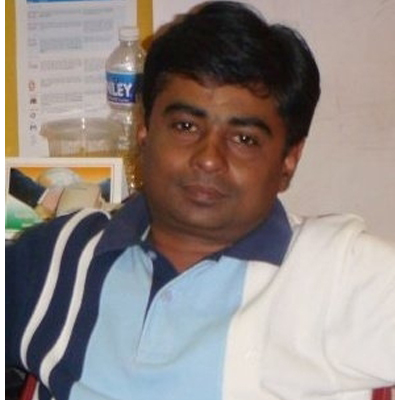
    MUMBAI: SMG Convonix has appointed Surajendu Sinha as vice president and business head (west & south).


    Sinha will be responsible for overseeing all key client relationships and will lead the media team in these regions.


    SMG Convonix CEO Vishal Sampat said, “SMG Convonix has always focused on providing real-time and meaningful digital solutions. We have always believed in staying ahead of the curve and Surajendu’s addition to the media team will allow us to do that by embracing changes in media and mobile faster. We’re focused on attracting reputed and experienced hands to lead our media teams and further bolster our offering. Surajendu fits the bill perfectly, and we’re glad to have him on board.”


    SMG Convonix COO Sarfaraz Khimani added, “Media consumption trends clearly indicate the increasing skew to digital and mobile. Surajendu’s addition to the leadership team at SMG Convonix is a reflection of the evolution of the medium and its consumption, and to ensure that our solutions to clients are always impactful and leading-edge.”


    Sinha has over a decade of experience in digital media planning and buying in companies like Neo@Ogilvy and Mindshare (Group M). In his last role at Mindshare, Sinha was senior director – digital media buying for Mindshare (west). He was responsible for growing digital revenues, rate benchmarking and driving annual strategic partnerships. He has handled clients like Kellogg’s, ICICI Bank, Idea Cellular, Ultratech, Birla White, Videocon d2h, HDFC Bank, Diageo, Tata Motors among others.


    Sinha said, “The decision to join SMG Convonix was easy based on the great work done by the team on digital including SEM, SEO, SMM, Display, ORM and analytics for its various clients. It will be great to be working with a passionate bunch of people with a focus on strengthening the paid media and mobility functions armed with  award winning, innovative media offerings and the addition of new revenue streams and benchmarking ensuring better value to be passed on to clients.”