Tag: Media Planning

  • Yajur Gulati Joins Cinépolis India as lead – brand & communications

    Yajur Gulati Joins Cinépolis India as lead – brand & communications

    MUMBAI:  Yajur Gulati, a distinguished marketing professional with extensive expertise in brand strategy and communications, has taken on a new role as lead – brand & communications at Cinépolis India. This strategic appointment marks an exciting chapter in Gulati’s career, as he takes charge of enhancing the brand’s presence and communication strategies across India.

    Gulati brings a wealth of experience to Cinépolis India, with a career spanning over a decade in diverse marketing and leadership roles. Before this, he led integrated media and communication strategies at Philips, where he played a pivotal role in promoting categories like male grooming, beauty, oral healthcare, and personal health. His initiatives included media planning, digital marketing, product launch activations, and brand health KPIs.

    Earlier in his career, Gulati held significant positions at companies such as HT Media Ltd., Reliance Brands Limited, GroupM, and LinkedIn, managing marketing operations, digital strategies, and brand activations. His impressive portfolio also includes managing marketing campaigns for Fortune 500 clients like Google, Microsoft, and Unilever.

    A graduate of Delhi University with a bachelor’s in commerce, Gulati further honed his marketing expertise through a postgraduate diploma in marketing from SVKM’s Narsee Monjee Institute of Management Studies (NMIMS).

    In his new role at Cinépolis India, Gulati is expected to drive innovative campaigns and strengthen the brand’s consumer connection, ensuring its leadership in the entertainment and cinema industry.
     

  • Psychology behind effective visual merchandising: Tapping into consumer behaviours

    Psychology behind effective visual merchandising: Tapping into consumer behaviours

    Mumbai: In the ever-evolving landscape of marketing, understanding consumer behaviour is paramount. Visual merchandising, a vital tool in a marketer’s arsenal, taps into the subconscious cues that influence purchasing decisions. While the digital age has transformed media planning, traditional concepts like primary, secondary, and tertiary media remain relevant. Integrating these concepts thoughtfully into campaign strategies can enhance the effectiveness of visual merchandising.

    The role of media planning in marketing

    Historically, media planning involved categorizing channels into primary, secondary, and tertiary media. This classification helped marketers allocate resources effectively and target consumers through the most impactful mediums. Despite the digital revolution, these foundational principles persist. Visual merchandising, when viewed through this lens, requires a strategic approach to leverage its intrinsic attributes fully.

    Visual merchandising as a medium

    Visual merchandising involves the strategic presentation of products to enhance their aesthetic appeal and influence consumer perception. However, no matter how elaborate or costly, visual merchandising elements are not inherently suited to serve as the primary medium in a media plan. This is largely due to the environment in which consumers encounter these visuals.

    Consider bustling settings like bazaars, malls, or high streets. These environments are filled with stimuli—numerous brands vie for attention amidst crowds of socially engaged consumers. In such contexts, individuals have limited attention to devote to each brand. Contrastingly, when a consumer watches a close cricket match and an advertisement appears during a break, their level of attention is significantly higher. The focused environment of a screen amplifies the impact of the advertising message.

    The challenge of capturing attention

    Assigning primary media responsibility to visual merchandising elements demands an acute awareness of the substantial burden placed on both the choice of elements and the content communicated. The effectiveness of such a strategy hinges on the ability to capture and retain consumer attention in environments where distractions are plentiful. Without this strategic consideration, relying solely on visual merchandising as the main medium can be akin to throwing a Hail Mary pass—hopeful but uncertain.

    Visual merchandising as a secondary or tertiary medium

    Visual merchandising excels when used as a secondary or tertiary medium within a comprehensive media plan. After the consumer has received the primary message through other channels, visual merchandising serves as an effective reminder. By leveraging the natural flow of foot traffic in physical spaces, marketers can reinforce brand messages and prompt action.

    Analyzing customer flow allows marketers to select appropriate visual merchandising elements tailored to specific objectives—attracting walk-ins and driving conversions. For walk-ins, the emphasis is on impact. Eye-catching displays and bold visuals can draw consumers into a store. For conversions, the focus shifts to details—providing information and subtle cues that encourage the consumer to make a purchase. This dual approach utilizes the strengths of visual merchandising without overextending its role beyond its most effective capacity.

    Integrating visual merchandising in the digital age

    In today’s digital age, integrating visual merchandising with online strategies can amplify its effectiveness. For instance, digital signage and interactive displays can bridge the gap between physical and digital experiences. These tools can personalize messages based on real-time data, enhancing engagement and aligning with consumer expectations shaped by digital interactions.

    Moreover, social media platforms can showcase visual merchandising efforts, extending their reach beyond physical locations. By creating visually appealing content that resonates with online audiences, brands can generate interest that drives foot traffic to stores.

    Understanding the psychology behind effective visual merchandising is crucial for tapping into consumer behaviors. By recognizing its role within the hierarchy of media planning, marketers can deploy visual merchandising strategically. When used as a complementary medium, it reinforces messages delivered through primary channels, enhances brand recall, and influences purchasing decisions.

    In an environment saturated with stimuli, the key lies in crafting visual merchandising elements that not only capture attention but also align seamlessly with broader marketing objectives. Through thoughtful integration and a keen understanding of consumer behavior, visual merchandising can significantly contribute to a brand’s success in both physical and digital marketplaces.

    This article has been authored by  Channelplay co-founder & co-CEO Suhas Misra.

  • Publicis Groupe media agency Zenith wins Eureka Forbes biz

    Publicis Groupe media agency Zenith wins Eureka Forbes biz

    Mumbai: Consumer goods company Eureka Forbes has appointed Zenith India, the ROI agency of Publicis Groupe as its media AOR (agency of records). Zenith won this business in a competitive and comprehensive multi-agency pitch process which began in February this year and saw leading groups participate.

    Zenith won this business on the back of its integrated, differentiated approach to planning and powerful suite of proprietary multi-channel tools.

    Zenith will handle the entire gamut of integrated media-planning, buying and implementation, which includes performance marketing, digital, SEO, commerce, data, technology, analytics, and insight transformation (DTAI) initiatives for Eureka Forbes. The scope of work will focus on driving business growth and media engagement for the brand in a dynamic, ever-shifting technology landscape.

    Zenith India CEO Jai Lala said, “We are delighted to partner with Eureka Forbes, a consumer goods company that has carved a niche for itself and needs no introduction. Zenith through its strong integrated approach and data driven decision-making will help accelerate business growth and help them stay true to its brand mission and purpose. Zenith has an ROI-focused approach, delivering on real outcomes and measurable results and through our differentiated thinking, diverse capabilities and data and analytics skills, we look forward to partnering with the brand on its expansion plans and helping them lead and excel in an era of new consumer and market realities.”

    Eureka Forbes India CMO Sameer Wanchoo said, “Eureka Forbes leads its respective categories in water and cleaning, through brand and proposition differentiation, continuous innovation, digital enabled business process and its execution rigor, driving both effectiveness and efficiency. With dynamic consumer media habits and extensive multi-media fragmentation, our partnership with Zenith will help us maximize effective reach amongst relevant target audiences. We are confident that our partnership with Zenith will further fuel brand growth and drive business metrics.”

  • Connected TV: A growing market in India

    Connected TV: A growing market in India

    Mumbai: Connected TV has an audience base of 45 million in India, according to Madison Advertising Report 2022.

    The segment contributes eight to ten per cent of the digital audience currently. In the last five years, it has grown nine times and is expected to grow by another four times to reach an audience base of 120 million by 2025. It is expected that connected TV audience base contribution will surge by 15 per cent in future.

    The audience base of CTV is growing mostly due to the increase in demand for smart TVs. In 2021, CTV shipments accounted for 84 per cent of overall TV shipments as compared to 64 per cent in 2020.

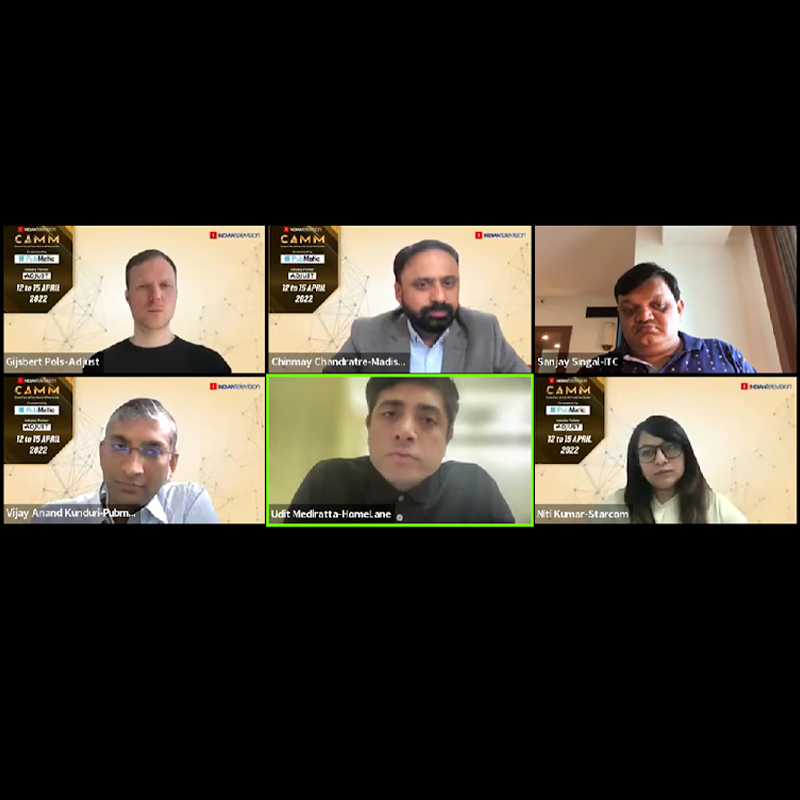
    These data points were presented by Madison World’s general manager Chinmay Chandratre who moderated a panel discussion at Indiantelevision Dot Com’s four-day event ‘Content-Tech, Ad-Tech, Mar-Tech and More (CAMM) Summit’ co-powered by Pubmatic and Industry Partner Adjust held on Tuesday.

    The discussion was joined by legacy and new-age brand marketers, media planners and technology providers such as Adjust lead product strategist Gijsbert Pols; Starcom chief operations officer Niti Kumar; ITC Limited chief operating officer – dairy and beverages Sanjay Singhal; HomeLane chief marketing officer Udit Mediratta and Pubmatic’s regional vice president (OTT and CTV) Vijay Anand Kunduri.

    Watch the full session.

    The discussion kicked off by understanding how a legacy brand like ITC looked at the opportunity of CTV. “Typically, the way you build huge categories like biscuits and snacks is through mass advertising,” explained ITC’s Sanjay Singhal.

    “As consumer tastes have evolved, we have found that there is a need to slice and dice consumer segments whose needs cannot be met by traditional products and communication on mass media platforms. There is a need for targeting cohorts of consumers that TV cannot do efficiently,” said Singhal.

    “There is only so much that may be communicated in a 30-seconder ad on TV,” he added.

    Singhal, “When there is a need to explain certain benefits of products to the consumer, a more engaging medium with a higher frequency build-up is required.”

    No doubt ITC is a large spender on TV but a large proportion of ad spends are moving to new age mediums for their brands that are targeting younger audiences, alluded Singhal.

    He added, “It’s not just our brands such as ‘Bingo’ and ‘Yippee’ which are youth-oriented that are moving towards digital but also our atta brand ‘Ashirvaad’. That’s the power of high frequency.”

    While legacy brands are leveraging a mix of traditional TV and CTV, new-age brands such as HomeLane are comfortable advertising only on digital and CTV platforms.

    As Udit Mediratta puts it, “As a digital-first brand, our target audience is largely millennials who are ‘cord-cutters’ and hence CTV is the new TV for us. There are inherent strengths in CTV whose visuals and formats are similar to traditional TV while at the same time it is also targeted and measurable. The only disadvantage at this point is scale because there are only 20 million CTV households. However, this base is expected to increase by four times in the next three to four years.”

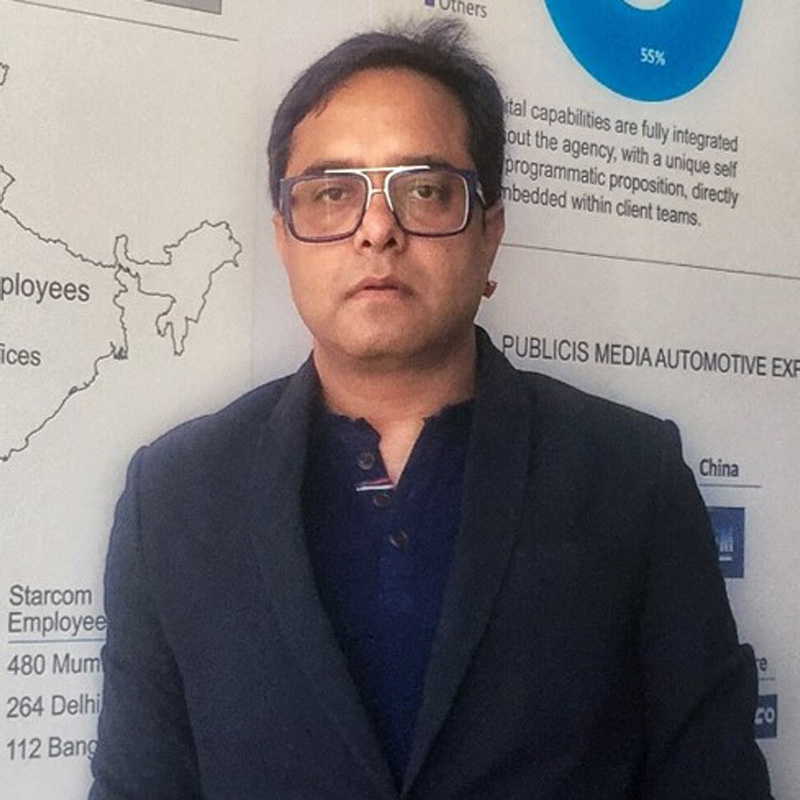
    From a media planning perspective, CTV allows brands to reach incremental audiences, states Starcom’s Niti Kumar. “When you look at CTV and what it brings to the table, it is the largeness of TV in terms of screen size and format coupled with the biggest advantage of digital i.e., targeting/precision. CTV should be included in media plans based on two criteria – where’s the consumer and the brands’ business outcomes.”

    “In terms of inventory that is available and targeting, CTV in India is still in its nascent stage as compared to what a YouTube or Disney+ Hotstar can provide. There’s a lot of development that is needed in the technology but it can be layered onto media plans from an incremental reach perspective,” she adds.

    The rise of CTV also implies that publishers must be more conscious of hygiene factors while displaying an ad that negatively impacts the user experience. “What we’ve seen is a movement from the small screen to the big screen,” observed Pubmatic’s Vijay Anand Kunduri.

    “In most of the Indian market, digital penetration is largely due to mobile but in the last 24 months, we’ve seen the transition from ‘me’ to ‘we’ viewing largely in front of CTV. On the broadcaster side, the trend where the content was first being created for linear and then streamed on OTT as catch-up has reversed. Now, content is being streamed on OTT-first followed by linear telecast,” Kunduri added.

    “Parallel to CTV there’s also the emergence of free ad-supported TV (FAST) or advertising video-on-demand (AVOD) and publishers must take into account that when their ad is playing on CTV it should not face technical issues such as buffering, back-to-back ad reels and showing competitor product ads consecutively as this creates a bad user experience,” he added.

    Adjusts’ Gijsbert Pols mentioned that in terms of measurability, CTV measurement on digital platforms is just like Facebook and YouTube, however, there is an important caveat that marketers and planners must be aware of.

    He said, “Across the world, performance marketers are entering the TV space via CTV because it has become measurable. I don’t think we are far away from a fully digitalised way of measuring performance and branding as the technology and data are there. The problem is implementation which is a tough cookie to crack.”

    “While you can measure CTV in the same way you measure other digital channels, it does require you to adjust key performance indicators (KPIs). CTV is more upper-funnel as there are no clicks. For the last decade, digital marketers have been used to measure digital looking at last touch data, however, CTV requires you to adopt a multi-touch approach when it comes to measurement,” he concluded.

  • Interactive Avenues onboards Pranali Sarkar as Associate VP- Media Planning

    Interactive Avenues onboards Pranali Sarkar as Associate VP- Media Planning

    Mumbai: Interactive Avenues – A Reprise Network Company, the full-service digital agency of Mediabrands India, has onboarded Pranali Sarkar as associate vice president, media planning. Sarkar will be tasked to scale up and add greater value to the current capabilities under the agency’s media planning function.

    Talking about the appointment, Interactive Avenues – A Reprise Network Company CEO Amardeep Singh said, “As more brands are committing to the digital transformation journey, we strive to fuel meaningful business outcomes with precise targets and that’s where Pranali comes in. Her experience and portfolio are a perfect fit for our integrated business and complement our data-driven philosophy. We are excited to have her onboard and wish her all the success.”

    With over 15 years in the industry, integrated media planning and strategy is core to Sarkar’s area of expertise, according to the agency. She has seasoned expertise in FMCG, and Telecom categories, and her diverse portfolio features some of the top advertisers in the country including Unilever, Mondelez, ITC, Godrej, and Reliance, to name a few.

    About her new role, Sarkar said, “Interactive Avenues’ reputation precedes itself. The company is in a highly competitive industry and leading from the front in all-round media capabilities. All this backed by a dynamic leadership team that I am thrilled to be a part of. I am looking forward to using this opportunity to further elevate and enhance the existing media function by crafting new-age solutions for client and agency business outcomes alike.”

    Sarkar was last working with Fulcrum, heading the Unilever Personal care category where she spearheaded multiple campaigns for iconic brands like Dove, Closeup to name a few. She has also worked with Madison where she helped set up and lead their integrated media planning teams.

  • Zenith onboards Priyanka Kapur as vice president

    Zenith onboards Priyanka Kapur as vice president

    Mumbai: Zenith India on Tuesday appointed Priyanka Kapur as vice president to lead its Nestlé business. She will be responsible for media planning, relationship management, and supervising the complete and integrated offering for the client. Her key focus will be on strategy, digital transformation, data, analytics, implementation, and buying.

    A postgraduate from NMIMS, Kapur has over 18 years of rich experience in media and marketing. Her last assignment was with Lodestar UM for almost ten years as connections lead for its key client Coca-Cola. Her role involved spearheading the strategic planning product across portfolio brands and crafting solutions, connecting brands to consumers. She was also responsible for research and insights and remained updated on the latest consumer trends to build them seamlessly into solutions for brands.

    Kapur has also worked as a marketer with NDTV, led new business development at Balaji Telefilms, and as a media planner on some prestigious accounts like Tata Motors and Zodiac.

    Zenith India CEO Jai Lala said, “I am delighted to have Priyanka on board. Priyanka’s diverse work experience in the field of media and strategic approach towards the business will help provide impactful and effective solutions to our clients, in an evolving media landscape.”

    Priyanka Kapur said, “I am excited about Zenith’s unique ROI plus and digital-first approach that delivers maximum business results for clients. Also, I am delighted to be part of Publicis Groupe and look forward to the PowerOfOne advantage.”

  • Mediacom bags media mandate for Bayer Consumer Health

    Mediacom bags media mandate for Bayer Consumer Health

    Mumbai: MediaCom India, a GroupM media agency, today announced that it has been awarded the media mandate of Bayer’s new Consumer Health division in India. The company envisions making self-care for a better life a reality for billions of people around the world through everyday healthcare. The account was won following a multi-agency pitch and will be handled out of MediaCom’s Mumbai office. Media duties include full planning and buying across media platforms.

     Bayer is a global life sciences company present in India for over 125 years with a stated commitment to the principles of sustainable development and goal to create value for its customers, shareholders and employees. The company’s vision reads, ‘Health for all, hunger for none’.

     Bayer Consumer Health Division, India country head Sandeep Verma, said, “With Bayer’s Consumer Health division offering a portfolio of leading and trusted brands in India, we want people to adopt self-care and take charge of their everyday health.  To make this possible, it’s essential to have the right partners on board who can add value to our efforts and contribute to our vision. We are therefore happy to onboard MediaCom in our journey for Consumer Health.”

     MediaCom South Asia CEO Navin Khemka said, “With the rising concerns of the global population, we believe it is important to have a company like Bayer in the market whose scientific successes are intended to help improve people’s lives. With our integrated teams and media-neutral solutions, we are looking forward to helping Bayer further scale its efforts and accelerate its business growth. Leveraging MediaCom’s expertise, we will be focusing a lot on new-age thinking and digital-first approach and are looking forward to creating an amazing experience for them.”

     As Bayer’s Consumer Health division expands its geographic footprint, India is of strategic importance in the global business strategy. In addition to the existing crop science and pharmaceutical divisions, the introduction of the consumer health division will further strengthen the company’s presence in India.