Tag: Media Partners Asia

  • FB, Google’s biz approach that of a media content company: GroupM chief

    FB, Google’s biz approach that of a media content company: GroupM chief

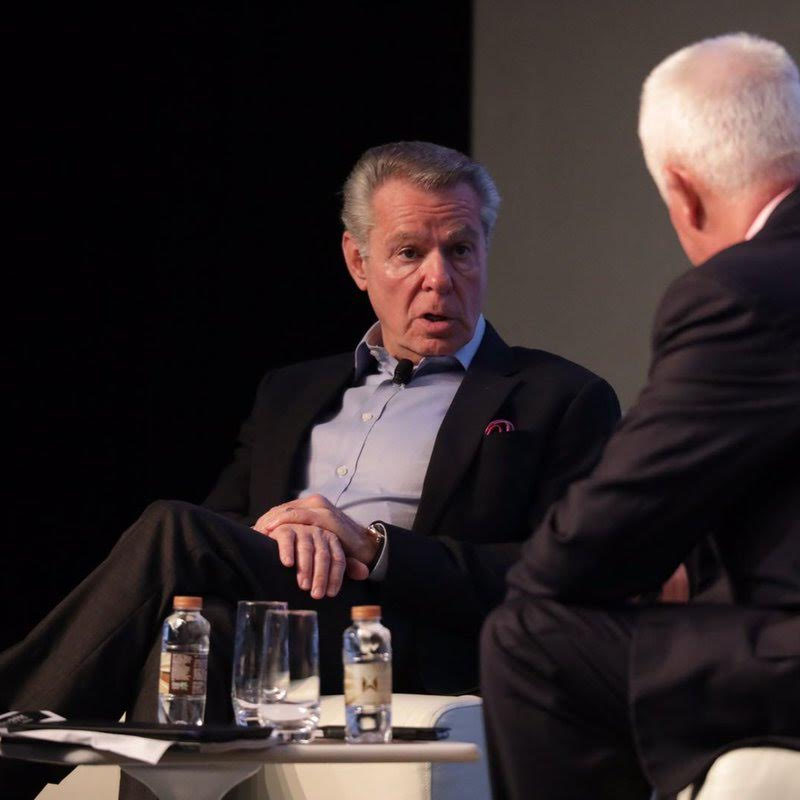
    MACAO: When the hundred billion dollar man, GroupM Global Chairman Irwin Gotlieb, says that the role of the media is to create content, it’s time to take notes. When he opines that Facebook and Google are tech companies whose “business approach is that of a media company” that relies on content, it’s more the reason that one should seriously relook at content creators and business strategies.

    It’s inevitable that Facebook and Google will get more seriously into content creation, Gotlieb said here, adding that it may not be a very healthy trend considering the power that such companies wield in the digital realm today.

    Speaking to former CASBAA Chairman Marcel Fenez during the Opening Keynote at CASBAA Convention 2016 here on Tuesday, Gotlieb held forth on varied media industry trends, including holding the view that the AT&T-Time Warner type of mergers (yet to be ratified by US regulator) are “just tip of the iceberg” in vertical integration, which can take interesting turn as FB and Google seriously get down to such M&A activities.

    To buttress his argument Gotlieb said that Google had already started a division to create content to target consumers, while it may be a matter of time before FB also follows the same path. It’s “kind of “inevitable” that both these companies move into content creation too, which may pose a challenge to other industry stakeholders, the GroupM chief said.

    Pointing out that both these tech giants were “walled gardens and very protective of the data they have”, Gotlieb, who as the GroupM chief is responsible for generating approximately US$ 100 billion in annual global ad sales, said it may not be a very healthy trend as people need to “see across them to target properly (consumers) to maximise client investments.”

    “In the absence of big ideas…it (data) allows us to reach and understand the consumer better,” Gotlieb said, adding, while replying to another question, the measurement of TV as “we understand today is understated as there are alternate devices (to consume media)” available with consumers.

    Holding forth on the changing nature and measurement of viewing behaviors, Gotlieb also touched upon how ways to reach audiences via the marketing funnel is the same but a granularity of data can help decision-making for each stage of the funnel.

    He underscored how media will continue to play a role and become more targetable, addressable and, eventually, part of the transaction process.

    Meanwhile, after Gotlieb had set the trend for the opening day of the CASBAA Convention here, Pricewaterhouse Coopers MD Oliver Wilkinson provided statistics to illustrate that pay TV was not dead despite what the headlines screamed and that it remained a primary form of entertainment.

    Still, with digital players increasingly encroaching on the turf of pay TV, content and channel providers should look to diverse their business models and offerings, Wilkinson said.

    Doing deals in China was the topic for Bennett Pozil, EVP of East West Bank. He discussed the migration of content both ways as well as some of the pros and cons of doing business in China.

    Vivek Couto, Executive Director at Singapore-based market research company Media Partners Asia, flagged the rise of digital players with the forecast that pay TV growth would slow to about 3 per cent as content providers were looking to establish more direct to consumer offerings. However, he admitted that in some markets in Asia like India players had invested heavily in traditional TV infrastructure.

    Reaching a vast audience through tailored video and gaming content was the topic for Chad Gutstein, CEO of Machinima, who highlighted that their most valued content was when viewers felt they had a connection to the creation of it.

    James Schwab, Co-President of VICE, discussed how their local content policy over digital channels has helped the company grow exponentially over the last few years. The recent move into TV was important for the company as it gave them the ability to invest more in content.

    Localized and Asian content was flagged by Henry Tan, COO of Astro, for being one of the main drivers that has seen the provider defy the trend of decline in time spent on TV and reporting healthy growth in this respect. A true understanding of the complexities of the Malaysian audience demographic was key to content that worked for Astro’s market, he said.

    Piracy, online or otherwise, cropped up in conversations throughout the day with opinions polarized on whether this would continue to be an issue.

    In a session devoted to the subject of content piracy, Avigail Gutman, Programme Director, Operational Security, Cisco, advised that the industry needed to “follow the money” in combating piracy. Lucia Rangel, VP Latin America, Asia Pacific & Worldwide, Game Strategy and Operations, Warner Bros. agreed the problem was global and that `ISD boxes’ formed a critical part of the problem as many consumers were not even aware of the illegality of these and other streaming mechanics. A global effort was needed to fight the pirates, Rangel commented.

    Desmond Chan, Deputy GM, Legal and International Operations, TVB, highlighted the tangible impact piracy had already made to their business, while Nickhil Jakatdar of Vuclip talked about how the content provider’s strategy was to provide a better experience than that available from pirate outfits.


  • MPA & STVF announces knowledge exchange forum at STVF in Shanghai

    MPA & STVF announces knowledge exchange forum at STVF in Shanghai

    MUMBAI:  Media Partners Asia (MPA) and Shanghai TV Festival (STVF) announced a partnership to collaborate on the first ever knowledge exchange forum at the STVF in Shanghai on 10 June.

    China & the Global Video Opportunity Forum unites leaders from TV and digital video industries in China, Asia Pacific, Europe and North America.

    The exclusive thought leadership forum sets the stage for a cultural exchange between domestic and international media players and provides a unique networking platform for attendees.

    MPA Business Development vice president Reagan Chan said, “We are pleased to partner with Shanghai TV Festival and co-host this ground breaking forum, sharing perspectives and partnerships across the world’s leading media and entertainment markets.”

    STVF managing director Wenxia Fu said, “STVF is one of the most important platforms in Asia’s television industry for international cultural exchange and collaboration. Established in 1986, this year’s festival will be its 22 edition. We are thrilled to partner with MPA, Asia’s leading research and consulting company to bring us closer to our international counterparts for an unmatched knowledge sharing opportunity.”

    China’s TV and digital video markets lead in Asia Pacific, generating revenue of approximately US$50 billion, according to MPA, which could grow to more than US$75 billion by 2021, making content creation, production and distribution a vital part of China’s world leading media and entertainment ecosystem.

  • MPA & STVF announces knowledge exchange forum at STVF in Shanghai

    MPA & STVF announces knowledge exchange forum at STVF in Shanghai

    MUMBAI:  Media Partners Asia (MPA) and Shanghai TV Festival (STVF) announced a partnership to collaborate on the first ever knowledge exchange forum at the STVF in Shanghai on 10 June.

    China & the Global Video Opportunity Forum unites leaders from TV and digital video industries in China, Asia Pacific, Europe and North America.

    The exclusive thought leadership forum sets the stage for a cultural exchange between domestic and international media players and provides a unique networking platform for attendees.

    MPA Business Development vice president Reagan Chan said, “We are pleased to partner with Shanghai TV Festival and co-host this ground breaking forum, sharing perspectives and partnerships across the world’s leading media and entertainment markets.”

    STVF managing director Wenxia Fu said, “STVF is one of the most important platforms in Asia’s television industry for international cultural exchange and collaboration. Established in 1986, this year’s festival will be its 22 edition. We are thrilled to partner with MPA, Asia’s leading research and consulting company to bring us closer to our international counterparts for an unmatched knowledge sharing opportunity.”

    China’s TV and digital video markets lead in Asia Pacific, generating revenue of approximately US$50 billion, according to MPA, which could grow to more than US$75 billion by 2021, making content creation, production and distribution a vital part of China’s world leading media and entertainment ecosystem.

  • MPA forecasts Asia Pacific online video opportunity at US$35 billion by 2021

    MPA forecasts Asia Pacific online video opportunity at US$35 billion by 2021

    MUMBAI: According to a report by Media Partners Asia (MPA), Asia Pacific online video revenue is expected to reach US$35 billion by 2021, an average annual growth of 22 per cent from US$13 billion in 2016.

    China will remain the largest market, accounting for 76 per cent of Asia Pacific online video revenue by 2021. Japan, Australia, Korea and India will also be significant, in aggregate accounting for 17 per cent of regional online video revenue by 2021. 

    The report, entitled Asia Pacific Online Video Distribution, covers 14 markets, tracking the growth of advertising and subscription-based online video, as well as mobile and fixed broadband.

    Commenting on the report findings, MPA executive director Vivek Couto said, “The growth of broadband, combined with slow but progressive change in content licensing, is driving demand for online video services. However, the distribution of driver local content online is modest, especially outside of China, India and Korea. This is evident in Southeast Asia, where broadband penetration is growing rapidly but from a low base in most markets. Telecom operators in these markets are investing in broadband networks and integrating with online video platforms to help drive subscriptions. This allows online video operators to utilize carrier billing, overcoming market limitations in payment infrastructure. It’s a bet to drive online video consumption in the short term and ARPUs in the long term.”

    Online video advertising accounted for less than 15 per cent of Asia Pacific digital ad spend in 2015. This share will grow to 22 per cent by 2021. Online video ad sales will reach approximately US$22 billion by 2021 versus US$9 billion in 2016, a 19 per cent CAGR. China will represent more than 70 per cent of the online video advertising pie by 2021.

    In the online subscription video-on-demand (SVOD) segment, MPA expects total paying customers to grow from 177 million by 2016 to 360 million by 2021, with China contributing the majority. SVOD revenue will reach US$13 billion by 2021, a 28 per cent CAGR from US$3.7 billion in 2016.

    China will again contribute the majority, representing more than 80 per cent by 2021. The Southeast Asia SVOD opportunity will grow rapidly but from a low base, representing about US$200 million in revenue by 2021.

    Asia Pacific fixed broadband subs will reach 345 million in 2016, and grow to 425 million by 2021. Average broadband household penetration will grow from 35 per cent in 2016 to 41 percent in 2021. Mobile broadband will reach 79 per cent of the Asia Pacific population by 2021, versus 46 per cent in 2016.

  • MPA forecasts Asia Pacific online video opportunity at US$35 billion by 2021

    MPA forecasts Asia Pacific online video opportunity at US$35 billion by 2021

    MUMBAI: According to a report by Media Partners Asia (MPA), Asia Pacific online video revenue is expected to reach US$35 billion by 2021, an average annual growth of 22 per cent from US$13 billion in 2016.

    China will remain the largest market, accounting for 76 per cent of Asia Pacific online video revenue by 2021. Japan, Australia, Korea and India will also be significant, in aggregate accounting for 17 per cent of regional online video revenue by 2021. 

    The report, entitled Asia Pacific Online Video Distribution, covers 14 markets, tracking the growth of advertising and subscription-based online video, as well as mobile and fixed broadband.

    Commenting on the report findings, MPA executive director Vivek Couto said, “The growth of broadband, combined with slow but progressive change in content licensing, is driving demand for online video services. However, the distribution of driver local content online is modest, especially outside of China, India and Korea. This is evident in Southeast Asia, where broadband penetration is growing rapidly but from a low base in most markets. Telecom operators in these markets are investing in broadband networks and integrating with online video platforms to help drive subscriptions. This allows online video operators to utilize carrier billing, overcoming market limitations in payment infrastructure. It’s a bet to drive online video consumption in the short term and ARPUs in the long term.”

    Online video advertising accounted for less than 15 per cent of Asia Pacific digital ad spend in 2015. This share will grow to 22 per cent by 2021. Online video ad sales will reach approximately US$22 billion by 2021 versus US$9 billion in 2016, a 19 per cent CAGR. China will represent more than 70 per cent of the online video advertising pie by 2021.

    In the online subscription video-on-demand (SVOD) segment, MPA expects total paying customers to grow from 177 million by 2016 to 360 million by 2021, with China contributing the majority. SVOD revenue will reach US$13 billion by 2021, a 28 per cent CAGR from US$3.7 billion in 2016.

    China will again contribute the majority, representing more than 80 per cent by 2021. The Southeast Asia SVOD opportunity will grow rapidly but from a low base, representing about US$200 million in revenue by 2021.

    Asia Pacific fixed broadband subs will reach 345 million in 2016, and grow to 425 million by 2021. Average broadband household penetration will grow from 35 per cent in 2016 to 41 percent in 2021. Mobile broadband will reach 79 per cent of the Asia Pacific population by 2021, versus 46 per cent in 2016.

  • Indian advertising market to grow fastest at +10.7% in APAC: MPA

    Indian advertising market to grow fastest at +10.7% in APAC: MPA

    MUMBAI: The Indian advertising market is poised to grow fastest over the next five years in the Asia Pacific region at a rate of 10.7 per cent.


    According to report by Media Partners Asia (MPA), in spite of an overall slow rate of growth in advertising revenue in APAC at 5.3 per cent in 2015, India emerged as one of the fastest growing markets with a growth rate of 10.8 per cent. The report shows that India has taken over China, which stands at a growth of 8.5 per cent of advertising revenue, followed by Vietnam with 8.1 per cent.


    Over the next five years, after India, the fastest growing market in the APAC region will be China at 8.4 per cent followed by Indonesia at 8.2 per cent; the Philippines at 7.7 per cent, and Vietnam at 7.3 per cent.


    By 2020, China’s net advertising revenues will total more than $85 billion and Japan will remain the region’s second-largest ad market, followed by Australia, India, Korea and Indonesia.


    DIGITAL ADVERTISING TO OVERTAKE TV


    Staying in line with other industry predictions, MPA also foresees digital advertising taking over television advertising by 2017. Digital’s share of the advertising market in APAC is projected to overtake that of TV by 2017 and grow to 44.2 per cent by 2020 from 30.7 per cent in 2015. The biggest drivers will be Australia, China, Korea, Japan and Taiwan.


    Although the rapidly growing markets of India and Indonesia will also contribute, TV will continue to be the biggest ad medium in key markets such as India, Japan and Korea by 2020.


    Furthermore in Southeast Asia, TV will incrementally grow its share of advertising from 54 per cent in 2015 to 54.9 per cent by 2020, driven by the launch of digital terrestrial TV (DTT) in the Philippines and Thailand and a rebound in free-to-air (FTA) TV demand across Indonesia. In Asia Pacific, on average, MPA projects that TV’s share of total advertising will decline from 36.5 per cent in 2015 to 30.7 per cent by 2020.


    MPA projects an increase to 5.8 per cent growth in 2016 and a CAGR of 5.5 per cent for 2015-20, reflecting stable but more moderate economic growth across both mature and emerging markets.

  • Digital penetration of pay-TV subs in APAC to reach 90% by 2023: MPA

    Digital penetration of pay-TV subs in APAC to reach 90% by 2023: MPA

    MUMBAI: The Asia-Pacific pay-TV industry will grow at a 6.6 per cent average annual rate from 2014 to 2019, according to a new report, Asia Pacific Pay-TV & Broadband Markets, released by Media Partners Asia (MPA).


    MPA projects industry sales to climb from $52 billion in 2014 to $72 billion by 2019 and to $84 billion by 2023. Despite robust growth, the region’s pay-TV industry is under pressure however, as the pace of both subscriber and revenue growth decelerates.


    In Southeast Asia, a significant slowdown in Indonesia and Thailand will apply the brakes to regional momentum, partially offset by significant expansion in the Philippines and decent gains in Malaysia.


    Revenue growth will be at its most robust and scalable in large territories such as India, Korea and China as well as smaller markets such as Hong Kong and the Philippines. Australia will offer much improved subscriber momentum, although revenue expansion will lag.


    Ex-China, which remains a utility oriented and highly regulated pay-TV market, Asia added10.8 million net new pay-TV customers in 2014, slower than the 11.2 million added in 2013 and significantly slower than the average 15-18 million net additions that occurred between 2008-11.


    MPA projections indicate a spike in net additions will occur in 2016, due to India’s next phase of cable digitalization, with a steady deceleration likely to follow. Including China, MPA sees total pay-TV subscribers in Asia-Pacific growing from 500 million 2014 to 598 million by 2023.


    Adjusted for multiple connections in a household, pay-TV penetration of TV households will grow from 54 per cent in 2014 to 61 per cent by 2023. In Asia ex-China, adjusted pay-TV penetration is expected to grow from 55 per cent to 60 per cent over the same period.


    Digital penetration of pay-TV subs in Asia-Pacific will increase from 70 per cent in 2014 to 90 per cent by 2023 as all major pay-TV markets covered in the report go 100 per cent digital except for India (70 per cent),Pakistan (32 per cent), Sri Lanka (94 per cent), and Thailand (53 per cent).


    HD penetration of total digital pay-TV subs will grow from 24 per cent to 44 per cent over the same period, with penetration between 50-90 per cent in Australia, China, Korea, Japan, Malaysia, New Zealand, the Philippines and Singapore.


    Over 2014-19, value-added services (VAS), driven by VOD, will be the fastest growing segment for Asia’s pay-TV industry, as revenues climb at a 13.2 per cent CAGR from 2014-19.Key market drivers of VOD include Australia, China, Japan and Korea, while Malaysia and Hong Kong lead amongst smaller markets.


    MPA projects that authenticated TV Everywhere (TVE) services will not generate meaningful revenue but remain a churn reducer in most markets.


    In standout pay-TV markets such as India and Korea, a combinationof high volume and a level of ARPU upside (partially off set by price competition), inaggregate, will drive subscription revenue growth. Higher yields will also boost growth in Hong Kong, Malaysia, the Philippines and Vietnam.


    According to MPA, pay-TV advertising will grow from $10 billion in 2014 to $14.3 billion by 2019, with growth driven by high base markets such as India and Korea along with China. Australia, Japan and Taiwan will remain material, although growth in each of these markets will soften.


    The pay-TV ad opportunity in Southeast Asia will remain under-exploited, partially due to limited penetration in most markets, but also because of poor execution.


    MPA executive director Vivek Couto said, “Pay-TV operators are striving to either reignite growth or sustain existing momentum with a new cycle of value creation. A number of operators are repackaging products with improved price points (i.e. Australia), tiering (i.e. Hong Kong) and slimmer, low-ARPU packs (i.e. Philippines). Most players have invested to enhance programme windows and offer more VOD. Others are climbing the curve of product innovation with all-HD platforms, with more local and Asian content, as well as live sports, a key mainstay for pay-TV.”

  • Tata Sky taps IBM to launch new mobile solutions

    Tata Sky taps IBM to launch new mobile solutions

    MUMBAI: Tata Sky has partnered with IBM to launch new mobile solutions that will enable it to reach new markets, and improve customer service and responsiveness for its 14 million subscribers across the country.


    With the IBM MobileFirst Platform, Tata Sky can securely integrate customer and enterprise data and launch new apps to spur growth, especially in rural markets. For example, the new mSales app helps dealers and distributors quickly respond to customer inquiries, track existing accounts and onboard new subscribers. Access to mobile capabilities that enable more efficient customer service is especially important in rural areas where there is often limited access to laptops or reliable Internet connectivity.


    According to a market study by Hong Kong-based research firm Media Partners Asia, the DTH active subscriber base in India will increase from 37 million in 2013 to 60 million by 2018 and 75 million by 2023. By launching innovative mobile solutions for its 300,000 dealers, Tata Sky aims to add more subscribers and gain market share.


    With more than 50,000 downloads since its launch, the mSales app creates new cost efficiencies by decreasing help desk calls to manage existing customer needs, and streamlines processes for establishing new accounts. With simplified access to customer analytics, dealers and distributors can better engage customers with more targeted, personalized products and services.


    “With IBM’s deep mobile and industry expertise we have gained a trusted partner for mobile solutions. The Tata Sky mSales app is one of the few examples of how mobile handsets can help us overcome business challenges thereby opening new markets and creating more valuable customer interactions,” said Tata Sky chief information officer Ravishanker.


    Advancing clients’ digital transformation strategies, the IBM MobileFirst portfolio of solutions can be integrated as a part of a hybrid cloud solution that combines public and private cloud elements with the flexibility to choose and change environments, data and services as needed.


    “Service Providers around the world are facing heightened competition as they compete for customer wallet share and loyalty. Creating personalized customer interactions is critical for extending those relationships and identifying new business opportunities. With the IBM MobileFirst Platform, Tata Sky can take advantage of new growth opportunities in untapped markets and easily scale the number of users and apps being delivered to market to offer differentiated services and get ahead of the competition,” said IBM India and South Asia regional general manager Vanitha Narayanan.


    The IBM MobileFirst Platform is available from Bluemix, IBM’s cloud development platform, or via on-premises deployment. IBM total cloud revenue – covering public, private and hybrid engagements – was $7.7 billion over the previous 12 months at the end of March 2015; it grew more than 60 per cent in the first quarter 2015.

  • TV home shopping market to generate Rs 45-50 billion in FYE March 2015: MPA

    TV home shopping market to generate Rs 45-50 billion in FYE March 2015: MPA

    MUMBAI: India’s retail landscape has changed rapidly in recent years. Owing to increasing disposable incomes and a growing number of nuclear families with evolving lifestyles, the country is experiencing a shift towards organised retail.


    Organised players accounted for nine per cent of India’s overall retail trade in 2013. However, the year saw sales from modern retail formats growing slowly.


    Rising costs, combined with India’s infrastructure hurdles have prompted retailers to reconsider their expansion plans. This scenario has forced brands to look for newer mediums to distribute their products, especially in areas where modern retail penetration continues to be low. Backed by domestic as well as international investors, e-tailers such as Flipkart and Snapdeal have taken advantage and created a Rs140 billion ($2.3 billion) online retail industry.


    In the midst of this marketing blitzkrieg by e-tailers, TV home shopping, an established distribution platform with a much wider reach, has also taken giant strides.


    Although much smaller in comparison to the e-tailing industry, the TV home shopping industry has started to effectively leverage the reach of cable and satellite in India, estimated at 140 million households or 650 million people as of December 2014. In comparison, the number of internet users is estimated at 302 million.


    The HomeShop18 and Star CJ Revolution

    According to a report released by Media Partners Asia (MPA), although the industry has been in existence since the 1990s, most of the earlier TV home shopping companies were restricted to selling religious or unbranded beauty products by purchasing commercial airtime to run infomercials on TV channels. The pre-digitisation era also saw an attempt to launch a dedicated TV home shopping channel – TVC Online. However, it stopped airing within one year of its launch in 2003. Majority of these products failed to meet quality expectations. As a result, consumers grew skeptical of TV home shopping. “Logistical challenges and infrastructural constraints added to the woes of the industry as they resulted in delayed product delivery to customers,” says the MPA report. 


    However, following the arrival of 24-hour dedicated TV home shopping channels, there has been a turnaround.


    HomeShop18 and Star CJ launched in 2008 and 2009 respectively, focusing on building customer trust by: 


    · Ensuring high quality products;


    · Creating technology enabled delivery and logistics networks; 


    · Establishing 24/7 multi-lingual customer service support centers.


    As the industry’s credibility rose, brands such as Samsung and Videocon started utilising the services of TV shopping players. In addition, leading service brands such as Bajaj Allianz and ICICI Lombard have also experimented with the platform. Since its inception, HomeShop18 has fulfilled over 20 million orders, having served more than 11 million customers, while Star CJ has catered to six million customers since launch.


    Industry Dynamics and Business Models

    The success of these two channels has encouraged more players to enter the market. Naaptol, which started as an e-commerce platform, has recently launched Blue, a 24-hour dedicated TV channel. In addition, the company has partnered with multi system operator (MSO) Hathway Cable & Datacom to launch Hathway Shopee, which is exclusively available on the MSO’s digital platform. 


    Similarly, another MSO Den Networks has entered into a 50:50 JV with Snapdeal to launch Den-Snapdeal TV Shop, the pilot for which launched in September 2014. Other key players include Planet M Shopping, HBN Telebrands and TVC Retail.


    Growing at 40-50 per cent year on year, the industry, as per MPA, has generated gross merchandise volume (GMV) sales of Rs 32 billion in FYE March 2014. MPA analysis also indicates that the TV home shopping market could generate between Rs 45-50 billion in FYE March 2015. The top three players: HomeShop18, Star CJ and Naaptol, hold the lion share with 85 per cent market share.


    Comprising both 24-hour dedicated channels and small and medium-sized firms, which buy independent airtime slots from multiple channels, gross commission revenues are estimated to range between Rs 10-12 billion for FYE March 2014. 


    On the cost side, while TV home shopping companies pay carriage fees to DTH and cable operators, they also incur airtime charges for slots on TV channels. MPA estimates that while a one-hour midnight slot on GECs costs Rs100,000, news channels charge between Rs 25,000-Rs 50,000.


    Overcoming the hurdles

     As is the case with e-tailers, India’s low credit card penetration and poor logistics infrastructure are proving to be the main challenges for TV home shopping players. As consumers in smaller towns are used to a “touch and feel” approach to the product before making payment, about 80 – 95 per cent of TV home shopping sales are driven by cash on delivery (COD). However, logistical difficulties often result in delayed deliveries and consumers refusing to accept delivery. Return rates are as high as 10-20 per cent of total transactions and adversely impact the business economics of TV home shopping companies, according to the MPA report. 


    To counter last mile delivery challenges, players such as Naaptol and TVC use the services of India Post, which has over 155,000 post offices of which more than 139,000 are in rural areas.


    TV home shopping versus e-tailers

    Although e-tailers function on a similar business model, the strategies adopted by TV home shopping players are in stark contrast to their online counterparts. 


    On an annual basis, TV home shopping players advertise between 3,000-4,000 products with a high majority being private labels and small to mid-scale brands. In comparison, Flipkart and Snapdeal stock over 15 million and five million products, respectively, points out MPA. 


    “This strategy enables TV home shopping players to command commissions in the range of 30-40 per cent of the sale price, compared to 5-20 per cent for e-tailers,” says the report.


    The consumer demographic is also different. With over 80 per cent of TV households having access to pay-TV, majority of the orders originate from smaller towns. In contrast, sales of e-tailers are driven by markets with high English language proficiency and internet penetration. 


    Comparison with e-tailers on financials and value creation

    The MPA report highlights that despite incurring significant losses, most e-tailers are focused on driving valuations through exponential top-line growth. In contrast, TV home shopping firms have delivered balanced growth with profitability. In FYE March 2014, net revenue growth for HomeShop18 was similar to players such as Amazon India and ebay India. Moreover the TV segment for HomeShop18 was also profitable at Rs 150 million for 9M FY 2014.


    For the similar period, TVC Retail, which enjoys superior margins for its product profile, reported a net profit growth of 42 per cent year on year. While Star CJ and Naaptol are on the cusp of profitability, even newer players are exhibiting robust growth. 


    Den-Snapdeal JV has been growing at 200 per cent month-on month and is clocking a GMV of Rs 1 billion. The network expects to cross the Rs 5 billion mark by the end of the first year of operations. 


    Similarly, Hathway-Naaptol, primarily offering semi-branded products at high margins, is already enjoying an average monthly run-rate of Rs 15 million, since its launch in June 2014.


    E-tailer valuations seem justifiable only as a multiple of GMV. However, it is worth noting that their long-tail strategy is highly dependent on a substantial rise in India’s internet penetration. 


    “Partnering with MSO platforms or TV home shopping players can enable e-tailers to mitigate the risk of slower than expected internet growth. Hence, going forward, more JV deals such as Den-Snapdeal are likely to occur. This will mutually benefit both partners by drawing synergies from their existing businesses,” says the report. 


    Becoming future ready

    On the back of rising smartphone penetration, global TV home shopping giants such as QVC and HSN have streamlined their m-commerce operations to maximise revenue and profitability.


    “Realising that mobile internet, which accounts for 57 per cent of India’s internet users, could drive the next leg of growth, Indian players have followed suit. Although TV continues to account for 70 per cent of its transactions, HomeShop18 has witnessed 100 per cent Q/Q traffic growth on mobile platforms. Similarly, Star CJ expects its mobile website to account for 20 per cent of its transactions in the near future versus 6 per cent at present,” says MPA. 


    In the meantime, the industry continues to record impressive numbers. Naaptol expects its revenues to increase from Rs 1.65 billion in FYE March 2014 to Rs 3.45 billion in FYE March 2015. “Given that TV home shopping is still in its infancy in India, such trends are likely to continue for the next three – five years,” highlights the report. 


    The India Today group, recently launched Bag It Today. Business entrepreneur Raj Kundra in partnership with Bollywood actor Akshay Kumar has launched Best Deal TV, a celebrity driven venture. Targeting a reach of 35-40 million households, the channel will tie-up with celebrities such as Ekta Kapoor, Sonakshi Sinha and Yuvraj Singh. The celebrities will be signed on a profit sharing model. The channel will start by advertising 30 products from select categories such as lifestyle, home, health, fashion and beauty. Subsequently, it also plans to tap regional markets by roping in local celebrities in Tamil and Telugu markets.


    Apart from these, a few regional players are already working towards setting up TV home shopping channels. It might not be long before global home shopping giants and other strategic and financial investors start to enter the market.

  • Star’s RIO approach should form template for other broadcasters: MPA

    Star’s RIO approach should form template for other broadcasters: MPA

    MUMBAI: Leading broadcaster Star India’s move towards a more transparent and uniform template for distribution deals with cable multi-system operators (MSOs) should form a template for other major broadcast groups (i.e. Zee, Network 18 / IndiaCast, Discovery) to follow over 2015.

    According to a report released by Media Partners Asia (MPA), over the next few months, all eyes will be on the MSO’s readiness to rollout channel packages and related consumer acceptance of price increases as well as potential churn to DTH.
    Also critical will be the rollout of prepaid services for legitimate pass through of subscription revenues to MSOs and broadcasters. “If executed successfully, these new mechanisms will help bring in long-awaited addressability across the cable industry, reduce dependence on carriage fees while also drive ARPU growth to improve economics for all industry stakeholders,” the MPA reports says.

    Star’s decision of providing channels on Reference Interconnect Offer (RIO) came after the Telecom Regulatory Authority of India (TRAI) came up with its regulation to unbundle channel aggregators, which further raised the prospect of a level playing field between broadcasters and distributors.

    The unbundling of aggregators, according to MPA, exposed platforms favoured by vertically aligned broadcasters, thereby bringing to the fore the disparity of content costs amongst operators.

    In the midst of the dissolution of top channel aggregator MediaPro in April 2014, major MSO Hathway levied a charge of disparate pricing by MediaPro in DAS (Digital Addressable System) markets, offering favourable channel rates to Den, which had an effective 25 per cent stake in MediaPro, as well as Siti Cable, a sister concern of the Zee group. “Hathway, despite having more digital subscribers in DAS markets than both Den and Siti Cable was asked to pay a ~15 per cent higher cost per sub or CPS (at Rs 35 per sub per month) for MediaPro channels,” the report reveals.

    Hathway referred the matter to Telecom Disputes Settlement and Appellate Tribunal (TDSAT), claiming a refund of Rs 700 million from MediaPro.

    It was In November that Hathway, which had been receiving channels from Zee on a RIO basis, settled with Zee and signed a CPS-based agreement.

    Star, however, to bridge the divide on disparate pricing for operators, subsequently filed an affidavit making all its channels (including sports channels) available only at RIO rates. And since 10 November, all Star channels have been available, on a RIO basis, for cable operators.

    Implications of Star’s distribution strategy for DAS markets

    According to MPA, Star’s filed RIO rates are steep and are not reflective of the actual fees collected from subscribers. As a result of this Star rolled out an incentive scheme (based on number of channels carried, logical channel number and channel penetration) for MSOs. “The existing DAS markets remain characterised by an absence of tiers and limited addressability to monetise on subscription income; therefore, MSO dependence on carriage in these markets remains high,” says the report.

    As per MPA, Star’s “RIO-only but incentivised distribution approach” is a bold step as it deprives cable operators of carriage fees. “In addition, we expect Star’s content cost for all MSOs to increase by at least 15-20 per cent, at a minimum. Therefore, in order to absorb the increase in net content costs and benefit from available price incentives, MSOs have been forced to introduce tiering and implement rate hikes in DAS markets,” highlights the report.