Tag: Media Partners Asia

  • A year when OTT onward march & TRAI tariff issue hogged limelight

    A year when OTT onward march & TRAI tariff issue hogged limelight

    MUMBAI: 2018 could have been easily dubbed as the Indian year digital or OTT, with its chaotic growth continuing and multi-million dollars being poured into programming by global and local players, however, the new tariff and regulatory regime for the broadcast and cable sector occupied as much mind space.

    Though these are early days for a sure shot business model for digital space emerging as players continue to experiment with AVOD, SVOD and combination of several other models, there’s no denying OTT has more than a foot inside the door in India.  

    According to a report by market research firm Media Partners Asia, online video revenue, comprising net ad spend and subscription fees, will grow at an 18 per cent CAGR across Asia Pacific between 2018 and 2023, climbing from $21 billion 2018 to $48 billion by 2023. While China will account for the lion’s share of industry value, with more than 60 per cent of Asia Pacific online video revenue and more than 75 per cent of direct-to-consumer SVOD subs by 2023, other big markets by revenue would include India, Japan, Australia, Korea and Taiwan.

    So, though traditional pay TV is not dead yet and will continue to grow in India as the saturation point is still far from over (BARC India estimates there are about 197 million TV homes in India over 100 million still to be covered), traditional media players have realised OTT and other forms of digital delivery of video — professional or user generated — will continue to grow and put pressures on ARPUs and other numbers as more Indians take to smartphones and devises with broadband infrastructure slowly improving and cost of data plummeting in the short term.

    The inroads into India in 2018 made by Chinese mobile companies have been impressive while raising fears of tracking and data misuse too.

    “With 160 million shipments of smartphones in 2019, apart from being the only market to grow in this sector, India will also be the most potential market for global content creators,” Zeel MD Punit Goenka tweeted last week. This observation is testimony to traditional media players waking up to the competition from OTT platforms for eyeballs.

    The growth of online platforms also means the continued search for both original and library content too will grow as it did in 2018. Not only global players like Netflix and Amazon announced big-budget investment in original content starring leading Hindi film stars like Shah Rukh Khan and Saif Ali Khan, local companies too have upped the ante realising the potential of the digital space. Star India’s digital arm Hotstar claimed 100 million viewers for the IPL cricket and ZEE5 has come out with some refreshing non-fictional programming.

    If online video distribution is growing in India, so has the demand for content regulation. Even as Indian policy-makers struggle to understand the business model(s) for digital players, the cry for regulation to suit Indian sensibilities (or lack of it) too has increased. Netflix Indian original Sacred Games is still fighting out a legal case, while informal warnings have gone to other Indian OTT platform too to tone down edgy programming being streamed.

    Bouncing amongst several government organisations (MIB, TRAI and Meity), the issue of online content regulation was a hotly debated topic in India with a large section of the industry pushing for self-regulation like those prevailing for TV content.

    If not in 2018, some sort of content regulation for online video will definitely come. The only thing that matters is whether in 2018 or it will be post general election in 2019.

    The action in the online video segment and its delivery mode was catalysed by the arrival of Reliance Jio that has expanded from just being a player to becoming a behemoth in a short period of time, handing out services at comparatively low prices. The rollout of Jio Giga fibre network in 2018 has sharply woken up legacy distribution players, including telcos who went on a partnership spree to source content.   

    And, if the regulators in India struggled with the issue of online  content, TRAI’s new tariff regime, proposed first quarter 2017, continued to cast a shadow in 2018 with confusion relating to some aspects (like a 15 per cent cap on discounts to consumers for TV channels) lingering on like a unfinished record playing out discordant notes. While TRAI has sought clarification from the Supreme Court on the discount issue (the next hearing is sometimes in January 2019), it has simultaneously cracked the whip on broadcasters and distribution platforms to fall in line with its new tariff regime by end of the present year.

    The formulation of a new telecom policy or the National Digital Communication Policy 2018 could also be said to be a milestone as India stopped just short of creating a mega communications regulator overseeing the realms of TV broadcast, online and telecoms, depending on having increased synergies amongst these segments and their regulatory regimes.

    Increased mergers & acquisitions seen in 2018 would continue consolidating the market and players. But such activities also raised doubts on possible creation of monopolies. Disney takeover of most of the media businesses of Rupert Murdoch’s 21st Century Fox, including Asia biggie Star, played out in India too even as Mukesh Ambani’s Reliance Industries and its various arms went on a shopping spree buying sizable stakes in content makers (Balaji Telefilms, Eros, for example), distribution platforms (Hathway, DEN Networks) and other media assets. That Subhash Chandra-founded Zee too is looking for an investor spiced up the mergers and acquisitions space.

    Channels continued to be launched in 2018 with almost all networks rolling out new offerings in regional languages – a trend which began over 2016 and 2017. Colors Tamil, Sony Marathi, Star Sports 3, Zee Keralam were unfurled for viewers by the major players. What's keeping broadcasters buoyant is the annual expansion in advertising continues unabated at about nine to 10 per cent annually. 

    While legacy media players (like cable TV, MSOs/LCOs, DTH) in India have started a fight for survival and improved bottomlines in the aftermath of online’s growth, the #MeToo effect in 2018 did not leave the media and entertainment untouched.

    Though #MeToo in 2018 more impacted the advertising and film segments with some big names becoming casualties, the ripple effect in the broadcast sector was low. But the movement has opened up a can of worms in the Indian media, entertainment and advertising segments.

    The industry is on tenterhooks in an election year, wondering whether the BJP or NDA will make a comeback in April-May 2019 or yield to the Congress. Will the policy regime continue or will there be changes? These are questions that seem to be creasing many a brow. 

    But on the whole, will the trends continue in 2019? Of course, yes as it too promises to be quite a roller-coaster.
  • Indian pay TV revenue to touch $16 bn by 2023: MPA

    Indian pay TV revenue to touch $16 bn by 2023: MPA

    MUMBAI: As per a new report by Media Partners Asia (MPA), the pay TV revenue in Asia will top $56 billion in 2018. This will continue to grow at 3 per cent CAGR till 2023 and likely to exceed $66 billion by then. Pay TV revenue consists of subscription fees and local and regional advertising sales.

    Over the next five years, the biggest gains will come from China, where pay-TV revenues are projected to grow at a 3 per cent CAGR to reach $25 billion by 2023, and the more accessible and commercial India market, where pay-TV revenue is set for a whopping 8 per cent CAGR to reach $16 billion by 2023. That makes India the highest growing and most scalable pay-TV market in Asia Pacific. At the same time, South Korea will grow at a 3 per cent CAGR to reach $7.4 billion in revenue by 2023, according to MPA forecasts, while pay-TV revenue in Japan will climb at a meagre 1 per cent CAGR to touch $7.1 billion over the same time-frame.


    Elsewhere, pay-TV momentum will moderate in Indonesia and the Philippines, two of Southeast Asia’s biggest growth economies, according to MPA, while Australia, Hong Kong, New Zealand, Malaysia, Singapore and Thailand will register revenue declines ranging between a -1 per cent to a -6 per cent CAGR over 2018-23.

    Commenting on the findings from the Asia Pacific Pay-TV Distribution report, MPA executive director Vivek Couto said, “Pay-TV stakeholders are adjusting to new realities as the industry shifts to IP-based distribution. The growth of high-speed broadband and online video is driving fundamental changes in content consumption and investment across key markets. This, together with piracy, will continue to adversely impact pay-TV industry growth. There will be more fixed broadband subs than pay-TV subs across much of Asia Pacific by 2021, while the gap between the mobile broadband subs base and pay-TV & fixed broadband subs will further widen as mobile networks emerge as a major means for mass content distribution, accelerating the shift in content consumption from households to individuals. M&A activity for the Asia Pacific broadcasting and pay-TV sectors for 2017 and the first half of 2018 reached $10.5 billion in aggregate, with the biggest deals taking place in Australia, India and Korea. More M&A and consolidation is likely in these markets with Southeast Asia likely to join the action over 2019-20.”

    MPA analysis indicates that the pay-TV subscriber base in Asia Pacific will grow by 3 per cent in 2018 to reach 645 million subs, representing 57 per cent of TV homes with at least one pay-TV service. The Asia Pacific pay-TV subs base will grow at a 2 per cent CAGR between 2018-23 to reach ~696 million by 2023, according to MPA projections. Pay-TV penetration by 2023 will fall to 55 per cent of TV homes when adjusted for multiple subscriptions, largely due to an acceleration in cable cord cutting in China.

    Ex-China, net customer additions across Asia Pacific will significantly slow from 10.4 million in 2017 to 6.5 million in 2018. India will account for 47 per cent of the growth in 2018, followed by Indonesia (12 per cent), the Philippines (12 per cent), Korea (10 per cent), Pakistan (7 per cent) and Sri Lanka (3 per cent). The pay-TV base ex-China will grow from 267 million subs in 2018 to 288 million subs by 2023, representing a 2 per cent CAGR, with adjusted pay-TV penetration remaining flat at 57 per cent of TV homes.
     

  • Cable TV, DTH players cautiously optimistic on Jio fiber competition

    Cable TV, DTH players cautiously optimistic on Jio fiber competition

    MUMBAI: The terminator…, oops sorry, the disruptor is back. And, this time it is targeting India’s multi-billion-dollar cable TV and DTH businesses with promises to unleash high-speed fixed line fiber-based broadband services that aims to “connect everyone, and everything, everywhere” — at least in 1,100 cities to begin with. No wonder the legacy businesses are eyeing the announcement on the launch of Reliance Jio GigaFiber project with a mix of healthy skepticism and optimism.

    “It will be a challenge, but then this would increase general awareness about fixed-line broadband (FLBB) services as penetration of wired broadband is pretty low,” Kerala Communicators Cable Ltd (KCCL) CEO Shaji Mathews told Indiantelevision.com when asked about the big bang launch of Jio GigaFiber from 15 August 2018, which is also backed by Reliance Industries’ money power.

    According to Mathews, Jio GigaFiber rollout would help getting the focus back on good quality FLLB services as “over the years the industry in general had been focusing on and talking more about wireless broadband”. KCCL is an initiative of independent cable TV operators in Kerala under the guidance of Cable Operators Association (COA), an umbrella union of over 4,000 local cable operators functioning all over the southern state.

    What about the gorilla in the room? Mathews, who has spent almost a life time in the cable TV business, was of the opinion that Jio’s entry into the FLLB segment would “bring true value to real players as the capable cable ops will survive” the competition. “Moreover, as the cable companies are already on ground with existing businesses, they have an added benefit of existing fiber optics,” he added optimistically.

    Echoing similar sentiments SITI Networks Limited chief business officer Rajesh Sethi, while accepting further disruption — as in Jio fiber — was expected in the content delivery eco-system, said, “As we keep pace with changing technological trends, the industry is expected to become more multifaceted, efficient and customer centric.”

    A senior rep from another MSO company who didn’t want to be named felt that with the entry of cash-rich companies like Reliance Jio, it would help legacy players to “focus better” on the core business. “The new venture of Jio will also bring back investors’ focus on the sector, apart from increased awareness among consumers,” the MSO company exec added while talking to Indiantelevision.com.

    India’s FLBB penetration was expected to increase to 10.3 per cent from the present single digit share by year 2022 as per Singapore-based Media Partners Asia research. As content and applications were also getting heavier and denser in size gradually, there were fair chances that Jio could disrupt the market, while other players have equal opportunity too in this segment, the MPA analysis had stated some time back.

    An immediate effect of the Jio fiber project announcement was that shares of listed MSO companies like Hathway Cable & Datacom, Den Networks, GTPL Hathway and SITI Networks dropped in the early part of trading on Indian bourses. It must also be mentioned that shares of Reliance Industries too had dipped in early trading as RIL chairman Mukesh Ambani was addressing the shareholders at yesterday’s company annual general meeting.

    While the spotlight may be falling on cable operators and MSOs, there is no denying the fact that Jio GigaFiber could also impact the business plans of DTH platforms and incumbent telecom players like Airtel, Vodafone and even State-run BSNL as Jio plans to offer not only just FLBB, but also a host of other telecom and TV services, apart from smart solutions for the retail consumer’s home, in general.

    India’s DTH players, for example, felt that while fiber-based broadband services could be a good option for high-rise residential complexes in urban Indian cities, it would be a challenge to lay fiber in far-flung hilly areas or take the lines into homes in those places where houses are horizontally laid out.  

    For cities like Mumbai, Bengaluru and Gurugram, having rows and rows of high-rise gated residential complexes, fiber based broadband services was a good opportunity, but it would be an expensive affair for a row of houses, DTH operator Dish TV’s managing director Jawahar Goel was quoted by BloombergQuint as saying. He added: “For delivering the cable and DTH services, we will always have the competitive edge, as our cost is lesser.”

    Telcos like Bharti Airtel, considered India’s biggest operator in terms of market and subscriber shares, however, are expected to react to the impending Jio competition in FLLB by cutting subscription rates and handing out higher monthly data packages to consumers at reduced costs.

    Over the last few months, Airtel, for example, has been aggressively attempting to sell its high-speed digital fixed line broadband services to existing consumers in Delhi and National Capital Region, which includes areas like Gurugram and places like Vaishali and Kaushambi in Ghaziabad district and Noida — all having rows of high-rise residential complexes of various sizes with varied population.

    Meanwhile, telecom industry body Cellular Operators Association of India (COAI), which has been at loggerheads with member Reliance Jio over a slew of issues in the past, yesterday termed Jio’s fixed-line fiber broadband system as a “game changer” and said the company garnering over 200 million mobile users in a short span of time is “commendable”, according to a Press Trust of India report from New Delhi.

    “The announcements made by Mukesh Ambani (RIL chairman) have positioned RJio as an extensive technology company rather than just a telecom service provider. This is an interesting development and once the plans laid out today start taking shape, we can expect new streams of revenue to be initiated that will benefit the industry,” COAI director-general Rajan S Mathews was quoted by the wire service as having said in a statement.

    The PTI report also took note of a latest note from JP Morgan that said while there were no details yet on pricing of the upcoming optic fiber broadband service, it was of the view that given Jio’s customer acquisition strategy, the launch pricing should effectively be at a “large discount” to current broadband and set top box pricing prevalent.

  • DEN Network fixed-line b’band biz plan hinges on partnerships & leveraging present infra

    DEN Network fixed-line b’band biz plan hinges on partnerships & leveraging present infra

    MUMBAI: With telcos handing out data at cheap rates in various package sizes under innovative schemes, mobile data consumption has increased rapidly in India in the last few years, while the growth of fixed-line broadband (FLBB) users has been tepid, if not completely static. MSO DEN Networks now wants to tap the hitherto unexplored opportunities of FLBB as a business proposition. So, what’s the plan?

    Not only DEN wants to use its own and partners’ customer bases in 100 small cities of India, but is also, probably, eyeing the huge FLBB market that will open up as the Indian government ramps up its BharatNet project to provide Internet and broadband services to approximately 250,000 gram panchayats or local village administrations through state-run telcos and third-party service providers, including cable operators. 

    The reason for hi-speed broadband in 100 cities in 10 Indian states is to try overcome the low returns in big cities and metros. “We have also seen a lot of stress in the fixed line broadband ARPUs of all the major metros, be it Mumbai, Delhi, Bangalore [and] Kolkata,” DEN Networks CEO SN Sharma said during a recent analyst call, going onto add that the ARPUS were low in the “top 10 towns of the country”.

    public://graph_1.jpg

    In April, DEN Broadband Pvt. Ltd, a subsidiary of DEN Networks, had announced expansion of its hi-speed internet services to 100 cities across India.  After completion, DEN Broadband aims to enable 1.1 crore (11 million) Indian households with high-speed broadband services by 2020 with 20 MB speeds on an average under different sets of packaging and schemes — in contrast to average lower offerings from various telcos.

    And, to back its claims, DEN Networks quotes data from international and domestic sources. In a presentation made to investors, the Sameer Manchanda-founded company justified its focus on FLBB by saying that if regulator TRAI’s December 2017 data was to be believed, there were 425 million wireless Internet subscribers, while there were only 18 million FLBB subs. Over the years, Indian FLBB growth has remained static compared to its APAC peers like Australia, China, Vietnam and Thailand.

    So, how is DEN going to go about its FLBB plans in 100 cities? The company plans to leverage its existing cable universe and tie-ups with last mile operators by going the franchisee model, leveraging present infrastructure (80 per cent already fibre-enabled), and lower capex and operational costs. Affordable technology like Metro Ethernet and GPON, coupled with standardized technical solutions, customer support from DEN and a pre-paid collect model on B2C basis, according to the company, would make good business sense.

    “We have a plan to enable 15 towns in the first quarter. Overall, 100 towns have to be enabled, and you will be surprised that LCOs themselves are approaching us,” Sharma informed an analyst, adding that it was not just a one-way traffic as company execs too were tapping LCOs informing them of the benefits as the infrastructure is already in place and the project could have additional revenue spin-offs for the LCOs. DEN has earmarked Rs. 100 crore (Rs.1 billion) as capex for the FLBB project over the three-year period.

    What is fueling DEN’s aspirations? Quoting Singapore-based Media Partners Asia figures, the company presentation told investors that there had been 

    15X rise year-on-year in Internet data traffic in 2017 with video content contributing 65 per cent of total mobile data traffic apart from the fact that India’s FLBB penetration was expected to increase to 10.3 per cent from the present single digit share by year 2022. Moreover, as content and applications keep getting heavier and denser in size, FLBB high speed broadband solutions could be ideal for offices and homes.

    “Our fiber is just 100 meters away from each of the subscriber that is being served by us,” Sharma explained to analysts, adding with broadband ARPUs low in metros and bigger cities it was decided to target the rest of the country that is not only a “virgin area” but has “equally good” demand.

    Asked about Reliance Jio’s ambitious plans to rollout broadband services in the country, which can disrupt this segment too, Sharma refused to comment, saying, “I am nobody to comment on others business.” 

    Also Read :

    DEN expands broadband services; plans Rs 100 cr capex

    Aim to take phase 3 ARPU to phase 1 value: Den Networks’ SN Sharma

    DEN readies Android-based STB for Feb launch

    TDSAT rules in favor of DEN Networks, directs ZEE entertainment to provide channels on RIO basis

  • India leads growth for regional pay-TV networks in Asia

    India leads growth for regional pay-TV networks in Asia

    MUMBAI: New research on the pay-TV channel ecosystem shows India powering revenue and profit growth for regional pay-TV broadcasters in Asia Pacific. Revenue for pay-TV channel groups owned by global media companies expanded by 4 per cent in 2017 to reach USD 5 billion across the region, while ebitda grew by 9 per cent year-on-year (yoy) to reach USD 1 billion according to leading industry analysts Media Partners Asia (MPA).

    India continues to make a massive contribution to this pie, led by large local channel businesses owned and operated by 21st Century Fox, Sony and Viacom. MPA’s figures show India comprising 65 per cent of revenue for regional pay-TV channel groups in 2017, followed by Southeast Asia with 15 per cent, Japan with 7 per cent and Australia with 5 per cent.

    Media Partners Asia executive director Vivek Couto said, “Success in a large-scale market such as India shows that regional broadcasters that invest in IP and local businesses can create a lot of long-term value.”

    Excluding large local pay channel businesses in India, pay-TV channel revenue for regional broadcasters declined by 1 per cent across the region in 2017, inching down to USD 2.2 billion while ebitda contracted by 4 per cent yoy to USD560 million. The performance reflects a more challenging wholesale and retail market for pay-TV in Southeast Asia as well as in Australia and New Zealand, Japan and Hong Kong and Taiwan. Nonetheless, Southeast Asia still leads the top-line contribution for this revenue segment at 33 per cent, followed by India (20 per cent), Japan (16 per cent), Australasia (11per cent) and Hong Kong and Taiwan (11 per cent).

    Ex-India, declines have been evenly spread across most genres. The notable exception is sports, wherein the growth of BeIN Media has helped boost the category. Together, factual, lifestyle, kids, news, music, movie and Asian entertainment channels experienced an aggregate contraction of close to US$150 million in affiliate and advertising sales ex-India in 2017.

    Nonetheless, a number of global broadcasters with investments in Asia are still seeing sustained growth in the region on the back of licencing deals and partnerships with online video and telecom platforms, growth of consumer products and nascent online video advertising. Leading broadcasters will also accelerate development of their own branded online video services in the region, a trend already underway with the launch of key entertainment and sports OTT platforms over 2016-17. Partnerships with streaming and telecom services will also proliferate over 2018.

    In India, macro hurdles as well as competitive and regulatory pressures will impact near-term performance for foreign-owned pay channels, MPA said.

    Nonetheless, major players should still outperform the market with strong double-digit growth along with longer-term upside from the growth of branded online video networks.“Success in a large-scale market such as India shows that regional broadcasters that invest in IP and local businesses can create a lot of long-term value,” said Couto. “These bets are starting to percolate across Southeast Asia, Korea and Japan. At the same time, businesses are starting to tap more growth from streaming platforms, including partnerships with online video and telco services.”

    Also Read:

    Indian pay-TV expanding by 10.6 pc, 77 pc to be digitised, ARPUs to rise by ’22: MPA

    Pay-TV in vital stage; service providers must innovate: Study

  • Indian pay-TV expanding by 10.6 pc, 77 pc to be digitised, ARPUs to rise by ’22: MPA

    Indian pay-TV expanding by 10.6 pc, 77 pc to be digitised, ARPUs to rise by ’22: MPA

    MUMBAI: Pay-TV players in Asia-Pacific region are girding up their loins to integrate online video into their service bouquets and recalibrate owing to broadband growth while concentrating and scaling up their investment on premium content as they stare at competition

    Indian pay-TV revenue, according to the new Media Partners Asia (MPA) report, is set to expand by 10.6 per cent this year. The annual ‘Asia Pacific Pay-TV Distribution 2017’ report covering 17 markets includes analysis of 80 pay-TV and broadband operators with KPIs and P&L.

    Pay-TV industry revenues in India are on track to pass the US$-10 billion mark this year, MPA states. Industry revenues are set to expand by 10.6 per cent this year, picking up the pace again after a 6.3 per cent growth rate in 2016.

    Cable, the dominant platform in Indian pay-TV with 59 per cent of subscription revenue and 67 per cent of subscribers, will expand by 7.0 per cent this year to exceed US$ 3.6 billion, according to MPA forecasts. Revenues for DTH satellite meanwhile will grow by 13.6 per cent to reach approximately US$ 2.6 billion. Pay-TV advertising, meanwhile, is set to contribute just over US $3.8 billion.

    Media Partners Asia president – India Mihir Shah said: “India’s pay-TV market has been shaken and stirred by macro-economic developments, from demonetisation to tax reform, as well as structural shifts in the marketplace, notably TV ratings for rural areas as well as proposals for a new tariff regime from the regulator. That said, the market continues to offer scale and opportunities for monetisation. India’s pay-TV industry will add five million net new customers this year, lifting the base to 155 million homes. By 2022, this base will have grown to 173 million homes.”

    “Although average revenue per user or ARPU is relatively low at US$ 3.4, this will rise to US$ 3.8 by 2022,” Shah added.

    “Digitalisation offers a major opportunity, not only to incumbent cable and DTH operators, but also to new platforms such as DD FreeDish. By the end of this year, there will still be 44 million analogue cable homes in India that need to be upgraded to digital networks. We expect 77 per cent of India’s pay-TV base to be digitalised by 2022. On-ground enforcement of the government’s cable digitalisation programme, together with more foreign direct investment as well as healthy primary and secondary capital markets, will also help drive digital subscriber growth.”

    India’s pay-TV market is poised to be the fastest growing in Asia Pacific over the next five years, as revenues increase by a 7.1 per cent annual growth rate between 2017 and 2022, according to MPA forecasts. Analysts projected pay-TV industry revenues in India to pass the US$ 14-billion mark in 2022.

    Revenue from pay-TV advertising will grow by a 10.5 per cent annual growth rate over this time-frame, increasing its share of the pay-TV pie from 38 per cent in 2017 to 45 per cent in 2022. Pay-TV subscription revenue will grow by a 4.8 per cent annual growth rate, with its share of the pie set to fall from 62 per cent in 2017 to 55 per cent in 2022.

    India is the second largest pay-TV market in Asia-Pacific, after China, which is expected to generate US$ 21.0 billion in revenue this year, according to MPA. Japan, a US$ 6.5 billion pay-TV market, is third. Korea sits in the fourth place, at US$ 5.5 billion, while Australia lies fifth at US$ 2.8 billion.

  • Comment: War on online video piracy, which matters, is here for India to fight

    Comment: War on online video piracy, which matters, is here for India to fight

    “There’s only one war that matters. And it is here”.

    So reads the caption of HBO’s official trailer for the blockbuster sixth episode of ‘Game of Thrones’ season seven that is scheduled to be aired next week. Even as Daenerys Targaryen’s Unsullied Army took up position outside the walls of King’s Landing, the online leaks of the TV series continued with unfazed pirates threatening not only to up the ransom figures, but also breach more episodes—Khalessi and dragons, notwithstanding.

    But the caption of the trailer does resonate with the Indian media and entertainment (M&E) industry as well as the government and policy-makers. The war that matters – the battle against online pirates — is certainly here and worth fighting for.

    As the online video market grows around the globe, India being no exception, so has the fear of online piracy and loss of revenues to content owners.

    The leak of an episode of GOT that recently happened in India, courtesy Prime Focus Tech, Indian host broadcaster Star India’s technology vendor, brought to the fore that the menace is closer home and will grow in coming days. And it happened just in the week – or after Hotstar – started a high decibel media campaign  urging  viewers to stop downloading torrents and go for originals on the streaming VOD service. The comnsumer – it seemed – was cocking a snook at its suggestions, though the leak happened through its vendor-partner. 

    Earlier, it was primarily the Indian film industry that was battling online pirates through John Doe court orders and blocking of some websites. But now, it seems, the whole entertainment industry needs to come together with policy makers to put up a joint front against piracy. More importantly, admission of the fact that the scourge has arrived on Indian shores and will spread in the coming years more aggressively, will only help drive anti-piracy initiatives.

    It’s not that initiatives against piracy are not taking place, but they are individual acts. “There are various industry bodies operating in the M&E sector in India and since there can’t be divergent views on tackling piracy, it’s high time a single coalition is formed by all industry stakeholders in partnership with government, which will help align business interests in a common mission,” said Viacom18 Media group general counsel and company secretary Sujeet Jain, one of the industry execs at the forefront in the fight against piracy.

    Why the fight against online piracy is imperative and India must start taking counter measures to safeguard against revenue losses?

    Sample some figures. Singapore-based market research firm Media Partners Asia (MPA) recently estimated that the Indian online video industry generated approximately $ 230 million in total sales in 2016 and could reach approximately $340 million in 2017. Online video revenues, including net advertising and subscription fees, will grow at a 21 per cent CAGR across the Apac region between 2017 and 2022, climbing from US$17.6 billion in 2017 to US$46 billion by 2022, MPA reported.

    Data revenues across fixed and mobile networks in Apac will reach $318 billion by 2022 and average mobile broadband penetration will reach 73 per cent per capita by 2022 versus 59 per cent in 2017, with some of the biggest growth coming from India, Indonesia, the Philippines, Thailand and Vietnam.

    Indian regulator TRAI’s figures state till May-June this year India had 282 million wireless and 18.33 million wired broadband subs.

    While acknowledging the potential of the Indian online video market and its weaknesses for breaches, a TV exec, on the condition of anonymity, pointed out that lack of cohesion and unity is stopping various industry associations to come together under one umbrella for anti-piracy activities. The need for finances to keep such an initiative afloat is an impediment too.

    For example, a body called Copyright Force was announced last year with much fanfare with few Indian and foreign industry associations promising to collaborate on anti-piracy measures. But, recently a senior government official in the Ministry of Commerce, which oversees IPR-related policy-making, told indiantelevision.com that he had not heard about Copyright Force, but some individual media companies were in regular touch.

    Writing a blog on the need to uphold IPR, Viacom18’s Jain very aptly had pointed out programs such as Digital Bharat may not achieve the  desired results if online piracy is not curbed as IPR enforcement for the M&E industry was no less important than IP assets emerging from innovations and R&D from other sectors and for India to be globally successful, it must ensure safeguards against IPR breaches.

    While the government admits India is a big and complex market, officials also point out efforts are on to evolve an ecosystem where IPR is respected  and online piracy is arrested, if not totally demolished as even more developed markets are finding it difficult to plug such loopholes – leakage of GOT episodes from various parts of the globe being an example.

    A senior government official also told indiantelevision.com that the Commerce Ministry is in touch with organizations like the Ministry of Information and Broadcasting, Ministry of Electronics and IT and Ministry of Law to amend some of the existing relevant legislations (The Cinematograph Act, 1952, the IT Act and the Copyright Act, for instance) to update them in the modern context.
     
    However, the government also expects the Indian M&E industry and related industry associations to give it exhaustive and cohesive feedbacks and suggestions to help framing of futuristic legislations to fight piracy and uphold sanctity of IPRs. Probably, such a united approach is not coming forth from the industry, even while piecemeal suggestions are being given to the government.    

    That raises another question: how is the issue of IPR piracy is being sought to be addressed in other parts of the world?

    The UK has PIPCU or the Police Intellectual Property Crime Unit, which is funded by the Intellectual Property Office and run by the City of London Police to combat this criminality, with a special focus on offences committed online. Australia has a controversial, but stringent law against piracy. In Asia, various countries have different standards, but collaborate with media associations like Hong Kong-based CASBAA to crack down on pirates through jointly funded legal recourse and high-pitch anti-awareness campaigns.

    In June this year, 30 global content creators and on-demand entertainment companies launched an industry coalition called Alliance for Creativity and Entertainment (ACE) dedicated to protecting the dynamic legal market for creative content and reducing online piracy.The worldwide members of ACE include Amazon, AMC Networks, BBC Worldwide, Bell Canada and Bell Media, Canal+ Group, CBS Corporation, Foxtel, Grupo Globo, HBO, Hulu, Lionsgate, MGM, Millennium Media, NBCUniversal, Netflix, Paramount Pictures, Sky, Sony Pictures Entertainment, Studio Babelsberg, STX Entertainment, Twentieth Century Fox, Univision Communications Inc., Village Roadshow, The Walt Disney Company and Warner Bros Entertainment Inc with Star India being the lone Indian member.

    A spokesperson of ACE told indiantelevision.com that though it’d welcome more Indian companies (apart from Star), it has no India-specific initiative on its agenda at the moment. One wonders why not? Certainly ACE with its money and influencing power – some of its supporters do have large business exposure in the Indian market – can contribute a lot in terms of international practices that could help the Commerce Ministry in framing and pushing more effective anti-piracy measures; the existence and contribution of TIPCU or Telengana Intellectual Property Crime Unit or Maharashtra’s online Cyber  crime division, notwithstanding.

    If, according to MPA, India, Japan, Australia, Korea and Taiwan will emerge as the markets (apart from market leader China) with the most scale in online video revenues and distribution, can the pirates be far behind back home?

    Jain conservatively estimated large and medium sized pirate networks in India can generate between $2-6 million per annum, but another Indian M&E industry exec said the loss due to piracy could be in high double digit millions of dollars. Incidentally, the Indian government doesn’t have a figure of revenue losses due to online piracy. If it has, that figure hasn’t been made public.

    So, if there’s one war that the Indian M&E industry and the government need to take cognizance of – it’s already here – it could very well be the fight against online piracy.

    Certainly, piracy cannot be bandied as an achievement of the government’s much touted Make In India and/or Made In India programmes.

    ALSO READ :

    Indian online video to grow to US 1.6 bn at 35 percent CAGR by 2022

    MPA forecasts Asia Pacific online video opportunity at US$35 billion by 2021

    FICCI Frames ’17: Maharashtra to form IP crime unit to fight online piracy

    Online pirates beware, Copyright Force on way

  • Indian online video to grow to US 1.6 bn at 35 percent CAGR by 2022

    MUMBAI: Media Partners Asia (MPA) estimates that the Indian online video industry generated approximately US$ 230 million in total sales in 2016, and is on course to reach approximately US$340 million in 2017. MPA projects a 35 percent CAGR to 2022 as total industry sales top US$1.6 billion.

    Further, the MPA report entitled Asia Pacific Online Video & Broadband Distribution, says that the Asia Pacific online video market will scale to US$ 46 billion by 2022, with China contributing more than 75 percent. MPA indicates that online video revenues, including net advertising and subscription fees, will grow at a 21 percent CAGR across the region between 2017 and 2022, climbing from US$17.6 billion in 2017 to US$46 billion by 2022.

    Said Mumbai-based MPA Vice President Mihir Shah: “In 2016, Jio’s 4G launch intensified competition slashing mobile data prices. The currency demonetization initiative by the government, implemented towards the end of 2016, also helped spur a significant improvement in the digital payments infrastructure in the country. Both these events have served as catalysts for online video consumption and monetization. By 2022, SVOD will account for 17 percent of the online video market in terms of revenues. Online video consumption will remain dominated by YouTube with domestic challengers Hotstar and Voot performing robustly but in a distant second and third place, respectively.”

    China will continue to contribute the lion’s share of customers and revenues to the online video industry in Asia Pacific, garnering 85 percent of SVOD customers and 78 percent of online video sector revenues by 2022. Such growth and scale reflects: (1) Wide-scale investment in original and acquired OTT content, including early and exclusive windows; (2) A weak market for traditional pay-TV, creating an opportunity for premium content distribution and monetization through online video; (3) Steady improvements in broadband reach and infrastructure, as well as increased adoption of smart TVs and set-top boxes; (4) Consumer adoption of seamless payment systems, developed by the owners of some of the most popular online video services, who are also leveraging data analytics and bundling to create new cohesive new ecosystems for content, commerce and communication. China’s online video market is largely ad-supported but with subscription’s share of revenue hitting 33 percent in 2017 (compared to 18 percent in 2015 and 26 percent in 2016), prospects for a demand-driven subscription model remain bright.

    Japan, Australia, India, Korea and Taiwan will emerge as the markets ex-China with the most scale in online video revenues and distribution. This reflects robust payment infrastructure, including in India, along with the growth of advertising-funded platforms and the steady rise of premium, subscription-based platforms. Piracy and under-developed payment infrastructure will continue to limit growth across much of Southeast Asia although increased broadband penetration (led by mobile connectivity) positions telcos as key partners to drive online video revenues. Online video advertising, in particular, remains a scalable and vital opportunity in Southeast Asia while SVOD revenues will grow rapidly from a very low base.

    Said MPA executive director Vivek Couto: “Advances in telecoms and payment infrastructure continue to point the way forward for the online video sector in Asia Pacific, although business models and regulations continue to evolve in a sector that’s still nascent in most territories. Key trends are emerging: (1) Services anchored to nimble, robust and sustainable business models – built around strong execution and scalable content consumption – are rising to the top; (2) Access to local and Asian content is increasingly essential in almost all markets, while demand for recent windows for franchise-based Hollywood product is also robust. Demand for original content along with movies, kids content and sports is also becoming more important; (3) Content curation, packaging and pricing remain critical, along with brand equity. Telecom operators, which have been focused on either paid conversion or mass reach to drive value, are increasingly moving to tighter payment per consumption models in pursuit of ROI across key video partnerships; (4) The value of branded destinations will increase rapidly within the online video ecosystem as platforms and operators forge partnerships with broadcasters and content players; (5) Leading local and regional players ex-China will start to capitalize on a massive online video advertising opportunity, hitherto dominated in the main by YouTube.”

    According to MPA, the online video advertising pie in Asia Pacific will grow from under US$12 billion in 2017 to more than US$25 billion by 2022. Ex-China, this opportunity equates to US$7 billion by 2022 versus US$3 billion in 2017. YouTube and to some extent Facebook will remain dominant, with an average 75 percent market share of online video advertising between them ex-China by 2022, versus 85 percent in 2017. Japan, India and Australia, followed by Korea, will be the biggest online video ad markets after China over this period. In SVOD, consumer spend ex-China will accelerate from a low base as revenues reach ~US$3.1 billion in 2022 versus US$1.5 billion in 2017. Japan and Australia will account for a combined 55 percent of value by 2022 versus 68 percent in 2017. Southeast Asia’s contribution will climb rapidly from a mere 9 percent in 2017 to 15 percent by 2022. Indirect SVOD revenues, which reflect wholesale fees paid by telcos to online video platforms as part of bundling and integration agreements, will remain important in the medium term but become less significant longer-term. Even in the short-to-medium term, telecom operators are recalibrating their approach to ROI with a greater focus on payment per consumption models. Ex-China, SVOD indirect fees will grow from only US$110 million in 2017 to US$213 million by 2022. Average SVOD subscriber penetration of the population will only reach 9.8 percent in 2017. This should increase to ~19 percent by 2022 as total SVOD subs, including direct and indirect connections, scale from 341 million in 2017 to 676 million by 2022 (from 58 million to 102 million ex-China).

    Exponential growth of mobile internet connectivity, combined with a slow but steady transition to next-generation fixed broadband, will provide a significant boost to online video consumption, reach and monetization. According to MPA, data revenues across fixed and mobile networks in Asia Pacific are sizable at US$236 billion in 2017. These will reach US$318 billion by 2022, with the ex-China market size at ~US$175 billion by 2022 versus US$126 billion in 2017. Average mobile broadband penetration will reach 73 percent per capita by 2022 versus 59 percent in 2017, with some of the biggest growth coming from India, Indonesia, the Philippines, Thailand and Vietnam. Average fixed broadband penetration will grow steadily from 44 percent to 52 percent of households over 2017-22, with the focus increasingly on upgrading high-speed networks using fibre and next-generation cable technologies.

  • Content & channel management vital as Asian production enters new growth cycle

    MUMBAI: The TV, film and video production sector in Asia is set to enter a new cycle of growth, according to a new report from Media Partners Asia (MPA), as economic development and evolving distribution ecosystems stoke competition and demand for better shows, as well as more varied formats and approaches.

    MPA’s Video Content Dynamics, published today, reviews industry supply, demand and key drivers across India, Korea and five markets in Southeast Asia (Indonesia, Malaysia, the Philippines, Thailand and Vietnam) on free, pay and OTT platforms. The report breaks out ratings performance, economics and key players by genre (drama, movies, news, sports, kids and factual), as well as theatrical performance for local and international films.

    TV is the dominant viewing platform in these markets. However, as more people get access to affordable high-speed broadband, quality content as well as proactive channel management are becoming increasingly important for incumbent broadcasters, MPA analysts noted.

    “Online video is gaining traction in key emerging markets, as broadband speeds increase and connection costs come down,” said Media Partners Asia VP – Research & Consulting Steve Laslocky. “Leading broadcasters are rolling out ad-supported catch-up services while subscription online video services (local, regional and global) are gaining traction with premium Asian content as well as domestic and Hollywood movies. More than ever, a healthy local production ecosystem is a vital component of a healthy TV market.”

    Korean content remains the gold standard for production in Asia, expanding beyond drama and film to become a genre in its own right. Costs are increasing in Korea’s highly competitive domestic marketplace, where profits are challenging. At the same time, demand and pricing power in MPA-surveyed markets continue to rise across both TV and online video, helping sustain Korea’s leadership position.

    MIXED PICTURE ACROSS ASIA

    Future growth prospects and the relative health of local production varies across the seven markets covered by MPA’s Asia Video Content Dynamics report. Broadcasters that rely heavily on in-house teams, as seen in Malaysia and the Philippines for example, risk stifling ideas and competition. On the other hand, too many third-party studios competing for work can squeeze margins. This trend, seen in India’s TV industry, leaves little money to reinvest and develop local production for the opportunities and challenges ahead.

    Indonesia stands out as a relatively healthy ecosystem among Asian growth markets. Southeast Asia’s largest economy comprises comparatively few major production houses, often operating with backing from one of the country’s major TV groups. Production costs are relatively low, while the free-to-air ad market remains buoyant, providing good returns for popular shows. This bodes well for the future development of Indonesian content.

    By contrast, the environment for production in India is almost the opposite. The rollout of digital TV is dramatically expanding viewer choices for hundreds of millions of homes in the sub-continent, while opening up opportunities to develop premium and more targeted content. However, intense competition for TV revenues between hundreds of local production houses has driven margins to 15% and below, making it difficult to capitalize on these changes.

    DRAMA RULES, BUT GENRE MIX CRUCIAL

    Multiple genres are fueling consumption on free, pay and OTT services. Local dramas, however, remain the most important ratings driver across much of the region, despite concerns about stale storylines.

    In India for example, domestic drama accounted for over half of all TV viewing last year, underscoring its dominance. Local series were also popular in Southeast Asia, representing 46% of viewing in Vietnam, 35% of viewing in Thailand and 31% of viewing in the Philippines.

    Movies also tend to rate well on TV, especially in countries with a strong domestic film industry. This is especially evident in India as well as Indonesia and the Philippines, the two markets in Southeast Asia with the largest box office and where local films also have the highest share of revenue.

    Sports, meanwhile, is a high-profile and high-rating but ultimately event-driven genre. Many international marquee events are aired late at night, limiting viewership, underscoring the importance of local tournaments. Monetization for some local sports, such as football in Malaysia, still lags international franchises however, despite high ratings.

    Contrary to common perception, sports is not a major audience contributor on pay-TV, while the popularity of recent Hollywood movies on pay-TV varies by market. Kids content, meanwhile, is a leading pay-TV genre in Indonesia (50% audience share) and the Philippines (22%).

    Some OTT platforms are starting to compete on early windows for Asian content, although not on Hollywood movies, where studios can still command high prices from premium pay channels and pay-TV operators across most markets. This will likely change over time.

    Investment in local content and original productions for the OTT window, meanwhile, is growing rapidly in India and slowly expanding across Southeast Asia. In markets such as Indonesia, local movies, dramas and series are boosting consumption across regional SVOD services.

    Monetization for ad-supported services however, with the exception of YouTube, is proving to be a challenge. As online video gains scale in the region, industry standards for comparable viewing data will be crucial to further growing online video advertising outside of the YouTube ecosystem.


  • FB, Google’s biz approach that of a media content company: GroupM chief

    FB, Google’s biz approach that of a media content company: GroupM chief

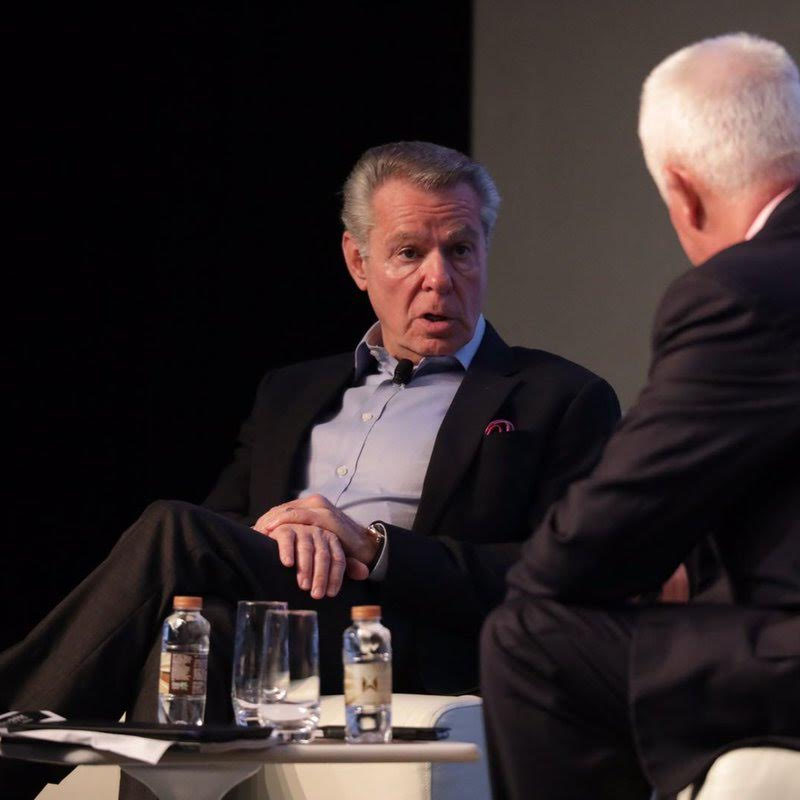
    MACAO: When the hundred billion dollar man, GroupM Global Chairman Irwin Gotlieb, says that the role of the media is to create content, it’s time to take notes. When he opines that Facebook and Google are tech companies whose “business approach is that of a media company” that relies on content, it’s more the reason that one should seriously relook at content creators and business strategies.

    It’s inevitable that Facebook and Google will get more seriously into content creation, Gotlieb said here, adding that it may not be a very healthy trend considering the power that such companies wield in the digital realm today.

    Speaking to former CASBAA Chairman Marcel Fenez during the Opening Keynote at CASBAA Convention 2016 here on Tuesday, Gotlieb held forth on varied media industry trends, including holding the view that the AT&T-Time Warner type of mergers (yet to be ratified by US regulator) are “just tip of the iceberg” in vertical integration, which can take interesting turn as FB and Google seriously get down to such M&A activities.

    To buttress his argument Gotlieb said that Google had already started a division to create content to target consumers, while it may be a matter of time before FB also follows the same path. It’s “kind of “inevitable” that both these companies move into content creation too, which may pose a challenge to other industry stakeholders, the GroupM chief said.

    Pointing out that both these tech giants were “walled gardens and very protective of the data they have”, Gotlieb, who as the GroupM chief is responsible for generating approximately US$ 100 billion in annual global ad sales, said it may not be a very healthy trend as people need to “see across them to target properly (consumers) to maximise client investments.”

    “In the absence of big ideas…it (data) allows us to reach and understand the consumer better,” Gotlieb said, adding, while replying to another question, the measurement of TV as “we understand today is understated as there are alternate devices (to consume media)” available with consumers.

    Holding forth on the changing nature and measurement of viewing behaviors, Gotlieb also touched upon how ways to reach audiences via the marketing funnel is the same but a granularity of data can help decision-making for each stage of the funnel.

    He underscored how media will continue to play a role and become more targetable, addressable and, eventually, part of the transaction process.

    Meanwhile, after Gotlieb had set the trend for the opening day of the CASBAA Convention here, Pricewaterhouse Coopers MD Oliver Wilkinson provided statistics to illustrate that pay TV was not dead despite what the headlines screamed and that it remained a primary form of entertainment.

    Still, with digital players increasingly encroaching on the turf of pay TV, content and channel providers should look to diverse their business models and offerings, Wilkinson said.

    Doing deals in China was the topic for Bennett Pozil, EVP of East West Bank. He discussed the migration of content both ways as well as some of the pros and cons of doing business in China.

    Vivek Couto, Executive Director at Singapore-based market research company Media Partners Asia, flagged the rise of digital players with the forecast that pay TV growth would slow to about 3 per cent as content providers were looking to establish more direct to consumer offerings. However, he admitted that in some markets in Asia like India players had invested heavily in traditional TV infrastructure.

    Reaching a vast audience through tailored video and gaming content was the topic for Chad Gutstein, CEO of Machinima, who highlighted that their most valued content was when viewers felt they had a connection to the creation of it.

    James Schwab, Co-President of VICE, discussed how their local content policy over digital channels has helped the company grow exponentially over the last few years. The recent move into TV was important for the company as it gave them the ability to invest more in content.

    Localized and Asian content was flagged by Henry Tan, COO of Astro, for being one of the main drivers that has seen the provider defy the trend of decline in time spent on TV and reporting healthy growth in this respect. A true understanding of the complexities of the Malaysian audience demographic was key to content that worked for Astro’s market, he said.

    Piracy, online or otherwise, cropped up in conversations throughout the day with opinions polarized on whether this would continue to be an issue.

    In a session devoted to the subject of content piracy, Avigail Gutman, Programme Director, Operational Security, Cisco, advised that the industry needed to “follow the money” in combating piracy. Lucia Rangel, VP Latin America, Asia Pacific & Worldwide, Game Strategy and Operations, Warner Bros. agreed the problem was global and that `ISD boxes’ formed a critical part of the problem as many consumers were not even aware of the illegality of these and other streaming mechanics. A global effort was needed to fight the pirates, Rangel commented.

    Desmond Chan, Deputy GM, Legal and International Operations, TVB, highlighted the tangible impact piracy had already made to their business, while Nickhil Jakatdar of Vuclip talked about how the content provider’s strategy was to provide a better experience than that available from pirate outfits.