Tag: Media Partners Asia

  • Bite-sized and booming: how FareFlow’s microdramas are conquering the world

    Bite-sized and booming: how FareFlow’s microdramas are conquering the world

    MUMBAI: Three weeks. That’s all it took for FlareFlow to vault from newcomer to number one on America’s free entertainment app charts, on both iOS and Android. The microdrama platform—brief, serialised stories designed for mobile screens—has cracked a formula that’s reshaping how millions consume entertainment. And it’s not stopping at American shores.

    Col group’s international platform hit a new single-day revenue record just three weeks after breaking into America’s top five on Google Play. The surge signals something bigger than a viral moment: audiences worldwide are abandoning hourlong episodes for stories that fit between tube stops.

    According to Sensor Tower data from 22 August to 20 September 2025, FlareFlow now ranks third in Germany, fourth in Australia and fifth in Canada among short-drama and entertainment apps. The momentum reflects a fundamental shift in viewing patterns. Where audiences once defaulted to traditional series or films, they’re increasingly choosing bite-sized narratives that slot seamlessly into daily routines.

    China offers a glimpse of what’s coming. Microdrama revenues there have already overtaken the traditional box office, according to Media Partners Asia, with Col’s intellectual property portfolio driving much of that growth. FlareFlow is now exporting this model globally, adapting genres to local tastes: revenge plots, flash marriages and family conflict dominate in Southeast Asia, whilst young adult fiction, werewolves and CEO-driven dramas resonate in Western markets.

    “This is not a passing trend in China or America—it’s a global shift in storytelling,” said Col group chief executive Ray Tong. “People have consumed vertical content since Instagram Stories and TikTok, but what’s evolving is the storytelling itself. FlareFlow is shaping that evolution for audiences everywhere.”

    To sustain this growth, Col is investing heavily in infrastructure and partnerships. The company has established more than 30 international production teams across Los Angeles, New York, Canada, London and southeast Asia, supported by dual post-production centres in Beijing and Los Angeles. By year-end 2025, it plans to open the industry’s first purpose-built microdrama production studio in Hengqin, Greater Bay Area—a 10,000-square-metre facility with 30 soundstages tailored specifically for short-form content.

    With a pipeline of 280 dramas, FlareFlow is scaling aggressively. Since launching in April 2025, the platform has surpassed 15 million downloads across 177 regions, with monthly user spending increasing more than 500 per cent.

    “What excites us most is that it isn’t just about FlareFlow’s growth—it’s about investing in an ecosystem,” added at Col group general manager for international press and southeast Asia Timothy Oh. “Our investments worldwide are helping the industry adapt and thrive as microdramas become part of everyday viewing.”
    The question now isn’t whether microdramas will succeed, but how quickly they’ll reshape the global entertainment landscape.

  • Micro-dramas set to race to $9.5 b global market as China leads the charge

    Micro-dramas set to race to $9.5 b global market as China leads the charge

    SINGAPORE: Micro-dramas, once a fringe curiosity, are now a juggernaut. China’s revenues rocketed from $0.5 billion in 2021 to $7 billion in 2024 and will overtake the domestic box office this year, according to Media Partners Asia’s latest study, The Micro Drama Economy 2025.

    More than 830 million Chinese viewers are tuning in, nearly 60 per cent paying or transacting. Profitability is no longer theoretical: DramaBox booked $323 million in revenue and a $10 million net profit last year, while ReelShort (Crazy Maple Studio) has scaled fast despite heavy costs.

    Outside China the market hit $1.4 billion in 2024 and is on track for $9.5 billion by 2030. Affluent women aged 30–60 drive demand in the United States, while younger mobile-first audiences dominate Asia.

    Artificial intelligence is accelerating the boom, from content personalisation and rapid creative iteration in China to dubbing and localisation worldwide.

    “There are too many players with limited differentiation and too much churn, but winners are emerging,” said MPA executive director Vivek Couto. “Production is cheap but distribution is costly. Success depends on speed, scale and repeatable IP. China shows what’s possible when content is tied to social and payments rails, while the US proves the global opportunity. Japan, Korea, India, Southeast Asia and Latin America are next.”

    The report maps viewership patterns, key demographics and profitability benchmarks, charting how micro-dramas leapt from niche experiment to multi-billion-dollar global category.

  • APOS 2025: Sushant Sreeram and JioHotstar’s masterclass on reinvention

    APOS 2025: Sushant Sreeram and JioHotstar’s masterclass on reinvention

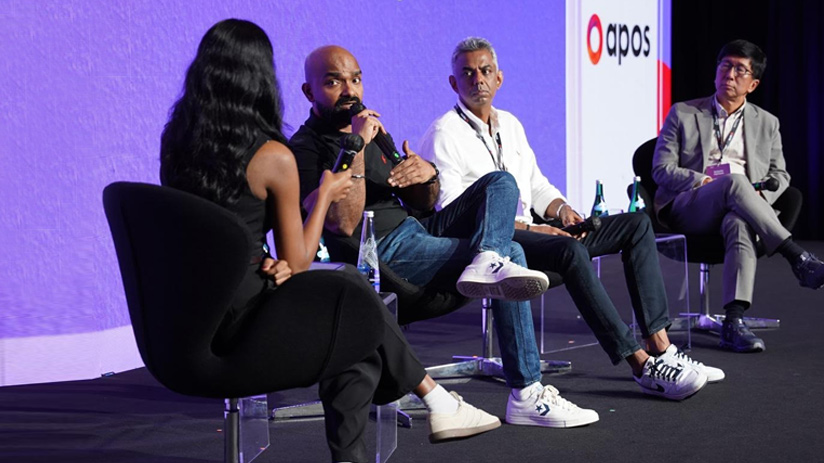
    BALI: JioStar’s Sushant Sreeram came out swinging at APOS 2025, tearing up the traditional streaming script with a bold case for fluid monetisation and empathy-first design. Speaking on a high-voltage panel alongside Aditya Swamy of Google Play and Sutanto Hartono of Emtek, the SVOD chief and CMO laid out JioHotstar’s roadmap for a new era of video engagement.

    “We’re not locked into SVOD or AVOD silos,” Sreeram said. “Serving over 500 million monthly users and nearly 300 million subscribers demands a far more flexible approach to how people watch — and pay.”

    His argument was clear: India’s economic layers defy cookie-cutter pricing. “The top 10 per cent of Indian households have parity with the UK or Germany on a PPP basis. But the next 10 per cent? A whole different world. That’s where true innovation begins.”

    Sreeram credited much of JioHotstar’s traction to product-led thinking, citing the latest IPL season as a masterclass in fan experience. “Viewership surged 40 per cent on opening weekend in year 18. That’s not fatigue — that’s reinvention,” he said, referencing multi-cam feeds, VR features, and deep localisation as core drivers.

    AI and machine learning are now hardwired into the platform. “From predictive personalisation to real-time language adaptation, we’re not chasing attention — we’re courting emotion,” he added.

    His parting shot? “You don’t build for India — you build from India. That means designing with agility, pricing with precision, and listening like your survival depends on it. Because it does.”

  • MPA Report: APAC video market to hit $165B by 2029;  streaming set to dominate

    MPA Report: APAC video market to hit $165B by 2029; streaming set to dominate

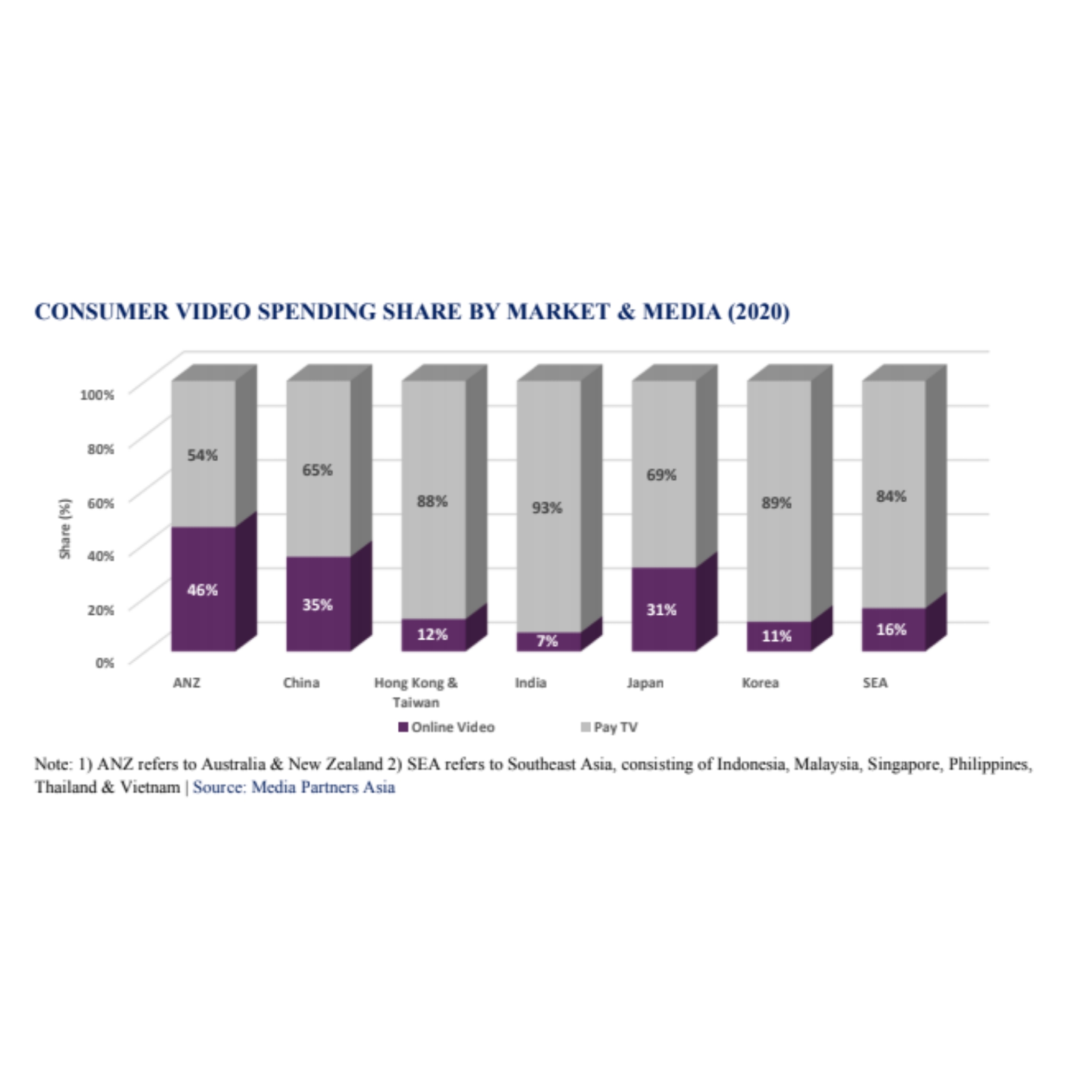
    MUMBAI: To use a cricket analogy, television is going to go  even  more on the backfoot while online video shall come charging down the pitch to hit revenues out of the park. 

    That’s the latest prediction of Singapore-based  Media Partners’ Asia (MPA) in its  2025 report, outlining transformative trends in the Asia-Pacific (APAC) video and broadband industry.

    Among its key findings and predictions are:

    Industry growth & transition
    * Market Expansion: APAC video revenue is projected to grow by $16.2 billion, reaching over $165 billion by 2029 (CAGR: 2.2 per cent).
    * Online video explodes: Online video revenues projected to climb from $64 billion in 2024 to $89 billion by 2029, marking a 40 per cent increase. Gap with the US (at $140 billion in 2029) will have narrowed. 
    * Traditional TV contracts:  In contrast, traditional TV revenues are expected to shrink by $8 billion during the same period.
    * Streaming overtakes TV: Streaming revenues will surpass traditional TV by 2027, with their industry share rising from 44 per cent in 2024 to 54 per cent  by 2029, led by India and China.
    * Subscription video on demand (SVOD) services are expected to grow their share of the Asia-Pacific (APAC) video industry’s revenue from 44 per cent in 2024 to over 54 per cent by 2029.

    Revenue drivers & contributions
    * Key markets: India, China, and Japan will drive 64  per cent of the growth, with India alone accounting for 26 per cent.
    * Content growth: User-generated content (UGC) and social video platforms will lead, contributing $10.7 billion in new revenue. SVOD ($8.4 billion) and premium AVOD ($5.0 billion) follow closely.
    * Advertising leadership: Advertising will account for 65 per cent  of online video revenue growth, increasing its share of total video revenue from 52 per cent in 2024 to 54 per cent by 2029. Premium ad-supported video on  demand platforms driving growth.

    Shifting dynamics
    * SVOD boom: Subscriptions are set to rise from 644 million in 2024 to 870 million by 2029, driven by sports, Asian entertainment, and US content.
    * Connected TV surge: Penetration will exceed 85 per cent  in developed markets like Australia, Korea, and Japan by 2029, with notable growth in India, Indonesia, and Thailand.
    * Local players gaining ground: Global giants like YouTube, Netflix, and TikTok, which held 67 per cent market share in 2024, will see this decline to 62 per cent by 2029 as regional platforms strengthen.

    Vivek Couto, Executive Director at MPA, stated, “The APAC video market is undergoing rapid transformation, with streaming driving deeper engagement and improved monetisation. However, the decline of traditional TV and challenges in local streaming profitability are pushing the industry toward consolidation, particularly in markets like India, Japan, and Southeast Asia

  • India premium VOD revenues top $1B in 1H 2024

    India premium VOD revenues top $1B in 1H 2024

    Mumbai: The premium video-on-demand (VOD) category, driven by advertising and subscription, generated $1.04 billion in revenues over 1H 2024, up 38 per cent from $760 million in 1H 2023. Local content accounted for 86 per cent of premium VOD engagement in 1H 2024, with live sports and local drama & romance leading category demand. Sports content attracted the highest number of unique viewers, with nine of the top 15 titles belonging to the sports genre – six of which were BCCI events. Cricket was the standout, as IPL 2024 and the ICC Men’s T20 World Cup 2024 were the top two sports properties, driving significant viewership.

    The take-outs were revealed by the latest analysis conducted by ampd, the digital measurement platform owned and operated by Media Partners Asia (MPA), which measures consumption and engagement across the digital economy in India, including VOD. In 1H 2024, a total of 8 trillion minutes were streamed across online video platforms in India. YouTube dominated the landscape, capturing 92 per cent of all online video consumption, while premium platforms—comprising AVOD, freemium, and SVOD services—accounted for the remaining eight per cent. Within the premium video segment, freemium platforms led with 92 per cent of the 645 bil minutes streamed during the same period.

    Jio Cinema, Netflix, and Disney+ Hotstar led premium VOD category monetisation, contributing 70 per cent of the total revenues garnered by the category. Jio Cinema was the category leader in 1H 2024 with 36 per cent revenue share while Netflix led pure-play SVOD monetization with a 38 per cent share.

    Premium VOD ad revenue in 1H 2024 was driven by Jio Cinema and Disney+ Hotstar, leveraging marquee cricket with the Indian Premiere League (IPL) and ICC World Cup. After a turbulent CY2023, total SVOD subscriptions rebounded from 110 million to 120 million in 1H 2024. India’s TAM of affluent audiences continues to expand, with Netflix and Prime Video capitalising on this trend through investments in local originals and films. Together, these platforms accounted for nearly 70 per cent of SVOD revenue in 1H 2024. Meanwhile, Jio Cinema’s launch of an affordable plan has further broadened the SVOD audience, incentivising more users to pay for streaming content.

    Commenting on the findings, MPA India vice president Mihir Shah said, “Subscriber growth momentum will continue in 2H 2024, driven by aggregation and deeper partnerships with telcos, pay-TV operators, and OEMs. In addition, with the onset of the festive season at, advertising spending should be robust in Q4 2024. However, with no major sports events, spending will shift toward tentpole non-fiction shows on premium VOD platforms, with a significant portion moving back to high-reach UGC platforms. Netflix and Prime Video have a steady stream of content planned for 2H 2024. For freemium platforms, entertainment spends have started to come back under new advertising-friendly formats like TV++, which are similar to daily TV soap operas with 40-120 plus episodes per season. These formats have proven to attract new users and drive engagement with lower budgets.”

  • MPA report: Content investment in seven APAC markets grew four per cent in 2023

    MPA report: Content investment in seven APAC markets grew four per cent in 2023

    Mumbai: Media Partners Asia’s (MPA) 2024 Asia Video Content Dynamics report offers a comprehensive analysis of content investment, engagement, and viewership across TV, VOD, and theatrical sectors in seven key APAC markets: India, Korea, Indonesia, Philippines, Singapore, Thailand, and Vietnam.

    The report reveals that content investment in these markets reached $15.5 billion in 2023, marking a four per cent year-on-year increase. This growth, while positive, represents a significant slowdown from the 2021-22 period, reflecting a post-COVID normalization of budgets and a rationalisation of local content investment in streaming VOD. India led the charge with a robust 12 per cent growth, driven primarily by sports content, while Indonesia followed with a solid five per cent increase. Korea, the Philippines, and Thailand managed modest gains, whereas Malaysia and Vietnam experienced contractions due to challenging advertising markets.

    Korea and India continue to dominate the landscape, collectively accounting for 80 per cent of total content investment in 2023. Korea, a mature market, is expected to see flat overall growth, with expansion in streaming and film offset by TV’s secular decline. In contrast, India, with its relatively low 52 per cent TV household penetration, presents significant growth potential across all verticals through 2028. MPA projects that India will surpass Korea in total content investment by 2026.

    Looking ahead, MPA forecasts a 2.7 per cent CAGR in total content investment across the seven markets, reaching $17.2 billion by 2028. This growth will be predominantly driven by India, with Indonesia and the Philippines also expected to show decent growth rates. Korea and Thailand are anticipated to experience limited growth, while Vietnam faces the most challenges due to weak TV advertising and rampant piracy.

    The investment landscape is evolving, with TV (free-to-air and pay) still commanding the lion’s share at 64 per cent in 2023, followed by streaming at 26 per cent and film at 10 per cent. By 2028, TV is projected to retain over 50 per cent of industry investment, while streaming is expected to increase its share to 33 per cent, with film marginally growing to 11 per cent.

    MPA vice president Stephen Laslocky offered insights on the shifting content dynamics:

    “Korean content continues to lead the pack with world-class production values and compelling storytelling, though we’re seeing online original content costs inflate to as much as US$7 million per episode. Its extraordinary appeal is evident, accounting for over 30 per cent of content demand in Southeast Asia and Taiwan. The rise of streaming has significantly elevated storytelling and production quality, particularly in Thailand and Indonesia, where competition is intensifying. We’re seeing content from these countries, especially Thai titles, gaining traction across Asia.

    It’s become clear that many traditional TV drama producers are struggling to compete with higher-end streamed video content. In contrast, quality film producers have embraced the flexibility of streaming and adapted with greater ease. Over the past year, as some ad revenues have permanently shifted to digital and streaming behaviour has become entrenched, we’ve observed TV production margins contracting across most markets. For online originals, streamers have become much more disciplined in their approach to budgeting and content strategy.”

    The report also highlights significant trends in online video consumption. YouTube leads with over a billion monthly active users across the surveyed markets, with 732 million in India alone. TikTok has emerged as a formidable competitor in Southeast Asia, boasting 211 million total monthly active users across Indonesia, Malaysia, Philippines, and Thailand.

    In the premium VOD space, Netflix maintains a strong lead in most markets, capturing between 40-70 per cent of viewership in Korea, Indonesia, Malaysia, and the Philippines. However, it faces stiff competition in Thailand from TrueID and in India from Disney+ Hotstar and Jio Cinema. Local players like Indonesia’s Vidio are also making their mark, while regional platforms such as Viu are leveraging Korean content and strategic partnerships to strengthen their positions.

    The theatrical sector is still in recovery mode, with superhero franchise fatigue and Hollywood strikes delaying a return to pre-pandemic levels in most markets. India has already bounced back, with 2023 box office revenues exceeding 2019 figures. Other markets, excluding Korea, are expected to recover over the 2025-28 period. An emerging trend in film distribution sees a shift towards revenue-share models for internationally appealing titles, presenting new opportunities for Korean and Thai producers in particular.

    As the APAC content landscape continues to evolve, the interplay between traditional and emerging platforms, coupled with changing consumer behaviours, will shape the industry’s future. The MPA report underscores the dynamic nature of the market and the critical importance of adaptability and strategic investment in driving growth across the region.

  • Revenues up 11 per cent in 1H 2024 for Southeast Asia’s premium VOD sector

    Revenues up 11 per cent in 1H 2024 for Southeast Asia’s premium VOD sector

    Mumbai: The premium video-on-demand (VOD) landscape in Southeast Asia continues to grow revenues at a double-digit pace with viewership relatively robust, as revealed by the latest analysis conducted by ampd, the digital measurement platform owned and operated by Media Partners Asia (MPA).

    Southeast Asia’s premium VOD category generated more than 230 billion minutes in viewership over 1H 2024, up four per cent Y/Y, driven by growth in the Philippines and Indonesia. Category revenues, including subscription fees and advertising sales, grew 11 per cent Y/Y to US$895 million with gains across the region’s five main markets, Indonesia, Thailand, Malaysia, Philippines and Singapore. Indonesia continues to retain the first position in terms of revenues. The region added one million net new SVOD subscriptions over 1H 2024 to reach 48.8 million, representing Y/Y growth of 5 per cent. Philippines, Thailand and Malaysia led customer growth.

    MPA executive director Vivek Couto said: “While price increases have moderated customer growth, growing penetration beyond the major urban centers in Indonesia, Philippines and Thailand remains a major opportunity as premium sports, local, Asian and US content moves online. Korean, US, Chinese & Japanese content captured 80 per cent of premium VOD viewership in Southeast Asia in 1H 2024. While Korean content remains the major driver, Chinese dramas are increasing freemium viewership. US content remains the leading acquisition funnel across global services. Local content maintains strong reach, with acquisition impact.”

    Netflix and Viu both grew revenues at a significant double-digit pace in 1H 2024. Netflix’s share of category viewership reached 50 per cent in 1H 2024 overall, dominating viewership in Malaysia, Philippines and Singapore but facing strong local competition and more complex category dynamics in Indonesia and Thailand. Netflix’s category revenue share, including ads, reached 40 per cent in 1H 2024. Viu had 10 per cent viewership and category revenue share in 1H 2024. In spite of shedding subs, Disney+ revenues continue to grow as the service focuses on a higher ARPU customer funnel. WeTV retained a robust category engagement share in SEA at eight per cent in 1H 2024. Amongst local players, Vidio leads in Indonesia with 20 per cent category revenue share in 1H 2024 and 17 per cent viewership share, driven by heartland local dramas and sports. Thailand’s True ID led Thailand with 27 per cent premium VOD category viewership share though it remains second to Netflix in revenue share.

    Premium VOD viewership in Southeast Asia (1H 2024)

    Source: ampd

  • Robust growth in Korea’s premium VOD sector, led by Tving

    Robust growth in Korea’s premium VOD sector, led by Tving

    Mumbai: The premium video-on-demand (VOD) landscape in South Korea grew subscribers, revenues and engagement at robust levels in 1H 2024 according to analysis conducted by ampd, the digital measurement platform owned and operated by Media Partners Asia (MPA). The Korean SVOD market added 705,000 net new subscribers in 1H to a total 20.8 million by end of June 2024 while premium VOD revenues, including subscription and advertising, grew 11 per cent year-on-year to $922 million and viewership grew five per cent Y/Y to 103 billion minutes.

    Tving led subscriber growth in 1H 2024, contributing 34 per cent share of SVOD category net additions to 4.2 million total subscribers. Tving’s growth is anchored to popular tvN and JTBC network dramas, variety and originals. The introduction of a new advertising tier helped drive user growth in 1H 2024, with MAUs >11.5 million. Netflix remains the premium VOD category leader with 43 per cent share of revenue and 37 per cent of viewership. Tving is gaining pace, growing share of premium VOD viewership by six points Y/Y to reach 30 per cent, capturing 15 per cent of premium VOD revenues. Beyond premium VOD, viewership across AVOD, SVOD and live streaming platforms on mobile devices totalled 534 billion minutes in 1H 2024, up 24 per cent Y/Y. YouTube is the overall VOD category leader and continues to gain share, reaching 80 per cent of total VOD viewership in 1H 2024.

    ampd’s lead analyst & head of insights Dhivya T commented: “Local content captured 77 per cent of premium VOD category engagement and 75 per cent of customer acquisition in 1H 2024, with key drama and variety hits from Tving , Netflix , Coupang Play and Disney+. An abundance of local drama and variety releases across major VOD platforms drive viewership, with over 200 titles contributing to 80 per cent of Korean content demand in 1H 2024. Tving led hits across scripted and unscripted titles, carrying 10 of the top 15 titles (seven shared across platforms) in 1H 2024. Other key platforms include Netflix with seven of the top 15 titles. Disney+ originals Coupang Play’s sports and originals also broke through. CJ ENM produced six of the top 15 titles in 1H 2024.”

    Premium VOD viewership share in South Korea (1H 2024)

    Source: ampd

  • India’s creative economy set to soar with premium online video fuelling 50 per cent of new revenue growth

    India’s creative economy set to soar with premium online video fuelling 50 per cent of new revenue growth

    Mumbai – An insightful report released today unveiled the transformative power of India’s streaming video on demand (VOD) industry and its contribution to the nation’s video entertainment economy. The study, “Beyond Screens – Streaming VOD’s Impact on The Creative Economy,” commissioned by Prime Video India and conducted by Media Partners Asia (MPA), offers a compelling vision of the sector’s future and its far-reaching economic implications.

    The comprehensive analysis, based on extensive research and interviews with industry leaders, reveals that premium online video-on-demand is set to fuel 50 per cent of new revenue growth of India’s total video market. The report reveals that while historically, TV has led content investments in the video industry, but online video (ex-sports) already claims 24 per cent share in 2024, a 3x increase since 2017, and is expected to touch 30 per cent by 2028. Further, with streaming revenues equating to 1.5x of movie producers’ net share from theatrical box office, the growth in the video industry holistically is being driven by streaming. Not just this, but even allied industries, like telecom are seeing the impact of video streaming. For instance, video has been the primary driver of data consumption for telcos, representing over 70 per cent of their data traffic.

    The streaming revolution has already catalysed an unprecedented content boom, with over 1,500 original titles released across VOD platforms between 2016 and 2023. This surge has created a ripple effect of employment opportunities, generating approximately 174,000 direct and indirect jobs in 2023 alone. The industry’s projected growth promises to open up 280,000 positions by 2028, with the potential to exceed 330,000 jobs as demand for specialized skills in VFX, animation, subtitling, and dubbing intensifies.

    Premium video platforms are the true pioneers of the pan-India content movement, playing a significant role in expanding its reach nationwide. Crucially, the report highlights how these platforms are also emerging as powerful conduits for the nation’s soft power on the global stage. By showcasing India’s diverse cultures and progressive outlook to audiences in over 190 countries, these platforms are elevating the country’s international influence to new heights. Leading streaming services like Prime Video, Disney+ Hotstar, Jio Cinema, Netflix, Sony Liv, and Zee5 are at the forefront of this cultural exportation, poised to cement Indian content’s place alongside global phenomena like Anime, K-pop, and K-dramas.

    The report also highlights how the social and economic multiplier effect of streaming VOD can unlock future value for stakeholders in the creative and several allied industries, contingent on addressing key challenges:

    1. Expanding modern production facilities beyond major urban centers

    2. Fostering collaboration for infrastructure development

    3. Cultivating technical talent through innovative training programs and academic partnerships

    4. Intensifying efforts to combat piracy and protect intellectual property

    As India’s creative economy stands on the brink of unprecedented growth and global impact, this report serves as a crucial roadmap for industry stakeholders and policymakers alike. The streaming VOD sector is not just reshaping entertainment; it’s redefining India’s place on the world stage.

  • Online Video remains the growth engine of content investment with local content still key to acquiring subscribers: AVIA OTT Summit

    Online Video remains the growth engine of content investment with local content still key to acquiring subscribers: AVIA OTT Summit

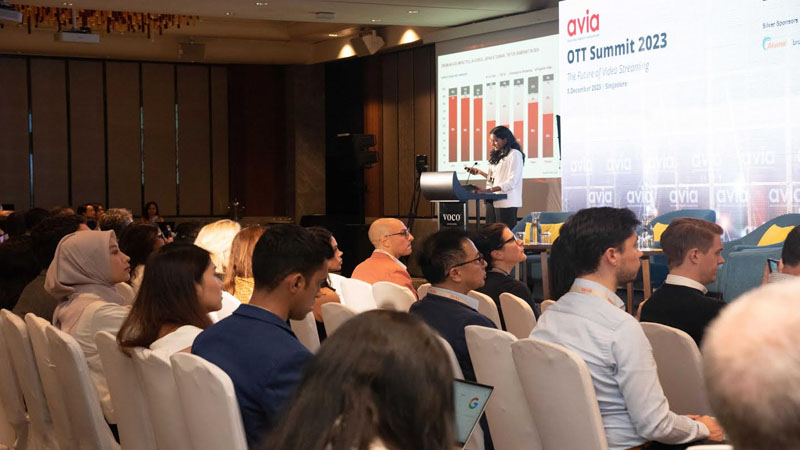
    Mumbai: The Asia Video Industry Association (AVIA), held its annual OTT Summit in Singapore on 5 December, where over 90 per cent of the speakers were senior female executives from across the video industry in Asia Pacific. This year’s summit was designed to try and redress the gender imbalance seen in many industry conferences.

    The Summit opened with Media Partners Asia head of content & platform insights, lead analyst Dhivya T, presenting an overview of the state of streaming in Asia, a market where competition was very much driven by a battle for share of time, with premium video on demand (VOD) fighting with social media and user-generated content (UGC).  

    Competition was also giving rise to new business models and strategies beyond the traditional AVOD and SVOD models, including mobile gaming, ecommerce and bundle subscriptions becoming more common. And with a higher focus in increasing ARPUs, price increases have also become prevalent.

    Ex-China, online video revenues in Asia Pacific were expected to hit US$46 billion in 2028, up from US$29 billion this year. While SVOD was expected to have a CAGR of 6.4 percent, premium AVOD will see a growth rate of almost 18 percent, led by Japan, India, and Korea. In Southeast Asia, Indonesia was emerging as the leading market for AVOD, with Thailand for SVOD.

    In terms of content trends and investment, although pay TV remained the largest vertical, online video was the growth engine of video content investment, with local and Asian content leading premium VOD viewership with the highest reach. Hence local content remained key to acquiring subscribers in the region, and constantly over-indexing with new users.

    In the world of streaming, Free Ad-Supported Streaming TV (FAST) was also much talked about at the Summit as the new kid on the block, as it mimicked the experience of linear TV, delivering scheduled content, with advertising included. Driving the growth of FAST in Asia was the penetration of Smart TVs in the region, with 80 per cent of OTT viewers in APAC using Connected TV (CTV), and with one-third of OTT viewing on CTV, shared Samsung Ads APAC head of product marketing Samantha Cooke. But FAST channels were not always about making money, as FAST was also used for marketing, outreach and brand building, added Brightcove senior product marketing manager Roberta Cambio.

    Senior marketeers from the major platforms too chimed in on the importance of brand building, as the mantra was no longer acquiring subscribers at all costs but focus on keeping the ones you have. For Shemaroo Entertainment CMO Anuja Trivedi, marketing was now more aligned to the business, as consumers who saw campaigns engaged better as well. And partnerships which built more value can only build more excitement for the product and engagement for the platform, said Trivedi. Akamai Technologies senior solutions engineer Sarah Lim, also added that people, platform and the technology were what will help drive your strategy forward for the future. “Marketing is greater than the sum of its parts,” said Lim.

    With 71 per cent of viewers in APAC watching advertising supported streaming on top of linear TV viewing, OMG Singapore chair for media & measurement, AAMS & CEO Chloe Neo, was also seeing growth from regional clients with a greater inclination to look at branding, with the reallocation of budgets into OTT tending to be from the big brands, due to their expectations on quality content. While investment was coming from the linear TV side, more clients were now embracing CTV and addressability for strategic benefit, and not just for incremental reach, added GroupM CIO Southeast & North Asia, Chair, APAC Investment Committee Anita Munro.

    A strong focus on content closed off the Summit, with panellists agreeing that Asian content could not be lumped together. There was huge variety within what is labelled Chinese or Indian content. ZEE5 CCO Hindi Originals Nimisha Pandey emphasised that storytelling trumped investment. “Audiences don’t care how much money has gone into content, if it connects, it connects,” she said.

    Viu content acquisition and development chief Marianne Lee  noted, “Each local market has their own strategy which complements the regional strategy. While it is important for the content to travel outside, the content must also do well locally,” said Lee. In agreement, Agnes content director Agnes Rozario added, “There will always be certain types of content that travel better than others. But it has to work in the home market first.”

    One market which saw things a little differently was Thailand where True Corporation deputy director, planning & business development, strategic content group Kirana Cheewachuen, saw huge potential in the overseas growth and popularity of Thai content, and international success was her primary goal.

    Sharing her strategy for the Pacific Rim in the closing session, Paramount ANZ EVP, chief content officer & head Beverley McGarvey said that Australia was a mature market at a pivotal point now as audiences were adjusting between more traditional legacy media and streaming. Hence accelerating growth in streaming while maintaining linear businesses and making content that can work across platforms was what was needed in order to remain viable.