Tag: Media Ownership

  • Peace TV saga & absence of rule of law

    Peace TV saga & absence of rule of law

    The Peace TV saga after the Dhaka terrorist attack just before Eid and the brouhaha created over availability of an unlicensed channel in Indian television homes highlights yet again rules and regulations have to be applied uniformly and stringently.

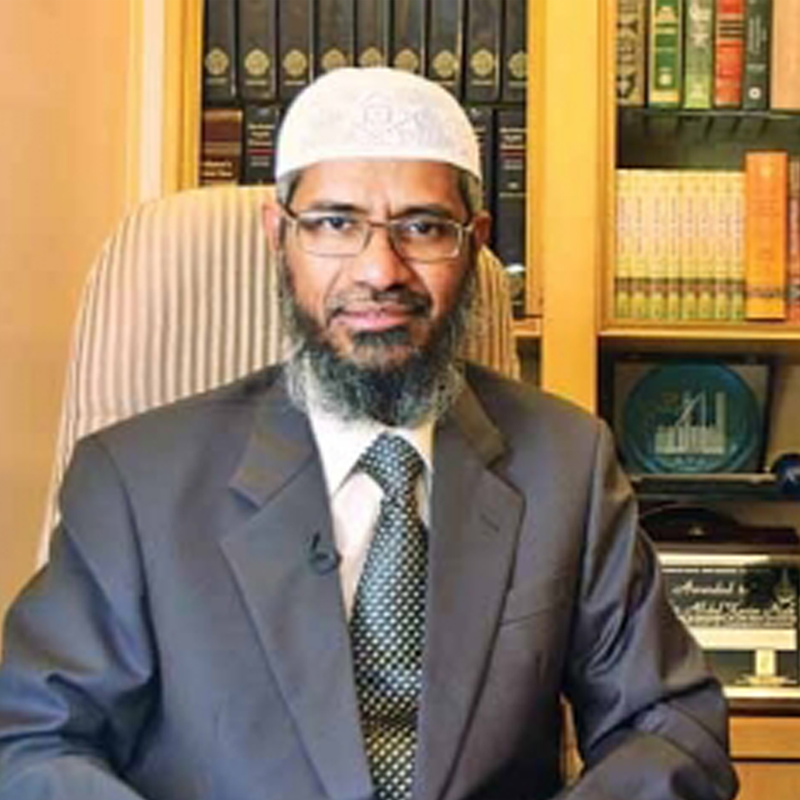
    The Indian government woke up suddenly issuing gag orders on distribution platforms when the general media in the country went to town regarding Peace TV. The media alleged Peace TV and the Mumbai-based Islamic tele-evangelist Zakir Naik’s sermons aired on the channel could have instigated the Bangladeshi terrorists. All these allegations were based on some interpretation of a report in a Bangladeshi newspaper.

    That the Bangla newspaper subsequently clarified its report stating categorically that it had never said the terrorists were `inspired’ by Naik’s sermons is a completely another story because the Indian media, by and large news channels, ignored the clarification.

    However, the fact stands that Peace TV is not licensed to air in India and had been denied landing rights by the Indian government several times in the past. Still, the channel was available on Indian networks and the sermons online.

    Similarly, several Pakistani TV channels too are available in some parts of the country (crackdown on illegal retransmissions do happen from time to time, government officials insist) as also Chinese radio stations in border areas.

    So, the question is: how come an unlicensed TV channel officially denied permission to broadcast in India was still reaching Indian TV homes?

    The answer lies in apparent laxity in implementing and upholding existing regulations on the part of Indian policy-makers, regulators and law enforcing agencies. In some cases it may also be local-level indulgences despite knowing that a certain regulation had been breached.

    Because in India most such issues boil down to majority vs. minority yardstick with the victimisation syndrome kicking in — all in the name of certain democratic rights — regulatory breaches are overlooked or rule of the law not enforced. Until one such breach kicks up crap all round; like the Peace TV affair recently did.

    Historically speaking, as India opened up to satellite TV revolution from early 1990s and rules were lax (downlink licence or landing rights were terms not known to Indian policy-makers then) many TV channels invaded the Indian skies and homes. Some of them were bad (read propagandist), some indifferent, but largely most were entertaining.

    As successive Indian governments woke up to the power of TV propaganda in whipping up unpalatable frenzy and jingoism, Ministry of Information and Broadcasting (MIB) started formulating rules and regulations to isolate TV channels, mostly uplinked from outside India, from entering Indian homes via cable or other distribution platforms, which were perceived as not conducive for India.

    One such historic policy drafting also saw a Broadcast Bill being introduced in Parliament in 1996 where the draft stated that certain categories of organisations (like political parties, NGOs, religious bodies, advertising agencies, etc) would be barred from owning and running TV channels.

    The Bill never got enacted into a law and since then half-hearted attempts by other governments to bring similar Bills in Parliament failed to get necessary traction; mostly owing to a superstitious belief that whichever government tries to regulate the broadcast sector went out of power in New Delhi.

    Historical incidents, notwithstanding, it has also been observed in India that any proposed regulation relating to cable and broadcast sector having the potential to affect powerful lobbies like political parties or religious bodies or their proxies get swept under the carpet.

    Take, for example, broadcast carriage regulator TRAI’s two recommendations on media ownership, made after wide consultations with stakeholders. I am told both the reports are gathering dust in some corner of MIB.

    Apart from suggesting many other things on the ownership issue, TRAI said in a set of recommendations in 2014, “…given that about six years have elapsed without any concrete action being taken by the Government, the Authority strongly recommends that its Recommendations of 12 November 2008 and 28 December 2012 may be implemented forthwith.”

    The regulator’s recommendations came after issues relating to media ownership issue and vertical monopoly were referred to it by MIB.

    Emboldened by the fact that MIB had put its weight behind it, TRAI (again) recommended in 2014 that political bodies, religious bodies, urban, local, panchayati raj, and other publicly funded bodies, Central and State government ministries, departments, companies, undertakings, joint ventures, and government-funded entities and affiliates be barred from entry into broadcasting and TV channel distribution sectors.

    The regulator suggested exit routes for existing entities already into business, adding such a debarment could be implemented through an executive decision by incorporating the disqualifications into rules, regulations and guidelines as necessary.

    But by 2014, MIB had already licensed many news and religious/spiritual TV channels and distribution platforms owned/managed by political parties, religious bodies (in one case a temple’s management committee) and/or their proxies for operation at pan-India and State levels.

    And so, even the 2014 TRAI recommendations remain ignored, while at another level technology has outpaced or threatens to make obsolete the Indian process of policy making.

    A colleague, while outlining the potential of Facebook Live (and other such techs like Twitter’s Periscope), recently commented it’s matter of time when Facebook Live will kick into India, dipping into the country’s smart-phone user base (250 million on last count) to give birth to the possibility of “hundreds of news channels on FB dishing out unadulterated, independent updates of developments.” Very few in Indian government would be tracking developments like FB Live.

    In an age when technology is moving faster than policy-making, flat-footedness of Indian policy-makers and our general apathy towards rule of the law will hasten policy chaos resulting in arbitrary decisions being implemented.

  • Peace TV saga & absence of rule of law

    Peace TV saga & absence of rule of law

    The Peace TV saga after the Dhaka terrorist attack just before Eid and the brouhaha created over availability of an unlicensed channel in Indian television homes highlights yet again rules and regulations have to be applied uniformly and stringently.

    The Indian government woke up suddenly issuing gag orders on distribution platforms when the general media in the country went to town regarding Peace TV. The media alleged Peace TV and the Mumbai-based Islamic tele-evangelist Zakir Naik’s sermons aired on the channel could have instigated the Bangladeshi terrorists. All these allegations were based on some interpretation of a report in a Bangladeshi newspaper.

    That the Bangla newspaper subsequently clarified its report stating categorically that it had never said the terrorists were `inspired’ by Naik’s sermons is a completely another story because the Indian media, by and large news channels, ignored the clarification.

    However, the fact stands that Peace TV is not licensed to air in India and had been denied landing rights by the Indian government several times in the past. Still, the channel was available on Indian networks and the sermons online.

    Similarly, several Pakistani TV channels too are available in some parts of the country (crackdown on illegal retransmissions do happen from time to time, government officials insist) as also Chinese radio stations in border areas.

    So, the question is: how come an unlicensed TV channel officially denied permission to broadcast in India was still reaching Indian TV homes?

    The answer lies in apparent laxity in implementing and upholding existing regulations on the part of Indian policy-makers, regulators and law enforcing agencies. In some cases it may also be local-level indulgences despite knowing that a certain regulation had been breached.

    Because in India most such issues boil down to majority vs. minority yardstick with the victimisation syndrome kicking in — all in the name of certain democratic rights — regulatory breaches are overlooked or rule of the law not enforced. Until one such breach kicks up crap all round; like the Peace TV affair recently did.

    Historically speaking, as India opened up to satellite TV revolution from early 1990s and rules were lax (downlink licence or landing rights were terms not known to Indian policy-makers then) many TV channels invaded the Indian skies and homes. Some of them were bad (read propagandist), some indifferent, but largely most were entertaining.

    As successive Indian governments woke up to the power of TV propaganda in whipping up unpalatable frenzy and jingoism, Ministry of Information and Broadcasting (MIB) started formulating rules and regulations to isolate TV channels, mostly uplinked from outside India, from entering Indian homes via cable or other distribution platforms, which were perceived as not conducive for India.

    One such historic policy drafting also saw a Broadcast Bill being introduced in Parliament in 1996 where the draft stated that certain categories of organisations (like political parties, NGOs, religious bodies, advertising agencies, etc) would be barred from owning and running TV channels.

    The Bill never got enacted into a law and since then half-hearted attempts by other governments to bring similar Bills in Parliament failed to get necessary traction; mostly owing to a superstitious belief that whichever government tries to regulate the broadcast sector went out of power in New Delhi.

    Historical incidents, notwithstanding, it has also been observed in India that any proposed regulation relating to cable and broadcast sector having the potential to affect powerful lobbies like political parties or religious bodies or their proxies get swept under the carpet.

    Take, for example, broadcast carriage regulator TRAI’s two recommendations on media ownership, made after wide consultations with stakeholders. I am told both the reports are gathering dust in some corner of MIB.

    Apart from suggesting many other things on the ownership issue, TRAI said in a set of recommendations in 2014, “…given that about six years have elapsed without any concrete action being taken by the Government, the Authority strongly recommends that its Recommendations of 12 November 2008 and 28 December 2012 may be implemented forthwith.”

    The regulator’s recommendations came after issues relating to media ownership issue and vertical monopoly were referred to it by MIB.

    Emboldened by the fact that MIB had put its weight behind it, TRAI (again) recommended in 2014 that political bodies, religious bodies, urban, local, panchayati raj, and other publicly funded bodies, Central and State government ministries, departments, companies, undertakings, joint ventures, and government-funded entities and affiliates be barred from entry into broadcasting and TV channel distribution sectors.

    The regulator suggested exit routes for existing entities already into business, adding such a debarment could be implemented through an executive decision by incorporating the disqualifications into rules, regulations and guidelines as necessary.

    But by 2014, MIB had already licensed many news and religious/spiritual TV channels and distribution platforms owned/managed by political parties, religious bodies (in one case a temple’s management committee) and/or their proxies for operation at pan-India and State levels.

    And so, even the 2014 TRAI recommendations remain ignored, while at another level technology has outpaced or threatens to make obsolete the Indian process of policy making.

    A colleague, while outlining the potential of Facebook Live (and other such techs like Twitter’s Periscope), recently commented it’s matter of time when Facebook Live will kick into India, dipping into the country’s smart-phone user base (250 million on last count) to give birth to the possibility of “hundreds of news channels on FB dishing out unadulterated, independent updates of developments.” Very few in Indian government would be tracking developments like FB Live.

    In an age when technology is moving faster than policy-making, flat-footedness of Indian policy-makers and our general apathy towards rule of the law will hasten policy chaos resulting in arbitrary decisions being implemented.

  • “Govt. should come up with clear, transparent security clearance guidelines:” Dr Subhash Chandra

    “Govt. should come up with clear, transparent security clearance guidelines:” Dr Subhash Chandra

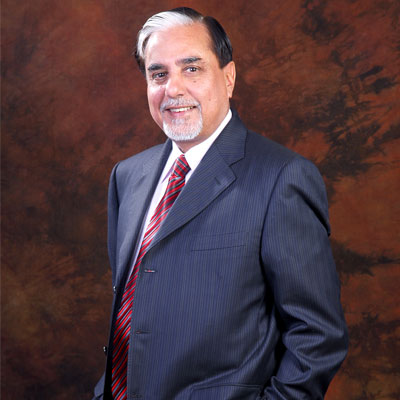
    MUMBAI: The growing number of television channels and the recent debate over the security clearance of Kalanithi Maran owned Sun TV Network has led the ‘Big Daddy’ of Indian television to come out and speak about ownership and security guidelines of the mushrooming channels.


    Essel Group chairman Dr Subhash Chandra said, “From the beginning, I have been of the view, which I mentioned during the UPA 1 regime to Priyaranjan Das Munshi and Dr. Manmohan Singh that licences should not be issued without proper checks.”


    According to Chandra, news channel licences should be scrutinized in the manner that the Reserve Bank of India scrutinizes applications before issuing any licence in financial service. “They go to the extent of finding out the ultimate source of funding as well as cleanliness of people involved and check them out before issuing licence,” he informed. 


    Chandra has been actively speaking about having a strict and clear guideline before issuing licences from 2001-2006. “But because no one was listening to my point of view, I decided to then remain dormant and listen to the government’s point of view,” he laughed off. 


    Ten days ago, Chandra had tweeted rather sensationally saying, “I will not be surprised if for some TV stations, the final money is coming from Dawood Ibrahim.” He feels that the system prevalent currently doesn’t go even one layer beyond what the person has submitted. 


    The minimum amount required for starting a news channel today is Rs 5 crore. “As per the guidelines today, the check is done on the person submitting the money. No one tries finding out where the money is coming from. This is eroding our credibility as media,” he said.  


    Chandra is of the opinion that the time has come to have strict, clear and transparent guidelines, which will expose the corporate veil and go to the real source of funding. “The government is not doing anything on the issue of media ownership and then says that all media is wrong,” he added. 


    Pointing out that no one so far has debated on the issue, he said, “I want the debate to be triggered and then the decision can be taken collectively.”


    Calling out to the government to check entities through clear guidelines, he said, “Those who are clean will come out clean, but the government hasn’t checked anyone. We are open to such scrutiny ourselves.”


    Stressing on the fact that not having clear security guidelines compromises with the national and economic security, Chandra said, “I want to see clean money coming into the sector.”

  • TRAI managed to give broadcasting as much importance as telecom in 2014

    TRAI managed to give broadcasting as much importance as telecom in 2014

    NEW DELHI: A decade after broadcasting was handed over to it, the Telecom Regulatory Authority of India (TRAI) appears to have given equal if not more time to the broadcasting sector, thanks largely to convergence of technology.

    Thus, issues like spectrum, marketing and even FM radio have got equal space during the Regulator’s work as telecom, apart from the digital addressable system (DAS) introduced in 2011.

    TRAI also mastered the art of marketing during the year 2014. It developed radio jingles in Hindi, English and 10 regional languages on VAS/UCC which were aired on various FM channels in 84 cities across the country for one week in the months of June, July, August and October 2014.

     Admitting in its annual report that it had failed to carry out periodic reviews to make inflation- linked adjustments, TRAI said it had finally done so in concurrence with the Supreme Court. Thereafter it issued two tariff orders on 31 March and 31 December as far as broadcasting was concerned.

    Based on the rise in the wholesale price index (WPI) over the last five years and considering other relevant factors, the Authority came to a conclusion that an overall 27.5 per cent inflation hike is to be allowed, both at the wholesale and retail levels. Taking into account the consumer’s interest, the Authority prescribed that this hike be implemented in two installments. The first installment of 15 per cent was made effective from 1 April 2014. This was notified vide the Telecommunications (Broadcasting & Cable) Services (Second) Tariff (Eleventh Amendment) Order 2014 dated 31 March 2014. The second installment for the remaining inflation-linked increase has been made effective from 1 January 2015. This is expected to give adequate and reasonable time to all stakeholders to adjust to these hikes. To take care of the second installment of the inflation linked hike, the Authority notified the Telecommunications (Broadcasting & Cable) Services (Second) Tariff (Thirteenth Amendment) Order 2014 dated 31 December 2014.

    In a matter relating to a tariff order prescribing tariffs for commercial subscribers, the Supreme Court in April 2014, asked TRAI to come out with a new tariff dispensation for such subscribers. Accordingly, on 16 July and 18 July 2014, TRAI notified amendments to tariff orders / regulations pertaining to commercial subscribers of broadcasting and cable TV services. These amendments bring in clarity regarding the manner of distribution of TV signals to commercial subscribers, prescribe tariffs based on intended use of the TV signals, and aim to enhance transparency in tariff regulation.

    During phase I and phase II of digitisation of cable TV sector, it was noticed that the authorised agents/aggregators of the broadcasters were forming large bouquets, combining channels of different broadcasters and forcing it on the DPOs viz. cable, DTH, HITS and IP TV operators. This was resulting in distortions in the market. Incidentally, the Ministry of Information and Broadcasting (MIB) had also sent a reference to TRAI requesting for a review of the regulatory framework with regard to aggregators. The amendments aim at contributing to the orderly growth and overall development of the sector by streamlining the distribution of TV channels from broadcasters to DPOs. The salient provisions in these amendments are:

     A broadcaster is now defined as an entity having the necessary government permissions in its name. Only the broadcaster shall publish the Reference Interconnect Offers (RIOs) and enter into interconnection agreements with DPOs. However, in case a broadcaster, in discharge of its regulatory obligations, is using the services of an agent, such authorised agent can only act in the name of and on behalf of the broadcaster.

    As far as FM radio is concerned, TRAI on the request of MIB made recommendations on the amount of migration fee to be charged from existing FM operators on their migration from Phase-II to Phase-III of FM Radio Broadcasting. The permissions for operating FM Radio as per Phase-II policy were granted by MIB during the period 2005 to 2009 in 86 cities. As per the Phase-II policy, the permissions were granted for a period of 10 years to each FM Radio operator and there is no provision for extension of permission in the Phase-II policy.

    Therefore, Phase-II permissions will start expiring from 31 March 2015 onwards. There was no great incentive for an existing operator to pay a migration fee and operate as per the Phase-III policy only for the balance period of Phase-II permissions. Accordingly, the Authority in its recommendations on ‘Migration of FM Radio Broadcasters from Phase-II to Phase-III’ dated 20 February 2014 recommended a period of permission of 15 years after migration from Phase-II to Phase-III. The salient features of the recommendations are:
    TRAI reiterated early implementation of its recommendations on minimum channel spacing of 400 KHz for FM radio broadcast issued on 19 April 2012, which will in effect increase the number FM channels in each city for auction. The period of permission to operate the existing FM channels on migration from Phase-II to Phase-III will be 15 years.

    In the DTH Guidelines, under which licenses are issued to DTH operators, there is no explicit provision for an extension or a renewal of the licenses on completion of the license period. In this regard, the MIB sought recommendations of TRAI. After examination, the Authority concluded that to allow the DTH operators to continue their business after the expiry of the stipulated 10 year license period, the government will have to issue a new license. Accordingly, the Authority looked at the issues concerning the DTH sector holistically and, after following the due consultation process, sent its recommendations to the MIB on “Issues related to New DTH Licenses” on 23 July, 2014.

     Apart from removing the ambiguity over renewal of licenses, these recommendations suggest that the government came out with a new licensing regime for DTH sector which, amongst others, allows for longer license period, rationalised license fee, rationalised and regulated cross-holding and vertical integration between broadcasters and distribution platform operators including DTH operators. The recommendations also suggest a mechanism for migration of operators from the existing regime to the new regime. A new licensing regime, incorporating the provisions in the said recommendations, is expected to bring in, amongst others, certainty in DTH business, ease taxation pressures, attract better investments in the sector etc. and, thereby, promoting the overall efficiency in DTH operations.

     Ensuring plurality of voices in the media, that is, availability of fair, balanced and unbiased representation of a wide range of opinions and views, is critical for any democratic polity. Ensuring both external plurality, namely multiple voices in the national media market, and internal plurality, that is presentation of a range of facts and news in an unbiased manner by a media outlet, are fundamental in the working of a democracy.

    Regulatory restrictions on cross-media holdings seek to ensure external plurality in the media market, while restrictions in vertical holding by any entity of a broadcaster and a distribution entity are important to ensure that the distribution channels remain open to all desirous of presenting an opinion or view to the public. Finally, content regulation is critical in a time when news is increasingly seen as an asset belonging to a media entity’s owners to be monetized for political/ business/ or pecuniary gain.

    Recommendations on “Issues related to Media Ownership” were issued on 12 August

    The key issues addressed and the concerned recommendations included defining who owns a media entity and controls it – in brief, an entity that possess not less than 50 per cent of voting rights in the media entity or can appoint more than 50 per cent of the members of its board of directors will be deemed to control it. The Recommendations also take into consideration control through debt, and has recommended the loan threshold that will deem the lender to be in control of a media entity.

    The restrictions recommended on cross-media ownership apply on the media entities that cover news and current affairs genres in the television and print segments only, as impact of radio and internet in India on opinion formation is marginal. In the print segment, only daily newspapers, including business and financial newspapers, should be considered.
    The MIB had sent a reference to TRAI seeking recommendations of the Authority on extension of permission granted to Community Radio Stations (CRS) in India. According to the 2006 Policy Guidelines for CRSs, the period of validity of Grant of Permission Agreements (GOPA) is five years and the guidelines contain no provisions for the renewal/ extension of permissions. The validity of the GOPAs issued under these Guidelines for some of the CRSs, had expired on completion of five years, requiring them to stop operating. The Authority, therefore, in an interim reply suggested continuation of the GOPAs on the same terms and conditions.

    CRS are an important medium for empowerment and social development of the local communities. Therefore, going beyond the terms of reference from MIB, the Authority in a pre- consultation process sought inputs from CRS permission holders on the issues relevant for the growth of CRS in the country based on their experiences over the past decade. Several responses were received; these inter alia included comments on procedural matters; technical issues; content; aid and assistance.

    In addition to the issues highlighted, the Authority also noted the important role, the CRS play in serving the local communities by providing relevant information/alerts during natural calamities and emergency situations. The Authority, after analysing all issues comprehensively, sent ‘Recommendations on Issues related Community Radio Stations’ to MIB on 29 August, 2014. The salient features of the recommendations included initial permission for operating a CRS to be five years; extension of permission for five years at a time, to be allowed following performance evaluation; and CRS to be allowed to broadcast locally relevant news and current affairs content sourced exclusively from AIR, in its original form or translated into the local language/ dialect.

    MIB sent references to the Authority to provide its recommendations on issues relating to ground based channels being operated by cable TV operators and programming services being offered by DTH service providers to their subscribers. Collectively these kinds of programming services provided by the Distribution Platform Operators (DPOs) are referred to as Platform Services (PS).

    At present, the PS offered by DPOs are not subject to any specific regulations or guidelines. Similarly, there are several ground-based broadcasters who provided local TV channels to cable operators for distribution which are also not covered by any specific regulations. Since, all of these platform services and local channels are being operated and distributed without even a simple registration system in place; the possible impact of the content carried on these channels on the law and order/ security situation is a cause for concern. In addition, the differentiated treatment under the different policy guidelines applicable to the different types of DPOs has to be addressed, to provide for similar regulatory frameworks for what after all are inter-changeable services. Therefore, there is an urgent need to establish a simple, robust and fair regulatory system that addresses all concerns regarding the PS being distributed on cable TV networks.

    After an extensive consultation process in which open houses discussions were held with stakeholders in all four regions in India, the Authority forwarded its recommendations on ‘Regulatory framework for Platform services’ to the government on 19 November 2014.