Tag: Media Leadership

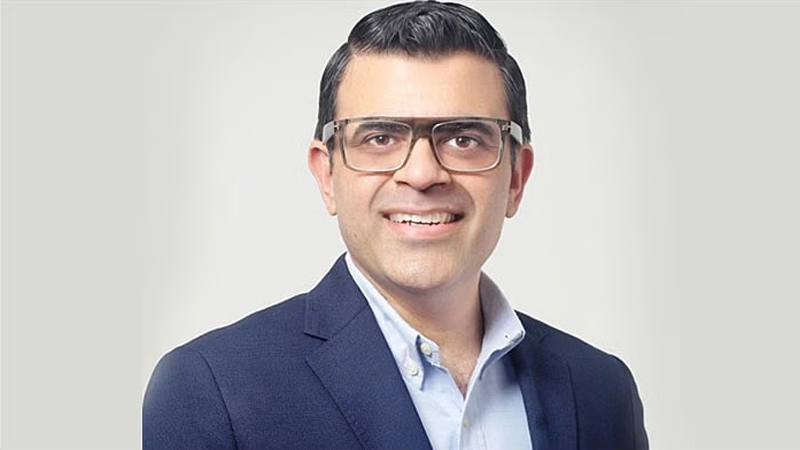
  • Harshit Sahni steps up as senior director at Warner Bros. Discovery

    Harshit Sahni steps up as senior director at Warner Bros. Discovery

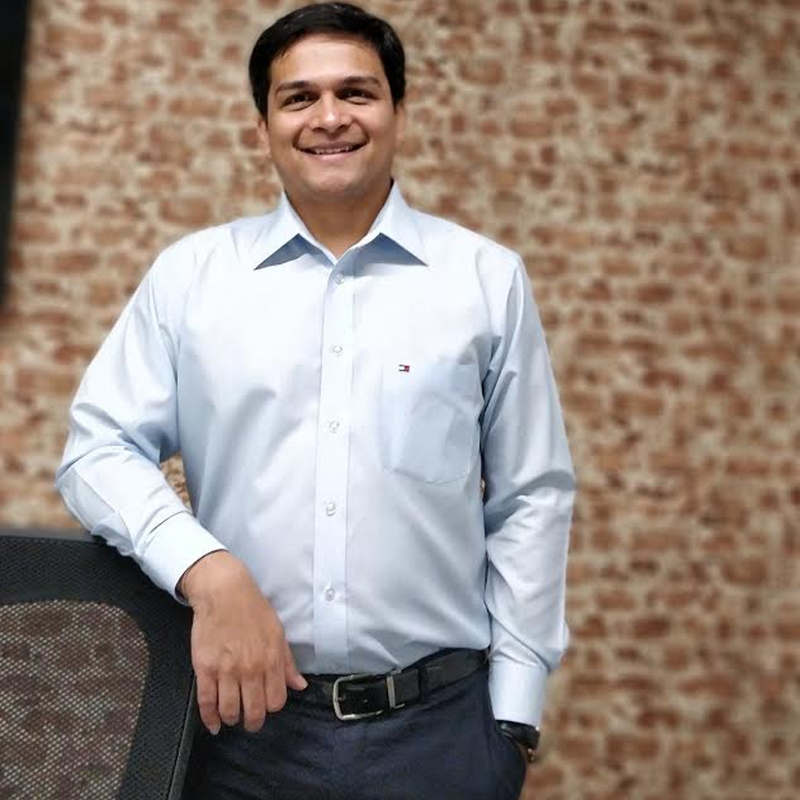
    MUMBAI: Big moves, bigger responsibilities—Harshit Sahni has taken on a new leadership role as senior director – cluster revenue head for factual & lifestyle, eurosport, international business – south Asia at Warner Bros. Discovery. With over two decades of experience in media, advertising, and revenue strategy, Sahni is all set to steer the business into new territories of growth and innovation.

    Having already made an impact as cluster revenue head since September 2024, Sahni now takes the reins at a crucial time for the industry. With advertising dynamics shifting and digital transformation accelerating, he aims to push the boundaries of content monetisation and strategic partnerships in south Asia’s evolving media ecosystem.

    His track record speaks volumes. At Warner Bros. Discovery and previously at Discovery Inc., Sony Pictures Networks, and Star News, Sahni has consistently driven advertising revenue, built strategic partnerships, and spearheaded innovative sales models. From launching ad-sales operations in Bangladesh, Sri Lanka, and the Maldives to securing 80 per cent market share in key partnerships, he has been a key player in shaping the industry’s revenue streams.

    A results-driven leader, Sahni has a history of crafting integrated advertising solutions, establishing new revenue streams, and pioneering business models that redefine commercial success. His ability to forecast trends, optimise advertising strategies, and execute high-impact campaigns makes him a force to reckon with in the world of factual entertainment and lifestyle content.

    The future of factual & lifestyle media in south Asia looks promising, and with Sahni leading the charge, expect innovative advertising models, strategic brand partnerships, and bold revenue strategies that redefine content monetisation.

  • JioStar taps ad sales powerhouse Anuradha Mathu Agrawal to lead the charge

    JioStar taps ad sales powerhouse Anuradha Mathu Agrawal to lead the charge

    MUMBAI: When it comes to advertising, the battle for consumer attention is fierce, and JioStar has just enlisted a powerhouse to take the lead. Anuradha Mathu Agrawal has stepped in as head of mid-market entertainment ad sales, armed with decades of experience in media sales and strategic revenue growth. With a career spanning top networks and ever-evolving markets, she is set to redefine JioStar’s ad sales game with fresh strategies and bold moves.

    Her appointment follows the exit of Dhruv Dhawan, who previously led digital growth for mid-tier and emerging clients. While Dhawan’s next move remains a mystery, his contributions to JioStar’s digital ad sales strategy were widely recognised.

    A career built on media mastery

    If the advertising industry had a hall of fame, Agrawal’s name would be etched in gold. She has consistently delivered market-leading ad sales strategies, built robust revenue streams, and established herself as an expert in regional content monetisation.

    Agrawal’s media journey kicked off in 1994 with Bennett Coleman and Co. Ltd. (Times of India Group), back when print was still king and social media wasn’t hijacking everyone’s attention span. She later took her talents to India Today in 1998, proving she wasn’t just here to play—she was here to win.

    In 1999, she landed at Star India, where she spent nearly a decade making TV advertising a goldmine, selling ad slots that turned daily soaps, cricket matches, and reality TV into revenue machines. After an impressive nine-year run, she moved to Ndtv as senior vice president in 2008, and by 2010, she was fine-tuning brand deals at Turner Broadcasting System as an executive director (Cartoon Network, anyone?).

    Then came the plot twist—she co-founded Leomax International in 2012, running the show for nearly three years, striking e-commerce deals with Snapdeal, Fashion&You, and 99labels. Because why just climb the corporate ladder when you can build one yourself?

    By 2015, she was back in the corporate saddle as national revenue head at CNN-News18, before making a grand return to Star TV Network in 2016 as senior vice president—later rising to executive director at Disney Star post-merger, where she dominated regional ad sales in Telugu markets and the kids’ portfolio.

    The entertainment ad sales landscape is evolving faster than a binge-worthy series, and Agrawal is here to push JioStar to the forefront. With JioStar doubling down on innovation, her expertise will be pivotal in scaling revenue, optimising advertiser engagement, and creating a next-level media ecosystem.

    JioStar’s entertainment ad sales division just got a serious boost, and with Agrawal at the helm, the industry is watching closely. Will she revolutionise regional advertising? If history is any indication, the answer is a resounding YES.


  • Shruti Bhargava returns to Republic Media Network as national branded content head

    Shruti Bhargava returns to Republic Media Network as national branded content head

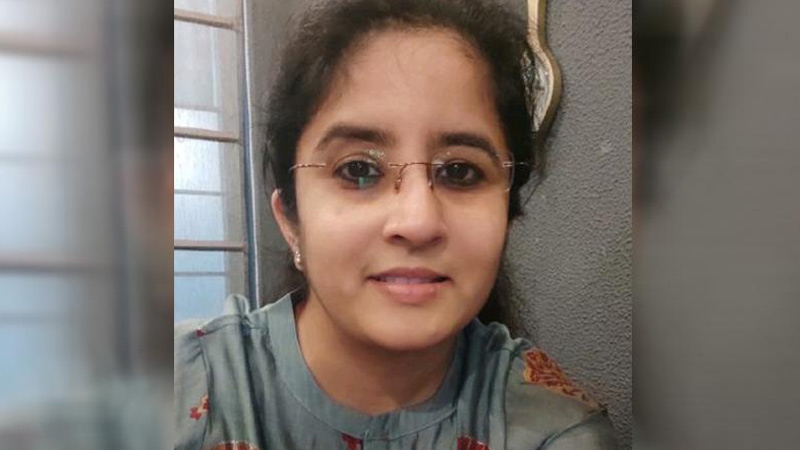
    MUMBAI: Shruti Bhargava has officially commenced her new role as the national head of branded content and associations at Republic Media Network. In her announcement on LinkedIn, she expressed her gratitude, stating, “Thank you Hersh Bhandari for your unwavering support and for the opportunities to help me grow in the professional journey.”

    With over 15 years of extensive experience in the media industry, Shruti Bhargava’s career reflects remarkable growth and versatility.

    She has held significant leadership roles, including general manager – north at Republic World since January 2024, overseeing operations and advertising revenue across platforms. Prior to this, she served as regional head – north & east India at Goldmines Telefilms, managing advertising revenue for diverse television channels. Between April and December 2022, she was general manager at Republic World, spearheading branded content initiatives and campaigns.

    Earlier, as deputy general manager at Republic Media Network Sales, she led the North India business for Republic TV from June 2021 to March 2022.

    Bhargava’s career also includes senior manager positions at TV Today and HT Media Ltd, where she managed advertising sales and marketing strategies across radio, television, digital, and print media, cementing her reputation as a well-rounded leader in the industry.

    Bhargava’s academic background includes a Bachelor of Technology in computer science from the Indian Institute of Technology, Kanpur, and a master’s degree from the University of Illinois at Urbana-Champaign. Additionally, she has participated in significant initiatives such as the International Antarctic Expedition as a Climate Force Ambassador.

    As Bhargava steps into this new chapter at Republic Media Network, her vision is set on strengthening brand partnerships and creating impactful content that resonates with audiences across the nation.

  • Coaching centre advertising guidelines drawn up by Indian government

    Coaching centre advertising guidelines drawn up by Indian government

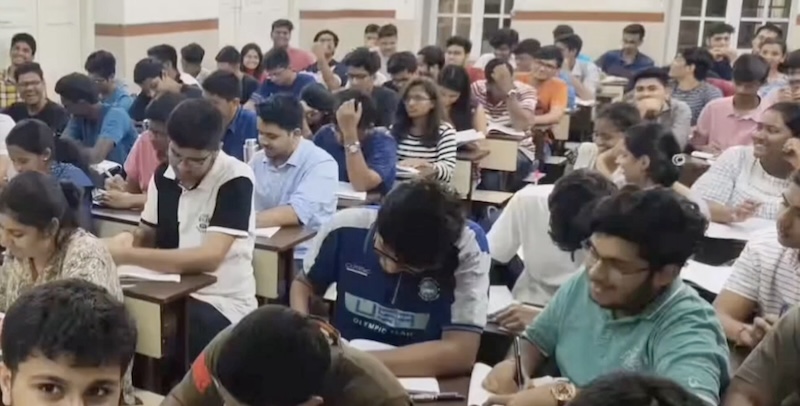
    MUMBAI: Coaching centres had better watch out. No more will their promoters be able to make wild claims in an attempt to lure naïve students to take up courses with them. Nor will they be allowed to force students to endorse their courses. 

    The  Central Consumer Protection Authority (CCPA) has issued comprehensive guidelines to address the issue of misleading advertisements in the coaching sector. Guidelines for Prevention of Misleading Advertisement in Coaching Sector, 2024,  aim to safeguard students and the public from deceptive marketing practices commonly employed by coaching centers, disclosed CCPA chief commissioner and secretary department of consumer affairs Nidhi Khare at a press meet on 13 November 2024. 

    The guidelines have been drawn up a by a committee that was chaired by the then chief commissioner CCPA which included representatives from the CCPA, department of personnel & training, ministry of education, Lal Bahadur Shastri National Academy of Administration (as a special invitee), National Law University (NLU) Delhi, law firm and industry stakeholders.

    These guidelines are drafted in the wake of growing concerns about false/misleading claims, exaggerated success rates, and unfair contracts that coaching institutes often impose on students. Such practices have been found to mislead students, influencing their decisions by concealing important information, giving false guarantee etc.
     

    Some of the Key Highlights of the guidelines are as follows:

    Regulation of advertisements: The guidelines explicitly prohibit coaching institutes from making false claims related to the courses offered, their duration, faculty qualifications, fees, and refund policies;  selection rates, success stories, exam rankings, and job security promises and assured admissions, high exam scores, guaranteed selections or promotions.

    Truthful representation: Misleading representations about the quality or standard of their services are strictly prohibited. Coaching institutes must accurately represent their infrastructure, resources, and facilities.

    Students’ success stories:  In a notable move, the guidelines reportedly will prevent coaching centers from using students’ names, photos, or testimonials in advertisements without their written consent—and importantly, this consent must be obtained only after the student’s success. This provision is intended to reduce the pressure student’s face when enrolling, as they are often pushed into signing such agreements upfront.

    Transparency and disclosure: Coaching centers will need to disclose important information, such as the name, rank, and course details alongside the student’s photo in an ad. Whether the course was paid for by the student that too must be clearly stated. Additionally, any disclaimers will need to be prominently displayed, with the same font size as other important details, ensuring that consumers are not misled by fine print.

    No creation of false urgency: The guidelines will reportedly target the common tactic used by any person engaged in coaching, that is, creating a false sense of urgency or scarcity, such as implying limited seats or exaggerated demand, to pressure students into making immediate decision.

    Convergence with national consumer helpline: Every coaching center will be required to partner with the national consumer helpline, making it easier for students to raise concerns or complaints regarding misleading advertisements and unfair trade practices.

    Fair contracts: The guidelines are also said to address the issue of unfair contracts that students are often enter into with coaching centers. Coaching institutes will no longer be allowed to use successful candidate’s photographs, names, or testimonials without post-selection consent. This provision is intended to eliminate the pressure that many students face when enrolling in coaching centers.

    Enforcement and penalties: Any violation of these guidelines will be treated as a contravention of the Consumer Protection Act, 2019. The Central Authority has the power to take stringent actions against offenders, including imposing penalties, ensuring accountability, and preventing further occurrences of such deceptive practices.

    Khare, emphasised that CCPA seeks to work closely with industry stakeholders, consumer organisations, and regulatory bodies to ensure effective implementation and compliance with the guidelines in the interest of consumers and public. She further stated that misleading advertisement in coaching sector will be governed as per Consumer Protection Act, 2019 and the guidelines will bring clarity to the stakeholders and protect consumer interests. 

  • E-commerce ad volumes on TV growing by 20 per cent YoY since 2019: TAM data

    E-commerce ad volumes on TV growing by 20 per cent YoY since 2019: TAM data

    Mumbai: The e-commerce sector’s ad volume share is growing on television at 20 per cent every year since 2019, as per data by Tam Media Research (TAM). E-commerce ad volumes registered the highest growth in the third quarter of 2021 outshining the festive period.

    E-commerce category media/entertainment/social media contributed the highest share of total e-commerce ad volumes at 31 per cent. This was followed by e-commerce-education at 16 per cent and e-commerce-online shopping at 14 per cent.

    The top three advertisers in the e-commerce category were Amazon Online India, Think & Learn, and Whitehat Education Technology. Amazon Online India was the only advertiser with double-digit share in overall eCommerce ad volumes at 11 per cent. Amazon Online India was also a new entrant among the top ten advertisers on TV (all sectors/categories) for the year 2021.

    E-commerce advertisers preferred genres such as news, films and general entertainment to feature ads as they accounted for 31 per cent, 21 per cent and 20 per cent ad volumes share, respectively. Feature films and news bulletins were the preferred programmes among advertisers. A time band analysis for e-commerce sector advertising on TV showed that the primetime band saw the highest share of ad volumes at 31 per cent followed by the afternoon time band at 21 per cent. 

    ​​​​​​

  • FreshToHome has grown 4x since 2019: CEO Shan Kadavil

    FreshToHome has grown 4x since 2019: CEO Shan Kadavil

    Shan Kadavil’s bio on a networking platform reads ‘Farmer, Fisherman & Entrepreneur’.  In his own words, his journey to co-founding FreshToHome stemmed simply from a desire to find safe, hygienic fish to consume. That desire turned into passion, which in turn set him off on a mission to source seafood which is free of chemicals & antibiotic residue. To do so, Kadavil and team had to disrupt the traditional ways in which sourcing and distribution of seafood & meat happens in India and re-invent the food supply chain from scratch, by disengaging with the middle men and providing value to the farmers and fishermen.

    Thus, was born FreshToHome- an AI-based online marketplace that directly connects consumers with the fishermen and farmers. Today the platform has transformed into arguably the world’s largest vertically integrated e-commerce company in the fish and meat space, delivering to nearly two million customers in ten cities in India and all of UAE. The brand is now making forays into other fresh food categories such as fruits, vegetables and dairy.

    An entrepreneur who jump-started many technology companies and start-ups in India and the US, Kadavil has been named twice in the Exhibit magazine’s “100 Top Tech Indians” list, and won the Economic Times “Most Promising Entrepreneur of 2019” award, among others. Founder, chairman of tech startup, Dbaux Technologies, Kadavil holds a number of patents in the areas of Big Data & Cloud Computing.

    Kadavil is also credited with having built the first and largest Studio outside the US for Zynga- a leader in social gaming and maker of popular games such as Farmville, CityVille & Mafia Wars- in his previous role as the country manager & India founder of the company.

    As he himself jokingly once said, Kadavil literally went from making virtual tomatoes and potatoes on Farmville to actually farming fresh vegetables, poultry and fishes from fishermen.

    IndianTelevision’s Anupama Sajeet caught up with the multi-functional leader for a freewheeling conversation on being one of the early movers in the online seafood & meat delivery space in India, the challenges it entailed and on the road ahead for the e-tailer…

    Edited excerpts:

    On the brand’s claim of ‘zero chemicals & antibiotic-residue free’ on its fish & meat products

    The key to success in the fish and meat category is quality products and the fastest time from source to end consumer. A typical fish supply chain in India has over three middlemen which takes at least three to four days to reach the end-user. FreshToHome’s AI & IoT-tech-enabled platform ensures that the sellers are able to source without middlemen and the product reaches the end consumer within 24 to 36 hours.

    Additionally, the platform guarantees that an around-the-clock cold chain keeps the products within a range of zero to four degrees. The prompt delivery to the customer’s doorstep is possible through our state-of-the-art facilities and hubs in all regions and our convoy of vehicles that deliver around 23,000 tons of fish and meat per year.

    Apart from this, we have numerous checks during the process, including for standard chemicals, antibiotics, and preservatives. FreshToHome has reputed third-party lab certification that we provide on our website and app, which our customers are free to download. With this, we are able to validate that the products our customers are purchasing have been tested for over 120 antibiotics and other chemicals.

    On the marketing strategy behind the recent TVC campaign & revamped logo

    With our first campaign titled “Apne aap se, ya app se” we reference the wet market and nudge consumers to move online and buy from the FreshToHome app for a better experience. The film aims to highlight the predicament faced by ‘non-app’ users. There are three films created, which show the comparison with the wet market in a split screen treatment, depicting our three product categories- chicken, fish & meat- with super-quick delivery, cleaned, cut, and ready-to-cook. Most importantly, it shows how the consumer can save time and effort spent in the conventional ways of buying and thereafter cleaning, cooking it. We have also revamped our brand imagery (logo, look and feel) to be more youthful and fresh, bringing to life its core of fresh, chemical free food.

    On the brand’s media mix for advertising

    Being a digitally native brand, our media will be primarily digital. Post pandemic, coinciding with our campaign launch, our media mix has included TV, OTT, outdoor and print in a big way, as we want to deliver a larger thematic message by creating awareness of the benefits of shifting to buying meat and seafood online.

    On ‘the pandemic effect’ and the difference in numbers- pre & post Covid

    The growth of the platform has been rapid during the pandemic- the number of orders and registered users have gone up. While, in the first wave we witnessed a growth of 1.5 times, we have registered a growth of 2.5 times now.

    During the first wave, we were less prepared and there were a lot of issues in settling down operationally. We spent a lot of energy figuring out how to amplify human capital. The lack of resources was a problem but we have now hired 40 per cent extra manpower. In the last three to four months, we have employed 3000-4000 people. This rapid growth has happened on our platform directly or indirectly. And that kind of growth prepared us for the second wave. Earlier where we had one factory in each city, we now have two to three factories. We have grown four times from 2019 to the present. Currently, we are getting 2.2 to 2.3 million orders per month.

    On the shift in consumer behaviour towards online & company’s plan post-pandemic

    Online space is going to become much more competitive and saturated with every passing day. Companies like us will not be able to ignore the importance of this medium if they want to stand out among the competition and provide value to their consumers. Businesses with agility and creativity should work together to ensure the collective survival of this ecosystem.

    The industry has continued to reach out to micro-influencers for awareness about safety and hygiene among their potential consumers. It is imperative to adopt marketing strategies directed towards building a direct bond with their customers by focusing on digital methods.

    Talking particularly about FreshToHome and FTH Daily, COVID-19 transformed the fish and meat purchasing behaviour of consumers dramatically. Due to safety concerns, consumers made the habit-forming shift to e-commerce and we saw online demand for our products going up manifolds last year, thanks to the safety guarantee of “100 per cent Fresh and zero per cent chemicals”.

    On features, that sets FreshToHome apart from other established e-tailers

    The key differentiator of FreshToHome is our direct sourcing approach. For a competitor, who buys from vendors in the city, this is a hard task to do. Our ‘Farm to Fork’ feature and our AI-backed US patent called “Virtual Commodities exchange” is primarily what helps us stand apart. So, we get the info on consumer demand and then we match this with supply information from farmers. With the help of this, the time delay between taking the product and reaching the consumer is reduced.

    Secondly, there are no chances of wastage. The wastage in the supply chain of fish is about 15 per cent. The time cut-off in the supply chain, which is a minimum of 0 to 24 hours, makes us extremely competitive. Then there’s our sourcing strength. Most players may go to five to six harbours, but we go to nearly 500 fishermen and 125 harbours. This has the advantage of being marginalized in cost and not overpriced.

    Also, we use external labs to get certifications like ‘Free of ammonia’ and ‘No preservatives and antibiotic residue’. We are an honest brand and we are vocal about it.

    On ensuring quality, while expanding the products portfolio beyond meat

    When Mathew Joseph (co-founder) and I met, he had a company called ‘SeaToHome’. The reason behind starting ‘FreshToHome’ was to expand our categories to everything “fresh”- that was the vision. Since then, we realised that fish itself has been a complex challenge of hygiene but we are slowly and steadily building against that. It took us four years before we got our commodity on the exchange platform correctly. Then, to build the cold chain and supply chain- the whole process took us five to six years to develop.

    Now that the infrastructure has been developed, we are expanding our categories to fruits, vegetables and dairy. We have already expanded our daily delivery service- FTH Daily in 2019, which specialises in delivering milk, groceries, fruits, vegetables, and daily essentials, in Bangalore, Hyderabad, and Pune.

    On challenges faced while expanding regionally

    The challenge has always been to change an inherent consumer behaviour to shift their purchase of meat and seafood through our app, instead of going out and buying it themselves. This is a gradual shift where we are continuing to educate consumers about the benefits of buying meat and seafood from FreshToHome.

    On plans for international expansion

    We are already one of the largest players in the UAE and now plan to expand to all GCC (Gulf Cooperation Council) countries, specifically in Saudi Arabia, Oman and Qatar.

  • BARC week 32: Kashmir, Article 370 abrogation pushes English news ratings up

    BARC week 32: Kashmir, Article 370 abrogation pushes English news ratings up

    BENGALURU: Abrogation of Article 370 and the presentation and passage of The Jammu and Kashmir Reorganisation Act, 2019 in the parliament on 5 August and 6 August 2019 respectively was a big booster for news across all media. Reactions from within and without the country, the incessant debates and arguments for and against the act attracted eyeballs to news television channels. The English news genre on television was also a big beneficiary in terms of increase in viewership during the week (Week 32: Saturday, 3 August 2019 to Friday, 9 August 2019, week or period under consideration). Broadcast Audience Research Council of India (BARC) weekly data for week 32 of top 5 English news channels showed that the combined viewership of the top channels increased by 1.074 million impressions or went up by 59.3 percent as compared to week 31 of 2019.

    The combined weekly impressions of the top 5 English news channels were 2.885 million and 1.811 million during weeks 32 and 31 respectively. The top 5 English channels in week 32 of 2019 were the same as in week 31 with a shuffling in ranks four and five. In terms of absolute weekly impressions, the Arnab Goswami-led Republic TV was the biggest gainer in viewership, while pubcaster Doordarshan’s English news channels DD India gained the least among the top 5 English news channels in week 32 as compared to week 31. The India Today Group’s India Today Television gained the most in terms of percentage at 87.6 percent while DD India had the lowest gains of 32 percent in terms of growth of weekly viewership. India Today Television climbed up one rank to fourth place replacing Network18’s CNN News18 which descended to rank 5. Please refer to the figure below:

    Let us see how the top 5 English news channels performed.

    As mentioned above, channels ranked one (Republic TV), two (Times Now) and three (DD India) in week 32 of 2019 had the same ranks in the previous week. Please refer to the figure below for ranks, with rank 1 being the most watched.

    Republic TV was ranked one in week 32 of 2019 with 0.871 million weekly impressions, which was 51.7 percent or 0.297 million impression more as compared to 0.569 million weekly impressions in week 31.

    With 0.630 million weekly impressions in week 32 of 2019, Times Now retained its previous week’s second rank. Times Now viewership in week 32 of 2019 was 53.3 percent or 0.219 million impressions more than the 0.425 million weekly impressions in week 31.

    DD India retained its third rank in week 32 of 2019 with 0.528 million weekly impression which was 0.128 million impressions or 32 percent more than the 0.337 million weekly impressions in week 31.

    As mentioned above, India Today Television climbed up a place to fourth rank in week 32 of 2019 with 0.439 million weekly impressions which was 0.211 million impressions or 87.6 percent more than the 0.234 million weekly impressions in week 31.

    Completing the quintet at rank 5 was CNN News18 with 0.417 million weekly impressions in week 32 of 2019 which was 0.134 million impressions or 69.5 percent more than the 0.246 million weekly impressions in the previous week. Please refer to the figure below:

  • The digital content boom – trends in 2019

    The digital content boom – trends in 2019

    When is the last time you followed a full show on TV? With the advent of digital streaming platforms, it’s something that is hard to recall for most people. There was a time when having access to digital content in itself was exciting. But in this user-driven world and the dynamics that come with it, we are now way beyond that. The way audiences consume videos is changing at a fast pace, with new technologies and constant innovations being introduced in the same year. With every new invention comes the scope for innovation, and the subsequent need to make this new concept more user-friendly. Some brands have perfected the art of researching resulting in their products to become an instant hit! Others have taken a different route, that of almost dropping a new interface out of thin air and then tweaking it according to ‘what users want’.

    Either way, it’s bound to always be about the users, who just seek something ‘new’ every time they log in an entertainment platform through their phones. Either through content or through experience, users today are looking for something fresh and novel in terms of either content or experience, and are quick to reject contents or platforms that offer none. Considering the same, here’s a look into what you can expect in 2019 from the most favoured form of content consumption:

    Brand videos backed by purpose

    People are more aware than ever before, and they don’t hesitate to voice themselves online. With the rise in the number of mediums to express oneself, you can talk about current issues on your status, an Instagram story, a twitter poll or even a GIF. Videos, have the ability and the capacity to showcase issues more than most other mediums. Brands are noticing the kind of impact videos with a purpose have on their audiences, and there is a large scope for worldwide discussions to arise from the same. Businesses see the scale and impact caused by videos of this kind and aim to define their stance and responsibilities through them. Be it campaigns to save water, or on global warming or the right to vote, video content with current relevance strikes a chord with audiences and is here to not only stay, but to grow.

    Device compatibility a necessity

    Smartphone penetration is increasing at a speed never imagine before and video content accounts for the highest amount of data consumption. Having access to internet data and Wi-Fi almost everywhere we go has facilitated the increased use of mobiles to consume video content. But times have moved beyond when it used to be a thrill just to be able to watch video content on your phone. Now, it is all about making that viewing experience even better, by way of customisation or the norms that define comfort. Platforms such as Instagram’s IGTV have already accommodated and steered this trend, by making it exclusively for vertically-shot videos that are full-screen. Smartphones are also where people are most open to watching ads. According to a survey by data analytics company MoMagic Technologies, 40 percent of Indians prefer to watch video, even advertisement videos on their mobile phones over other platforms.

    Bigger role to play for regional language content

    The surge of digital content in the past few years has opened up many avenues, a major one of which is for vernacular languages to break into the mainstream. This is thanks to the wider reach of online streaming to consumers from regions other than Tier I cities. A 2017 report by KPMG and Google, found that there were 234 million internet users consuming content in Indian languages and 175 million English users in 2016. The report further stated that the period between 2016 and 2021 will see 9 out of 10 new internet users using local languages. Platforms such as Voot and Hoichoi already have a wide user base, leading the way for vernacular languages to be at par with the rest.

    Better content value and storylines

    Gone are the days when the “Big Screen” was seen as graduating from the “Small Screen”. With great storylines compelling audiences to get hooked onto shows on OTT platforms, native content is becoming increasingly popular. Both well-known as well as newcomer actors, directors and icons are getting more and more involved with shows and movies online, a thrill for audience thanks to engaging storylines and better production values. The focus is shifting from the “who” to the “what”, and overall quality is taking precedence. This is something that we can expect to see more of on OTT/streaming platforms in the rest of 2019.

    Virtual Reality (VR) put to better use in marketing

    Out of the many new developments in technology, VR has been talked about more than it has been implemented. The industries that VR is currently used in are limited to those such as gaming and leisure. However, there is great scope for the use of VR to heighten user interest by giving them a sense of control and involvement across industries. Somewhat like a video-game concept of controlling the story with the moves you make, interactive viewing experiences are on the rise. Digital content platforms have already begun using this tactic, the most popular of which has been Netflix’s Bandersnatch. It is an interactive viewing experience, where audiences get to choose the storyline as they watch it. This also means there are several possible endings and storylines, which piques user curiosity and engagement altogether.

    Transcripts and annotations to boost video content

    Almost all TV service providers have subtitles on their English entertainment channels, most without an option. Apart from these, even most video content platforms have their default settings as subtitles/closed captions “On”. As a result, most consumers have gotten into the habit of watching video content, whether movies, shows or music, with subtitles. Not only does this provide clarity in the AV experience, but it also helps online content be found and presented to the ‘right’ audiences. Platforms such as Google and YouTube use algorithms to track keywords, and having descriptions and transcripts embedded into the content helps build solid Search Engine Optimisation. Additionally, closed captions help when one is watching videos in a noisy environment, as well as when they want or need to watch video content on mute. In 2019, we will see brands incline towards having their content aligned for videos with sound and soundless videos alike.